
The Anatomy of an Ultra-Luxury Airbnb Listing: What $5,000-a-Night Homes Do Differently
Take any ultra-luxury Airbnb listing apart, component by component, and you find the same quiet decisions repeated. Here's the full teardown — and how to apply each part to your own property.
A merely expensive listing looks like a nice house. An ultra-luxury listing looks like a decision.
Spend an afternoon inside the top tier of the platform — the villas that clear four and five figures a night — and the pattern stops feeling like taste and starts feeling like engineering. The photos are sequenced. The first line is doing a specific job. The amenities read like a story instead of a checkbox list. Nothing is accidental.
This is a component-by-component teardown of the ultra-luxury Airbnb listing: the hero shot, the title and first line, the photo order, the amenity narrative, the description's rhythm, the pricing signals, the house rules, the host bio, the response systems, and the reviews. For each part, what the top listings actually do — and how you can apply it to a property in this class. Numbers here are illustrative examples, not market data. The thinking travels; the specifics are yours to fit.
The first image is a filter, not a decoration
In search results, your first photo competes as a thumbnail against a wall of other thumbnails. That's the whole game at the top of the funnel. Ultra-luxury listings don't lead with a tidy living room or a wide exterior that could be any large house. They lead with the one frame that says, instantly and without a caption, that this property is not like the others.
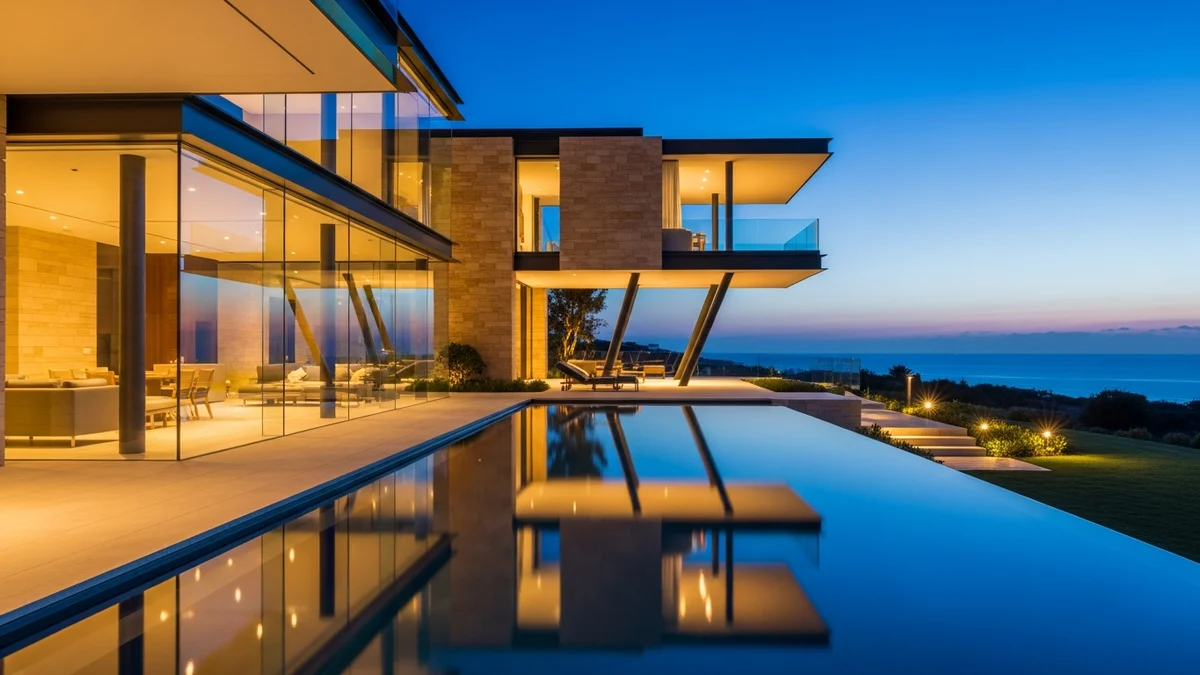
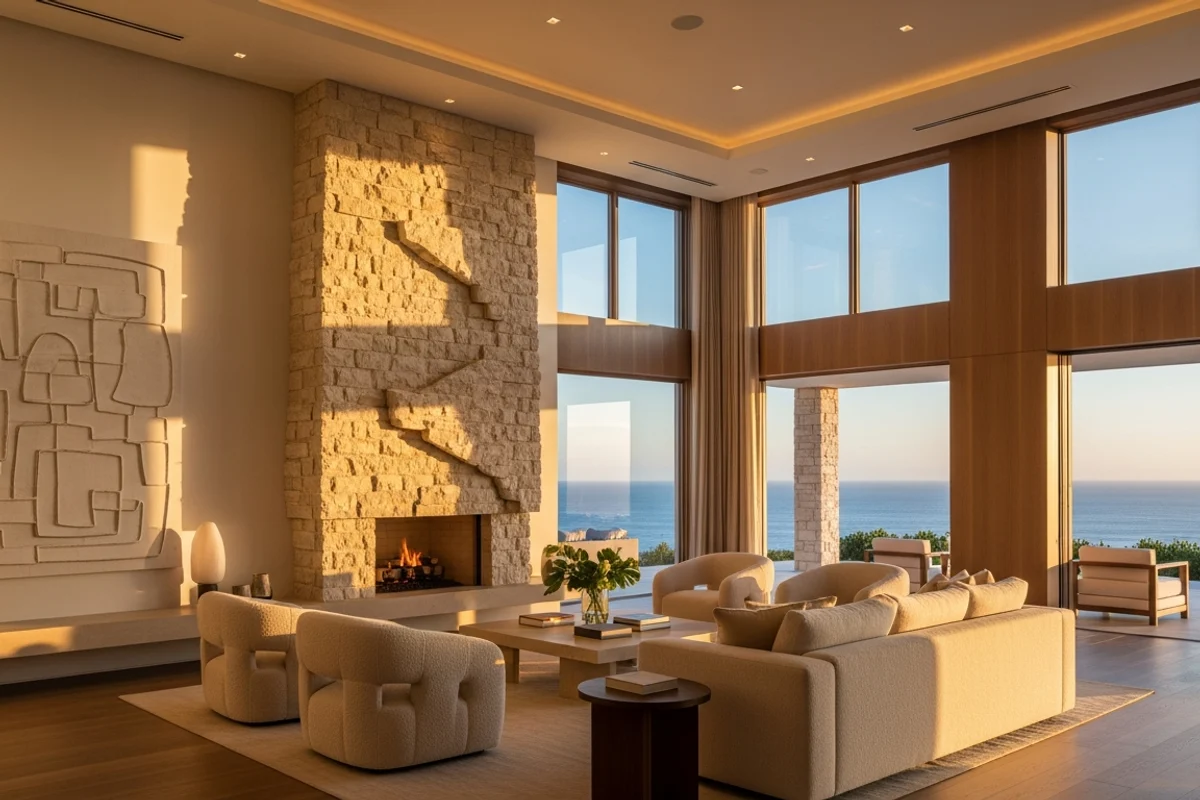
Look at the best high-end Airbnb photos and you'll notice they resolve a single, confident subject: an infinity pool dissolving into the sea, a double-height glass wall holding a whole coastline, a stone terrace lit against a dusk sky. There's a reason dusk keeps winning — warm interior light against a deep blue exterior reads as expensive in a way midday sun never does. Professional real-estate and architectural photographers know this; it's the difference between a snapshot and a sale.
The practical move: shortlist your five strongest angles, shoot each at golden hour and at blue hour, and pick the one frame that would still stop a scroll at thumbnail size. Everything else in the sequence supports that opening promise. If your best asset is a view, that's your hero. If it's the architecture, lead with the architecture. Cavmir's photography guidance for luxury listings starts here — because no amount of copy rescues a weak first frame.
The title names the fantasy; the first line closes the gap
Titles at this level are specific and unhurried. They name a real, ownable feature and a real place. "Stunning," "luxury," and "getaway" are filler words that every listing uses, so they signal nothing. A confident title trades adjectives for nouns: the material, the setting, the one thing this home has that its neighbors don't. That specificity is also quietly good for Airbnb SEO, because it matches the concrete language guests actually search.
The first line of the description is prime real estate — it's what shows above the "read more" fold. Ultra-luxury listings don't waste it on "Welcome to our home." They lead with the payoff: the framed view, the seclusion, the single detail that justifies the rate. Everything a $5,000-a-night guest is quietly worried about — is it really private, is it really that view, is it really this good — gets answered in the first sentence they read.
Write the title and first line last, once you know your hero shot. They should say the same thing in words that the photo says in an image. When the picture and the promise line up, trust builds before the guest has read a single amenity. That alignment is a core part of listing optimization — it's cheap to fix and it moves the whole funnel.
Order the gallery like a walkthrough, not a folder dump
Most listings upload photos in whatever order the camera exported them. Ultra-luxury listings sequence the gallery like a guided walkthrough. The first five to seven images carry the whole argument, because that's roughly how far a genuinely interested guest scrolls before they decide to book, save, or bounce. Load those positions with your strongest frames and let the rest support.
A reliable arc: the hero, then a shot that establishes arrival and scale, then the signature interior spaces, then the experiential moments — the pool at dusk, the terrace set for dinner, the view from the primary suite — then bedrooms and bathrooms, then the small human details that make a house feel lived-in and cared for. Each image should answer a question the previous one raised. By the last frame, the guest has taken the tour in their head.
Two practical habits separate the top listings. First, they caption strategically — a short, factual caption on a key photo ("Primary suite, private terrace, ocean-facing") removes doubt at exactly the moment it forms. Second, they cut ruthlessly: twenty-five excellent photos beat forty good ones, because a weak frame in the sequence plants a small doubt. When you're marketing a property in this class, the edit matters as much as the shoot.
Turn a checklist into a description of the stay
At the ultra-luxury level, the amenity list stops being an inventory and becomes a narrative. A wine cellar isn't a bullet point — it's an evening. A private chef's kitchen isn't a feature — it's a dinner you can picture. The top listings describe what the amenity does for the guest, because a guest paying this much is buying an experience, not a specification sheet.
This is also where you separate the standard from the exceptional. Fast Wi-Fi, air conditioning, and a full kitchen are table stakes — mention them plainly and move on. Spend your real estate on the things the tier below can't offer: the staff who can be arranged, the boat at the private dock, the spa room, the view from the primary bath. That's the luxury short-term rental difference, and it's what a high-net-worth guest is scanning for.
One discipline the best listings hold: they describe honestly. Overselling a "spa" that's a hot tub, or a "chef's kitchen" that's a nice range, is the fastest way to a lukewarm review from a demanding guest. Describe the real thing vividly, and let the reality clear the bar you set. Honest, specific, experiential — that's the whole recipe for attracting high-net-worth guests.
Write it to be skimmed, then read
Most people read a listing on a phone, thumb moving fast. The description has to survive a skim and reward a full read. Ultra-luxury listings solve this with rhythm: a short, evocative opening that sets the scene, then clearly labeled sections a guest can navigate at a glance — the home itself, the setting, the experience, and the practical logistics.
The opening earns the read; the labeled blocks make sure a fast reader still lands on what matters to them. A guest bringing a family scans for bedrooms and safety. A couple scans for the primary suite and the view. A group scans for the table and the pool. Structure lets each of them find their answer without wading through the others, which is exactly what good luxury vacation rental marketing does — it meets several buyers inside one page.
On tone: the top listings are quieter than you'd expect. They trust the reader. Adjectives are rationed, exclamation points are absent, and the writing sounds like a knowledgeable person describing a place they know well — not a brochure shouting. That restraint reads as confidence, and confidence is exactly what a guest at this price is paying to feel.
Price is a message, and the listing has to back it up
At the top of the market, the nightly rate is itself a signal. A high, steady price tells a guest this is a serious property; a wobbling price with constant "special offer" flags tells them the opposite. The best listings set a confident number and let the listing earn it — because in this tier, cheap can actually read as suspicious.
Coherence is the whole trick. A $5,000-a-night rate has to be backed by $5,000-a-night photography, copy, reviews, and responsiveness. When one element is thin — a weak gallery, a generic description, a slow reply — the price starts to look like an error rather than a class. Guests notice the mismatch even when they can't name it, and they move on.
Practically, that means resisting the urge to discount your way to occupancy. A handful of well-chosen, quietly communicated adjustments — a shoulder-season rate, a longer-stay arrangement — protect the signal far better than a permanent sale banner. Getting this balance right is part strategy and part positioning, which is where Cavmir's marketing work tends to focus.
Rules signal standards; the bio signals a person
House rules are read more carefully than hosts assume, and their tone tells a guest a lot. Ultra-luxury listings keep rules clear, complete, and calm. They set real expectations — occupancy limits, event policies, care for the property — without the defensive wall of warnings that makes a guest feel pre-accused. Firm and gracious beats anxious and shouty, every time. A well-run home doesn't need to raise its voice.
The host bio does a different job: it makes the stay feel personal and accountable. A guest spending serious money wants to know a competent, reachable human stands behind the property. The best bios are short and specific — who the host is, why they know this home and this place, and the standard of care they hold. Not a life story; a quiet credential. It's the human counterweight to a listing that could otherwise feel like a corporate rental.
The last two components live outside the listing
Two of the most important components of a premium listing aren't in the listing at all. The first is the response system. A guest weighing a five-figure booking usually has a question first, and the speed, warmth, and competence of that reply is a live preview of the whole stay. Slow, templated, or vague answers quietly kill high-value bookings. The best hosts treat pre-booking messages as the first minute of service, not an interruption.
The second is the review section, which functions as the trust engine of the entire page. A prospective guest reads reviews to answer one question: did the reality match the promise the photos and copy made? That's why consistency matters more than any single superlative — a run of reviews all confirming the same things (the view is real, the host is responsive, the home is spotless) is far more persuasive than one ecstatic outlier. You earn those reviews by getting every earlier component right, then delivering on them in person.
Taken together, response and reviews are where a great listing either proves itself or unravels. They're also the components you can't fake with better copy — which is exactly why they carry so much weight at the top of the market.
The ultra-luxury listing, on one page
- 01 · Hero ShotLead with the one defining frame, shot at dusk. It has to sell the price at thumbnail size.
- 02 · Title / First LineName a real feature and place. First sentence answers the guest's quiet worry above the fold.
- 03 · Photo SequenceOrder the gallery as a walkthrough. Front-load your best five to seven frames; cut the weak ones.
- 04 · Amenity NarrativeDescribe what each amenity does for the guest. Skip the table stakes; sell the tier-above features.
- 05 · Description RhythmShort evocative opener, then labeled blocks. Scannable on a phone, complete on a laptop.
- 06 · Pricing SignalSet a confident, steady rate. Every other component has to earn the number. No perpetual discounts.
- 07 · Rules & BioRules firm but gracious. Bio short and specific — a real, competent human behind the stay.
- 08 · Response / ReviewsFast, informed replies. A consistent run of reviews confirming the promise beats one rave.
Every one of these is a lever — and most listings pull maybe half of them
If you're marketing a property in this class, Cavmir can help you get each component pulling in the same direction: the photography, the listing optimization, the positioning, and the search visibility that keeps it seen. Have a look at what we do, or read the luxe marketing playbook next.
Talk to us