

If you own a luxury rental, you already know the affluent traveler doesn't book the way most guests do. They read the whole listing, then they read between the lines. They notice how you write, how you photograph the place, how fast and how carefully you answer a question. By the time they reach out, they've mostly decided whether they trust you. Winning high net worth vacation rental guests is less about stacking amenities and more about earning that trust before the first message. This is a marketing problem, and it rewards hosts who treat it like one.
Let's walk through who this guest actually is, what they're really paying for, and how a real brand, honest storytelling, and the right channels move you from "a nice place we found online" to "the host we book every year."
Who the high-net-worth guest actually is
There's no single high-net-worth guest, and treating them as one type is the first mistake. The range is wide. On one end you have the quietly wealthy: the family that's had money for two generations, drives a sensible car, and would rather nobody know their net worth. On the other end you have the recognizable, the guest whose name or face carries weight, who's used to being treated a certain way and notices instantly when they aren't. Both can afford your rate. They want very different things from you.
The travel parties differ too. A multigenerational family renting a large estate cares about how the kids and grandparents will actually live in the space for a week. A couple on an anniversary trip cares about privacy and a sense of occasion. A group of friends splitting a Napa Valley villa cares about whether the place can host a dinner for twelve without feeling cramped. Same rate bracket, three different pitches. Your marketing has to speak to the trip, not just the tier.
What ties them together isn't taste, it's expectation. Skift's luxury-travel coverage keeps circling the same idea: affluent travelers increasingly measure value by how a stay makes them feel and how little friction it carries, not by the length of the amenity list. Once you internalize that, a lot of your marketing choices get simpler.
What they're really buying
Here's the part that trips up owners who focus on square footage and hardware. The high-net-worth guest isn't buying rooms. They're buying time, privacy, effortlessness, and a story they get to tell later.
Time. These are people whose calendars are the scarce resource, not their money. Anything that saves them a decision, a phone call, or a wasted hour reads as luxury. A single point of contact who actually answers. A pre-stocked kitchen. A driver already arranged. You're selling the removal of small frictions.
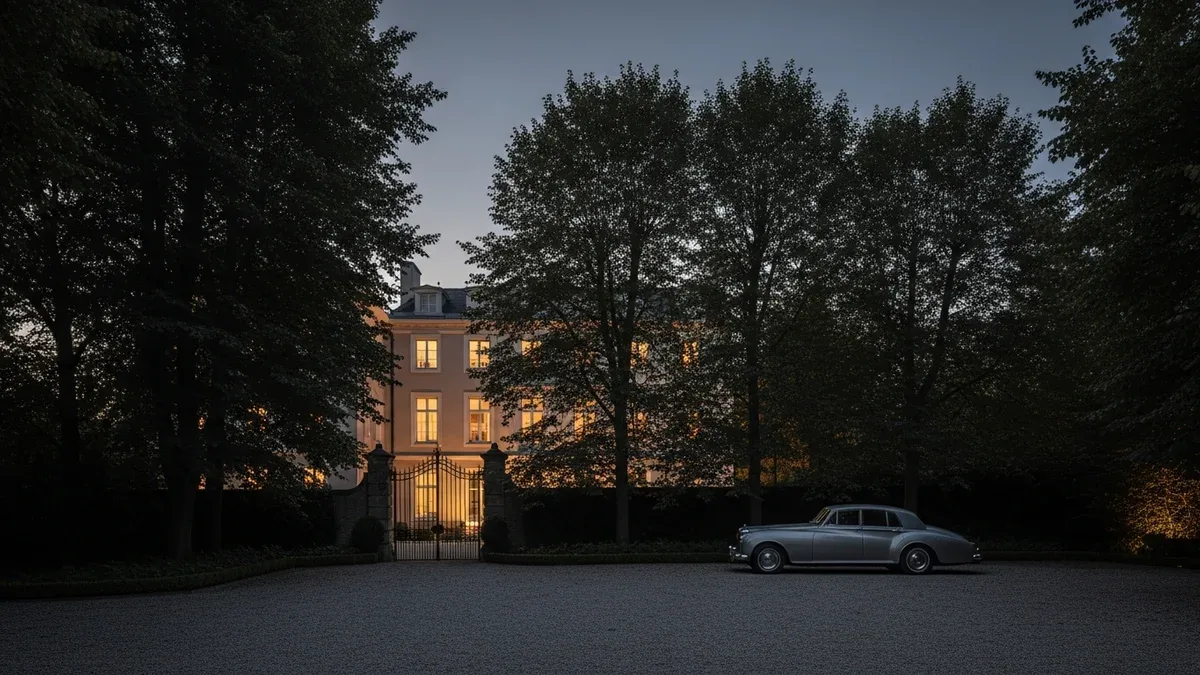
Privacy. A gated Montecito property that no photographer can shoot from the road is worth more to this guest than a flashier place with sightlines to the street. Discretion isn't a feature you add at the end; for many of these travelers it's the whole point.
Effortlessness. The stay should feel like it runs itself. When something does go wrong, and it will, the recovery should be quiet and quick. Affluent guests forgive problems. They don't forgive a host who makes the problem their responsibility to solve.
A story. This one's underrated. Part of what a guest pays for at the top of the market is something to tell friends: the chef who cooked in the villa, the view at sunrise, the fact that the place used to belong to someone interesting. Give them a story worth repeating and you've turned a guest into a marketer.
Before you write a single line of your listing, answer one question: what's the sentence this guest will say to a friend about your place? Build the whole page around making that sentence true, then true again.
Brand as trust: why a real name and a real website matter
Affluent guests are cautious for good reason. They're a bigger target for scams, and a five-figure booking to a stranger's account is a real risk. Your brand is how you tell them, without saying it out loud, that you're safe to book.
Start with a name. A property with an actual name, not "Beautiful 5BR Villa," feels like a place someone stewards rather than a unit someone flips. Then a real website you control, not just a marketplace listing. When a guest searches your property name and finds a clean, consistent site with proper photography, a clear story, and a way to reach a human, their shoulders drop. When they find nothing, or find three inconsistent listings with different photos and different prices, they quietly move on.
Consistency is the whole game. The name, the photos, the tone, the pricing logic should match everywhere the guest encounters you. That's what strong branding actually delivers at this level: not a logo, but a coherent presence that reads as "these people have their act together." Cavmir helps luxury hosts build that presence so the property looks like the operation behind it is as considered as the house itself.
Source: Industry estimates; Skift luxury-travel analysis
A real website also gives you somewhere to send people who already trust you, which is how you get more direct bookings instead of paying a platform to reintroduce you to your own past guests. And if you're pursuing marketplace credibility alongside your own site, our Airbnb Plus and Luxe qualification guide walks through the standards those programs actually check.
The channels that actually reach them
You don't reach this guest with a discount ad. Price-cutting signals the opposite of what they're looking for. The channels that work are the ones built on trust and relationships.
Travel advisors and concierge networks. A large share of high-end travel still flows through advisors, the people affluent clients trust to vet a property so they don't have to. Getting known to a handful of good advisors who serve your market can matter more than any amount of paid reach. They're not looking for the cheapest option; they're looking for the host who won't embarrass them in front of a client.
Referrals. At the top of the market, word of mouth is the strongest channel there is. One happy guest at a Hamptons estate telling three friends is worth more than a month of ads. Your job is to be so consistent that referring you feels safe for the person doing the referring.
The right social presence. Social isn't about volume here, it's about proof. A restrained, well-shot feed tells a browsing guest, and the advisor checking you out, that the reality matches the listing. Thoughtful influencer marketing with the right creator, not the biggest one, can put your property in front of exactly the traveler who'd love it. The wrong partnership, chasing follower counts, does more harm than good.
Pick two or three channels and be excellent in them. A host known and trusted by five advisors beats one who's a stranger to fifty. Depth of relationship outperforms breadth of reach at this tier every time.
Discretion and privacy as an honest promise
Privacy is one of the few things you can genuinely promise this guest, so market it honestly and then keep it. That means being specific and being restrained at the same time.
Be specific about what you actually offer: a gated entrance, staff who sign confidentiality agreements, no cameras inside, a booking process that doesn't leak a famous guest's name across three vendors. Affluent travelers, and the advisors who book for them, ask these questions early. Having clear, true answers ready is itself a mark of a serious host.
Be restrained in how you talk about it. Never name-drop past guests. The fastest way to lose the discreet, quietly wealthy family is to hint that you'd talk about them the way you're talking about someone else. Your discretion is a promise, and the way you honor other people's privacy in your marketing is the proof that you'll honor theirs. Say what you protect and how. Then stop talking.
Earning repeat and referral business
The economics at the top of the market run on loyalty. A guest who books a Lake Como villa and loves it doesn't want to start the search over next year; they want to come back, and they want somewhere just as good for their next trip. That's the loyalty loop, and it's where the real money lives.
Repeat business is cheaper and steadier than constantly winning strangers. So the stay itself is your best marketing. The small, remembered details, that they had a newborn last time and you left something thoughtful, that they mentioned loving a particular wine, are what turn a good stay into a relationship. Follow up like a person, not a system. A short, genuine note after checkout beats an automated "rate your stay" email every time.
Referrals compound the same way. When you delight a guest and make it easy for them to point a friend your way, you've built a channel that costs nothing and outperforms everything. The properties that dominate luxury markets rarely have the biggest ad budgets. They have the deepest bench of past guests who happily vouch for them.
The mistakes that quietly repel this guest
Most of the damage at this level is self-inflicted, and it's subtle. Here's what quietly pushes affluent guests away, usually without a word of complaint.
Hype and urgency. "Book now, only two dates left!" reads as desperate to a guest who's used to being courted, not pressured. Calm confidence sells here. If your marketing sounds like a flash sale, you've told them you're not their tier.
Over-automation. Nothing kills a luxury impression faster than a guest realizing they're talking to a bot when they expected a person. Automate your back office all you like; keep the guest-facing touches human. The moment a five-figure booking feels like a self-checkout, the spell breaks.
Inconsistency. Different photos on different sites, a price that shifts for no clear reason, a tone that's polished in the listing and sloppy in the reply. Every mismatch is a small withdrawal from the trust account. Enough of them and the guest concludes you're not careful, and careful is the whole product.
Chasing volume. The instinct to fill every night at any price is the opposite of a luxury strategy. Discounting to boost occupancy trains the market to see you as a bargain, and it repels the guest who reads price as a signal of quality. Fewer, better-fit bookings at a firm rate protect the brand you're building.
None of this requires a bigger budget. It requires restraint, consistency, and treating your marketing as a promise you intend to keep. Get the name, the site, the story, and the relationships right, and the affluent guest starts to feel what they were looking for all along: that booking you is the easy, safe, obvious choice. If you'd like a second set of eyes on how your property presents to this traveler, Cavmir helps luxury hosts get the brand and the story pointing in the same direction. That's usually where the work starts, and often where it pays off.