The Market
Why Kraków is One of the World's Premier STR Markets
Kraków is the most crowded short-term rental market in Poland and one of the most crowded in Central Europe, which makes it the market where positioning is worth the most. Around 6,159 listings compete here, and the two districts everybody wants — Stare Miasto and Kazimierz — are the most saturated submarkets in the country. Stare Miasto averages roughly PLN 420 a night, but the number that matters is not the rate, it is how many identical two-bedroom flats are quoting something close to it within the same four streets. Meanwhile Grzegórzki and Podgórze are walkable, well-connected and materially under-supplied. The regulatory picture is about to move. Poland has no national short-term rental register in force, and Regulation (EU) 2024/1028, which has applied since 20 May 2026, harmonises the schemes Member States choose to run rather than creating one — so there is no registration number to display here today. Poland's own act — which would create a national register with a per-offer ID and, critically, let municipalities designate zones where short-term rental is restricted — was still in the legislature in August 2026. Kraków has said publicly that it wants that power, and it is the Polish city most likely to use it first. There is still no tourist tax here: the climate fee was abolished, and the city has said it will revisit a visitor levy once the national framework lands. Everything about this market rewards the operator who can be specific.
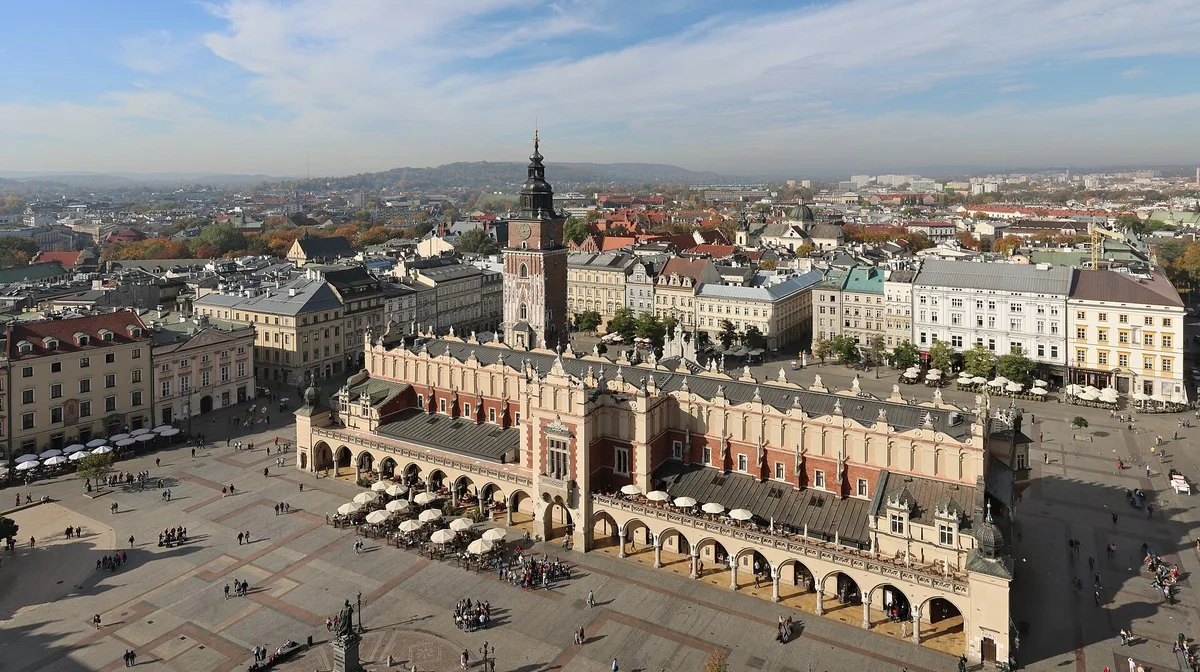
Kraków's demand is deep, international and unusually well spread across the year, which is why so many people have bought here. The Historic Centre was inscribed on the very first UNESCO World Heritage List in 1978, the main square is the largest medieval market square in Europe at roughly 3.79 hectares, and the Jagiellonian University has been running since 1364 — the city does not have to work to attract visitors. What it has instead is a supply problem. Nightly rates blend near €90 at occupancy around 60%, but those averages hide two different businesses: a saturated core where a generic listing competes purely on price, and a set of walkable neighbouring districts where the same property specification faces a fraction of the competition. Kazimierz carries the city's restaurant and bar economy and prices strongly at weekends; Podgórze, across the river, is fifteen minutes on foot from Kazimierz and trades at a discount that no longer reflects the walk. Guest mix runs from European weekend groups and stag traffic that many buildings actively resist, through couples on two and three-night breaks, to remembrance and heritage travellers who plan months ahead and behave completely differently. Kraków also has a genuine boutique hotel and guest house sector, much of it in converted townhouses inside the Planty ring, competing for exactly the same guest as the apartments.
Top Attractions & Landmarks
- Wawel Royal Castle and Wawel Cathedral
- Rynek Główny, the largest medieval market square in Europe
- St Mary's Basilica and the hourly hejnał trumpet call
- The Cloth Hall (Sukiennice) and the Rynek Underground museum
- Kazimierz, its synagogues and Plac Nowy
- The Planty ring and Collegium Maius of the Jagiellonian University
- The Wieliczka Salt Mine, UNESCO-inscribed in 1978
Nearby Markets: Warsaw | Zakopane | Wrocław