The Market
Why Zakopane is One of the World's Premier STR Markets
Zakopane is Poland's winter capital and its most expensive nightly market, and it also has the strangest fee situation in the country. Rates run around PLN 528 a night — roughly €115 — at occupancy near 52% across some 3,518 rentals, in a town of about 27,000 people that absorbs millions of visitors a year. The regulatory oddity is worth understanding before you buy anything here. On 1 April 2025 Poland's Supreme Administrative Court finally dismissed the town's appeal in a case running since 2015, confirming that Zakopane had been charging the opłata miejscowa unlawfully: the local fee is only permitted where statutory air-quality criteria are met, and the whole of Małopolska is classified as exceeding pollution limits. The fee had been worth roughly PLN 5 million a year. And yet in March 2026 the town was still administering a local-fee collection system, having bought new software and issued every collector an individual bank account with remittance due by the tenth of the following month. Because the accommodation provider is the collector, that is the operator's problem rather than the guest's — so confirm your current collection duty with the town directly rather than assuming either that it was abolished or that it simply continues. Meanwhile the national picture is the same as everywhere in Poland: there is no register to join yet. Poland's own register and its municipal restriction zones are drafted but not yet law, and the EU regulation harmonises national schemes rather than creating a European number.
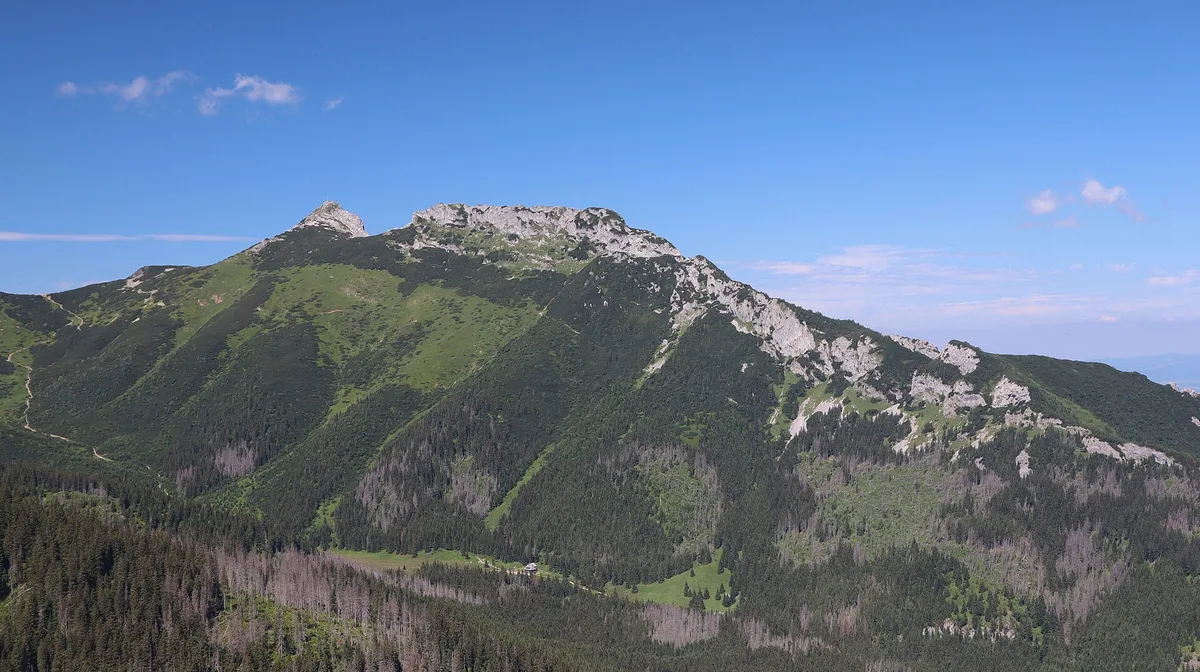
Zakopane runs two separate businesses in one town and the gap between them is the whole opportunity. Winter is the headline: skiing at Kasprowy Wierch and the smaller local lifts, the FIS Ski Jumping World Cup at the Wielka Krokiew in January where booking rates have been reported up 30% to 60% and nightly prices up 25% to 50%, and a Christmas-to-Epiphany block that is the single densest demand period in Polish tourism. Summer is bigger in volume and almost nobody prices it properly: the Tatra National Park is the busiest in Poland, Morskie Oko is a pilgrimage, and the valleys fill with families and hikers from June through September at rates well below the January peak despite comparable occupancy. Between them sit two genuine dead zones in April-May and November, when the snow has gone and the trails are wet. The guest is overwhelmingly domestic — Poles driving down from Kraków, Katowice, Warsaw and the whole of Silesia — with a meaningful Czech, Slovak, Hungarian and British contingent and a growing Israeli one. Supply is dominated by pensions, guest houses and family-run mountain lodges rather than apartments, which means an owner here is competing against operators who serve breakfast and know the trail conditions.
Top Attractions & Landmarks
- Tatra National Park and the trail network from the town
- Morskie Oko, the great glacial lake below Rysy
- The Kasprowy Wierch cable car, climbing to 1,987 metres
- Krupówki, the 1,100-metre pedestrian street through the centre
- The Wielka Krokiew ski-jumping hill
- Villa Koliba and the Zakopane Style architecture of Stanisław Witkiewicz
- The Chochołowska and Kościeliska valleys
Nearby Markets: Kraków | Warsaw | Wrocław