
1935 · WRIGHT · MILL RUN, PA
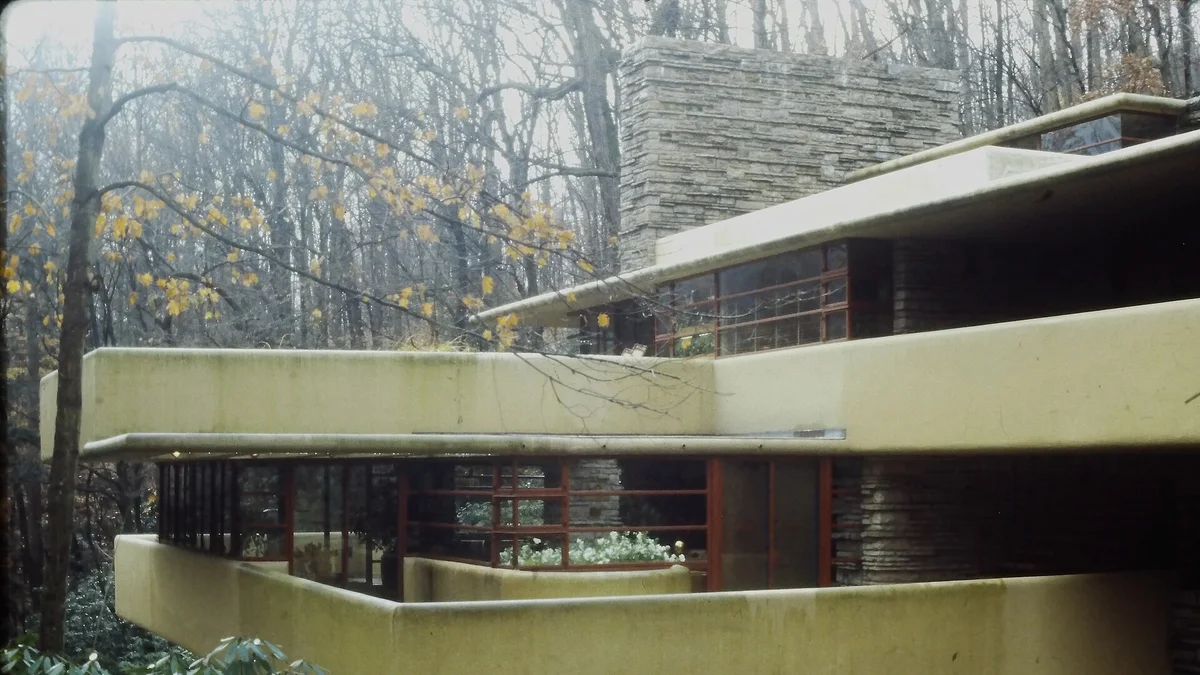
Fallingwater, Frank Lloyd Wright's cantilevered house over a waterfall, is a museum today, not a rental. It is the design touchstone for this piece.
Photo: Bmzuckerman / Wikimedia Commons (CC BY 4.0)
Marketing an Architectural Landmark: Lessons from Modernist Masterpieces
An architectural rental doesn't sell like a beach house. When the building itself is the draw, the marketing has to lead with the design, respect the architecture, and speak to a guest who already knows the difference between good and great.
When the building is the product
Most vacation rentals sell a location and a set of comforts. An architectural rental sells something different: the chance to spend a few days inside a piece of design history. That changes almost everything about how you market it.
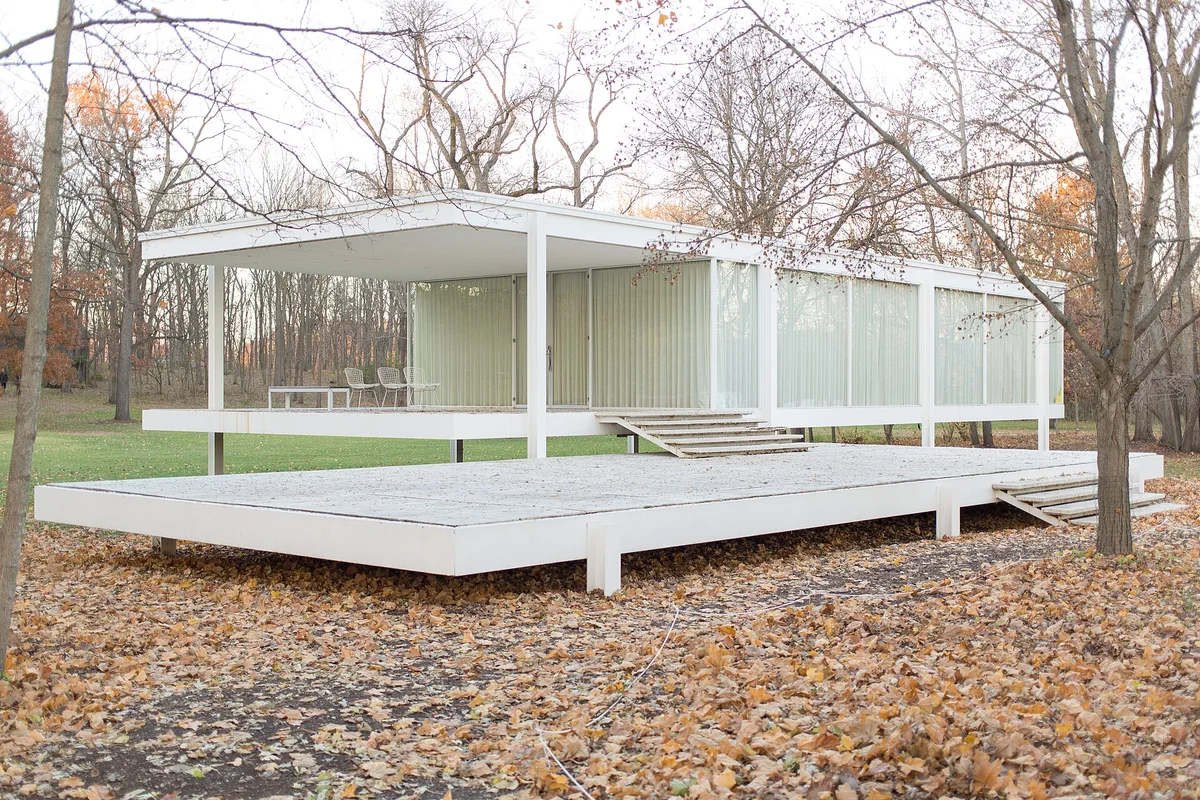
Think about the buildings people travel to see. Fallingwater, Frank Lloyd Wright's 1935 house cantilevered over a waterfall in Mill Run, Pennsylvania, draws visitors from around the world. It's a museum now, so you can't book a night there, but it's the clearest example of the idea: the architecture is the destination. Mies van der Rohe's 1951 Farnsworth House in Plano, Illinois, a single glass-walled room floating above a floodplain, does the same. So does the mid-century modern scene in Palm Springs, where whole neighborhoods of glass, steel, and clean horizontal lines have become a collectible category of their own.
Not every design-forward home is a Wright or a Mies. But if your property has real architectural intent, a named architect, a recognizable style, a considered relationship to its site, then you're marketing an architectural rental, and the standard playbook won't do it justice. The positioning moves that make modernist landmarks so magnetic can be borrowed by any home that was actually designed rather than merely built.
Lead with the architect and the story
The single biggest shift is putting the design first. A design-literate guest wants to know who drew the house, when, in what tradition, and why it looks the way it does. That's not trivia. It's the reason they're willing to pay to sleep there instead of at the resort down the road.
So your listing headline and your first paragraph shouldn't open with "3BR home, sleeps 6, hot tub." They should open with the architecture. Name the architect if there is one and you can verify it. Name the year and the style: mid-century modern, Bauhaus-influenced, International Style, Usonian, brutalist, whatever it honestly is. If the house sits in a documented architectural context, a Palm Springs tract by a known firm, a restoration supervised by preservationists, say so. The story is the product, and a strong listing narrative is what converts a curious scroller into a booking.
A word of caution that matters more here than anywhere: get the facts right. Design-literate guests notice, and so do the design journalists and Instagram accounts that could amplify your property. Don't call something "Frank Lloyd Wright-inspired" unless it genuinely is, and never imply an architect touched a house he never saw. If you're unsure of a date or an attribution, keep it general and true rather than specific and wrong. Accuracy is part of the luxury.
Borrow the language of design, honestly
You don't need a famous name to position well. A guest responds to the same cues the icons rely on: horizontal lines, indoor-outdoor flow, honest materials, the way light moves through a room across the day. If your home does any of that on purpose, describe it in those terms. "Floor-to-ceiling glass that dissolves the wall between living room and garden" tells a design-minded guest exactly what they're getting, and it echoes the Farnsworth House without pretending to be it.
Photograph the architecture correctly
You can have the most significant house in the county and still lose the booking to bad photography. Architecture is unforgiving in a way a cozy cabin isn't: crooked verticals, harsh midday shadows, and clutter read instantly as amateurish to the exact audience you want. This is where professional architectural photography earns its fee.
Three things separate architectural photography from ordinary listing shots. First, light. Modernist houses were designed around the sun. Shoot at the hours the architect intended, often the golden windows early and late in the day, when low light rakes across surfaces and reveals texture and depth. Blue hour, just after sunset, is when a glass house lit from within becomes a lantern; it's the signature shot for a reason.
Second, lines. Keep verticals vertical and horizontals level. A tilted-back camera makes walls fall over. A proper architectural photographer uses perspective correction so the geometry reads as clean and intentional, which is the whole point of the building. On a modernist house, a crooked frame doesn't just look sloppy, it fights the design.
Third, vantage points. Every landmark has the shot, the one angle that made it famous. Fallingwater has its view up from the stream; the Farnsworth House has the low, straight-on frame that shows it floating. Find your home's defining vantage and lead with it, then work through the sequence a designer would: the approach, the entry, the reveal of the main space, the connection to the landscape, the details a craftsman would notice.
Attract the design-literate guest
The guest who books an architectural rental is not chasing a discount. They're an architect, a designer, a collector, a photographer, or simply someone who reads about buildings for pleasure. They travel specifically to experience places like this, and they'll pay a premium for the real thing over a knockoff. Your marketing has to find them where they already are.
That means the design press and the design-obsessed corners of the internet, not just the usual travel channels. A genuinely significant house belongs in the conversations happening on architecture accounts, in design newsletters, on Pinterest boards curated by people who care about mid-century modern. It's the kind of property that outlets covering design and travel will feature, and that a well-run search strategy can put in front of people typing "modernist house rental" or "Palm Springs modernism stay" into Google.
A direct-booking website matters more for this category than most. A dedicated site lets you tell the full architectural story, run the photography at the scale it deserves, and capture the design pilgrim who found you through an article rather than a marketplace search. It also lets you build an email list of exactly the people who care, the ones who'll come back and tell their equally design-literate friends.
Palm Springs as the working model
Palm Springs is the clearest example of a whole rental scene built on architecture. Modernism Week draws design tourists every year, and a cottage industry of mid-century modern rentals has grown up around it. The homes that do best there aren't necessarily the biggest; they're the ones with genuine period integrity, marketed to people who know why a butterfly roof or a breeze-block screen matters. It's proof that a design-forward Airbnb can command attention and rate on the strength of its architecture, without a famous architect's name attached.
Respect and preserve the building
Renting a landmark comes with a duty the marketing has to reflect. A significant house is fragile in ways a standard home isn't: original finishes, period fixtures, materials that can't simply be replaced at the hardware store. Guests who value the architecture generally understand this, and framing your house rules around preservation rather than restriction actually reinforces the property's status.
Say plainly that the home is an architecturally important building and that part of the experience is helping care for it. Explain the pieces that are original. Set thoughtful limits on group size and events if the house calls for them. This isn't a downside to hide; it's a signal. A guest who's told they're staying somewhere worth protecting feels the weight of the privilege, and that feeling is exactly what they came for. Handled well, stewardship becomes part of the story you're selling, not a caveat buried in the fine print.
Price the intangible
Here's the hard part. How do you price a night inside a piece of design history? There's no straightforward comp, because the value isn't in the square footage or the bedroom count, it's in the significance, and significance doesn't appear on a spreadsheet.
The honest answer is that an architectural rental is priced against experiences, not against other houses. The right comparison isn't the three-bedroom down the street; it's a special hotel, a design-led boutique, a place a guest chooses for what it means rather than what it costs per square foot. Industry coverage from outlets like AirDNA and Skift has repeatedly noted that distinctive, design-forward properties can hold rate and occupancy where generic inventory softens, because there's simply less of it and the guests who want it will wait and pay.
To make that pricing stick, the presentation has to earn it. Consider a quick, illustrative example: two homes on the same street rent for a similar nightly figure, but one is photographed at blue hour with the architecture leading and the story told in full, while the other has phone snapshots and a generic description. The first can defend a higher rate and a longer minimum stay, not because the walls are different, but because the marketing makes the intangible visible. That's the entire game with an architectural rental, and it's where thoughtful listing optimization pays for itself. (Those figures are an illustration, not market data.)
Borrow the moves, whatever you host
You don't need a masterpiece to use any of this. The positioning that makes modernist icons magnetic scales down to any home that was designed with intent. Lead with whatever design story is true: the architect, the era, the materials, the relationship to the view. Photograph it in its best light, with the lines kept honest and the defining vantage found. Speak to the guests who'll actually value it, and reach them where design lovers gather. Treat the house as something worth protecting, and let that show. Then price against the experience you're offering, not the house next door.
Done together, these moves turn a well-designed home into a destination in its own right. Not every property is Fallingwater. But every property has a story worth telling correctly, and a guest somewhere who's looking for exactly that.
Marketing a home worth looking at?
If your property has real architectural intent, Cavmir helps hosts market it like the landmark it is, from the photography and the listing to the direct-booking site and the search strategy. Low-key, no pressure. Talk to us when you're ready.
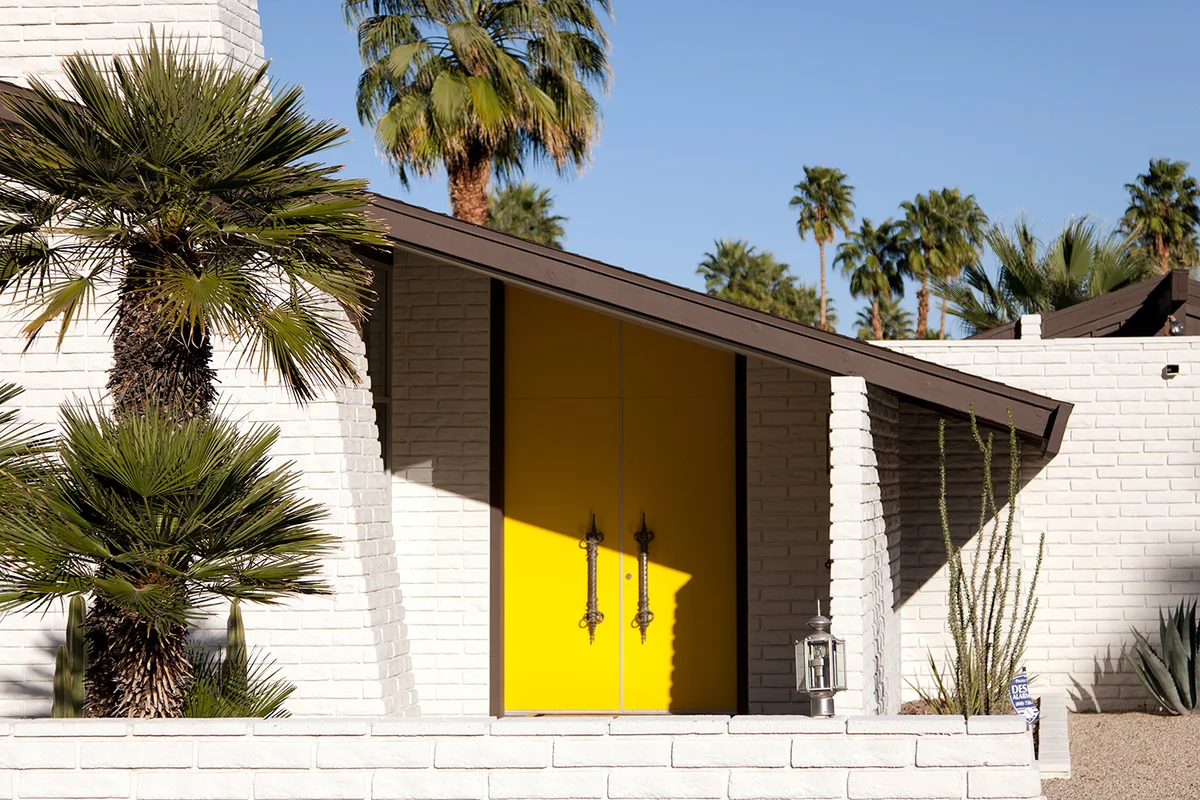
A whole rental scene, built on architecture.
Palm Springs proves the model at scale: neighborhoods of glass, steel, and clean horizontal lines rented to design tourists who know exactly why the details matter. No famous architect required, just genuine period integrity and marketing that leads with it.
