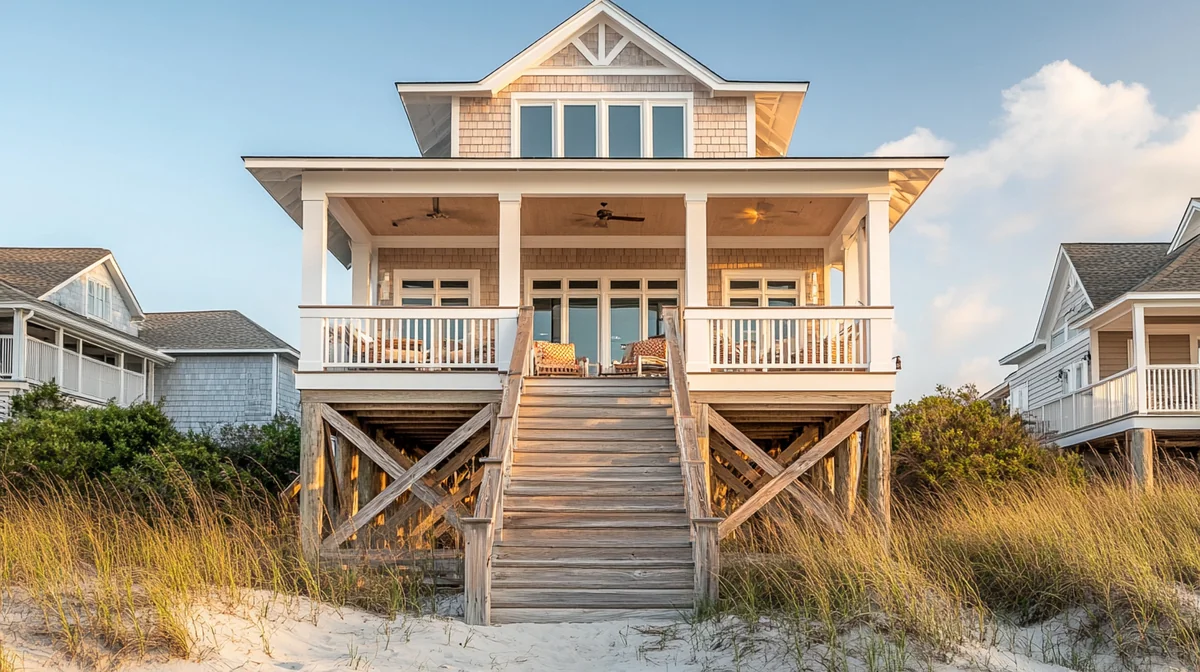


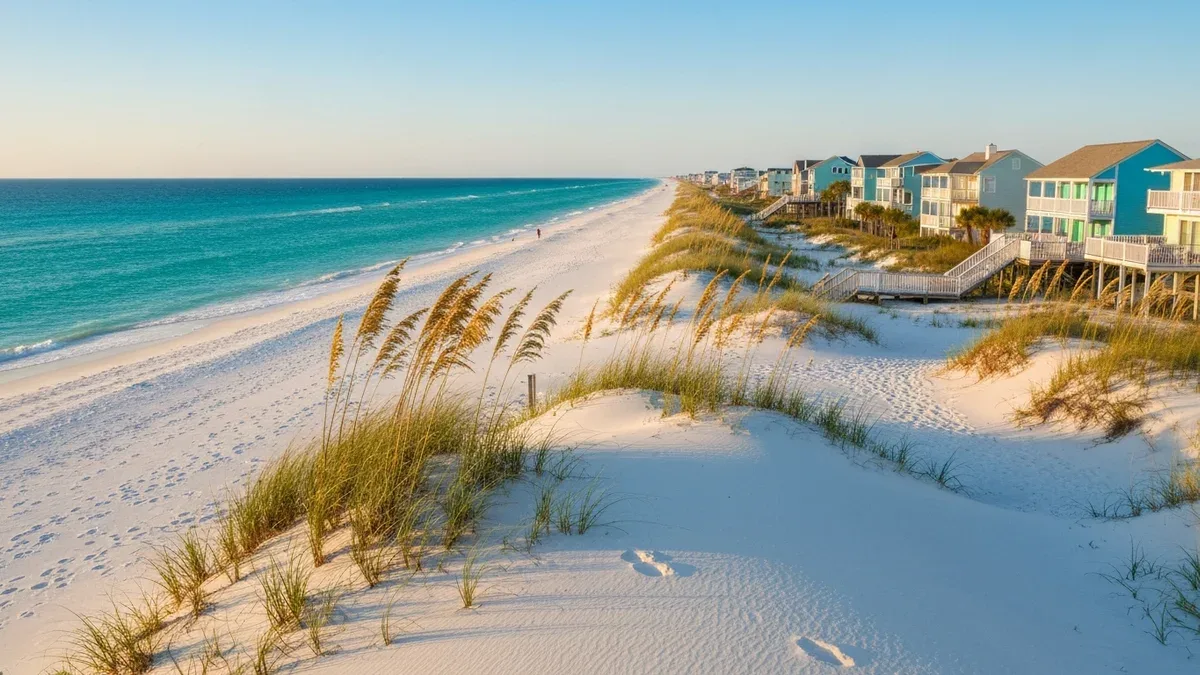
If you own a beach place along Florida's Emerald Coast, the destin 30a vacation rental market is one of the most reliable stretches of coastline in the country for booked calendars. Sugar-white sand, warm Gulf water that actually looks emerald in July, and a guest base that plans family trips a year out. But "reliable" doesn't mean "easy." Destin and the 30A communities are two different animals with different guests, different price ceilings, and different county rules, and the owners who do well here are the ones who understand which one they own.
This guide is for owners along the Emerald Coast who want a plain read on how the market actually works: who books, when they book, what the county and the state require of you, and where hosts leave money on the table. Cavmir helps hosts market and optimize their listings here, so what follows is the operator's-eye view, not a brochure. Tax and permit specifics change, so treat the rules below as a starting point and confirm the current numbers with the county, Florida DBPR, and your own accountant before you rely on them.
One thing up front: this is a marketing and market-strategy guide, not legal or tax advice. Where you see a dollar figure or a deadline, verify it at the source I've linked. Rules on this coast get updated more than most.
Destin vs 30A: two markets that share a coastline
People lump the whole Emerald Coast together, and guests do too when they're dreaming about a beach week. But as an owner you need to know which market you're in, because they price and rent differently.
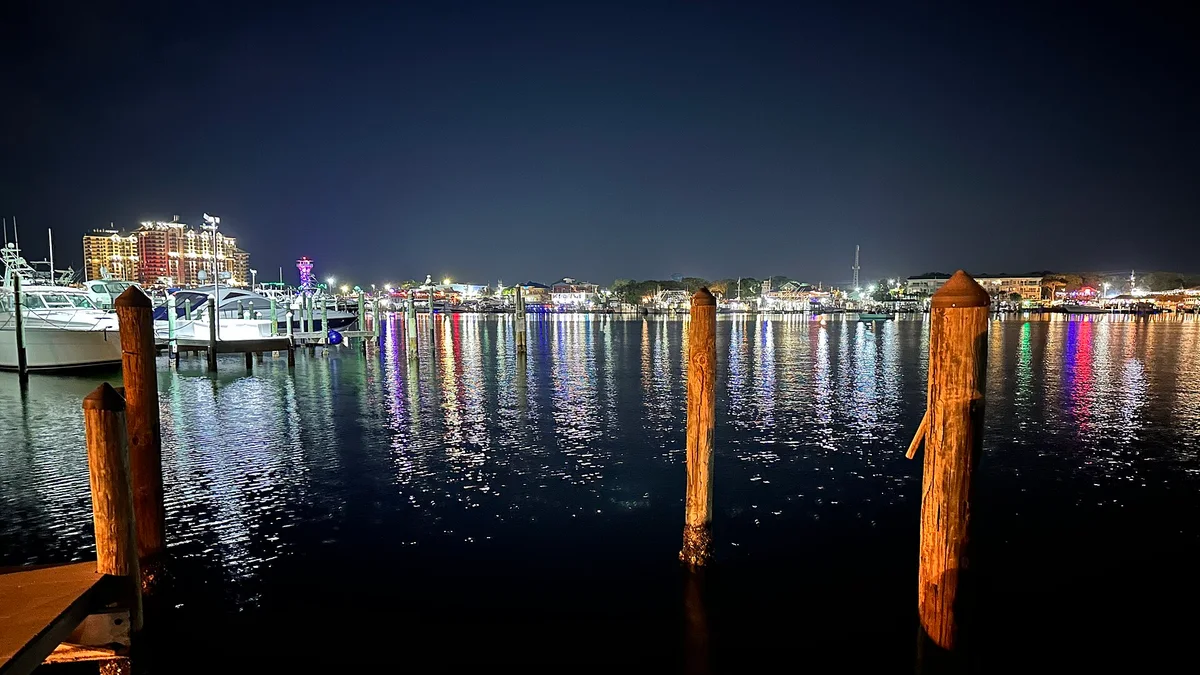
Destin sits in Okaloosa County. It's the busy, high-energy end of the coast: HarborWalk Village, the Destin Harbor charter fishing fleet, Crab Island, Destin Commons for shopping, and a wall of Gulf-front condo towers plus single-family neighborhoods behind them. Destin suits guests who want the beach and a lot else within a short drive: fishing charters, dolphin cruises, restaurants, mini golf, an easy family week that doesn't require anyone to be quiet.
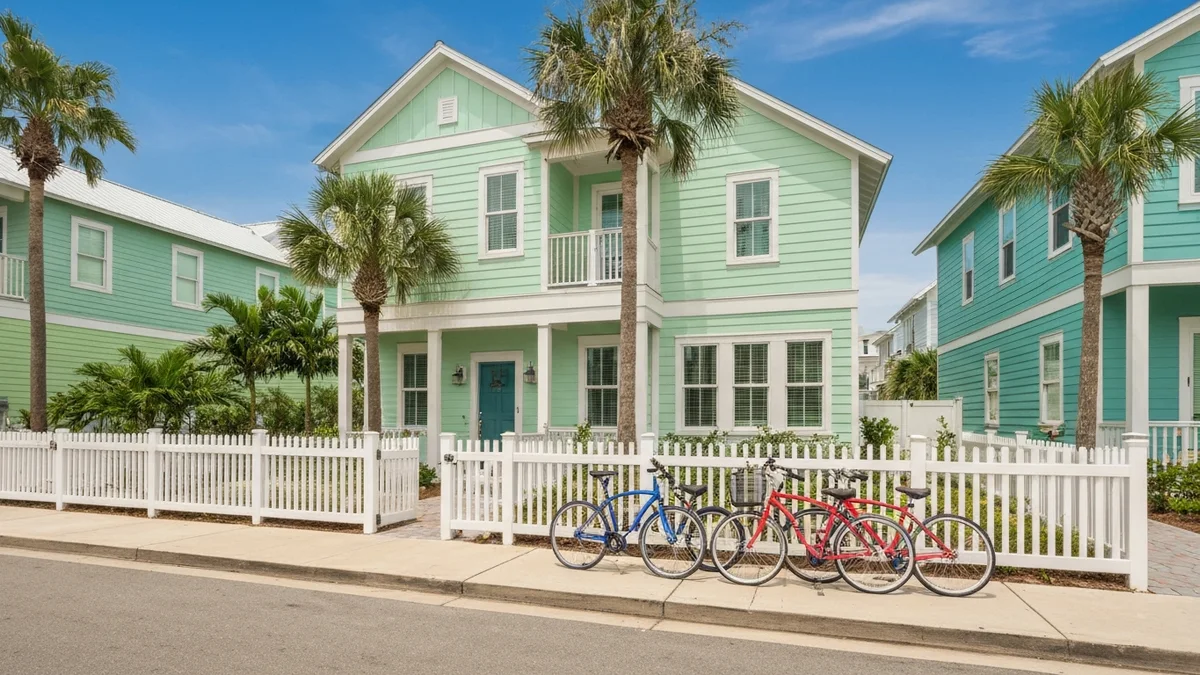
The 30A communities sit in Walton County, east of Destin, strung along the 30A scenic highway. This is the design-forward, slower, more expensive end: Seaside, WaterColor, Seagrove, Grayton Beach, Blue Mountain Beach, Santa Rosa Beach, WaterSound, Alys Beach, Rosemary Beach, and Inlet Beach. Between Destin and the true 30A towns sits Miramar Beach, which is also Walton County and a strong family market in its own right. The 30A guest is often paying a premium for a specific town, a specific look, and walkable New Urbanist streets where they park the car on Friday and don't touch it until checkout.
So who does each suit? If you own in Destin or Miramar Beach, you're competing on space, amenities, and access to the action, and your guest is value-conscious about a big family trip. If you own on 30A, you're competing on aesthetic, town identity, and proximity to a named community's beach club or town center, and your guest will pay more for the right address. Neither is "better." They reward different marketing.
Quick gut-check on which you own
- Okaloosa County, Destin or Fort Walton side: Destin rules and Okaloosa taxes apply. Lean into harbor, fishing, family activity.
- Walton County, Miramar Beach: family-friendly, big-condo and beach-house market, still Walton County rules.
- Walton County, a named 30A town: premium positioning, town-specific rules that can be stricter than the county baseline. Read the section on communities below carefully.
Registration, your DBPR license, and the bed tax
Here's the part nobody enjoys and everybody has to get right. There are three layers to being legal on this coast: a state license, a county or city registration, and taxes. Miss one and you can get fined or shut down. I'll walk through each, but confirm the current Walton/Okaloosa County plus Florida DBPR rules before you file, because the amounts and deadlines move.
1. Your Florida DBPR vacation rental license (state level)
Florida requires most whole-home short-term rentals to carry a vacation rental license from the Department of Business and Professional Regulation (DBPR). Your place generally needs one when it's rented for periods under 30 days more than three times a year, or advertised as a transient rental. For a single house or townhome, the license type is usually "Vacation Rental Dwelling, Single." You apply through the state licensing portal, and DBPR can inspect on a random or complaint basis after issuing. Confirm the current fee and requirements at the source.
Do this first. You can find the official application and current fee on the Florida DBPR licensing portal. The state license is the foundation, and the county registration usually asks for your DBPR license number.
2. County or city registration (local level)
This is where Destin and 30A split.
Walton County (Miramar Beach and 30A): Walton County runs a Vacation Rental Registration Program. Every short-term rental needs a certificate, you name a local responsible party who's reachable 24/7 and can get to the property fast, and the county has been tightening enforcement, including signage that carries the county's official hotline number. Confirm the current fee, deadlines, and signage rules on the Walton County Vacation Rental Registration page. The penalty for operating without a certificate is far larger than the annual fee, so this is not a corner to cut.
City of Destin (Okaloosa County): Destin is stricter than most people expect. The city is carved into zoning districts, and only some of them allow short-term rentals at all, so the very first question for a Destin property is whether your address sits in a zone that permits STR use. Beyond that, the city typically wants a local business tax receipt, a dwelling registration, the state DBPR license, a responsible party who lives within a set distance and can respond within an hour, and it enforces overnight occupancy caps. Confirm every one of these on the Okaloosa County short-term rental page and the City of Destin's own STR pages before you buy or list, because the zoning question alone can make or break a Destin deal.
If you're still shopping for a Destin property, check the zoning before you check the view. A gorgeous Gulf-front house in a zone that doesn't permit short-term rentals is a long-term rental or a second home, not an STR, no matter what the listing agent implies. Get the zoning district in writing and confirm it against the city's permitted-use list.
3. The bed tax, sales tax, and Florida's no-income-tax edge
Three taxes generally touch a short-term booking on this coast, and you, the host, are on the hook to collect and remit them.
- Tourist Development Tax (the "bed tax"): This is a local tax on stays of six months or less. In Walton County the rate depends on where you are, with the beach and 30A corridor carrying a higher rate than the rest of the county. In Okaloosa County the bed tax applies to Destin-area rentals of six months or less. Rates change, so confirm your exact rate and filing portal with the Walton County Clerk tourist tax office or the Okaloosa County Clerk for Destin.
- Florida state sales tax plus any local surtax: Florida's state sales tax also applies to transient rentals, and some counties add a discretionary surtax on top. Your platform may collect some of this for you, but not always all of it, and never assume, verify what's being collected on your behalf.
- No state income tax: Florida has no state income tax. That's a genuine advantage for owners, and it's part of why the Emerald Coast draws so much out-of-state investment. It does not remove your federal obligations, and it does not remove the bed tax or sales tax, which are the ones people forget.
The mistake I see most often: an owner assumes the booking platform handles all the taxes, files nothing with the county, and then gets a letter. Counties here run collections and they do go after non-filers. Set this up correctly on day one and confirm the split with your accountant.
The 30A communities, town by town
On 30A the town is the product. Guests search by community name, not just "30A," and each town carries its own personality, price point, and in some cases its own rules layered on top of Walton County's. Here's the practical read for owners, moving roughly east to west.
Inlet Beach and Rosemary Beach (east end)
- Rosemary Beach: one of the most recognized and priciest 30A names, cobbled streets, Dutch West Indies architecture, a strong walkable town center. Guests pay up for the address. High expectations on finish and cleanliness.
- Inlet Beach: the eastern gateway, more varied inventory and price points, close to the shops at 30Avenue. Good value entry to the 30A brand for guests who can't stretch to Rosemary or Alys.
Alys Beach and WaterSound
- Alys Beach: the all-white, Bermuda-inspired town that photographs like nowhere else on the coast. Refined, quiet, premium. If you own here, your marketing should lean hard on the architecture and the calm, not on party energy.
- WaterSound: more private and residential in feel, associated with a polished, upscale guest. Amenities and community access matter to bookings here.
Seagrove, Seaside, and WaterColor (the heart of 30A)
- Seaside: the famous one, the planned town people recognize from film, with the Airstream food trucks and the amphitheater. National name recognition means strong search demand, and guests will pay for proximity to the town center and the beach pavilions.
- WaterColor: one of the larger 30A communities, resort-style amenities, the Beach Club, pools, and trails. Amenity access is a real booking driver, so being inside WaterColor with community privileges is worth featuring prominently.
- Seagrove: established, a little more laid-back and often a touch more attainable than Seaside next door, popular with repeat family guests.
Grayton Beach, Blue Mountain Beach, and Santa Rosa Beach (west end)
- Grayton Beach: the oldest, most bohemian town on 30A, home to the famous Red Bar, adjacent to a state park and rare coastal dune lakes. "Nice dogs, strange people" is the local motto and the vibe is proudly funky. Guests here want character, not polish.
- Blue Mountain Beach: a smaller, quieter community on higher ground, good for guests who want 30A without the busiest crowds.
- Santa Rosa Beach: a large area covering a lot of ZIP 32459, wide range of inventory and price, more attainable entry into the 30A market. Note that Walton County has treated the 32459 area on its own registration timeline at points, so confirm your renewal cycle specifically.
Name the town in your listing title and your direct-booking pages, not just "30A." A guest who has decided on WaterColor is not searching "Florida panhandle rental," they're searching "WaterColor beach house." Matching the exact town they've fixated on is one of the cheapest wins in this whole market, and it's why a strong SEO foundation pays off here.

Rates and seasonality: summer, spring break, and the shoulders
The Emerald Coast has a pronounced season, and your pricing calendar should look nothing like a flat monthly number. Understanding the rhythm of the destin 30a vacation rental market across the year is what separates a full calendar from a half-empty one. Here's the shape of the year.
Summer is the firm peak
June through August is the top of the market. Families book weeks in advance, houses commonly go to seven-night minimums, and the Fourth of July week is the firmest of all. If you own a house rather than a condo, summer is where the bulk of your annual revenue is decided, and it's decided early, sometimes the previous fall. Don't underprice a summer week just to lock it in January, and don't be the last house on the block still open in April for July, that usually signals your rate is high for what you offer.
Spring break is the second engine
March and April bring heavy spring-break demand, families and college groups, often with shorter minimum stays than summer but strong nightly rates. This is the stretch that kicks off the busy season, and pricing it well matters almost as much as summer.
Fall is the growing shoulder
September and October have quietly become one of the best-value stretches for guests and a real opportunity for owners. The water is still warm, the crowds thin out, and couples and empty-nesters travel. If your calendar dies after Labor Day, that's a marketing gap, not a market limit. Repositioning for the fall shoulder, couples getaways, remote-work stays, longer bookings, is exactly the kind of move that keeps a calendar full. There's a whole playbook on this in our guide to off-season revenue in the shoulder months.
Winter is snowbird territory
From roughly November through March, the Emerald Coast draws snowbirds, retirees escaping the cold in the Midwest, the Northeast, and Canada, on monthly rentals. This is a different product: longer stays, lower nightly rates, but months of occupancy and far less turnover cost. Some owners run nightly all summer and switch to monthly snowbird bookings all winter, and it's one of the smartest ways to flatten the seasonal cliff. If you want to compete for these guests, your listing and direct site need to speak to monthly stays specifically.
The through-line across all four seasons: this coast rewards active pricing. A static rate leaves real money on the table in July and sits empty in October. Owners who use a proper pricing approach, and understand their own micro-market, consistently outperform set-and-forget listings. Our complete guide to dynamic pricing goes deep on the mechanics.
Build your calendar backwards from summer. Lock your minimum-stay and rate strategy for June through August first, because that's your revenue spine. Then treat spring break, fall, and snowbird season as three separate products with their own pricing and their own guest messaging, rather than one flat "off-peak" discount. The owners who segment the year like this are the ones who don't panic in October.

The guest profile and what commands a premium
Know who's booking and you'll know what to feature. On this coast the core guest is the multi-generational family, grandparents, parents, kids, sometimes cousins, taking an annual beach week together. That single fact drives most of what earns a premium here.
- Gulf-front and true Gulf views: the single biggest premium on the coast. Actual Gulf-front, where you walk out to the sand, commands top rates. So does a genuine, unobstructed Gulf view from the balcony. Guests pay for this specifically and they check it hard.
- Sleeping capacity done right: big families need beds, but real beds in real bedrooms, not a house that sleeps twelve by counting the sofa. Honest, comfortable capacity for a large group is a booking magnet.
- Private pool: especially valuable in the shoulder and cooler months when the Gulf is a little brisk, and always a draw for families with young kids.
- Beach access and beach service: deeded or easy walkable beach access, and pre-set beach chairs and umbrellas in season, remove friction for a family hauling gear.
- Community amenities: on 30A, access to a community's pools, beach club, tram, or town center is a genuine differentiator worth featuring by name.
- Golf carts: in the walkable 30A towns, an included golf cart is close to expected at the higher end and a real perk everywhere. Guests search for it.
Two other guest types matter more than owners realize. First, the destination-wedding and group traveler: 30A in particular draws bridal parties, family reunions, and milestone celebrations that book large houses months out and spend well. If your place sleeps a big group comfortably, say so clearly and feature the gathering spaces, the big kitchen, the deck, the pool, because those groups are searching for exactly that. Second, the remote worker and long-weekend couple who now travel in the shoulder months. Fast, reliable Wi-Fi, a real workspace, and a quiet setup have quietly become booking factors on this coast, not just in the winter snowbird window. A listing that mentions dedicated workspace and strong internet picks up shoulder-season nights that a beach-only listing misses.
The families who book here are planning a big, expensive trip and they're risk-averse about it. They want to know exactly what they're getting, and they read reviews closely, cross-check your photos against the map, and notice when the description oversells. They also rebook: a family that had a smooth week will come back the next year, often the same week, if you make it easy. That's why honesty and clarity in your listing isn't just ethics, it's conversion and retention, which brings us to the pitfalls.
The pitfalls that quietly cost owners money
Most of the damage on this coast is self-inflicted. Here are the ones I see over and over.
Over-promising the "Gulf view"
Calling a place "Gulf view" when the guest can see a sliver of water by leaning off the third bedroom balcony is the fastest way to earn a bad review and a chargeback dispute. Emerald Coast guests know the difference between Gulf-front, Gulf-view, and "Gulf-side of the highway." Describe exactly what the guest will see, from where, and let the premium ones command their premium honestly. An accurate listing books at a slightly lower headline rate but with far fewer refund fights and much better reviews, which lifts your ranking and your future rate.
Missing the registration or tax obligations
Covered above, but it bears repeating because it's the pitfall with the biggest downside. Operating a Destin property in a zone that doesn't allow STRs, or renting anywhere on the coast without the county certificate and the bed-tax filings, isn't a paperwork slip, it's a shutdown risk. Get legal first.
Ignoring community-level rental restrictions
Some 30A communities and HOAs layer their own rules on top of Walton County, minimum-stay requirements, rental caps, registration of their own. A county certificate does not override an HOA restriction. Before you count on a certain nightly strategy, confirm what the specific community allows.
Treating photos as an afterthought
In a market where guests are comparing dozens of gorgeous beach houses side by side, mediocre photos lose the booking before your copy is ever read. This coast is genuinely photogenic, the sand is white, the water is emerald, the towns are designed to be pretty, so there's no excuse for dim, cluttered, phone-snapshot listings. Professional photography here isn't a luxury, it's the price of competing. Our photography guide covers what actually moves the needle.
Leaning entirely on the OTAs
The big platforms bring you volume, and you should be on them. But paying 15 to 20 percent-plus in fees on every booking, forever, on a property that guests rebook year after year, is a leak. Emerald Coast guests are exactly the kind who come back, same week, same family, every summer. Capturing those repeat guests onto a direct channel is one of the highest-return moves an owner here can make.
Marketing, distribution, and the case for direct bookings
Here's the strategic heart of it. The Emerald Coast has strong, predictable demand, which is a blessing and a trap. The blessing: you'll get booked. The trap: it's easy to be lazy, list on one OTA, set a flat rate, and leave a third of your potential revenue and all your guest relationships on the table.
A healthy Emerald Coast marketing setup has three legs.
- Distribution across the OTAs for reach. Be where the guests search. A well-built, well-photographed, correctly titled listing (with the town name) that ranks well is table stakes. This is where listing optimization earns its keep, better copy, better photos, better structured data, and a higher ranking on the same platform you're already using.
- A direct-booking website to own the repeat guest. The family that comes every July should book with you directly the second year, not pay the platform fee again. A direct site turns your best guests into a fee-free, rebooking base and gives you an email list you actually own. This is the single biggest lever most Emerald Coast owners haven't pulled. See our guide to getting more direct bookings, and the direct-booking website service if you want it built for you.
- SEO and content so guests find you when they search the town. When someone types "Rosemary Beach house with pool" into Google, you want your direct site in that result, not just an OTA listing. That's an SEO job, and on a name-driven coast like this it's unusually winnable.
Interior presentation matters too. In a market this competitive on aesthetics, a thoughtfully designed, photograph-ready interior lifts both your nightly rate and your booking rate, which is where interior design quietly pays for itself. The 30A guest in particular is paying for a look; give them one worth photographing and they'll do your marketing for you on their own social feeds.
None of this requires you to fight the market. Demand is here. The job is to capture more of the value the demand creates, higher rates through better presentation, more direct bookings through owning the relationship, and fuller shoulder seasons through smarter positioning.
Reading the destin 30a vacation rental market for 2026
Zoom out and the picture is steady. The Emerald Coast keeps drawing families, the towns keep their names and their pull, and the fundamentals, white sand, warm Gulf, drive-market access from across the South and Midwest, no Florida state income tax, remain intact. What's changing is the ground game: tighter county enforcement in both Walton and Okaloosa, more sophisticated owners, and guests who compare more carefully than ever.
That means the gap between a well-run listing and a neglected one is widening across the destin 30a vacation rental market. The owner who registers correctly, prices actively across all four seasons, photographs honestly and well, names the town, and captures repeat guests directly is pulling ahead of the owner who lists once and hopes. For hard numbers on occupancy and rates in your specific town, pull current data from a source like AirDNA and cross-check it against the county tourism figures, because a coast-wide average tells you very little about Alys Beach versus Miramar Beach versus a Destin condo tower.
If you also own or are eyeing property in other Florida markets, the same playbook logic applies with different local facts, our market pages for Destin, 30A, and Miami break each one down.
A short FAQ for Emerald Coast owners
Do I need a state license and a county registration, or just one?
Generally both. Most whole-home short-term rentals need a Florida DBPR vacation rental license and a local registration or certificate (Walton County program for 30A and Miramar Beach, City of Destin registration in Okaloosa County). Confirm your specific situation with DBPR and your county.
Can I short-term rent anywhere in Destin?
No. Destin permits short-term rentals only in certain zoning districts. Confirm your address is in a zone that allows STR use before you buy or list, on the Okaloosa County and City of Destin pages.
What taxes do I collect from guests?
Typically the local Tourist Development Tax (bed tax) on stays of six months or less, plus Florida state sales tax and any local surtax. Rates vary by exact location, especially in Walton County where the 30A corridor differs from the rest of the county. Verify your rate with the county clerk and confirm what your booking platform collects on your behalf versus what you must remit yourself.
Is Destin or 30A better for a first rental?
Neither is universally better. Destin and Miramar Beach tend to be more attainable to enter and lean family-activity; 30A commands higher rates but higher expectations and sometimes stricter community rules. Match the market to your budget and the guest you can serve well.
When should I set my summer rates?
Early, often the prior fall. Summer is the firm peak and families book far ahead. Set your minimum stays and rates for June through August first, then build the rest of the year around it.
Does Florida really have no state income tax?
Yes, Florida has no state income tax, which is a genuine advantage for owners. It does not remove your federal obligations or the bed and sales taxes you collect from guests. Confirm your full tax picture with your accountant.
Where Cavmir fits
You don't need a manager to run this market well. You need a listing that ranks, honest photos that convert, pricing that respects the seasons, and a way to keep the families who love your place coming back directly. Cavmir helps Emerald Coast hosts do exactly that, sharper listings, direct-booking sites, and the SEO to be found when guests search your town by name. If your calendar has gaps that the market shouldn't allow, that's usually a marketing problem, and it's a solvable one. Have a look at our listing optimization and direct-booking website services, or start with the 30A market page if that's your patch of the coast.