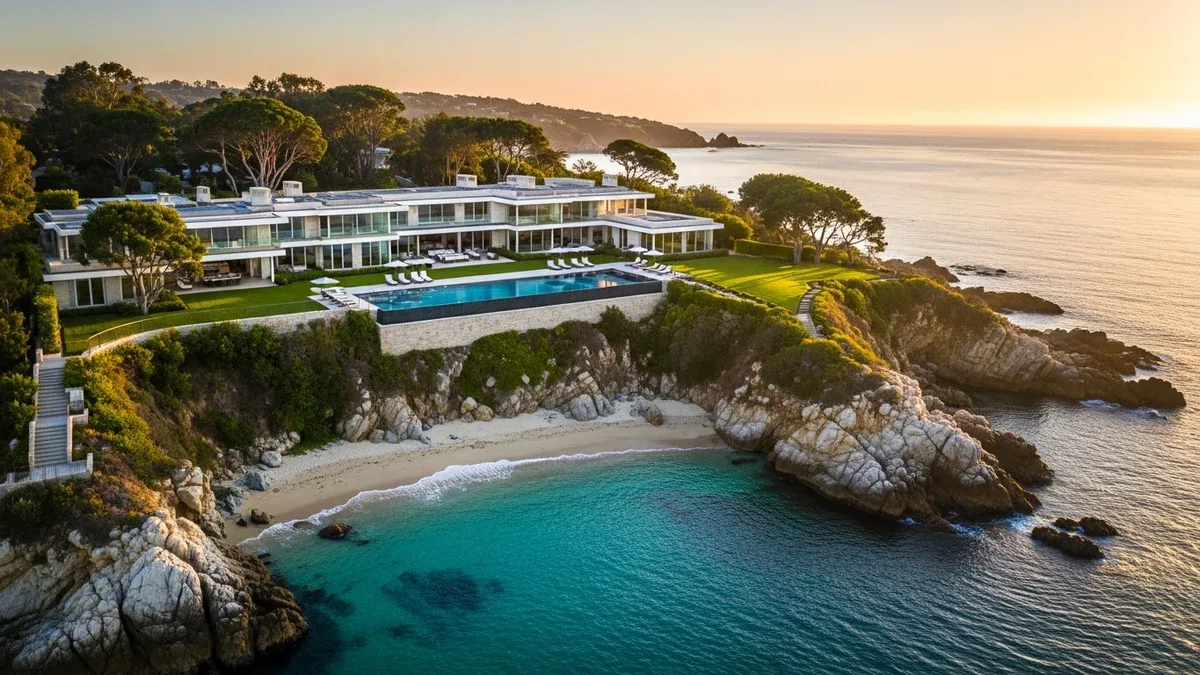
If you own or manage a trophy home, you already know the number on your listing does more than cover the bills. It sets expectations before a guest reads a single word of your description. A rate of $4,200 a night tells a different story than $900, and the guest reading it is asking a different question than the family comparison-shopping three condos in the same building. Pricing at the top of a market is its own discipline, and most of the pricing advice floating around out there was written for the middle of the market. This is about the other end of it.
I've spent years on the marketing side of high-end short-term rentals, and the pattern holds across markets. The owners who hold their rates through a soft week aren't luckier. They've built a case for the number, and they defend it. Here's how that works.
Why luxury pricing works differently
In the mid-market, price is a filter. Guests line up four or five comparable places, sort by nightly rate, and book something near the bottom that still looks decent. Lower the price ten percent and you move up the sort order. That's rate-shopping, and dynamic tools were built for exactly that behavior.
At the top, the guest isn't running that math. Someone booking a $6,000-a-night villa in Montecito or a chalet in Courchevel for ski week isn't trying to save $400. They're trying to be sure the place is as good as it looks, that it'll be private, that nothing will go wrong on a trip that cost them a lot to plan. Price is a signal of quality, not a cost to minimize. Drop the rate too far and you don't win the booking — you make them wonder what's wrong with it.
Two forces do most of the work here. The first is anchoring: the first number a guest sees frames everything after it. If your comps in the market sit at $3,500 and up, a $3,900 rate reads as normal, even premium-normal. The second is scarcity: there are only so many genuinely trophy homes in Aspen or on Palm Beach, and the guest knows it. You're not one of forty near-identical units. You're one of a handful, and the number should reflect that you know it too.
Before you touch your rate, look at what your price communicates on its own. If a guest saw only the number, with no photos, would they expect the home you actually have? If your rate says "nice" and your home says "exceptional," you've left money and positioning on the table.
Building a true comp set at the top
Most pricing tools build your comp set automatically, and at the top of a market that's where they quietly fail you. An algorithm pulling "similar listings within five miles" will fold in the four-bedroom rentals down the road that happen to sleep the same number of people. Those aren't your competition. Your competition is the other trophy homes — and there might only be six of them in the whole market.
Build the set by hand. Find the genuine peers: same tier of finish, same kind of view or beachfront or slope access, same level of privacy, same service story. In a market like Nantucket or the Hamptons that might mean a dozen homes, not a hundred. Pull their calendars over a full year. Watch what they charge in peak weeks, what they hold in the shoulders, and — this is the part people miss — which weeks they actually book versus which weeks just sit there at a big number.
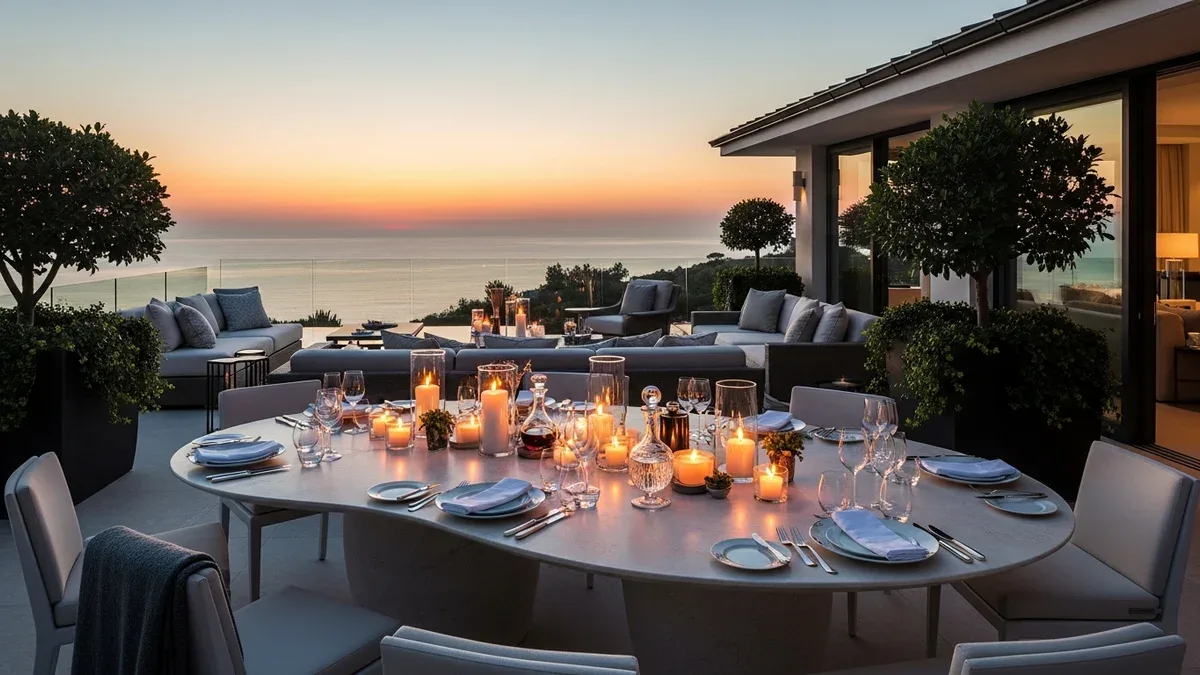
A rate nobody books isn't a comp, it's a wish. When you look at real bookings instead of just published rates, you get the honest ceiling of your market and the honest floor of what the top tier actually transacts at. That's the range you're pricing inside. If you want help pulling that set together and reading it right, that's the kind of thing our consulting work digs into — the goal is a comp set you'd defend in a room, not one an algorithm guessed at.
Seasonality and event-driven peaks
Luxury markets don't have gentle seasons. They have a few weeks that carry the year and long stretches that don't. Aspen and Vail live or die on ski weeks and the holiday stretch from Christmas through New Year's. Courchevel is the same rhythm on the other side of the Atlantic. The Hamptons and Nantucket compress into summer. Napa Valley has harvest. Palm Beach fills in the winter when the Northeast is frozen. Ibiza and Mykonos peak hard in July and August and then quiet down fast.
On top of the season sit the events, and these are where the real money is. A regatta week, a film or music festival, a major art fair, a marquee sporting weekend — these pull in guests who will pay two or three times a normal peak rate because they need to be in that place on those exact dates and there's no substitute. Industry trackers like AirDNA and Skift have noted for years that event weeks in luxury markets can command multiples of an already-high baseline. Your job is to know your market's calendar cold and to have your rates and minimum stays set months ahead of those dates, not scrambling the week before.
The mistake I see most is treating the peak as a single number. It isn't. Christmas week in Aspen is not the same as the second week of January, even though both are "ski season." Price the specific week, not the season.
Source: Industry estimates; AirDNA luxury-tier analysis
Dynamic pricing tools vs. hands-on revenue management
Dynamic pricing tools are genuinely good at the middle of the market. They watch demand, adjust nightly, and keep an ordinary rental competitive without you touching it. I'm not against them — we've written a full dynamic pricing guide because they earn their keep for most owners. The problem is what they do to a trophy home.
A blunt algorithm sees an unbooked calendar and does one thing: it drops the price. That's the right move for a condo and the wrong move for a $5,000-a-night estate. Trophy homes book in fewer, larger transactions, often far in advance, sometimes through a broker or a concierge. A quiet stretch on the calendar in April doesn't mean your July is soft. But the algorithm doesn't know that, so it panics and cuts, and now your rate is signaling weakness in exactly the market where weakness kills you.
At the top end you want the tool informing you, not driving. Let it surface demand signals and flag dates you might have missed. Then a human makes the call, because a human knows a booking inquiry from a family office looks nothing like the traffic patterns the software was trained on. The best setup I've seen uses the data as an input and keeps a person with market judgment holding the wheel.
If you do run a pricing tool on a high-end home, set a hard floor it can't dip below and cap how aggressively it can discount. Give it a lane. Left fully automatic, it'll chase occupancy down to a number that quietly repositions your home as mid-market — and that's very hard to walk back.
Minimum-stay and rate-floor discipline
Two levers protect a premium rate as much as the rate itself: your minimum stay and your floor. Both are about discipline, and both get abandoned the moment an owner gets nervous about an empty week.
Minimum stays do more than fill nights. A seven-night minimum in peak weeks, or a firm three or four nights in the shoulders, filters for the guest you actually want and cuts down the wear, the turnover cost, and the parade of one-night lookers who treat a trophy home like a hotel room. In the biggest event weeks, tight minimums are standard at the top of the market for a reason. They protect the calendar and they protect the experience.
The rate floor is the line you decide in advance and hold. The number below which you simply don't go, no matter how the calendar looks in the moment. Here's the thing about cutting your rate to save a soft week: it rarely stays a one-time thing. Guests talk, brokers remember, and the market has a long memory for what a home "goes for." Discount once in a panic and you've reset the anchor. It's far easier to hold a rate and lose one week than to drop it and spend a year clawing back your positioning. A soft week costs you a week. A blown floor costs you the year.
How brand, photography and reputation hold the rate
Two identical homes on the same street will not command the same rate, and the gap comes down to how they're presented and what people say about them. This is the part of pricing that's actually marketing, and it's where a rate gets defended before a guest ever asks about it.
Photography carries the most weight, and it's where owners underinvest most often. At $4,000 a night, phone photos or a rushed shoot don't just look cheap — they undercut the entire premise of the price. Real architectural photography, shot in the right light, that shows the space, the setting, and the details is the single clearest justification of a high rate a guest sees before booking. It's the visual anchor that makes the number feel right instead of steep. We've written before about how presentation lets you hold your ground when you're competing with hotels on pricing, and at the luxury tier the same logic runs even harder.
Then there's reputation. A wall of genuine five-star reviews that mention the service, the cleanliness, the responsiveness — that's what lets you charge more than the home next door with a thinner track record. Brand ties it together: a consistent name, a real website, a story about the home and the people behind it. This is where Cavmir helps owners most, on the marketing side — building the presentation and the presence that make a premium rate feel earned rather than asked for. A strong brand doesn't just support the rate. It's the reason a guest doesn't flinch at it.
Justifying the number to the guest
In the end the rate has to make sense to the person paying it, and at this level "nice house" isn't the justification. The justification is everything around the four walls. Service is most of it: a genuine concierge, a stocked home on arrival, someone reachable who fixes problems before the guest has to think about them, a chef or a driver arranged with one message. That's what separates a trophy rental from an expensive one.
Exclusivity is the next piece. Real privacy, a home that isn't churning through a booking every three nights, the sense that for this week the place is entirely theirs. And then the details — the ones that don't photograph but that people remember and tell friends about. The linens, the coffee, the note on the counter, the thing that got handled before they noticed it needed handling. Those details are what turn a high rate into a fair one in the guest's mind, and they're what bring that guest back next year at the same number or higher.
Price at the top of a market isn't a figure you land on and forget. It's a case you make and keep making — through your comp set, your calendar discipline, your presentation, and the experience you deliver. Get those working together and the number stops being something you defend and becomes something guests simply expect to pay. If you're weighing how to set or hold a rate on a specific home, that's worth a real conversation, not a formula. On the finer points of what any of this means for your own books, your accountant is the right person to bring in — our side of it is making sure the number is set well and presented in a way the market believes.