Buffalo Bayou Park
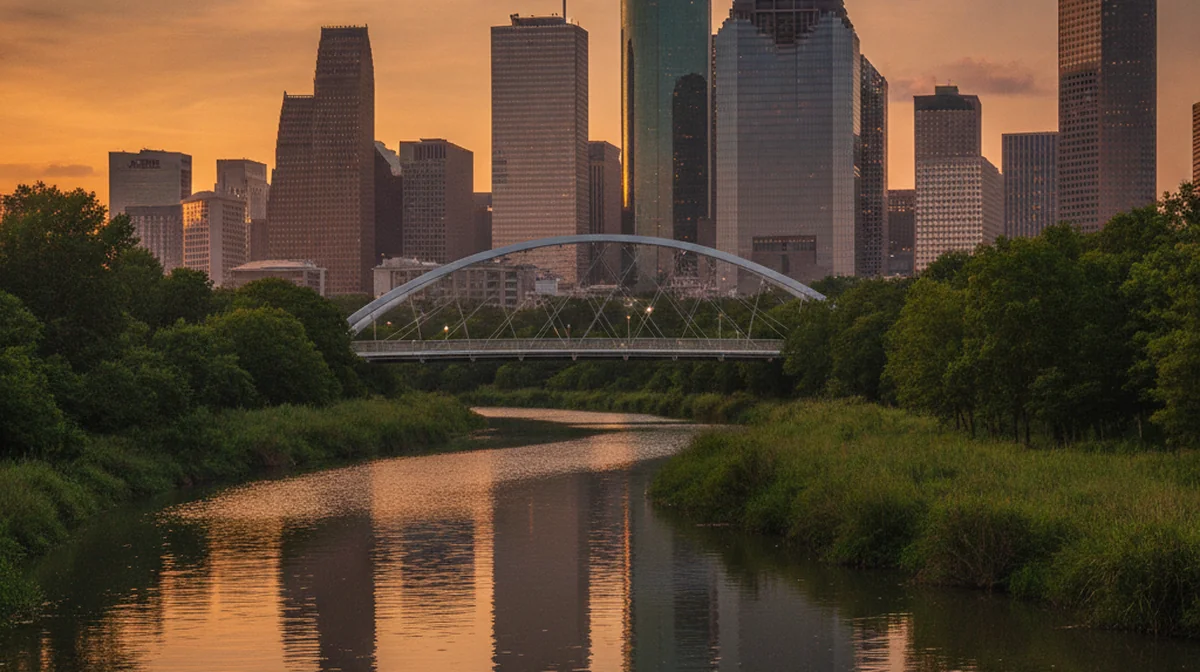
The trails between Shepherd Drive and downtown give you skyline, kayakers and green space all at once — the morning image that contradicts everything people assume about Houston. If your listing is close, open the gallery with it.
Expert short-term rental marketing to grow your bookings and nightly rate in Houston, Texas, USA.
* Market averages. Cavmir-managed properties typically exceed these figures by 25–45%. Data sourced from AirDNA, STR market reports, and Cavmir internal analytics.
Houston is the fourth-largest city in the country and one of the steadiest short-term-rental markets in Texas, because the demand isn't tourists — it's life. Families in town for treatment at the Texas Medical Center, the largest medical complex in the world. Energy-industry travelers on multi-week projects. The Houston Livestock Show and Rodeo pulling more than two million people every spring. Add the Museum District, Montrose, The Heights and EaDo, and seven FIFA World Cup matches at NRG Stadium in 2026, and you have a city where a well-marketed rental or boutique hotel earns all twelve months. The catch: as of January 1, 2026, every STR inside the city limits needs a registration certificate. Compliance is now part of the marketing.
Houston runs flatter than resort markets and that's its strength. Expect a blended nightly rate around $165 and occupancy in the low 50s, with monthly revenue near $2,100 for a solid whole home — steadier than almost any vacation town. The demand mix is unusual: medical stays near the Texas Medical Center often run weeks, not nights; the Rodeo in February and March is a twenty-day citywide spike; March is reliably the strongest month; and Astros postseason runs light up October. Neighborhood is everything — Montrose, The Heights and the Museum District pull the guests who pay, while far-flung suburban listings fight over price shoppers. The 2026 World Cup window in June and July is a one-time layer of international demand on top of it all.
Nearby Markets: Galveston | Austin | San Antonio

A few of the visual fingerprints we lean into when we shoot, brand and market a Houston property — courtesy of the open Wikimedia Commons archive.
Cavmir fits Houston because this market rewards the boring fundamentals done beautifully: photography that makes a bungalow in The Heights feel like a reason to book, listing copy written for the medical family and the project traveler, and a direct-booking website so your repeat guests — and Houston generates repeat guests — stop paying platform fees to find you again. We do the same work for boutique hotels near the Medical Center and downtown. We also make sure your new city registration number is on every listing, because a delisted property earns nothing. We help position and market your property. We never manage it or touch your keys.
Houston was founded in 1836 by the Allen brothers, a pair of New York land speculators who advertised a swampy townsite on Buffalo Bayou as a future 'great commercial emporium' — and for once the promoters undersold it. The Ship Channel, dredged after the 1900 Galveston hurricane pushed commerce inland, made Houston a port fifty miles from the sea. Spindletop's 1901 gusher made it the capital of the energy business. NASA's Manned Spacecraft Center — now Johnson Space Center — arrived in 1961 and gave the city its name in the first word spoken from the surface of the Moon.
The city guests visit today is stranger and better than its reputation. Houston is arguably the most ethnically diverse major city in America, and it eats like it — Viet-Cajun crawfish, taquerias, Nigerian kitchens, James Beard winners in strip malls. The Texas Medical Center grew into the largest medical complex in the world, drawing patients and families from every continent for stays that run weeks or months. The Menil Collection and the Museum District built a world-class art scene with free admission at its heart. And famously, Houston has no conventional zoning — the city grew wherever the market took it, which is why a top-tier restaurant can sit next to a muffler shop. For rental owners that same looseness long meant almost no STR rules; that era ended January 1, 2026, when the city's first registration ordinance took effect.
Neighborhood quality drives everything. Montrose and The Heights are the premium core — walkable, restaurant-dense, close to downtown — and their bungalows pull the strongest nightly rates. The Museum District and anything with a fast drive to the Texas Medical Center command steady medical-stay demand at solid weekly rates. EaDo and Midtown serve event and nightlife guests; Rice Village and West University pull university families. Blended, the market sits around $165 a night — modest against resort towns, but the volume is relentless and the calendar is long. Rodeo season and the 2026 World Cup window price like a different city entirely.
Houston is one of the flattest STR calendars in the country, and that's a compliment. March is reliably the strongest month — Rodeo tail, spring break, perfect weather — while February's Rodeo opening and April conventions keep spring strong overall. Summer is hot but steady with family and international travel, October brings Astros playoff energy, and the holidays run quiet but never dead. The soft spot is late summer's heat and hurricane-watch weeks. The demand most owners never touch: medical stays, which book weeks at a time, year-round, and reward listings written for comfort and proximity rather than tourism.
Houston went from essentially unregulated to registered in one step. On April 16, 2025 the City Council adopted the city's first short-term-rental ordinance, and it took effect January 1, 2026. It defines an STR as a dwelling unit — or portion of one — rented for under 30 consecutive days, and requires every STR inside the city limits to hold a Certificate of Registration.
The mechanics: registration opened October 1, 2025 through the city's portal, costs $275 plus a $33.10 administrative fee per unit, is valid for one year, and is non-transferable. The certificate number must be displayed on every listing and advertisement. The ordinance also sets operating standards — a designated emergency contact, compliance with noise and nuisance codes — and gives the city authority to revoke certificates for repeat violations tied to serious offenses. Beginning January 1, 2027, the city will notify platforms to remove listings without valid certificates, which makes an unregistered listing a countdown clock.
Notably, Houston did not impose zoning bans or density caps — consistent with a city that has no conventional zoning — so this is registration and accountability, not restriction. Add the 17% combined hotel occupancy tax (6% state, 7% city, 2% county, 2% sports authority) on stays under 30 days. Details can shift as the program matures; confirm current requirements with the city in writing.
The Houston strategic tip: build your listing for the medical family and the project traveler, not the tourist. Houston's deepest, steadiest demand books by the week and chooses on comfort, cleanliness and drive time — a listing that states the minutes to the Texas Medical Center, offers real beds instead of sleeper sofas, and reads calm and dependable will out-earn the neon 'Space City getaway' listing every month of the year.
Tactically: first, register now and put the certificate number on every listing — platform delisting notices start in January 2027, and compliance is about to become a visible trust signal. Second, shoot food and neighborhood; Houston is one of America's great eating cities, and a listing that shows the Montrose patio scene or The Heights' 19th Street sells the trip, not just the beds. Third, price the Rodeo like the event it is — three weeks, two million visitors — and set World Cup 2026 rates months ahead. Fourth, build a direct-booking website: medical families, energy-project crews and Rodeo regulars are repeat guests by nature, and every returning stay booked direct is commission saved. Fifth, if you operate a boutique hotel or a small multi-unit property near the Medical Center or downtown, invest in photography and direct-booking design before anything else — in a flat-calendar market, the property that owns its guest relationships compounds while the one renting them from OTAs stands still.
The real headwinds: hurricane and flood exposure is a fact of life on the Gulf coastal plain, and insurance pricing reflects it. Summer heat is brutal and suppresses walk-around tourism. Supply is deep and spread across an enormous metro, so undifferentiated listings fight on price. And the new registration regime, while light, adds annual cost and a delisting deadline careless hosts will miss.
This is the section to take seriously in Houston. Standard homeowner's policies don't cover commercial short-term renting, and on the Gulf coastal plain you need to think in layers: an STR or landlord policy for liability and income, wind coverage that actually pays on the coast-adjacent risk, and flood insurance as its own line item — large parts of Houston flood, Harvey proved the maps optimistic, and standard policies exclude it. Price all three before you buy, not after. Work with an agent who writes Houston investment property specifically.
Texas levies no state income tax, which helps the net. Lodging-side, stays under 30 days owe a combined hotel occupancy tax of about 17% — 6% state, 7% City of Houston, 2% Harris County and 2% sports authority — one of the higher stacks in the country. Platforms collect the state share on their bookings; city registration and remittance, plus everything on direct bookings, are typically yours. Stays of 30-plus days are generally exempt, which flatters the medical-stay model. Confirm your exact obligations with your accountant; treat these figures as a 2026 snapshot.
Houston remains one of the more affordable big-city entries in the country, and that shapes the financing: conventional investment loans with 15–25% down pencil at these price points, and DSCR loans underwritten on rental income are widely available. Lenders will look hard at flood zone status and insurance costs — get those quotes before you write an offer, because they move the math. The steadier Houston calendar actually helps underwriting versus boom-bust resort towns. Talk to a lender who knows Harris County investment property.
Houston's trajectory is scale plus credibility. The metro keeps adding population and jobs at national-best rates, the Texas Medical Center's expansion — including its enormous Helix Park research campus — keeps deepening the medical-stay demand that makes this market unusual, and the 2026 World Cup puts the city in front of an international audience that mostly knows it as an airport. The new registration ordinance will thin out casual and non-compliant hosts through 2027 as platform delisting kicks in, which quietly hands share to registered, professionally presented properties. Expect the rules to stay registration-shaped rather than restrictive — Houston's no-zoning culture runs deep — but expect enforcement to get real. The durable play: register early, market like a brand, own a direct channel, and build around the repeat guests — medical, corporate, Rodeo — that Houston generates like no other Texas market.
Houston is the most underrated hospitality city in America and we'll argue it with anyone. It doesn't photograph like Charleston or ski like Park City, so the travel press ignores it — and meanwhile it feeds ten million-plus visitors a year through the Rodeo, the Medical Center, the port, the energy business and one of the best restaurant scenes on the continent. The demand is enormous, unglamorous and constant, which is exactly the kind of demand a rental owner should want. Markets that run on life instead of vacations don't crash when travel fashion changes.
What we love as marketers is that Houston rewards honesty. You can't sell it as a postcard, so you sell it as it is: the bungalow in The Heights with the porch swing and the taco truck two blocks down, the calm well-lit house eight minutes from MD Anderson where a family can exhale, the EaDo loft that puts you walking distance from the ballpark. Listings written with that kind of specificity beat pretty-but-vague every time here. And the timing is genuinely interesting: a brand-new registration ordinance is professionalizing the market and the 2026 World Cup is about to introduce Houston to the planet. The hosts who get compliant and get presentable this year are set up for the decade.
A great property in Houston doesn't just want a listing — it wants a point of view, an audience, and a brand the city itself would recognise.
Honest picks from the neighborhoods Houston guests actually book — the specifics that make a listing read like a local wrote it. Real places, no filler.
The trails between Shepherd Drive and downtown give you skyline, kayakers and green space all at once — the morning image that contradicts everything people assume about Houston. If your listing is close, open the gallery with it.
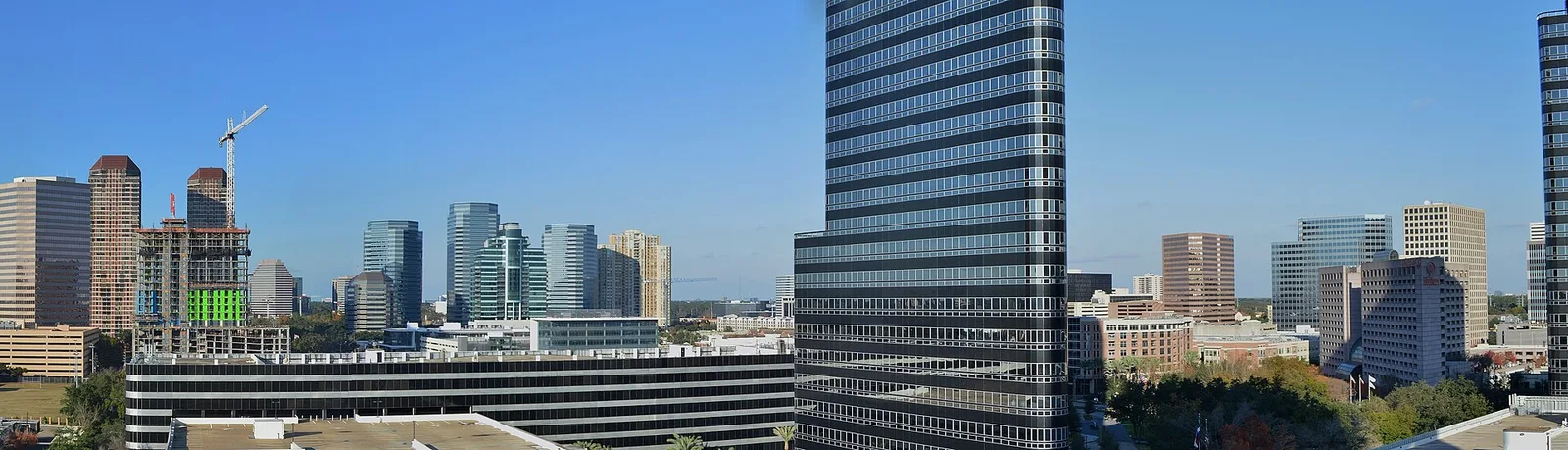
The 64-foot semicircular fountain by the Galleria is Houston's most photographed structure for a reason, and it's at its best in the last hour of light. It's the anchor shot for any Galleria-area listing.
A strollable strip of vintage shops, bakeries and bungalow-lined side streets in Houston's favorite old neighborhood. Walkability is scarce currency in this city — if your property has it, say the minutes out loud.
Montrose is the city's restaurant heart, from James Beard winners to backyard ice houses. A listing that names its three best dinner walks converts better than any adjective — this is a city people visit to eat.
The two foods Houstonians will argue about longest. Crawfish season (roughly February through May) is a genuine event, and a guidebook that points guests to the owner's taco pick reads instantly local.
When August heat empties the sidewalks, nineteen museums — several free, nearly all cold — make Houston one of the best indoor cities in the country. Sell air-conditioned culture to summer guests instead of apologizing for the weather.
Fifty minutes south: the seawall, the Pleasure Pier and the Strand's Victorian ironwork. It's the add-a-day trip Houston guests don't know they want until the guidebook suggests it.
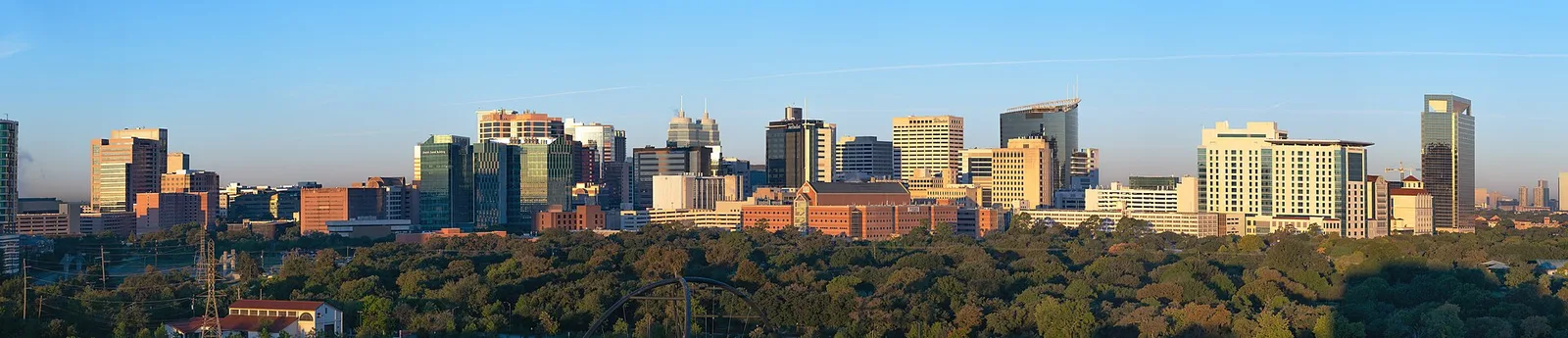
The most consequential line in a Houston listing. Medical families book on proximity, comfort and calm — state the minutes to the Medical Center and NRG Stadium plainly, and offer the weekly rates those stays actually need.
A few composite engagements drawn from how Cavmir typically works in this market. The situations are illustrative and consistent with Houston, not pulled from a single named client.
A renovated two-bedroom in the Heights had five-star reviews and invisible marketing — twelve dim photos, no neighborhood story, and no registration number displayed as the new city ordinance took effect.
Cavmir reshot the house and the 19th Street scene it sits near, rewrote the listing around walkable specifics, displayed the new certificate of registration prominently, and stood up a simple direct-booking website with email capture.
The listing climbed into the consideration set for guests choosing the neighborhood first, rate held firm against nearby comparables, and past guests began rebooking direct for Rodeo season instead of re-finding the property through a platform.
A quiet two-bedroom eight minutes from the Texas Medical Center was styled and priced like a weekend tourist rental, missing the multi-week medical-stay demand that was literally driving past it every day.
Cavmir repositioned the listing around comfort and logistics — drive times, weekly rates, real beds, a proper kitchen, a calm palette — and wrote the copy for families managing hard weeks, not vacationers.
Average stay length stretched from nights to weeks, occupancy steadied across the calendar including deep summer, and the property found the guest it was always best suited to serve.
A small independent hotel near the convention corridor depended on OTAs for the bulk of its bookings and had no plan for the World Cup summer beyond hoping the phones would ring.
Cavmir rebuilt the photography and direct-booking website, set an event-pricing strategy for the June–July 2026 window months in advance, and built pre-arrival email flows to convert one-time event guests into a returning corporate base.
The hotel entered the World Cup window with premium rates published early and its own booking channel carrying a meaningful share, and the guest list it captured became the foundation for post-event corporate marketing.
Talk to Cavmir today. We'll show you exactly what your Houston property is leaving on the table — and how fast we can change that.
Book a Free Strategy Call