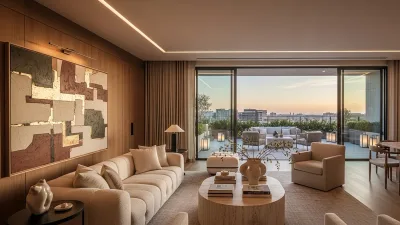

Ask ten luxury hosts what makes a property command its rate, and most will hand you a list. Pool. Hot tub. Nice kitchen. Fast Wi-Fi. That list isn't wrong, but it's the answer of someone who's still thinking about amenities as boxes to check. At the Luxe tier, a guest paying $3,000 or $8,000 a night isn't shopping features. They're buying a few days of a life they can't have at home, and the amenities are only the parts of that life you can photograph. Get the thinking right and the rate follows. Get it wrong and you've got an expensive house with a spec sheet.
This is the part of the business that gets talked about backward. Hosts spend on the thing that sounds impressive and skimp on the thing guests actually feel. So let's walk through what genuinely moves a booking and a rate at this level, why the wellness side is pulling ahead of everything, and how to present all of it so it reads like a place people want to be instead of a warehouse of upgrades.
Why amenities at this tier are about experience, not a list
Here's the shift that separates a good rate from a great one. A mid-market guest reads amenities as reassurance. They want to know the AC works and there's a coffee maker. A Luxe guest reads amenities as a promise about how their days will go. The infinity pool isn't a pool. It's the morning swim before anyone else is up, the light on the water at six, the reason they picked your place over the three others on the same street in Montecito.
So the right question isn't "what should I add." It's "what will this guest actually do here, and what makes those hours better than they'd be anywhere else." A chef's kitchen matters because a family is going to cook together, or a private chef they hired is going to work in it, and a cramped galley kills that. A wine room matters because someone is going to open a bottle that means something to them and wants to do it well. The amenity is a stand-in for a moment. When you buy or improve amenities with the moment in mind, you stop wasting money on things nobody uses and start funding the things that fill your calendar.
Airbnb's own Newsroom has been pointing at this for a while now: the listings pulling the strongest demand at the top of the market are the ones offering a distinct experience, not just a longer feature list. It tracks with what we see across the properties Cavmir helps market. The best-performing luxury listings aren't the ones with the most amenities. They're the ones where every amenity clearly belongs to a way of spending the trip.
The headline amenities that anchor a luxury listing
Some amenities do the heavy lifting in search, in photos, and in the guest's decision. These are the ones worth leading with because they're the reason a booking happens at all. You don't need every one of these. You need the two or three that fit your property and your market, done to a standard that holds up in person.
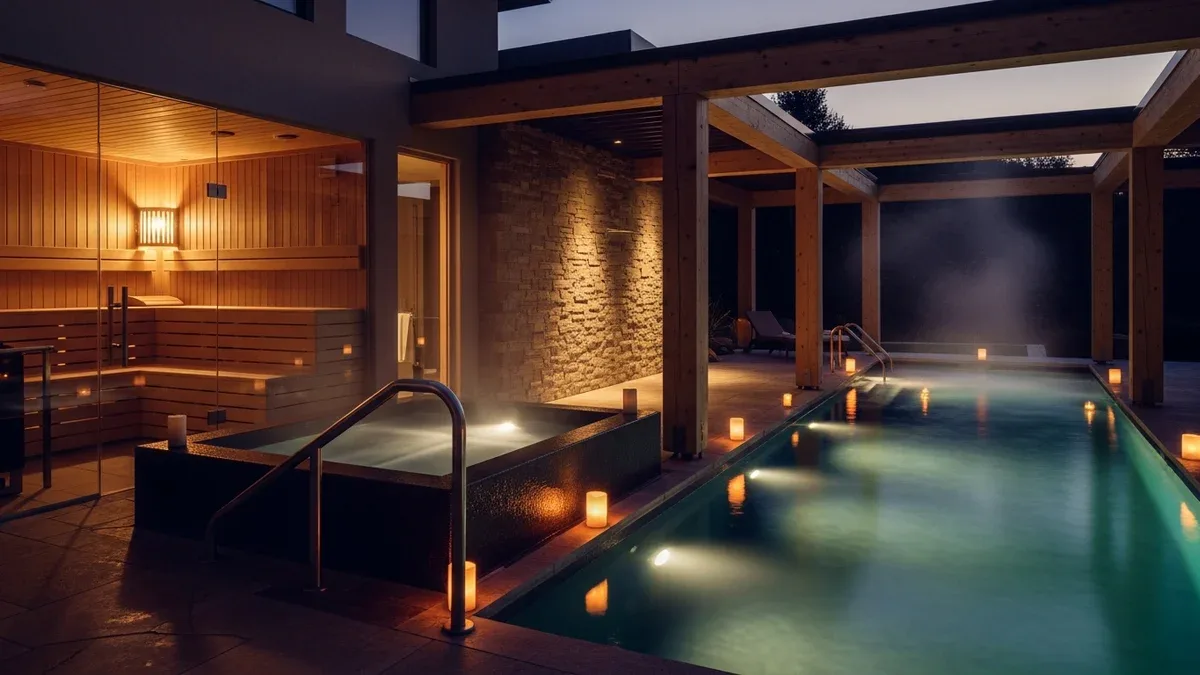
- The water. An infinity pool with a real view, or a heated pool that works in shoulder season, is often the single most searched-for feature at this tier. Heated matters more than people think. A cold pool in Lake Tahoe in October is a photo, not an amenity.
- The chef's kitchen. Wide counters, professional range, two dishwashers, room for a hired chef to work without bumping into guests. At this level people entertain, and the kitchen is where a good stay is either easy or a fight.
- The wellness suite. Sauna, steam, cold plunge, a real gym with equipment people recognize. This is the category climbing fastest, and it deserves its own section below.
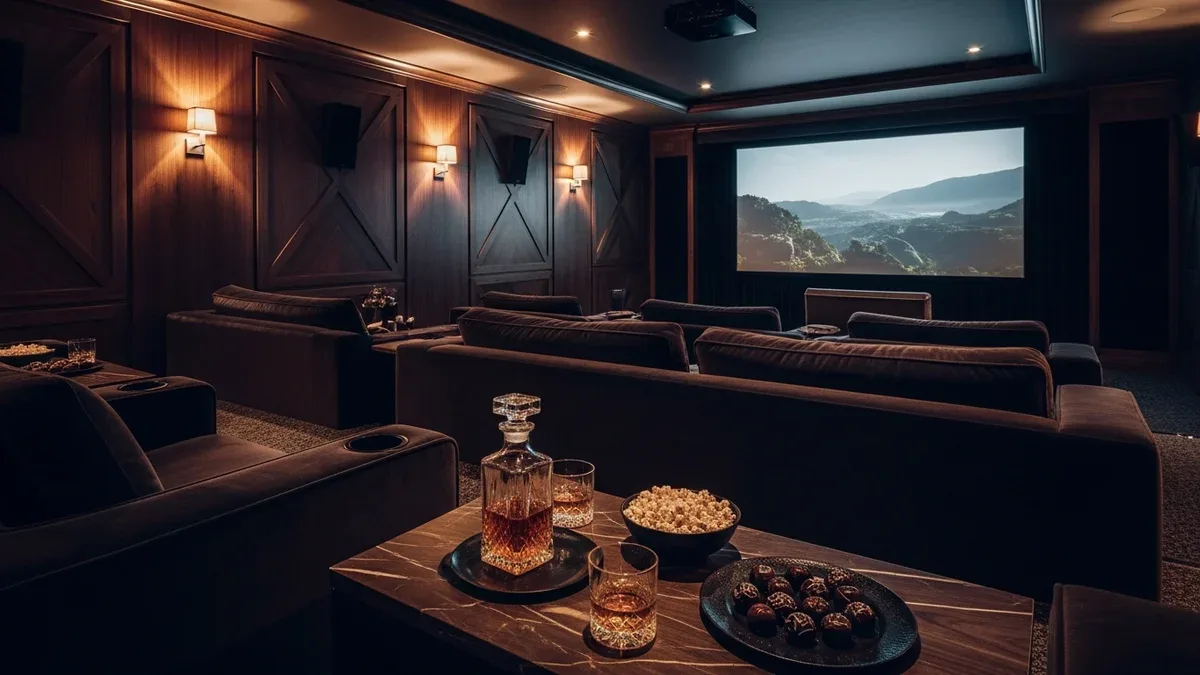
- The home cinema. A proper room with tiered seating, blackout, and sound that isn't a soundbar. Rainy afternoons and families with kids make this earn its keep.
- The wine room. Temperature-controlled, visible, part of the architecture. It signals a certain kind of stay before a guest reads a word.
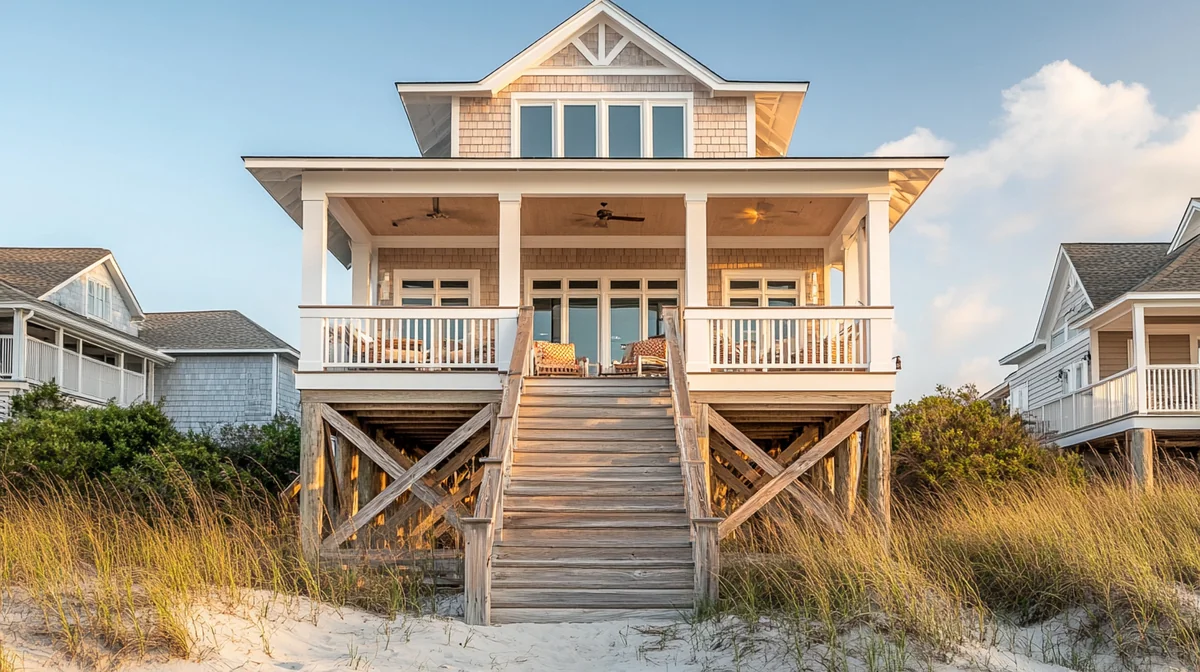
- The access nobody else has. Private beach frontage in The Hamptons, ski-in ski-out in Aspen or Courchevel, a dock on the water in Lake Como. Access you can't buy your way into after the fact is the closest thing to an unbeatable amenity there is.
Notice that none of these are cheap, and none of them are optional half-measures. A steam shower that's really just a hot shower, or a "gym" that's a treadmill in the garage, does more harm than good. It shows up in reviews, and at this price a lukewarm review costs you the next three bookings. Better to do three of these properly than seven of them badly. If you're weighing which upgrades actually pay back, our rundown of amenities that increase bookings is a useful gut check before you spend.
Wellness is the fastest-rising luxury demand
If there's one clear trend across the top of the market, it's this. Wellness has moved from a nice extra to a reason people book. AirDNA's luxury-tier analysis and Skift's travel coverage have both flagged the same thing over the last couple of years: recovery, spa, and quiet are what the high end is asking for, and supply hasn't caught up. That gap is where the rate lives.
What guests mean by wellness has gotten more specific too. It used to mean a hot tub. Now a serious wellness setup looks like a sauna and a cold plunge next to each other, a steam room, a massage space or the room to bring a therapist in, a gym that a fit person would actually use, and, quietly, a property calm enough to sleep and think in. That last one gets overlooked. A wellness suite in a house on a loud road with thin walls is a contradiction. Quiet is an amenity, even though it never shows up on a list.
Source: Industry estimates; AirDNA luxury-tier analysis
If you're going to add one wellness feature this year, put the cold plunge next to the sauna and light both well. The sauna-plunge pairing is what guests photograph and what recovery-minded travelers search for. A sauna alone in a dark corner reads as an afterthought. The pairing reads as intent.
Technology done right means you never notice it
Technology at this tier is judged by a strange standard: the best version is the one you don't notice. Nobody has ever left a five-star review praising the router. But plenty of $5,000-a-night stays get quietly downgraded because the Wi-Fi dropped during a work call or the sound system took twenty minutes and a phone flashlight to figure out. Tech is a floor, not a ceiling. You don't win with it. You lose without it.
So the goal is invisible and reliable, not clever. The pieces that matter:
- Genuinely fast, whole-property Wi-Fi. Business-grade, with coverage that doesn't die at the pool or the guest house. Plenty of your guests are working part of the trip whether they admit it or not.
- Smart-home that a guest can run without a manual. Lighting, climate, shades, all obvious. If it needs a printed guide, it's a gimmick, not a convenience.
- EV charging. Increasingly expected at this level, especially in Napa Valley, Malibu, and Palm Beach. A Tesla-and-universal setup covers most guests. Its absence gets noticed.
- Seamless AV. One remote or one app, working every time, in the cinema and the main rooms. The test is whether a guest who's never seen the house can play a movie in under a minute.
The trap is buying the flashy thing and skipping the boring one. A house with a golf simulator and unreliable Wi-Fi has its priorities exactly backward. Nail the invisible layer first. It's what guests actually feel, even when they can't name it.
Outdoor living and the setting
At the luxury level the outdoor space is often the reason people came, not an add-on to the indoors. In Palm Beach, Malibu, or on the Amalfi coast, guests will spend most of their waking hours outside, and the amenities that shape those hours carry real weight. This is also where the setting itself becomes an amenity you can't manufacture.
The outdoor kitchen matters for the same reason the indoor one does: people gather and cook, and doing it well beats doing it with a rusty grill and a card table. A proper fire feature, a firepit or an outdoor fireplace, extends the evening and does more for the mood of a stay than almost anything of its cost. Dockage on the water in Lake Como or a Hamptons bayfront turns a house into a base for the whole day on the water. And the view is its own amenity, maybe the purest one. A genuine ocean, mountain, or vineyard view sells the property before a guest reads the description, and no upgrade fully substitutes for it.
The mistake here is treating outdoor space as leftover space. Furniture that's an afterthought, dead lighting, a firepit nobody bothered to make comfortable around. If the setting is the reason your rate is what it is, the outdoor living needs the same care as the primary suite, sometimes more. Thoughtful interior design should carry all the way outside, because at this tier the line between inside and out is the whole point.
Family- and group-friendly luxury
A lot of Luxe bookings are groups. Multi-generational families, a few couples, a milestone trip somebody's been planning for a year. Designing for that isn't the same as designing for two, and the properties that get it right own a segment that pays very well and books far in advance in places like Jackson Hole and Napa Valley.
The word to hold onto is space, real separation, so a group can be together when they want and apart when they need to be. Bunk suites are a good example of how this goes right or wrong. Done badly, a bunk room is a cramped afterthought that says "the kids sleep here." Done well, it's a proper suite with quality beds, its own bathroom, good light, and enough room that a teenager isn't miserable. The families paying the most are traveling with kids, and the property that treats the kids' space seriously wins the booking over the one that didn't.
Safety belongs in this conversation too, quietly. Pool fencing, gates, a house that a parent can relax in. It never makes the highlight reel, but its absence ends a booking fast for anyone traveling with young children. And enough gathering space, a table everyone actually fits at, a living room that holds the whole group, is what turns a big house into a place a group remembers instead of just a place they stayed.
Photograph the group scenario directly. Show the long dining table set for twelve, the bunk suite made up and lit like a real bedroom, the yard with room for kids to run. Group organizers are looking for permission to picture their whole party there. Give it to them and you'll pull bookings your feature-list competitors miss.
Presenting amenities as a lifestyle, not a spec sheet
Here's where a lot of otherwise excellent properties leave money on the table. They own the amenities and then describe them like a hardware store. "Sauna. Steam room. Cold plunge. Home theater. Wine cellar." All true, all flat. That list tells a guest what you have. It doesn't tell them what their trip will feel like, and at this price the feeling is what they're paying for.
Presentation is where the amenity becomes a reason to book. The same cold plunge reads completely differently depending on how you frame it. As a line item, it's equipment. Written as the cold plunge you'll brace for at sunrise before the sauna and your first coffee on the deck, it's a morning someone wants to have. You're not inventing anything. You're just describing the amenity in the life it belongs to. The photography carries the same weight, sometimes more, since most guests decide from the images before they read a word. A wine room shot flat under bad light is storage. Shot properly, it's an evening.
This is the work that separates a property that merely has nice things from one that consistently books at the top of its market. It's also where the marketing and the design have to agree, because a listing that promises a certain kind of stay and then delivers a mismatched interior loses trust in the first ten minutes. If you're building the whole picture from the ground up, our guide to interior design for luxe Airbnbs pairs naturally with this one, and markets like Aspen reward getting both right.
The takeaway is simple enough. Buy amenities for the moments they create, not the list they fill. Do fewer of them properly rather than more of them halfway. Then present the ones you have as the life a guest gets to borrow for a few days. That's what commands the rate, and it's the part Cavmir helps hosts get right, from the amenity decisions to the way the whole thing is told. Whenever you're ready to look at your own property through that lens, we're happy to help you sort the features that matter from the ones that just sit there.