Compliance · Permits · Taxes
Moab's permit rules, county overlays and lodging taxes
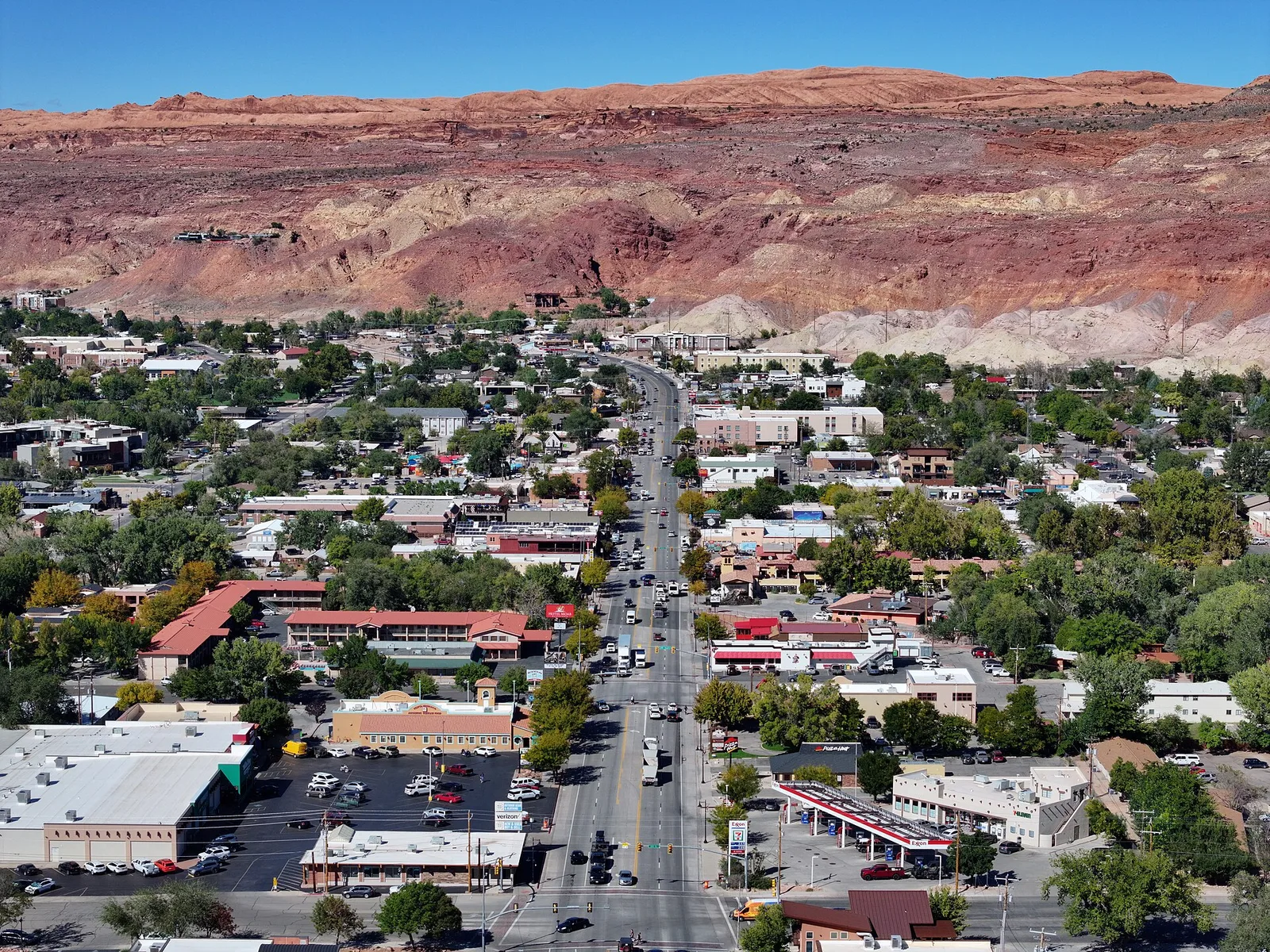
Before you ask whether a Moab house can rent by the night, ask which government it answers to. The valley splits four ways: the City of Moab, unincorporated Grand County, the Town of Castle Valley up the river, and San Juan County's share of Spanish Valley at the south end. Each one writes its own rules and issues its own license, and Grand County's licensing page sends anyone inside Moab or Castle Valley limits to those towns. A listing that promises “nightly rental OK” is only as good as the office that said so. Pull the parcel number, find out which code governs it, and get the answer in writing from that office before you write an offer. What follows is the starting point for this year, and every figure in it should be confirmed with the office that set it.
What Moab's 2024 ordinance closed inside city limits
The city's Ordinance 2024-03, passed on June 11, 2024, defines a short-term rental as any stay of 30 consecutive days or less and lists where it's prohibited: the A-2, C-1, C-3, C-5, FW, I-1, R&D-1, R-2, R-3, R-4 and RA-1 zones, plus any zone that doesn't name short-term rentals as a permitted use. The exceptions are narrow, chiefly code-compliant bed-and-breakfasts and guest apartments. Two things follow for a buyer. A house in one of those residential zones rents nightly only if the city confirms an existing legal use at that address. And a commercial zone isn't an automatic pass, because three of the city's commercial zones sit on the prohibited list. Ask the planning office for the zone, the use status and what a change of ownership does to it, and have a land-use attorney read the answer before you close.
Grand County's overlay, license and fees
Outside the city, the county set the terms in 2019. On July 18, 2019, the Grand County Council voted 5-0 to remove the right to build new nightly rentals in every county zoning district, letting vested projects finish as planned; the ordinance counted 4,525 nightly-rental units in the county against 3,240 primary homes. Today each nightly rental carries its own county business license number, and recent county figures put that license at about $100 a year at renewal, prorated by quarter for new ones, with renewals due by March 31 and a late penalty of $10 a week up to $50. A property in an Overnight Accommodations Overlay district that hasn't operated as a nightly rental before also pays a one-time $500 overlay permit fee, which tells you where new nightly use can still happen. Applications route through planning and zoning, building, code enforcement's dark-skies check, the Moab Valley Fire Department and the Southeast Utah Health Department, and a license can't be moved to another address. Confirm the current figures with the county before you budget.
The tax stack, and who files what
Lodging in Moab carries the city's 9.35% combined sales and use tax, which already includes a 1.6% resort community tax, plus three room taxes: the city's 1.5%, Grand County's 4.5% and the state's 1.07%. The county rate rose from 4.25% on October 1, 2025, after HB 456 raised the cap on county room taxes by a quarter point to 4.5% from July 1, 2025. Stack the pieces and a night inside city limits carries close to 16% in tax. Airbnb's Utah help page says it collects and remits the combined sales tax, the state room tax and the local county and city room taxes on stays of 29 nights or fewer, figured on the price including cleaning and guest fees. Everything else stays with you: the registrations with the Utah State Tax Commission, the returns, and the full tax on every direct booking your own website takes and on any channel that doesn't remit for you. Have a Utah accountant set up the accounts and your filing calendar before the first guest arrives.