



Saturday
Storm King Art Center
Five hundred acres of large-scale sculpture in the Hudson Highlands, best on foot or by bike on a clear day. Tell guests to book timed tickets in foliage season and to allow the whole afternoon.

Expert short-term rental marketing to grow your bookings and nightly rate in the Hudson Valley — from Rhinebeck farmhouses and Hudson townhouses to river-view cottages in Kingston, Beacon and Cold Spring.
Sixteen services, one team. Everything below is built in-house and scoped to your property and market. Most owners start with the 12-Step System.
Every engagement is quoted to your portfolio. These are the ready-made scopes owners pick most — our Fall Special (55% off list or more) is already applied to the website, King Broker, Hotels and à la carte scopes. A clear proposal within 48 hours.
The work is public. Selected engagements and what changed — and reviews from the owners and managers behind them.
* Market averages from AirDNA and STR market reports. A single home's numbers depend on its size, its location and how it is marketed.
Cavmir is an Airbnb marketing agency. We build the brand, the direct-booking website and the marketing for short-term rentals in Hudson Valley.
The Hudson Valley is the stretch of river towns between the northern suburbs of New York City and Albany, and for the past fifteen years it has been where the city goes on Friday afternoon. Amtrak puts Rhinecliff under two hours from Penn Station and Hudson a little over two; Metro-North's Hudson Line reaches Beacon and Poughkeepsie from Grand Central; the Taconic and the Thruway do the rest. What the city found when it arrived was a landscape of Dutch and English estates, Gilded Age mansions, working farms, nineteenth-century main streets and the river itself, painted by the Hudson River School and still looking the part. The vacation-rental market that grew around all that is one of the most design-conscious in the country, and one of the most tightly regulated.
The valley is a string of distinct markets rather than one. Rhinebeck and Red Hook in Dutchess County carry the classic weekend-house product, farmhouses and cottages on country roads within reach of the village's restaurants and the Sunday farmers market. Hudson, the small city in Columbia County whose Warren Street became a design and antiques destination, rents townhouses and lofts to a guest who came for the shops and the restaurants. Kingston and the Rondout waterfront in Ulster County, Beacon with Dia and the Metro-North station, Cold Spring and Garrison in the Hudson Highlands near Storm King, New Paltz under the Shawangunk cliffs, Catskill village across the river from Olana: each has its own guest, its own price and, crucially, its own short-term rental law.
The guest is a New Yorker, or a visitor to New York adding a weekend upstate, and that shapes everything. They arrive Friday evening, often by train, and leave Sunday afternoon; they book a house on its interiors, its view and its distance from a village they can walk; they spend heavily on dinner, farm stands, cider and art; and they come back to a house that earned them, season after season, for foliage, for the holidays, for a summer week on the river. They are also the most design-literate guest in American vacation rentals. A listing shot and written to magazine standard, with the tone of a friend's recommendation, wins here; a listing that looks like a real-estate flyer loses to the one next door.
What makes the valley different from the Catskills up the road is regulation. Hudson, Kingston, the Village and Town of Rhinebeck, Beacon and New Paltz have each written their own short-term rental law, several of them built around primary-residence requirements, permit caps and lotteries, and New York State added a statewide registry and platform tax collection in 2025. That has frozen supply in the most desirable villages, which is bad news for a new investor and very good news for an owner who already holds a legal, well-marketed house. In this market the moat is the permit, and the marketing is how you collect the rent on it.
Nearby Markets: Catskills | New York City | Berkshires | Litchfield Hills
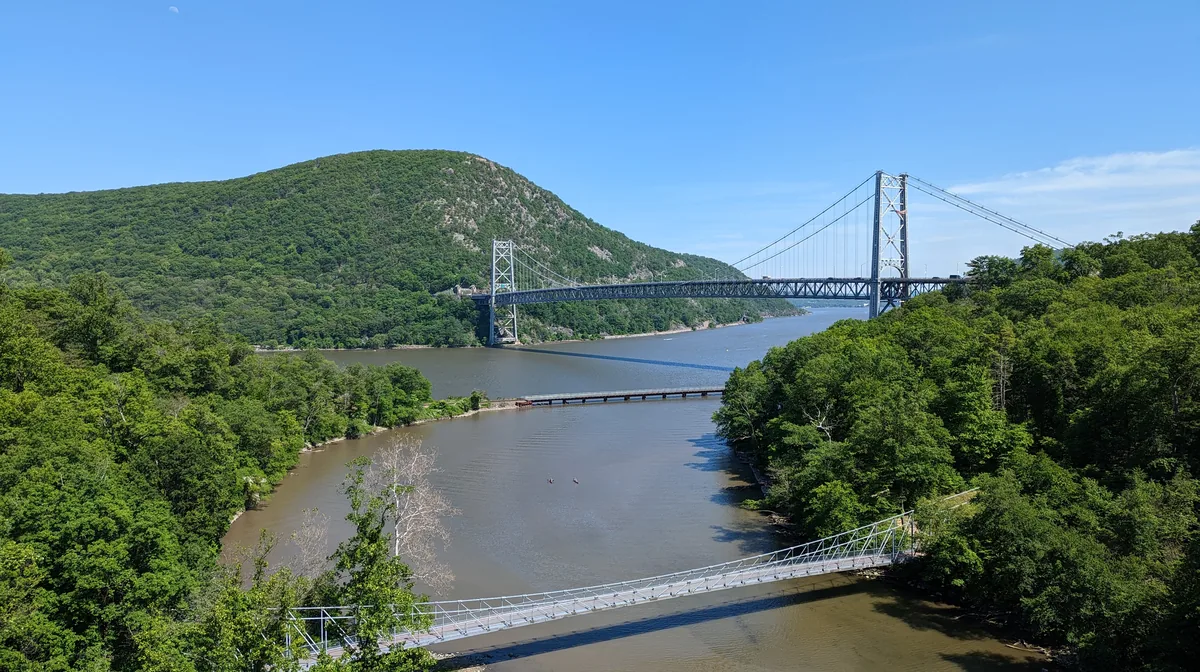
Cavmir markets Hudson Valley rentals as the specific products they are, a Rhinebeck farmhouse for a foliage weekend, a Hudson townhouse for a Warren Street trip, a Highlands cottage near Storm King, rather than as inventory in an 'upstate' feed. We put your property in front of the guest who books this valley: the Brooklyn couple deciding on Wednesday, the family planning Thanksgiving in August, and the repeat guest who wants their October weekend held, wherever they search, from Google and Instagram to the email list that brings last year's guests back.
The valley has been a second-home landscape since the river was the road. Dutch patroons and English manor lords held its east bank in the seventeenth and eighteenth centuries; the Livingstons, Roosevelts and Vanderbilts built along the river road through Hyde Park and Rhinebeck; Frederic Church built Olana on a hill above Hudson to paint the view; and by the Gilded Age the river towns were where New York money went to sit on a porch. The twentieth century hollowed the towns out, Hudson most of all, and left the housing stock cheap, handsome and waiting.
The modern market began when artists and designers priced out of Brooklyn discovered that a Warren Street storefront or a Rhinebeck farmhouse cost less than a Park Slope apartment. Dia opened its museum in a former Nabisco box-printing factory in Beacon in 2003, Storm King's attendance climbed year after year, restaurants followed the money, and the vacation-rental platforms of the 2010s turned every renovated farmhouse into a weekend business. The pandemic poured fuel on it: the city emptied into the valley in 2020, second homes became first homes, and rental demand and house prices both jumped.
The towns answered with law. Hudson passed a short-term rental local law in 2020 that limits rentals to owner-occupied homes and shut the door on new non-owner-occupied units; Kingston capped full-time short-term rentals at one percent of its housing stock, about 106 permits, and the cap has been reached; the Village of Rhinebeck allows fifteen owner-occupied permits awarded by lottery and sixteen rental nights a year; Beacon requires primary residence and caps rentals at a hundred days a year; the Village of New Paltz bans anything but on-site hosts; and in 2025 the Town of Rhinebeck adopted a primary-residence law of its own. Then New York State signed the first statewide short-term rental registry law in the country in December 2024, in force since April 2025, which lets counties build registries and makes the platforms collect state and local sales tax.
Today the market is mature, professional and supply-constrained. AirDNA counts roughly 400 active short-term rentals in the Hudson market, averaging nightly rates in the mid-$300s at about 50 percent occupancy, with Rhinebeck close behind, and the best-positioned houses, legal, beautifully finished and within a walk of a village, set their own prices for foliage weekends and the holidays. What has not caught up is the marketing. Many valley listings still lead with the sofa, hide the fact that the village is a ten-minute walk, and depend on two platforms for a guest who would happily book direct. In a market where supply is frozen by law, the owner who holds a permit and markets like a small hospitality brand has an advantage nobody can build next door.
Hudson Valley pricing is tiered by finish and by walkability before anything else. A restored farmhouse with a pool on a country road outside Rhinebeck or Germantown, or a designer townhouse on or near Warren Street, anchors the top of the market and clears well above the averages on foliage and holiday weekends. Village cottages and apartments in Beacon, Cold Spring, Kingston and New Paltz carry the broad middle, sold on the train and the walk to dinner. Larger houses in the countryside carry the group tier, the wedding party at a Dutchess County barn venue, the extended family at Thanksgiving, the friends' reunion in June.
The calendar is flatter than a beach or ski market, which is the valley's quiet strength. October is the super-peak, foliage, the Dutchess County Fair having just ended, apple and pumpkin season at the farms; the holidays from Thanksgiving through New Year are strong for larger houses; late spring and summer carry weddings, graduations at Bard, Vassar and Marist, and river weekends; and even January and February hold a real market of couples who want a fireplace and a village dinner. A house with the right story can run a genuinely year-round calendar here.
The mistake most owners make is pricing every weekend the same and every weekday as a discount. A foliage Saturday, a Storm King weekday in May, a wedding-weekend Thursday-to-Sunday and a January fireplace escape are four different guests with four different willingness-to-pay curves, and each deserves its own copy, photography and rate. Owners who sell those products explicitly fill the nights the weekend-only competition never touches.
Moderate seasonality with an autumn peak. October leads, the holidays follow, late spring and summer are strong on weddings, graduations and river weekends, and winter holds a fireplace-and-dinner market that most valley towns support well. The train makes Friday-to-Sunday the natural rhythm; flexibility on check-in days and a real midweek product are competitive weapons.
The revenue most owners miss is midweek in May, June and September, when Storm King and Dia are open, the farms and cideries are in full swing and the weekend crowds are absent. Remote workers, retirees and museum-bound travelers will pay for a Tuesday-to-Thursday stay when a listing prices and photographs it as one; most listings never do.
The Hudson Valley is regulated town by town, and in New York a village and the town around it can each have their own law, so the first thing to establish is exactly which jurisdiction your address is in. The City of Hudson's 2020 local law restricts short-term rentals to owner-occupied homes (an owner living there at least fifty days a year may rent up to sixty days) and does not permit new non-owner-occupied units. The City of Kingston issues three permit types: full-time whole-unit permits capped at one percent of the housing stock, about 106, a cap that has been reached; resident-occupied permits without a cap; and limited permits for a whole unit rented fewer than thirty days a year. All require registration, a fee and an inspection. The City of Beacon requires the rental to be the owner's or tenant's primary residence, a permit and inspection, stays of no more than thirty days at a time and no more than a hundred days a year.
Rhinebeck is two jurisdictions: the Village allows fifteen owner-occupied permits village-wide, awarded by lottery, with an owner in residence at least 260 days a year, no more than sixteen rental days a year and an annual inspection, while the Town adopted its own consolidated law in September 2025 that requires primary-residence status and specific insurance language and does not grandfather earlier registrations. The Village of New Paltz allows short-term rental only as an incidental use of a host's primary residence; the Town of New Paltz allows non-owner-occupied rentals with an annual rental registration permit and inspection, one owner-occupied and one non-owner-occupied rental per owner, a ten-guest cap, and a 2025 restriction on properties with accessory dwelling units. Other towns, Red Hook, Germantown, Saugerties, Cold Spring, have rules of their own.
On top of the local layer sits New York State's short-term rental registry law, signed in December 2024 and in force since April 2025, under which the booking platforms collect the state's 4 percent sales tax and local sales taxes and counties may build their own registries. County occupancy taxes apply as well: Dutchess raised its rate to 5 percent in January 2025, Ulster charges 4 percent, and Columbia County introduced a 4 percent lodging tax in January 2025 outside the City of Hudson, which levies its own. This is the most regulated market on Cavmir's US map, and the rules move every year. Treat this section as orientation rather than legal advice: confirm current requirements with your city, town or village clerk, the county and a New York accountant before you list. Cavmir handles the marketing side; licensing and tax compliance sit with you and your local professionals.
First, photograph for the guest you actually have. The Hudson Valley guest reads shelter magazines and scrolls design accounts; they book on the kitchen, the light, the view from the bath and the porch at dusk, and they can smell a real-estate photo from across the river. Shoot in autumn light, style the table, show the fireplace lit, and show the village street at the end of the walk. This is the one American rental market where interiors alone move the rate.
Second, sell the train and the walk. 'Eighteen minutes from the Rhinecliff station, ten minutes on foot to the farmers market' is the sentence that wins a car-free Brooklyn couple; 'two blocks from Warren Street' wins the Hudson shopper; 'a short cab from Beacon station, a mile to Dia' wins the museum weekend. State the station, the ride time and the walk in the first lines, and you convert the guest who would otherwise book the Catskills by default.
Third, engineer the repeat. Valley guests come back for the same foliage weekend or the same Thanksgiving for years once a house earns them, and in a market where the law freezes supply the lifetime value of that guest is enormous. A fast direct-booking site, a past-guest list that gets first refusal on October weekends each summer, and a rebooking incentive that beats the platform fee are the tools; most of the valley still uses none of them.
Fourth, treat compliance as marketing. A listing that states its permit number, its jurisdiction and its occupancy limit plainly reads as legitimate to a guest who has read the news about caps and lotteries, and it reads as legitimate to the village too. Pair that with hotel-grade turnovers on a Sunday afternoon, a check-in that works when the train is late, and a welcome book full of resident knowledge, and the review flywheel that defends the rate starts turning.
Regulation is the structural challenge and the structural opportunity. A house that is legal in the Town of Rhinebeck may be illegal a hundred yards away in the Village; Kingston's cap is full; Hudson has closed the door on new investor units; and the rules change every year, with the state now watching through its registry. Buying into the valley for short-term rental without confirming the jurisdiction, the permit and the occupancy rules first is how people end up with a beautiful house they cannot rent.
Costs are high and the calendar is weekend-shaped. Dutchess and Columbia real estate prices rose sharply after 2020, property taxes in New York are steep, and a heritage farmhouse costs real money to keep to the standard the guest expects. Friday-to-Sunday demand means a house can be full every weekend and still run at 50 percent, so owners who never build a midweek product leave a third of the year on the table.
There is also the sameness problem. The valley's rental stock has converged on a look, the white kitchen, the clawfoot tub, the wood stove, the linen everything, and a guest scrolling 'Hudson Valley farmhouse' cannot tell one from the next. When product looks identical, the listing that tells a specific, true story about its village, its view and its walk to dinner is the one that stops the scroll. Owners who present their house as a small brand with a name and a point of view win disproportionately here.
Heritage houses, wood stoves, pools and rural roads all matter to underwriters, and several valley municipalities now require specific additional-insured language on a short-term rental policy. Short-term-rental use must be disclosed; a standard homeowners policy will not respond. Budget for a landlord or STR-specific policy through a New York broker who knows the towns' permit conditions.
New York taxes short-term stays at the state's 4 percent sales tax plus local sales tax, collected by the platforms under the 2025 registry law, and the counties levy occupancy taxes on top, Dutchess 5 percent, Ulster 4 percent, Columbia 4 percent outside Hudson, which Airbnb now collects, while owners register and remit on other channels and direct bookings. Non-resident owners file New York returns on rental income, and property taxes are among the highest in the country. Coordinate with a New York accountant.
Financing is conventional but expensive: jumbo loans dominate above the conforming limit, second-home and investment pricing applies, and lenders will not count rental income a municipality does not allow. Confirm the permit before the appraisal, model the weekend-shaped revenue plainly, and put New York property taxes in the carry from day one.
A permit decides whether a house can rent at all. What trips up owners in 2026 is everything after the permit, because a legal Hudson Valley rental now answers to three offices at once: the city, town or village that issues the permit, the county finance office that runs the occupancy tax, and the New York State Tax Department, which has taxed short-term rental stays since March 1, 2025. The platforms carry more of that load than they used to, and they still leave gaps, which sit exactly where an owner building a direct-booking business operates: your own website, the other platforms in some counties, and the places Airbnb's tax list skips. Get all three registrations in place before your first guest, and keep the paperwork that proves who paid what.
Since March 1, 2025, New York's state and local sales tax applies to short-term rental stays priced above $2.00 per unit per day, which covers every rental in the valley. The platform, which the Tax Department calls a booking service, has to register as a sales tax vendor and collect the tax on the stays it handles, and it owes you a Form ST-155 certificate of collection within 90 days of those sales unless it publishes an equivalent agreement. File those certificates with your records, because they prove the platform stays were covered. Airbnb's New York tax page says it collects state sales tax at 7 to 8.875 percent of the listing price, cleaning and guest fees included, on stays of 89 nights or fewer outside New York City. Direct bookings work the other way. When a guest books through your own website, you're the vendor: you register with the Tax Department, charge the tax and file returns on the quarterly, monthly or annual schedule the state assigns you. The only exemption is for an owner who rents their own place for 3 days or fewer in a calendar year without a booking service. And a guest who stays 90 consecutive days counts as a permanent resident for sales tax, which matters if you take long winter lets.
Each county adds its own occupancy tax and runs its own registration, and the three valley counties now work three different ways. Dutchess raised its rate from 4 to 5 percent under Local Law No. 1 of 2025, which took effect January 14, 2025, with the higher rate charged from March 1, 2025. Airbnb has collected the Dutchess tax for its hosts since March 1, 2017; every other booking, including your direct ones, means registering with the county's Commissioner of Finance, collecting the 5 percent yourself and paying quarterly, by the 20th day after each quarter ends. Airbnb also collects Ulster's 4 percent hotel and motel occupancy tax on stays of 90 nights or fewer. Columbia started its 4 percent lodging tax on January 1, 2025, everywhere in the county except the City of Hudson, which has its own occupancy tax. Every Columbia property rented for under 30 consecutive days needs its own county registration, and since January 1, 2026 returns are quarterly, due April 20, July 20, October 20 and January 20. This year brought the change: since April 1, 2026 Airbnb collects and remits the Columbia tax, and the county states that the arrangement doesn't extend to any other platform. So a Germantown farmhouse that books half its nights on Vrbo or direct still files every quarter. Rates and deadlines move, so confirm the current figures with each county's finance office before you set prices.
Cities and towns are adding their own layer. On August 21, 2026 the state enacted A.B. 10737, which lets Kingston levy up to 3 percent of the per diem rental rate on hotels, motels, bed and breakfasts and similar tourist facilities, with the authority running to December 31, 2029. The mayor's proposal named Airbnb-style rentals and the city's 2026 budget already counts about $100,000 from the tax, so ask City Hall whether it's in force, and whether it reaches a house like yours, before you quote a Kingston stay. The same day, S.B. 7820 let the Town of Gardiner, next door to New Paltz, charge up to 5 percent on transient accommodations, with an automatic repeal after three years. Beacon already adds a 2 percent room occupancy tax on short-term rentals on top of the Dutchess 5 percent, and across the river the City of Newburgh's 5 percent sits on top of Orange County's 5 percent; Airbnb collects all four. Now the gaps. Airbnb's New York page doesn't list Putnam County, Greene County or the cities of Hudson, Kingston and Poughkeepsie, so there you ask the local finance office what applies and who files it. Kingston's permit door is shut for whole-house operators, too: the city isn't accepting registrations for new Full permits, keeps a waitlist that requires proof of ownership, and posts its list of registered rentals, updated quarterly, which is the first place to look up an address before you offer. None of this is tax or legal advice for your situation; a New York accountant who files Hudson Valley occupancy returns, and a local real-estate attorney before you buy, will set it up correctly.
Every river town here has its own guest, its own housing stock and its own rulebook, and the rulebook often decides the business model before you've seen the kitchen. Read the valley from north to south: Columbia County sells design, food and farmland, northern Dutchess sells estates and occasions, Ulster sells a working small city and the Shawangunk cliffs, and the southern towns sell the train and the trails. Choose the town by the guest you want, then check the jurisdiction line, the residency rule and the local tax before you write an offer. It's the read Cavmir starts from when we market a home here, because the town decides the story long before the photos do.
Hudson is the design-and-dinner weekend. Guests come for Warren Street's shops and restaurants and want a townhouse or loft they can walk home from. The city's law ties rentals to an owner who lives there, so the workable model is a building you live in with a unit you rent, and the occupancy tax is the city's own, outside Columbia County's 4 percent; since Airbnb's New York page doesn't list the City of Hudson, ask City Hall who files it before your first booking. Step outside the city line and the product changes. Germantown, Claverack and the farm towns of Columbia County sell space to families and groups: a farmhouse with a pool, a barn, a long table and room for four cars. These towns write their own rules, so pull the town code and ask the building department about occupancy and septic capacity before you buy a six-bedroom house to sleep twelve. Across the Rip Van Winkle Bridge, Catskill village in Greene County has the Thomas Cole National Historic Site, linked to Olana by the Hudson River Skywalk, and a walkable Main Street of its own. It suits guests who want Hudson's restaurants a short drive one way and the Catskill Mountains a short drive the other, and with Greene County missing from Airbnb's New York tax list, confirm the county and town occupancy taxes before you set a rate.
Northern Dutchess is the occasion market. Rhinebeck fills for estate weddings, the Dutchess County Fair and retreats at the Omega Institute; Red Hook and Tivoli catch Bard College's families; Hyde Park sells history and dinner, with the FDR Presidential Library, the Vanderbilt Mansion and the Culinary Institute of America's restaurants a few minutes apart. In both Rhinebecks the law ties rentals to an owner who lives there, so the product is your own house rented while you're away, sold on the walk to the village, and every Dutchess stay carries the county's 5 percent, which Airbnb collects. Across the river, Kingston is the valley's working small city in three distinct districts: the Uptown Stockade with its stone houses and restaurants, Midtown around the Ulster Performing Arts Center, and the Rondout waterfront with the Hudson River Maritime Museum. As of May 2025 about 150 of Kingston's estimated 11,049 housing units were operating as short-term rentals, about 1.36 percent, and with new Full permits closed, the realistic play is an owner-occupied two-family where you live in one unit and rent the other. Upriver, Saugerties pairs a small village with the Saugerties Lighthouse and the summer horse-show crowd, and the town writes its own permit rules, so read its code before you buy.
The southern valley sells the outdoors and the train. New Paltz sits under the Shawangunk Ridge, with the Mohonk Preserve and Minnewaska State Park Preserve drawing climbers and hikers in every season and SUNY New Paltz drawing visiting parents. The village allows short-term renting only within a host's own home, so whole-house operators look to the Town of New Paltz, which registers non-owner-occupied rentals, or to neighbors like Gardiner, each with its own code, and Gardiner's new authority to add up to 5 percent is a cost to model now. Build for this guest: a mudroom for gear, parking for two cars and the drive to the trailhead in minutes. Beacon is the Dia and Main Street weekend, an easy Metro-North ride from the city, with the Mount Beacon trail at the east end of town. Beacon requires the rental to be the owner's or tenant's primary residence, so it suits an owner letting a room or an apartment in the home they live in, and every stay carries the Dutchess 5 percent plus the city's 2 percent. Cold Spring and Garrison in Putnam County sell Breakneck Ridge, Boscobel and an antiques-lined Main Street a short walk from the station to hikers and art-weekend couples. The village has its own rules, so read them first, spell out where guests park on a hiking Saturday, and because Putnam isn't on Airbnb's tax list, ask the county what you file. Wherever you buy, ask the clerk which jurisdiction the address sits in, whether the permit survives a sale and what the county expects you to file, and have a local attorney confirm it before you sign.
The Hudson Valley's outlook is strong and constrained at the same time. Demand from the city is structural, the train keeps the valley two hours from eight million people, the museums and restaurants keep expanding, and the supply of legal short-term rentals in the most desirable villages is frozen by law. For an owner who holds a permit, that is close to the best position a vacation-rental market can offer.
The pressures to watch are regulatory drift and cost. Towns that have not yet written a law will, and the ones that have will tighten, with the state's registry giving them data they never had before; property taxes and insurance will keep rising; and the valley's housing politics will keep short-term rentals in the local newspaper. Owners who operate transparently, keep their permits current and diversify into midweek and winter products will weather it; investors who bought on 2021 math will sell to them.
The other shift is in how guests find the valley. More travelers now start with an AI assistant or a direct search than with a platform scroll, and properties that publish clear, structured, useful information, the station and the walk, the jurisdiction and the permit, plain seasonality, a fast site an assistant can read, surface in those answers. The valley's design-literate, phone-first guest is exactly the demographic making that shift first. Positioning for it now, while most of the valley still markets the old way, is the most durable advantage an owner can build.
The Hudson Valley is the rare rental market where the guest's taste is the product. They are buying a house they wish they owned, in a village they wish they lived in, for a weekend that looks the way they want their life to look, and a listing that understands that and presents the house plainly and beautifully attracts the traveler who is actually shopping for the valley. That traveler pays a fair rate, rebooks and complains less.
What I love about marketing here is the loyalty of the calendar. Couples find the right farmhouse and come back for the same October weekend for a decade; families claim Thanksgiving; friends claim the June reunion. One well-marketed house with a real repeat base outperforms a churn-dependent competitor on both revenue and stress, and in a market where the law has frozen supply, that base is a moat.
And the raw material is glorious. The photographs take themselves when the river goes silver under Olana at seven in the evening; the stories write themselves when the town was painted by Church and the museum was a cookie factory. Our job is rarely to invent an angle. It is to notice the true one the owner has stopped seeing, frame it plainly, and put it in front of the couple already looking for exactly that.
The picks Cavmir puts in a Hudson Valley welcome book: the details that make a stay feel like resident knowledge instead of a printed concierge script, and that quietly earn the five-star reviews.
Five hundred acres of large-scale sculpture in the Hudson Highlands, best on foot or by bike on a clear day. Tell guests to book timed tickets in foliage season and to allow the whole afternoon.
The former box factory on the river in Beacon, a short walk from the Metro-North station. Pair it with lunch on Main Street and guests feel like they know the town.
Frederic Church's house above Hudson, with the river view he built it to paint. The grounds alone are worth the drive; the house tour books ahead in autumn.
The old rail bridge at Poughkeepsie, now a state park over the river. Free, flat, and the photo every guest takes; send them at golden hour.
The village's Sunday market is where weekend guests provision and where locals actually go. Give them the hours and a route on foot from the house.
Cinnamon for regional Indian cooking, Terrapin for the contemporary American standby, Willow at Mirbeau for the special-occasion table. All book out on foliage weekends; reserving ahead makes a host look heroic.
Santa Fe Uptown for globally inspired plates in the Stockade district, Lola for pizza and pasta. Tell guests and they come home feeling like insiders.
The reason many guests come. Send them early on Saturday, before the day-trippers, and name the side streets for lunch.
The ridge above New Paltz is the valley's hiking and climbing playground. A trailhead recommendation and a parking note turn a good weekend into the one they retell.
Answer the train question before it is asked: Rhinecliff or Hudson on Amtrak, Beacon or Poughkeepsie on Metro-North, the ride time, and the taxi or walk from the platform. Clarity here prevents the only common valley complaint.
October Saturdays go months ahead. Tell past guests in early summer that their weekend is open, and most of the autumn calendar fills itself.
Representative Cavmir engagements in Hudson Valley. Property identifiers redacted; figures composited from internal analytics and market benchmarks.
A beautifully restored farmhouse with a pool, invisible among dozens of white-kitchen listings, renting on price with dim photos and a title that named the road rather than the place.
Rebuilt the listing around the specific facts, eighteen minutes from Rhinecliff station, a walk to the village market, the porch at dusk, with magazine-grade photography, a proper brand name and a direct-booking page with a foliage-weekend rebooking offer for past guests.
Occupancy climbed from the low-40s to the low-60s across the year, the nightly rate rose by double digits on October and holiday weekends, and repeat and direct bookings now anchor the midweeks in May and September that used to sit empty.
A legal, owner-occupied Warren Street-adjacent townhouse earning well on weekends but with no story for the rest of the week and no channel beyond two platforms.
Positioned it explicitly as the Hudson shopping and dining base, two blocks from Warren Street, a taxi from the Amtrak station, with plain compliance copy that stated the permit and the rules, midweek photography and outreach to design-trade and gallery visitors.
Midweek stays went from a handful of nights to consistently booked Tuesday-to-Thursday runs in spring and autumn, direct traffic on Hudson-specific queries tripled, and annual revenue rose by roughly a third.
A large house in the Highlands that lost every comparison to Rhinebeck farmhouses because its marketing never made the case for the southern valley.
Positioned it explicitly as the Storm King and Dia house, an hour from the city by train, two families at the table, the trailheads and the river stated plainly, with search-optimized content for group, art-weekend and hiking queries.
The house stopped competing on Rhinebeck terms and started winning its own: direct traffic on Highlands queries tripled, wedding and reunion weekends booked a season ahead, and the owner raised rates twice in a year.
Yes. Cavmir works with farmhouse, cottage, townhouse and apartment owners across the valley, Rhinebeck, Red Hook, Hudson, Germantown, Kingston, Saugerties, New Paltz, Beacon, Cold Spring and the Highlands, on branding, listing optimization, photography direction, direct-booking websites, SEO and paid campaigns. Legal, well-finished houses within reach of a village and a train station are exactly the kind of stays we market.
The snapshot on this page shows average nightly rates in the mid-$300s with occupancy near 50 percent, drawn from AirDNA's 2026 data for the Hudson and Rhinebeck markets, but the valley is really a dozen markets: a designer farmhouse with a pool and a village apartment price and fill very differently. Treat these as directional averages, not guarantees; the gap between a well-marketed and a poorly-marketed house on the same road is wide.
October is the super-peak, for foliage and the farm season, followed by Thanksgiving through New Year for larger houses. Late spring and summer carry weddings, college weekends and river days, and the valley holds a real winter fireplace market. The train makes Friday-to-Sunday the natural rhythm; midweek in May, June and September is the most underpriced window.
Heavily, and town by town. Hudson limits rentals to owner-occupied homes, Kingston caps full-time permits at about 106 and the cap is full, the Village of Rhinebeck issues fifteen owner-occupied permits by lottery, Beacon and the Town of Rhinebeck require primary residence, and New York State runs a registry with platform tax collection since 2025. Confirm the rules for your exact jurisdiction with the clerk and a New York accountant before you buy or list. Cavmir handles the marketing side; we don't provide legal or permitting advice.
Yes, and many prefer to. Amtrak's Empire Service stops at Rhinecliff and Hudson, under two hours and a little over two from Penn Station, and Metro-North's Hudson Line reaches Beacon and Poughkeepsie from Grand Central. A listing that names the station, the ride time and the taxi or walk from the platform wins the car-free city guest, and it is a detail most competitors leave out.
Give your repeat guests a way to book you without a platform in the middle: a fast direct-booking website, a complete Google Business Profile, and a past-guest list that gets first refusal on foliage and holiday weekends each summer. Valley guests are loyal to a house that earned them, see vacation rental SEO, and most owners still leave that loyalty entirely to the platforms.
Yes, and they have their own page and their own strategy. The Catskills sell mountains, swimming holes and cabins; the valley sells villages, the river, museums and the train. A house on the line between the two, in Saugerties or Catskill village, should decide which guest it is talking to and say so, rather than claiming both and converting neither.
It depends on scope. Current plans and one-time project pricing are on the pricing page; most owners start with a listing overhaul or the 12-step system. A conversation about your property costs nothing: contact Cavmir.
Send us the listing and we'll tell you what we'd change. Not a pitch deck — a straight read on your photos, your title, your rates against the Hudson Valley comp set, and whether a direct-booking site would pay for itself.
You'll hear back from a person, usually inside one business day. If we don't think we can move your numbers, we'll say so. Cavmir is a short-term rental marketing agency — we position and market properties, we don't manage them.
Talk to Cavmir today. We'll show you exactly what your Hudson Valley property is leaving on the table — and how fast we can change that.
Book a Free Strategy Call