Kaaterskill Falls
New York's most painted waterfall, and for good reason — go early on a weekday and you'll have the two-tier drop nearly to yourself. By 11 a.m. on a fall Saturday the trailhead is a parking problem. Tell guests both facts.
Expert short-term rental marketing to grow your bookings and nightly rate in The Catskills, New York, USA.
* Market averages. Cavmir-managed properties typically exceed these figures by 25–45%. Data sourced from AirDNA, STR market reports, and Cavmir internal analytics.
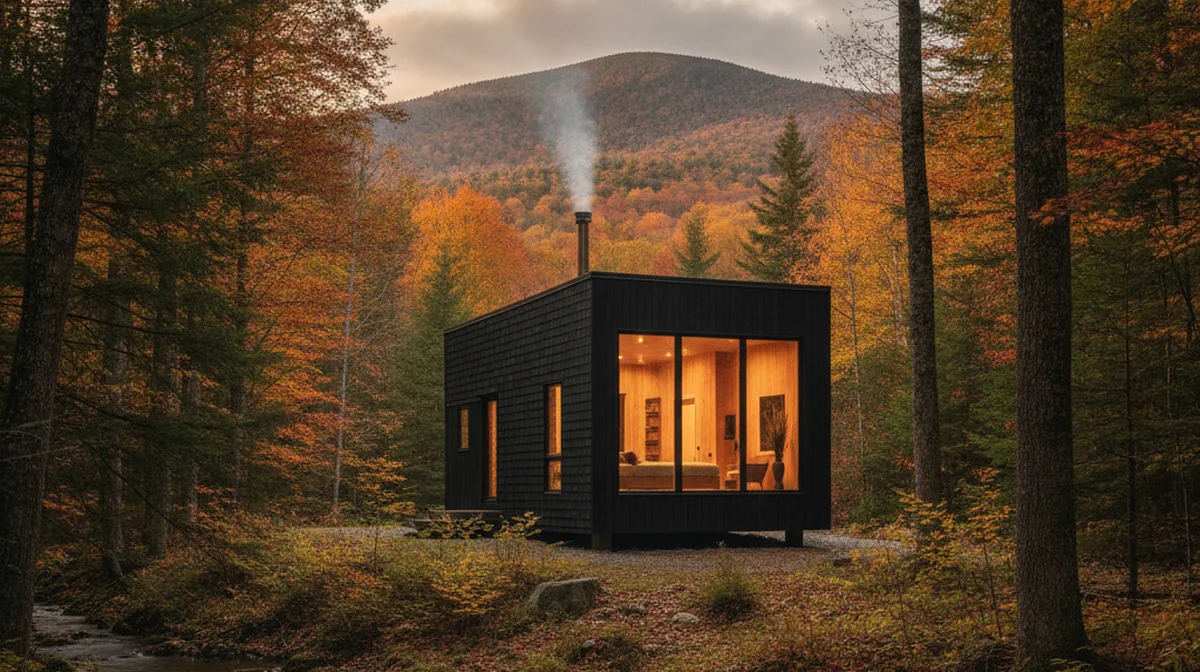
The Catskills are the mountains two hours northwest of New York City — Woodstock and Phoenicia in Ulster County, Hunter and Windham in Greene, Livingston Manor down in Sullivan — and over the past decade they've become the East Coast's design-cabin capital. Brooklyn money renovated the farmhouses, architects built the black-clad A-frames, and a weekend up here now means Kaaterskill Falls, a swimming hole on the Esopus, dinner at the Phoenicia Diner, and a wood stove going by nine. The guest is specific: a couple or small group from the city, booking on photography and mood, choosing between two hundred cabins that all claim a hot tub and a view. In a market built on aesthetics, how your listing looks isn't a detail — it's the whole game.
This is a genuine four-season market with two big peaks. Fall foliage — late September through mid-October — is the strongest window of the year, when leaf-season weekends book out months ahead. Summer brings swimming holes, hiking and the festival crowd; winter feeds Hunter, Windham and Belleayre with ski traffic that keeps cabins earning through February. Blended numbers land around $320 a night and low-50s occupancy, but the design-led cabins with strong photography run well above that while dated listings sit empty midweek. The soft spots are predictable: March and April mud season, and Monday-through-Thursday most of the year. The whole market is drive-to — almost every guest is coming up the Thruway or Route 17 from the city — which makes midweek and last-minute demand very responsive to marketing.
Nearby Markets: The Poconos | Lake Placid | New York City

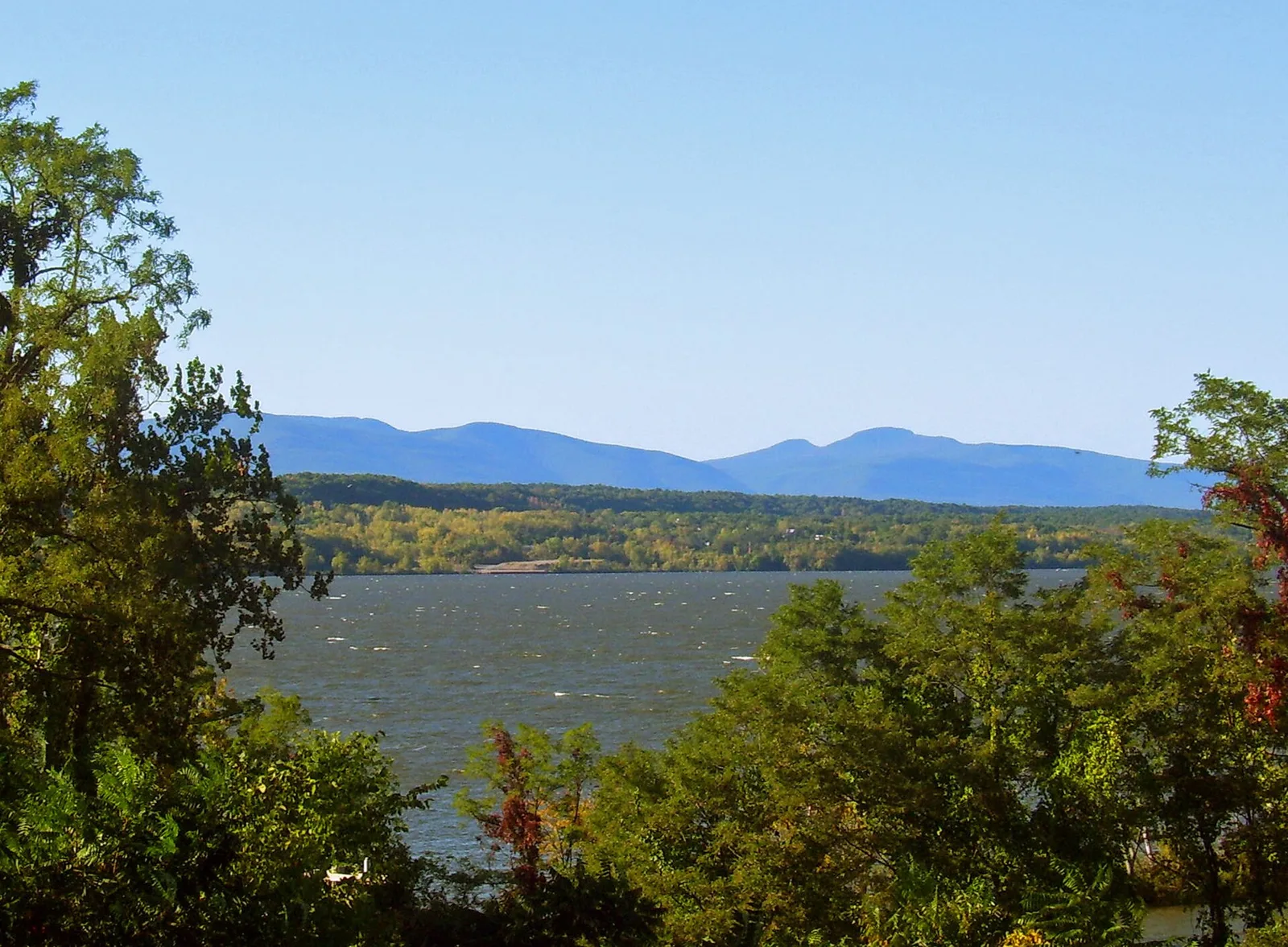
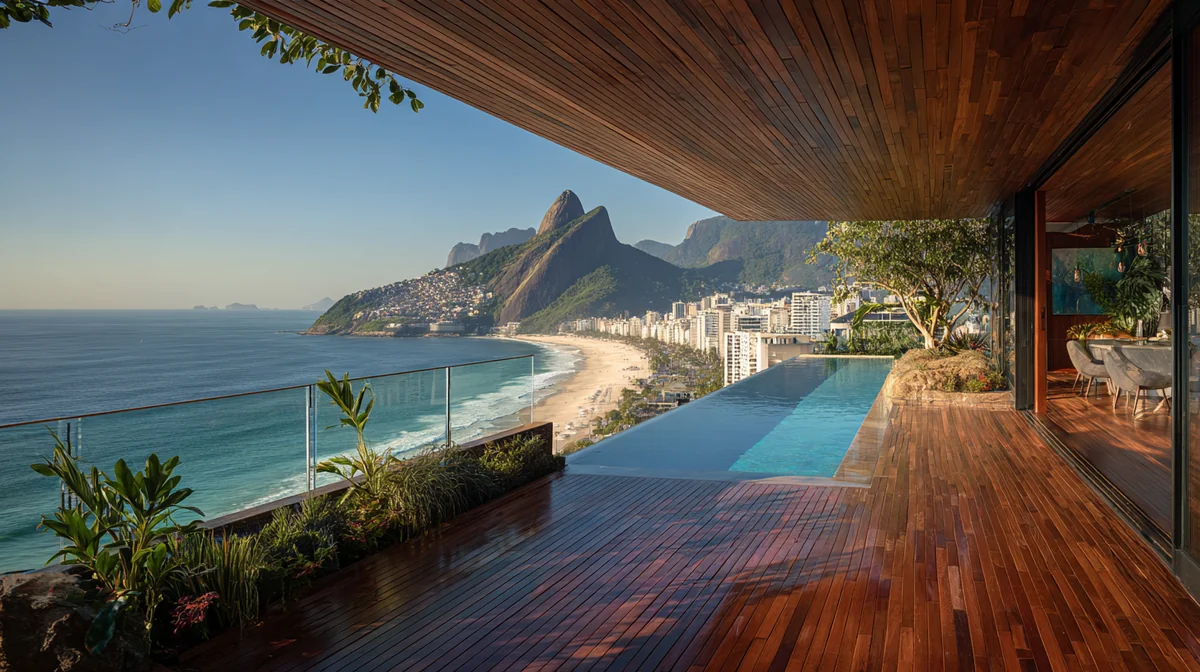
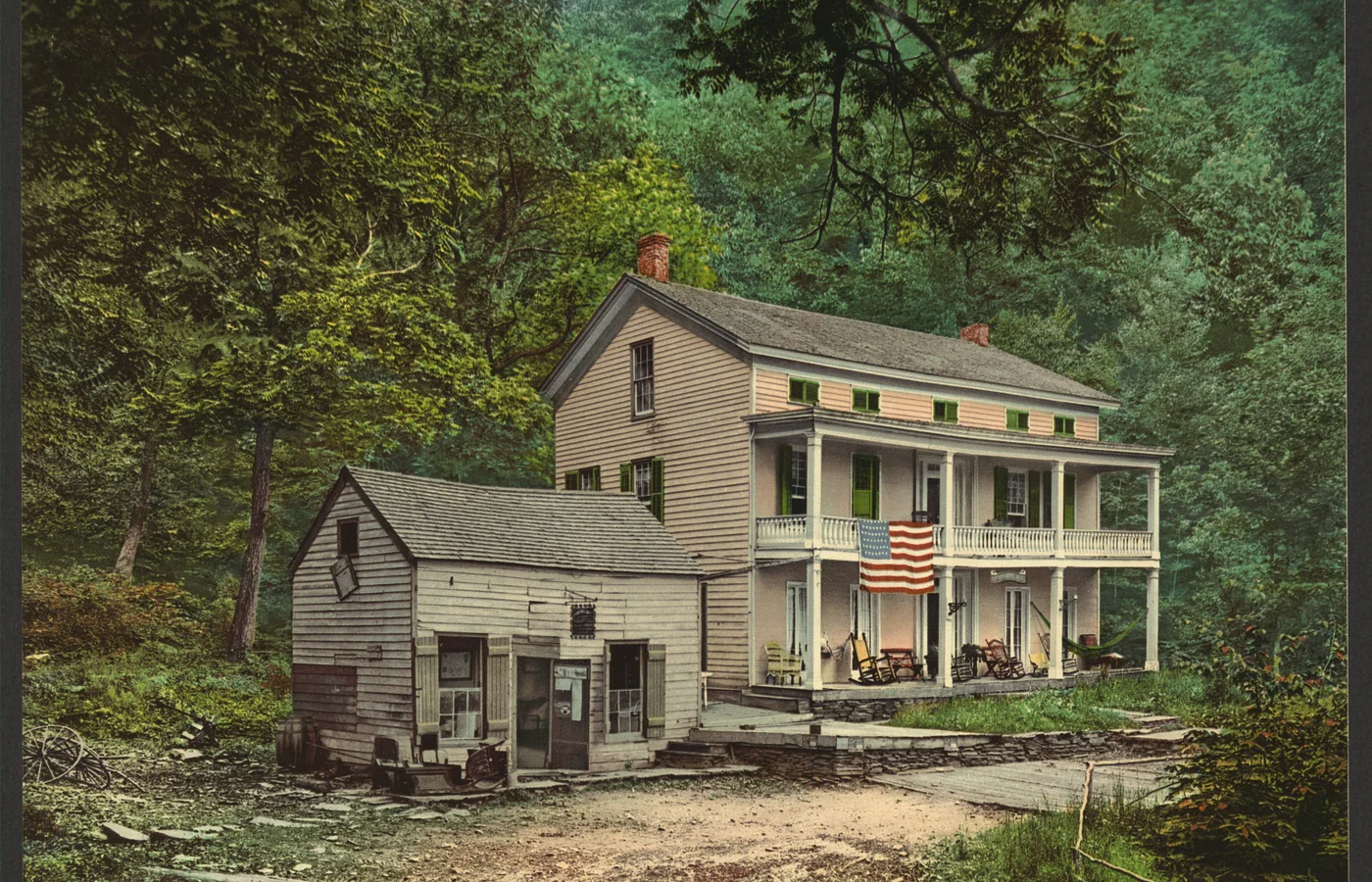
A few of the visual fingerprints we lean into when we shoot, brand and market a The Catskills property — courtesy of the open Wikimedia Commons archive.
Cavmir works the Catskills because this market is won on brand, and most owners don't have one. We name the cabin, shoot it in the light guests are actually buying — dusk, mist, snow, the stove lit — build a direct-booking website that turns one good stay into a repeat guest, and run vacation rental marketing against the midweek and mud-season gaps. We help position and market your property. We never manage it or touch your keys.
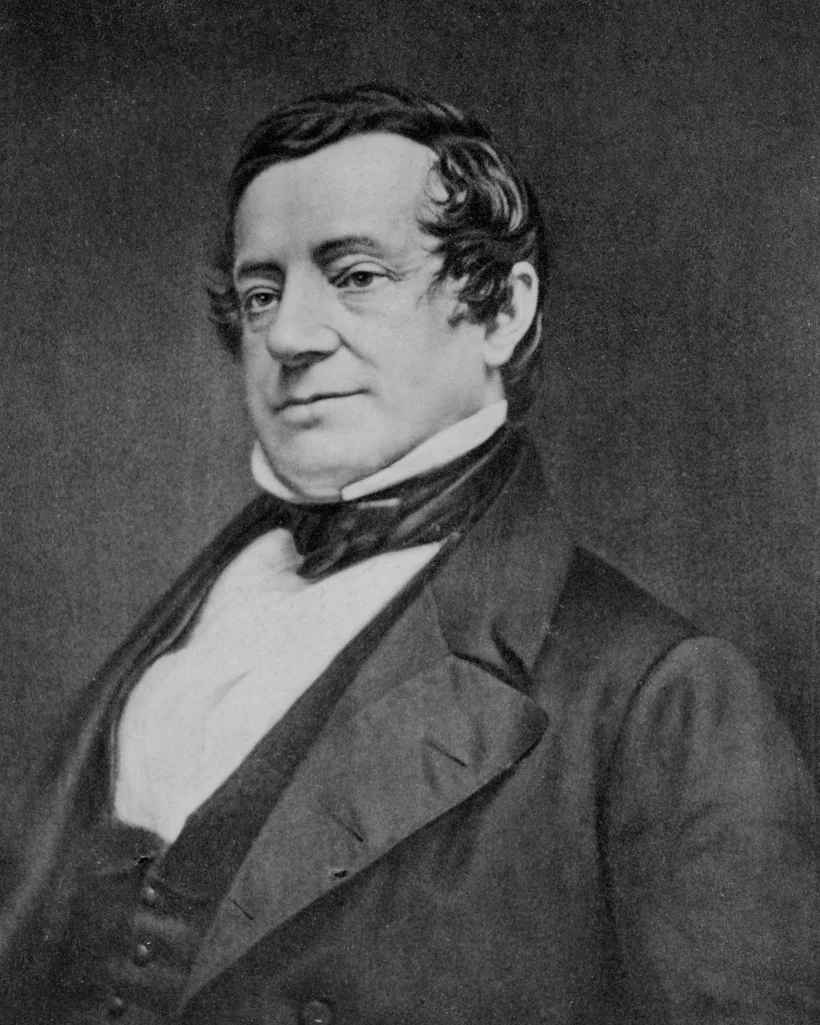
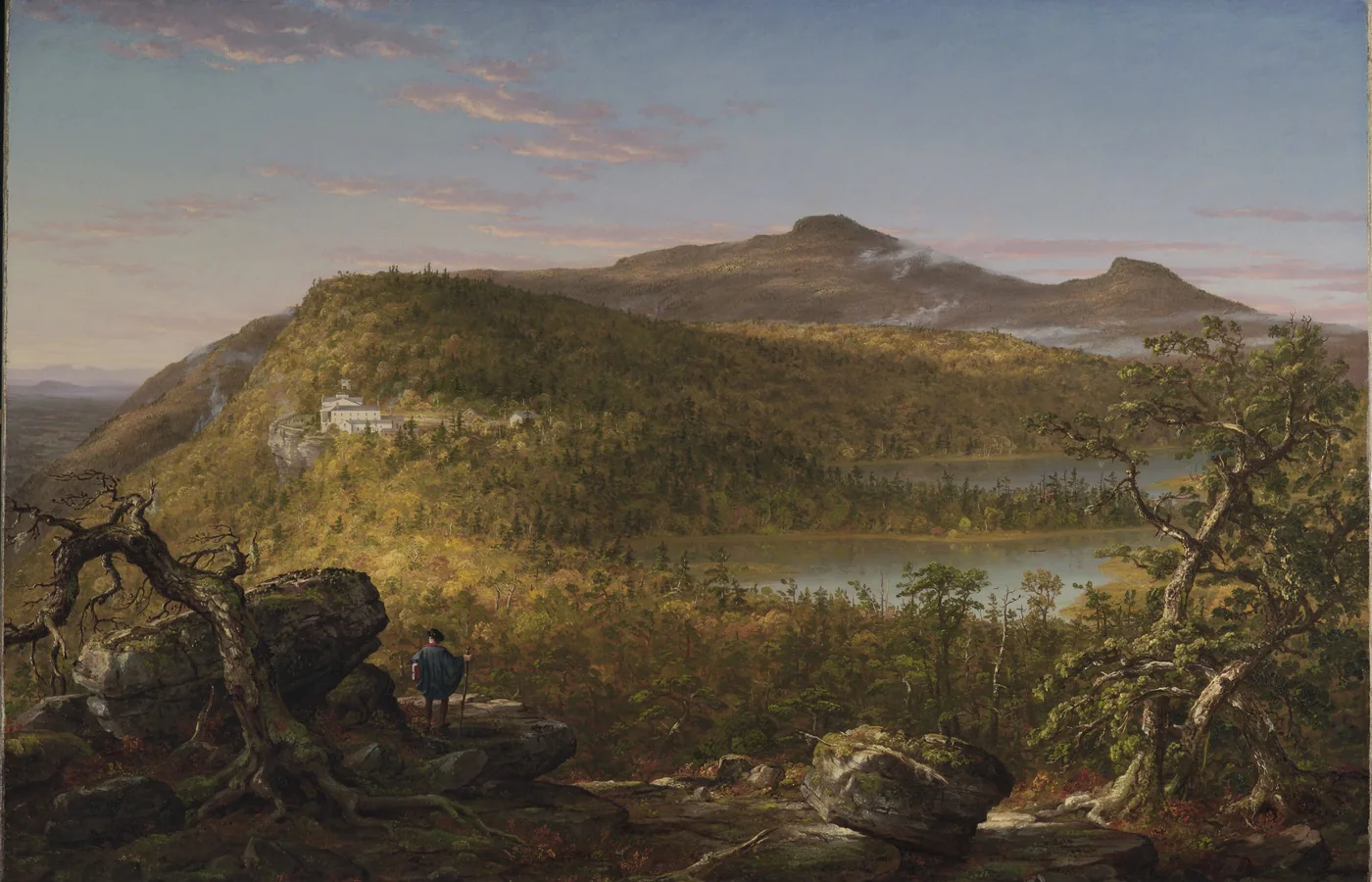
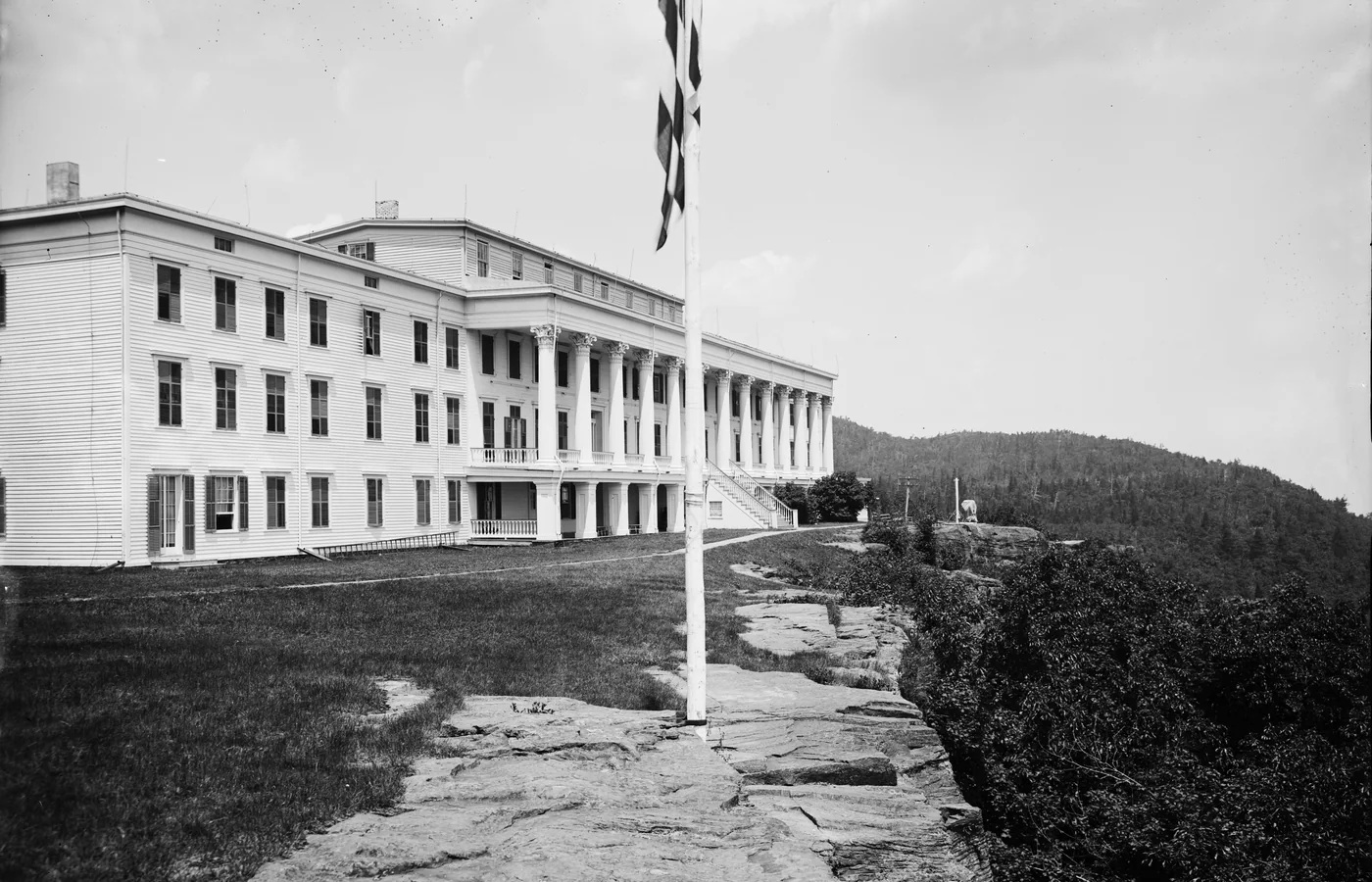
The Catskills were America's first great mountain resort. Washington Irving set Rip Van Winkle here, the Hudson River School painters made Kaaterskill Falls famous before photography existed, and by the mid-1800s grand hotels like the Catskill Mountain House drew city guests up by steamboat and stage. A century later the region reinvented itself as the Borscht Belt — hundreds of resorts in Sullivan and Ulster counties where generations of New York families summered and half of American stand-up comedy learned its trade. When air travel killed that model in the 1960s and 70s, the big hotels emptied and the region went quiet for decades.
The current chapter began in the 2010s, when Brooklyn priced out its own creative class and the Catskills offered what it had always offered: mountains two hours from the city. This time the form was different — renovated farmhouses, architect A-frames, black-clad cabins with wood stoves and picture windows — and Instagram did what the Hudson River School had done before, selling the landscape one image at a time. Woodstock's arts identity (the town gave the 1969 festival its name, though not its site), Phoenicia's creekside main street and Livingston Manor's fly-fishing heritage each anchor a distinct micro-market. Today the inventory is dominated by individually owned, design-forward whole homes, the guest arrives by car from the five boroughs, and towns across Ulster, Greene and Sullivan counties have moved from ignoring short-term rentals to permitting and capping them — a shift that increasingly favors established, compliant, well-marketed operators over newcomers.
Design is the price axis here more than geography. A photographed-to-death architect cabin near Woodstock or Phoenicia clears $400 to $700 a night in peak windows, while a dated three-bedroom nearby struggles at $200. Hunter and Windham carry a winter premium for ski-walkable or ski-close houses; Livingston Manor and the Sullivan County side run a little gentler with a strong fly-fishing and weekender crowd. Blended market estimates sit around $320 a night at low-50s occupancy. The spread between a branded cabin and a generic listing — often 2x on rate at equal occupancy — is the widest of any market we work in the Northeast, which is exactly the opportunity.
Fall is king: late September through mid-October foliage weekends book out far ahead at the year's best rates. Summer runs strong from June through August on swimming holes, hiking and festivals. Winter holds up around Hunter, Windham and Belleayre from Christmas through February. The soft windows are March-April mud season and midweek in every season — both fixable with marketing, since the entire guest base lives a two-hour drive away and books impulsively when the listing gives them a reason.
There's no statewide short-term-rental license in New York — regulation in the Catskills is entirely town by town, and the towns have been busy. Get your specific town's current rules in writing before you buy or list.
Woodstock requires an STR permit (roughly $250 a year) and caps non-owner-occupied permits — that cap has been full, with a waitlist, so an investor purchase there doesn't automatically come with the right to rent it. Shandaken (which includes Phoenicia) caps licenses for non-resident owners at 150, a quota reached quickly after adoption, and requires fire-safety inspections and posted emergency information. Hunter and other Greene County towns run their own permit regimes. Sullivan County towns around Livingston Manor have generally been lighter, but rules there are evolving too.
On top of town permits, New York State now applies sales tax to short-term-rental occupancy statewide (since March 2025), and Ulster County levies a 4% occupancy tax — raised from 2% — with Greene, Delaware and Sullivan counties each running their own occupancy taxes at different rates. Penalties for unpermitted operation include fines and losing your place in capped-permit queues. Confirm everything with the town clerk and code office in writing before you advertise.
The Catskills strategic tip: brand the cabin, because the cabin is the product. Guests here don't book a town and then find a house — they fall for one specific image of one specific cabin and plan the weekend around it. A name, a consistent visual identity and photography shot in the moods people are actually buying (dusk, fog, snow, the stove lit) move rate more than any amenity upgrade under five figures.
Tactically: first, shoot in the off-light. Golden hour, blue hour, mist and snowfall are what separate a $450 cabin from a $250 one photographed at noon. Second, build the direct channel early — this market runs on repeat couples and word of mouth, and a direct-booking website with an email list converts one good October stay into a February and a June booking without paying commission three times. Third, sell midweek on purpose: remote-work messaging, Sunday–Thursday pricing, and fast wifi stated plainly (with the speed test screenshot) fill the nights everyone else writes off. Fourth, be straight about the practical stuff — cell coverage gaps, snow driveways, the last mile of dirt road — because surprises become reviews, and the guest who chose you anyway becomes a repeat. Fifth, check the permit math before you count on growth: in capped towns your permit is an appreciating asset, and keeping it compliant and renewed is worth more than any single season's revenue.
Permit caps and waitlists in the marquee towns mean you can own a house you're not allowed to rent — the single biggest trap for new buyers. Midweek softness and mud season drag annual occupancy, winters demand plowing and pipe-freeze vigilance, and the design bar keeps rising as new architect cabins enter every year. Cell and internet dead zones are real and must be managed, not hidden.
A wood-stove cabin on a dirt road rented to strangers is not what a standard homeowner's policy has in mind. You'll want a short-term-rental or landlord policy with solid liability limits, and underwriters here care about the specifics: wood-burning appliances, hot tubs, ponds and creeks, and winter vacancy all affect terms. Snow-load and pipe-freeze claims are the regional classics. Work with an agent who writes upstate rental properties and disclose everything — a denied claim costs more than the premium ever did.
Plan on three layers: New York State and local sales tax on short-term stays (applied statewide since March 2025), your county's occupancy tax — 4% in Ulster, with Greene, Delaware and Sullivan at their own rates — and ordinary income tax on the earnings. Platforms collect some of this in some counties, but the registration and remittance obligation is yours, especially on direct bookings. County-by-county details shift; confirm your exact stack with your accountant before your first season.
Most Catskills rental purchases are second homes or investment properties, so expect the usual: bigger down payments, reserves, and rate premiums over primary loans, with DSCR products available where the rental income story is strong. One local wrinkle — in permit-capped towns, lenders and appraisers increasingly ask whether the property can legally operate as an STR, so have the permit answer before you have the mortgage conversation. A lender familiar with upstate seasonal markets will price it all more sensibly.
The structural bet on the Catskills is simple: the mountains aren't moving and neither is New York City. Two hours' drive from twenty million people, with no airport dependency and a four-season calendar, is a demand foundation that survives recessions better than fly-to markets. The regulatory direction is clear — more towns adopting permits, more caps on non-owner-occupied rentals — and that's quietly good news for owners already inside the fence: capped supply plus growing demand is how rates rise. The design arms race will keep escalating, which means the gap between marketed and unmarketed properties widens every year. Expect midweek remote-work demand to keep growing, expect the foliage and ski windows to stay premium, and expect the permit itself to become one of the most valuable lines on your property's balance sheet. The owners who treat the cabin as a small brand — with real photography, a direct-booking site and a returning guest list — are the ones the next decade pays.
The Catskills are the most design-literate rental market on the East Coast, and that makes the work a pleasure. The guest here has taste and books with their eyes: one moody photograph of a wood stove through a picture window outsells three paragraphs of amenity copy. When we get a cabin with good bones — a real A-frame, a farmhouse with old floors, a deck over a creek — the job is honest: shoot it in the fog and the snow and the last light, give it a name, and let the mountains do the talking. No market rewards photography more directly, which means no market shows our work faster.
We also love the underdog calendar. Everyone fills the foliage weekends; the craft is in the rest. Selling a Tuesday in January to a remote worker who wants to write by the stove, or a mud-season week to a painter who wants the mountain to herself — that's positioning, not discounting, and it's the difference between a cabin that earns eight months a year and one that earns three. And the towns here have real texture to market: Woodstock's fifty years of arts identity, Phoenicia's creek-town main street, Livingston Manor's fly-fishing bars. A listing that knows its town reads like a local and books like one. We're in it for the owner who built something beautiful and is tired of watching uglier cabins outrank it.
A great property in The Catskills doesn't just want a listing — it wants a point of view, an audience, and a brand the city itself would recognise.
A few honest, insider picks across Ulster, Greene and Sullivan counties — the specifics that make a cabin listing read like a local wrote it. Real places, no filler.
New York's most painted waterfall, and for good reason — go early on a weekday and you'll have the two-tier drop nearly to yourself. By 11 a.m. on a fall Saturday the trailhead is a parking problem. Tell guests both facts.
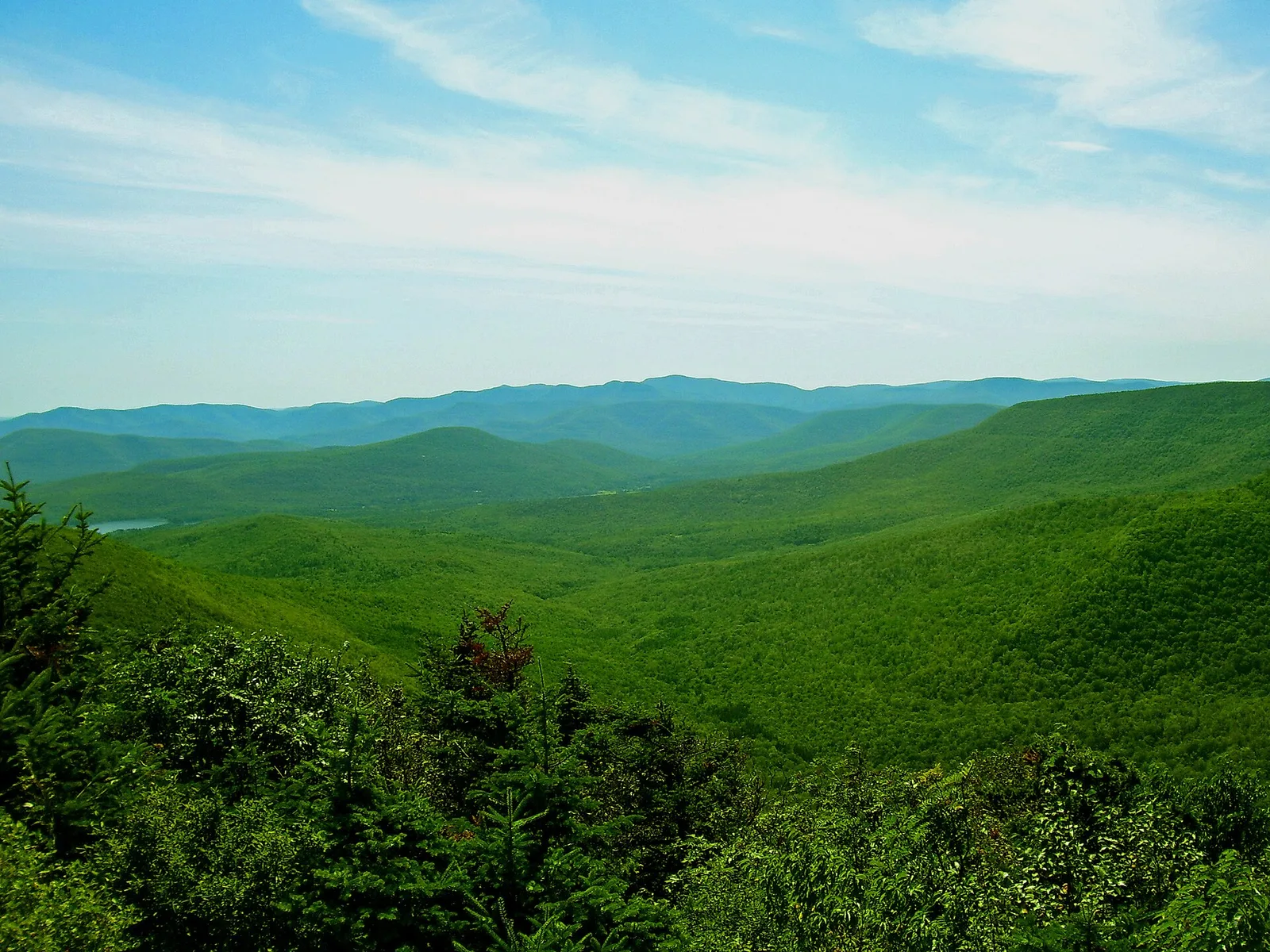
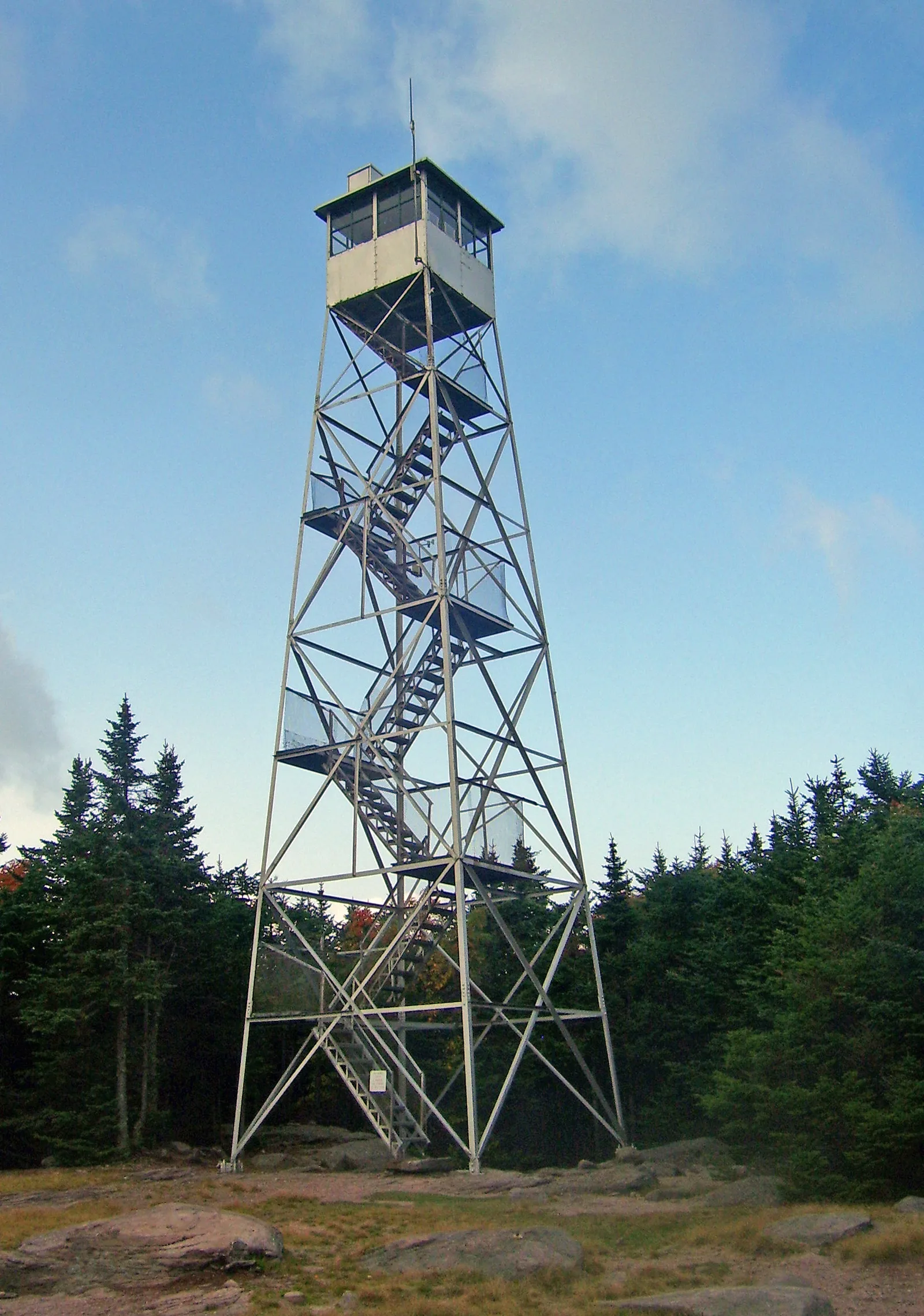
The hike passes the ruins of an abandoned mountain-house hotel on the way to a fire tower with the whole Hudson Valley below. Late light through the ruins is the most Catskills photograph there is.
The main street of America's oldest arts-colony town — galleries, record shops, the village green drum circle on Sundays. Guests staying anywhere in Ulster County will drive in; tell them where to park.
A 1962 roadside diner reborn as the region's unofficial clubhouse — chrome, neon, and skillets that show up on every Catskills weekend photo dump. Weekend waits are real; midweek it's all yours.
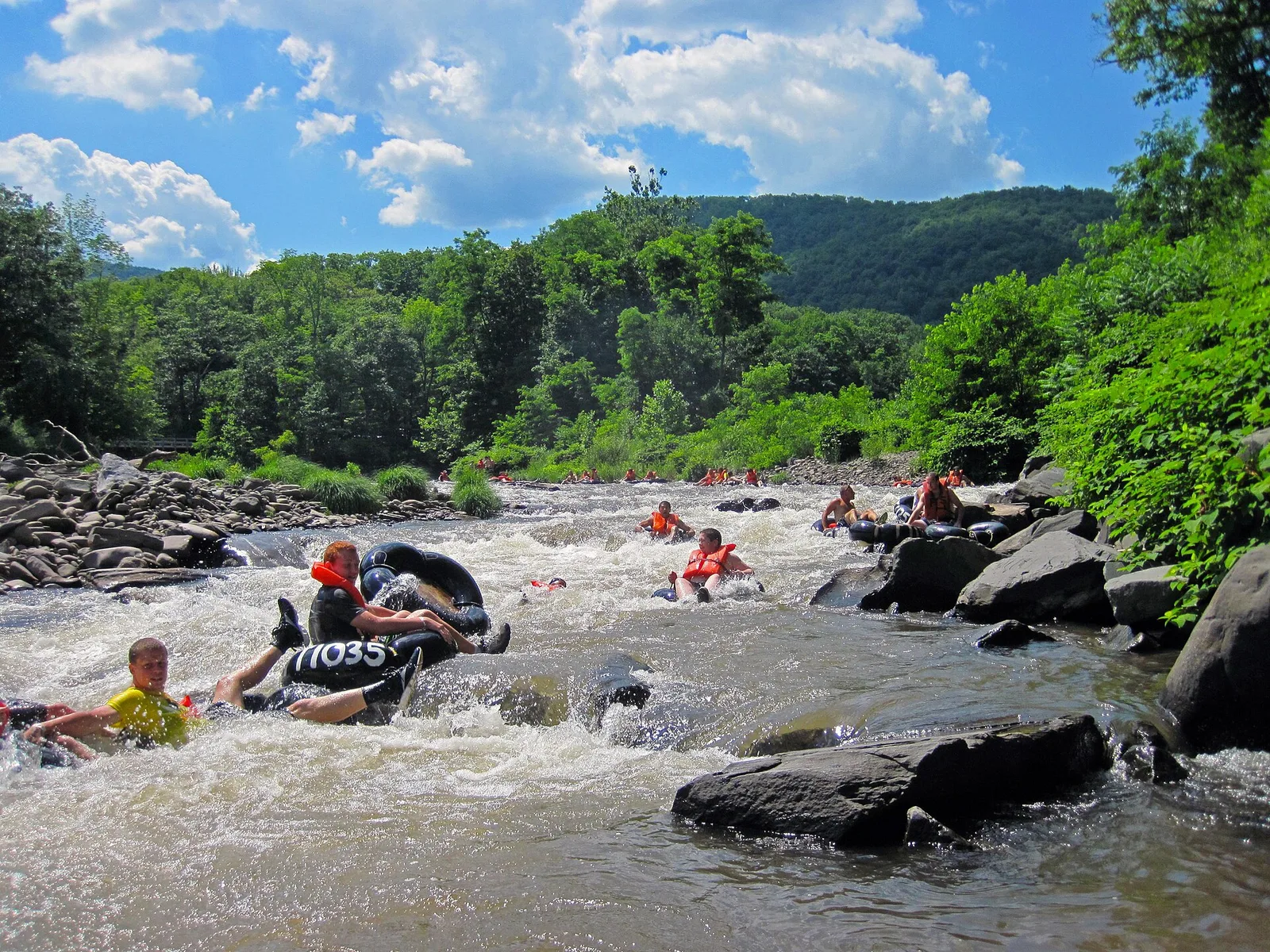
Summer here runs on creek swimming — the Esopus around Phoenicia and the famous Peekamoose Blue Hole (permit required in season). Point guests to the rules and the quieter spots; it's the amenity no cabin can build.
After the lifts close, the Belleayre area goes quiet while the waterfalls run their hardest of the year. Mud season is real, but late April hiking under full-throttle falls is the Catskills with nobody watching.
The Sullivan County side: fly-fishing water where American dry-fly fishing was born, the Catskill Fly Fishing Center, and a two-block main street with better food than towns ten times its size.
Every Catskills inquiry eventually asks the same two things: is there cell coverage, and can my car make the driveway? Answer both honestly in the listing — with the wifi speed test — and watch cancellations and bad reviews drop.
A few composite engagements drawn from how Cavmir typically works in the Catskills. The details are illustrative and consistent with the market, not pulled from a single named client.
A striking new-build A-frame with a ski-season location was photographed in flat summer daylight and priced against ordinary houses — its design premium invisible, its winter calendar soft outside holiday weeks.
Cavmir reshot the cabin in the conditions guests actually buy — snowfall, dusk, the stove lit — gave it a name and a consistent identity across channels, split winter and summer pricing properly, and pointed paid social at the city ski crowd from December through February.
Winter weekends began booking ahead at a clear premium over comparable houses, midweek ski stays appeared where there had been none, and the cabin's photography started doing the selling its architecture always deserved.
A renovated farmhouse with a full non-owner-occupied permit — a scarce asset in a capped town — was listed with phone photos and generic copy, earning like an unpermitted spare room while the permit's value sat unused.
Cavmir positioned the house around what the permit made possible: a full brand, a direct-booking website, professional photography through the seasons, and copy anchored in Woodstock's arts identity rather than boilerplate cabin language.
The house moved decisively upmarket in rate, repeat guests began booking direct for return stays, and the owner came to treat the permit-plus-brand combination as the appreciating asset it is.
A modest two-bedroom on good water had a natural audience — fly-fishing travelers and quiet-weekend couples — but a listing that never mentioned the river, the hatch calendar or the town, so it competed as generic inventory.
Cavmir rebuilt the positioning around the water: photography from the bank at first light, copy written for anglers and their patient partners, a simple direct-booking site, and outreach into the fishing-travel channels the big platforms don't reach.
Spring and fall — previously the dead zones — became the strongest windows on the calendar, guests began arriving pre-sold on the location, and the cabin found the specific audience it had been invisible to.
Talk to Cavmir today. We'll show you exactly what your The Catskills property is leaving on the table — and how fast we can change that.
Book a Free Strategy Call