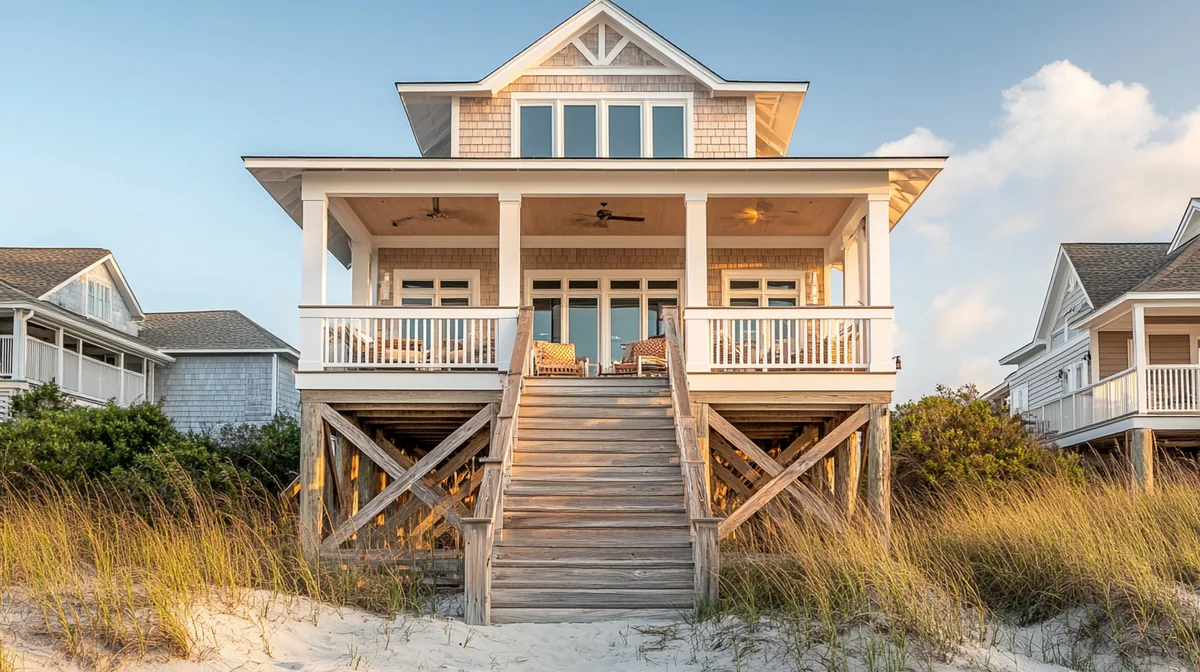


Breakfast
Café 44
A local breakfast spot the county visitors bureau knows for its pancakes and Southern biscuits. An easy first stop on arrival morning, before the grocery run and the first afternoon on the water.

Short-term rental marketing to grow bookings and nightly rate on Lake Oconee, from lakefront homes with a private dock on the Putnam County shore to golf homes inside Greene County's rental districts and lake houses that fill with Atlanta families in July, golf groups in the fall and wedding parties near the Ritz-Carlton.
Sixteen services, one team. Everything below is built in-house and scoped to your property and market. Most owners start with the 12-Step System.
Every engagement is quoted to your portfolio. These are the ready-made scopes owners pick most — our Fall Special (55% off list or more) is already applied to the website, King Broker, Hotels and à la carte scopes. A clear proposal within 48 hours.
The work is public. Selected engagements and what changed — and reviews from the owners and managers behind them.
* Market averages from AirROI data for Eatonton, Georgia (the Putnam County side of Lake Oconee), 12 months October 2025 to September 2026, updated October 1, 2026; AirROI Greensboro, Georgia for the Greene County side. ROI is Cavmir's estimate. A single home's numbers depend on its size, its location and how it is marketed.
Cavmir is an Airbnb marketing agency. We build the brand, the direct-booking website and the marketing for short-term rentals in Lake Oconee.
Lake Oconee is one of Georgia Power's lakes, more than 19,000 acres of water on the Oconee River, with a shoreline shared by Greene, Morgan and Putnam counties. Greensboro is the town on the Greene County side and Eatonton the town on the Putnam County side, and the Greene County visitors bureau puts the lake about 75 miles east of Atlanta, just over an hour's drive. The Ritz-Carlton Reynolds lists Hartsfield-Jackson Atlanta International Airport 75 miles from its door. The rental market is almost all whole houses: in AirROI's Eatonton market, the bigger of its two markets on the lake, about 97 percent of listings are entire homes, nearly nine in ten are houses, and seven in ten sleep eight or more guests.
The market splits into products that book and price differently. Lakefront homes with a private dock carry the summer, and AirROI's data shows why: about 71 percent of Eatonton listings are tagged waterfront, and those average roughly $55,500 a year against $21,600 for the rest. Reynolds Lake Oconee, a 12,000-acre community with eight courses on its golf page and The Ritz-Carlton Reynolds on its shore, sells golf, marinas and a resort on the water, though it says access to its amenities can be subject to fees, membership dues or other limits. Then come the off-water houses in and around Greensboro and Eatonton. The zoning map draws one more line: Greene County allows stays under 31 days only inside a short-term rental overlay district, Putnam County caps its licenses, and Morgan County allows short stays only as a conditional use. A listing titled 'Lake Oconee lake house' competes with all of them at once, and some of them can't legally host the same guest.
The calendar is a summer calendar with a fall second act. In AirROI's twelve months to September 2026, July averaged about $11,789 of revenue per listing at 53.7 percent occupancy and June about $10,428, while February brought in about $2,420 and January's occupancy fell to 18.8 percent. AirROI's high season, May through August, averaged about $536 a night at 43 percent occupancy, and the three strongest months earned 43 percent of the year's revenue. Then golf takes over: the visitors bureau puts the golf season at September through November, with fall color peaking from late October into early November. The guests are mostly a drive away. Atlanta is the top origin city in AirROI's data at about 14.6 percent of guests, followed by Athens, Alpharetta, Jacksonville and Milledgeville, and 98.5 percent of guests are domestic.
What sets Lake Oconee apart is the size of the spread between the houses that work and the ones that don't. AirROI's median listing fills about 28 percent of its nights and earns about $3,530 a month; the top quarter fills 45 percent or more and earns $6,860 or more, and the top tenth fills 62 percent or more and earns $12,700 or more. Revenue per listing fell about 7.5 percent on the year while the number of active listings grew about 20 percent, so the average house is working harder for less. The houses at the top usually have the same things in common: a legal right to rent short stays that's spelled out in the listing, the dock and the water in the first photos, a calendar priced for the real seasons, and families and golf groups who come back. That's work a marketing plan can do.
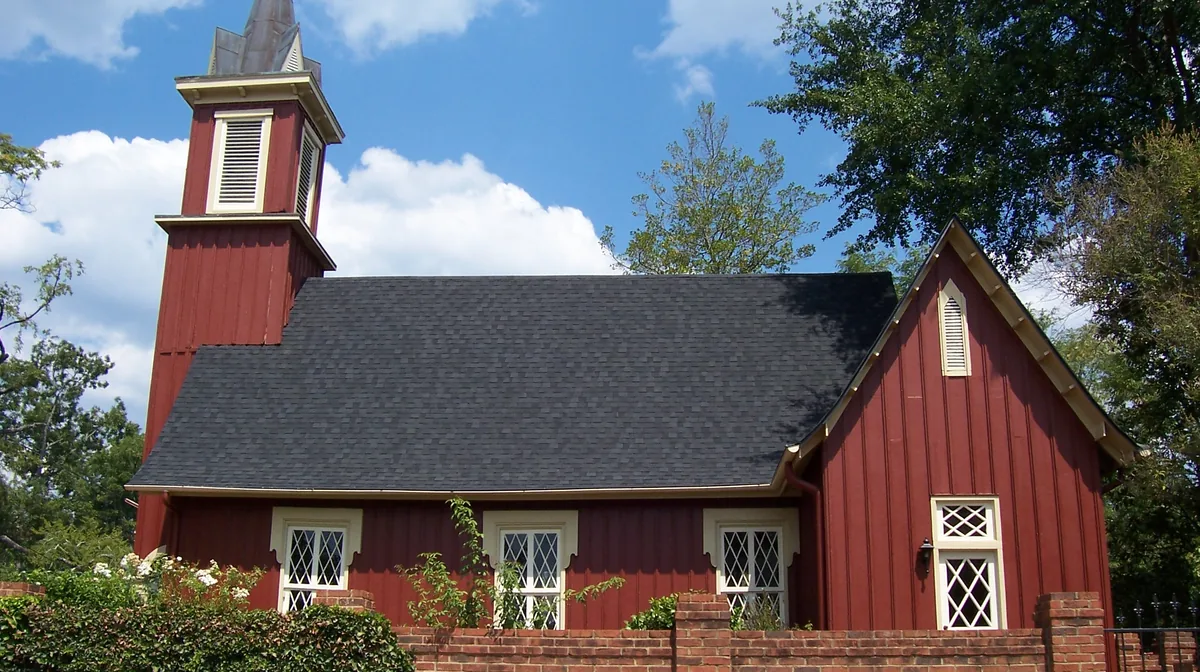
Photo: Upstateherd · CC BY-SA 3.0 · via Wikimedia Commons
Cavmir markets Lake Oconee homes as the small hospitality brands they are, the lakefront house with a dock that hosts the same Atlanta family every July, the golf home in a Greene County rental district that fills with foursomes in October, the house near the Ritz-Carlton that sleeps a wedding party, rather than as interchangeable lake inventory. We put your property in front of the guest who picks Lake Oconee on purpose, the Alpharetta family booking July in April, the golf group planning a fall weekend, the bride's parents looking for a house close to the ceremony, wherever they search, from Google and AI assistants to the email list that brings last summer's family back.
Before the lake, there was the Oconee River and the towns that grew up beside it. Scull Shoals, on the river in Greene County, was settled in 1784 and became a mill village with one of Georgia's first paper mills and a four-story textile mill that employed more than 600 people. A flood in 1887 wrecked most of the mills, the people eventually left, and the mill foundations, chimneys and an old arched bridge now sit in the Oconee National Forest at the end of a dirt road. In Greensboro, the Old Gaol was completed in 1807: a two-story granite jail with two-foot-thick walls and a trap door above the entry where condemned prisoners were hanged, believed to be the oldest jail structure still standing in the state. The town's city cemetery dates to the 1700s and is the resting place of pioneer settlers and eight Revolutionary War soldiers.
Across the water, Eatonton gave American literature a set of stories. Joel Chandler Harris was born in Eatonton on December 9, 1845, and worked as a printer's devil at Turnwold, the plantation of Joseph Addison Turner, where he first heard the stories he later compiled as the Uncle Remus tales. The Uncle Remus Museum on South Oak Street tells that history, and in June 2009 it opened a wing that recreates Turner's office and library. Putnam County also borders Lake Sinclair, another Georgia Power lake, so an owner on the Putnam side answers to the same county rules on either lake, and AirROI's Eatonton numbers may take in some Sinclair houses as well as Oconee ones.
The lake is younger than many guests assume. Reynolds Lake Oconee traces its own story to a family retreat on the Oconee River about a century ago; by 1982, it says, the river had become Lake Oconee, and the Reynolds club and community was founded. It has grown to 12,000 acres with nearly 4,000 members, 11 restaurants, five full-service marinas and 21 miles of walking and biking trails, and its golf page lists eight courses, among them Great Waters by Jack Nicklaus, The National and Richland by Tom Fazio, The Oconee by Rees Jones, The Landing and The Preserve by Bob Cupp, and Creek Club by Jim Engh. Great Waters has hosted the LPGA's Drive On Championship. The Ritz-Carlton Reynolds sits on the shore at 1 Lake Oconee Trail, and Reynolds calls it one of the only lakefront Ritz-Carltons in the world. Outside the gates, the Harbor Club course, designed by Weiskopf and Morrish and opened in 1991, is the only completely public golf course in Greensboro, and Georgia Power owns public parks around the shore, including Old Salem, Parks Ferry and Lawrence Shoals, each with a seasonal campground.
Today the market is mid-sized, house-heavy and tightly zoned. AirROI's Eatonton market shows 263 active listings averaging about $512 a night at 31 percent occupancy over the twelve months to September 2026, for annual revenue near $45,856 per listing, down about 7.5 percent on the year as listings grew about 20 percent. Its smaller Greensboro market, 55 listings, averaged about $480 a night at 27 percent occupancy, with revenue down about 26 percent as listings rose 62 percent. Greene County has required short stays to sit inside an overlay district since September 1, 2018; Putnam County adopted a new ordinance on September 1, 2023 that caps licenses at 350, and it had issued 254 for 2026; Morgan County allows short stays only as a conditional use. The gaps we look for first are the ones that cost money: a listing that never says whether the house is licensed, photos that skip the dock, no plan for golf groups or wedding weekends, and nothing to sell between December and March.
Lake Oconee pricing is tiered by size and water first. In AirROI's Eatonton data, homes with five or more bedrooms average about $961 a night and $93,700 a year at 35 percent occupancy, four-bedroom homes about $555 and $51,500, and three-bedroom homes about $342 and $27,200. The nightly spread runs from $260 or less for the bottom quarter to a median of about $370, $565 or more for the top quarter and $1,045 or more for the top tenth. The amenity data says what guests pay for: listings tagged waterfront average about 157 percent more revenue than those without, hot tubs, found on 17 percent of listings, about 133 percent more, and fire pits about 111 percent more. The top listing in the market, a ten-bedroom house, earned about $363,309 at an average rate of $2,141. A dock house that belongs in the top tier but presents like the median is an expensive mistake, and the fix is usually positioning before price.
The calendar does the heavy lifting. AirROI's high season, May through August, averages about $536 a night at 43 percent occupancy and $8,420 a month; April, its shoulder month, about $502 at 33 percent and $5,030; and the long low season, September through March, about $465 at 28 percent and $3,740 a month. Rates move less than owners expect, from about $445 in February to about $555 in June and July on AirROI's two-year averages, so most of the off-season gap is in empty nights rather than in price. Guests book about 60 days ahead on average, 78 days out for July 2026 in AirROI's monthly table and only 23 to 24 days for January and February, and the average stay is 3.9 nights, from about 3.2 in October to 4.4 in June.
The common mistakes are pricing a July week like a June weekend and letting the fees do the damage. July books furthest out and earns the most, so its best weeks deserve their own rate and a weekly minimum, released first to the families who stayed last year. About 62 percent of the market's listings use a two-night minimum and 25 percent a three-night minimum, which leaves room for a longer minimum in peak weeks and a shorter one midweek in the fall. AirROI puts the median cleaning fee at $251 and the average at $284, charged by about 95 percent of listings and adding up to about 13.5 percent of gross revenue, so check what yours does to the total a guest sees for two nights. About half the market uses a firm cancellation policy; if yours is stricter than the houses around you on summer weeks, make sure the house and the price earn it.
High seasonality with a summer top. On AirROI's two-year averages July earns about 4.7 times what February does, $11,300 against $2,430 per listing, and the three strongest months bring in 43 percent of the year's revenue. June and July are the core, May and August the edges, and April climbs toward summer, booked about 70 days ahead in 2026. Fall carries its own trade: the visitors bureau puts the golf season at September through November, fall color starting around mid-October and peaking from late October into early November, and fall as prime time for largemouth bass and crappie. November 2025 was the strongest month of the low season, about $4,981 per listing, booked about 68 days ahead with stays averaging 4.1 nights. January is the quietest month for occupancy, under 19 percent.
The revenue most owners miss sits in three places. The first is winter: from December through March guests book three to six weeks out and stay about four nights, so a weekly or monthly rate, a fireplace in the photos (about half the market lists an indoor fireplace, and those listings earn about 62 percent more) and flexible check-in days fill weeks that sit empty under a summer model. The second is the fall weekday, when golf groups and couples will come Sunday to Thursday if someone offers them a midweek rate. The third is Greene County's rule set: a house outside an overlay district can't take stays under 31 nights, but it can host a month-long guest any time and short stays in the first half of April, and a calendar built around those two products earns from a house many owners assume can't rent at all.
Start with the state's taxes. Airbnb collects and remits Georgia's 4 percent state sales tax and the 2 to 5 percent county and local sales tax on reservations of 89 nights or fewer, including cleaning fees, plus the state's $5-a-night hotel-motel fee for the first 30 days of a reservation and every locally imposed occupancy tax, which Airbnb says typically runs 0 to 8 percent. The Department of Revenue says the innkeeper, or the marketplace innkeeper that lists the rental, is legally responsible for the $5 fee, that the fee stops on the 31st day of continuous occupancy, and that returns are due monthly by the 20th, filed electronically, even in a month with no rentals. If you take direct bookings, all of that is yours: register for sales tax and the state fee, collect them and file every month. Greene County won't issue a rental license without proof of a Georgia sales tax number.
Greene County's rule is the one to understand before you buy. In the unincorporated county, a rental of fewer than 31 days is allowed only inside a Short-Term Rental Overlay District, and only with a current county short-term rental business license, which expires every December 31. You can check a parcel on the county assessor's qPublic map under 'Short Term Rental Districts'. A new district needs an application showing the support of owners of at least 60 percent of the legal parcels in the residential community, the Board of Commissioners makes the final decision, and an approved district lasts five years before it is renewed or ended after a public hearing; a developer still building a community can apply for areas within it. Houses that rented short stays and paid the county's hotel-motel tax between September 1, 2016 and August 31, 2017 kept the right as a non-conforming use, but that status ends when the house is sold to an unrelated buyer. From April 1 to April 15 each year, short stays are allowed in any district without the license, though the posting, parking, noise, local-contact and safety rules still apply and the hotel-motel tax is due by May 20. Operating without a required license carries a $1,000 penalty for each day the house is marketed or rented for overnight stays.
Inside a district, the license comes with conditions. Overnight guests are capped at two per bedroom plus two per house, daytime visitors at six more, and cars at the number of on-site spaces, with no parking on county roads. You need a local contact person who lives in the county or within 60 miles and can reach the house within an hour of a call from the sheriff or code enforcement, an interconnected, hard-wired smoke detection system, and advertising that states the maximum occupancy, the vehicle limit and the noise rules. A house built for more than ten overnight guests must meet the access and life-safety codes that apply to hotels. Greene's hotel-motel tax ordinance, as the county posts it, sets the tax at 5 percent of rent, with no tax on stays of more than 30 consecutive days, due by the 20th of the following month, and the county also asks short-term rentals to file a personal property return, form PT50P, between January 1 and April 1.
Putnam County, on the Eatonton side, adopted its current rules on September 1, 2023. A short-term vacation rental is any stay of 30 consecutive days or less, and it needs an annual county license, $350 a year, one house per license. The ordinance sorts the zoning districts into sectors: in R-1R no short-term rentals are allowed except those that were already operating, and across the R-1, R-2, RM-1, RM-3 and agricultural districts the county allows no more than 350 licenses in total, counting the older R-1R ones, with new applicants waitlisted after that. The county's list showed 254 licenses issued for 2026. Every ad must show the license number, the maximum occupancy and the vehicle limit; occupancy is two per bedroom plus two, with a ceiling of 12 for licenses issued since September 1, 2023; the person signing the rental contract must be at least 25; and a 24-hour agent must reach the house within an hour. The contract has to state how many people, cars and boats are allowed, speakers must stay indoors from 10 p.m. to 9 a.m., and special events, campers and fireworks are out. Violations can bring a fine of up to $1,000, and three in twelve months revoke the license for a year. A house rented once in a calendar year for 14 days or less needs no license. Putnam's hotel-motel excise tax is 8 percent, reported monthly by the 20th, though no report is needed if every booking runs through an online facilitator that remits it.
Morgan County, the third county on the lake, takes a different approach. Its zoning ordinance prohibits short-term rentals in every district except where they're specifically allowed as a conditional use, so you need that approval before you can apply for the annual license, which takes the form of an occupational tax certificate, has to be applied for again every year and ends automatically when the property changes hands. Rentals are limited to seven days, no more than 52 such rentals a year, with no overlap; the house is inspected every year before the license is issued; and the ordinance requires a paved off-street parking space per bedroom, with a boat or trailer counting as a vehicle, a 10-pound ABC extinguisher on every level, interconnected smoke detectors in every bedroom and a local contact on call 24 hours whose details go to the sheriff, the fire department and every neighbor within 300 feet. Then come the rules no county writes. Greene's and Putnam's ordinances both say private covenants still apply, so read your community's documents before you list. Docks, boathouses and seawalls need a written construction permit from Georgia Power, which also lists a maximum boat size of 30 feet 6 inches on Lakes Oconee and Sinclair. Inside Greensboro, Eatonton or Madison city limits, check the city's own rules. Treat this section as orientation rather than legal advice, and confirm current requirements with the state, your county, your city and your association before you list. Cavmir handles the marketing side; licensing and tax compliance sit with you and your local professionals.
First, put your right to rent in the listing. A guest can't tell a licensed house from an unlicensed one unless you say so, and two of the three counties ask you to: Putnam's ordinance requires the license number, the maximum occupancy and the vehicle limit in every ad, and Greene's requires the occupancy, vehicle and noise rules. AirROI's data shows no listing in the Eatonton market displaying a permit or license number, so a house that shows one stands out as the careful choice. Add the license number, the occupancy cap and the parking count to the description, the house manual and your own site, and if you're in Greene County say plainly that the home sits inside a rental district. If you're buying, ask which rule gives the house its right to rent before you make an offer, because in Greene a grandfathered right ends at the sale and in Morgan the license ends with a change of ownership.
Second, sell the golf weekend as its own product. The visitors bureau puts the golf season at September through November, Reynolds sells packages such as Stay & Play 18 and the National Village Experience, and the Harbor Club, opened in 1991, is the only completely public course in Greensboro. Give golf groups a page of their own: which courses a guest can book and how, the drive to each first tee, bedrooms laid out for four or eight adults in separate beds, room for clubs and a cooler, and a midweek rate for Sunday-to-Thursday foursomes. Never imply access to Reynolds courses, marinas or dining that your offer doesn't include; the community says access can be subject to fees, membership dues or other limits, and a golf group that arrives expecting a tee time it can't get writes the review that costs you next fall.
Third, build for the wedding weekend and the family reunion, inside the rules. The Ritz-Carlton Reynolds can host weddings of up to 600 guests outdoors or 300 indoors, and the visitors bureau's wedding itinerary sends the rehearsal dinner out on the water at sunset. The families and bridal parties around those events need houses, and the right listing tells them in the first lines how many adults it sleeps under the county cap, how far it is to the ceremony, where the cars park and whether a boat can collect them; Lake Oconee Boat Tours runs a 23-foot Barletta tritoon that picks guests up at their location. Know your numbers before you market them: Putnam caps occupancy at two per bedroom plus two, with a ceiling of 12 on newer licenses, Greene uses the same formula and allows six daytime visitors on top, and in Greene a house for more than ten overnight guests has to meet hotel life-safety codes. Putnam bans special events at short-term rentals, so sell the house as the place the wedding party sleeps.
Fourth, engineer the repeat and treat operations as marketing. Atlanta sends about 14.6 percent of the market's guests, with Athens and Alpharetta next, so the family that comes back for the same July week every year is the most valuable guest on the lake, which argues for a real direct channel: a fast direct-booking website, a complete Google Business Profile and a past-guest list that hears about next summer's weeks first. The bar is high here: AirROI's Eatonton listings average a 4.88 rating, 54 percent carry Airbnb's Guest Favorite badge, about 60 percent of the market is run by Superhosts and about 41 percent of listings use Instant Book. About one guest in ten speaks Spanish, by AirROI's language data, so a bilingual house manual is cheap and memorable. It also means life jackets in every size by the dock, a check-in that works after a Friday drive from Atlanta, and photos that match the house exactly.
Zoning decides what you can sell, and it can change with a sale. In Greene County, a house outside an overlay district can't take stays under 31 nights except in the first half of April, an approved district lasts five years before it is renewed or ended, and a grandfathered house loses its right when it sells to an unrelated buyer. Putnam's 350-license cap means a new owner may join a waitlist, and R-1R parcels can't get a new license at all. In Morgan County the license ends with a change of ownership and rentals top out at seven days. Owners who bought a lake house on the assumption that it was 'already an Airbnb' have the most to lose, and the fix is to confirm the house's status in writing before you build a marketing plan on it.
The lake is a summer market with a long quiet stretch. July earns about 4.7 times what February does, and January occupancy averages under 19 percent, so a house priced and marketed only for summer families spends seven months of the year mostly empty. AirROI's low season runs from September through March, and those months still average about $3,740 a listing, which is the revenue a fall golf product, a winter monthly rate and a holiday offer compete for. Owners who live in Atlanta or farther away face a second problem: remotely run lake houses drift, with stale photos, slow replies and a winter calendar nobody opens. A strong local operations partner and current marketing close that gap.
The competition is growing and getting more professional. AirROI's Eatonton market added about 20 percent more listings in a year while revenue per listing fell about 7.5 percent, and in its Greensboro market listings rose 62 percent while revenue fell about 26 percent. The ten biggest hosts run about 28 percent of the Eatonton listings, and about 22 percent are professionally managed. On the golf and wedding side, a house also competes with The Ritz-Carlton Reynolds and the cottages Reynolds offers inside the community, from four-bedroom National Club Cottages that sleep eight to condominiums at The Village at Lake Club Pointe. A house wins those guests on space, privacy, a dock and a kitchen, but only when the listing makes the case as clearly as the resort does.
Lake Oconee insurance has to cover the water as well as the house. Expect a homeowner policy that allows short-term rental use or a dedicated rental policy, higher liability limits for the dock, swimming and any boat guests use, separate coverage for the dock and boathouse, and flood cover if your parcel sits in a mapped flood zone. Greene and Putnam both require an interconnected, hard-wired smoke detection system, and in Greene a house for more than ten overnight guests has to meet hotel life-safety codes, so tell your carrier exactly how the house is set up. Disclose rental use to the carrier, and talk to a broker who writes Georgia lake homes before you buy.
Rental income is federal and Georgia income. On Airbnb bookings, Airbnb collects Georgia's 4 percent state sales tax, the local sales tax, the $5-a-night state fee and the local hotel-motel tax; on direct bookings you collect and file them yourself, monthly by the 20th. Greene County's hotel-motel tax is 5 percent and Putnam's is 8 percent, and Greene also asks short-term rentals to file a PT50P personal property return by April 1. Ask the county assessor how a rental home is classified before you budget property tax, and work with a Georgia accountant who knows short-term rentals.
Financing is conventional but sized for the market: jumbo loans for lakefront homes, second-home or investment-property pricing depending on how you use the house, and lenders who want a realistic, summer-heavy revenue model rather than a flat monthly average. Before you close, confirm the house's right to rent in writing, because in Greene and Morgan that right can depend on the parcel and can end with the sale, and add community dues and any club membership to the carry.
Lake Oconee's outlook is stable for structural reasons. The lake belongs to Georgia Power's system and isn't going anywhere, Atlanta is just over an hour away, and Reynolds keeps investing in golf, with eight courses on its golf page and The Ritz-Carlton Reynolds hosting weddings on the shore. The guests who come for July on the water, a fall golf weekend or a wedding have reasons to visit that don't depend on a platform's search ranking.
The pressures to watch are local. Putnam's cap leaves about 96 licenses between the 254 issued for 2026 and the ceiling of 350, and once it fills, new owners wait. Greene's overlay districts are approved for five years at a time and renewed after a public hearing, so a district's neighbors have a say every cycle. Morgan's conditional-use model gives the county a case-by-case decision on every house. None of this threatens a well-run, licensed rental, but each one rewards owners who keep their paperwork, their neighbors and their reviews in order.
The other shift is in how guests find a house. Travelers now also find stays through AI assistants and direct search, not only platform scrolls, and the properties that surface in those answers publish clear, structured, useful information: the license number, the dock and the boat limit, the drive to Reynolds and the Ritz-Carlton, the golf a renter can actually book and a fast site an assistant can read. Our guide to generative engine optimization for vacation rentals explains how that works. Lake Oconee's guests plan weeks or months ahead and ask specific questions, so positioning for those answers now is one of the most durable advantages an owner can build.
Lake Oconee is a market where plain facts sell. There's a big lake an hour from Atlanta, a dock at the bottom of the yard, more golf than a group can play in a weekend and a small town with a granite jail more than 200 years old that you can borrow the keys to. When a listing says exactly what the house offers instead of generic lake-getaway copy, it attracts the guest who's actually shopping for Lake Oconee, and that guest tends to come back and look after the house.
What I love about marketing here is the calendar's personality. July belongs to families on the water, October to golf groups and the first fall color, the first half of April to Greene County's open window, and January to the couple or the remote worker who wants a quiet month by the fire. An owner who stops marketing one generic lake house and starts marketing four seasonal products often finds nights and rate that were sitting there all along.
And the raw material is generous. A river that ran mills before there was a lake, the town where Joel Chandler Harris first heard the Uncle Remus stories, an iron horse in a pasture and a jail with a trap door give a host more stories than a welcome book can hold. Our job is rarely to invent an angle. It's to notice the true one the owner has stopped seeing, frame it plainly and put it in front of the guest already looking for exactly that.
The picks Cavmir puts in a Lake Oconee welcome book: the details that make a stay feel like local knowledge instead of a printed concierge script, and that quietly earn the five-star reviews.
A local breakfast spot the county visitors bureau knows for its pancakes and Southern biscuits. An easy first stop on arrival morning, before the grocery run and the first afternoon on the water.
At 114 North Main Street, a Southern lunch spot whose buttermilk pie has been featured in Southern Living. Lunch runs Monday to Saturday from 11 to 2, and dinner Thursday to Saturday from 5 to 9.
Greensboro's granite jail was completed in 1807, with two-foot-thick walls and the trap door still above the entry. Stop at Genuine Georgia downtown for a set of keys and you can tour the inside.
A mill village settled in 1784 on the Oconee River, with one of Georgia's first paper mills, wrecked by a flood in 1887. Take Highway 15 north from Greensboro, turn right on Macedonia Road and follow the sign; the last stretch is about ten minutes of dirt road.
Abbott Pattison's 12-foot iron sculpture from 1954 stands on a Greene County farm off Highway 15, moved there from the University of Georgia campus after repeated student pranks. A quick photo stop that guests remember.
At 214 South Oak Street, the museum tells the story of Joel Chandler Harris, born in Eatonton in 1845, and the tales he first heard at Turnwold. Open Monday to Saturday, closed for lunch from noon to 1 between March and October; adults pay $5 and a family rate is $15.
Lake Oconee Boat Tours runs sunset and full-moon cruises on a 23-foot Barletta tritoon with a 250-horsepower motor, and the boat can pick guests up at their location. A good rehearsal-night or anniversary booking to suggest in advance.
On Lake Oconee Parkway in Eatonton, a watercraft rental shop whose fleet includes Nautique, Sea Ray, Crest, Yamaha and Honda. Point guests here when the house has a dock but no boat.
Designed by Weiskopf and Morrish and opened in 1991, it's the only completely public golf course in Greensboro, so it's the tee time a group can book without a Reynolds package.
The resort's restaurants include Linger Longer Steakhouse, Amore del Lago and Gaby's by the Lake, which the visitors bureau calls casual lakefront dining, with Oconee Cove for a drink after. Book ahead on summer and golf-season weekends.
Forest walking trails, an observation tower above the fall leaves and an archaeological site, all in one morning. A good outing for guests who've had enough sun, best from mid-October when the color starts.
Three property types that do well in Lake Oconee, a common starting point for each, and the plan Cavmir builds for it.
A licensed lakefront house near Eatonton with a covered dock that fills June and July, but shows the kitchen before the water, never mentions its license number or boat limit, prices every summer week the same and sits mostly empty from December to March.
Rebuild the listing around the water and the license: new photography from the lake and the dock, the dock and lift described exactly, the license number and the occupancy, vehicle and boat limits in the first lines, July weeks priced as their own product with a weekly minimum and released to past guests first, a fall golf and midweek rate, a winter weekly rate, and a direct-booking site with a past-guest list.
Built to raise July rate, fill fall weekdays and give the winter a product of its own. Track July nightly rate against the previous year, fall midweek nights booked, December-to-March occupancy, review mentions of the dock, and the share of direct and returning-guest bookings.
A licensed home near Reynolds Lake Oconee inside a short-term rental overlay district whose listing shows a golf course but never explains which courses a renter can book, so golf groups arrive expecting access the offer doesn't include, and wedding guests never find it.
Confirm the community's current rental and amenity rules and the license conditions first, then position the home around what a guest really gets: the house, the view, the public and package golf a renter can book, and the drive to the Ritz-Carlton and the Harbor Club. Add a golf-group page with a midweek rate for September to November, a wedding-party page with the legal occupancy and the parking, a sunset-cruise suggestion for rehearsal nights, and a clear amenity note in the listing and the confirmation email.
Aimed at fewer access complaints, better reviews and more fall and wedding bookings. Track review mentions of golf access, inquiry-to-booking rate from golf groups, September-to-November occupancy and repeat bookings from groups.
A lake house on the Greene side that the owner bought expecting to rent by the weekend, only to learn that it sits outside any overlay district, so stays under 31 nights aren't allowed except from April 1 to 15, and the calendar sits empty.
Rebuild it as two legal products: furnished stays of 31 nights or more, marketed to families building or renovating at the lake, remote workers and people trying the area before they buy, with monthly pricing, fast wifi and a work desk in the photos; and a first-half-of-April product that follows the county's posting, parking, noise and local-contact rules, with the hotel-motel tax filed by May 20. Add a direct-booking page for both, and if neighbors want the same thing, note that a new district needs the support of owners of 60 percent of the community's parcels.
Designed to turn a house that can't take weekend stays into steady income without breaking the county's rules. Measure months booked by 31-night-plus guests, April window nights and revenue, inquiry sources and renewals among monthly guests.
Yes. Cavmir works with owners around Lake Oconee, in Greensboro, Eatonton, Reynolds Lake Oconee and the rest of the Greene, Putnam and Morgan county shoreline, on branding, listing optimization, photography direction, direct-booking websites, SEO and paid campaigns. Lakefront homes with a dock, golf homes inside Greene County's rental districts and houses that sleep a wedding party are exactly the kind of stays we market. We're a marketing agency; day-to-day operations stay with you or your local manager.
AirROI's Eatonton market data for the twelve months to September 2026 puts the average at about $512 a night and 31 percent occupancy, or roughly $45,856 a year per listing, down about 7.5 percent on the year. The spread is wide: the median listing earns about $3,530 a month and fills 28 percent of its nights, the top quarter $6,860 or more at 45 percent or more. Treat these as market averages, not a forecast for your house; product, presentation, pricing and the house's legal right to rent decide where a property lands.
June and July are the peak, with July the top month for revenue, and May and August are strong edges. Fall runs on golf, from September to November, and on fall color from late October into early November. December through March is the quiet stretch, when guests book late and a weekly or monthly product earns more than a discounted weekend.
Only if it's licensed and sits inside a Short-Term Rental Overlay District, or kept a grandfathered right from 2016 and 2017. Greene County allows stays under 31 days only in those districts, with an annual license that expires December 31, and charges $1,000 for each day an unlicensed rental is marketed or rented. Outside a district you can still rent for 31 nights or more, and from April 1 to 15 short stays are allowed in any district without the license, though the county's posting, parking, noise and contact rules still apply. Check your parcel on the county's qPublic map and confirm with the county; Cavmir handles the marketing side, not legal or permitting advice.
Putnam requires an annual license, $350 a year, for any stay of 30 days or less, with a cap of 350 licenses across the county and no new licenses in the R-1R district; 254 were issued for 2026. Every ad must show the license number, the maximum occupancy and the vehicle limit, occupancy is two per bedroom plus two with a ceiling of 12 on newer licenses, and a 24-hour agent must reach the house within an hour. The county's hotel-motel excise tax is 8 percent. Confirm the current rules with the county before you list.
Yes, on its own bookings. Airbnb collects Georgia's 4 percent state sales tax and the 2 to 5 percent local sales tax on stays of 89 nights or fewer, the state's $5-a-night hotel-motel fee for the first 30 days, and the locally imposed occupancy taxes, which include Greene County's 5 percent and Putnam County's 8 percent. On direct bookings you collect and file everything yourself, monthly by the 20th, and Greene County asks for a Georgia sales tax number before it issues a license.
Give each its own page. For golf groups, say which courses a renter can book and how, from Reynolds' packages to the public Harbor Club, the drive to each first tee and a midweek rate for September to November. For wedding parties, lead with the legal occupancy, the parking and the drive to the ceremony, and suggest a sunset cruise for the rehearsal night. Atlanta sends the most guests, so geo-target it first; see vacation rental SEO for how search fits in, and our Atlanta page for the city market itself.
It depends on scope. Current plans and one-time project pricing are on the pricing page; most owners start with a listing overhaul or the 12-step system. A conversation about your property costs nothing: contact Cavmir.
Send us the listing and we'll tell you what we'd change. Not a pitch deck — a straight read on your photos, your title, your rates against the Lake Oconee comp set, and whether a direct-booking site would pay for itself.
You'll hear back from a person, usually inside one business day. If we don't think we can move your numbers, we'll say so. Cavmir is a short-term rental marketing agency — we position and market properties, we don't manage them.
Demand in Lake Oconee peaks around June through July and runs quietest around January through February. Here is how the year actually books — and what to do about each stretch of the calendar.
Summer is the peak on Lake Oconee. July is the strongest month for revenue and occupancy, June is close behind, and July stays book furthest ahead, more than two months out. Hold July rates firm, use weekly minimums on the best weeks, release them to last year's families first, and have the dock photos and listing copy finished by early spring.
Fall runs on golf and color. The golf season runs from September through November, fall color peaks from late October into early November, and November is the strongest month of the fall. Sell golf weekends and midweek foursomes as their own product, give couples a midweek rate, and treat April, when bookings start climbing toward summer, as the start of the season.
December through March is the quiet stretch, and January is the emptiest month of the year. Guests book late in winter, often within a few weeks, and stay around four nights, so a weekly or monthly rate, fireplace and hot tub photos and flexible check-in days fill weeks a summer model leaves empty. It's also the time to refresh photos, service the dock and plan next summer's offer to past guests.
Guests book about two months ahead on average. July books furthest out, more than two months early, while January and February stays often come in within about three weeks. Have summer ready by early spring, open fall golf weekends early, and keep winter pricing flexible for late planners.
Most stays run a long weekend to a few nights. They're shortest in the fall, when weekend trips dominate, and longest in early summer and midwinter, when family weeks and longer winter visits are part of the mix.
The winner is a four- to five-bedroom lakefront house with a private dock, a clear view of open water and room for two families or a golf group. In the gated communities, the homes that do best say plainly what a renter can use and which courses a guest can book. Off the water, houses near Greensboro and Eatonton win when they sell golf, weddings and longer stays instead of competing with dock houses on the water.
Start by naming your product, lakefront with a dock, a golf home near Reynolds Lake Oconee or a house that sleeps a wedding party, and sell that advantage in the title and the first photos. Price around the real calendar, holding July firm, selling fall golf weekends as their own product and building a weekly or monthly rate for winter. Add a Google Business Profile and a direct-booking site so summer families and golf groups can rebook you directly. That's the marketing layer Cavmir builds for owners here: photography direction, listing copy, a direct-booking website and local search.
Summer is the peak, with July the strongest month and June close behind; May and August are the edges. Fall stays busy with golf from September through November and fall color into early November, and December through March is the quietest stretch of the year.
About two months ahead on average. July books furthest out, more than two months early, while winter books on short notice, often within about three weeks. Have summer ready by early spring and open fall golf weekends early.
The drive market leads: Atlanta and its northern suburbs send the most guests, with Athens, Augusta and Milledgeville close behind. Fly-in guests use Hartsfield-Jackson Atlanta International, about 75 miles from The Ritz-Carlton Reynolds, so the big fly-in cities matter most for golf and wedding weekends.
A private dock and a view of open water lead, followed by a hot tub, a fire pit and an indoor fireplace for the cooler months. Group-friendly bedrooms and off-street parking matter for golf groups and wedding parties, and fast wifi matters for longer winter stays.
Run your Airbnb, Vrbo, or website through Cavmir's free grader. It checks the things that decide whether guests book on Lake Oconee — photos, listing copy, page speed, local search — and shows you where bookings leak. Takes about a minute, and there's no sales call attached.
If the report says your booking engine is the weak link, that's fixable: a direct-booking website of your own means repeat guests stop paying platform fees to come back to you. That's the work Cavmir does — see Airbnb website design on Lake Oconee.
Talk to Cavmir today. We'll show you exactly what your Lake Oconee property is leaving on the table — and how fast we can change that.
Book a Free Strategy Call