

Coffee & First Light
The square before the shops open
Get down there by eight on a Saturday and you have the courthouse square almost to yourself. By eleven in October it is shoulder to shoulder, so the early hour is the good one.

Expert short-term rental marketing to grow your bookings and nightly rate in Dahlonega, Georgia, USA.
Sixteen services, one team. Everything below is built in-house and scoped to your property and market. Most owners start with the 12-Step System.
Every engagement is quoted to your portfolio. These are the ready-made scopes owners pick most — our Fall Special (55% off list or more) is already applied to the website, King Broker, Hotels and à la carte scopes. A clear proposal within 48 hours.
The work is public. Selected engagements and what changed — and reviews from the owners and managers behind them.
* Market averages from AirDNA and STR market reports. A single home's numbers depend on its size, its location and how it is marketed.
Cavmir is an Airbnb marketing agency. We build the brand, the direct-booking website and the marketing for short-term rentals in Dahlonega.
Dahlonega is an hour and change north of Atlanta, which makes it one of the easiest weekend escapes in the Southeast and one of the most consistently under-marketed. The town square is a genuine nineteenth-century gold-rush square with the old Lumpkin County courthouse in the middle of it, now the gold museum. Around it sit tasting rooms, a couple of good restaurants and a college. Fifteen minutes out in any direction you are on gravel, climbing toward Amicalola Falls, the Chestatee River or the approach trail that walkers take to the southern end of the Appalachian Trail. The wineries are the thing most visitors come for now — Wolf Mountain, Three Sisters, Montaluce, Frogtown and the rest turned Lumpkin County into Georgia's wine country without anyone in Atlanta quite noticing when it happened. Rental stock runs from downtown lofts and cottages to hilltop cabins with a long view and a hot tub. Occupancy is driven by weekends and by events, which is both the constraint and the opening.
The Atlanta metro is five and a half million people and almost all of Dahlonega's demand comes from it. That produces a market with a very particular shape: Friday and Saturday nights sell themselves, midweek is thin, and the calendar spikes hard around a handful of real events. Gold Rush Days in October fills the county. Bear on the Square in April fills it again. Wedding season at the vineyards runs spring through fall and books whole cabins for whole weekends. Late fall leaf traffic is strong and December brings the Old Fashioned Christmas crowd to the square. The market's weakness is Sunday through Thursday, and it is the single biggest lever an owner here has. Most listings do nothing about it. They price the week flat, they wait, and they take a 40 percent month. The second weakness is sameness. A lot of the newer cabin stock was built to the same spec — mountain view, hot tub, fire pit, shiplap — and photographed the same way, so guests choose on price because nothing else distinguishes the options. An owner who tells a specific story here, whether that is wine-country base, trail access, or a downtown walk-everywhere cottage, separates from the pack quickly because so few competitors bother.
Nearby Markets: Blue Ridge | Helen | Atlanta | Lake Oconee
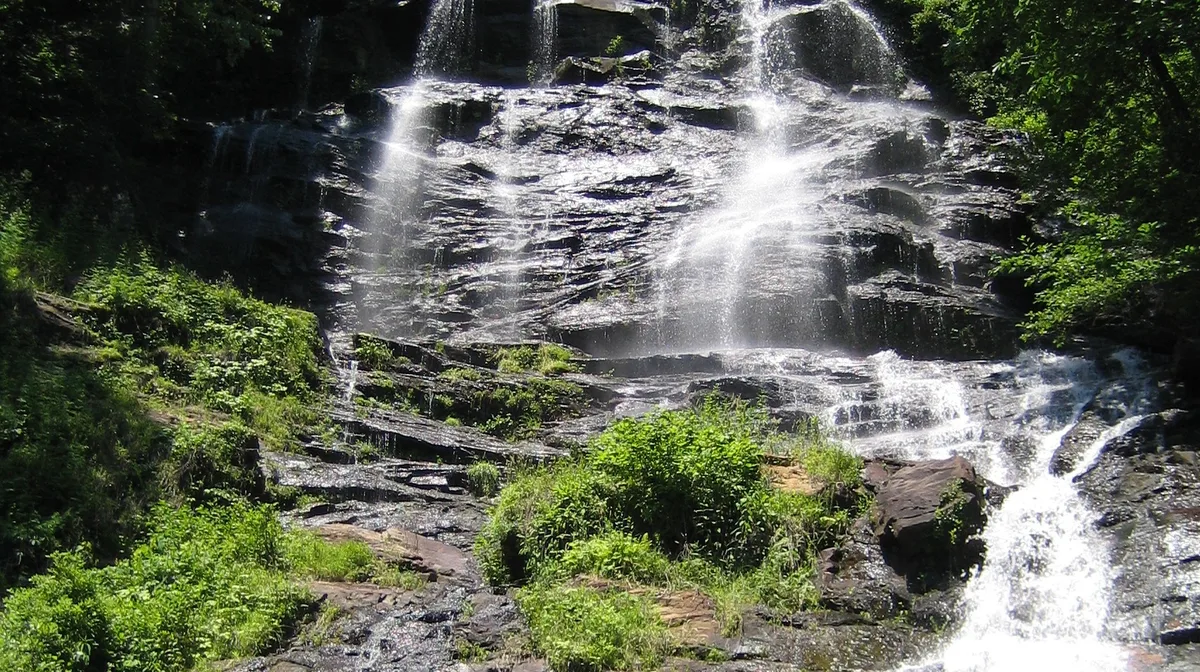
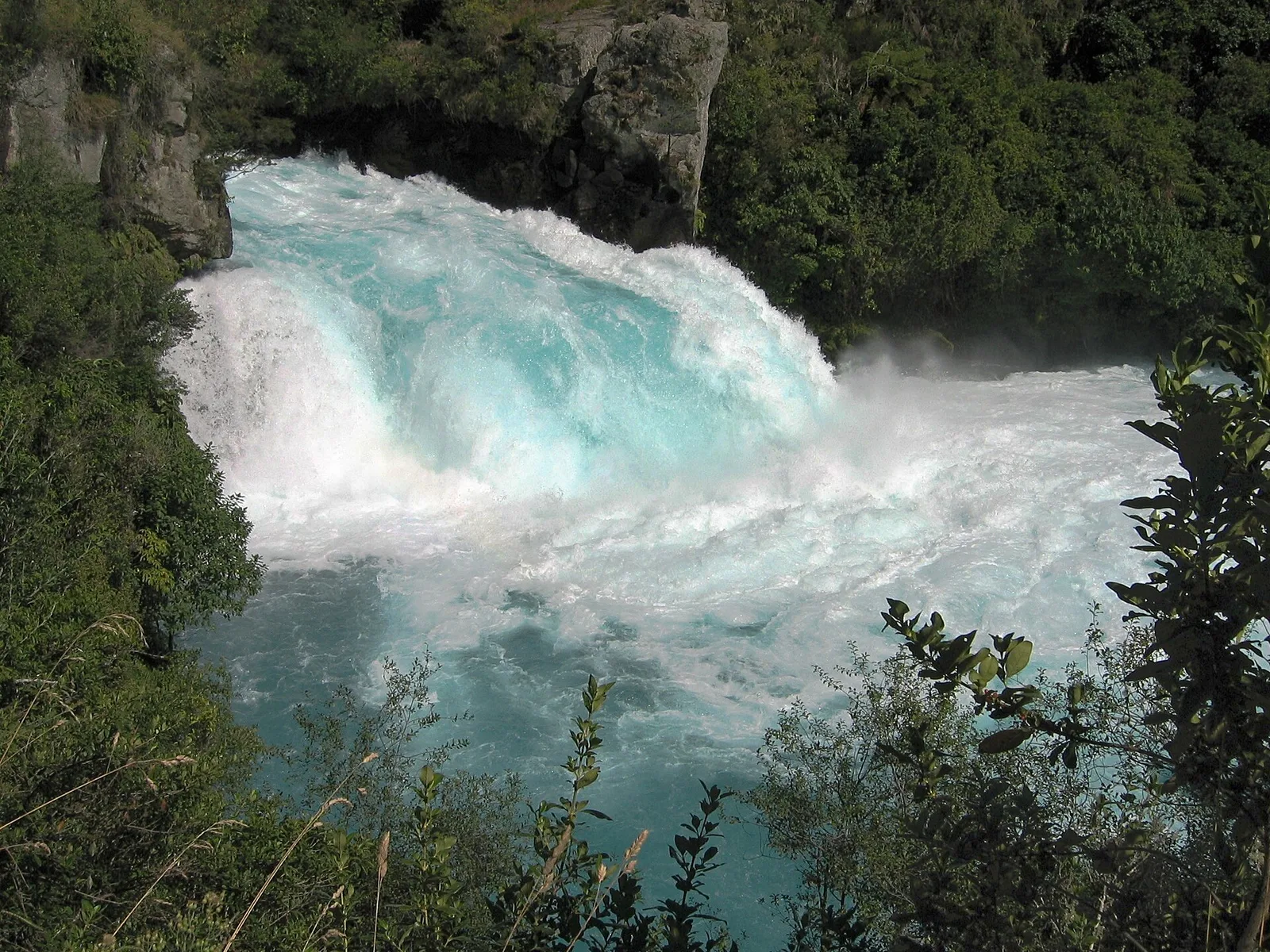
A few of the visual fingerprints we lean into when we shoot, brand and market a Dahlonega property — courtesy of the open Wikimedia Commons archive.
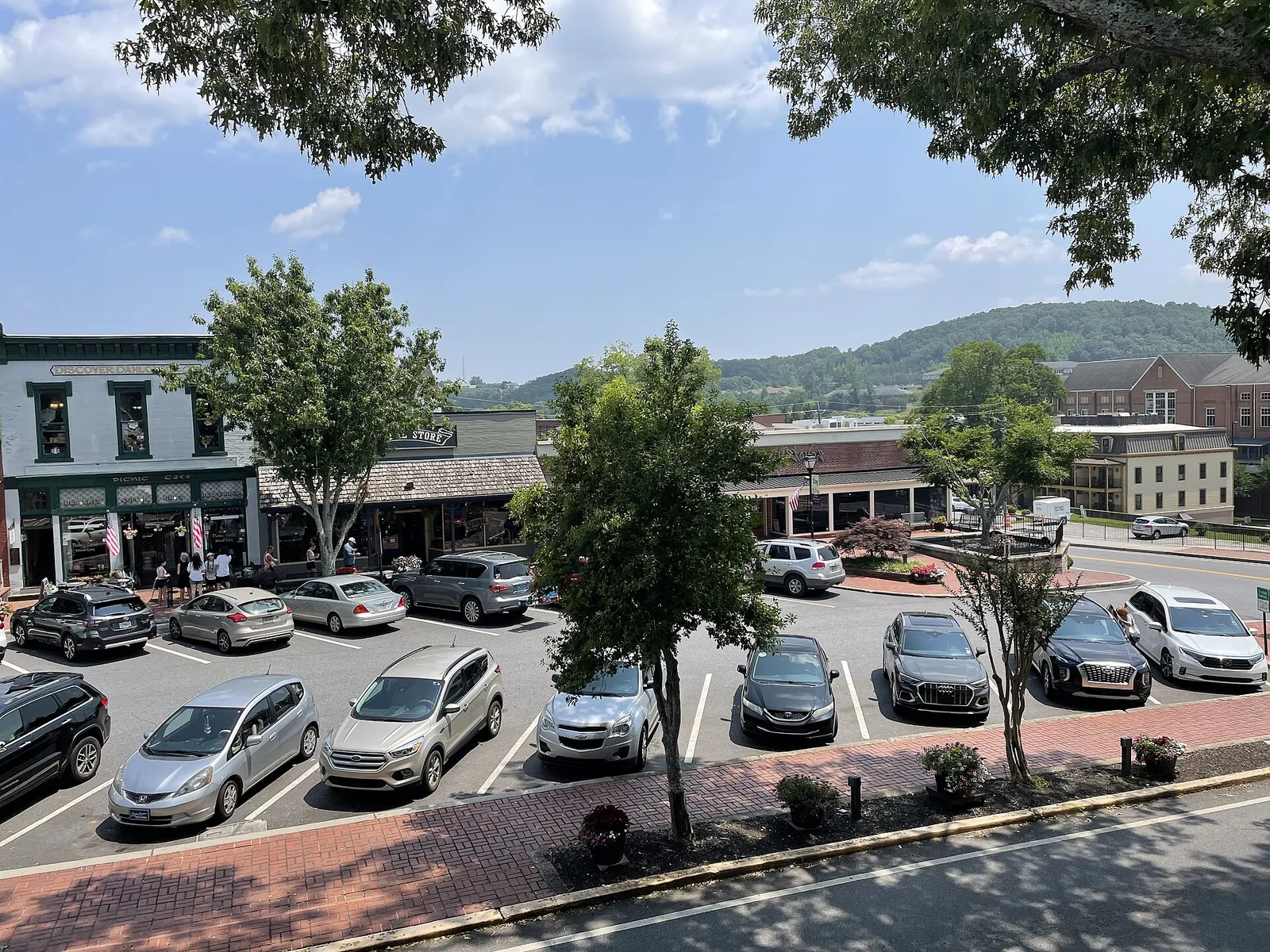
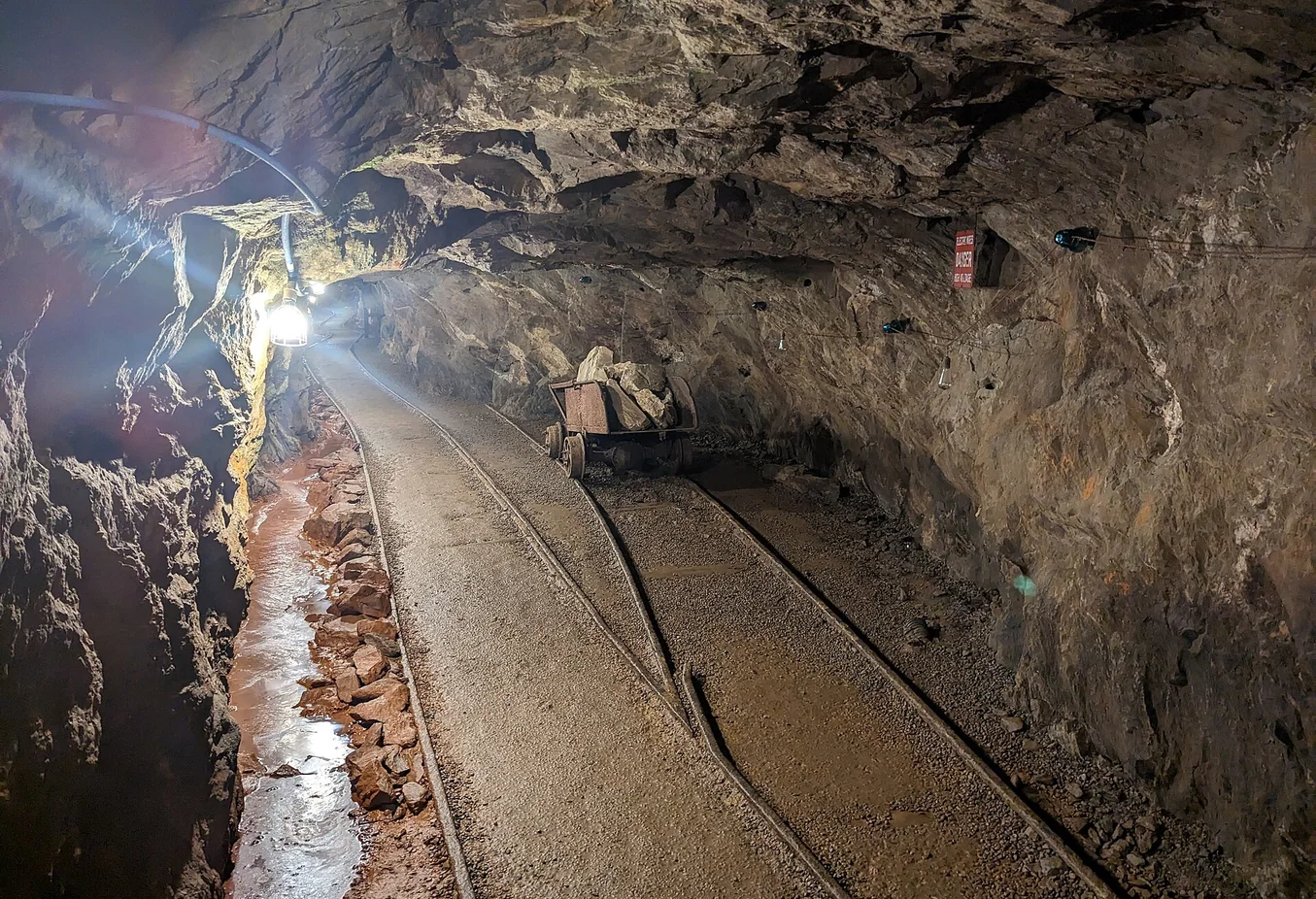
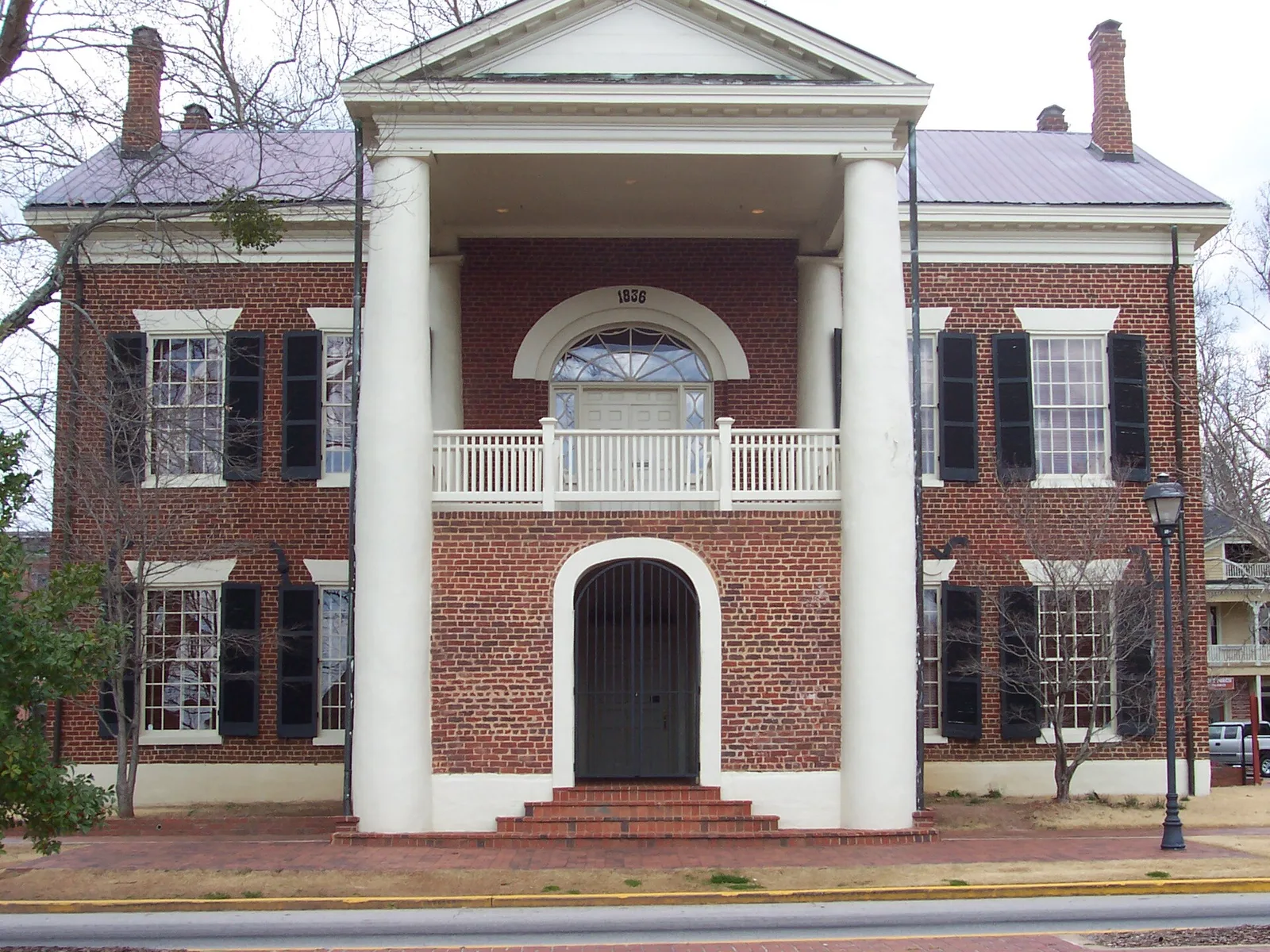
Cavmir builds Dahlonega owners a marketing position, not just a listing. We shoot the property properly, including the parts that actually decide a booking here — the porch view at five o'clock, the drive time to the tasting rooms, the room where four couples can sit down to dinner. We write the copy around a specific guest with a specific weekend in mind rather than a generic mountain getaway. We build your direct-booking site so wedding-party and wine-weekend traffic can find and book you without a platform between you, we set up the email list that turns October guests into April guests, and we run local search and paid campaigns against metro Atlanta, Chattanooga and Greenville. Midweek is where we push hardest, because that is where the room is. We will tell you plainly when a week is not winnable and where to spend instead. We help position and market your property. We never manage it or touch your keys.
Dahlonega struck the first major gold rush in the country, minted its own coins, and now sells the same square to Georgia's wine-country weekenders. Cavmir writes the modern chapter.
Gold turned up in these hills around 1828 and set off the first major gold rush in the United States, two decades before California. The town that grew around it took its name from a Cherokee word for yellow, and within a few years Dahlonega had a federal branch mint striking gold coins with a D mintmark. That mint ran from 1838 until the Civil War closed it. The rush also sat on top of Cherokee land, and the removals that followed are part of this county's history and are not softened by the gold-panning souvenir shops on the square. The mint building later became the campus of what is now the University of North Georgia; the original structure burned in 1878 and the hall that replaced it stands on the same foundation with a gold-leafed steeple that the town still points at.
The line most visitors hear is that a local assayer stood on the courthouse steps in 1849 and tried to keep miners from leaving for California by telling them there was gold in the hills right here. The miners left anyway. What stayed was a courthouse square that never got knocked down — the 1836 Lumpkin County courthouse in the middle of it is the oldest surviving courthouse building in Georgia and now houses the gold museum. That square is why Dahlonega works as a weekend destination at all. It gives an hour-from-Atlanta town a genuine center. The modern chapter started in the 1990s and 2000s when growers figured out that the elevation and the soil on this plateau suit vinifera grapes. The Dahlonega Plateau was recognized as its own American Viticultural Area in 2018, and the wineries — Wolf Mountain, Three Sisters, Frogtown, Montaluce and the rest — turned a historic gold town into Georgia's wine country. The short-term rental market here is a direct product of that shift.
Before the platforms, gold brought the first outsiders to these hills, a federal mint stamped the town's name onto coins, and an assayer stood on the courthouse steps to talk miners out of leaving for California. The wine country that grew here two centuries later sells the same landscape to a new crowd. The channel changed; the work is identical: presentation, positioning, and a historic square that gives the hills a center. It is the same business Cavmir is in today.


Historical images: public domain and Creative Commons via Wikimedia Commons — the U.S. Department of Agriculture, John Trainor, Gwringle, and others.
This market prices on weekends and events, and the owners who do well are the ones who treat those as two separate systems. Friday and Saturday nights carry the year and can support real rates, particularly for properties that sleep six or more, because the dominant booking here is two or three couples splitting a cabin for a wine weekend. Then there are the dates that behave independently of season: Gold Rush Days in October fills every bed in the county, Bear on the Square does the same in April, and vineyard wedding weekends book whole houses from spring through fall. Those dates deserve their own rates and their own minimum stays, set months ahead. The third piece is the university calendar — move-in, family weekend, homecoming and graduation are fixed, predictable, and routinely priced as ordinary nights by owners who never checked. The weakness is Sunday through Thursday, which in a market this close to Atlanta is genuinely hard and genuinely worth attacking. Two-night midweek pricing with a real discount, plus positioning for remote work and for retired couples who travel off-peak, moves the needle more here than another dollar on a Saturday. Round rates to sensible numbers, hold the line on peak dates, and be flexible where the market is thin rather than the other way around.
Spring and fall carry this market. April through early June is wine-country season with good weather and the April festival; September through mid-November is the strongest run of the year, combining harvest, leaf color and Gold Rush Days. Summer is respectable but hot, and the traffic shifts toward river tubing and waterfalls rather than tasting rooms. December is better than people expect because the square does Christmas properly and Atlanta drives up for it. January and February are the real off-season, along with a soft patch in late July and August. Midweek is the structural weakness in every month. An owner here should plan the year around four or five event peaks, two strong shoulder runs and a deliberate midweek strategy rather than a single high season.
Dahlonega and Lumpkin County both have a say, and which one applies depends on which side of the city line your parcel sits. Inside the City of Dahlonega, short-term rentals are permitted in every zoning district except R-1 single-family residential. That single sentence decides a lot of purchases. If you are shopping for an in-town rental, the zoning designation of the parcel matters more than the house on it, and you should confirm it with the city before you go under contract rather than after. In unincorporated Lumpkin County, the county runs a licensing process built around the Occupational Tax Certificate: there is a short-term rental section on the business license application, a set of supporting documents that has to be signed and notarized before you submit, and a Fire Marshal inspection that the property has to pass as part of getting the license. Budget time for that inspection. It is a real step, not a formality, and it is where owners who bought a cabin in November discover their smoke and carbon monoxide setup does not meet the standard.
On the tax side there are three layers to account for. Lumpkin County raised its hotel-motel tax from five percent to eight percent effective for stays on or after August 1, 2023. The City of Dahlonega levies its own local hotel-motel tax on gross rental receipts for properties inside city limits. Georgia state sales tax applies on top, and Georgia's per-night state hotel-motel fee reaches short-term rentals booked through a marketplace — the legislature settled that question in 2021. Where a booking platform acts as a marketplace facilitator, it is required to remit the local and state lodging taxes on the reservations it processes. If you advertise on your own, take direct bookings, or collect rent from a guest yourself, remitting is your job. Since a serious marketing program is designed to grow exactly those direct bookings, sort out the registration and the filing schedule first. Also read your subdivision covenants. In a county with this much recent cabin development, a private restriction is the most common thing that stops a rental, and no city or county approval overrides it.
Sell the weekend, not the house. The guest booking Dahlonega is not shopping for a cabin, they are planning a Saturday that involves three tasting rooms and a dinner and a slow Sunday morning. The listing that lays that out — by name, with drive times to Wolf Mountain and Three Sisters and the square — beats the listing with better countertops. Second, photograph the group table. Almost every booking here is multiple couples, and the single most persuasive image for that guest is a dining table or a deck set for six or eight people. Most listings never show one. Third, be explicit about the drive from Atlanta. An hour and fifteen minutes from the northern suburbs is a selling point and worth stating plainly, because a competitor two hours further north cannot say it. Fourth, work the university calendar. Move-in, family weekend, homecoming and graduation dates are published a year in advance, they fill the county, and they are the easiest premium dates to capture simply by looking them up and setting rates and minimums accordingly. Fifth, get a hot tub photographed properly at dusk or do not lead with it — a daylight photo of an empty tub on a bare deck actively hurts. Sixth, build the email list around the seasons rather than the property. A note in early September about harvest weekends, and another in March about the spring festival, will out-earn any amount of listing tinkering because your past guests already know they like it here.
Midweek is genuinely hard, and no amount of copywriting fixes a Tuesday in February an hour from a major city. Supply has grown quickly, and a lot of the new cabin stock was built to a similar spec and photographed the same way, so differentiation is thin and price competition is real. Wedding-driven demand is lucrative but concentrated and lost entirely if the venue calendar shifts. And the two-rulebook structure — city zoning on one side of a line, county licensing and a Fire Marshal inspection on the other — trips up buyers who assume the whole county works the same way.
Short-term rental use generally falls outside a standard homeowner's policy, so plan on a dedicated rental policy with solid liability limits. In this county the specifics worth raising with your agent are alcohol, water and fire. Alcohol because a substantial share of your guests are here for wineries and will be drinking at the property; ask directly how guest injury is treated and whether anything about serving or providing alcohol changes coverage. Water because creek and river properties along the Chestatee and Yahoola need a real flood conversation, and because hot tubs are close to universal in this market and are a named risk. Fire because wood stoves, outdoor fire pits and the very dry stretches this region gets in autumn all matter, and because the county's Fire Marshal inspection sets a floor for life-safety equipment, not a ceiling. Ask for guest injury, guest property damage and loss of rental income to be confirmed in the policy language, and tell your carrier honestly how many nights a year the property is rented.
Three layers stack on a Dahlonega stay and the mix depends on where the property sits. Lumpkin County's hotel-motel tax went from five to eight percent effective for occupancies on or after August 1, 2023. The City of Dahlonega levies its own local hotel-motel tax on gross rental receipts for properties within city limits. Georgia state sales tax applies as well, and Georgia's per-night state hotel-motel fee applies to short-term rentals booked through a marketplace facilitator following the 2021 legislative change. Booking platforms that act as marketplace facilitators are required to remit the state and local lodging taxes on the reservations they process. Anything you book directly, advertise yourself or collect yourself is your obligation to remit, on the schedule the city or county sets. Keep platform and direct revenue in separate ledgers from the start. Ask your accountant how the county and city rates apply to your specific parcel before your first filing, because getting the jurisdiction wrong is the most common error here.
Most Lumpkin County purchases finance conventionally as a second home or an investment property, and the gap between those two in down payment and rate is the first thing to model. The complications are rural and predictable: private and shared gravel roads may require a recorded maintenance agreement before a lender will proceed, well and septic properties need their inspections lined up early, and larger acreage parcels can push an appraisal toward a longer timeline or a different loan product. Buyers scaling past a first property often move to debt-service-coverage lending underwritten on the rental income rather than personal income, which is widely available in north Georgia. Whichever route you take, build the real numbers into the model — the county or city lodging tax, the Fire Marshal inspection and any remediation it requires, insurance at rental rates rather than owner-occupied rates, and an honest midweek occupancy assumption rather than an annual average that hides four empty weeknights. Have your accountant look at the structure before you close, not after.
The wine story is still the main engine and it is still growing. The Dahlonega Plateau viticultural area was only recognized in 2018, plantings continue, and each new tasting room adds a reason to visit in a month that is not October. That is the best possible news for shoulder-season occupancy. The second thread is Atlanta itself. Metro growth keeps pushing the weekend-escape radius outward, and Dahlonega sits at a comfortable distance for a market that increasingly wants two nights rather than a week. The third is supply. Cabin construction in the county has been steady and there is no obvious brake on it, which means differentiation will matter more each year and price-only competition will get harder to win. Watch the regulatory conversation too: the county's move to raise its lodging tax and the city's zoning carve-out both signal a local government paying close attention to this sector. That usually leads to more formality over time, not less. Owners who are properly licensed, properly insured and building a direct relationship with their guests will be the least affected by whatever comes.
Dahlonega has a square, and that changes everything. A lot of mountain towns are a strip of highway with cabins scattered above it. This one has a real center, built around a courthouse from 1836, with tasting rooms and a bakery and a bookstore on the four sides of it and students crossing from the college up the hill. Guests can park once and walk. That is worth more than any single amenity you can put in a cabin. Then you drive fifteen minutes and the county turns into gravel, ridge lines and vineyards on the south-facing slopes, and another twenty minutes past that you are at the base of a waterfall that drops seven hundred feet in stages. Both of those are the same weekend. What we like about marketing here is that the product is genuinely good and genuinely undersold. Georgia wine surprises people who have not tried it in twenty years. The gold history is real history, not a theme. The Appalachian Trail starts a short drive from town and the approach trail up from Amicalola Falls is where thousands of thru-hikers begin every spring. And most of the rental listings in the county say almost none of that. They say mountain view, hot tub, sleeps eight. There is a large gap between what this place actually offers and what its listings communicate, and closing that gap is the entire job.
A great property in Dahlonega doesn't just want a listing — it wants a point of view, an audience, and a brand the city itself would recognise.
Eight things worth putting in the guest guide. Specific beats generic every time, and these are the answers people ask for anyway.
Get down there by eight on a Saturday and you have the courthouse square almost to yourself. By eleven in October it is shoulder to shoulder, so the early hour is the good one.
Wolf Mountain and Montaluce both do proper sit-down meals with a view over the vines, and both fill on weekends. Tell guests to book when they book the stay.
Six or so serious producers within twenty minutes of the square, recognized as their own viticultural area in 2018. Give guests a route with three stops, not a list of nine.
The old 1836 courthouse, the oldest surviving one in Georgia, full of the actual gold-rush story. Forty-five minutes indoors and better than it sounds.
The water is at its heaviest with spring rain, the stairs are far less crowded than in October, and the approach trail toward Springer Mountain is full of thru-hikers starting out.
The river is close, gentle and the right answer for a hot Saturday when the tasting rooms feel like too much. Outfitters run shuttles through the summer.
The south-facing vineyard slopes catch the last light, and the drive back into town in that light is the picture guests actually post.
Give them the honest answer both ways, including what Friday afternoon on GA-400 does to it. A guest who leaves at two instead of five has a better weekend and blames you for neither.
Guests who find a Dahlonega rental on Airbnb search its name afterwards, and the page they should land on is the owner’s own site. Cavmir builds vacation rental websites of 40 to 125 pages in the owner’s brand. For a home that only lists on Airbnb, that is a website for your Airbnb: your name and domain, your photos, your area guides and your reviews, with a button that sends guests to the listing. For homes on Hostaway, Guesty or Hospitable it is a direct booking website: live availability and prices from the PMS, the whole stay priced before checkout, and the booking completed in the PMS. Both start from the same vacation rental website design, run the TrollBuster™ compliance scan before launch, and are yours at launch: domain, code, content and photos.
The guide pages of a Dahlonega site can start with the picks on this page: The square before the shops open, A vineyard lunch with a reservation and The Dahlonega Plateau wineries. Each one is a search a guest makes before choosing a home, and each becomes a page that leads to the booking button.
Packages start at $1,475 for the Starter Website (40 pages, two to three weeks) and run to $3,732 for Full with Direct Booking (125 pages, booking synced with your PMS); the current prices are on the pricing page.
A few composite engagements, drawn from how Cavmir typically works with cabin and cottage owners in a weekend-driven wine market. Illustrative rather than any one client's file.
Strong weekends and an almost empty Monday-to-Thursday calendar, with rates set flat across the week and never revisited.
Built a four-tier seasonal calendar with event dates priced separately, added automatic midweek discounting in shoulder months, repositioned the listing around wine-weekend groups with a photographed dinner table for eight, and launched an email list segmented by season.
Midweek nights began filling in spring and autumn rather than sitting empty, and event weekends started booking months earlier at their proper rates.
A walkable in-town property being marketed with the same mountain-view language as cabins fifteen minutes out, so its actual advantage never registered.
Rewrote the whole position around parking once and walking everywhere, shot the streetscape and the porch instead of distant ridges, and built direct-booking landing content aimed at festival weekends and university dates.
The property stopped competing on cabin terms and started attracting the couples and parents who specifically wanted to walk to dinner, with a rising share of repeat and direct bookings.
The newer property absorbed all the attention while the older one sat, and both were listed with near-identical copy that made the older one look simply worse.
Separated the positioning — the new build for groups and celebrations, the older cabin for quiet couples and dog owners — with different photography, different copy and cross-referral between them on one owner-branded site.
The older property found its own audience instead of reading as the discount option, and enquiries blocked on one calendar were retained by the other.
Demand in Dahlonega peaks around October and runs quietest around January through February. Here is how the year actually books — and what to do about each stretch of the calendar.
October is the peak by a clear margin, combining harvest at the vineyards, leaf traffic and Gold Rush Days on the square. April is the secondary peak with the spring festival and the start of wedding season. Both deserve their own rate tier and minimum stays set months ahead rather than adjusted in the week.
May, June, September and December all carry real demand that owners routinely under-price. Wedding weekends run right through spring and autumn and book whole houses. The December square draws Atlanta out for the holiday programme. Push midweek discounting aimed at retired couples and remote workers.
January, February and the hottest stretch of late July and August are the soft months. Use them for longer stays, for locals, and for the maintenance and reshoot window. A monthly rate in the market beats an empty calendar held at a hopeful nightly price.
Wedding and event weekends book six to twelve months ahead. Gold Rush Days and October leaf weekends fill through the summer. Ordinary weekends run on a two to six week window, and midweek is last-minute if it happens at all.
Overwhelmingly two-night weekend stays, with three-night holiday and event weekends. Midweek is thin and is the structural weakness of the market rather than a seasonal one.
Cabins sleeping six to ten with a long view, a hot tub and a genuine dining table win the wine-weekend business, which is the core of this market. In town, a walkable cottage near the square is a different and equally good product for couples and university families. Properties that can host a wedding party of ten or more are the top of the market and are under-supplied.
Start with photography that shows what a guest actually gets here, then write the listing around a real itinerary rather than a feature list. Build a direct-booking site so returning guests can come back without going through a platform, and keep an email list segmented by season so you can reach last year's visitors before the calendar opens. Local search matters more than people expect in a market this size, because guests search the destination and the attraction rather than the word rental. A marketing agency layer handles the photography, the listing copy, the direct-booking site and the local SEO as one system instead of four disconnected jobs.
October is the peak, combining vineyard harvest, leaf season and Gold Rush Days on the square. April is the second peak with the spring festival and the start of wedding season. Summer is respectable but hot, and the traffic shifts toward the river and the waterfalls rather than the tasting rooms.
Wedding and event weekends book six to twelve months ahead, and October fills through the summer. Ordinary weekends run on a two to six week window. Midweek is close to last-minute, which is precisely why it needs a deliberate discount and its own marketing rather than being left to sort itself out.
Metro Atlanta supplies the large majority of guests, with Chattanooga, Greenville, Augusta and Birmingham behind it. Almost everyone drives, most of them on a Friday afternoon, and the trip is short enough that people repeat it annually. That makes an email list of past guests unusually valuable here.
A hot tub, a mountain view and a dining table that genuinely seats eight, because most bookings are two or three couples sharing. A fire pit and a covered porch do real work in spring and autumn. For town properties, walkability to the square matters more than any amenity you can install. Fast wifi is what makes the midweek remote-work stay possible at all.
Run your Airbnb, Vrbo, or website through Cavmir's free grader. It checks the things that decide whether guests book in Dahlonega — photos, listing copy, page speed, local search — and shows you where bookings leak. Takes about a minute, and there's no sales call attached.
If the report says your booking engine is the weak link, that's fixable: a direct-booking website of your own means repeat guests stop paying platform fees to come back to you. That's the work Cavmir does — see Airbnb website design in Dahlonega.
Send us the listing and we'll tell you what we'd change. Not a pitch deck — a straight read on your photos, your title, your rates against the Dahlonega comp set, and whether a direct-booking site would pay for itself.
You'll hear back from a person, usually inside one business day. If we don't think we can move your numbers, we'll say so. Cavmir is a short-term rental marketing agency — we position and market properties, we don't manage them.
Talk to Cavmir today. We'll show you exactly what your Dahlonega property is leaving on the table — and how fast we can change that.
Book a Free Strategy CallPhotography via Wikimedia Commons (images resized and cropped): Amicalola Falls 2 by Joggingman08 (Wikivoyage) (CC BY-SA 4.0) · Dahlonega, Georgia by BullDawg2021 (CC BY-SA 4.0) · Dahlonega Gold Museum Historic Site by HowardSF at English Wikipedia (CC BY-SA 3.0) · Huka Falls by Avenue (CC BY-SA 3.0) · Public Square North, Dahlonega, GA by Gwringle (CC BY-SA 3.0).
