



First Morning
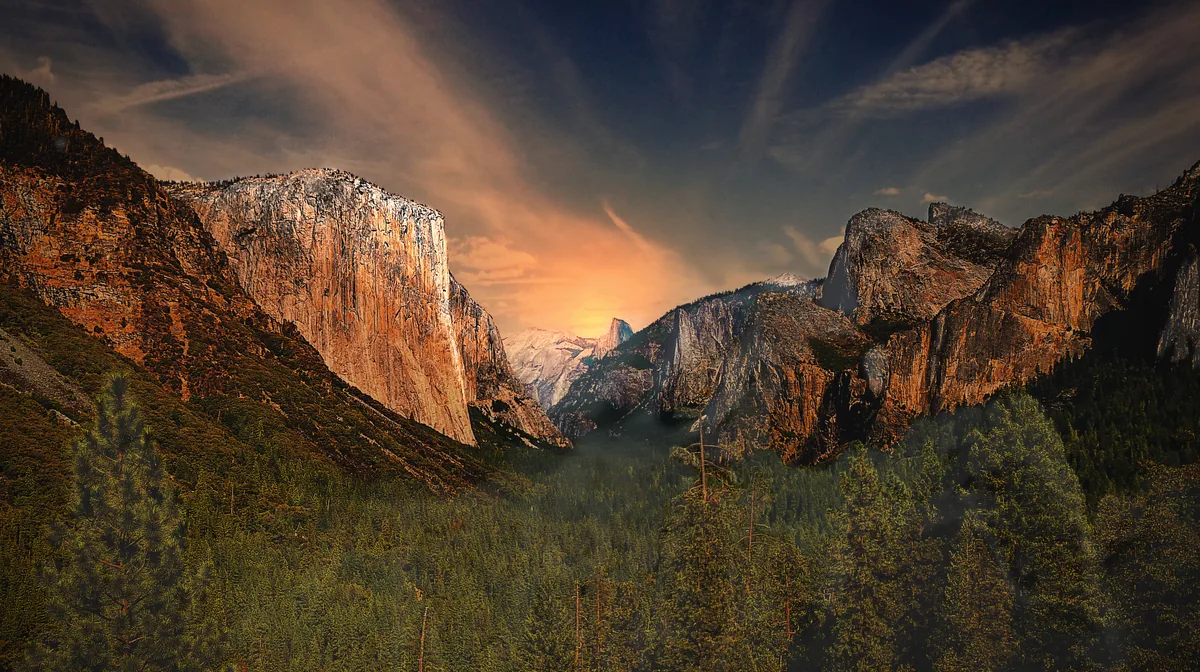
Tunnel View before nine
Send guests up Highway 41 to the overlook early, before the tour buses, and then down into the Valley. It is the photograph that sells your next booking and the reason they came.

Expert short-term rental marketing to grow your bookings and nightly rate in the Yosemite gateways — from Bass Lake cabins and Oakhurst homes to Mariposa, Groveland and the private enclaves inside the park.
Sixteen services, one team. Everything below is built in-house and scoped to your property and market. Most owners start with the 12-Step System.
Every engagement is quoted to your portfolio. These are the ready-made scopes owners pick most — our Fall Special (55% off list or more) is already applied to the website, King Broker, Hotels and à la carte scopes. A clear proposal within 48 hours.
The work is public. Selected engagements and what changed — and reviews from the owners and managers behind them.
* Market averages from AirDNA and STR market reports. A single home's numbers depend on its size, its location and how it is marketed.
Cavmir is an Airbnb marketing agency. We build the brand, the direct-booking website and the marketing for short-term rentals in Yosemite.
Yosemite National Park recorded 4.28 million recreation visits in 2025, its fourth-busiest year on record, and almost none of those visitors can sleep inside the park in a private home. Lodging inside the boundary is limited to the concession hotels, tent cabins and campgrounds, so the vacation-rental market lives in the gateway communities on the three main roads in: Oakhurst, Bass Lake and Fish Camp on Highway 41 from the south, Mariposa, Midpines and El Portal on Highway 140 from the west, and Groveland and Pine Mountain Lake on Highway 120 from the north. Add the two private enclaves that sit inside the park boundary, Yosemite West and the old inholding at Wawona, and you have a rental market whose entire demand is generated by one of the most visited national parks in the country, and whose supply is held in check by county rules, septic capacity and the mountains themselves.
The gateways are different products, and the difference matters to a listing. Oakhurst is the biggest town, an hour from Fresno's airport, with the grocery stores, the brewery and the largest pool of cabins and homes; Bass Lake, ten minutes above it, is a summer lake resort with docks, boat rentals and waterfront houses that book like a beach town. Fish Camp sits two miles from the south entrance beside the Tenaya at Yosemite resort and the Mariposa Grove of giant sequoias. Mariposa is the gold-rush county seat on the shortest year-round route to Yosemite Valley, with Midpines and El Portal strung along the Merced River canyon right up to the Arch Rock gate. Groveland, on the north road, serves the Hetch Hetchy side and the Tioga Road high country, with the gated Pine Mountain Lake community as its rental base. Yosemite West is reachable only through the park, a few minutes from the Glacier Point Road turnoff.
The guest is a planner with a deadline. Most Yosemite visitors come between May and October, roughly three quarters of the year's total, and they book around a day in the Valley, a hike to the top of a waterfall, the sequoias and, for the ambitious, a Half Dome permit. They arrive from the Bay Area, Los Angeles, Sacramento and the Central Valley by car, from the rest of the country and overseas through Fresno and San Francisco, and they want to know one thing before anything else: how long is the drive to the entrance gate and to the Valley floor from your door. A listing that answers that in its first line, in minutes, by season, wins the traveler who has been burned by a 'near Yosemite' cabin two hours from the park.
What makes this market unusual is how completely the park sets the calendar. The reservation experiments of 2024 and 2025 shaped where and when guests stayed; the National Park Service has said no vehicle reservation will be required in 2026, which the gateway towns expect to push demand higher still. Tioga Road and Glacier Point Road close for the winter, Yosemite Falls runs hardest in May and can go dry by late summer, and wildfire smoke can empty a July calendar in a week. Owners who understand those rhythms and market around them, rather than posting a cabin and hoping, are the ones whose calendars stay full when the rest of the road is discounting.
Nearby Markets: Mammoth Lakes | Lake Tahoe | San Francisco
Cavmir markets Yosemite-gateway rentals as the specific products they are, a Bass Lake dock house for a July week, an Oakhurst cabin for a family doing the Valley and the sequoias, a Groveland home for the Tioga Road crowd, rather than as another 'cabin near Yosemite'. We put your property in front of the guest who books this park: the Bay Area family planning in February, the international traveler routing through Fresno, and the repeat guest who wants the same waterfall week every May, wherever they search, from Google and Instagram to the email list that brings last year's family back.
The gateway towns predate the park's tourism and were built on other things. Mariposa was a gold-rush town and became the county seat of a county that once covered a fifth of California; Groveland grew up on the northern mines and later as a construction base for the Hetch Hetchy water project; Oakhurst, once called Fresno Flats, was a ranching and lumber town, and the Madera Sugar Pine Lumber Company's narrow-gauge railroad, whose steam engines still run for visitors at Fish Camp, hauled timber out of the mountains above it. Yosemite itself was set aside by the federal government in 1864 and became a national park in 1890, and for most of the twentieth century its visitors stayed inside the park at the lodges and campgrounds or in the motels of the gateway towns.
The vacation-rental market arrived with the internet and grew with the park's crowds. Bass Lake had long rented waterfront cabins to Central Valley families; Yosemite West, developed as a private subdivision on the park's western boundary in the 1960s, became a base for rental homes reachable only through the park; and the platforms of the 2010s turned second homes in Oakhurst, Mariposa and Pine Mountain Lake into full-time short-term rentals. The three counties responded in different ways: Mariposa County capped new vacation rentals at three bedrooms in 2016 because of septic-system rules, Madera County built a transient-occupancy program and has been writing a dedicated vacation-rental ordinance, and Tuolumne County adopted a short-term rental ordinance with mandatory fire inspections in January 2024.
Today the market is large and unevenly distributed. AirDNA counts roughly 930 active short-term rentals in the Oakhurst market alone, averaging nightly rates in the mid-$300s with occupancy in the high forties and guests booking about six weeks ahead. Visitation set a modern pattern of 4 million-plus years with a summer super-peak, and the park's traffic management, the 2024 and 2025 peak-hours reservation pilots and the 2026 decision to drop them, has moved demand between gateways from one season to the next. Rates hold up because supply is constrained: septic capacity, county bedroom limits and fire-safety inspections keep new inventory slow, and the best-located homes, minutes from a gate or on the water at Bass Lake, set their own prices in July.
What has not kept pace is presentation. A large share of gateway listings still lead with a photo of a sofa, name a county instead of a gate, and bury the one number every guest needs, the drive time to the park. In a market where the guest is choosing between three roads in and a dozen towns, the listing that explains exactly where it sits, what it is close to and what the season will look like is the one that converts, and the one that keeps converting when the reservation rules change again.
Yosemite pricing is tiered by distance and by water. Bass Lake waterfront homes and the houses inside the park at Yosemite West and Wawona anchor the top of the market, sold on the dock or the fact that the Valley is a forty-minute drive without a gate in between. Cabins and homes within twenty minutes of a park entrance, in Fish Camp, El Portal, Midpines and the upper end of Oakhurst, carry the broad middle. Larger family homes in Oakhurst, Mariposa and Pine Mountain Lake carry the group tier, where a five-bedroom for two families is the workhorse product and the drive to the gate is traded for space and a hot tub under the pines.
The calendar's shape does the rest. Late May through August is the super-peak, with July weeks around the Fourth booked months ahead and international demand filling midweeks that domestic drive markets leave open. April and May, when the waterfalls run hardest and the dogwoods bloom in the Valley, are a real spring season that most owners still price as a shoulder. September and October stay strong as the crowds thin, the light improves and Tioga Road stays open into the autumn. Winter is soft outside the holidays, with a small but loyal market for snow play, the Yosemite ski area at Badger Pass and the February crowds that come for Horsetail Fall.
The mistake most owners make is charging a flat summer rate and a flat winter rate. A waterfall week in May for a couple from the Bay Area, a Fourth of July week for a family with a boat at Bass Lake, an October photography week for a retired couple and a snowy Christmas week for a family from Fresno are four different guests with four different willingness-to-pay curves, and each deserves its own copy, photos and rate. Owners who sell those products explicitly fill the weeks the rest of the road leaves empty.
High seasonality with a long summer. Peak runs Memorial Day through Labor Day; spring waterfall season in April and May and the September–October autumn are strong and under-marketed shoulders; winter is soft outside Christmas, New Year and the February Horsetail Fall weekends. Glacier Point Road and Tioga Road are seasonal, and a listing that states when they typically open and close saves a guest a disappointment and earns a review.
The revenue most owners miss sits in May and October. The falls are at full flow in May with the summer crowds not yet arrived, and October brings clear air, color along the Merced and smaller lines at the gate. Wildfire and smoke are the counter-risk in July and August; a plain, flexible smoke-cancellation posture in those weeks converts the hesitant guest your neighbors never reach.
The gateways sit in three counties, each with its own rules, and the first thing to establish is which one your property is in. Mariposa County (Mariposa, Midpines, El Portal, Fish Camp's Mariposa side, Yosemite West and Wawona) licenses vacation rentals and home stays through its Planning Department and Tax Collector, collects a 12 percent transient occupancy tax plus a 1.5 percent tourism assessment, and since 2016 has limited new vacation rentals to three bedrooms or fewer because of septic-system requirements; the county has been reviewing that ordinance, with the Planning Commission recommending higher bedroom limits and a housing trust fund, so check the current text. Madera County (Oakhurst, Bass Lake and the Madera side of Fish Camp) requires a transient occupancy tax certificate and a business license, collects a 9 percent occupancy tax plus a 2.5 percent tourism assessment, and has been developing a dedicated short-term vacation rental ordinance with a non-transferable permit and standards for occupancy, parking, noise, trash and fire safety.
Tuolumne County (Groveland and Pine Mountain Lake) adopted a short-term rental ordinance in January 2024: operating requires a transient occupancy tax certificate and a passing fire and life-safety inspection by the county fire department, and the county collects a 12 percent occupancy tax. Pine Mountain Lake adds its own homeowners' association rules on top of the county's. Inside the park, Yosemite West and Wawona homes are private property under county jurisdiction, but they sit within a national park, and the practical rules of access, parking, wildlife and fire restrictions apply to your guests as they do to everyone else.
None of this is a ban, but it is three different sets of paperwork, and the counties are actively revising them. Treat this section as orientation rather than legal advice: confirm current requirements with the Mariposa, Madera or Tuolumne County planning and tax offices, the fire authority and a California accountant before you list, and read your HOA covenants if you are at Pine Mountain Lake or Bass Lake. Cavmir handles the marketing side; licensing and tax compliance sit with you and your local professionals.
First, sell the drive time, by season, in the first line. 'Twenty-five minutes to the south entrance, fifty to Tunnel View, chains required in winter' is the sentence every Yosemite guest is looking for and most listings hide. Name the entrance you are closest to, say how long the Valley floor takes on a July morning versus an October afternoon, and explain the road closures, and you win the planner who has been burned before.
Second, sell the gateway, not just the park. Bass Lake's docks and boat rentals, the steam train at Fish Camp, the sequoias at the south gate, the Merced River swimming holes below El Portal, Hetch Hetchy from Groveland, the saloons and gold-rush streets of Mariposa: each gives a guest a second day that does not require a dawn start at the gate. Photography that shows the lake at seven in the evening, the dock, the porch under the pines and the car packed for the Valley outperforms a fourth photo of the kitchen.
Third, engineer the repeat. Yosemite families come back for the same waterfall week or the same Fourth of July at the lake for years once a house earns them, and international guests recommend a cabin across a whole tour group. That argues for a real direct channel: a fast direct-booking site, a past-guest list that gets first refusal on summer weeks each January, and a rebooking incentive that beats the platform fee. Most of the road still does none of this.
Fourth, treat operations as marketing. At the gateways the reviews that move search rank praise the things that go wrong most often: a check-in that works without cell signal, a wildfire and smoke policy stated in plain language, bear-proof trash and food rules explained rather than posted as a threat, chains in the garage in winter and a boat slip that is actually reserved in summer. A wall of recent five-star reviews for accuracy and communication defends the rate better than any photo.
Wildfire is the structural risk. The 2018 Ferguson Fire closed Yosemite Valley for two weeks at the height of summer; the 2022 Oak Fire burned more than nineteen thousand acres outside Mariposa and destroyed more than ninety homes; the Washburn Fire the same month threatened the Mariposa Grove. Smoke can cancel a July week even when the flames are far away, and California's insurance market has hardened accordingly. Owners need defensible space, a carrier that knows the address is a rental, and a cancellation posture that turns smoke anxiety into bookings instead of bounces.
The park's rules shape demand faster than a listing can react. Two summers of peak-hours reservations changed where people stayed and when they arrived; 2026 drops them, and the gateways expect more traffic and fuller gates as a result. Road closures, the winter chain requirements and the seasonal opening of Glacier Point and Tioga Roads all land in the guest's lap, and a listing that does not explain them becomes the target of the review.
There is also the sameness problem. Hundreds of cabins on the three roads share the same pine-paneled interiors and the same hot-tub photo, and a guest scrolling 'cabin near Yosemite' cannot tell an Oakhurst house forty minutes from the gate from a Fish Camp house five minutes from it. When product looks identical, the listing that tells a specific, true story about where it sits and what a week there looks like is the one that stops the scroll. Owners who present their house as a small brand with a name and a point of view win disproportionately here.
The Sierra foothills are high-risk wildfire territory and California's insurance market reflects it: admitted carriers have pulled back, surplus-lines and FAIR Plan coverage are common, and underwriting looks hard at defensible space, roofing, access roads and the fire district. Short-term-rental use must be disclosed. Price the policy before you buy, not after, and budget for it to rise.
Occupancy taxes differ by county, 12 percent plus a 1.5 percent tourism assessment in Mariposa, 9 percent plus 2.5 percent in Madera, 12 percent in Tuolumne, and the platforms collect some of it depending on channel while the owner remains responsible for the certificate and for remitting the rest, monthly or quarterly. Out-of-state owners also file California nonresident returns on rental income. Coordinate with a California accountant who knows the county.
Financing is conventional but rural: lenders want a realistic, seasonally shaped revenue model, appraisals in the gateways can be thin, and septic, well and fire-access conditions can complicate closing. Waterfront Bass Lake and inside-the-park homes carry jumbo pricing. Model the full carry, including insurance and the county's bedroom limits, before you count on the summer.
In 2026 the three gateway counties sit at three different stages, and the stage matters as much as the tax rate when you're choosing where to buy. Tuolumne County, on the Groveland side, runs a working program built around a fire and life-safety inspection, so the rules are known and the paperwork is short. Madera County, home to Oakhurst and Bass Lake, has been drafting a dedicated permit since at least mid-2025 and still hasn't adopted one, which leaves today's buyer pricing a rule that could change at the next board meeting. Mariposa County licenses vacation rentals and home stays under rules it has been reviewing; we found no adopted change to its bedroom limit, so read the current text before you make an offer on a larger house. Across all three, Airbnb collects the county lodging tax on the stays it books, which changes what you remit but not what you're responsible for.
Tuolumne's rules sit in Chapter 8.70 of the county code, and since January 19, 2024 you can't operate a short-term rental in the unincorporated county, Groveland and Pine Mountain Lake included, until the house has passed a fire and life-safety inspection. The inspection is good for two years and then has to be renewed. Inspectors expect a smoke alarm in every bedroom and at least one on every level, basements and habitable attics included, and you'll want the brush cleared around the house before the visit, because this is fire country. You also need a local contact who answers the phone 24/7 and can be at the property within 60 minutes, which rules out running a Groveland house alone from the Bay Area. Published summaries of the county program put the application fee at about $300, though some listings quote less, so confirm the current figure with the county. Pine Mountain Lake adds a second gate: register with the association and get its approval for rental use in writing before you close.
Oakhurst, Bass Lake and the rest of unincorporated Madera County still operate on a business license and a transient occupancy tax certificate while the county's short-term vacation rental ordinance stays in draft. The Planning Commission hearing was rescheduled to February 4, 2026, and when the Board of Supervisors took up amendments on occupancy limits, permitting and enforcement in August 2026, it didn't adopt the ordinance and said more work was needed. A motion to simplify it died without a second, and supervisors talked about streamlining the process and cutting fees. The drafts so far point one way. You'd need a permit on top of the license and the certificate, it wouldn't transfer when you sell, and your buyer would apply fresh. Occupancy would be tied to the size of the house, parking would have to fit on site, and there'd be quiet hours, trash standards and fire and life-safety rules that reach defensible space, with enforcement aimed at correcting problems first. Speakers at the August meeting asked for grandfathering of existing operators, and that question isn't settled. Until it is, price a Bass Lake or Oakhurst purchase as if no permit comes with the house.
Airbnb collects and remits the county lodging tax in all three counties, figured on the listing price with the cleaning fee included, for stays of 30 nights and shorter. In Mariposa County that's the 12% transient lodging tax plus the 1.5% tourism business improvement district assessment; in unincorporated Madera County it's 9% plus a 2.5% district assessment; in Tuolumne County it's 12%, outside the city of Sonora. None of that ends your paperwork. You still hold the county certificate, Tuolumne expects its returns quarterly, and every direct booking from your own website is yours to tax and remit in full, district assessment included, because no platform sits in the middle. Vrbo and the other channels each set their own collection rules, so check each one before you assume the tax is covered, and keep a ledger that splits platform-remitted nights from the ones you remit yourself. Have a California accountant who files in your county set up the returns before the first guest arrives, and confirm the current requirements with the county tax collector.
Every gateway house sells the same park, so the road it sits on decides who books it. The south road through Oakhurst sells families and lake weeks, the Merced River road through Mariposa sells the Valley to couples and car-free travelers, Yosemite West and Wawona sell the short morning, and the north road through Groveland sells the Bay Area driver headed for Hetch Hetchy and the high country. The roads also cross county lines, so the address decides both the guest and the paperwork. Before you buy, drive from the front door to the nearest entrance station on a summer Saturday morning and time it, then check which county the parcel is in, what the association allows and whether the septic system matches the bedroom count you plan to advertise. It's the read Cavmir starts from when we market a home here.
Oakhurst is the volume market, with the biggest pool of family-sized homes, the grocery stores and the shortest drive from Fresno's airport. It wins two families sharing a house, multigenerational groups and anyone doing the sequoias and the Valley over several days. Space, a hot tub and air conditioning carry the listing, because foothill summers run hot and the guest is trading drive time for room. Bass Lake is a separate product for a separate guest: the lake family who books a dock, a slip and a full week, and who may visit the park only once. Buy there for July and August, then give the house a spring and autumn story built on the waterfalls and the quiet lake. Before you buy at the lake, confirm in writing whether the slip conveys and what the homeowners' rules say about renting. Fish Camp is the closest town to the south entrance and the Mariposa Grove, so it sells the early start and the snow week. The county line runs close by, so confirm which county the parcel is in, and remember that everything on the Madera side carries the unsettled permit risk described above.
Mariposa, Midpines and El Portal sell the Valley. This is the year-round route into Yosemite Valley along the Merced River, and the YARTS bus runs it, which makes it the natural base for international visitors and anyone arriving without a car. The guest is a couple or a small family planning a day in the Valley and an evening in town, so cabins and two- and three-bedroom homes fit, and Mariposa County's bedroom limit on new vacation rentals points the same way. If a seller is marketing a larger house as a rental, ask to see the county approval for that bedroom count before you count on the income. Midpines and El Portal trade the town for the river, with swimming holes and canyon walls that sell a summer afternoon; because they sit in a steep, wooded canyon, a written smoke and evacuation policy belongs in the listing. In El Portal especially, confirm that the lot is private land with its own water and septic before you fall for the view. Mariposa town, with its historic main street and restaurants, gives guests an evening out, which helps carry the winter months when the high country is closed.
Wawona, a private inholding inside the park, and Yosemite West, a subdivision you can only reach through the park, sell the short morning: no line at an entrance station before a sunrise at Glacier Point or a day in the Valley. That premium comes with conditions you have to state up front. Guests pass a park entrance to get there, Yosemite West sits high on a mountain road that sees snow and chain controls in winter, and both are a long drive from a full grocery store, so the stocked kitchen and the arrival instructions do the work in the reviews. Both fall under Mariposa County's licensing and bedroom rules. North of the park, Groveland and Pine Mountain Lake sell the Bay Area driver, the family heading for Hetch Hetchy and the Tioga Road high country in summer, and the group that wants a lake, a golf course and a pool inside a gated community. Larger homes fit here, but the inspection, the 60-minute contact and the association's approval come first. Summer runs long on this side until Tioga Road closes, and winter is quieter, so the holidays and the autumn weekends carry the off-season.
Yosemite's outlook is strong for structural reasons. Visitation has settled into 4 million-plus years, the 2026 decision to drop vehicle reservations is expected to push demand higher, and the gateways are the only place that demand can sleep in a private home. Supply is capped by septic capacity, county bedroom limits and fire-safety rules, which keeps rates firm for the best-located properties.
The pressures to watch are regulation and fire. All three counties are revising their rules, Mariposa toward higher bedroom limits and a housing fund, Madera toward a dedicated permit, Tuolumne toward inspections and enforcement, and the direction is more paperwork rather than less. Insurance will keep rising, and a bad smoke year can erase a summer. Owners who operate professionally and diversify their season into spring and autumn will weather both better than the summer-only competition.
The other shift is in how guests find the park. More travelers now start with an AI assistant or a direct search than with a platform scroll, and properties that publish clear, structured, useful information, real drive times, plain seasonality, road-closure guidance, a fast site an assistant can read, surface in those answers. Yosemite's planner-guest is exactly the demographic making that shift first. Positioning for it now, while most of the road still markets the old way, is the most durable advantage an owner can build.
Yosemite is the rare rental market where the product is not the house at all. Nobody books Oakhurst for Oakhurst; they book it for the morning they walk out to Tunnel View, and a listing that understands its role, the base camp, the porch after the hike, the dock after the Valley, and sells it plainly attracts the guest who is actually shopping for Yosemite, and that guest pays a fair rate, rebooks and complains less.
What I love about marketing here is the loyalty of the calendar. Families find the right cabin and come back for the same waterfall week or the same July at the lake for years, and the guest who came from Germany once sends the rest of her family the next summer. One well-marketed house with a real repeat base outperforms a churn-dependent competitor on both revenue and stress, and the cost of earning that loyalty is a fraction of chasing strangers every season.
And the raw material is unbeatable. The photographs take themselves when the granite goes orange over the lake at dusk; the stories write themselves when the saloon down the road has been pouring since the gold rush. Our job is rarely to invent an angle. It is to notice the true one the owner has stopped seeing, frame it plainly, and put it in front of the family already looking for exactly that.
The picks Cavmir puts in a Yosemite welcome book: the details that make a stay feel like resident knowledge instead of a printed concierge script, and that quietly earn the five-star reviews.
Send guests up Highway 41 to the overlook early, before the tour buses, and then down into the Valley. It is the photograph that sells your next booking and the reason they came.
Tell guests the falls run hardest in late spring and can fade by August. A May week sold on the water is a product most owners never offer.
The big trees sit just inside the south entrance, a short shuttle from the welcome plaza. Half a day, gentle walking, and a family leaves with the other Yosemite photo.
Ten minutes above Oakhurst, Bass Lake is a summer resort in its own right, with The Pines Resort's Ducey's restaurant on the water. Guests who did not know it existed leave a review about it.
Historic logging locomotives run on the old Madera Sugar Pine right-of-way off Highway 41 near Fish Camp from spring to autumn. The pick for a day the kids need something that is not a hike.
The Tenaya at Yosemite resort in Fish Camp has the sit-down dinner and the bar-and-grill for a family in hiking clothes. Note that its restaurants take a winter break; check before sending guests.
Pizza, burgers and house beer at the crossroads of Highways 41 and 49, the natural stop on the way back from the park. Guests treat it as the town's living room.
For Highway 120 guests, the saloon that claims to be California's oldest, with the iron doors that gave it its name. The Hetch Hetchy road and the Tioga high country start nearby.
Answer it before it is asked: minutes to your entrance, minutes to the Valley floor, which roads are seasonal and when the chain law applies. A plain paragraph here prevents the only common Yosemite complaint.
Explain how you handle smoke days and evacuation orders and what a guest gets back. Trusting guests with the truth converts the anxious July planner your neighbors never reach.
Bear-proof bins, no food in cars, no coolers on the porch. Frame it as sharing the place rather than as a warning sign and guests follow it, and mention it in the review.
Representative Cavmir engagements in Yosemite. Property identifiers redacted; figures composited from internal analytics and market benchmarks.
A well-kept cabin under the pines, invisible among hundreds of near-identical listings, renting on price with a photo of the sofa first and a title that said 'near Yosemite' without saying how near.
Rebuilt the listing around the specific facts, twenty-two minutes to the south entrance, the sequoia grove first, the porch after the Valley, with new photography, a proper brand name and a direct-booking page with a summer-week rebooking offer for past guests.
Occupancy climbed from the low-40s to the high-50s across the year, the nightly rate rose by double digits in May and October, and repeat and direct bookings now anchor the spring weeks that used to sit empty.
A dock house earning well in July but dark from October to May, positioned as a summer lake rental with no story for the other eight months and no channel beyond two platforms.
Split the product in two, the summer lake week with the boat slip front and centre, and an autumn-to-spring Yosemite base-camp offer with waterfall-season and snow photography, plus outreach to photography workshops and international tour planners.
Spring and autumn went from a handful of nights to consistently booked weekends, winter holidays filled at rates the owner had never asked for, and annual revenue rose by roughly a third.
A large house in the gated community on the north road that lost every comparison to south-gate listings because its marketing never made the case for Highway 120.
Positioned it explicitly as the Tioga Road and Hetch Hetchy house, two families at the table, the community's own lake and pool spelled out, the Groveland saloon and the drive to Tuolumne Meadows stated plainly, with search-optimized content for group and high-country queries.
The house stopped competing on south-gate terms and started winning its own: direct traffic on Highway 120 queries tripled, summer weeks booked a season ahead, and the owner raised rates twice in a year.
Yes. Cavmir works with cabin and home owners across the Yosemite gateways, Oakhurst, Bass Lake and Fish Camp on Highway 41, Mariposa, Midpines and El Portal on Highway 140, Groveland and Pine Mountain Lake on Highway 120, and the private enclaves at Yosemite West and Wawona, on branding, listing optimization, photography direction, direct-booking websites, SEO and paid campaigns.
Only in two small private enclaves inside the boundary, Yosemite West near the Glacier Point Road turnoff and the old inholding at Wawona, which are reached through the park entrances. Everything else is in the gateway towns outside the gates. A listing that states exactly where it sits and how long the Valley takes wins the guest who has been misled by 'in Yosemite' before.
The snapshot on this page shows average nightly rates in the mid-$300s with occupancy in the high forties, drawn from AirDNA's 2026 data for the Oakhurst market, but the gateways are really several markets: a Bass Lake dock house, a Fish Camp cabin and a Mariposa home price and fill very differently. Treat these as directional averages, not guarantees.
Late May through August is the super-peak, with the Fourth of July at Bass Lake booked months ahead. April and May, when the waterfalls run hardest, and September and October, when the crowds thin, are strong shoulders that most owners underprice. Winter is soft outside the holidays and the February Horsetail Fall weekends.
Yes, by county. Mariposa County licenses vacation rentals and caps new ones at three bedrooms; Madera County requires an occupancy tax certificate and business license and is building a dedicated permit; Tuolumne County requires a fire and life-safety inspection since 2024. Occupancy taxes run 11.5 to 13.5 percent depending on the county. Confirm current rules with the county and a California accountant. Cavmir handles the marketing side; we don't provide legal or permitting advice.
No. The National Park Service announced that no vehicle reservation will be required in 2026, after peak-hours reservation pilots in 2024 and 2025, and it is managing traffic and parking instead. Rules change year to year, so a listing that keeps an up-to-date paragraph on entry, road closures and chain requirements earns the review about how easy the trip was.
Give your repeat families a way to book you without a platform in the middle: a fast direct-booking website, a complete Google Business Profile, and a past-guest list that gets first refusal on summer weeks each January. Yosemite guests are loyal to a good base camp, see vacation rental SEO, and most owners still leave that loyalty entirely to the platforms.
It depends on scope. Current plans and one-time project pricing are on the pricing page; most owners start with a listing overhaul or the 12-step system. A conversation about your property costs nothing: contact Cavmir.
Send us the listing and we'll tell you what we'd change. Not a pitch deck — a straight read on your photos, your title, your rates against the Yosemite comp set, and whether a direct-booking site would pay for itself.
You'll hear back from a person, usually inside one business day. If we don't think we can move your numbers, we'll say so. Cavmir is a short-term rental marketing agency — we position and market properties, we don't manage them.
Talk to Cavmir today. We'll show you exactly what your Yosemite property is leaving on the table — and how fast we can change that.
Book a Free Strategy Call