Start here Work with Cavmir in Amish Country
Get a Proposal (786) 751-3426
$254
Avg. Nightly Rate
44%
Avg. Occupancy Rate
$3,620
Avg. Monthly Revenue
7–10%
Est. Cash-on-Cash ROI
MODERATE
Seasonality
LOW
Regulatory Burden

* Market averages from AirROI data for Berlin, Ohio, twelve months to September 2026 (published October 1, 2026); Millersburg and Sugarcreek figures come from AirROI's own markets and are labeled as such in the copy. ROI is Cavmir's estimate. A single home's numbers depend on its size, its location and how it is marketed.

The Market

Why Ohio's Amish Country Is a Weekend Getaway Rental Market

Cavmir is an Airbnb marketing agency. We build the brand, the direct-booking website and the marketing for short-term rentals in Amish Country.

Ohio's Amish Country centers on Holmes County and reaches east to the Sugarcreek side of Tuscarawas County, with Loudonville and Mohican State Park on its western edge. Berlin, Walnut Creek, Charm, Mount Hope, Winesburg, Killbuck and the county seat at Millersburg sit a short drive apart on hilly state, county and township roads. Most guests drive in. The Holmes County Chamber of Commerce & Tourism Bureau's 2026 visitor guide puts Canton 32 miles and about 45 minutes away, Akron 52 miles and an hour, Cleveland 75 miles and an hour and a half, Columbus 100 miles and two hours, Pittsburgh 115 miles and two and a half hours, and Cincinnati 209 miles and three and a half hours. Fly-in guests can use Akron-Canton Airport, which lists nonstop flights to more than twenty destinations, among them Chicago, Charlotte, Washington, Nashville and several Florida airports. In AirROI's Berlin market data, 90 percent of listings are entire homes, and cabins and unique stays make up about 29 percent of all listings.

The market splits into products that book and price differently. One-bedroom listings make up more than half of AirROI's Berlin entire-home supply, and 42 percent of all its listings sleep two, so the typical stay here is a couple's weekend. Larger homes are scarcer and earn more: two-bedroom listings in Berlin have a median of about $46,500 a year at 52 percent occupancy and three-bedroom homes about $51,300 at 56 percent, against $25,700 at 37 percent for one bedroom. Family houses near Millersburg and the trail sell bedrooms, a kitchen and room for everyone; cabins and farm stays on the back roads sell quiet, a porch and a fire pit; and on the Sugarcreek side, AirROI's three top-earning listings, all listed under the same property name, each took in about $127,000 to $130,000 at 74 to 75 percent occupancy. A listing titled 'Amish Country cabin' competes with all of them at once, and with the more than 50 restaurants, inns, hotels and historic attractions that Berlin's merchants count in their town alone.

The calendar has two tops. In AirROI's twelve months to September 2026, October 2025 earned the most per listing, about $5,790 at 62 percent occupancy and $279 a night, and July 2026 came close at about $5,520 with the year's highest nightly rate, $285; January 2026 earned the least, about $1,990 at 27 percent. Fall color, the antique and Swiss festivals and the run-up to Christmas carry the autumn, and summer vacations carry July, when stays run longest. The guests are almost all American, 99 percent by AirROI's count, and Ohio leads: Cleveland and Columbus are the top origin cities in Berlin's data, followed by Cincinnati and Pittsburgh, and in AirROI's Millersburg data Columbus, Cleveland, Akron and Dayton lead.

What sets the market apart is how far a well-run listing pulls ahead of the median. AirROI's average Berlin listing takes about $43,500 a year at $254 a night and 44 percent occupancy, up 10.5 percent on the year and about 60 percent above the Ohio average of $27,200, which ranks Berlin 26th of the 174 Ohio markets AirROI tracks. The spread is wide: the median listing charges about $220 a night and fills about 44 percent of its open nights, the top quarter $290 or more and 61 percent or more, and the top tenth $420 or more and 72 percent or more. In a typical month the median listing earns about $2,800 and the top quarter $4,650 or more. The listings at the top usually share the same habits: a product built for the guest who's coming, the hot tub, the fire pit or the view in the first photos, written directions for back roads where some GPS units stumble and cell service is limited, and guests who come back. That's work a marketing plan can do.

Top Attractions & Landmarks

  • Behalt, the 265-foot cyclorama at the Amish & Mennonite Heritage Center
  • The Holmes County Trail and its lane for buggies
  • Heini's Cheese Chalet near Berlin
  • Yoder's Amish Home on State Route 515
  • The Victorian House Museum in Millersburg
  • The Holmes County Antique Festival (October)
  • Berlin's Live Nativity Parade (Thanksgiving weekend)
  • Mohican State Park near Loudonville

Nearby Markets: Hocking Hills  |  Sandusky  |  Pittsburgh

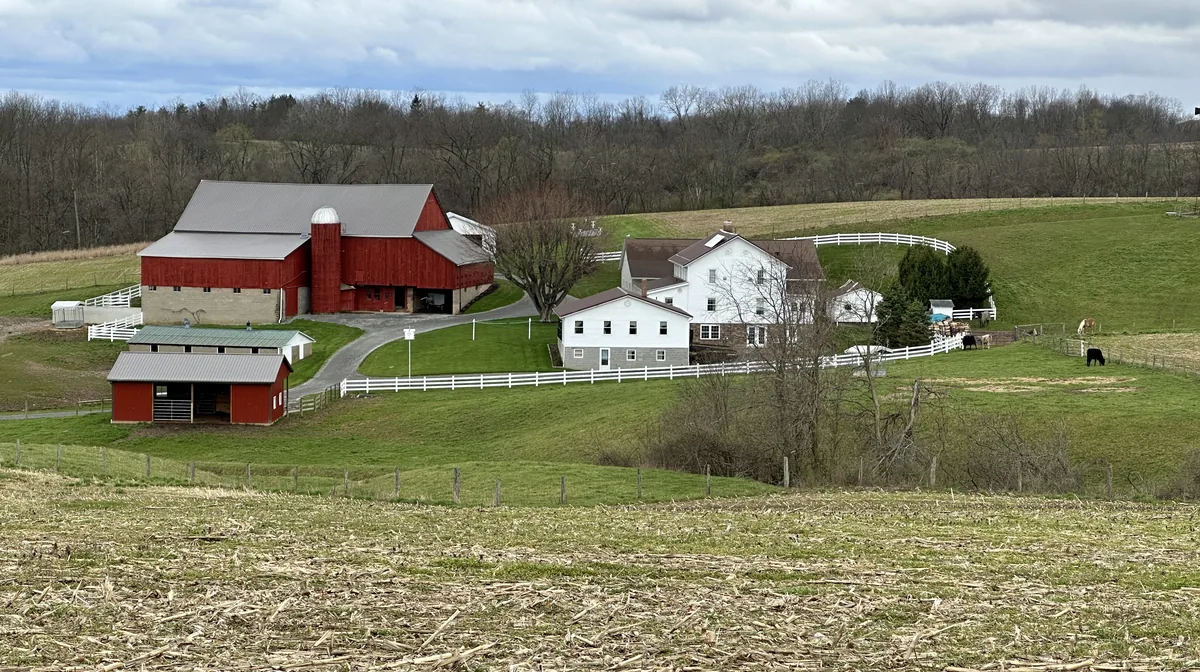
An Amish farm with red barns and a white farmhouse in Holmes County, Ohio
Why Cavmir

The Cavmir Advantage
in Amish Country

Cavmir markets Amish Country stays as the small hospitality brands they are, the cabin above a valley that hosts the same Columbus couple every October, the family house near Millersburg that a Cleveland family books for the Antique Festival, the farm stay on a township road that sends its guests to the cheese house and the heritage center, rather than as interchangeable countryside inventory. We put your property in front of the guest who chooses Holmes County on purpose, the couple planning a hot-tub weekend in the fall color, the family booking Thanksgiving weekend around Berlin's Live Nativity Parade, the reunion that needs a bed for everyone under one roof, wherever they search, from Google and AI assistants to the email list that brings last year's guests back.

State of the Industry · History

The Amish Country STR Market — Past & Present

The first Anabaptists reached Ohio in the early 1800s. The Holmes County Chamber of Commerce & Tourism Bureau's history names Jonas Stutzman, known as Der Weiss, who settled near present-day Walnut Creek in 1809; most of the early settlers had started their journey in Pennsylvania, and it's said the hills reminded them of Switzerland. Amish and Mennonite families settled the county in those early decades, drawn by its farmland. The state created Holmes County in 1824 from land in neighboring counties, including Tuscarawas and Coshocton, and named it for Major Holmes, a hero of the War of 1812. Charles Miller planned the county seat and, as the chamber puts it, honored himself in the naming, and Millersburg's sandstone courthouse, finished in 1886, is the third built there. The chamber's history notes that Mennonites, Amish and non-Amish dwell together in Holmes County today, and that family branches here spread wide across those lines.

The Young Center for Anabaptist and Pietist Studies at Elizabethtown College, which updates its counts every summer and includes children and adults, lists the Holmes County area second on its 2026 table of the twelve largest Amish settlements, after the Lancaster County area in Pennsylvania, with about 38,775 people in 332 church districts. Its state table puts Ohio's Amish population at 87,760 in 78 settlements, second only to Pennsylvania's. Each church sets its own standards, so practices vary from one district to the next. Services are held in homes and conducted in High German, and the chamber's guidance for visitors is plain: a distant field being plowed or a buggy on the road is fine to photograph, but Amish people will not pose for a photo and don't want their faces photographed. For questions that go deeper, the chamber sends visitors to the Amish & Mennonite Heritage Center and to Elizabethtown College's Amish Studies site.

Visitors came, and the community built places to answer them. In 1978 Heinz Gaugel, an artist born in 1927 in Eybach, a village in Germany's Swabian Alps, who first came to Holmes County in 1962 and moved onto a farm there in 1972, committed to painting a cyclorama after an Amish blacksmith voiced his frustration with tourists' questions. The Mennonite Information Center, established in 1981, bought the painting in 1988 with about 100 feet complete, broke ground in March 1989 for a Mural Hall to house it, and in October 1992 Gaugel signed the finished work: Behalt, 10 feet tall and 265 feet long, one of four cycloramas in North America. The center took its present name, the Amish & Mennonite Heritage Center, in 2002. The food trades grew alongside it. Bunker Hill Cheese, the maker behind Heini's Cheese Chalet, dates its place in the community to 1948 and credits John (Hans) Dauwalder, a Swiss master cheesemaker who brought his skills to America in the 1920s; the Ohio Swiss Festival has run in downtown Sugarcreek every fall since 1953; and Boyd & Wurthmann in Berlin has been where locals eat since 1938.

Today the rental market is mid-sized, weighted toward one-bedroom stays for couples and growing fast. AirROI counts 89 active listings under Berlin, up 13 percent on the year, 164 under Millersburg, up 27 percent, 66 under Sugarcreek, up 20 percent, and 33 under Walnut Creek, about 350 between the four, with average revenue per listing near $43,500 in Berlin, $37,200 in Sugarcreek and $33,900 in Millersburg. The lodging taxes show how big the overnight trade, hotels and inns included, already was before the latest wave of listings: in 2018 the state's table of local lodging taxes recorded $434,456 collected under Berlin Township's 3 percent tax, more than in any other township or village in the county. Revenue isn't keeping pace with supply everywhere; Millersburg's average slipped 0.3 percent and Sugarcreek's 6.6 percent while their listing counts grew by a fifth or more. The gaps we look for first are the ones that cost money: eight photos where thirty would sell, a map pin that hides where the cabin is, directions that trust a GPS that may not know the township road, a hot tub that first appears in photo nine, no winter offer for the months when the calendar empties, and no direct channel for the couples and families who come back.

Pricing Strategy & Seasonality

Pricing, Seasonality & When to Capture ROI

Pricing Strategy

Amish Country pricing is tiered by bedrooms and by what's outside the door. AirROI's Berlin numbers show the bedroom ladder: one-bedroom listings average about $231 a night at 37 percent occupancy, two-bedroom homes $268 at 52 percent and three-bedroom homes $296 at 56 percent, and median annual revenue climbs from $25,700 to $46,500 and $51,300. Across the market, the median listing averages about $220 a night, the top quarter $290 or more, the top tenth $420 or more and the bottom quarter $160 or less. AirROI's Millersburg data shows what guests pay for outside: listings with a hot tub earned about $49,500 a year against $26,700 for those without, and listings with a fire pit, a grill, a patio, a pool or an indoor fireplace all earned more than those without one. Those figures describe the places that have the features rather than proving the feature made the difference, but they show what a stay here is for: a soak after a day of shopping and eating, a fire after dinner and a place to sit outside.

The calendar does the rest. AirROI's high season in Berlin, June through October, averages about $4,700 of revenue a month at 52 percent occupancy and $264 a night; May and November sit in the middle at about $3,830, 48 percent and $244; and the low season, December through April, averages about $2,670 at 36 percent and $227. October earns about 2.6 times what January does in AirROI's two-year averages, and the three strongest months bring in 34 percent of the year's revenue. Guests book about 50 days ahead on average: about 67 days ahead for October stays and about four weeks for January. The average stay is 2.1 nights, longest in July at about 2.6, and about eight in ten listings that set a check-in time use 3 p.m., with check-out usually at 10 a.m. Each listing hosts about 49 bookings a year, so every arrival, every set of directions and every turnover counts.

The common mistakes are pricing a three-bedroom house like a couples' cabin and selling a family product one night at a time. A family of six compares your total with two hotel rooms in Berlin, so price the house on what it gives that a hotel doesn't: a kitchen, a living room, a yard and one table where everyone eats together. Cleaning fees are modest here, which helps: in AirROI's Berlin data about 90 percent of listings charge one, with a median of $40 and an average of $49, about $19 a night on the average stay and 6.3 percent of revenue, while AirROI's Millersburg median is $60 and its Sugarcreek median $92. Minimum stays split the market: 44 percent of Berlin listings accept one night and the other 56 percent set two, and 63 percent use a firm cancellation policy. AirROI's arithmetic is worth keeping in view: a 10 percent higher rate on the nights you already book adds about $4,070 a year to the average Berlin listing, and ten more booked nights at about $220 add about $2,200.

Seasonality & ROI Windows

Moderate seasonality with a fall top and a summer top. October earns the most in AirROI's two-year averages, about $5,390 per listing, with July within 5 percent of it, and January the least, about $2,050. Summer brings the longest stays and the highest nightly rates. September and October bring the festivals. Berlin's Harvest Festival and Rib Cook-Off fills historic downtown Berlin on a Friday and Saturday in mid-September (September 10 and 11 in 2027); the Holmes County Steam & Engine Show runs three days at Harvest Ridge near Millersburg in late September (September 24 to 26 in 2026); the Ohio Swiss Festival takes over downtown Sugarcreek around the turn of the month (September 30 to October 2 in 2027); and the Holmes County Antique Festival fills downtown Millersburg for a weekend in October (October 10 and 11 in 2026). November stays busier than most owners expect, at about 48 percent occupancy in 2025, and Thanksgiving weekend opens the Christmas season with Berlin's Live Nativity Parade, set for November 27, 2026. December through March is the quiet stretch, with January occupancy near 27 percent and rates near $220.

The revenue most owners miss sits in two places. The first is winter, which books late, about four weeks ahead for January, and rewards a different product: a hot tub and a fire in the first photos, a weekday rate, a two-night winter offer for Cleveland, Columbus and Akron couples, and a welcome book that sends guests to the heritage center, the cheese houses and the Victorian House Museum on a gray afternoon. Many businesses close on Sundays, and Heini's Cheese Chalet closes from New Year's Day into mid-January for cleaning, so a winter guide has to say what's open and when. The second is the family and group stay. Two- and three-bedroom homes earn far more than one-bedroom cabins in AirROI's data, yet more than half the entire-home supply has one bedroom and only about one listing in eight sleeps eight or more, so a house that fits a family, a reunion or two couples traveling together, and says so plainly, has less competition than the cabins down the road.

Regulation & Licensing · 2026

What the Law Requires in Amish Country

Ohio taxes short stays through its sales tax and lets counties, townships and municipalities add lodging taxes; we found no statewide short-term rental permit in the sources we checked. Section 5739.01 of the Revised Code counts as a sale, for sales tax, 'all transactions by which lodging by a hotel is or is to be furnished to transient guests', meaning people occupying a room for sleeping accommodations for less than 30 consecutive days, and it defines a hotel as 'every establishment kept, used, maintained, advertised, or held out to the public to be a place where sleeping accommodations are offered to guests, in which five or more rooms are used for the accommodation of such guests, whether the rooms are in one or several structures.' A single two-bedroom cabin usually falls outside that definition; an owner whose cabins together put five or more rooms in front of guests may not, so have an Ohio tax adviser count your rooms before you add a third cabin. Counties may levy a lodging excise tax of up to 3 percent under Section 5739.09, and Section 5739.091 lets a county, township or municipality declare, by resolution or ordinance, that its lodging tax also reaches establishments with fewer than five rooms; for that count, rooms in several structures or on several parcels under common ownership are added together unless they're advertised as distinct establishments. Airbnb's Ohio tax page lists only Cuyahoga County, Cincinnati and Cleveland as places where it collects and remits, so in Amish Country the collecting and filing are yours, on platform bookings and direct ones alike.

Holmes County and several of its townships levy their own taxes. The Ohio Department of Taxation's table of local lodging taxes for calendar year 2018, published in October 2020 and the most recent edition we could open, lists a 3 percent county lodging tax in Holmes County and separate 3 percent taxes in the Village of Millersburg and in Berlin, Clark, Hardy, Paint and Walnut Creek townships, and notes that the combined local rate is capped at 6 percent in most places. That year the county's own tax brought in $754,366, about $1.47 million was collected within the county in all, and Berlin Township's tax raised $434,456. The county commissioners return part of the money to the visitor economy through bed tax grants to groups that promote tourism and overnight stays, generally no more than $10,000 a year to any one recipient, and they posted a 2026 application. Millersburg's rule is the clearest: the village has levied a 3 percent bed tax since 1999 on all rents received by establishments in which one or more rooms are used to accommodate guests, collected by the owner with each booking and remitted to the village monthly, and it posts a short-term rental registration form, a monthly return and an online payment page. The village also asks new businesses to file a form with its income tax department. Outside the village, ask the county and your township's fiscal officer which taxes reach your address and how often to file, and confirm the current rates with them.

Zoning and safety rules are local and parcel by parcel. We found no county short-term rental ordinance and no township rental rules among the Holmes County Planning Commission's published documents, which cover subdivision regulations, floodplain regulations and a development permit for building in a special flood hazard area. The commission lists zoning and building code information among its services, meets on the second Wednesday of each month at 3 p.m. in the Old Jail building in Millersburg, and is the place to ask what applies to your parcel before you build a cabin or buy one; ask your township trustees too. Inside Millersburg, the village requires prior approval for any construction, alteration or modification, and its zoning inspector confirms a property's zoning district. The county health department licenses and inspects public swimming pools and spas, with an inspection before the first license and every year after, and campgrounds and parks must be licensed to operate, as must a temporary park-camp used up to 21 days a year, so ask the department before you advertise a pool or spa shared by several cabins or add tent or RV sites. AirROI found none of Berlin's 89 listings, none of Millersburg's 164 and none of Sugarcreek's 66 showing a registration, permit or license number, which fits what we found but isn't proof that no rule applies to your property.

The Tuscarawas side and the western edge have their own taxes. The same 2018 state table lists a 3 percent lodging tax in Tuscarawas County and 3 percent municipal taxes in Sugarcreek, Dover, New Philadelphia and Strasburg, among others; Sugarcreek's raised $103,075 that year. On the Mohican side, it lists a 3 percent Ashland County tax, a 3 percent municipal tax in Loudonville and 3 percent taxes in Green, Hanover and Montgomery townships. These are 2018 rates, the latest in the state table we could open, so get today's rate and filing schedule from the county and the village or township before your first booking. Ask the village offices in Sugarcreek and Loudonville about current rental rules before you list, and remember that a homeowners association or the covenants of a cabin development can be stricter than any public rule. Treat this section as orientation rather than legal advice, and confirm current requirements with the county, the township or village, the Ohio Department of Taxation and any association before you list. Cavmir handles the marketing side; permitting and tax compliance sit with you and your local professionals.

Market-Specific Tips & Challenges

Local Tips & Unique Market Challenges

Tips That Actually Move Revenue in Amish Country

First, sell the evening outside. AirROI's Millersburg data puts a hot tub on about a third of listings, and those listings earned about 85 percent more a year than the rest; fire pits, grills and patios show the same pattern. Guests here are buying a night outdoors after a day of shopping and eating, so put the hot tub, the fire pit and the view in the first three photos, show them at dusk as well as at noon, and say in words what a photo can't: whether the hot tub is private or shared, how far the fire pit is from the door, whether firewood is supplied and what the porch looks out on. Berlin's listings average only eight photos, so a set of thirty that walks a guest from the parking spot to the hot tub stands out. If the view is across a valley, name the valley, and never let a wide-angle lens promise more privacy than the lot has.

Second, write the directions and the etiquette into the listing. The chamber's visitor guide warns that a business with a Millersburg address may actually be in Berlin and a Sugarcreek address may be closer to Walnut Creek, that map programs work better when abbreviations such as CR and TR are written out as County Road and Township Road, though some GPS units still won't recognize them, and that cell service is limited in places; only about a third of Berlin's listings show their exact location. Send every guest a written route from the nearest state route, a pin that's on the driveway and a reminder to download a map before they lose signal. Add the road rules the guide gives visitors: don't accelerate at the top of a hill, expect horse-drawn vehicles to turn left into fields and driveways, read a driver's fully extended arm as a left-turn signal rather than an invitation to pass, pass slowly only on a reasonably open stretch, and give e-bikes room, since some reach 30 miles an hour. Tell guests that many shops close on Sundays, that the guide marks the ones that open, and that Amish neighbors don't want their faces photographed. A guest who knows the local customs before arrival has a smoother trip, and the review shows it.

Third, build the family product and price it as one. Two- and three-bedroom homes earn the most per listing in AirROI's Berlin data, with median annual revenue of $46,500 and $51,300, and only about one listing in eight sleeps eight or more, so a home that fits a family, a reunion or two couples traveling together faces less competition than the one-bedroom cabins. Give those guests a page of their own: the bed list, the drive to the Farm at Walnut Creek, Yoder's Amish Home and the Holmes County Trail, where to buy groceries and baked goods, and what's open on a Sunday. Set a two-night minimum for summer and fall weekends, offer a three-night rate for Thanksgiving weekend and the Antique Festival, and open next October to this October's guests first, because October stays book furthest ahead. Mention the trail's paved stretch and the bike rentals near it, the animals at the farm and the nativity parade's camels, because those are the details a family plans its days around. See vacation rental SEO for how pages like these get found.

Fourth, engineer the repeat and treat operations as marketing. The bar is very high: AirROI's Berlin listings average 4.92 stars, 88 percent carry Airbnb's Guest Favorite badge and nearly 98 percent of hosts are Superhosts, while value is the lowest-scoring category at 4.84, so the total a guest pays has to feel fair. About 71 percent of listings use Instant Book, and about three in ten are professionally managed. A couple who returns every October and a family who books the same Thanksgiving weekend are worth more over ten years than a season of strangers, which argues for a real direct channel: a fast direct-booking website, a complete Google Business Profile and a past-guest list that hears about next fall's dates first. Operations count as marketing too: a lane that's plowed and salted before a winter arrival, a check-in that works after dark on a rural road, the lodging taxes built into every direct quote, and a welcome book that knows which restaurants and cheese houses open on a Sunday.

Unique Amish Country Challenges

Supply is growing faster than demand in parts of the market. AirROI's Millersburg market added 27 percent more listings in a year while average revenue per listing slipped 0.3 percent, and Sugarcreek added 20 percent while its average fell 6.6 percent; in Berlin, listings grew 13 percent and revenue per listing still rose 10.5 percent. New supply splits the same October weekends, and the listings that lose are the ones that look like everyone else's. The largest host in AirROI's Millersburg data runs 26 listings and the ten largest run 45 percent of the market, so a single-cabin owner competes with operators who have photographers, pricing tools and repeat-guest lists. Standing still costs money: in a typical Berlin month the top quarter of listings earns at least 2.6 times what the bottom quarter does.

The calendar has a long trough and short stays. January runs near 27 percent occupancy at about $220 a night, the low season from December through April averages about 36 percent, and the average stay is about two nights, so every booking carries a full turnover and a cleaning. AirROI's own cost model for the average Berlin listing allows about $430 a year for insurance and $1,300 for repairs and upkeep, which may be thin for a cabin with a hot tub, a fireplace and a gravel lane; check those lines against real quotes. Owners who live in Cleveland or Columbus face a second problem: remotely run cabins drift, with stale photos, slow replies and a winter calendar nobody opens. A strong local cleaning and maintenance partner and current marketing close that gap.

The rules and the roads are the owner's job. Airbnb doesn't collect the county, township or village lodging taxes here, an owner who adds cabins can cross the five-room line into sales tax, and a shared pool or spa or a few tent sites can bring a health department license into play. The roads ask for care too: buggies, farm equipment, bicycles and e-bikes share narrow, hilly routes with guests who don't drive them often, and the chamber's guide spells out how to pass safely. And the competition isn't only other rentals. Berlin's merchants count more than 50 restaurants, inns, hotels and historic attractions in their town, and inns such as the Inn at Honey Run, a 56-acre adult-only resort near Millersburg, sell rooms, fine dining and grounds as one stay. A cabin or a house wins by offering what a hotel room doesn't, a kitchen, a hot tub, a fire pit and room for everyone, and by saying so clearly.

A Curious Amish Country Fact
Behalt exists because of tourists' questions. In 1978, after an Amish blacksmith voiced his frustration with tourists' questions, the artist Heinz Gaugel committed to painting a cyclorama of Amish and Mennonite history. He signed the finished mural in October 1992: 10 feet tall and 265 feet long, telling Amish, Mennonite and Hutterite history in reds for times of persecution and blues and greens for times of greater peace and tolerance. It has earned the nickname the Sistine Chapel of the Amish and Mennonites, and guests who start their trip there arrive everywhere else with better questions.
Finance Essentials — Amish Country
🛡️

Insurance

Insurance for an Amish Country rental has to cover rural risks. Expect a homeowner policy that allows short-term rental use or a dedicated rental policy, liability limits sized for a hot tub, a fire pit, a pond and guests driving a gravel lane, and a clear look at flood exposure if the property sits near a creek: Holmes County administers floodplain regulations and a development permit for building in a special flood hazard area. AirROI's cost model allows only about $430 a year for insurance on the average Berlin listing, so get real quotes from a broker who writes rental cabins in Holmes County before you buy, and disclose rental use to the carrier.

🧾

Property & Income Tax

Rental income is federal and Ohio income, and inside Millersburg the village asks new businesses to file a form with its income tax department. Guests pay the local lodging taxes, Holmes County's 3 percent and the 3 percent taxes of the townships and villages that levy their own in the state's 2018 table, including Millersburg's bed tax inside the village; which of them apply depends on the address. Airbnb's Ohio page lists none of them, so plan to collect and file them yourself on every booking, and if five or more rooms across your buildings are used for guests, ask about Ohio sales tax as well. The county auditor's office handles real estate appraisal and assessment, so ask how a home used as a rental is valued before you budget property tax, and work with an Ohio accountant who knows short-term rentals.

🏦

Mortgages & Financing

Financing is conventional, and prices are moderate by vacation-market standards. MLS Now's Wayne/Holmes monthly report, which combines sales in Wayne and Holmes counties and publishes averages, not medians, recorded an average single-family sale price of $280,600 in August 2026 and $293,814 for January through August, up 8.9 percent on the same months of 2025, with an average market time of 30 days in August; the highest single-family sale of the year so far was $1,499,900. The 7 to 10 percent return shown for this market is built on that $293,814 two-county average: AirROI's Berlin revenue, less AirROI's running costs and before mortgage and property tax, comes to about 10 percent of it for the average listing and under 8 percent for the median one. An average across two counties isn't a cabin price, and a cabin on acreage with a view can cost well above it, which pulls the return down, so underwrite the property you're buying, expect second-home or investment-property pricing depending on how you use it, and look for a lender who accepts a revenue model built on an October peak and a January trough rather than a flat monthly average. Budget for the lodging taxes, a winter vacancy reserve and the cost of keeping a rural lane open in snow.

Future Outlook · 2027 & Beyond

Where Amish Country is Headed Next

Amish Country's outlook is steady for structural reasons. The Holmes County area is second only to Pennsylvania's Lancaster County area on the Young Center's table of the largest Amish settlements, and the heritage center, the cheese houses, the shops and the restaurants around it give visitors reasons to return; Berlin's revenue per listing rose 10.5 percent in AirROI's latest twelve months, and the events that fill weekends keep coming back, from the Ohio Swiss Festival, held every fall since 1953, to the Antique Festival in Millersburg and the Live Nativity Parade, which Berlin has held on the Friday after Thanksgiving for more than 20 years. Canton, Akron, Cleveland, Columbus and Pittsburgh are all within two and a half hours by the chamber's count. None of those reasons to visit depends on a platform's search ranking.

The pressures to watch are supply, taxes and costs. Listing counts grew by a fifth or more in a year in AirROI's Millersburg and Sugarcreek markets, which spreads the same weekends across more cabins. Ohio law already lets any county, township or municipality extend its lodging tax to places with fewer than five rooms, and Millersburg's tax already reaches any lodging with one room, so build tax collection into every booking now rather than later. Insurance, snow removal and the cost of running a hot tub need checking every year. None of this threatens a well-run rental, but each one rewards owners who run the cabin professionally.

The other shift is in how guests find a place to stay. Travelers now ask AI assistants and search engines for a cabin with a private hot tub near Berlin, a house near the Holmes County Trail for a family reunion or a place close to the Antique Festival, and the properties that surface publish clear, structured, useful information: the bed list, the hot tub and fire pit, the drive times to Berlin, Walnut Creek and Millersburg, directions that work without a signal, a Sunday guide and a fast site an assistant can read. Our guide to generative engine optimization for vacation rentals explains how that works. Amish Country's guests plan around October, the holidays and a family's free weekend, so positioning for those answers now is one of the most durable advantages an owner can build.

From the Desk of Sofie Sinag

Why We Love Marketing in Amish Country

Amish Country is a market where plain facts sell the stay. There's a cheese house that buys its milk from local family farms, a 265-foot mural painted to answer visitors' questions, a trail with a lane built for buggies, a county seat with a sandstone courthouse from 1886, and a host community whose listings average 4.92 stars. When a listing says exactly what the cabin offers instead of generic countryside copy, it attracts the guest who's actually shopping for Holmes County, and that guest tends to come back and look after the place.

What I love about marketing here is the calendar's personality. October belongs to fall color, the antique dealers in Millersburg and the Swiss Festival in Sugarcreek, Thanksgiving weekend to the camels in Berlin's Live Nativity Parade, July to families on the trail and at the farm, and January to the couple who wants a hot tub, a quiet road and nowhere to be. An owner who stops marketing one generic cabin and starts marketing four seasonal reasons to come often finds nights and rate that were sitting there all along.

And marketing here comes with responsibilities I'm glad to take on. The families whose farms, shops and kitchens draw visitors here have their own customs about photographs, Sundays and the road, and a listing that explains them well serves the guest and the neighbors at once. Our job is rarely to invent an angle. It's to notice the true one the owner has stopped seeing, frame it plainly and put it in front of the guest already looking for exactly that.

Cavmir's Amish Country Cheat Sheet

The Picks We Recommend for Your Welcome Book

The picks Cavmir puts in an Amish Country welcome book: the details that make a stay feel like local knowledge instead of a printed concierge script, and that quietly earn the five-star reviews.

Start Here

Behalt at the Amish & Mennonite Heritage Center

At 5798 County Road 77, the center shows Behalt, Heinz Gaugel's 265-foot circular mural of Amish, Mennonite and Hutterite history, on a 30-minute guided tour, with a pioneer barn and a pre-Civil War one-room schoolhouse beside it, and it now houses the eastern Holmes County tourist information center. It's open Monday to Saturday and closed Sunday: the best first stop for guests with questions about the people who live here.

On the Road

Sharing the road with buggies

The chamber's guide asks drivers not to accelerate at the top of hills, to watch for blind spots on winding roads and to expect horse-drawn vehicles to turn left into fields and driveways; a driver's fully extended arm is a left-turn signal, not a signal to pass. Pass slowly, only on a reasonably open stretch, and give e-bikes extra room, since some reach 30 miles an hour.

Cheese

Heini's Cheese Chalet

A mile northeast of Berlin on Route 62, at 6005 County Road 77, the factory store of Bunker Hill Cheese, which dates its place in the community to 1948. It's open Monday to Saturday from 9 a.m. to 5 p.m., sets its Sunday hours by season, and closes from New Year's Day to mid-January for cleaning. An easy first stop on arrival day, with bus parking for groups.

Trail

The Holmes County Trail

Holmes County Rails-to-Trails calls it the first trail in the nation to accommodate Amish buggies: an asphalt lane for bikes, walkers, runners and wheelchairs beside a chip-and-seal lane for buggies and horses. Its main paved stretch, from Fredericksburg to Killbuck, runs 15 miles, with another 7.5 miles paved from Glenmont to Brinkhaven, and the visitor guide lists bike rentals near the trail.

Amish Life

Yoder's Amish Home

On State Route 515, guests tour two homes with local guides who explain the history, lifestyle and culture of the Amish, then visit a barn with a petting area, take a buggy ride and see the schoolhouse. Locally owned since 1983, it's a respectful way to answer the questions guests bring without knocking on a neighbor's door.

Lunch in Berlin

Boyd & Wurthmann

At 4819 East Main Street, it has been where locals eat since 1938, with Amish-inspired dishes, daily specials and more than 15 homemade pies. It takes no reservations, so send guests early or late in the lunch hour.

Animals

The Farm at Walnut Creek

A working farm at 4147 County Road 114 where guests take a horse-drawn wagon tour or drive their own car to see and feed more than 600 domestic and exotic animals. Its camels, sheep, cows, donkeys and horses also walk in Berlin's Live Nativity Parade.

History

Victorian House Museum

A 28-room Victorian mansion on the National Register at 484 Wooster Road in Millersburg, with self-guided tours and seasonal holiday hours. The Millersburg Glass Museum next door, ticketed in the Victorian House lobby, tells the story of the local glass plant, its workers and its owner, John Fenton.

October

Holmes County Antique Festival

Antiques, arts and crafts and live entertainment fill Historic Downtown Millersburg for a weekend every October; in 2026 it ran Saturday, October 10, from 10 a.m. to 9 p.m. and Sunday, October 11, from 10 a.m. to 4 p.m. Open those dates for next year as soon as this year's festival ends.

Thanksgiving Weekend

Berlin's Live Nativity Parade

Berlin has held its live nativity parade on the Friday night after Thanksgiving for more than 20 years. The 2026 parade steps off at 5:45 p.m. on November 27 from Sheiyah Market and ends at the town square with a short program on the town stage, with Mary and Joseph, the Three Wise Men, shepherds and camels from The Farm at Walnut Creek.

Day Trip West

Mohican and Loudonville

The Mohican area around Loudonville, in Ashland County, calls itself the camp and canoeing capital of Ohio, with Mohican State Park, Mohican-Memorial State Forest and Malabar Farm State Park all a short drive from town and trails for hikers, runners, mountain bikers and riders. Check the river conditions page before guests rent a canoe.

Local Playbook · Three Property Types

How Cavmir Markets Amish Country Properties

Three property types that do well in Amish Country, a common starting point for each, and the plan Cavmir builds for it.

1BR Couples' Cabin · hills near Berlin
The Situation

A one-bedroom cabin with a private hot tub and a valley view whose listing leads with the bed, shows eight photos, hides its location, sends guests up a township road with nothing but a map pin, and sits mostly empty from January to March.

The Plan

Rebuild the listing around the evening outside: the hot tub, the fire pit and the view in the first three photos, shot at dusk, thirty photos in all, written directions from the nearest state route and a reminder to download a map before arrival. Add a Sunday guide and the road etiquette, a winter weekday rate and a two-night offer for Cleveland, Columbus and Akron couples, register for and file the county and township lodging taxes, and start a past-guest list that hears about October first.

What It Targets

Built to raise winter weekday occupancy and the October rate without discounting the weekends that already sell. Track January to March occupancy, weekday nights, the October nightly rate, review mentions of directions and check-in, and the share of repeat and direct bookings.

3BR Family Home · Millersburg, near the Holmes County Trail
The Situation

A three-bedroom house inside the village that lists as a 'cozy getaway', competes on price with one-bedroom cabins, accepts one-night stays all year and has never registered for the village's bed tax.

The Plan

Register with the village and collect and remit the 3 percent bed tax first, then reposition the house for families and reunions: the bed list up front, a family page with the drive to the Farm at Walnut Creek and Yoder's Amish Home, the route to the trail, offers for the Antique Festival weekend and for Thanksgiving with the Live Nativity Parade, a two-night minimum on summer and fall weekends and a three-night holiday rate. Add a direct-booking site and a past-guest list for returning families.

What It Targets

Aimed at a higher nightly rate and longer stays from families instead of one-night stays priced like a cabin. Track nightly rate, average length of stay, June to October and Thanksgiving occupancy, value scores in reviews, and the share of returning families.

Four-Cabin Property · Walnut Creek Township
The Situation

Four cabins on one wooded property with a shared hot tub and a small pool, listed as four look-alike listings that compete with each other, with no whole-property option for reunions and nobody sure which taxes and licenses apply now that five or more rooms across the cabins are used for guests.

The Plan

Settle the rules first: have a tax adviser count the guest rooms against Ohio's five-room hotel definition for sales tax, confirm the county and township lodging taxes and the filing schedule, and ask the county health department whether the shared pool and hot tub need a license. Then give each cabin its own product, couples in one and families in another, add a whole-property booking for reunions and family gatherings, and launch a direct-booking site with a group inquiry form.

What It Targets

Designed to turn four competing listings into one property with several products and a group option. Track whole-property inquiries and bookings, nightly rate by cabin, winter occupancy, the share of direct bookings and on-time tax filings.

FAQ

Amish Country Airbnb Marketing:
Questions, Answered

Does Cavmir offer Airbnb marketing services in Amish Country?

Yes. Cavmir works with owners across Ohio's Amish Country, from Berlin, Walnut Creek, Charm, Mount Hope, Winesburg and Millersburg in Holmes County to the Sugarcreek side of Tuscarawas County and the Mohican side near Loudonville, on branding, listing optimization, photography direction, direct-booking websites, SEO and paid campaigns. Couples' cabins with hot tubs, family homes, farm stays and multi-cabin properties are exactly the kind of stays we market. We're a marketing agency; day-to-day operations stay with you or your local manager.

What do short-term rentals earn in Ohio's Amish Country?

AirROI's Berlin data for the twelve months to September 2026 puts the average at about $254 a night and 44 percent occupancy, or roughly $43,500 a year per listing, up 10.5 percent on the year. The spread is wide: the median listing earns about $2,800 a month and the top quarter $4,650 or more, and two- and three-bedroom homes have median revenue of about $46,500 and $51,300 a year. AirROI's Millersburg market averages about $33,900 a year and its Sugarcreek market about $37,200. Treat these as market averages, not a forecast for your property; product, presentation and pricing decide where a stay lands.

When is demand highest for Amish Country rentals?

October is the strongest month, with about 62 percent occupancy in 2025 and the year's earliest bookings, and July comes close on revenue with the highest nightly rates. September brings Berlin's Harvest Festival and the Steam & Engine Show, the turn of September into October the Ohio Swiss Festival in Sugarcreek, October the Antique Festival in Millersburg, and Thanksgiving weekend the Live Nativity Parade in Berlin. January is the quietest month, when guests book about four weeks out and the hot tub sells the stay.

Are short-term rentals regulated in Holmes County?

Mostly through taxes and local zoning. We found no county short-term rental permit and no township rental rules in the county's published documents, but Holmes County, several townships and the Village of Millersburg levy 3 percent lodging taxes, Ohio's sales tax can apply once five or more rooms are used for guests, in one or several structures, the county health department licenses public pools, spas and campgrounds, and building in a special flood hazard area takes a county permit. Ask your township and the county planning commission about your parcel before you build or buy. Confirm current requirements locally; Cavmir handles the marketing side, not legal or permitting advice.

Does Airbnb collect the lodging taxes on Amish Country rentals?

No. Airbnb's Ohio tax page lists only Cuyahoga County, Cincinnati and Cleveland as places where it collects and remits, so in Holmes and Tuscarawas counties you collect and file the lodging taxes yourself. The state's 2018 table lists 3 percent taxes for Holmes County, for Berlin, Clark, Hardy, Paint and Walnut Creek townships, for Tuscarawas County and for Millersburg and Sugarcreek, and Millersburg's bed tax is remitted to the village monthly. Those are 2018 rates, so confirm today's with the county and your township or village before you take your first booking. If five or more rooms across your buildings are used for guests, ask a tax adviser about Ohio sales tax too.

How should an Amish Country listing handle Sundays, buggies and photographs?

Put the etiquette in the listing and the welcome book. Many shops and restaurants close on Sundays, so list the ones that open and their hours. Give guests the road rules from the chamber's visitor guide: don't accelerate at the top of a hill, expect buggies to turn left into fields and driveways, and pass slowly only on an open stretch. And tell them what the chamber tells visitors: a buggy on the road or a distant field is fine to photograph, but Amish people will not pose for a photo and don't want their faces photographed. See vacation rental SEO for how a guide like this helps guests find you.

Which amenities earn the most in Amish Country rentals?

A hot tub leads. In AirROI's Millersburg data, listings with one earned about $49,500 a year against $26,700 without, and fire pits, grills, patios, pools and indoor fireplaces all show the same pattern. Those figures describe the places that have the features rather than proving the feature made the difference, but they match what guests come for: an evening outside after a day of shopping and eating. Space matters too, since two- and three-bedroom homes earn far more than one-bedroom cabins in Berlin.

How much does Airbnb marketing cost for an Amish Country property?

It depends on scope. Current plans and one-time project pricing are on the pricing page; most owners start with a listing overhaul or the 12-step system. A conversation about your property costs nothing: contact Cavmir.

Free Property Review

What is your Amish Country property actually worth per night?

Send us the listing and we'll tell you what we'd change. Not a pitch deck — a straight read on your photos, your title, your rates against the Amish Country comp set, and whether a direct-booking site would pay for itself.

You'll hear back from a person, usually inside one business day. If we don't think we can move your numbers, we'll say so. Cavmir is a short-term rental marketing agency — we position and market properties, we don't manage them.

  • No obligation, and no automated call sequence
  • We market and position — we never manage your property or hold keys
  • Works whether you're on Airbnb, Vrbo, or direct

Market Intelligence · Seasonality

Airbnb seasonality in Amish Country, month by month

Demand in Amish Country peaks around July and October and runs quietest around January through February. Here is how the year actually books — and what to do about each stretch of the calendar.

Peak demandSteadyQuiet

Peak season

October is the peak in Ohio's Amish Country, with fall color, the Antique Festival in Millersburg and the Ohio Swiss Festival in Sugarcreek, and July comes close with summer vacations, the longest stays and the highest nightly rates of the year. October stays book furthest ahead, more than two months out, so open next fall's dates to past guests first, hold weekend rates firm, set two-night minimums and have the hot tub, fire pit and view photos current before summer ends.

The shoulders

May, June, September and November keep the calendar moving. September brings the Holmes County Steam and Engine Show and Berlin's Harvest Festival, and November fills more nights than most owners expect, with Christmas shopping and Berlin's Live Nativity Parade on the Friday after Thanksgiving. Sell weekday rates to couples, a three-night family rate for Thanksgiving weekend and each festival weekend as a product of its own.

The quiet stretch

December through April is the quiet stretch, with January the lowest month of the year. Winter guests book late, often only about four weeks ahead, so keep pricing flexible, lead with the hot tub and the fireplace, offer a weekday and a two-night winter rate to couples from Cleveland, Columbus and Akron, and tell them what's open, since many businesses close on Sundays and some take a break after New Year's. January is also the time to refresh photos and plan next October's offer to past guests.

Dates that fill first

Holmes County Trail Benefit AuctionJune
The annual benefit auction for the Holmes County Trail is held at Harvest Ridge near Millersburg on a Saturday in June; mention it with the trail, its buggy lane and the bike rentals nearby in a summer listing.
Holmes County Steam and Engine Showlate September
Steam engines, antique tractors, classic cars, tractor pulls and demonstrations fill Harvest Ridge near Millersburg for three days; price the weekend as its own product and give guests the drive to the show grounds.
Berlin Harvest Festival and Rib Cook-OffSeptember
A free two-day festival in downtown Berlin with a rib cook-off, live music, Friday fireworks, a live auction and a Saturday parade; open those dates early and tell guests where to park and how to walk in.
Ohio Swiss Festivallate September or early October
Held in downtown Sugarcreek every fall since 1953, with cheese and wine samplings, races, contests and parades; houses on the Sugarcreek side should sell the festival weekend by name.
Holmes County Antique FestivalOctober
Antiques, arts and crafts and live entertainment fill Historic Downtown Millersburg for a weekend in October, the market's strongest month; homes within reach of downtown should price it as a premium weekend.
Berlin Live Nativity Paradelate November
On the Friday night after Thanksgiving, a live nativity parade with camels and other animals from The Farm at Walnut Creek runs through Berlin to the town square; build a three-night Thanksgiving offer for families around it.
Market Intelligence · Guests

Who books Amish Country Airbnbs — and how far ahead

Couples on a cabin weekend
Couples from Cleveland, Columbus, Akron and Pittsburgh who book a one-bedroom cabin for a couple of nights of shopping, good food and an evening in the hot tub. They choose on the photos of the hot tub, the fire pit and the view, and a good stay brings them back the next fall.
Families and reunion groups
Families and reunions who come for the farms, the animals, the trail and the food. They need real bedrooms, a full kitchen and room for everyone at one table, and they book summer, October and Thanksgiving weekend.
Festival and holiday visitors
Visitors who time a trip to the Steam and Engine Show, the Ohio Swiss Festival, the Antique Festival or Berlin's Live Nativity Parade. They want an easy drive or walk to the event and book those weekends early.
Guests learning about Amish and Mennonite life
Travelers who come to understand the culture, starting at the Amish and Mennonite Heritage Center and Yoder's Amish Home. They value a welcome book that explains photo etiquette, Sunday closures and how to share the road with buggies.

The booking window

Guests book about seven weeks ahead on average. October books furthest out, more than two months early, with July close behind, while January stays arrive only about four weeks ahead. Have the fall ready by midsummer, open festival and Thanksgiving weekends early and keep winter pricing flexible for late planners.

Typical stays

Most stays are short, about two nights, and weekends do most of the work. Stays run longest in July, when families take summer vacations, and shortest in September and November, when couples come for a weekend.

Where guests drive from

ClevelandColumbusAkronCantonPittsburghCincinnati

Where guests fly from

ChicagoCharlotteWashingtonOrlandoTampaNashville
Cleveland and Columbus are the top origin cities, with Cincinnati, Pittsburgh, Akron and Dayton behind them, and Canton is under an hour away, so the Ohio drive market carries the calendar. Fly-in guests can use Akron-Canton Airport, which has nonstop flights from Chicago, Charlotte, Washington, Nashville and several Florida cities. Geo-target the Ohio metros and Pittsburgh for weekends and holidays, and the nonstop cities for longer family trips.
Market Intelligence · What Wins

The Airbnb that wins in Amish Country

The winner is a stay built for the guest who's coming: a one-bedroom cabin with a private hot tub, a fire pit and a view for couples, or a two- or three-bedroom home with real bedrooms and a big table for families and reunions. Larger homes are scarcer and earn more per listing than the one-bedroom cabins that make up most of the supply. Wherever the cabin sits, written directions that work without a signal and a listing that shows the evening outside help it sell.

Amenities that move bookings here

private hot tubfire pitvalley viewindoor fireplacegrill and patiofull kitchena bed for every guestdirections that work offline
The highest-leverage move is putting the evening outside first: the hot tub, the fire pit and the view in the first photos, with written directions and a Sunday guide in the listing. Listings with a hot tub earn far more than those without in the market data.
FAQ

Amish Country Airbnb marketing questions, answered

How do I market my Airbnb in Amish Country?

Start by naming your product, a couples' cabin with a hot tub, a family home near Millersburg or a multi-cabin property for reunions, and put that advantage in the title and the first photos. Price around the real calendar, holding October and summer weekends firm, selling the festival weekends and Thanksgiving as products of their own and building a weekday and two-night rate for winter. Write directions that work without cell service, explain Sunday closures and buggy etiquette, and add a Google Business Profile and a direct-booking site so returning guests can rebook you directly. That's the marketing layer Cavmir builds for owners here: photography direction, listing copy, a direct-booking website and local search.

When is peak season for Amish Country Airbnbs?

October is the peak, with fall color, the Antique Festival in Millersburg and the Ohio Swiss Festival in Sugarcreek, and July comes close with summer vacations and the highest nightly rates. September and November stay busy with the Steam and Engine Show, Berlin's Harvest Festival and Thanksgiving weekend, and January is the quietest month of the year.

How far in advance do guests book Amish Country Airbnbs?

About seven weeks ahead on average. October books furthest out, more than two months early, with July close behind, while January stays book only about four weeks ahead. Have the fall ready by midsummer, open festival and Thanksgiving weekends early and keep winter pricing flexible.

Where do most Amish Country Airbnb guests come from?

Ohio leads: Cleveland and Columbus are the top origin cities, followed by Cincinnati, Pittsburgh, Akron and Dayton, and Canton is under an hour away. Nearly every guest is American. Fly-in guests can land at Akron-Canton Airport, which has nonstop flights from Chicago, Charlotte, Washington, Nashville and several Florida cities.

What amenities matter most for an Amish Country Airbnb?

A hot tub leads; listings with one earn far more than those without in the market data, and fire pits, grills, patios and indoor fireplaces show the same pattern. Families add their own list: real bedrooms, a full kitchen and room for everyone at one table. Written directions that work offline matter too, since cell service is limited in places.

Free Tools · Websites That Book

See what your listing in Amish Country is leaving on the table

Run your Airbnb, Vrbo, or website through Cavmir's free grader. It checks the things that decide whether guests book in Amish Country — photos, listing copy, page speed, local search — and shows you where bookings leak. Takes about a minute, and there's no sales call attached.

If the report says your booking engine is the weak link, that's fixable: a direct-booking website of your own means repeat guests stop paying platform fees to come back to you. That's the work Cavmir does — see Airbnb website design in Amish Country.

What the grader measures

  • ✓Photos and the first-impression frame
  • ✓Listing title and copy
  • ✓Your direct-booking website (or the lack of one)
  • ✓Page speed and mobile experience
  • ✓Local search and Google visibility
Grade My Listing — Free
Ready to Grow in Amish Country?

Let's Put Your Amish Country
Property on the Map

Talk to Cavmir today. We'll show you exactly what your Amish Country property is leaving on the table — and how fast we can change that.

Book a Free Strategy Call