


The permit
Annual, per dwelling
A Transient Rental Permit is required for each dwelling before any renting, renewed annually with the city.

Expert short-term rental marketing to grow your bookings and nightly rate in Sandusky, Ohio, USA.
Sixteen services, one team. Everything below is built in-house and scoped to your property and market. Most owners start with the 12-Step System.
Every engagement is quoted to your portfolio. These are the ready-made scopes owners pick most — the AI Efficiency Discount is already applied. A clear proposal within 48 hours.
The work is public. Selected engagements and what changed — and reviews from the owners and managers behind them.
* Market averages. Properties marketed by Cavmir typically exceed these figures by 25–45%. Data sourced from AirDNA, STR market reports, and Cavmir internal analytics.
Sandusky sits on a bay on the Lake Erie shore, halfway between Cleveland and Toledo, and it has been in the business of entertaining people since 1870, which is when a beer garden and bathing beach opened on the peninsula across the water. That beer garden became Cedar Point, now one of the oldest amusement parks in North America and, by roller coaster count, one of the most serious in the world. Around it grew a visitor economy that has genuinely changed shape twice. The first change was the park itself, which turned a lake port into a summer destination. The second was more recent and more important for anyone renting property here: a cluster of enormous indoor waterpark resorts opened in the 2000s, and because they are indoors, they broke the seasonality that had defined this town for a century. A market that used to close in September now has February demand. Sandusky is also a working city with a real history underneath the rides. It was the last stop on the Underground Railroad before Canada for a great many people, the place where the lake finally became a way out, and the town appears in Uncle Tom's Cabin for exactly that reason.
The regulatory position here rewards reading carefully, because it quietly determines whether a property can ever be a short-term rental at all. Any owner of a transient rental must obtain an annual Transient Rental Permit from the City of Sandusky for each dwelling before renting it. There is a minimum rental period of two nights, which is worth understanding as a pricing rule as much as a legal one: this market's natural guest wants one night before a park day, and the city has decided they cannot have it. The zoning is the important part. Transient rentals belong in the commercial districts. Properties outside those districts may operate only as a legally non-conforming use, meaning they have run continuously as transient rentals since before the city adopted its ordinance. In plain terms, the residential inventory is closed. It cannot be added to; it can only change hands, and only if the use has never lapsed. That makes an existing non-conforming residential rental a genuinely scarce asset and makes continuity of use something a buyer must verify rather than assume. On tax, the city has partnered with Erie County so owners file one online return covering both the city transient rental tax and the county lodging tax, and registration with the county is free. Confirm current rates and occupancy limits with the city.
Nearby Markets: Put-in-Bay | Erie | Hocking Hills
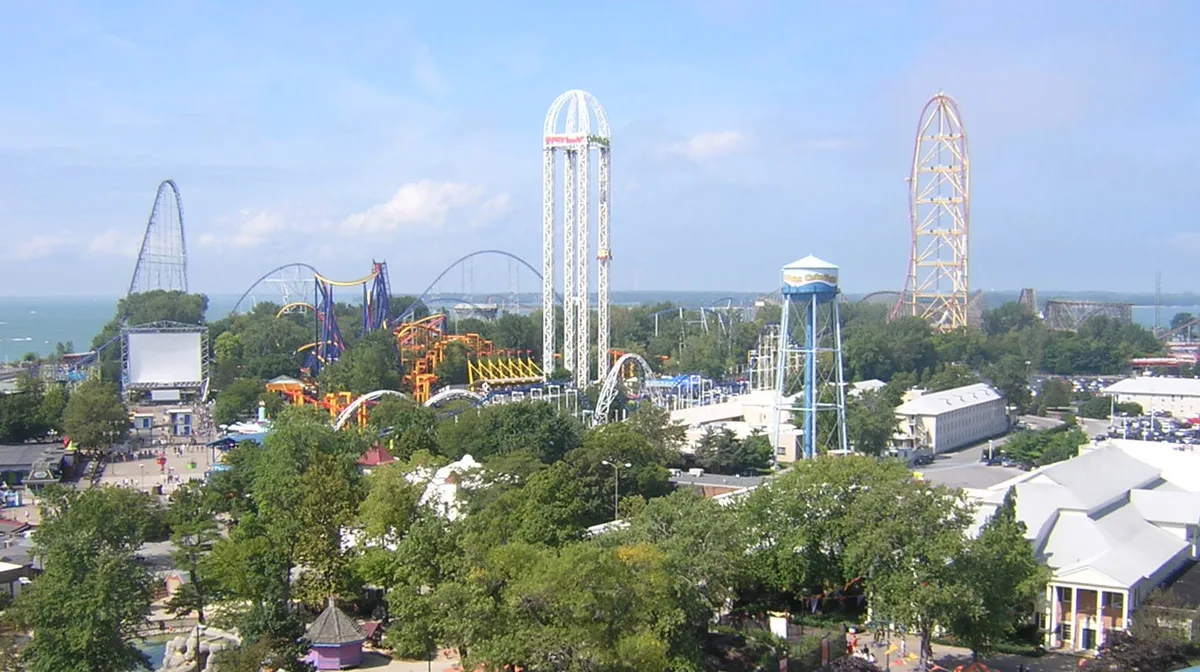
A few of the visual fingerprints we lean into when we shoot, brand and market a Sandusky property — courtesy of the open Wikimedia Commons archive.
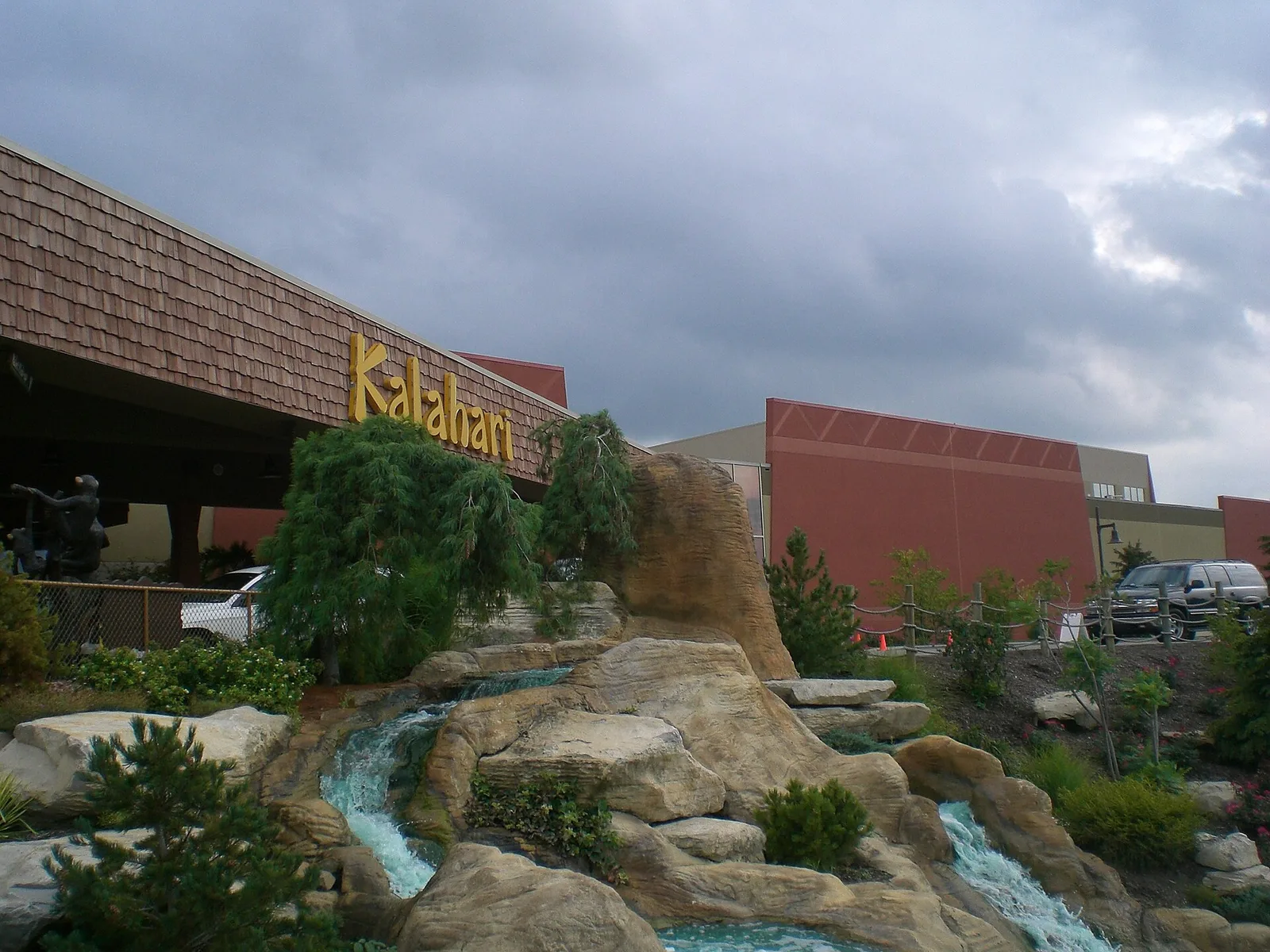

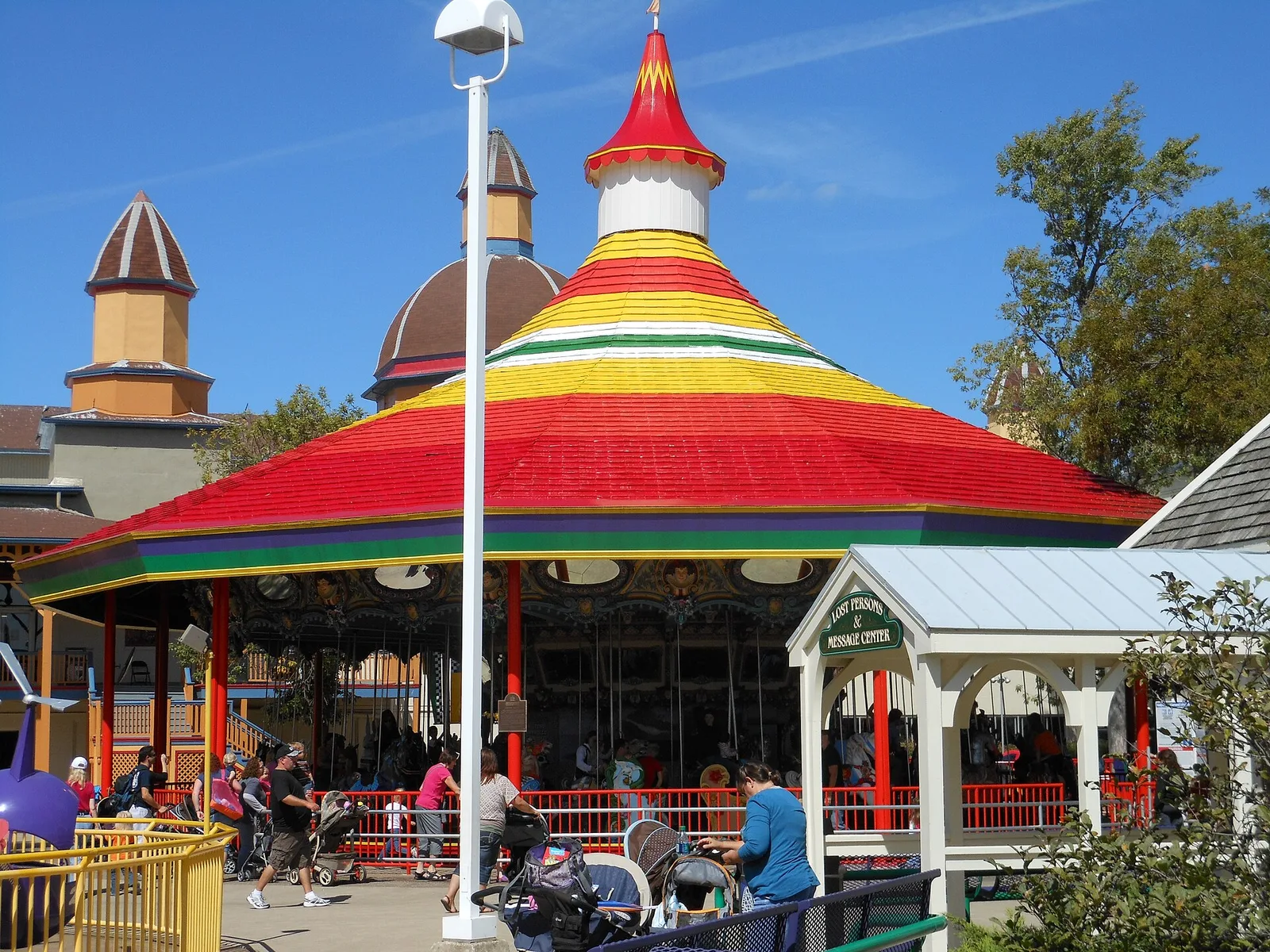
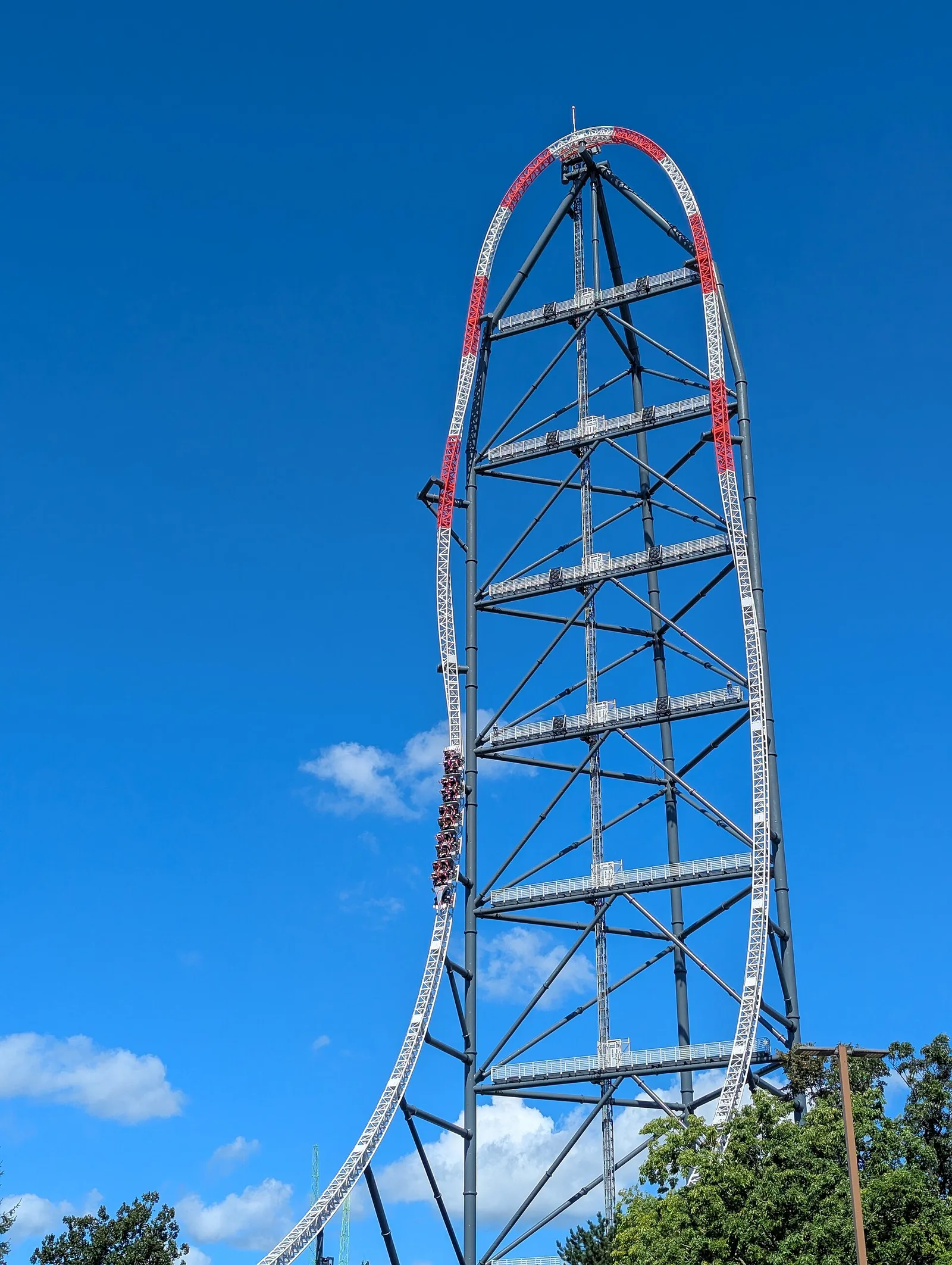
Cavmir markets Sandusky properties around the fact that this is no longer a summer town, which is the single biggest thing most listings here have failed to notice. The indoor waterparks generate demand in February and November, the park itself now runs a long autumn events season, and a property presented purely as a summer beach rental is invisible for half the year in a market that has genuine off-season traffic. We write the winter and shoulder story properly. We also handle the two-night minimum as an advantage rather than a constraint: if the city will not let you sell one night, then sell a two-day itinerary, because the guest who was going to do a single park day and drive home tired will do the park, the ferry to the islands, the lighthouse and a proper dinner if somebody lays it out for them. We photograph the property so the drive to the causeway, the bay and the neighbourhood are honest, write the parking and traffic reality of a park morning into the listing, and build a direct booking site that captures the enormous branded search volume this destination generates. Then we run local SEO, ads timed to the park's own calendar and an email list of the families who come back every summer. We help position and market your property. We never manage it or touch your keys.
Sandusky's name comes from a Wyandot word usually rendered as something close to at the cold water, and the town was laid out on a bay that made it one of the best natural harbours on Lake Erie. That geography gave it two very different histories. The first is commercial: it became a shipping port, a rail terminus, a centre of the ice trade cutting blocks from the frozen bay, and later a manufacturing city. The second is the one that matters more. Because Sandusky is on the American shore with open water to Canada, it became one of the most important terminals on the Underground Railroad, the place where the lake stopped being a barrier and became an escape. Harriet Beecher Stowe put it in Uncle Tom's Cabin for exactly that reason, and the town's role in that history is documented rather than legendary. In Sandusky Bay sits Johnson's Island, which during the Civil War held a prison camp for captured Confederate officers, and the cemetery there is still maintained. The entertainment story begins in 1870, when a beer garden and bathing beach opened on the peninsula across the water. It grew into Cedar Point, which added its first roller coaster before the end of the century and never stopped, becoming one of the largest and oldest amusement parks in North America. The most recent chapter is the one that changed the rental market: in the 2000s a cluster of very large indoor waterpark resorts opened around the city, and a town that had closed every September suddenly had a winter.
Sandusky's pricing question is no longer what to charge in July, it is whether you are pricing the other nine months at all. The summer peak is obvious and easy: from Memorial Day through Labor Day the park runs full, the ferries to the islands are busy, and rates should be set high and early with the two-night minimum treated as a floor rather than a target. What most owners miss is that the indoor waterparks generate genuine demand in January, February and November, when the outdoor season is long over, and that demand is far less price-competitive because there is much less inventory presenting itself for it. The park's own autumn events season is the other underused block. Within the summer, weekends carry a large premium and midweek is softer, which suits families willing to shift days if the listing tells them the park is quieter then. Group size matters: this is a market of families and multi-family trips, and a house that genuinely sleeps ten with parking for three cars beats a smarter property that sleeps six. The two-night minimum imposed by the city is worth pricing around rather than resenting; the honest response is to build and sell a two-day itinerary that justifies the second night rather than discounting it to fill.
Historically a pure summer market, now a two-season one. Memorial Day through Labor Day is the peak, driven by the amusement park and the lake. The autumn events season extends it into October. Then the indoor waterparks carry genuine winter weekend demand through November, January and February, which is unusual for a Great Lakes town and is the single most important structural change in this market in the last twenty years. March and April are the thinnest stretch. Lake-effect weather affects travel in winter, and almost everyone arrives by car.
Every owner of a transient rental in Sandusky must obtain an annual Transient Rental Permit for each dwelling before renting it, and there is a minimum rental period of two nights, together with restrictions on guest numbers. The zoning position is the part that decides whether a property can enter the market at all. Transient rentals sit within the commercial districts. Properties outside those districts may be used as transient rentals only where they qualify as a legally non-conforming use, which means they have operated continuously as transient rentals since before the city adopted its transient rental ordinance. The consequence is significant: the pool of legal residential-district rentals is fixed. It cannot be expanded by new applications, only transferred with properties whose use has never lapsed. If you are buying a residential-district property on the strength of its rental history, the continuity of that use is the single most important thing to verify in the transaction, because an interruption may have extinguished the right permanently. On tax administration, the City of Sandusky has partnered with Erie County so that owners file one online return and payment covering both the city's transient rental tax and the county's lodging tax, and there is no cost to register with Erie County. Ohio state sales tax also applies to lodging. Confirm the current city and county rates, the permit fee and the guest-number limits with the city directly, since these are revised periodically.
Sell the second night, because the city requires it. A family planning one park day and a drive home has to be given a reason to stay two, and that reason should be written into your listing: the ferry to Put-in-Bay, the lighthouse at Marblehead, the waterfront, a proper dinner downtown. Owners who treat the two-night minimum as a problem lose bookings; owners who build a two-day trip around it sell more. Second, market the winter. The indoor waterpark resorts changed this town's calendar and a great many listings still read as though the year ends in September. Third, be honest about the park morning. Traffic on the causeway and parking are real, and a listing that explains the timing, the routes and where to leave a car reads as local knowledge rather than a warning. Fourth, photograph for families. Bunk arrangements, the kitchen table, the driveway and where the pushchair goes matter more here than styling. Fifth, tell the town's real history somewhere. Sandusky's role on the Underground Railroad is documented and significant, and guests who learn it from you remember the stay differently. Sixth, capture the branded search traffic directly. This destination is searched by name in enormous volume, and a direct booking site lets you meet that demand rather than paying to be introduced to a guest who already knew where they were going.
Access to the residential market is closed to new entrants, so a buyer must find a property with unbroken non-conforming use or accept a commercial-district location. The two-night minimum removes a natural chunk of demand. The market is heavily dependent on a single operator's calendar and pricing decisions, which is a real concentration risk: if the park shortens a season or changes its events programme, this town feels it immediately. March and April are close to empty. And because almost everyone drives, weather has an outsized effect on short-notice bookings.
A Sandusky short-term rental needs the use named in the policy and liability limits set for a market whose guests are overwhelmingly families with children, often arriving late and leaving early, frequently in larger groups than the property is designed around. Be honest with your insurer about occupancy. If the property has a pool, a hot tub or lake access, schedule each of them specifically. Lake Erie weather produces the standard cold-climate claims in winter: frozen pipes, ice dams and roof loads, and a property that sits empty in March needs its vacancy conditions read carefully. Properties near the bay or in low-lying areas should be checked for flood exposure, which standard policies exclude. Older housing stock in the city's residential districts, which is where most of the non-conforming rentals sit, brings the usual questions about wiring, furnaces and roofs, and documenting upgrades helps. If your permit status depends on continuous non-conforming use, keep records that prove it, because that continuity is an asset and losing the paper trail is a real risk. Use an Ohio broker who writes vacation rentals.
Sandusky's tax administration is unusually convenient. The City of Sandusky has partnered with Erie County so that transient rental owners file a single online return and make one payment covering both the city's transient rental tax and the county's lodging tax, rather than dealing with two authorities separately. Registration with Erie County carries no cost. Ohio state sales tax applies to lodging as well, and the combined figure depends on the county-inclusive rate, so confirm the current numbers with the city or county rather than relying on a general guide, since Ohio lodging taxation varies considerably between counties. Establish what your booking platform collects and remits versus what you must file yourself, because the split differs by tax and by platform and the liability stays with you. On the income side, ask your accountant about Ohio and federal treatment, and about the municipal income tax position, which is a feature of Ohio that owners from other states routinely overlook and which can apply to rental activity depending on how it is structured.
Sandusky is an affordable market, which keeps entry costs and deposits modest, and that is a large part of why the yield numbers here look attractive. The financing complication is specific to the zoning position. If you are buying a residential-district property whose short-term rental use depends on legally non-conforming status, a lender assessing rental income needs to understand that the right is tied to unbroken continuity of use rather than to a permit that can simply be reissued, and that is a documentation exercise rather than a conversation. Get it settled before you are under contract. Commercial-district properties raise a different question, since a mixed-use or commercial classification can push the file toward a commercial lending product with different terms. Seasonal income concentration matters less here than it used to because the indoor waterparks produce winter revenue, and a property with documented year-round bookings will present better to an underwriter than one with a purely summer history. Older housing stock brings survey questions. Use a broker who lends in Erie County, Ohio and has financed transient rentals before.
Two forces will shape this market over the next decade. The first is the amusement park's ownership and investment decisions, which are made by a large corporate operator and are entirely outside any local control; season length, events programming and pricing at the park move this town's lodging demand directly, and that concentration is the main structural risk of owning here. The second is the indoor waterpark cluster, which has already done something no amount of marketing could: it gave Sandusky a winter. That change is permanent as long as those resorts operate, and it means a property here is no longer a three-month business. On the regulatory side, the city's decision to freeze residential-district rentals at their existing non-conforming population is a strong signal. It caps supply without banning anything, it is politically durable because it does not dispossess anyone, and there is no indication of it loosening. For an owner, that combination is favourable: a fixed supply of legal residential rentals, a demand base that now spans the year, and a destination that people search for by name in very large numbers. The right response is to build the direct relationship with returning families rather than competing for ranking every spring.
Sandusky is a town that has been showing people a good time since 1870, when somebody opened a beer garden and a bathing beach on the sandy peninsula across the bay. That beer garden is now Cedar Point, which has been adding roller coasters for over a century and has more of them than almost anywhere on earth, arranged along a spit of land with water on both sides so that from the top of the tallest you can see Canada on a clear day. But what we like about this town is that the rides are the newest thing about it. Sandusky is an old lake port with a limestone downtown and a bay full of boats, and it sits at a point in American geography that mattered enormously: with open water north to Canada, it was one of the great terminals of the Underground Railroad, the last stop where the lake stopped being an obstacle and became the way out. Harriet Beecher Stowe put it in Uncle Tom's Cabin because by the 1850s everybody already knew. Out in the bay is Johnson's Island, which held Confederate officers as prisoners and still has their cemetery on it. Ferries leave from the waterfront for Put-in-Bay and Kelleys Island. And then in the 2000s the indoor waterparks arrived and did something no marketing campaign could: they gave a Lake Erie summer town a February.
A great property in Sandusky doesn't just want a listing — it wants a point of view, an audience, and a brand the city itself would recognise.
Eight things that decide how a Sandusky rental performs, in a market where the residential rental pool is closed to new entrants.
A Transient Rental Permit is required for each dwelling before any renting, renewed annually with the city.
The city sets a two-night minimum. Build a two-day itinerary rather than treating it as lost revenue.
Transient rentals belong in commercial districts. Elsewhere they exist only as legal non-conforming uses.
A residential-district rental is legal only if it has operated continuously since before the ordinance. Verify that in any purchase.
Kalahari and Great Wolf broke the seasonality. This is no longer a three-month market and most listings have not caught up.
Cedar Point began as a beer garden and bathing beach and is now one of the oldest amusement parks in North America.
Put-in-Bay and Kelleys Island leave from the waterfront. The obvious answer to the second day the city requires you to sell.
Sandusky was a principal terminal, and appears in Uncle Tom's Cabin for that reason. Worth knowing and worth telling.
The three examples below are composite and illustrative. They reflect patterns seen across amusement-park and single-attraction markets rather than any single Sandusky client, and no real business is described.
A well-run property presented itself entirely as a summer park rental, went quiet from September and sat empty through the winter, in a market where indoor waterpark resorts were filling weekends in February.
We built a separate winter presentation aimed at indoor waterpark families, reshot interiors to look warm rather than beachy, and marketed the off-season months through different channels and to past summer guests.
Winter weekends began booking consistently, adding revenue in months the property had previously written off entirely.
An owner resented the city's minimum stay, kept trying to capture one-night park guests, and lost bookings to properties that had simply accepted the rule and built around it.
We wrote a genuine two-day itinerary into the listing: the park, the ferry to the islands, the lighthouse, the waterfront, and priced the second night as the better value rather than an imposition.
Average booking value rose because guests were buying a trip rather than a bed, and the minimum stay stopped being a source of lost enquiries.
A buyer was purchasing a residential-district property on the strength of its rental history without establishing whether the transient use had ever lapsed, which in this city can extinguish the right permanently.
Marketing work was held until the continuity of the non-conforming use had been verified and documented properly with the city, and the position was then written into the listing as a trust signal.
The owner proceeded knowing the right to operate was intact and documented, rather than discovering a problem after completion.
Demand in Sandusky peaks around June through August and runs quietest around March through April. Here is how the year actually books — and what to do about each stretch of the calendar.
Memorial Day through Labor Day is the outdoor peak, driven by the amusement park and the lake, with weekends carrying a large premium over midweek. Rates should be set high and early, and the city's two-night minimum treated as a floor to build an itinerary around rather than a constraint to resent.
The park's autumn events season extends demand well into October, and spring weekends pick up as the season opens. Both are easier to sell than owners expect because the competing inventory has usually stopped advertising by then.
March and April are the genuinely thin months. What is no longer thin is winter: the indoor waterpark resorts produce real weekend demand in November, January and February, and a listing still written as a summer beach rental is invisible for half a year in a town that now has year-round traffic.
Summer weekends and holiday periods book a few months ahead. Winter waterpark demand is shorter and often decided within weeks. Because almost all guests drive, forecasts move short-notice bookings noticeably in the shoulder months.
Two nights is the legal minimum and the practical norm, with three and four night stays over holiday weekends. Winter waterpark trips are typically two nights. The whole commercial exercise is making the second night feel like a benefit rather than a rule.
Whole houses with parking for several cars and genuine sleeping capacity win, because this is a market of families and multi-family trips. Proximity to the causeway matters, and being able to state the drive to the park gate honestly is worth more than any styling.
Start with photography that shows what a guest actually gets here, then write the listing around a real itinerary rather than a feature list. Build a direct-booking site so returning guests can come back without going through a platform, and keep an email list segmented by season so you can reach last year's visitors before the calendar opens. Local search matters more than people expect in a market this size, because guests search the destination and the attraction rather than the word rental. A marketing agency layer handles the photography, the listing copy, the direct-booking site and the local SEO as one system instead of four disconnected jobs.
Memorial Day through Labor Day is the outdoor peak, driven by the amusement park and the lake, and the autumn events season extends it into October. The important change is winter: indoor waterpark resorts now produce genuine weekend demand from November through February. March and April are the thin months.
Summer weekends and holiday periods book a few months ahead, while winter waterpark trips are shorter and often decided within weeks. Because almost every guest drives, forecasts move short-notice bookings noticeably in the shoulder months, and being instantly bookable matters more than long-lead visibility then.
A regional drive market above all, reaching across Ohio, Michigan and western Pennsylvania and into Ontario, with Cleveland, Toledo, Columbus, Detroit and Pittsburgh all realistic. Targeting those corridors specifically converts far better than broad midwest advertising in a market where nobody flies in.
Parking for several cars and genuine sleeping capacity for a large family group matter most, since multi-family trips are the norm. A full kitchen for an early breakfast before a park morning, laundry, air conditioning and fast wifi all do real work. Honest information about the causeway drive is worth more than styling.
Run your Airbnb, Vrbo, or website through Cavmir's free grader. It checks the things that decide whether guests book in Sandusky — photos, listing copy, page speed, local search — and shows you where bookings leak. Takes about a minute, and there's no sales call attached.
If the report says your booking engine is the weak link, that's fixable: a direct-booking website of your own means repeat guests stop paying platform fees to come back to you. That's the work Cavmir does — see Airbnb website design in Sandusky.
Send us the listing and we'll tell you what we'd change. Not a pitch deck — a straight read on your photos, your title, your rates against the Sandusky comp set, and whether a direct-booking site would pay for itself.
You'll hear back from a person, usually inside one business day. If we don't think we can move your numbers, we'll say so. Cavmir is a short-term rental marketing agency — we position and market properties, we don't manage them.
Talk to Cavmir today. We'll show you exactly what your Sandusky property is leaving on the table — and how fast we can change that.
Book a Free Strategy CallPhotography via Wikimedia Commons (images resized and cropped): CedarPoint Overview BackHalf DSCN9502 (cropped) by Larry Pieniazek, User:Lar, en:User:Lar (primary) (CC BY 2.5) · KalahariResortSanduskyOhio by Paul Frederickson (CC BY-SA 2.5) · Cedar Downs Racing Derby by Wdzinc (CC BY-SA 3.0) · William H. Dentzel 1924 Carousel by Wdzinc (CC BY-SA 3.0) · Top Thrill 2 train descending top hat by Jeremy Thompson (CC BY 4.0).
