Two ferries, two landings
The Miller Ferry from Catawba lands at Lime Kiln Dock at the south end and takes vehicles. The Jet Express from Port Clinton is faster and lands downtown. Tell guests which suits them and where to park on the mainland.
Expert short-term rental marketing to grow your bookings and nightly rate in Put-in-Bay, Ohio, USA.
* Market averages. Properties marketed by Cavmir typically exceed these figures by 25–45%. Data sourced from AirDNA, STR market reports, and Cavmir internal analytics.
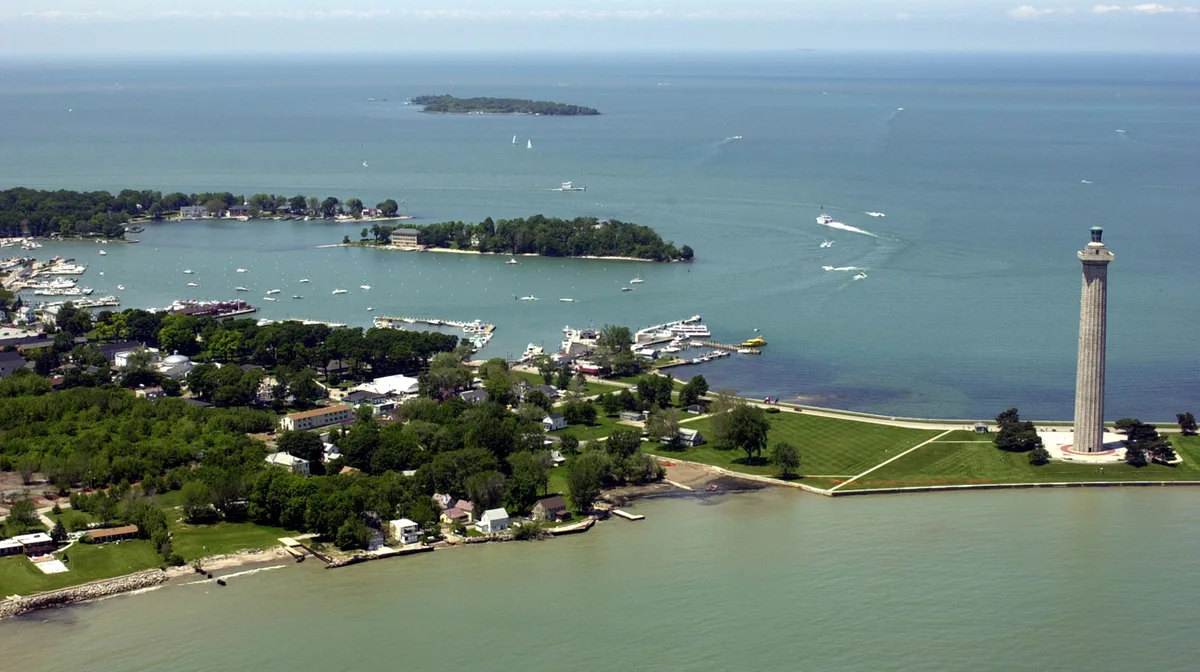
Put-in-Bay is on South Bass Island in the western basin of Lake Erie, three miles off the Ohio mainland and reachable only by ferry or small aircraft. It is one of the most concentrated summer markets in the Midwest: a village of a few hundred year-round residents that takes in a very large number of visitors between Memorial Day and Labor Day and then goes almost completely quiet. Perry's Victory and International Peace Memorial rises 352 feet above the harbour, commemorating the Battle of Lake Erie in 1813 and the long peace between the United States and Canada that followed, and it is one of the tallest monuments in the country. The island has caves, a state park, vineyards that date to a nineteenth-century wine industry, and a downtown by the harbour that is busy in a way that surprises first-time visitors. Golf carts are the normal way to get around. Kelleys Island and Middle Bass are nearby, and Cedar Point is visible across the water on a clear day. For an owner, the two defining facts are the ferry and the fact that this small island contains two separate governments.
South Bass Island is divided between the Village of Put-in-Bay and Put-in-Bay Township, and which of the two your property sits in determines what you have to do. The Village requires a short-term rental permit. Properties within the Township are subject to the Township Zoning Resolution and must hold a current Zoning Certificate from the Township, and are also subject to the Township Lodging Excise Tax. Above both, Ottawa County levies a Lodging Excise Tax of 3% on all rents paid by transient guests, and any owner renting one or more rooms or homes to transient guests in the county must register with the Ottawa County Auditor and obtain a Transient Occupancy Registration Certificate within thirty days of commencing business, with filing and payment handled through the county's online portal. Ohio sales tax applies to lodging on top of that. Beyond the paperwork, the operating reality is the ferry. Everything a guest brings and everything you need for the property crosses on a boat with a schedule, and that schedule contracts sharply outside the summer and stops for the winter. Occupancy and noise rules are enforced with real attention here, because the island is small and busy weekends are genuinely loud.
Nearby Markets: Hocking Hills | Mackinac Island | Lake Geneva

A few of the visual fingerprints we lean into when we shoot, brand and market a Put-in-Bay property — courtesy of the open Wikimedia Commons archive.
Cavmir markets Put-in-Bay properties around the ferry, the walk and the weekend, because those are the three things that decide a booking on a small island. Which ferry line a guest should take, where it lands, whether they should bring a car or leave it on the mainland, and whether they can walk to the harbour from your door — those questions matter more here than square footage, and most listings answer none of them. We photograph the property and the route from it to downtown, because on an island where golf carts are the default transport, walkability is a genuine feature. We write the season honestly, including what happens in September and October when the island is at its best and half the listings have already given up on the year. We build a direct booking site so groups who come back every summer can book with you directly, and we run local search that separates Put-in-Bay from the wider Lake Erie shore. Then we keep an email list through a long winter, because on this island next summer is decided in February. We help position and market your property. We never manage it or touch your keys.
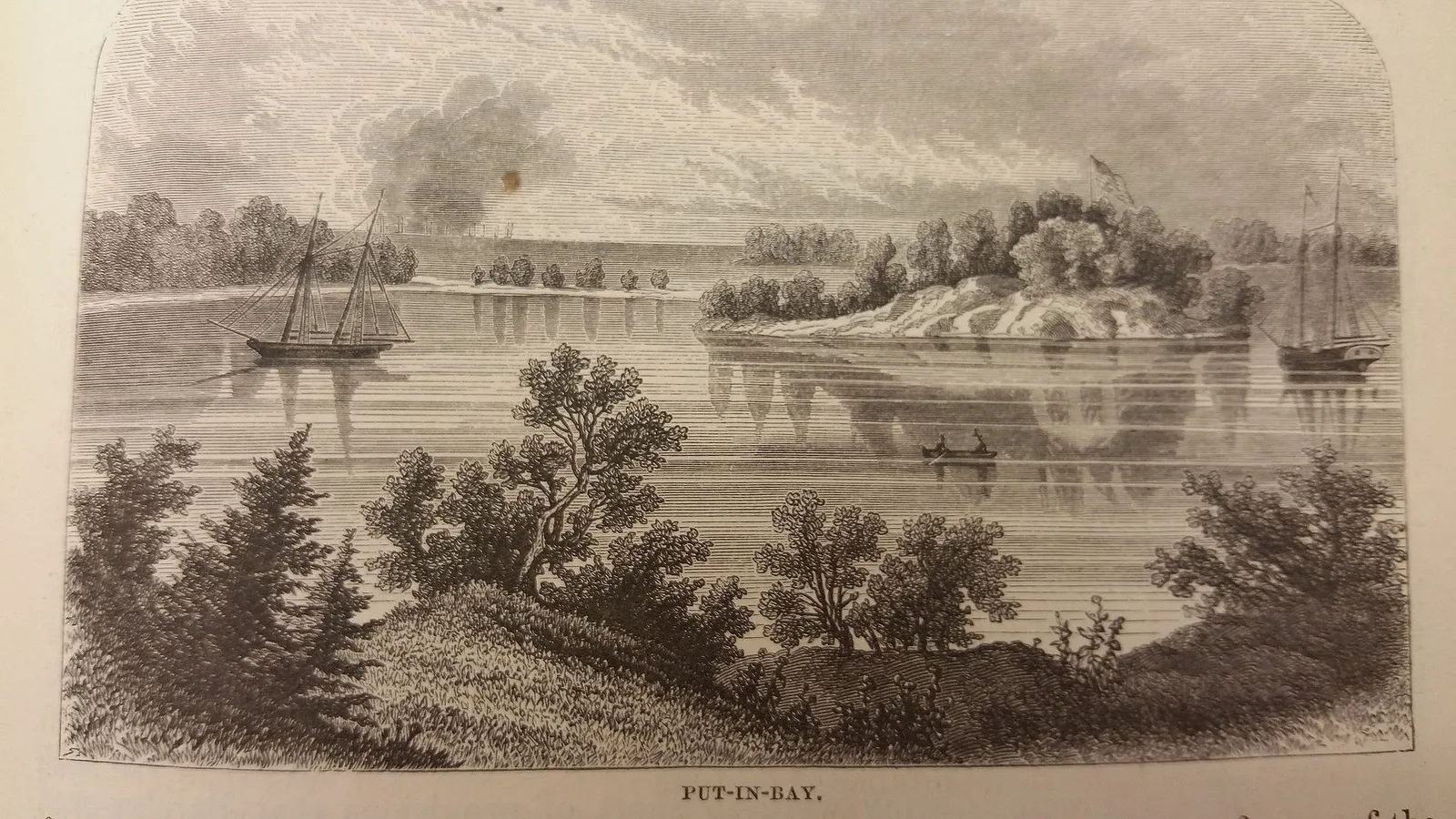
The defining event in Put-in-Bay's history happened offshore. On 10 September 1813, Oliver Hazard Perry's squadron defeated a British fleet in the Battle of Lake Erie, securing American control of the lake in the War of 1812 and prompting Perry's message: we have met the enemy and they are ours. The battle was fought west of the island and the American fleet had anchored in the bay that gives the village its name.
A century later, a memorial was built to it. Perry's Victory and International Peace Memorial, completed in 1915, is a Doric column 352 feet high — one of the tallest monuments in the United States — and it commemorates not just the battle but the long undefended peace between the United States and Canada that followed. It is a national memorial administered by the National Park Service, and the observation deck is the best view on Lake Erie.
Before tourism, the island's business was wine. German immigrants planted vines on the Lake Erie islands in the mid-nineteenth century, and the climate moderated by the lake proved unusually good for it. By the late 1800s this was one of the significant wine regions in America. Prohibition ended most of it, but the cellars remain and some of the wineries have operated continuously.
The resort era began with the steamboats. The Hotel Victory, opened in 1892, was for a time one of the largest hotels in the world and burned in 1919. The island has drawn summer crowds from Cleveland, Toledo and Detroit ever since.
The caves are geological. Perry's Cave and Crystal Cave — the latter containing what is described as one of the world's largest geodes — sit beneath the island and have been shown to visitors for well over a century.
What has not changed is the ferry. South Bass Island has always been reached by boat, and everything about the market follows from that.
Put-in-Bay has one of the most compressed seasons in this wave and prices accordingly.
The season is essentially Memorial Day to Labor Day, with a shoulder either side that depends heavily on ferry schedules. Within it, summer weekends do the overwhelming majority of the business. Friday and Saturday nights on a busy July weekend price at multiples of a midweek night in the same week, and the market is unusually weekend-concentrated even by resort standards.
That concentration means minimum stays need care. A two-night weekend minimum is normal and defensible in peak season. Applying it in June or September costs you the single-night midweek guest, and there is no queue behind them.
Group size is the other rate driver. A great deal of Put-in-Bay demand is groups — friends, families, celebrations — and properties that sleep a genuine group with the space to match earn a premium. Occupancy and noise rules are enforced with real attention here, so advertise the number you can legally and comfortably host rather than the number you could theoretically fit.
The underpriced opportunity is late season. September and early October on Lake Erie are excellent: warm water, mild air, no crowds, and the island in a completely different mood. Ferry service is still running, though on a reduced schedule. Most listings have mentally closed by Labor Day.
Winter effectively ends the market. Ferry service contracts sharply, ice can close the lake, and the island's population drops to a few hundred. Price and plan for a genuinely closed season rather than a soft one.
Memorial Day opens the season and Labor Day closes the core of it, with July and August the peak and weekends carrying most of the demand. June and September are good shoulder months with lighter crowds and reduced ferry schedules. Early October can be excellent. From late autumn the ferries contract sharply, ice becomes a factor in the western basin, and the island is genuinely closed to visitors through the winter. This is one of the shortest and most tightly defined seasons of any market in this wave.
South Bass Island contains two separate local governments, and the first thing an owner needs to establish is which one they are in.
The Village of Put-in-Bay requires a short-term rental permit from the Village. Properties outside the village boundary but on the island are in Put-in-Bay Township, and operators of one or more short-term rentals within the Township are subject to the Township Zoning Resolution and must hold a current Zoning Certificate from the Township, as well as remitting the Township Lodging Excise Tax. Two properties a short distance apart can therefore face different permitting bodies and different paperwork.
Above both sits the county. Any property owner renting one or more rooms or homes in Ottawa County to transient guests must register with the Ottawa County Auditor and obtain a Transient Occupancy Registration Certificate within thirty days of commencing business. The Ottawa County Lodging Excise Tax is 3% on all rents paid or to be paid by the transient guest, with registration, filing and payment handled through the county's online portal.
Ohio does not preempt local short-term rental regulation, so village and township rules are the operative ones. Ohio sales tax also applies to lodging on top of the county lodging excise tax; confirm the current combined figure with the county rather than relying on a published total.
Beyond permitting, occupancy and noise ordinances are enforced with genuine attention on this island. It is small, the village is compact, and busy summer weekends are loud. Properties that manage guest behaviour well have an easier relationship with the community and with the authorities than those that do not, and on an island that is not an abstract consideration.
Confirm current requirements with the Village of Put-in-Bay, Put-in-Bay Township and the Ottawa County Auditor for your specific parcel.
Explain the ferry properly and in detail. This is the single most useful thing you can do for a Put-in-Bay guest. Which line — the Miller Ferry from Catawba to Lime Kiln Dock, or the Jet Express from Port Clinton to the downtown docks — where each lands, how long the crossing takes, whether they should bring a car at all, where to park on the mainland if not, and what the last boat back is. Most listings say 'accessible by ferry' and stop.
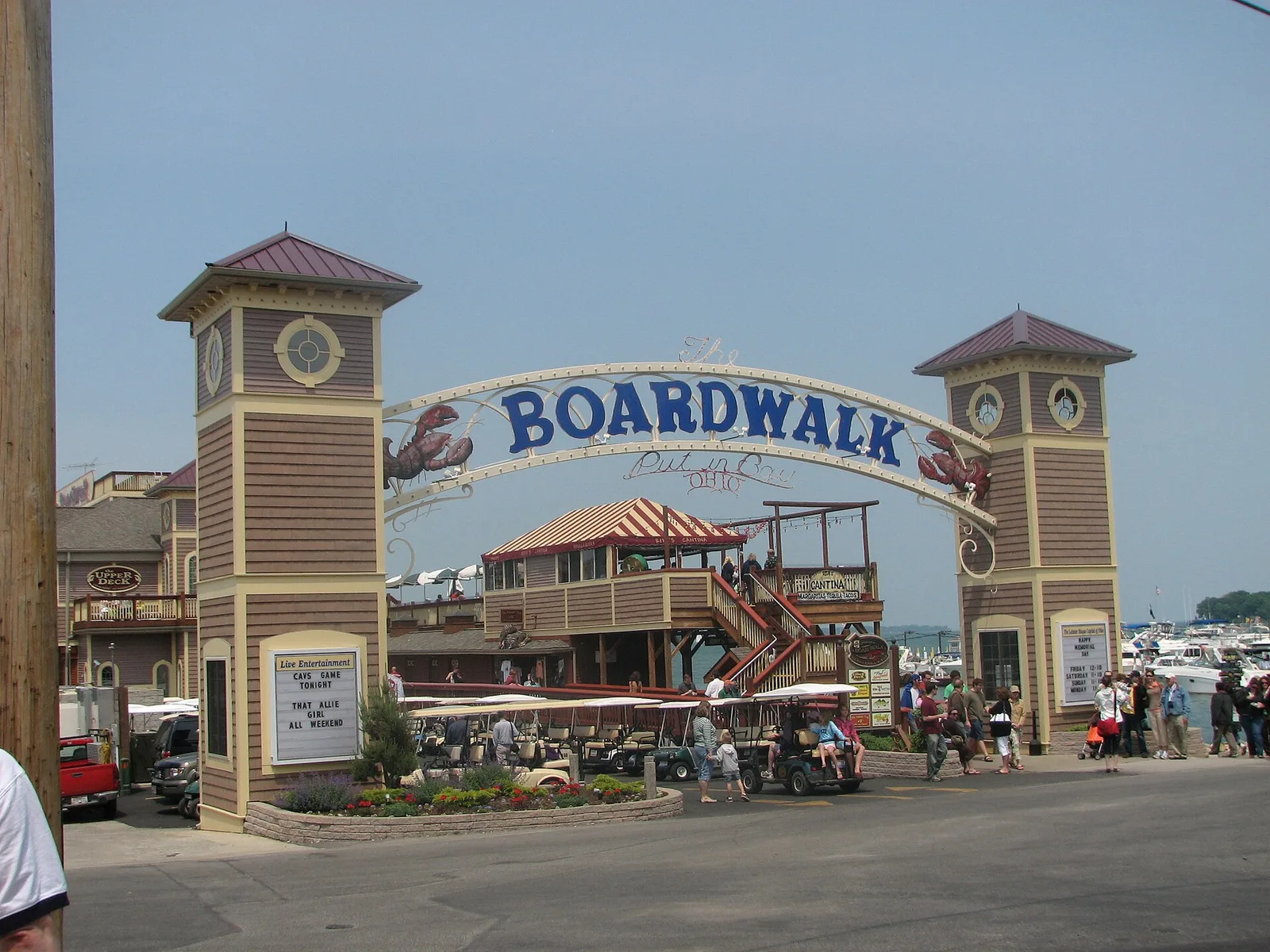
Answer the transport question. Golf carts are the normal way to get around the island and most visitors hire one. Say whether the property has parking for one, whether it comes with one, and how far the walk to downtown is. Walkability to the harbour is a genuine premium feature here.
Set expectations about the weekend. Downtown Put-in-Bay on a July Saturday is loud and busy. Some guests want exactly that and some are horrified by it. Being straightforward about how close you are to the noise, in both directions, produces better-matched guests and better reviews.
State your occupancy honestly and manage groups actively. This island enforces occupancy and noise rules, the community is small, and a property with a reputation for problem groups has a much harder time than one without.
Sell September. Warm water, mild weather, ferries still running on a reduced schedule, and an island that feels completely different. It is the best time to be here and almost nobody markets it.
Give guests the island's non-obvious things. The monument observation deck, the caves, the wineries with nineteenth-century cellars, the state park on the west side for sunsets, the crossing to Middle Bass. Visitors who only see the harbour have had a fraction of the island.
The season is the fundamental constraint. Roughly a hundred days of real demand, concentrated on weekends within them, followed by a genuine winter closure. Carrying costs run twelve months.
The ferry is the second. Everything and everyone crosses on a boat with a schedule, which complicates maintenance, deliveries, contractor access and guest arrival. Weather cancels crossings. Build slack into everything.
The third is the island's reputation as a party destination on summer weekends. That drives a large share of demand and simultaneously deters family and couple bookings, and a property has to decide which side of that it is on and market accordingly rather than trying to serve both.
The fourth is the two-government structure, which creates avoidable administrative confusion for owners who assume there is a single island rulebook.
Island property in the western basin of Lake Erie has a specific set of exposures.
Winter is the largest one. A property closed from November to April on an island where the ferry may not be running, in a region that gets hard freezes and lake-effect weather, is a freeze claim waiting to happen. Carriers will ask how the building is winterised and monitored, and the answers materially affect terms. Remote monitoring is worth more here than in most markets simply because nobody can get there quickly.
Ice damage is a genuine risk for anything at or near the shoreline, including docks, seawalls and outbuildings. Confirm how those are treated.
Short-term rental use must be disclosed. Liability should reflect a house full of guests, golf carts, water access and, on this island, the realistic possibility of large weekend groups.
Access affects claims and repairs. If a contractor has to cross on a ferry to fix a burst pipe in March, that is slower and more expensive than a mainland equivalent, and business interruption or loss of income cover should be considered in that light.
Work with a broker who writes on the Lake Erie islands specifically and understands the seasonal access issue.
Ohio's lodging tax structure is layered and, on South Bass Island, involves more than one authority.
The Ottawa County Lodging Excise Tax is 3% on all rents paid or to be paid by transient guests. Any owner renting one or more rooms or homes to transient guests in the county must register with the Ottawa County Auditor and obtain a Transient Occupancy Registration Certificate within thirty days of commencing business. Registration, filing and payment are handled through the county's online portal.
Put-in-Bay Township levies its own Township Lodging Excise Tax, which applies to short-term rentals within the Township and is remitted to the Ottawa County Auditor. Properties inside the Village are dealt with under the Village's own arrangements — confirm which applies to your parcel.
Ohio sales tax applies to lodging on top of the lodging excise taxes. Confirm the current combined rate with the Ottawa County Auditor rather than relying on a published figure, because the county and state components are set separately.
Booking platforms may collect and remit some components, but registration remains your obligation and direct bookings are generally yours to handle in full. The requirement to register within thirty days of starting business is specific and easy to miss.
Confirm current rates and obligations with the Ottawa County Auditor and the Ohio Department of Taxation, and speak to your accountant about the treatment of the income.
Island property financing has some quirks that mainland lenders do not always anticipate.
The most common one is appraisal. Comparable sales on a small island are limited, seasonal-use property is a specialised category, and an appraiser without island experience can struggle to value what is in front of them. A lender who has done South Bass Island transactions before will move faster and with fewer surprises.
Seasonality is the second. Income is concentrated in roughly a hundred days, heavily weekend-weighted, and that should be presented realistically rather than annualised. A lender who sees a July weekend rate extrapolated across a year will discount everything you tell them.
Access affects insurability and maintenance costs, and both feed into affordability. Utilities on the island — water, septic, power — can have their own considerations that are worth diligence.
Second-home and investment-property financing differ in rate, down payment and occupancy expectations. Many island owners use the property themselves in the shoulder months.
Confirm which local authority governs the parcel before relying on any rental income model, since the Village and the Township have different requirements.
This is general information rather than financial advice — confirm the specifics with your mortgage broker, insurance broker and accountant.
The structural facts at Put-in-Bay do not change. It is a small island reached by ferry, with a fixed amount of land, a short season and a winter that closes it. Supply cannot grow much, which supports values for the properties that exist.
The variable to watch is the balance between the island's two identities. Put-in-Bay is simultaneously a busy summer weekend destination and a quiet island with a national memorial, caves, wineries and a state park. Local regulation of occupancy and noise, and how vigorously it is enforced, shapes which of those identities dominates. Owners with family-oriented properties benefit from firm enforcement; owners chasing large weekend groups do not. Know which side you are on.
Season extension is the clearest commercial opportunity. September and early October on Lake Erie are genuinely good, ferry service still operates on a reduced schedule, and demand in those weeks is limited mainly by the fact that nobody markets them. Any owner willing to build a distinct shoulder-season product has very little competition.
Lake conditions are the medium-term uncertainty. Water levels in Lake Erie have swung considerably in recent decades, and western basin water quality has been a recurring public concern. Both affect the visitor experience and are worth following.
Finally, ferry economics matter more here than almost any other single factor. Any change to schedules, capacity or operators moves demand directly, and owners should treat the ferry timetable as market infrastructure rather than background detail.
Put-in-Bay is two islands wearing the same name. There is the one people talk about — a harbour front on a July Saturday, golf carts everywhere, a summer crowd that has been coming from Cleveland and Toledo and Detroit for well over a century. And there is the other one, which starts about four streets back and is quiet, wooded, full of nineteenth-century wine cellars and caves and a state park on the west side where you can watch the sun go down over the water with nobody else there.
The monument is the thing that surprises people. A 352-foot Doric column on a small island in Lake Erie, built in 1915, commemorating a naval battle and then, more importantly, the peace that followed it — the longest undefended border in the world. Three American and three British officers killed in the battle are buried beneath it together. You can go up it, and from the top you can see Canada.
We like the wine history too. German immigrants planted these islands in the mid-1800s because the lake moderates the climate, and for a while this was one of the significant wine regions in the country. Prohibition took most of it, but the cellars are still under the ground and some of the wineries never stopped.
And we like the ferry, honestly. Three miles of water is enough to make an island feel like one. Everything has to cross — every guest, every delivery, every contractor — and that friction is precisely what has kept South Bass from becoming a mainland suburb. It makes the place worth going to, and it makes the arrival part of the holiday rather than an inconvenience.
A great property in Put-in-Bay doesn't just want a listing — it wants a point of view, an audience, and a brand the city itself would recognise.
Eight things worth giving a Put-in-Bay guest — which ferry, whether to bring the car, and the half of the island most visitors never see.
The Miller Ferry from Catawba lands at Lime Kiln Dock at the south end and takes vehicles. The Jet Express from Port Clinton is faster and lands downtown. Tell guests which suits them and where to park on the mainland.
Most visitors hire a golf cart for the island. Say whether the property has parking for one and how far the walk to downtown is — walkability is a genuine premium here.
352 feet, a National Park Service site, and the best view on Lake Erie. On a clear day you can see Canada. It is the thing most day-trippers skip and should not.
Caves beneath the island shown to visitors for over a century, one of them containing an enormous geode. Reliable answers for a wet afternoon or a mixed-age group.
German settlers planted these islands in the 1800s and some wineries have operated more or less continuously since. The old cellars are worth seeing whether or not your guests drink.
West side of the island, cliffs over the water, and the best sunset on South Bass. Ten minutes from downtown and a completely different island.
Be straightforward with guests about how close you are to the harbour front and what a summer Saturday sounds like. Some want it, some do not, and both should know in advance.
Warm water, mild weather, reduced ferry schedules and hardly anyone about. It is the best time to be on the island and almost nobody comes.
The following are composite, illustrative examples drawn from patterns common in small-island seasonal markets. They are not descriptions of specific clients or properties.
Repeated arrival-day problems and mediocre reviews traced to a listing that said 'accessible by ferry' without explaining which line, where it landed, whether to bring a car or when the last boat left.
Wrote a full arrival guide covering both ferry operators, mainland parking, golf cart hire and walking distance, and moved the essentials into the listing itself rather than a post-booking message.
Arrival friction largely disappeared, reviews stopped mentioning confusion, and enquiries came from better-prepared guests.
A property a short walk from a busy downtown, marketed to families, generating complaints about weekend noise that had nothing to do with the house itself.
Repositioned it honestly for groups who wanted to be close to the harbour front, stated the noise reality plainly, and set occupancy and house rules that matched what the island enforces.
Guest fit improved sharply, complaint-driven reviews stopped, and the property competed for demand it was genuinely well placed to serve.
A property on the west side of the island with an entirely empty September, despite good weather, warm water, running ferries and no competition for the month.
Built distinct late-season positioning around quiet, sunsets at the state park and the monument, confirmed and published the reduced ferry schedule, and emailed past guests about the month specifically.
September moved from empty to meaningfully booked, at rates that did not require discounting to fill.
Demand in Put-in-Bay peaks around July through August and runs quietest around January, February and March. Here is how the year actually books — and what to do about each stretch of the calendar.
Memorial Day to Labor Day, with July and August the core and weekends doing the overwhelming majority of the business. This is one of the most weekend-concentrated markets anywhere, and a Friday or Saturday in July prices at a multiple of a midweek night in the same week.
June and September are good, with lighter crowds and reduced ferry schedules. Late September and early October can be excellent, with warm water and hardly anyone about. Almost nobody markets those weeks, which makes them unusually cheap to capture.
From late autumn the ferries contract sharply, ice becomes a factor in the western basin and the island is genuinely closed to visitors through the winter. Plan for a closed season rather than a soft one, and use it for maintenance and next-season marketing.
Short. This is a close-in drive market and a large share of summer weekend demand decides within a few weeks. Returning groups book earlier, which makes an autumn renewal habit disproportionately valuable on an island with limited inventory.
Predominantly two and three night weekend stays in peak season. A two-night minimum is defensible in July and August and costs you bookings if applied in June or September, when the single-night midweek guest has nowhere else to go.
Houses that sleep a group and are walkable to the harbour front do best in peak season, and walkability is a genuine premium on an island where golf carts are the default transport. Quiet-side properties should be sold on that quiet rather than on proximity to downtown.
Start with photography that shows what a guest actually gets here, then write the listing around a real itinerary rather than a feature list. Build a direct-booking site so returning guests can come back without going through a platform, and keep an email list segmented by season so you can reach last year's visitors before the calendar opens. Local search matters more than people expect in a market this size, because guests search the destination and the attraction rather than the word rental. A marketing agency layer handles the photography, the listing copy, the direct-booking site and the local SEO as one system instead of four disconnected jobs.
Memorial Day to Labor Day, with July and August the core and weekends carrying the overwhelming majority of demand. June and September are quieter with reduced ferry schedules, and late September into early October is genuinely the best time to be here. From late autumn the ferries contract and the island effectively closes.
Short. This is a close-in drive market and much of the summer weekend demand decides within a few weeks. Returning groups book earlier, so an autumn renewal habit is worth a great deal on an island with limited inventory.
Almost entirely regional, from Cleveland, Toledo, Detroit, Columbus and Pittsburgh. Nobody flies to Lake Erie for a weekend, so targeting those specific metros beats any national campaign.
Walking distance to the harbour front is the amenity guests actually choose on, followed by golf cart parking or an included cart, since carts are how the island moves. Air conditioning and outdoor space matter in summer. Above all, give guests genuinely good ferry and arrival instructions.
Run your Airbnb, Vrbo, or website through Cavmir's free grader. It checks the things that decide whether guests book in Put-in-Bay — photos, listing copy, page speed, local search — and shows you where bookings leak. Takes about a minute, and there's no sales call attached.
If the report says your booking engine is the weak link, that's fixable: a direct-booking website of your own means repeat guests stop paying platform fees to come back to you. That's the work Cavmir does — see Airbnb website design in Put-in-Bay.
Talk to Cavmir today. We'll show you exactly what your Put-in-Bay property is leaving on the table — and how fast we can change that.
Book a Free Strategy Call