




Lawrenceville
Butler Street, north-east along the river
Restaurants, galleries and independent shops. The neighbourhood that changed fastest and the easiest sell for a weekend visitor.

Expert short-term rental marketing to grow your bookings and nightly rate in Pittsburgh, Pennsylvania, USA.
* Market averages. Properties marketed by Cavmir typically exceed these figures by 25–45%. Data sourced from AirDNA, STR market reports, and Cavmir internal analytics.
Pittsburgh is a city built on the wrong topography for a city, which is exactly why it looks the way it does. Two rivers, the Allegheny and the Monongahela, come together at a point to form the Ohio, and the land around them rises steeply enough that neighbourhoods sit on shelves above each other connected by stairs, tunnels and an improbable number of bridges. The count is usually given as 446, more than any other city in the world. For a century the valleys below were full of steel, and the air was bad enough that the streetlights sometimes came on at midday. Then the mills closed, and instead of emptying out, the city turned into something else: universities, hospitals, robotics, software, and a museum culture funded by the fortunes the mills produced. Carnegie money is still visible on half the buildings downtown. What an owner inherits is a market with almost none of the seasonality that defines resort towns. Pittsburgh fills up because people come here for work, for treatment, for a degree, for a conference and for a game, in roughly the same volume in February as in July. The housing stock is old, characterful and cheap by the standards of any comparable city, and the regulatory position is one of the most unusual in the country.
Pittsburgh did not write a short-term rental ordinance. It wrote a rental ordinance. The city runs a Rental Permit Program through the Department of Permits, Licenses and Inspections, launched in December 2024 and applying to all rental activity from April 2025, and it does not distinguish short-term letting from long-term letting. You hold a rental permit for the unit, and renting it by the night is one of the things you may do with it. The permit fee has been reported at $175 with annual renewal, and renewal is also triggered by a change of ownership or of registration information. Inspection and code compliance are part of the programme. That structure has two consequences most owners here have not thought through. The first is that your compliance obligation looks like a landlord's rather than a hotelier's, and the standards being applied are housing standards. The second is that the risk profile of the asset is unusually low, because there is no separate short-term permit class that a future council can cap, waitlist or phase out without also rewriting how the city regulates every rental property in Pittsburgh. On tax, Pennsylvania charges a 6% state hotel occupancy tax, an additional 1% local tax applies in Allegheny County, and the county's own hotel room rental tax of 7% applies to short-term stays.
Nearby Markets: Cook Forest | Erie | Deep Creek Lake
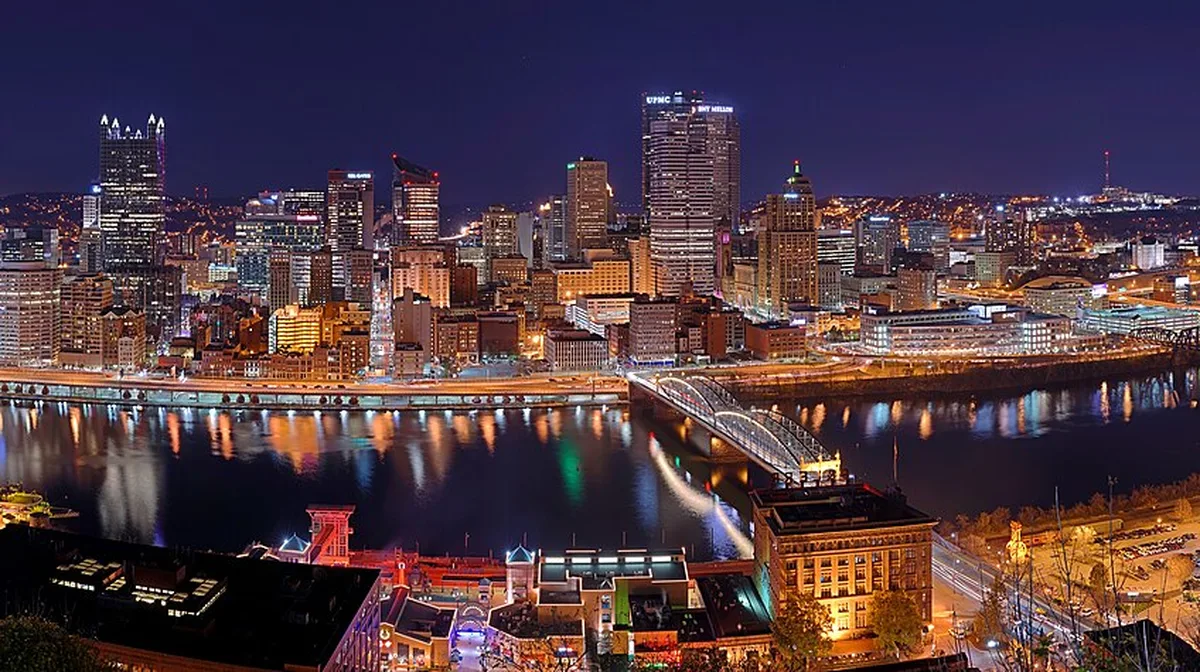
A few of the visual fingerprints we lean into when we shoot, brand and market a Pittsburgh skyline property — courtesy of the open Wikimedia Commons archive.
Cavmir markets Pittsburgh properties on the neighbourhood, because in this city the neighbourhood is the product and the geography makes it unusually literal. Lawrenceville, the Strip District, the South Side, Squirrel Hill, Mount Washington and the North Shore are not points on a gradient, they are separate places with separate reasons to stay in them, often separated by a hill that makes the two-mile distance on the map irrelevant. A guest here for a course of treatment at one of the hospital systems has entirely different requirements from someone in for a weekend at PNC Park, and the listing that acknowledges which one it is designed for wins both. We photograph properties in a way that shows the light these old houses actually get and the view if there is one, because a view of the skyline from a Mount Washington window is a genuine asset and most listings undersell it badly. We write copy that answers the parking question honestly, since that is the single most common complaint in this city. Then we build a direct booking site, run local SEO against neighbourhood and hospital-adjacent searches, place ads against the sports, university and conference calendars, and keep an email list of guests who are likely to return, because a great many of them are. We help position and market your property. We never manage it or touch your keys.
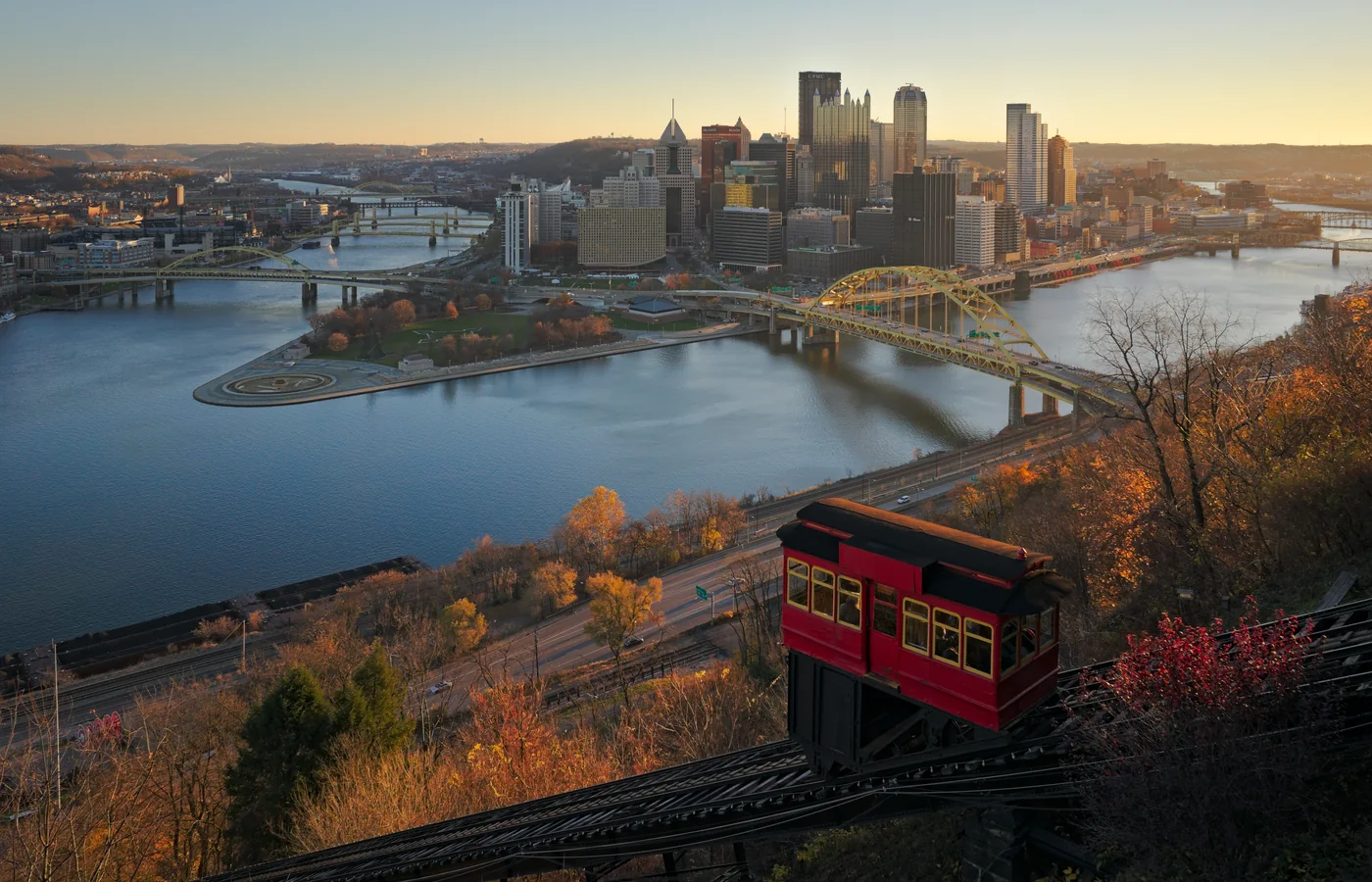
Pittsburgh built inclines to carry mill workers up Mount Washington and kept two of them running as its signature attraction. The city has been presenting its own hillsides for 150 years; Cavmir picks the story up from there.
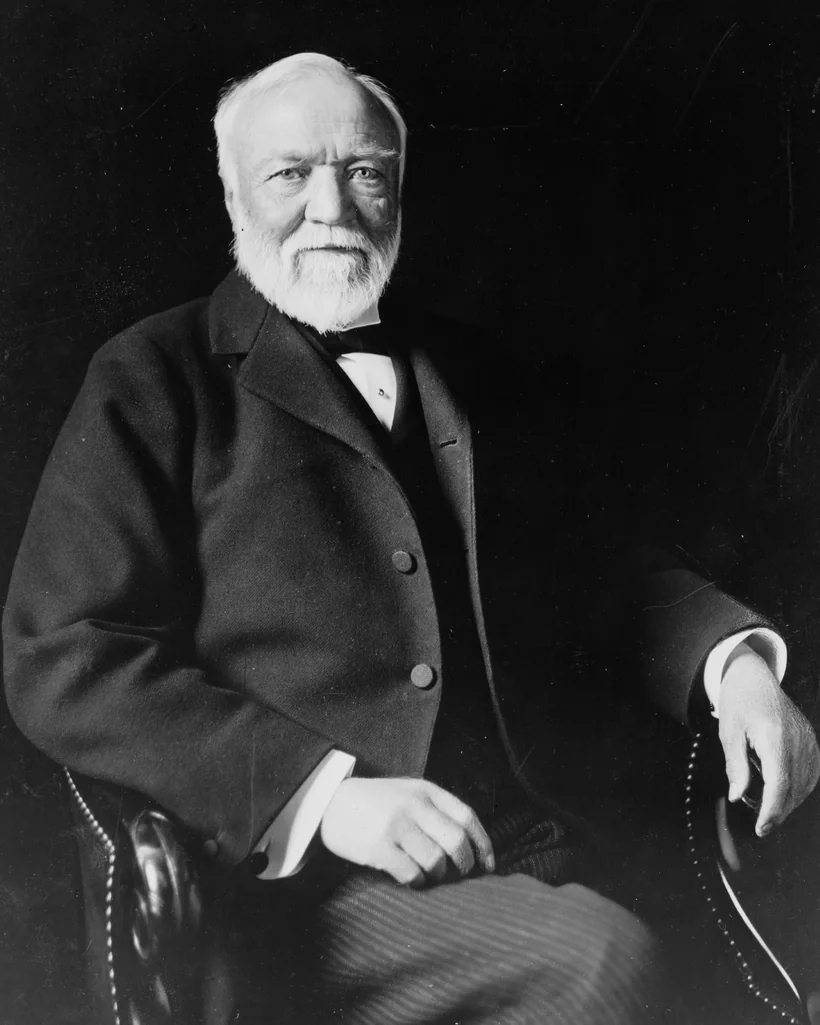
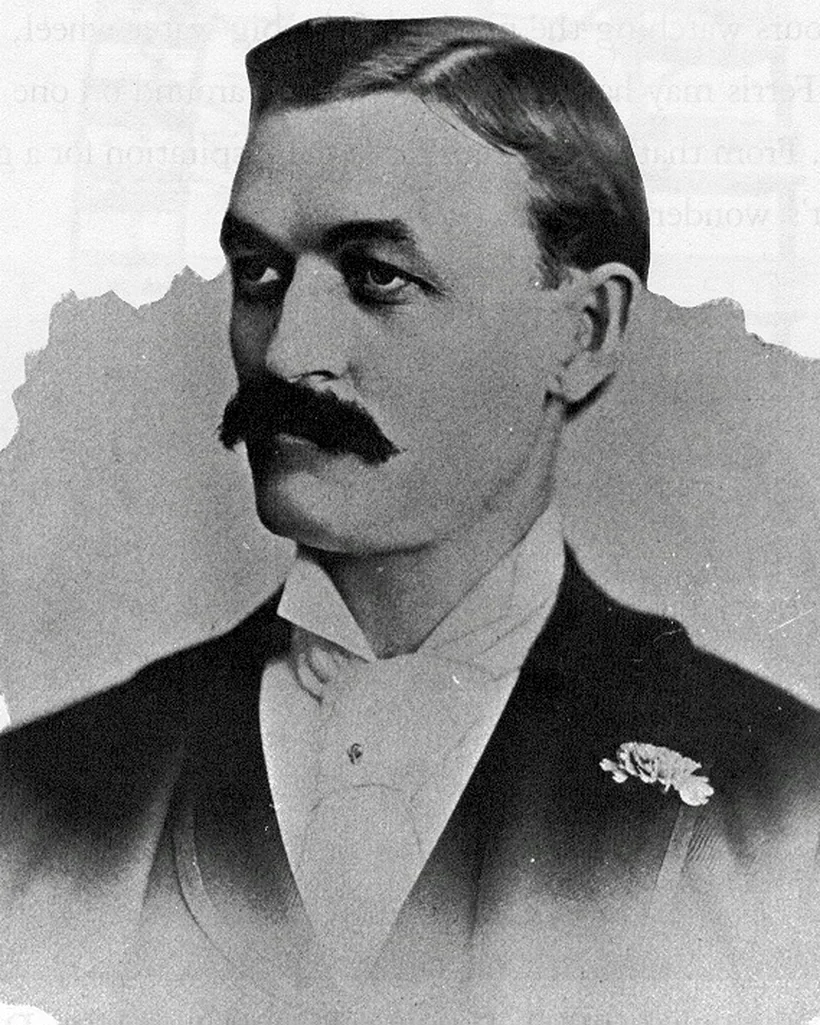
Pittsburgh exists because of where three rivers meet. The point where the Allegheny and the Monongahela form the Ohio was strategically decisive long before there was a city, and the British and French fought over it in the 1750s; Fort Pitt gave the place its name. What made it a great city, though, was the combination underneath: coal in the hills, iron ore arriving by water, and rivers to move it all. By the second half of the nineteenth century Pittsburgh was producing steel at a scale that built the American railway network and much of its skyline, and the fortunes involved were enormous. Andrew Carnegie, Henry Clay Frick, Andrew Mellon and George Westinghouse all made their money here, and a striking amount of it was spent locally on libraries, museums, concert halls and a university, which is why a post-industrial city of this size has cultural institutions on the scale it does. The cost was borne by the people living in the valleys. The air was notoriously bad, and the story about streetlights burning at midday is repeated locally because it was true. After the Second World War the city began a deliberate clean-up and rebuild that became known as the Renaissance, and then in the late 1970s and early 1980s the steel industry collapsed with brutal speed. Mills that had employed tens of thousands closed within a few years, and the region lost a substantial share of its population. What happened next is the part that matters now. Rather than emptying out permanently, Pittsburgh rebuilt around the institutions the steel money had left behind: the University of Pittsburgh and Carnegie Mellon, an unusually large hospital system, and later robotics, artificial intelligence and software firms that clustered around the universities. Today the mills are parkland, museums and film sets, the rivers are clean enough to fish, and the city runs on medicine, education and technology. For an owner, that history explains the two things that define this market: extraordinarily durable year-round demand, and housing stock that is old, characterful and inexpensive relative to any comparable city.
Before the platforms, funiculars carried mill workers up Mount Washington, and when the mills went quiet the city kept two of them polished as its signature ride. The Renaissance cleaned the air, the Point became a park, and the smoky-city photographs became before pictures. The channel changed; the work is identical: presentation, positioning, and a skyline worth riding a hillside to see. It is the same business Cavmir is in today.
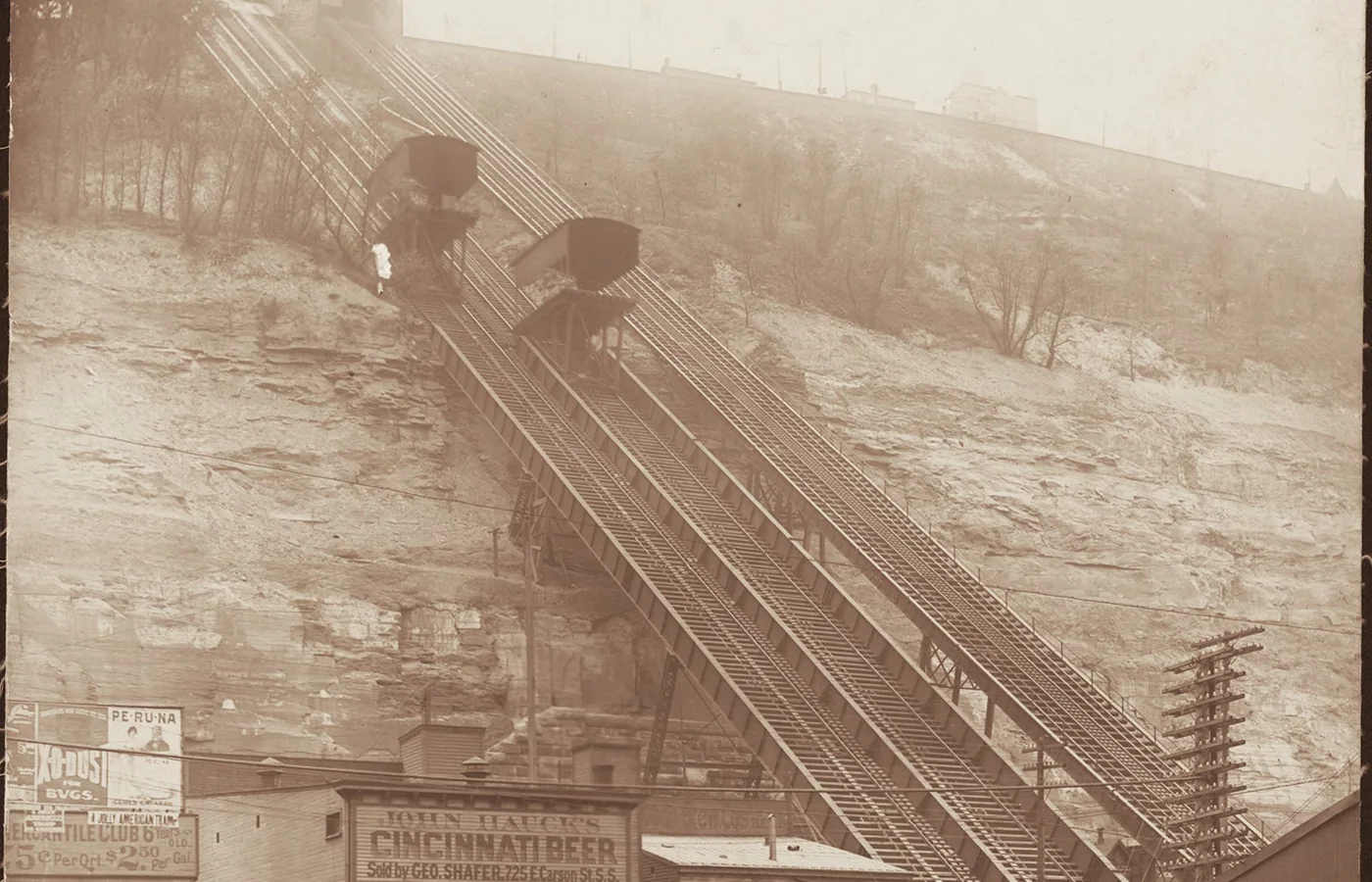
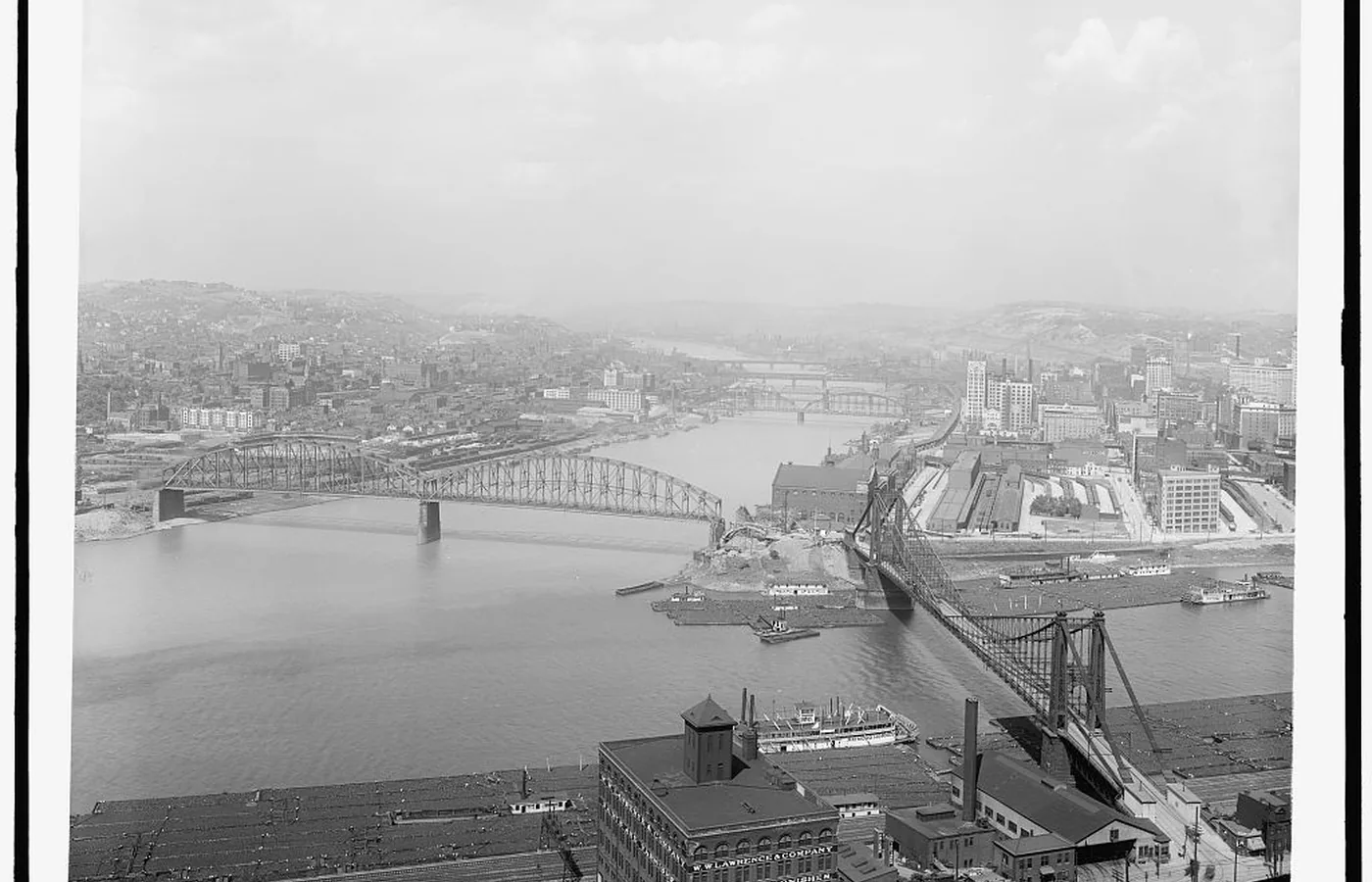
Historical images: public domain and Creative Commons via Wikimedia Commons — Theodore C. Marceau, Detroit Publishing Co., Dllu, and others.
Pittsburgh prices like a working city rather than a destination, which means occupancy and length of stay carry more of your revenue than peak-week rates do. The most reliable premium demand is not leisure at all: it is medical. The hospital systems here draw patients and accompanying families from a wide region, and those stays are long, planned, repeated and largely price-insensitive within reason, because the alternative is a hotel for three weeks. A property within a straightforward journey of a major hospital campus, set up with parking, laundry, a kitchen and a genuinely quiet bedroom, can hold a weekly rate that no leisure listing in the same neighbourhood will match. Price that explicitly, with weekly and monthly rates that are worth taking. On top of that floor, set event pricing for the dates that genuinely move: Steelers home Sundays, Pitt and Penguins schedules, university move-in and graduation weekends, and the larger conventions at the David L. Lawrence Convention Center. Those weekends will carry a real premium if you set it early. Between them, resist deep discounting; this market's weakness is midweek leisure, and the fix for midweek is the medical and business trade rather than a lower nightly rate. Remember the tax stack when you present a total, because 6% state hotel occupancy tax, the additional 1% local tax in Allegheny County and the county's 7% hotel room rental tax add up to a meaningful gap between your nightly rate and what the guest pays.
This is one of the flattest calendars on the map. Autumn is the strongest stretch, carrying football, the university year, conference season and the best weather of the year in the river valleys. Spring is close behind. Summer is warm, humid and green, with festivals, baseball at PNC Park and a steady family trade, though business travel thins in July and August. Winter is grey and long and the leisure trade drops, but the medical, university and business demand does not, which is why properties set up for longer stays hold up through February while purely leisure listings struggle. Plan maintenance for late winter.
Pittsburgh's regulatory position is unusual and, for an owner, unusually reassuring. The city did not write a short-term rental ordinance. It wrote a rental ordinance. The Department of Permits, Licenses and Inspections runs a Rental Permit Program, launched in December 2024 and applying to all rental activity from April 2025, and that programme does not distinguish short-term letting from long-term letting. You obtain a rental permit for the dwelling unit, and renting it by the night is one of the permitted uses of that unit rather than a separately licensed activity. The permit fee has been reported at $175, with annual renewal, and renewal is also required on a change of ownership or of the registration information on file. Inspection and code compliance form part of the programme, and the standards being applied are residential housing standards. Two consequences follow, and they are worth thinking about carefully. The first is practical: your compliance obligations look like a landlord's. You are being assessed on the condition and safety of a dwelling, not on hospitality-specific criteria, and the paperwork is correspondingly familiar to anyone who has held rental property before. The second is strategic. Because there is no separate short-term permit class, there is no distinct category for a future council to cap, waitlist, freeze or phase out without simultaneously rewriting how the city regulates every rental property in Pittsburgh, which is a far larger political undertaking than tightening a short-term rental scheme. Compared with markets where a numbered cap can be reached and a permit queue can close overnight, that is a materially lower structural risk. None of which means nothing will change. The programme is recent, the city has been rolling it out in stages, and short-term rentals have been discussed repeatedly at council. Verify the current fee, the renewal cycle, the inspection requirements and any 2026 amendments directly with Permits, Licenses and Inspections before you apply or advertise, and check whether your specific building type or neighbourhood carries additional requirements.
Pittsburgh's geography is the most under-used marketing asset in the city, and using it well starts with abandoning distance as a measure. Two miles here can mean a hill, a tunnel, a bridge and twenty minutes, so write in journey times and name the route. A guest told plainly that they are eight minutes from the hospital campus, or that the incline puts them downtown in under fifteen, has been given something no competitor's listing is offering. Second, if you have a view, treat it as the primary asset and photograph it properly. The skyline from Mount Washington at dusk is one of the genuinely famous views in the country, and listings routinely represent it with a single dark phone snap. Shoot it at blue hour on a clear evening and lead with it. Third, decide whether you are marketing to the medical trade, and if you are, say so directly and equip for it: parking that does not involve a hill in winter, laundry, a real kitchen, blackout blinds, quiet, and flexible check-in for people arriving on a treatment schedule. That guest reads listings differently from a weekend visitor and needs reassurance rather than atmosphere. Fourth, answer the parking question honestly and early. In much of this city street parking is genuinely difficult, permit zones are real, and the guest who discovers that at eleven at night writes the review that costs you the next three bookings. If parking is hard, say it is hard and say what to do instead. Fifth, name the neighbourhood properly and explain what it is, because outside the region almost nobody knows the difference between Lawrenceville and the South Side, and both have a strong case to make.
Winter is the honest weakness: it is long, grey and icy, hills and steps that are charming in October are a genuine problem in January, and leisure demand thins accordingly. Parking is difficult across much of the desirable inventory and it generates more complaints than any other single issue. The housing stock is old, which means character and also maintenance, and buyers underestimate what a hundred-year-old house on a slope costs to keep. The rental permit programme is new enough that its administration is still settling, so expect some friction and some waiting. And while the absence of a short-term-specific ordinance is a structural advantage, it also means less certainty about how the city will treat short-term letting if the conversation at council changes.
Insure a Pittsburgh rental with a policy written for paid guest occupancy: either a dedicated short-term rental product or a landlord policy with an explicit short-term rental endorsement. Standard homeowner's cover generally will not respond to a claim arising from a paying guest. Ask about liability limits, loss of income, and whether guest property is covered. Two local factors deserve specific attention. The first is water: freeze and burst pipe damage is the most common winter claim in this city, and older houses with original plumbing in uninsulated spaces are exposed, so check the policy's position on freeze losses and whether it requires heat to be maintained during vacancy. The second is the ground itself. Parts of the region sit above old mine workings and on slopes with a real history of landslip, and standard policies typically exclude earth movement and mine subsidence. Ask specifically about mine subsidence cover, since Pennsylvania has a state-backed programme for it, and ask about the slope if the property sits on one. Platform host protection is a supplement rather than a policy. Tell your lender how the property is used.
The lodging tax stack in Pittsburgh has three parts and they are administered by different bodies. Pennsylvania charges a 6% state hotel occupancy tax, which applies to short-term accommodation as it does to hotels. An additional 1% local tax applies in Allegheny County. Separately, Allegheny County levies its own hotel room rental tax at 7%, collected by the County Treasurer, and it applies to short-term stays. Registration is required in both places: with the Pennsylvania Department of Revenue for a Sales, Use and Hotel Occupancy Tax licence, and with the Allegheny County Treasurer's Office for the county tax. Some platforms voluntarily collect and remit the Pennsylvania hotel occupancy tax on hosts' behalf and some do not, and the position on the county tax may differ from the position on the state tax, so confirm with your platform in writing which lines it files and register and file for the rest yourself. If you do not let exclusively through a platform that collects, you must register and remit through myPATH. Confirm all current rates before publishing a figure, and ask your accountant how the income is treated federally and for Pennsylvania purposes.
Pittsburgh is one of the more financeable short-term rental markets in the country, largely because it is a normal metropolitan property market rather than a resort one. Conventional investment mortgages are readily available, prices are low enough that deposits are attainable, and the year-round demand profile means the income used in underwriting is less seasonally distorted than in a market with a three-month season. Lenders will ask whether short-term letting is permitted at the address, and here you have an easier answer than most owners elsewhere: the city permits the rental use through a general rental permit rather than a discretionary short-term licence, so the compliance story is straightforward once the permit is in place. Bring the permit and inspection documentation to underwriting. The other consideration is the housing stock. Much of the attractive inventory here is a century old, and appraisers and lenders will look closely at roofs, electrical systems, foundations and, on sloped sites, at any evidence of movement. Budget for the condition work an older house needs rather than assuming the purchase price is the whole cost. DSCR products are available and work well against a flat year-round income profile.
The rental permit programme is young and its administration is still bedding in, so the first thing to watch is how the city handles the first full renewal cycles and whether council revisits the framework once it has data on how many rental units are actually letting short-term. There is no short-term-specific category to tighten, which is a genuine structural protection, but that does not preclude the city creating one, and any move in that direction would be the most consequential change this market could see. Watch council rather than the news cycle. On the demand side, the trajectory is encouraging. The technology and robotics cluster around the universities keeps growing, the hospital systems keep drawing patients from a wide region, and the city's reputation with travellers has improved substantially as the riverfronts, the trail network and the museum offering have matured. Neighbourhoods like Lawrenceville have transformed within a decade and others are following. For an owner, the practical implication is that the guest mix will keep broadening from work and medicine toward genuine leisure, and the properties positioned early with a direct booking site, honest neighbourhood copy and a real email list will be the ones that capture the shift rather than paying a platform for it.
Pittsburgh is the most physically interesting city in the country and it does not seem to know it. Neighbourhoods sit on shelves above each other. Streets end in staircases, hundreds of public staircases, which are legally streets and appear on maps. Two nineteenth-century funicular railways still climb Mount Washington carrying commuters on a transit fare. There are more bridges here than in any city in the world, usually counted at 446, and they are yellow, because the city decided at some point that its bridges should be yellow and never revisited it. You come out of a tunnel on the Parkway and the entire downtown appears at once across a river, which is a piece of urban theatre no planner designed and every visitor remembers. Then there is what the steel money left behind: Carnegie's libraries and museums, the Cathedral of Learning with its Nationality Rooms, Phipps Conservatory, an orchestra, and a university system that turned the city into a robotics and software centre after the mills went. Meanwhile the rivers got clean, the mill sites became parks and trails, and the Carrie Blast Furnaces stand across the water like the ruins of a much older civilisation, which in a sense they are. We like Pittsburgh because it is a city that had every reason to give up in 1983 and instead rebuilt itself into somewhere people move to on purpose.
A great property in Pittsburgh skyline doesn't just want a listing — it wants a point of view, an audience, and a brand the city itself would recognise.
Eight things to know about Pittsburgh before writing listing copy, beginning with the fact that distance on a map here tells a guest almost nothing useful.
Restaurants, galleries and independent shops. The neighbourhood that changed fastest and the easiest sell for a weekend visitor.
Markets, produce, imported groceries and a Saturday morning that is a genuine event. Walkable and close to the centre.
Long commercial strip, busy at night, and the slopes behind it. Loud at weekends, which some guests want and others very much do not.
The skyline view and the two inclines. If your property has the view, it is the whole listing.
Leafy, established, close to the universities and hospitals. Where longer medical and academic stays are most comfortable.
Major medical campuses draw patients and families from across the region for extended stays. Equip and price for them.
Hills, tunnels and bridges make two miles meaningless. Always write minutes and name the route the guest should take.
Street parking is difficult across much of the good inventory and permit zones are real. Be honest about it in the listing, not at check-in.
The three examples below are composite and illustrative. They are built from patterns that recur in cities with strong institutional demand, and they do not describe any particular business or client.
A solid three-bedroom was being marketed as a weekend leisure rental in a neighbourhood that gets relatively little weekend leisure traffic. Occupancy was thin and the owner was considering selling.
We repositioned the property for extended medical stays: photographed parking, laundry, kitchen and a quiet bedroom as headline features, rewrote the listing to address people travelling for treatment and the families accompanying them, introduced weekly and monthly rates, and made check-in flexible for arrivals on a clinical schedule.
Average stay length increased sharply, the calendar filled with long bookings rather than scattered nights, and a steady stream of repeat and referred guests replaced the previous reliance on weekend search traffic.
A property with one of the best views in the city was representing it with two dark evening photographs taken on a phone, and was priced in line with apartments that had no view at all.
We reshot at blue hour on a clear evening with the skyline properly exposed, rebuilt the listing so the view led the gallery and the first paragraph, wrote the inclines and the overlook into the guest material as things to actually do, and repriced against the view rather than against the square footage.
The listing moved decisively out of its previous price band, the view became the reason guests chose it rather than a detail they discovered on arrival, and weekend rates held at levels the owner had assumed were unreachable.
An attractive renovated house was collecting otherwise positive reviews that consistently mentioned the parking as a nasty surprise, and the rating was slipping because of it.
We rewrote the listing to state the parking position plainly and prominently, added specific instructions and a nearby paid option with walking directions, put the same information in the pre-arrival message, and rebalanced the copy toward the walkability that makes the location genuinely good.
Parking stopped appearing as a complaint because it stopped being a surprise, the rating recovered, and the property began attracting guests who had chosen it specifically because they intended to leave the car behind.
Demand in Pittsburgh peaks around September through October and runs quietest around January through February. Here is how the year actually books — and what to do about each stretch of the calendar.
Autumn is the strongest stretch, carrying football, the university year, conference season and the best weather the river valleys get. Price the Steelers home Sundays and the university weekends early, because they are published far ahead and they sell out. Everything else in autumn rides along on that demand.
Spring is close behind autumn and is usually priced too low, with baseball opening, graduations and the city at its greenest. Summer is warm and festival-heavy with a steady family trade, though business travel thins through July and August. Both shoulders respond to length of stay rather than to nightly discounts.
Winter is grey and long and the leisure trade drops, but the medical, university and business demand does not. Properties set up for longer stays hold up through February while purely leisure listings struggle. Use late winter for maintenance and for a spring reshoot.
Medical stays book as soon as treatment is scheduled, often months ahead, and they rebook. Football and university weekends fill early too. General leisure is a few weeks out, and midweek business is close in.
Unusually long for a city market, because the medical trade books by the week or the month rather than by the night. Sports and leisure stays are short and weekend-weighted. The combination gives this market a flatter, more forgiving calendar than most.
Older houses with character do well here, but the deciding factor is the journey rather than the building. A property within a short, predictable trip of a hospital campus, a university or a stadium beats a nicer house that is twenty minutes and a hill away. Parking converts a good property into a bookable one.
Start with photography that shows what a guest actually gets here, then write the listing around a real itinerary rather than a feature list. Build a direct-booking site so returning guests can come back without going through a platform, and keep an email list segmented by season so you can reach last year's visitors before the calendar opens. Local search matters more than people expect in a market this size, because guests search the destination and the attraction rather than the word rental. A marketing agency layer handles the photography, the listing copy, the direct-booking site and the local SEO as one system instead of four disconnected jobs.
Autumn is the strongest season, with football, the university year and conference season together, and spring is a close and under-priced second. Summer is warm and festival-driven with a family trade. Winter leisure drops off, but the medical, university and business demand runs straight through it, which keeps this calendar flatter than most.
Medical stays book as soon as treatment dates are set, frequently months ahead, and those guests return. Football and university weekends also fill early. General leisure runs a few weeks out and midweek business is often last-minute.
Mostly regional drive traffic from Cleveland, Columbus, Buffalo, Philadelphia and Baltimore, plus a much wider catchment of patients and families drawn by the hospital systems. That medical catchment is the most under-marketed source of demand in the city.
Parking first, because it is genuinely difficult across much of the good inventory and it generates more complaints than anything else. After that, laundry, a full kitchen, fast wifi and a quiet bedroom are what the long medical and academic stays are actually choosing on.
Run your Airbnb, Vrbo, or website through Cavmir's free grader. It checks the things that decide whether guests book in Pittsburgh — photos, listing copy, page speed, local search — and shows you where bookings leak. Takes about a minute, and there's no sales call attached.
If the report says your booking engine is the weak link, that's fixable: a direct-booking website of your own means repeat guests stop paying platform fees to come back to you. That's the work Cavmir does — see Airbnb website design in Pittsburgh.
Send us the listing and we'll tell you what we'd change. Not a pitch deck — a straight read on your photos, your title, your rates against the Pittsburgh comp set, and whether a direct-booking site would pay for itself.
You'll hear back from a person, usually inside one business day. If we don't think we can move your numbers, we'll say so. Cavmir is a short-term rental marketing agency — we position and market properties, we don't manage them.
Talk to Cavmir today. We'll show you exactly what your Pittsburgh property is leaving on the table — and how fast we can change that.
Book a Free Strategy CallPhotography via Wikimedia Commons (images resized and cropped): Pittsburgh skyline panorama at night by Dllu (CC BY-SA 4.0) · Ascending the Duquesne Incline by Dllu (CC BY-SA 4.0) · Phipps Conservatory winter 2015 welcome center by Dllu (CC BY-SA 4.0) · Strip District 020524 by Fo2grfr (CC BY-SA 4.0) · Carnegie Mellon University as seen from the Cathedral of Learning by Dllu (CC BY-SA 4.0) · Downtown Pittsburgh from Duquesne Incline in the morning by Dllu (CC BY-SA 4.0) · Duquesne Incline, Pittsburgh PA (8899995839) by Roy Luck (CC BY 2.0).
