



Old Town
The 1706 plaza
San Felipe de Neri church, shops and restaurants around the original square. The cultural anchor and walkable if you are near it.

Expert short-term rental marketing to grow your bookings and nightly rate in Albuquerque, New Mexico, USA.
* Market averages. Properties marketed by Cavmir typically exceed these figures by 25–45%. Data sourced from AirDNA, STR market reports, and Cavmir internal analytics.
Albuquerque sits at about a mile above sea level in the Rio Grande valley, with the Sandia Mountains rising straight off the eastern edge of the city to over ten thousand feet. The Spanish named the range for watermelon, and anyone who watches it at sunset understands why: the granite goes pink and then deep red for a few minutes as the light goes. The city was founded in 1706 and the plaza at Old Town, with San Felipe de Neri church on it, has been there ever since. Route 66 came through along Central Avenue and left a run of neon that the city has sensibly decided to preserve rather than replace. The cultural layering here is genuine and unusually deep, with Pueblo, Hispano and Anglo histories all present and not blended into a marketing message. There is also a serious scientific establishment, Sandia National Laboratories and the university, that gives the city a professional visitor base most tourists never see. And for nine days each October, Albuquerque hosts the largest balloon event in the world, which fills every bed for a hundred miles. For an owner this is a well-priced market with one enormous peak, a real year-round floor, and a permit that comes with an unusual attachment.
Albuquerque regulates short-term rentals under Ordinance O-20-30, adopted in October 2020. A permit is required for any property listed for stays of 30 days or fewer, renewed annually, reported at $120 for the first year and $90 thereafter. Both owner-occupied and non-owner-occupied short-term rentals are permitted, which puts this city in a considerably friendlier position than several comparable metros where non-resident ownership is zoned out entirely. Maximum occupancy is set at two guests per bedroom plus two. The distinctive part is the Good Neighbor Agreement, which permit holders sign as a condition of the permit. Under it, gatherings are limited to twice the maximum overnight occupancy but never more than 20 people, and events must end by 10:00pm. That is a contractual obligation rather than a general noise ordinance, and it is the sort of term that quietly determines whether a property is suitable for the event and group market at all. On tax, the City levies a Lodgers' Tax of 5% and a separate Hospitality Fee of 1% on gross rental charges for stays up to 29 nights, and New Mexico gross receipts tax applies on top at the combined Albuquerque rate. Verify the current permit fee, the agreement terms and the tax rates with the City before you apply or advertise.
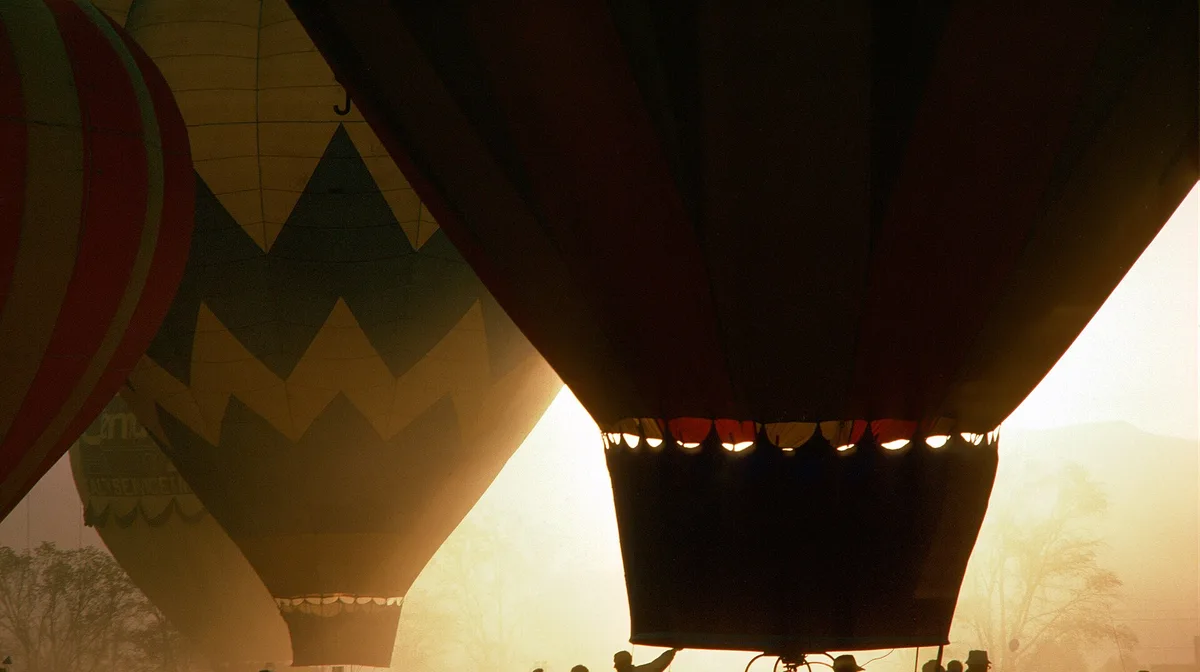
A few of the visual fingerprints we lean into when we shoot, brand and market a Albuquerque New Mexico property — courtesy of the open Wikimedia Commons archive.
Cavmir markets Albuquerque properties around the eleven months most owners here ignore. The Balloon Fiesta sells itself; nine days in October will fill anything with a roof, and every owner in the city already knows it. The opportunity is everywhere else. This is a city with a serious professional visitor base at the national laboratories and the university, a growing film and television production industry, a genuine outdoor season in the Sandias and along the bosque, and a cultural draw at Old Town, the Indian Pueblo Cultural Center and the Route 66 corridor that most listings mention in a single line and then abandon. We work out which of those your property actually serves and build the marketing around it, which usually means the neighbourhood rather than the house. We photograph in the light that makes this place look like itself, which is early and late, with the mountain in frame if you have it. We write copy that handles altitude, the summer monsoon and the practicalities of getting around a city built for driving. Then we build a direct booking site, run local SEO against searches that convert here, place ads against the Fiesta and the shoulder seasons, and keep an email list segmented by why people came. We help position and market your property. We never manage it or touch your keys.
Albuquerque was founded in 1706 as a Spanish colonial villa on the Rio Grande and named for a viceroy's title, though it lost one of its original letters somewhere along the way. The plaza at Old Town, with the church of San Felipe de Neri on its north side, is the original settlement and has been continuously occupied for over three centuries. But the human history here runs very much deeper than that: the Pueblo peoples farmed this valley for centuries before the Spanish arrived, and the petroglyphs carved into the volcanic escarpment on the west mesa, now a national monument, number in the tens of thousands. That layering, Pueblo, Hispano and Anglo, is not presented here as a heritage product. It is simply how the city is, and it shows up in the food, the architecture, the place names and the calendar. The railroad arrived in 1880 and, as often happened, it built its depot a couple of miles from the existing plaza, which created a second downtown that became the commercial centre. Route 66 came through in the 1920s and was realigned in 1937 to run east-west along Central Avenue, and the motels, signs and diners that resulted gave the city a neon inheritance it has had the sense to protect rather than demolish. The Second World War and the decades after brought the other defining institution: Sandia National Laboratories and the wider nuclear and defence research establishment, which turned Albuquerque into a city of physicists and engineers with a large federal payroll. The University of New Mexico grew alongside it. More recently, film and television production has become a substantial industry, drawn by the light, the landscape and state incentives. And every October since 1972 the International Balloon Fiesta has filled the northern edge of the city with several hundred balloons and the largest gathering of its kind anywhere. For an owner, that history produces an unusual demand mix: scientific and federal business travel, university traffic, film production crews, cultural tourism and one enormous annual event.
Albuquerque has the most extreme single-event pricing opportunity of any market in this batch, and then eleven months that need a different approach entirely. The Balloon Fiesta runs nine days each October and it fills accommodation across the metropolitan area and well beyond it. Rates during that window bear almost no relationship to the rest of the year, guests book many months ahead, and minimum stays are both accepted and expected. Set those dates as early as the following year's dates are published, and do not be timid about them. The error to avoid is treating that peak as the business. It is nine days. The rest of the year runs on a much steadier and much less glamorous foundation: professional visitors to the national laboratories and the university, medical traffic, film and television production crews who take longer bookings and value practical properties, and a cultural tourism trade that is strongest in spring and autumn when the weather is at its best. Build genuine weekly and monthly rates for the production and professional segments, because those bookings fill midweek and shoulder months that leisure demand will never touch. Summer is hot, and while the altitude keeps evenings pleasant, midday in July is a real constraint on the outdoor product, so price and describe accordingly. Remember the guest pays 5% Lodgers' Tax and a 1% Hospitality Fee on top of your rate, plus gross receipts tax, so the checkout figure sits meaningfully above the headline.
October is the year in miniature: the Balloon Fiesta fills everything for nine days and the whole month benefits. Beyond that, autumn and spring are the strong seasons, with clear air, comfortable temperatures and the best conditions for everything outdoors. Summer is hot in the middle of the day, and the July and August monsoon brings dramatic afternoon storms that visitors either love or are unprepared for; demand holds but the mix shifts toward evening and early-morning activity. Winter is the quiet stretch, mild by northern standards, with sunshine most days, and it sells well to people escaping harder climates if anyone bothers to tell them.
Albuquerque regulates short-term rentals under Ordinance O-20-30, adopted in October 2020, and by the standards of comparable western cities it is a moderate and workable framework. A short-term rental permit is required for every property listed for stays of 30 days or fewer. The permit is renewed annually, and the fee has been reported at $120 for the first year and $90 for renewals. Critically, both owner-occupied and non-owner-occupied short-term rentals are allowed with a permit, which distinguishes this market sharply from cities that zone non-resident operators out of residential neighbourhoods entirely. Maximum occupancy is set at two guests per bedroom plus two. The provision that most affects how a property should be positioned is the Good Neighbor Agreement, which permit holders sign. Under its terms, gatherings are limited to twice the maximum overnight occupancy and in no case more than 20 people, and events must end by 10:00pm. That last point is worth sitting with. It is not a general municipal noise curfew that might be enforced flexibly; it is a term of an agreement you have signed as a condition of your permit. For an owner that has a clear strategic implication: this is not a market to buy into with the intention of running an event or party property, and any listing that hints at that capability is inviting both a complaint and a permit problem. Conversely, for owners marketing to families, professionals and cultural visitors, the agreement is a genuine asset, because it means the neighbourhood around your property is subject to the same restraint. Verify the current permit fee, the renewal process, the occupancy calculation and the precise terms of the Good Neighbor Agreement with the City of Albuquerque before you apply or advertise, since the ordinance has been in force for several years and administrative practice around it has developed.
Sell the eleven months, not the nine days. Every owner in this city knows about the Balloon Fiesta and prices for it; almost nobody has a considered plan for February. The properties that do well here are the ones marketed to a specific non-Fiesta audience: production crews, who want practical space, parking, laundry and long stays and who are a genuinely large market in New Mexico; professional visitors to the laboratories and the university, who book midweek and repeat; and cultural travellers, who come in spring and autumn and want to be near Old Town, the museums and the Rail Trail rather than out by the interstate. Second, use the mountain. The Sandias are visible from most of the city and they turn pink at sunset, which is where the name comes from, and a photograph of that from your property is worth more than any interior shot. If you have an east-facing window or a patio, shoot it in the last ten minutes of light. Third, explain the altitude. Albuquerque sits above five thousand feet and visitors from sea level notice it: they dehydrate faster, sleep worse the first night and get sunburnt at times of year they do not expect. A short, friendly note about water and sun in the welcome material is genuinely useful and gets mentioned in reviews. Fourth, handle the monsoon. July and August afternoon storms are dramatic, brief and often accompanied by flash flooding in arroyos, and guests should be told plainly not to walk or drive into one. Fifth, be careful with the party question. Between the Good Neighbor Agreement and the 10:00pm event limit, this is a market where the right positioning is calm and residential.
The concentration of demand in a single October week means cash flow is uneven and it is tempting to over-invest in a nine-day opportunity. Summer heat constrains the outdoor product in the middle of the day. The Good Neighbor Agreement rules out the group and event segment that some owners rely on elsewhere, and its terms are contractual rather than discretionary. The city's reputation on crime and safety, fairly or not, is a real factor in guest decision-making and needs to be addressed with practical information rather than ignored. And the market is spread over a large, car-dependent metropolitan area, which means location matters enormously and a property in the wrong part of town cannot be marketed out of the problem.
Insure an Albuquerque short-term rental on a policy written for paid guest occupancy: a dedicated short-term rental product or a landlord policy with an explicit short-term rental endorsement, confirmed in writing. Standard homeowner's cover generally will not respond to a claim involving a paying guest. Ask about liability limits, loss of income and guest property. Several local factors are worth raising with the underwriter. Hail is the significant weather exposure here and New Mexico gets serious storms, so check the hail deductible and whether it is a flat figure or a percentage of insured value, and ask how the policy treats cosmetic roof damage, which is often excluded or limited. The summer monsoon brings flash flooding in arroyos and low-lying areas, and flood is generally excluded from standard property cover, so establish whether the property is exposed and whether separate flood cover is warranted. If the property is on the urban edge toward the mountains or the west mesa, ask about wildfire and about smoke damage specifically. Finally, given the Good Neighbor Agreement's occupancy and gathering limits, make sure your policy's terms are consistent with the occupancy you actually advertise. Platform host protection supplements a policy rather than replacing it.
Albuquerque's lodging tax has two city components and one state one, and they are commonly reported as a single number that is not quite right. The City levies a Lodgers' Tax of 5% on gross rental charges for stays up to 29 nights, and a separate Hospitality Fee of 1% on the same base, which together make the 6% local occupancy burden that guides often describe as a single 6% lodgers' tax. On top of that, New Mexico gross receipts tax applies to short-term rental income; the combined state and local gross receipts rate for Albuquerque has been reported at 7.875%, and gross receipts rates in New Mexico vary by location and are adjusted periodically. Platforms commonly collect and remit the Lodgers' Tax and the Hospitality Fee on bookings made through them, but the position on gross receipts tax and on bookings taken directly is different, and direct bookings are the owner's responsibility. Confirm current rates with the City of Albuquerque and the New Mexico Taxation and Revenue Department before publishing a figure, and ask your accountant how gross receipts tax should be handled on your direct bookings, because it is the most commonly missed obligation in this market.
Albuquerque is one of the more straightforward western markets to finance, largely because the regulatory position is permissive and the property prices are reasonable. Both owner-occupied and non-owner-occupied short-term rentals are permitted with a permit, so a lender is not being asked to underwrite income that depends on the borrower living in the property, which removes the complication that dominates markets like Kansas City. Conventional investment mortgages, portfolio loans and DSCR products are all available, and the price points mean deposits are attainable. Bring the permit position to underwriting, and be ready to explain the annual renewal cycle. Two local considerations affect the appraisal and the closing. The first is construction type: much of the attractive older inventory here is adobe or has adobe elements, and adobe requires an appraiser and an inspector who understand it, because maintenance history matters far more than it does with frame construction and lenders occasionally balk at unfamiliar building types. The second is insurance, which in hail-prone and wildfire-adjacent areas has become a condition to resolve before closing rather than after. If the property has a well or is outside city water and sewer, expect additional diligence.
The regulatory outlook here is more stable than in most of the West, which is itself worth something. Ordinance O-20-30 has been in force since 2020, it permits non-owner-occupied operation, and there has been no sign of the kind of cap-and-phase-down movement seen in coastal California. Watch for amendments, particularly to the Good Neighbor Agreement terms and to occupancy calculations, but do not expect the door to close. On the demand side, three trends favour owners. Film and television production in New Mexico has grown substantially on the back of state incentives and shows no sign of reversing, and production crews are an excellent short-term rental customer: long bookings, midweek, practical requirements and repeat business. The national laboratory and federal research presence continues to generate steady professional travel. And the city's cultural tourism offer has strengthened as Old Town, the museums, the Rail Trail development and the Route 66 corridor have been invested in. The main risk is not regulatory but reputational: perceptions of safety influence booking decisions here more than in most comparable cities, and owners who address that with practical, specific, honest information rather than silence will convert better than those who leave the question hanging.
Albuquerque has a mountain range on its eastern edge that turns the colour of watermelon flesh for about four minutes at sunset, which is where the name Sandia comes from, and the whole city stops slightly to look at it. It has a plaza that has been in continuous use since 1706 and a national monument on the west mesa covered in tens of thousands of petroglyphs carved into black volcanic rock. It has the best-preserved stretch of Route 66 neon anywhere, running along Central Avenue, which the city protected instead of tearing down. It has an aerial tramway that carries you from the desert floor to over ten thousand feet in about fifteen minutes. It has green chile on everything and a defensible argument that this is correct. And for nine days every October it fills the northern edge of town with several hundred hot air balloons, which go up together at dawn because a peculiarity of how cold air moves down this valley lets pilots fly out and come back to where they started. The layering here is real and unforced: Pueblo, Hispano and Anglo histories present simultaneously, not blended into a brochure. We like Albuquerque because it is a city with a great deal going on that has never particularly tried to convince anyone of it.
A great property in Albuquerque New Mexico doesn't just want a listing — it wants a point of view, an audience, and a brand the city itself would recognise.
Eight things to know about Albuquerque before writing listing copy, in a market with one enormous October week and eleven months that most owners ignore.
San Felipe de Neri church, shops and restaurants around the original square. The cultural anchor and walkable if you are near it.
Route 66 neon, restaurants and independent shops. The best walkable evening option for most visitors.
The tramway, the crest and the sunset colour. If your property has an east-facing view, photograph it in the last ten minutes of light.
It fills the entire metropolitan area. Set rates and minimum stays as soon as the dates are published.
A layered valley wind pattern lets pilots fly out and return. A genuinely good story for your welcome material.
Guests from sea level dehydrate, sleep badly the first night and burn faster. A short note about water and sun is genuinely useful.
Dramatic short storms with flash flooding in arroyos. Tell guests plainly never to walk or drive into one.
Gatherings capped at twice overnight occupancy and never above twenty, events end at 10pm. This is not a party market.
The three examples below are composite and illustrative. They reflect patterns common in markets with one dominant annual event, and they are not descriptions of any particular business or client.
A house priced aggressively for the Balloon Fiesta filled completely in October and then produced very little for the rest of the year, with the owner treating the other eleven months as unavoidable dead time.
We built a non-Fiesta strategy around the demand that actually exists year-round: film and television production crews, professional visitors to the laboratories and the university, and cultural travellers in spring and autumn. We added weekly and monthly rates, equipped the property for longer stays, and rewrote the copy for those audiences.
Occupancy outside October rose substantially on the back of longer bookings, and annual revenue stopped depending on a single nine-day window.
A property with an east-facing patio looking straight at the Sandias had a gallery of interior shots taken at midday and one flat, grey photograph of the mountain. Guests routinely mentioned the view in reviews as a pleasant surprise.
We reshot at sunset when the range turns pink, led the gallery with it, wrote the mountain into the first line of the listing, and added a short explanation of why it changes colour and where to stand to watch it.
The view moved from being a surprise on arrival to being the reason guests chose the property, and the listing supported a higher rate against comparable houses without one.
An owner was advertising a large property for celebrations and gatherings without accounting for the Good Neighbor Agreement signed as a condition of the permit, which caps gatherings and requires events to end at 10pm.
We rebuilt the positioning around multi-generational family stays and extended professional bookings rather than events, rewrote the listing to remove implied event capability, and made the occupancy and quiet-hours position explicit so guests self-selected correctly before booking.
The property attracted a guest mix consistent with its permit conditions, complaint risk fell substantially, and the larger bedroom count began working as an asset for families rather than as an invitation to a problem.
Demand in Albuquerque peaks around October and runs quietest around January, February and December. Here is how the year actually books — and what to do about each stretch of the calendar.
October is the year in miniature. The International Balloon Fiesta runs nine days and fills accommodation across the metropolitan area and well beyond it, at rates that bear no relationship to the rest of the calendar. Set those dates as soon as the following year's are published, apply minimum stays, and do not be timid about the rate.
Spring and autumn either side of the Fiesta are the best-weather months and the most consistently under-sold. Clear air, comfortable temperatures and the mountains at their best make this the right time for the cultural and outdoor trade. Sell those months on their own terms rather than as cheaper versions of October.
Summer middays are genuinely hot and winter is quiet, but both have a real audience if you address them directly. Winter here is mild and sunny by northern standards and sells well to people escaping harder climates. The steady counterweight all year is professional travel to the national laboratories, the university and the film industry.
The Fiesta books many months ahead, often as soon as dates are published. Production bookings arrive with the schedule and can be sudden but long. General leisure runs a few weeks out and winter is close to last-minute.
Fiesta stays are short and fixed to the event. Production and professional bookings run weekly or longer and fill the midweek that leisure never touches. Cultural travellers typically stay three or four nights and use the city as a base for Santa Fe and Taos.
Properties with an east-facing view of the Sandias have a genuine asset and should photograph it at sunset when the range turns colour. For the production and professional trade, practical space with parking and laundry outperforms anything boutique. Neighbourhood matters a great deal in a car-dependent metropolitan area this size.
Start with photography that shows what a guest actually gets here, then write the listing around a real itinerary rather than a feature list. Build a direct-booking site so returning guests can come back without going through a platform, and keep an email list segmented by season so you can reach last year's visitors before the calendar opens. Local search matters more than people expect in a market this size, because guests search the destination and the attraction rather than the word rental. A marketing agency layer handles the photography, the listing copy, the direct-booking site and the local SEO as one system instead of four disconnected jobs.
October dominates, because the International Balloon Fiesta runs nine days and fills the entire metropolitan area at rates unrelated to the rest of the year. Spring and autumn either side of it are the best-weather months and the most under-priced. Summer middays are hot and winter is quiet but mild and sunny.
The Balloon Fiesta books many months ahead, frequently as soon as the dates are published. Film production bookings arrive with the schedule and are often sudden but long. General leisure is a few weeks out and winter is largely last-minute.
A wide Southwestern drive catchment from Santa Fe, El Paso, Phoenix and Denver, plus a national flown-in audience that peaks enormously in October. There is also a steady professional layer arriving for the national laboratories, the university and film production work.
Parking, laundry and a workspace carry the long production and professional stays that fill the eleven months outside October. For leisure guests, outdoor seating with a view of the Sandias, air conditioning and a full kitchen matter most.
Run your Airbnb, Vrbo, or website through Cavmir's free grader. It checks the things that decide whether guests book in Albuquerque — photos, listing copy, page speed, local search — and shows you where bookings leak. Takes about a minute, and there's no sales call attached.
If the report says your booking engine is the weak link, that's fixable: a direct-booking website of your own means repeat guests stop paying platform fees to come back to you. That's the work Cavmir does — see Airbnb website design in Albuquerque.
Send us the listing and we'll tell you what we'd change. Not a pitch deck — a straight read on your photos, your title, your rates against the Albuquerque comp set, and whether a direct-booking site would pay for itself.
You'll hear back from a person, usually inside one business day. If we don't think we can move your numbers, we'll say so. Cavmir is a short-term rental marketing agency — we position and market properties, we don't manage them.
Talk to Cavmir today. We'll show you exactly what your Albuquerque property is leaving on the table — and how fast we can change that.
Book a Free Strategy CallPhotography via Wikimedia Commons (images resized and cropped): Hot Air Balloons , Albuquerque , Ektachrome by Scott Williams by Sba2 at English Wikipedia (CC BY 2.5) · 2013, A Walk in Old Town Albuquerque - panoramio by Chris English (CC BY-SA 3.0) · Albuquerque pano sunset by Daniel Schwen (CC BY-SA 4.0) · University Stadium, University of New Mexico Lobos football stadium by Quintin Soloviev (CC BY 4.0) · ABQ Skyline Pano by Lorivera (CC BY-SA 4.0).
