
.jpg)
.jpg)

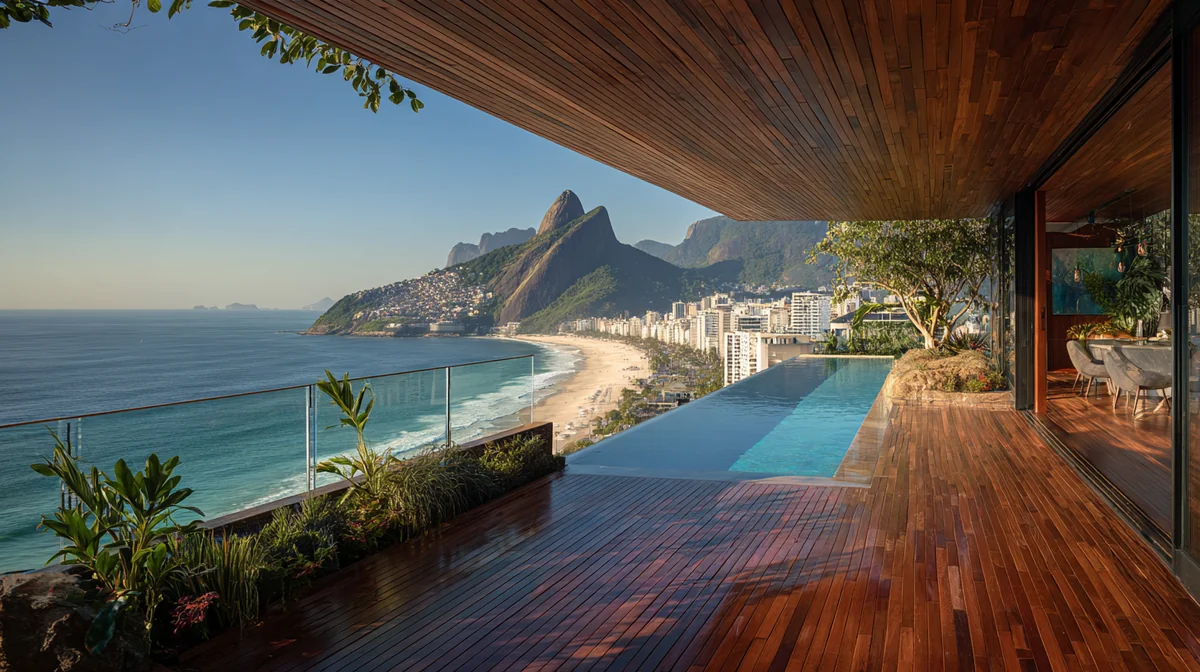



The Greenbelt
More than twenty-five miles of riverside path
It runs the length of the city and connects most of the good parks. Say where the nearest access point is and how far it is on foot.

Expert short-term rental marketing to grow your bookings and nightly rate in Boise, Idaho, USA.
* Market averages. Properties marketed by Cavmir typically exceed these figures by 25–45%. Data sourced from AirDNA, STR market reports, and Cavmir internal analytics.
Boise sits where the Rocky Mountain foothills come down to meet a high desert river plain, and the arrangement gives the city something very few state capitals have: you can be on a singletrack trail with a view over the whole valley fifteen minutes after leaving your desk. The Boise River runs straight through the middle of town with a greenbelt path following it for more than twenty-five miles, and in summer a large portion of the population floats down it on rubber rings. The foothills above the city carry the Ridge to Rivers trail network. Bogus Basin, a ski area, is a winding forty minutes from downtown. This is also, unexpectedly, one of the most significant Basque cultural centres outside Spain, with a whole block downtown devoted to it. For most of the twentieth century Boise was a modest agricultural and government town that nobody outside Idaho thought about. Then people started moving here in large numbers, and over the past decade it has become one of the fastest-growing metropolitan areas in the country, with the housing market and the restaurant scene to match. For a short-term rental owner, 2026 changed everything about how this market works, and it changed it in a direction almost no other city in America is moving.
The licence is gone. In March 2026 the Idaho legislature passed House Bill 583, which the governor signed on 16 March 2026, amending Idaho Code section 67-6539 to establish what is fairly described as the broadest state-level pre-emption of local short-term rental regulation in the country. Under the amended statute, no county or city may require a licence, fee, permit, certification or registration in order to operate a short-term rental. The statute took effect on 1 July 2026. Boise did not wait: the City Council approved the repeal of the city's own short-term rental ordinance on 12 May 2026, with effect from 18 May 2026, and a City of Boise short-term rental licence is no longer required. What survives is everything else. The city continues to enforce nuisance, noise, parking, safety and occupancy regulations consistent with state law and city code, and short-term rentals remain subject to every other ordinance that applies to residential uses generally. So the barrier to entry has collapsed and the behavioural standards have not. That combination has a predictable consequence that owners here should be planning for now rather than reacting to later: when the cost of entry falls to nothing, the competitive advantage moves entirely to whoever markets the property best.
Nearby Markets: McCall | Sun Valley | Sandpoint
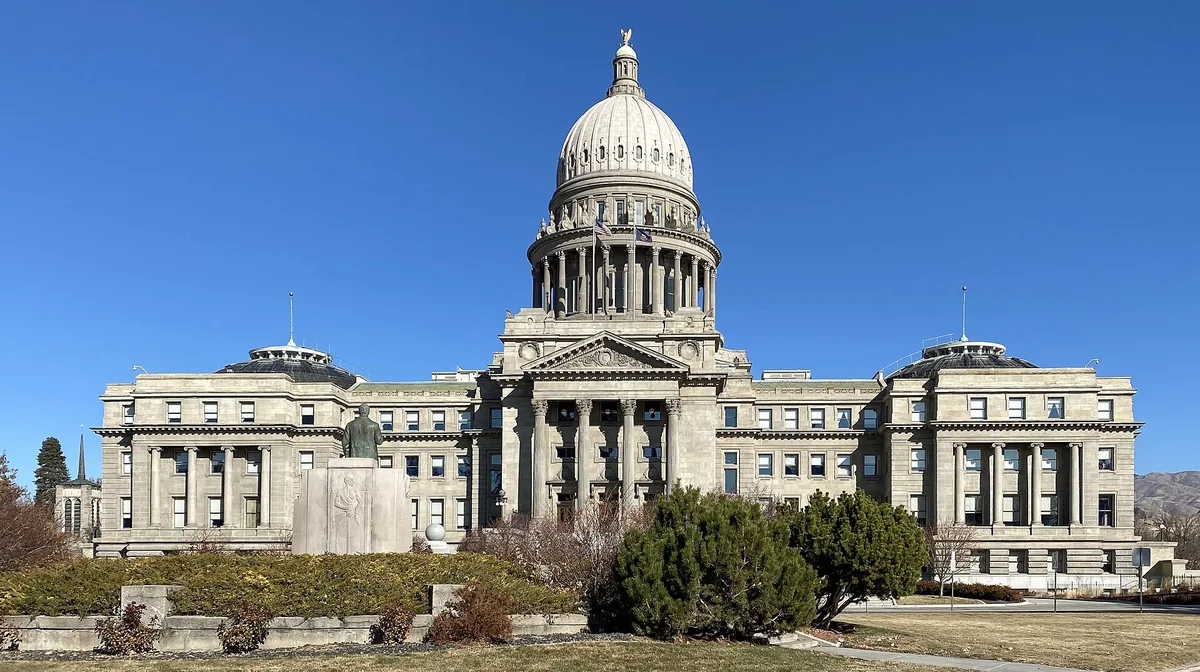
A few of the visual fingerprints we lean into when we shoot, brand and market a Boise Idaho downtown property — courtesy of the open Wikimedia Commons archive.
Cavmir markets Boise properties for the market Boise is about to become rather than the one it was. When a city removes the licence requirement altogether, the constraint on supply disappears, and the owners who do well are the ones whose properties are found first, look best and hold a direct relationship with their guests. That work needs doing before the new inventory arrives, not after. We start with the outdoors, because it is the reason most visitors come and most listings treat it as a bullet point: the greenbelt, the foothills trailheads, the river float, Bogus Basin in winter, and the drive to McCall or the Sawtooths. A guest choosing between two similar houses will pick the one whose listing tells them which trailhead is walkable from the door. We photograph in the light this valley actually has, which means early morning in the foothills and long golden evenings in summer. We write copy that answers the practical questions about parking, the float, and what is genuinely walkable downtown. Then we build a direct booking site so the relationship is yours, run local SEO against the searches that convert here, place ads against the event and ski calendars, and keep an email list of the guests who came once and will come again. We help position and market your property. We never manage it or touch your keys.
Boise began as a river crossing and a fort. The Oregon Trail came through the valley, and after a gold strike in the Boise Basin in 1862 the army established Fort Boise to protect the traffic; the town grew up alongside it and became the territorial capital within a couple of years. The name is generally taken from the French for wooded, which is what the cottonwoods along the river looked like to trappers arriving out of a great deal of sagebrush. Agriculture followed irrigation, and the valley became productive farmland. Two things then shaped the city in ways that still matter. The first was geothermal water. In 1892 the Boise Warm Springs Water District began piping naturally hot water from wells to heat homes on Warm Springs Avenue, which makes it one of the oldest geothermal district heating systems in the world, and the system is still running; the State Capitol itself is geothermally heated. The second was the arrival of a Basque community in the late nineteenth and early twentieth centuries, drawn initially by sheep herding. It became the largest Basque population in the United States, and rather than dissolving it organised: a boarding house, a cultural centre, a museum, a language school and the Jaialdi festival, all concentrated on a single downtown block. Through most of the twentieth century Boise remained a government and agricultural town with a few large employers, notably Boise Cascade, Albertsons and later Micron. What changed was migration. Since the 2010s the Boise metropolitan area has been among the fastest-growing in the country, driven by people arriving from more expensive western states, and the city has acquired the restaurants, the traffic, the house prices and the cultural range that come with that. For a short-term rental owner, the relevant consequence is a market with genuine year-round urban demand, real outdoor seasonality on top of it, and as of 2026 the lightest regulatory regime of any city on this map.
Boise's pricing problem for the next few years is going to be supply, and owners should price with that in mind rather than pretending otherwise. When a state removes the ability of cities to require any licence, fee, permit or registration, the barrier to entry goes to zero, and inventory follows. The right response is not to race the new arrivals to the bottom. It is to build the things new entrants will not have: a review base, a direct booking channel, an email list and a listing that is obviously better than the default. Price the seasons properly. Summer is the strongest run, with the river float, the greenbelt, festival season and the long evenings, and it will carry a genuine premium if you set it early. Ski season at Bogus Basin gives you a second, smaller peak, and because the mountain is close enough to Boise for a day trip, a well-placed city property competes with lodging much further away. Autumn is excellent and under-sold: Boise State home football weekends fill the city, the foothills are at their best, and rates rarely reflect it. Spring is soft outside Treefort. Build weekly and monthly rates for the substantial professional and relocation trade, because Boise gets a steady stream of people visiting to decide whether to move here, and they stay longer than tourists. Remember the guest is paying the tax stack on top of your rate, which within the Greater Boise Auditorium District means a meaningful addition to the headline price.
Summer is the peak and it is a real one, running roughly June through early September on the strength of the river, the greenbelt, the foothills and a full festival calendar. Autumn is the underrated season: warm days, Boise State football weekends, and the best hiking of the year. Winter brings a second, smaller peak driven by Bogus Basin and by holiday travel, though the valley itself often sits under an inversion for stretches, which is worth knowing before you photograph in January. Spring is the softest stretch apart from Treefort in March, which fills the downtown core completely. Plan maintenance and reshoots for April and early May.
Boise is now the lightest-regulated market on this map, and the change happened in 2026. The Idaho legislature passed House Bill 583, which the governor signed on 16 March 2026, amending Idaho Code section 67-6539, the statute governing limitations on local regulation of short-term and vacation rentals. The amended provision prohibits counties and cities from requiring a licence, fee, permit, certification or registration in order to operate a short-term rental, which is generally described as the broadest state pre-emption of local short-term rental regulation in the country. The statute took effect on 1 July 2026. The City of Boise moved ahead of that date: the City Council approved the repeal of the city's short-term rental ordinance on 12 May 2026, effective 18 May 2026, and a City of Boise short-term rental licence is no longer required. It is worth being precise about what has and has not changed, because a good deal of loose commentary has suggested Boise is now unregulated, and that is not correct. The city continues to enforce nuisance, noise, parking, safety and occupancy regulations consistent with state law and city code, and short-term rentals remain subject to every other ordinance that applies to residential uses that are not short-term rentals. Building and fire codes apply. Tax obligations are entirely unaffected: state sales tax, the travel and convention tax and, where applicable, the auditorium district tax all remain due, and pre-emption of licensing does not touch any of them. Two practical points follow. First, because there is no permit to obtain, there is also no permit to inherit or to lose, which removes a category of transaction risk that dominates markets like Reno and Lexington. Second, because entry is now costless, supply should be expected to rise, and the owners who prosper will be those who competed on quality and on direct demand rather than on holding a scarce licence. Read the current text of 67-6539 before restating any of this, since it was amended in 2026 and further amendment is plausible.
The single most valuable thing you can do in Boise right now is build the assets that survive a supply increase, and build them before the increase arrives. That means a direct booking site on your own domain, an email list you actually write to, a review base you have grown deliberately, and professional photography that makes the property obviously better than the phone-shot listings that will appear alongside it. None of that is urgent-feeling and all of it compounds. Second, sell the outdoors specifically rather than generally. Every listing in this city says close to hiking. Almost none of them name the trailhead, give the distance from the door, say which loop is good for an hour and which needs a half-day, or explain that the greenbelt runs more than twenty-five miles and where to join it. Do that and you will be the only one. Third, handle the river float properly if you are anywhere near it. It is the defining Boise summer activity, visitors want to do it, and the logistics are genuinely confusing: where to put in, where to take out, the shuttle, where to rent a tube. A clear half-page on that is worth more than a paragraph of scenery. Fourth, mention geothermal if the property is on it, because being told that the hot water comes out of the ground is memorable and true. Fifth, be honest about winter inversion. The valley can sit under grey air for a week at a time in January, and a guest who was expecting mountain views will be disappointed; a guest who was told to plan a day at Bogus Basin above the inversion layer will have a better trip and write a better review.
The obvious one is supply. Removing the licence requirement removes the main constraint on new inventory, and an owner who has not built a differentiated position will feel that within a couple of seasons. Growth has also pushed property prices up substantially, which compresses yield at the same time. The winter inversion is a real seasonal drag on the leisure trade and on photography. Bogus Basin, while close, is a small mountain compared with the destination resorts elsewhere in the region, so the ski market has a ceiling. And there is a political dimension worth watching: strong state pre-emption tends to attract counter-pressure at the local level, and the relationship between the city and the statute is newer than the ink.
Insure a Boise short-term rental on a policy written for paid guest occupancy, not a standard homeowner's policy, which will generally decline a claim arising from a paying guest. A dedicated short-term rental product or a landlord policy with an explicit short-term rental endorsement is what you want, in writing. Ask about liability limits, loss of income and guest property. Two Idaho-specific points are worth raising. The first is wildfire. The foothills above the city carry real seasonal wildfire exposure, and properties on or near the interface should expect the underwriter to ask about defensible space, roofing materials and access, and should expect that availability and pricing in that band can change year to year. Ask about smoke damage specifically, which is a more common claim than fire itself and is not always treated the same way. The second is water: freeze and burst pipes are the routine winter claim here. Note that the repeal of the licence requirement does not change anything about insurance; carriers set their own terms regardless of what the city requires. Platform host protection supplements a policy rather than replacing it. Tell your lender how the property is used.
Removing the licence requirement did not remove any tax obligation, and this is the most common misunderstanding in the market right now. Idaho charges 6% state sales tax on short-term lodging, and a 2% travel and convention tax applies to short-term lodging on top of it, generally for stays under 30 nights. Properties located within the Greater Boise Auditorium District are additionally subject to an auditorium district tax of 5%, which funds convention and visitor facilities, so an address inside the district carries a combined state and district burden of 13%. Whether your specific property falls inside the auditorium district is an address-level question and worth confirming rather than assuming. Stays of more than 30 consecutive days are generally outside these lodging taxes. Short-term rental marketplaces are required to charge tax on booking fees as well as on the listing price, so check what your platform is actually collecting and on what base. Confirm all current rates and the district boundary with the Idaho State Tax Commission before publishing a figure, and ask your accountant how the income should be treated federally and for Idaho purposes.
The 2026 pre-emption made Boise short-term rentals easier to finance, and it is worth making that argument to a lender explicitly because many have not caught up. The single most common underwriting objection to a short-term rental is regulatory: the lender worries that the city could cap, refuse or withdraw the permit the income depends on. In Boise there is no permit to withdraw, because state law prohibits the city from requiring one. That is a stronger position than almost any comparable market and it should be presented in the file with a reference to the amended statute rather than left for the underwriter to discover. Beyond that, this is a conventional metropolitan property market and conventional investment mortgages, portfolio products and DSCR loans are all available. The real constraint is price. Boise's rapid growth has pushed values up substantially relative to achievable nightly rates, so the deposit required is larger and the yield thinner than the headline occupancy suggests. Model conservatively, and model with an assumption that supply increases. If the property sits in the wildland interface, expect the lender to ask about insurance availability before closing, because that has become a live issue for western properties generally.
Two forces will decide this market and they point in opposite directions. The first is supply. House Bill 583 removed the entry barrier statewide, and it would be naive to expect the number of short-term rentals in Boise to stay where it is. More inventory at unchanged demand means softer occupancy and more competition for the same searches, and the owners who feel it least will be those with an established review base, a direct booking channel and a genuinely differentiated listing. Build those now. The second is demand, which continues to grow. Boise's in-migration has not stopped, the professional and relocation visitor base keeps expanding, the downtown keeps improving, and the outdoor product is genuinely excellent and increasingly well known. The third thing to watch is political. Pre-emption this broad is unusual, cities generally dislike it, and the tension between local governments and the statute is likely to produce further legislative activity in one direction or the other. Read the current text of Idaho Code 67-6539 before making decisions that depend on it, and watch the legislature rather than the city council, because for the first time in this market the state is where the rules are actually made.
Boise is a city where a substantial share of the population spends summer afternoons floating down a river on a rubber ring, and nobody regards this as remarkable. The Boise River runs right through the middle of town with a greenbelt path following it for more than twenty-five miles, and behind the city the foothills rise into a trail network you can reach on foot from several neighbourhoods. There is a ski area forty minutes up a winding road. There is a state capitol heated by water that comes out of the ground hot, from a system that has been running since 1892 and never stopped. And there is a Basque block downtown, a genuine one, with a cultural centre, a museum, a boarding house and a language school, because a large number of Basque sheepherders came to Idaho a century ago and their descendants decided to keep the culture rather than let it dissolve. Every five years the city holds Jaialdi and the whole thing comes out into the street. We also like that Boise has grown enormously in a decade and has managed it better than most places would have, and that in 2026 the state did something no other state has done and simply told cities they could not require a short-term rental licence at all. Whatever you think of that, it makes Boise the most interesting regulatory experiment in the country right now.
A great property in Boise Idaho downtown doesn't just want a listing — it wants a point of view, an audience, and a brand the city itself would recognise.
Eight things to know about Boise before writing listing copy, in a market where the licence requirement has just been abolished and the competition is about to get harder.
It runs the length of the city and connects most of the good parks. Say where the nearest access point is and how far it is on foot.
Trailheads sit right at the edge of several neighbourhoods. Name the specific trailhead and give an honest sense of the distance and the climb.
Tubing the Boise River from Barber Park to Ann Morrison. The logistics confuse visitors, so explain put-in, take-out and the shuttle plainly.
Restaurants, the cultural centre and the museum. The most distinctive thing in the city and most listings never mention it.
A local ski hill rather than a destination resort, which means day trips from the city. Good winter demand, honest expectations required.
Restaurants, Freak Alley, the Capitol and the university nearby. The right base for guests who do not want to drive everywhere.
The valley can sit under grey air for days in midwinter. Tell guests to plan a day above it at Bogus Basin and they will thank you.
The city licence requirement was repealed. Nuisance, noise, parking, safety and occupancy rules all still apply, and so do all the taxes.
The three examples below are composite and illustrative. They reflect patterns we see in fast-growing western markets and in markets facing a supply increase, and they are not accounts of specific businesses or clients.
A well-kept three-bedroom five minutes' walk from a trailhead described itself as close to hiking and was competing on price with properties out by the interstate that said exactly the same thing.
We named the trailhead, measured the walk from the front door, described three specific routes by length and difficulty, photographed the view from the ridge above the house, and rewrote the listing so the outdoor access led rather than trailed the amenity list.
The property stopped being compared with generic inventory, began attracting guests who chose it specifically for the trail access, and held a higher rate through the spring and autumn hiking seasons.
An owner with strong reviews and consistent occupancy had no website, no email list and no way to reach any previous guest. With the licence requirement about to disappear and new supply expected, the entire business sat inside one platform listing.
We built a direct booking site on the owner's own domain, migrated the photography and copy across, set up an email list segmented by trip type, and added a simple post-stay sequence inviting past guests to book directly next time.
A growing share of repeat bookings began arriving directly rather than through a platform, and the owner entered the more competitive period with an asset that new entrants could not replicate quickly.
A comfortable house was priced and photographed entirely for the summer river season and sat largely idle from October through April, with the owner treating winter as a write-off.
We built a winter proposition around Bogus Basin day trips and the professional and relocation trade, reshot the interior for the season, added weekly and monthly rates aimed at people visiting to decide whether to move to Boise, and wrote honestly about the inversion and how to get above it.
The winter months stopped being empty, longer bookings filled the weeks that leisure demand never reached, and annual revenue became far less dependent on a three-month summer.
Demand in Boise peaks around June through August and runs quietest around January through February. Here is how the year actually books — and what to do about each stretch of the calendar.
Summer is the peak and it is a genuine one, running from June into early September on the river, the greenbelt, the foothills and a full festival calendar. Long northern daylight extends the usable evening well past what visitors expect. Set summer rates early and hold them, because this is the stretch that has to carry the year.
Autumn is the most under-priced season here, with warm days, Boise State football weekends and the best hiking of the year. Spring is softer outside Treefort in March, which fills the downtown core completely. Both reward a property that has separate photography and copy for the season rather than a summer listing with a lower price.
Winter brings a second, smaller peak from Bogus Basin and holiday travel, but the valley can sit under an inversion for stretches, which is worth knowing before you photograph in January. The honest winter plays are ski day trips, relocation visits and longer professional stays. People move to this city constantly and they come to look first.
Summer weekends and Treefort book well ahead, and football weekends fill as soon as the schedule is published. Relocation and professional stays arrive closer in. Winter is largely last-minute apart from the holidays.
Summer leisure stays run three to five nights, longer than a typical city break because the outdoor product supports it. Relocation and professional stays run a week or more. Winter and festival stays are shorter and weekend-weighted.
Houses within walking distance of a foothills trailhead or the greenbelt outperform equivalent properties without that access, and the difference is worth stating in minutes. Downtown units win on walkability for festival and game weekends. With the licence requirement now removed statewide, presentation quality is what separates listings rather than scarcity.
Start with photography that shows what a guest actually gets here, then write the listing around a real itinerary rather than a feature list. Build a direct-booking site so returning guests can come back without going through a platform, and keep an email list segmented by season so you can reach last year's visitors before the calendar opens. Local search matters more than people expect in a market this size, because guests search the destination and the attraction rather than the word rental. A marketing agency layer handles the photography, the listing copy, the direct-booking site and the local SEO as one system instead of four disconnected jobs.
Summer is the peak, running June into early September on the river, the greenbelt and the foothills, with very long daylight. Autumn is the most under-priced stretch, with football weekends and the best hiking of the year. Winter brings a second smaller peak from Bogus Basin, and spring is softest outside Treefort in March.
Summer weekends, Treefort and football weekends all book well ahead. Relocation visits and professional stays come in closer to the date. Winter is largely last-minute outside the holiday period.
Regional drive traffic from Salt Lake City, Portland, Spokane and across southern Idaho, plus a large flown-in West Coast audience from Seattle, California and beyond. A meaningful share of that group is visiting to decide whether to move here, and they behave very differently from tourists.
Outdoor access is the differentiator, so gear storage, parking and a genuinely fast connection matter. For the longer relocation and professional stays, a full kitchen, laundry and a comfortable workspace do more than any decorative upgrade, and air conditioning is not optional in July.
Run your Airbnb, Vrbo, or website through Cavmir's free grader. It checks the things that decide whether guests book in Boise — photos, listing copy, page speed, local search — and shows you where bookings leak. Takes about a minute, and there's no sales call attached.
If the report says your booking engine is the weak link, that's fixable: a direct-booking website of your own means repeat guests stop paying platform fees to come back to you. That's the work Cavmir does — see Airbnb website design in Boise.
Send us the listing and we'll tell you what we'd change. Not a pitch deck — a straight read on your photos, your title, your rates against the Boise comp set, and whether a direct-booking site would pay for itself.
You'll hear back from a person, usually inside one business day. If we don't think we can move your numbers, we'll say so. Cavmir is a short-term rental marketing agency — we position and market properties, we don't manage them.
Talk to Cavmir today. We'll show you exactly what your Boise property is leaving on the table — and how fast we can change that.
Book a Free Strategy CallPhotography via Wikimedia Commons (images resized and cropped): Idaho State Capitol building by Quintin Soloviev (CC BY 4.0) · Boise River watershed by Mheberger (CC BY-SA 4.0) · Bogus Basin ski area (2017) by cifraser1 (CC BY 2.0) · Boise Zoo (Julia Davis Park) by Tamanoeconomico (CC BY-SA 4.0) · Idaho Anne Frank Human Rights Memorial by Tamanoeconomico (CC BY-SA 4.0) · AnneFrankHumanRightsMemoriaCentopahBackDetail by Kencf0618 (CC BY-SA 4.0).
