


Coffee & First Light
The river at Last Chance before six
The Henry's Fork through the flat water is at its best in the first hour, with mist off the surface and rising fish. You do not have to fish to be glad you got up for it.

Expert short-term rental marketing to grow your bookings and nightly rate in Island Park, Idaho, USA.
Sixteen services, one team. Everything below is built in-house and scoped to your property and market. Most owners start with the 12-Step System.
Every engagement is quoted to your portfolio. These are the ready-made scopes owners pick most — our Fall Special (55% off list or more) is already applied to the website, King Broker, Hotels and à la carte scopes. A clear proposal within 48 hours.
The work is public. Selected engagements and what changed — and reviews from the owners and managers behind them.
* Market averages from AirDNA and STR market reports. A single home's numbers depend on its size, its location and how it is marketed.
Cavmir is an Airbnb marketing agency. We build the brand, the direct-booking website and the marketing for short-term rentals in Island Park.
Island Park sits on the Idaho side of the Yellowstone plateau at about six thousand feet, inside one of the largest volcanic calderas on earth, and it is one of the quietest ways into the park anyone has found. The west entrance is roughly half an hour up the road. In between is the Henry's Fork of the Snake River, which fly fishers travel across the world to fish, along with Big Springs, Mesa Falls, Henrys Lake, a reservoir and several hundred thousand acres of national forest. In winter the same country becomes one of the biggest snowmobile destinations in the American West. The town itself is barely a town — a strip of cabins, lodges and outfitters strung along a highway that runs for more than thirty miles inside the city limits. The rental stock is cabins and lodge properties, overwhelmingly owner-held, and after a change in Idaho state law this year the regulatory picture here is now among the lightest in the country.
Two distinct high seasons and two genuinely quiet gaps. Summer runs from late June through September and is driven by Yellowstone traffic, the fishing on the Henry's Fork, Harriman State Park and the lakes. Guests who have realised that staying on the Idaho side is cheaper, calmer and barely further from the west entrance than staying in the park's gateway towns are a growing and word-of-mouth-driven audience. Winter is the second season, and it is a serious one: the snowmobile trail network here is extensive, the season runs from around the turn of the year into March, and the guests who come book multiple nights, travel in groups and plan well ahead. The gaps are spring, when the snow is going and the roads and rivers are unsettled, and late autumn before the snow arrives. Those two shoulders are hard, and they are the difference between a good year and an average one. On the regulatory side, Idaho enacted the broadest state preemption of local short-term rental rules in the country this year, which removes local permitting as a barrier and makes the competitive question — not the compliance question — the one that decides how you do.
Nearby Markets: Big Sky | Jackson | Sun Valley
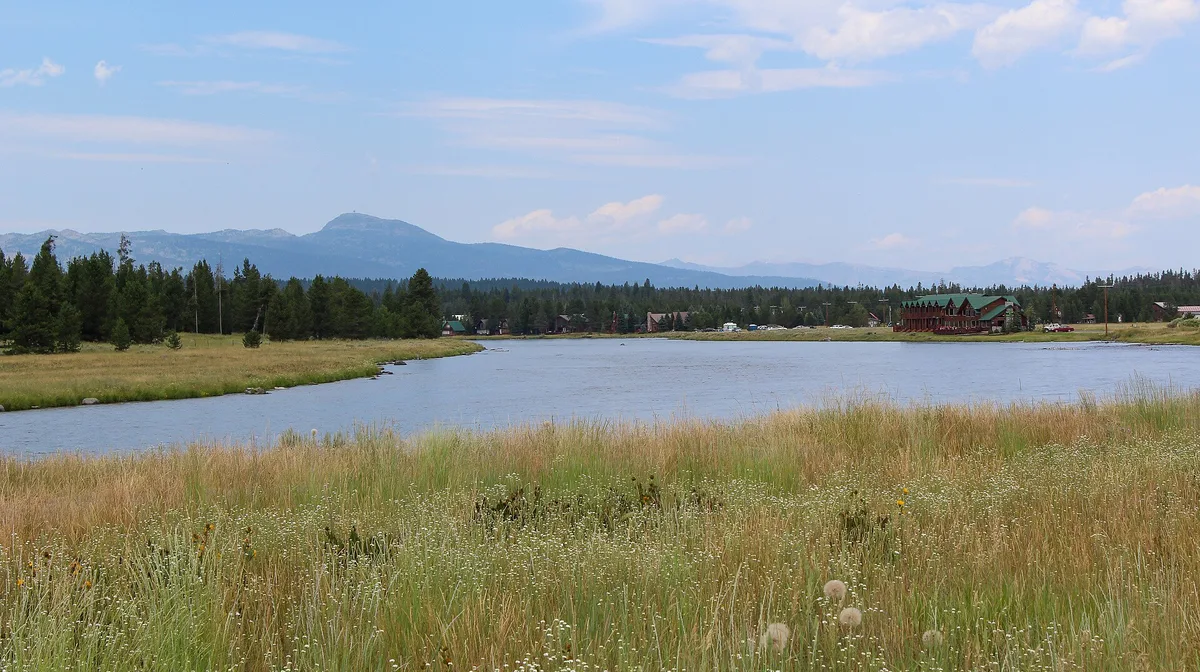
A few of the visual fingerprints we lean into when we shoot, brand and market a Island Park property — courtesy of the open Wikimedia Commons archive.
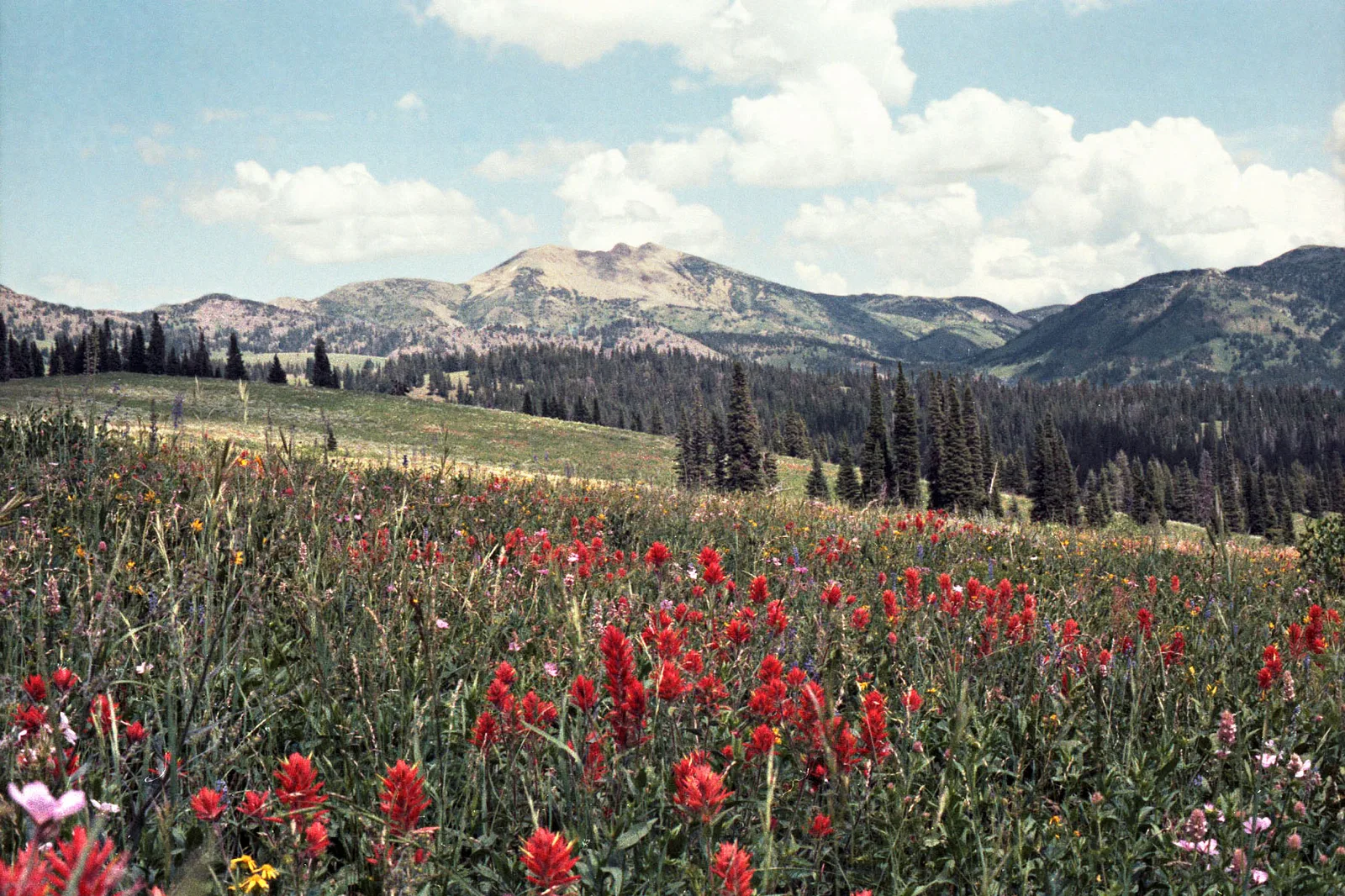
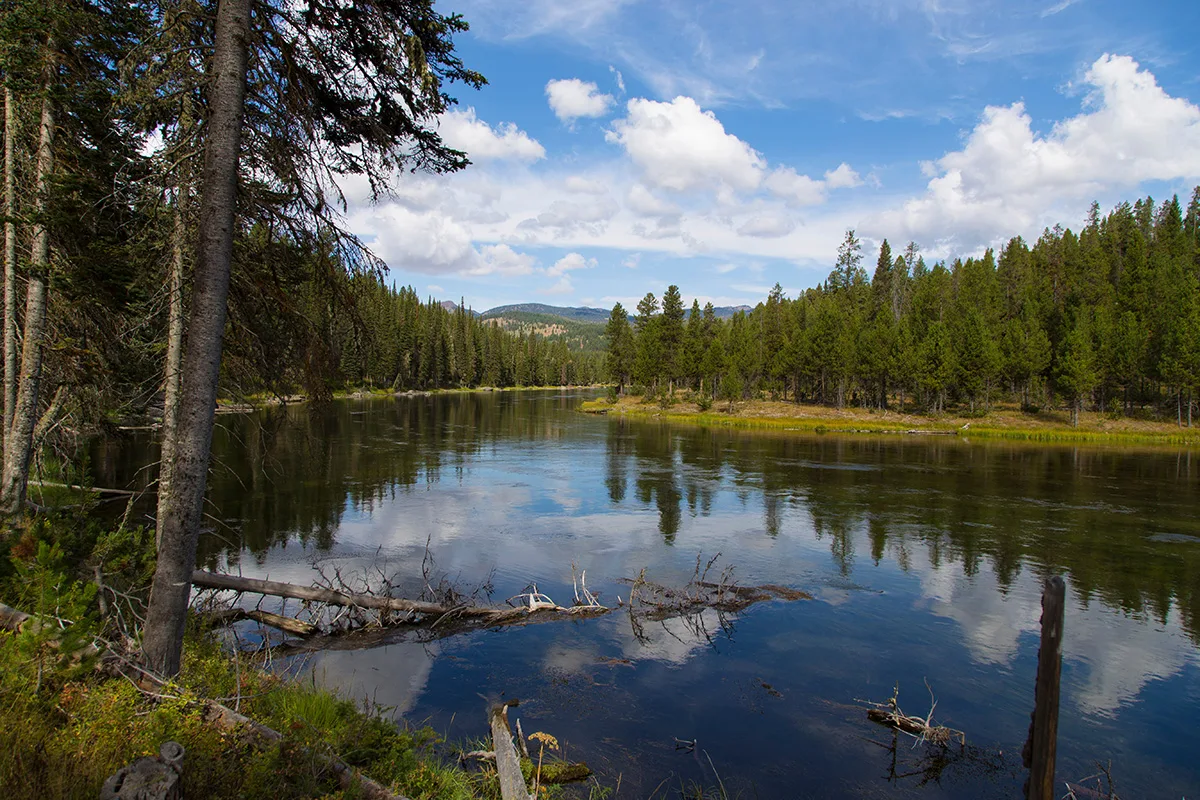
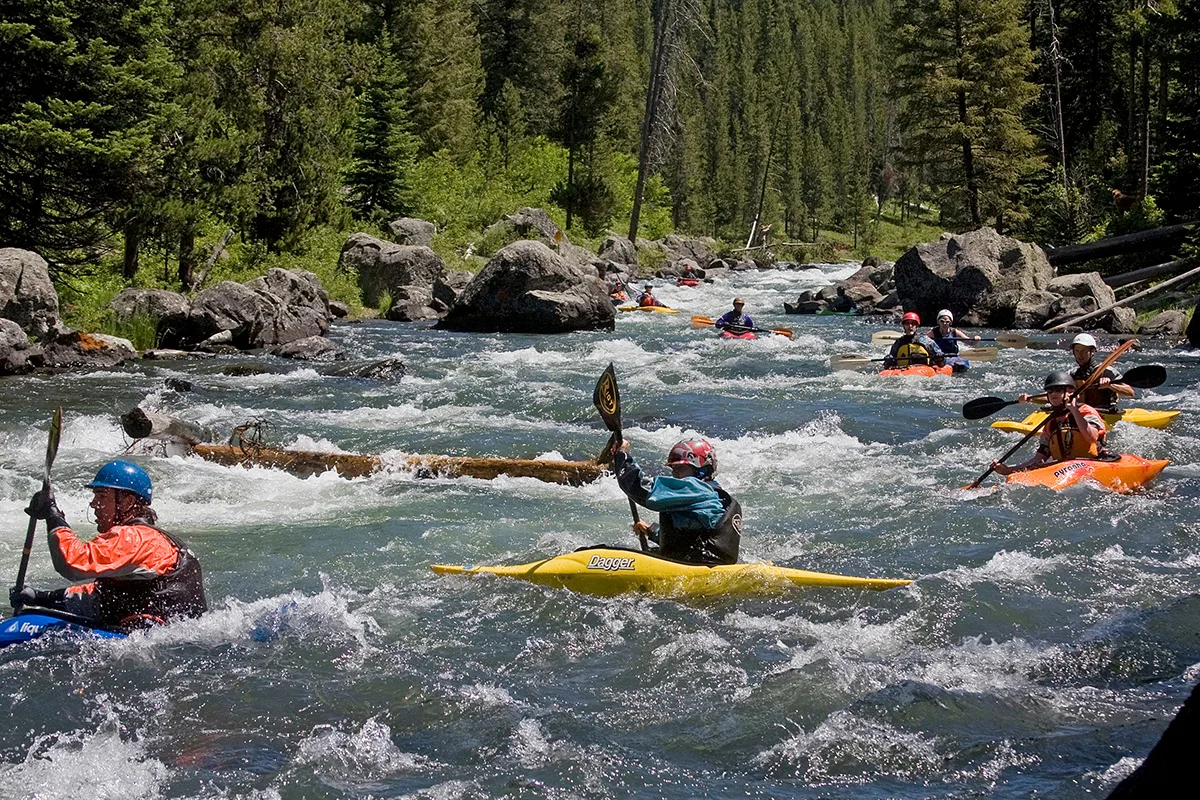
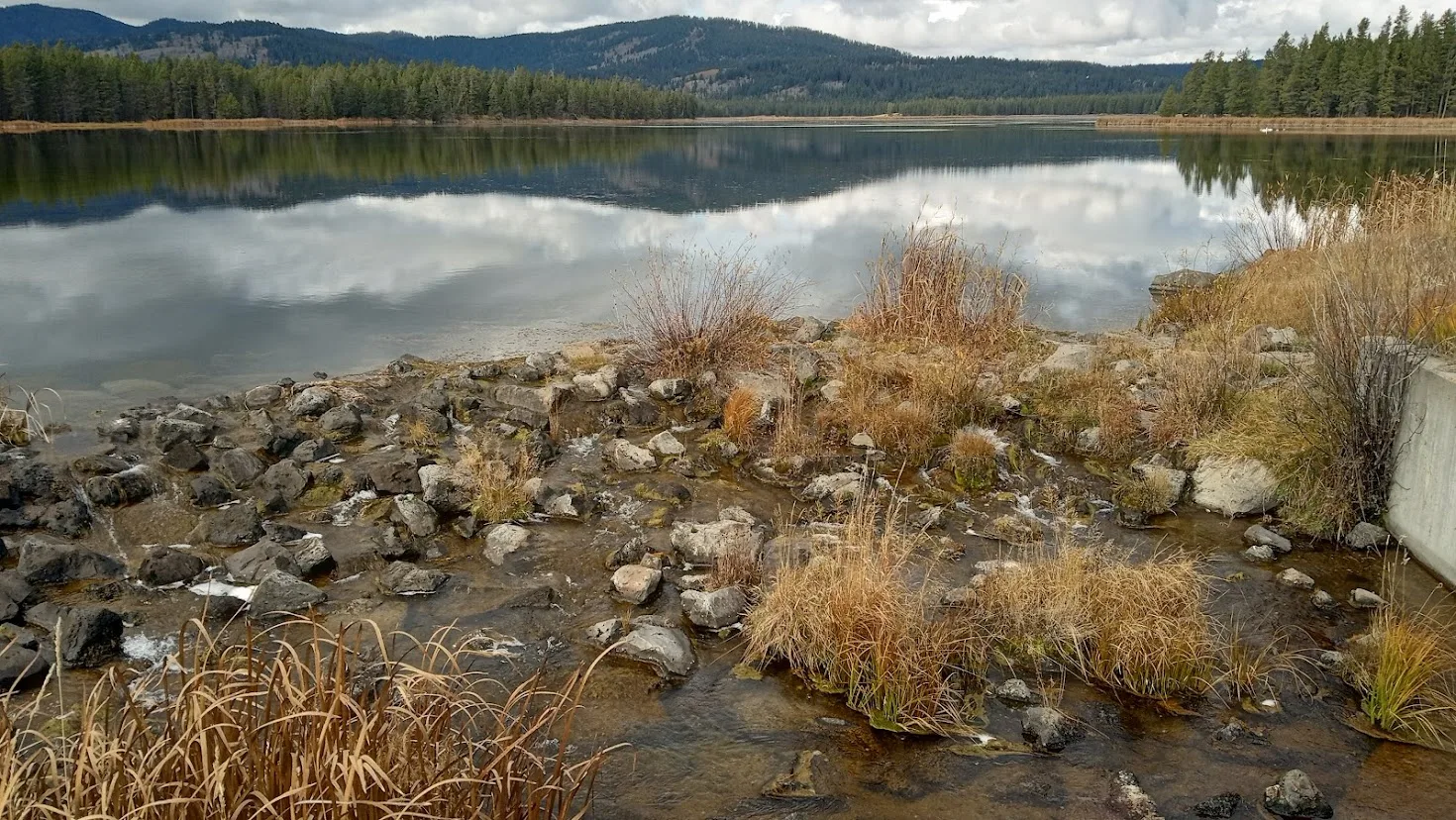
Cavmir markets Island Park cabins around the two audiences that actually pay the bills here, and they are not the same people. For the summer, we build the position around the Yellowstone approach and the Henry's Fork — real drive times to the west entrance, real river access, real distances to Mesa Falls and Big Springs — because a family planning a park trip is choosing on logistics as much as anything. For the winter, we build a completely separate story for the snowmobile audience: trail access, trailer parking, a place to dry gear, and multi-night group pricing. We photograph the property in both seasons, because a cabin shot in July does not sell January. We build the direct-booking site, get it ranking for the searches that already send people to this side of the park, and stand up the email list that turns a summer fishing family into a February group. We help position and market your property. We never manage it or touch your keys.
This whole plateau sits inside the Island Park Caldera, the collapsed remains of an enormous volcanic eruption and one of the largest calderas anywhere on earth. The rim is visible as a long low ridge if you know where to look, and the flat, spring-fed country inside it is what produces the Henry's Fork of the Snake River — a river that emerges cold and clear from Big Springs and runs through meadow and canyon in a way that made it one of the most written-about trout fisheries in the world.
The human history is railroads, ranching and recreation. The Union Pacific ran a line up this way and wealthy eastern families followed; the Harriman family and their partners assembled a working cattle operation on the river known as the Railroad Ranch, kept it for decades as a private retreat, and eventually gave it to the state of Idaho in the 1970s. It is Harriman State Park now, and the stretch of the Henry's Fork running through it — flat, glassy, and full of large and extremely difficult trout — is the water fly fishers mean when they talk about this river.
The town of Island Park itself is a piece of administrative folk history. It was incorporated in the late 1940s in a long narrow ribbon following the highway, reportedly so that the roadside lodges and bars along it would fall inside city limits and could hold liquor licences under the rules of the day. The result is a city whose main street runs more than thirty miles, a claim the town has cheerfully promoted ever since. What the strip actually contains is cabins, lodges, outfitters and gas stations, serving Yellowstone traffic in summer and one of the largest snowmobile networks in the West in winter. The rental economy grew directly out of that, and it grew fast enough after 2020 to become a local issue — which is part of the backdrop to the state law that changed everything this year.
Two peaks, two troughs, and the money is in respecting the difference between the guests. Summer, from late June through September, is Yellowstone season plus fishing season, and rates hold well because the alternative gateway towns are more expensive and more crowded. The mid-July to mid-August stretch is the ceiling. Winter, from roughly the turn of the year into March, is snowmobile season, and it is a genuinely different product: groups of four to eight, multi-night stays, trailers to park, gear to dry, and guests who book weeks or months ahead. Those bookings should carry minimum stays and should be priced as group stays rather than per-night bargains. Spring and late autumn are the troughs and they are real — the roads and rivers are unsettled, Yellowstone's opening and closing dates for the west entrance govern access, and there is genuinely less to sell. Price those honestly and use them for maintenance rather than pretending. The single biggest pricing error in this market is treating winter as an off-season discount period. It is not. It is the second peak, and owners who discount it are leaving money on the table.
Two seasons and two gaps. Summer runs late June through September, driven by Yellowstone and the Henry's Fork, and is the strongest stretch. Autumn colour and elk season carry a little into October, then the plateau goes quiet until reliable snow. Winter, roughly January through mid-March, is the second peak, built on the snowmobile trail network and drawing multi-night group stays. Spring is the hardest part of the year: mud, unsettled roads, and the west entrance to Yellowstone closed for its seasonal transition. Late autumn is the other gap. Yellowstone's seasonal opening and closing dates for the west entrance effectively set the boundaries of the summer season here, and every owner should have those dates in front of them when setting rates.
This changed fundamentally in 2026 and it is now one of the most permissive environments in the country. Idaho's governor signed House Bill 583 into law on 16 March 2026, with effect from 1 July 2026, establishing the broadest state-level preemption of local short-term rental regulation in the United States. Under it, no city or county in Idaho may require a licence, fee, permit or registration to operate a short-term rental; may impose an owner-occupancy requirement; may restrict the number of days a property can be rented; may cap the number or density of short-term rentals; may require additional parking, insurance or structural upgrades beyond what applies to all homes generally; may mandate reporting on rental activity; or may impose taxes or fees specifically on the operation of a short-term rental marketplace.
For Island Park that is a significant reversal. Fremont County had operated a short-term rental permitting process, with designated zones where rentals were allowed, and owners here had been working within it. The state law removes that layer. What it does not remove is everything else: ordinances of general application still apply, so noise, nuisance, building code, septic, fire safety, parking rules that apply to all residences, and any private covenants or homeowner association rules remain fully in force. A subdivision covenant prohibiting short-term rentals is a private contract and state preemption does not touch it — check yours.
On tax, HB 583 clarified that booking platforms must register with the Idaho State Tax Commission and are responsible for collecting and remitting applicable state and local taxes on the bookings they facilitate. That simplifies life for platform bookings considerably. Direct bookings remain your responsibility, and Idaho's sales tax applies to short-term lodging along with the state travel and convention tax and, depending on the address, other local levies. Confirm your specific obligations with the Idaho State Tax Commission rather than assuming the platform covers everything. Because the law is new, verify the current implementation position before making decisions that depend on it.
Run two marketing programmes, not one. The summer guest is a family doing Yellowstone plus a fishing day; the winter guest is a snowmobile group from Utah or eastern Idaho. They respond to different photographs, different copy and different rate structures, and a single generic listing serves neither well. Second, be exact about the Yellowstone drive. Say the miles and the minutes to the west entrance and to the geyser basins, because the whole value proposition of staying on this side is that it is nearly as close and considerably calmer, and no one will believe you unless you give numbers. Third, take the fishing seriously if you are anywhere near the water. Anglers plan around hatches, they travel in shoulder weeks, and a listing that names the section of river and the access is speaking a language that converts. Fourth, build a real winter product: trailer parking, a boot and glove drying setup, a place to work on a machine, and honest information about trail access from the property. Very few cabins here photograph any of that. Fifth, warn guests about the elevation, the cold nights in July and the wildlife. Sixth, in a market where local permitting has just been preempted, differentiate on quality and story rather than assuming everyone else will stay put — light regulation means more competition, not less.
The two shoulder gaps are genuine and there is not much to sell in them. Yellowstone's seasonal road closures set hard boundaries on the summer. Winter is entirely snow-dependent and a low-snow year takes the second season away. The market's growth after 2020 created real local friction about housing and rental density, and while state law has now preempted local permitting, the underlying community feeling did not disappear with it. And light regulation cuts both ways: with the permitting barrier removed, supply can grow faster than demand, which puts more weight on how well your property is presented and how strong your direct guest relationships are.
Get a dedicated short-term rental policy with real liability limits. At six thousand feet on the Yellowstone plateau, winter dominates the risk conversation. Snow load on a roof is a genuine structural issue here, and frozen pipes in a cabin left empty between bookings in January are the classic claim — carriers will ask how heat is maintained and monitored. Wood stoves are near-universal and change underwriting; keep chimney maintenance documented. If you accept snowmobiles, trailers or rent any equipment, confirm explicitly how that is treated, because it is a material change to the risk. Wildlife is a real consideration in a way it is not elsewhere: guests encounter bears, bison and moose here, and your guest guide should say so plainly. Water access, docks and boats need declaring. Wildfire risk applies across this country in late summer. Ask for guest injury, guest property damage and loss of rental income after a covered event to be confirmed in the policy language rather than described on a call.
Idaho's 2026 short-term rental law clarified that booking platforms must register with the Idaho State Tax Commission and are responsible for collecting and remitting applicable state and local taxes on the reservations they facilitate, which removes a lot of friction from platform bookings. It does not cover your direct bookings. Idaho sales tax applies to short-term lodging, the state travel and convention tax applies to lodging stays, and depending on your address additional local levies may apply — confirm which ones with the Idaho State Tax Commission rather than assuming. The law also prohibits local governments from imposing taxes or fees specifically on the operation of a short-term rental marketplace, which is a different thing from lodging taxes of general application. Since a marketing programme is built to grow direct bookings, get registered and get the filing calendar set before you drive that traffic, and keep platform and direct revenue in separate ledgers. Your accountant should review how personal use and rental days interact for your situation.
Financing here is standard mountain-cabin lending with a few specifics. Seasonal properties without year-round road access, plowed access or reliable water can fall outside conventional financing and need a portfolio lender — establish access and utilities early. Septic capacity should be verified against the occupancy you intend to advertise, because in a market where cabins routinely sleep ten, the system frequently was not built for it. Unusual construction — an older cabin, an A-frame, a partially off-grid build — narrows the lender pool. Second-home financing is cheaper than investment lending and the intended-use question matters. Debt-service-coverage lending is available for buyers scaling. The market-specific modelling point is the two-peak calendar: an annual average occupancy figure badly misrepresents a market with two strong seasons and two genuinely empty shoulders, and a lender or an accountant working from an average will draw the wrong conclusion. Bring the monthly numbers.
Island Park has long been one of Idaho's lighter-touch rental markets, but it wasn't rule-free. Because most cabins sit in unincorporated Fremont County, the county ran a transient-lodging permit for short-term rentals, tiered by how many guests a place could sleep — a couple hundred dollars for a smaller cabin and more for the big-group lodges. Then House Bill 583, signed in March 2026 and effective July 1, 2026, rewrote Idaho Code 67-6539 to bar every Idaho city and county from requiring a short-term-rental permit, license, registration or fee. The county's transient-lodging permit is exactly the kind of rental-specific permit the state no longer allows, so it's now preempted. Confirm Fremont County's current posture directly, because rural counties are still catching their codes up to the new law.
The county keeps the health-and-safety floor that applies to any home, and up here those basics carry real weight. You still need smoke alarms in the sleeping areas, a fire extinguisher and carbon-monoxide detector on each floor — which matter more than usual in cabins running on propane, wood stoves and generators — escape ladders for loft bedrooms, occupancy limits that track the building code, and an emergency handout. With so many Island Park cabins on private wells and septic systems down long lanes that snow in, realistic occupancy caps and working detectors aren't box-ticking; they're how you keep a remote guest safe when help is a long way off. Confirm the current life-safety requirements with the Fremont County building and planning office.
Island Park is the rare Idaho destination with almost nothing layered on top of the state. A stay of 30 nights or less carries just the 8% state stack: 6% sales tax plus the 2% travel-and-convention tax. There's no resort-city local-option tax identified for Island Park or Fremont County, and the area isn't inside an auditorium district, so you don't stack the extra points a guest pays in Boise, at about 13%, or in the Wood River Valley, at 11 to 12%. That low all-in rate is a quiet selling point for a price-sensitive fishing or sledding group. Airbnb and Vrbo collect the state taxes on their bookings; on a direct booking you register through Idaho Business Registration for a free seller's permit and remit yourself. Confirm the current figures with your accountant.
The friction here is real and worth understanding before you buy. Island Park's year-round population is only a few hundred, but the town swells every summer and every snowmobile season, and the complaints that pushed the county toward permits — septic strain, trash and wildlife, late-night generators and sleds, cars parked down narrow forest lanes — didn't vanish when HB 583 removed the permit. Expect the county to lean on nuisance, occupancy and health rules instead, and expect the good-neighbor operators to be the ones who stay out of the next round of regulation. In a town this small, one badly run rental makes the local paper, so setting quiet hours, headcount limits and a real parking plan protects both your reviews and the whole market. Confirm anything you're unsure of with the county.
Island Park is really two businesses wearing one address: a summer fishing-and-Yellowstone market and a winter snowmobiling market, with two quiet stretches in between. The cabins that win are the ones that know which guest they're selling to in which month and set the listing up for that guest specifically. Sell the same generic cabin to both and you underprice the peaks and oversell the lulls. Here's the split, and how to price around it.
From roughly June through September, Island Park is the calmer western doorway to Yellowstone — the park's West entrance is a short drive north through West Yellowstone — and it's a fly-fishing pilgrimage in its own right. The Henrys Fork of the Snake River is legendary water: Harriman State Park's Railroad Ranch flats, the Box Canyon, and the Last Chance stretch draw anglers from all over the country, while Henrys Lake, Big Springs and Mesa Falls round out the family side. This is your peak. Book the multi-night park trip and the week-long fishing group, price the summer like the destination it genuinely is, and lean the listing into the water and the park access that brought the guest looking in the first place.
When the snow comes, Island Park turns into one of the West's premier snowmobiling bases, with hundreds of miles of groomed trails and the deep, dependable Continental Divide snowpack that sledders chase all winter. That's a genuinely different guest than the summer angler: trailers and gear, a need for garage or trailer parking, plowed access, and somewhere to dry out and warm up after a day on the trails. December through March is a real second season here, not a discount window, and a cabin set up for sledders — heated garage, room for the trailer, sled-from-the-door access — commands it. Cavmir helps hosts optimize the listing so the winter guest instantly sees the setup they need instead of guessing.
Between the two seasons sit two quiet stretches: the muddy, buggy weeks of spring runoff, and the freeze-up weeks of late fall when the trails aren't ready and the water's gone cold. Roads and some services thin out, and that's simply the rhythm of a high-country town sitting above 6,000 feet. The operators who do well don't fight it — they schedule maintenance, well and septic service, and a winter's worth of firewood for those weeks, and they aim the listing at the stray hunter, the fall-color drive or the die-hard off-season angler rather than gutting the nightly rate. Plan the year around two peaks and two lulls and the cabin pencils; price it flat across twelve months and it won't.
The dominant near-term factor is the new state law. Removing local permitting lowers the barrier to entry across Idaho, and in a market that already grew quickly after 2020, that most likely means more supply. For existing owners the implication is direct: your defensibility now comes from presentation, guest relationships and repeat bookings rather than from a permit nobody else could get. Build those. The second thread is Yellowstone. Park visitation patterns, entrance-road schedules and any move toward reservation or timed-entry systems affect this side of the plateau immediately, and staying current on them is genuinely useful to your guests. The third is snow. Winter here is the second season and it depends entirely on a reliable snowpack for the trail network; variable winters put more weight on building a summer and shoulder business that does not need it. The underlying fundamentals — a world-class river, a caldera full of public land and a quiet approach to the busiest national park in the region — are not going anywhere.
Island Park is the version of Yellowstone country that people who have been coming for thirty years actually use. You are half an hour from the west entrance, but instead of a gateway town full of motels you have a plateau of lodgepole pine, spring creeks and lakes, sitting inside the rim of an enormous old caldera. The Henry's Fork runs through it, and the flat glassy stretch through Harriman State Park is the piece of water that fly fishers argue about in books — trout that can see everything and refuse most of it. Big Springs comes out of the ground at a rate that is difficult to believe when you stand there. Mesa Falls drops over a hundred feet with a view platform right at the lip. And in winter the whole thing goes under several feet of snow and turns into one of the biggest snowmobile networks in the West, which is a completely different town with completely different guests. What we like about marketing here is that both of those seasons are real and almost nobody markets both. Cabin after cabin here is photographed in July, described as being near Yellowstone, and then priced down in January as if winter were a problem. Winter is the second peak. An owner who builds two proper marketing programmes instead of one is running a substantially better business than the cabin next door with the same hot tub.
A great property in Island Park doesn't just want a listing — it wants a point of view, an audience, and a brand the city itself would recognise.
Eight things for the guest guide. Real distances and honest warnings — an Island Park address can mean thirty miles of highway, so specifics matter here more than most places.
The Henry's Fork through the flat water is at its best in the first hour, with mist off the surface and rising fish. You do not have to fish to be glad you got up for it.
The options are few and they are spread across thirty miles. Tell guests which ones are actually near your cabin, what time the kitchen closes, and which ones shut outside the season.
One of the most storied trout rivers in the world. Harriman's flat water is the famous stretch and the hardest; Box Canyon below it is more forgiving. Give guests a fly shop name and let the shop do the rest.
Upper and Lower Mesa Falls on the scenic byway, with a viewing platform right at the lip of the upper falls. It works in weather and it takes an hour and a half round trip.
The summer crowds have gone, the Yellowstone entrance is still open, the aspens are turning and the elk are bugling. It is the best fortnight on the plateau and almost nobody books it.
One of the largest natural springs in the country, coming out of the ground clear and cold at a constant temperature, with enormous trout sitting in it that cannot be fished for. Ten minutes and genuinely remarkable.
Leave early and you are in the park before the queue builds, with the Madison valley to yourself and bison on the road. Tell guests the exact drive time from your cabin.
Bears, bison and moose are genuinely present here, and July nights get down near freezing. Say both plainly in the guide, with the practical advice rather than the drama.
Guests who find an Island Park rental on Airbnb search its name afterwards, and the page they should land on is the owner’s own site. Cavmir builds vacation rental websites of 40 to 125 pages in the owner’s brand. For a home that only lists on Airbnb, that is a website for your Airbnb: your name and domain, your photos, your area guides and your reviews, with a button that sends guests to the listing. For homes on Hostaway, Guesty or Hospitable it is a direct booking website: live availability and prices from the PMS, the whole stay priced before checkout, and the booking completed in the PMS. Both start from the same vacation rental website design, run the TrollBuster™ compliance scan before launch, and are yours at launch: domain, code, content and photos.
The guide pages of an Island Park site can start with the picks on this page: The river at Last Chance before six, Dinner at the lodges along the highway and The Henry's Fork. Each one is a search a guest makes before choosing a home, and each becomes a page that leads to the booking button.
Packages start at $1,475 for the Starter Website (40 pages, two to three weeks) and run to $3,732 for Full with Direct Booking (125 pages, booking synced with your PMS); the current prices are on the pricing page.
A few composite engagements, drawn from how Cavmir typically works with cabin owners in a two-season Yellowstone-adjacent market. Illustrative rather than any single client's file.
Marketed only for summer, with winter discounted as an off-season despite the snowmobile trail network running past the property.
Built a separate winter position with photography in snow, a gear-drying and trailer-parking story, group-oriented multi-night pricing, and a direct-booking site with two distinct entry points for the two audiences.
Winter moved from a discounted tail to a second peak, with multi-night group bookings arriving months ahead rather than as last-minute discounts.
Genuine access to a famous stretch of the Henry's Fork, mentioned once in a line of text and appearing in none of the photographs.
Repositioned entirely around the fishing — the named section, the access, the hatch calendar, a fly shop partnership in the guest guide — and priced shoulder weeks for anglers who travel outside family season.
A specific, motivated audience began booking directly and in months the property had previously left empty, at rates the general family market would not support.
An Island Park address that guests assumed was near the park entrance, producing arrival disappointment and reviews about the drive.
Replaced the vague address with a plain table of drive times to the west entrance, the river, the falls and the nearest kitchen, and repositioned the property around quiet and space rather than proximity.
Guests arrived with accurate expectations, the drive-related complaints stopped, and the property began attracting people specifically looking for the quieter end of the plateau.
Demand in Island Park peaks around July through August and runs quietest around April and November. Here is how the year actually books — and what to do about each stretch of the calendar.
Two peaks that need two different marketing programmes. Summer from late June through September runs on Yellowstone traffic and the fishing, with mid-July to mid-August the ceiling. Winter from around the turn of the year into March is the snowmobile season and should be priced as a peak with minimum stays, not discounted as an off-season.
September is the best shoulder here — the crowds have gone, the west entrance is still open, the aspens are turning and the elk are bugling — and it is consistently under-booked. Early June is workable once the park roads open. Both respond well to email aimed at the previous season's guests.
Spring from April into early June and late October through November are the real gaps, driven by mud, unsettled roads and Yellowstone's seasonal transitions. Discount honestly, take longer stays, and use the windows for maintenance and a winter reshoot.
Summer weeks book from late winter onward, particularly the mid-July to mid-August peak. Snowmobile groups book months ahead. Fishing stays follow the hatch calendar. Spring and late autumn are last minute.
Three to seven nights in summer, since guests are usually building a Yellowstone trip rather than a weekend. Winter groups take multi-night stays. Two-night stays are uncommon given how far this is from any metro.
Cabins sleeping eight to twelve with a wood stove, a hot tub and real outdoor space are the core product. For winter, trailer parking and a proper gear-drying setup are genuinely differentiating and barely exist in the current inventory. River-adjacent properties are a distinct premium product for anglers if the water access is real and shown.
Start with photography that shows what a guest actually gets here, then write the listing around a real itinerary rather than a feature list. Build a direct-booking site so returning guests can come back without going through a platform, and keep an email list segmented by season so you can reach last year's visitors before the calendar opens. Local search matters more than people expect in a market this size, because guests search the destination and the attraction rather than the word rental. A marketing agency layer handles the photography, the listing copy, the direct-booking site and the local SEO as one system instead of four disconnected jobs.
Two peaks. Summer from late June through September runs on Yellowstone traffic and the fishing on the Henry's Fork, with mid-July to mid-August strongest. Winter from around the turn of the year into March is the snowmobile season and is a genuine second peak rather than an off-season. Spring and late autumn are the quiet gaps.
Summer weeks book from late winter onward, especially the mid-July to mid-August window. Snowmobile groups book months ahead around the trail season. Fishing stays follow the hatch calendar rather than the weekend calendar. Spring and late autumn are largely last minute.
Salt Lake City, Idaho Falls, Ogden and Boise supply much of the drive traffic, with Bozeman and Jackson serving visitors coming from the other side. Salt Lake City and Bozeman are the practical airports for fly-in guests. Winter snowmobile traffic skews heavily toward Utah and eastern Idaho, so it deserves its own targeting.
A hot tub and a wood stove carry both seasons. For winter — which is a peak here, not a lull — trailer and truck parking plus a real gear-drying space are the difference between a booking and a pass. For summer, space for a group and an honest drive time to the west entrance matter most. River access is a premium if it is genuine and shown in the photographs.
Run your Airbnb, Vrbo, or website through Cavmir's free grader. It checks the things that decide whether guests book in Island Park — photos, listing copy, page speed, local search — and shows you where bookings leak. Takes about a minute, and there's no sales call attached.
If the report says your booking engine is the weak link, that's fixable: a direct-booking website of your own means repeat guests stop paying platform fees to come back to you. That's the work Cavmir does — see Airbnb website design in Island Park.
Send us the listing and we'll tell you what we'd change. Not a pitch deck — a straight read on your photos, your title, your rates against the Island Park comp set, and whether a direct-booking site would pay for itself.
You'll hear back from a person, usually inside one business day. If we don't think we can move your numbers, we'll say so. Cavmir is a short-term rental marketing agency — we position and market properties, we don't manage them.
Talk to Cavmir today. We'll show you exactly what your Island Park property is leaving on the table — and how fast we can change that.
Book a Free Strategy CallPhotography via Wikimedia Commons (images resized and cropped): Henrysforksnakeriver 130124 by James N Perdue (CC BY-SA 4.0) · Kayakcoffeepotrapids 092859 by James N Perdue (CC BY-SA 4.0).
