
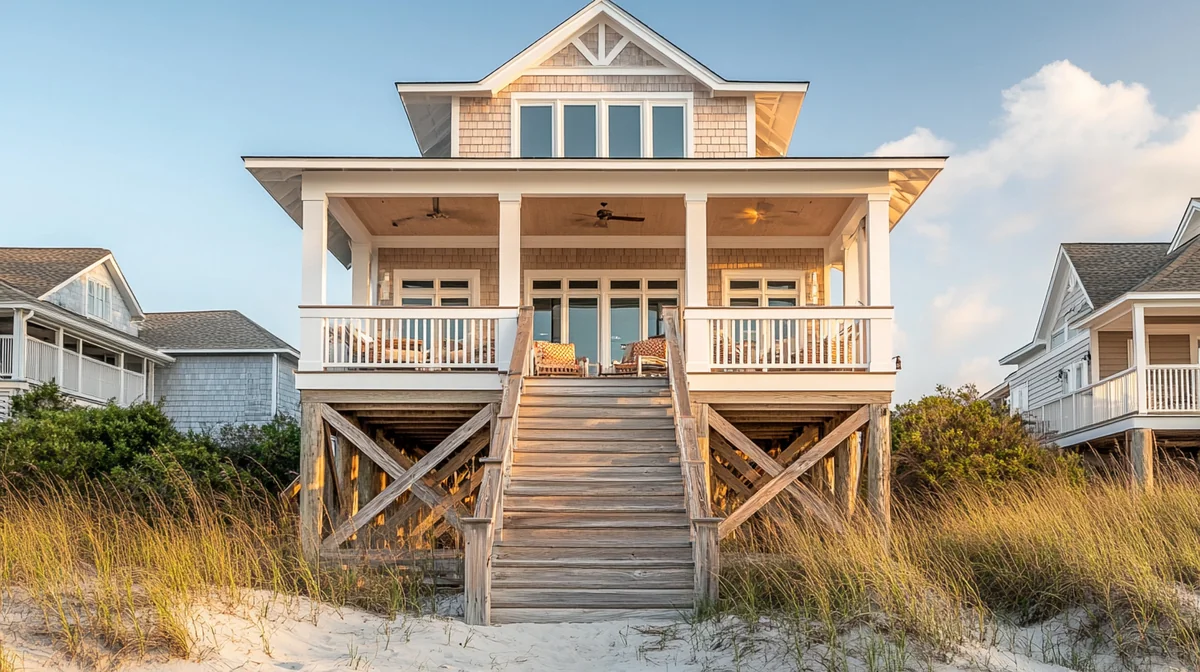


Marcus owns three cabins in the woods outside Broken Bow, Oklahoma. Good cabins — cedar, hot tubs, one with a loft the kids fight over. He built his own website on a Saturday in February, because the platform advertised that you could, and because $16 a month sounded a lot better than whatever an agency was going to say.
Eleven months later he asked me to look at it. The site was live. It was not, in any meaningful sense, working. Twenty-two visitors in the previous 30 days, nineteen of whom were Marcus checking it on his phone. The contact form emailed an address he'd stopped using in 2023. The booking button opened a page that said "Coming soon." The whole thing loaded in six and a half seconds on a phone, which is roughly four seconds past the point where most people give up. And Google had indexed exactly one page of it: the homepage.
Here's the part that matters, and the part Marcus hadn't done the math on. He estimated he'd spent somewhere between 60 and 80 hours on that site across the year — the initial build, the redesign in April when he decided he hated the colors, the two weekends fighting the booking widget, the evenings tinkering. Call it 70 hours. His cabins gross enough that his own time, valued conservatively against what he could earn doing literally anything else with those hours, is not free. And at the end of 70 hours, he had a site that had produced zero direct bookings and was still paying full commission to the platforms on every single night he sold.
The $16 a month was never the price. The price was 70 hours plus a year of not having the thing he was trying to build. That's the comparison nobody runs, and it's the one this article is about.
The DIY quote nobody gives you
When you ask an agency what a website costs, you get a number. When you decide to build it yourself, nobody hands you a quote — so the cost stays invisible, which is exactly why DIY feels cheaper than it is.
Let's make it visible. Here is the honest task list for a vacation rental website that can actually take a booking, not a brochure page with your photos on it. I've watched enough owners go through this to write the hours down without flinching.
Choosing a platform and a template: 4 to 8 hours, more if you're the kind of person who reads comparison articles. Wrestling the template into something that looks like your property instead of the demo bakery it was designed for: 10 to 20 hours. Writing the copy — real copy, for every page, that says something a guest cares about: 12 to 25 hours, and this is where most owners stall out for weeks. Sorting, editing, cropping, and compressing photos: 6 to 12 hours. Setting up and testing a booking engine, including the part where you connect it to your property management system and discover the plan you're on doesn't support that: 8 to 20 hours. Domain, DNS, email, SSL: 2 to 6 hours if nothing goes wrong, and something always goes wrong. Basic on-page SEO — titles, descriptions, headings, a sitemap, verifying the site in Search Console: 8 to 15 hours to do badly, and you will do it badly, because it's a specialist skill. Legal pages: a privacy policy, terms, a cookie consent banner if you run analytics, which you should: 3 to 8 hours. Testing on real phones: 4 hours. Fixing what testing found: unbounded.
Add it up at the low end and you're at roughly 57 hours. At the high end, 118. Marcus's 70 was dead average, and his site was missing half the list.
Example math only, from one composite owner's year: 70 hours invested in a self-built site that produced zero direct bookings. At a $75/hour opportunity cost that is $5,250 of owner time — before a single guest arrived. Run this number on your own hours before you decide DIY is the cheap option.
And the hours are the smaller half of the cost. The bigger half is the twelve months during which every booking you took still paid platform commission, because the thing that was supposed to stop that wasn't finished. If your property does $80,000 a year on the platforms and a functioning direct channel would have moved even 15 percent of that to your own booking engine, the delay cost you more than any agency was going to charge. That's not a scare tactic. That's arithmetic, and you can run it on your own numbers in about four minutes with our direct-booking calculator.
What "a website" actually means now
Part of why DIY estimates come in so low is that most people are picturing the wrong object. They're picturing a set of pages with photos. What a vacation rental website actually is, in 2026, is a small piece of infrastructure with about nine moving parts, and the parts have to agree with each other.
There's the front end — the design, the photos, the copy, the thing a guest sees. There's the booking layer — an engine that holds real-time availability, takes a payment, sends a confirmation, and does not sell the same week twice. There's the sync between that engine and whatever else holds your calendar, which for most owners means a property management system and two or three platform listings. There's the technical SEO layer — a crawlable structure, clean URLs, correct canonical tags, structured data that tells Google this is a lodging business in a specific place, a sitemap that's actually submitted. There's performance — image formats, caching, script discipline, the difference between a site that paints in 1.2 seconds on a phone and one that takes six. There's analytics and the consent banner that legally has to gate it. There's accessibility, which is both the right thing to do and, increasingly, a legal exposure. There's security — SSL, form spam protection, whatever guards the place where guests type card details. And there's email deliverability, so your confirmations don't land in spam.
A template platform hands you the first item on that list and a partial version of the sixth. Everything else is either your problem, an add-on subscription, or quietly missing. Nobody tells you it's missing. The site looks finished. That's the trap: a DIY site fails silently. It doesn't error out — it just sits there not ranking, not converting, and not telling you why.

Where DIY builds break, specifically
I want to be concrete here, because "hire a professional" is a useless argument without evidence. These are the seven failure modes I see over and over when I audit owner-built sites, in rough order of how much money they cost.
It never gets found
This is the big one. An owner-built site typically ranks for its own property name and nothing else. That's fine if guests already know your property's name, and useless if they don't — which describes every guest you don't already have. Ranking for the terms people actually search, like the market plus the property type plus the amenity, requires a page structure built for it, internal linking that makes sense, content that answers real queries, and technical hygiene most template platforms make hard or impossible. I've written the full diagnosis of why a vacation rental website doesn't show up on Google separately, because it's the single most common thing owners ask me about.
The booking path leaks
Every extra click, every form field, every moment of uncertainty about whether the dates are actually available loses a percentage of the people who were ready to book. Owner-built booking flows tend to have four or five of these leaks stacked on top of each other. The guest doesn't complain. They just go back to Airbnb, where the flow is frictionless, and you pay the commission on a guest who was already on your site.
It's slow, and it's worst on phones
Most vacation rental traffic is mobile, often on a phone with two bars in a parking lot. Owner-built sites are routinely three to six times slower than they need to be, almost always because of uncompressed photos and a stack of plugins. Speed isn't a vanity metric — Google uses it as a ranking input, and guests use it as a patience test. There's more on this in the piece on what a slow site costs in bookings.
The compliance layer is missing
No privacy policy, or one copied from another site with the other company's name still in it. Analytics running with no consent banner. Forms that collect personal data with no disclosure. Accessibility that would fail the first check a plaintiff's firm runs. Any one of these is a real exposure, and none of them are visible on the page. Ask your attorney what your specific obligations are — but do ask, because "I didn't know" has never been a defense.
It looks like a template, because it is one
Guests are better at reading design signals than owners give them credit for. A site that looks like fifty thousand other sites tells a guest that the property is probably fine and probably ordinary. If you're competing on nightly rate, ordinary is survivable. If you're trying to hold a premium — and premium is the entire reason to build a direct channel — ordinary is expensive.
It rots
A website is not a painting. Platform updates break widgets. Plugins go unmaintained. Payment processors change requirements. Browsers deprecate things. A site nobody maintains degrades measurably within a year and embarrassingly within three. DIY owners almost never budget for this, because the initial build felt like the whole job.
It doesn't get finished
The most common failure of all, and the one Marcus hit. The build starts strong in the off-season and stalls the moment bookings pick up, because you own a hospitality business and guests outrank the website every single day. Half-finished sites don't earn half the return. They earn nothing, and they keep charging you the subscription.
The three things you're actually buying from an agency
Agencies market themselves on design, which undersells the product. Design is the visible part. Here's what you're really paying for.
First, judgment. A designer who has launched a hundred property sites knows where the booking button goes, what the first photo should be, which page structure ranks in a market like yours, and what to cut. You are not buying labor you could theoretically supply yourself. You're buying the pattern recognition that comes from having watched a hundred of these succeed and fail, which you cannot supply yourself at any number of hours.
Second, integration. The nine-part list above, all connected and all tested — booking engine talking to the property management system, calendars synced so you never double-book, analytics wired and consent-gated, structured data emitted correctly, email flowing. This is the part that eats DIY builds alive, and it's ordinary work for a team that does it weekly.
Third, completion. An agency's project ends. It has a launch date, and someone whose job it is to hit it. Your site goes live in weeks, not eventually. Every month you shave off the timeline is a month of commission you stop paying, and for most properties that alone changes the comparison.
Before you compare quotes, write down the date you want the site earning. Not launched — earning. Then ask each option, including the DIY option, how it gets you to that date. The DIY answer is almost always "sometime," and "sometime" has a price you can calculate from your own commission line.
When DIY is genuinely the right call
I'd rather be trusted than persuasive, so here are the cases where I tell owners to build it themselves. They're real, and they're narrower than people hope.
You have one property, it's already booked solid through the platforms, and you want a simple placeholder page so guests can find you by name. Build it yourself. A single clean page with good photos, your contact details, and a link out to your platform listings is a perfectly honest thing to make on a weekend, and no agency should charge you for it.
You are testing a property concept and genuinely don't know if you'll keep it. Don't commission a brand and a build for something you might sell in eight months. Put up something cheap and revisit when the property has proven itself.
You do this professionally. If you build websites for a living, or you're a designer or developer with real front-end and SEO experience, then your hours are the same hours an agency would bill, and you should absolutely keep them. The advice in this article is not for you.
And one honest middle path: build a simple site yourself now, and bring in help specifically for the booking integration and the SEO structure. Some agencies, ours included, will take a scoped engagement rather than a full rebuild. That's often the highest-return hundred dollars an owner spends, because those two pieces are where the value and the difficulty both concentrate.
Outside those cases — one property that isn't full, multiple properties, a premium rate you're trying to defend, a market with real competition, or any ambition to take meaningful volume direct — the arithmetic points the other way, and it isn't close.
The comparison, run properly
Most DIY-vs-agency comparisons put a subscription price next to a project price and declare a winner. That compares one line item to an entire business outcome. Here is the comparison with the columns that actually matter.
| What you're comparing | DIY on a template platform | Professional agency build |
|---|---|---|
| Visible cash cost | Subscription, plus booking-engine add-ons, plus domain, plus the premium plan you needed for the feature you assumed was included | One-time build fee, quoted before work starts |
| Your hours | Typically 60 to 120, spread across months, taken from the hours you'd otherwise spend on guests and revenue | Roughly 6 to 12: a kickoff call, a content handoff, two rounds of feedback, an approval |
| Time to earning | Months to never; stalls when the season starts | Weeks, with a date on it |
| Booking engine and PMS sync | Whatever your platform supports, configured by you, tested by your guests | Selected for your stack, integrated and tested before launch |
| Technical SEO | Whatever the template emits; usually a homepage that ranks for your property name | Structure, schema, internal linking, and market-targeted pages built to rank |
| Speed and mobile | Slow by default; nobody optimizes their own images | Built to performance budgets and tested on real devices |
| Compliance | Your responsibility, usually skipped | Privacy policy, consent banner, and accessibility handled as part of the build |
| Design credibility | Recognizably a template | Matched to your property's actual brand |
| When something breaks | Your evening | A support channel |
| Ongoing cost | Subscription forever, rising, on someone else's platform | Hosting and optional care; the build itself is bought, not rented |
Two of those rows do most of the work. "Time to earning" is where the money is, because the entire point of a direct channel is to stop paying commission, and a site that isn't live isn't stopping anything. And "ongoing cost" is where the subscription model quietly wins the first year and loses the next five — a point worth sitting with if you've been told a monthly fee is the affordable option. We break the numbers down in what a direct booking website actually costs.
What a real engagement looks like
Owners who've never hired an agency imagine something more mysterious and more demanding than it is. Here's the honest shape of it, so you can judge the trade in hours rather than in vibes.
You have a kickoff conversation — 45 minutes to an hour — about the property, the market, the guest you want, and the rate you're trying to hold. You hand over what you already have: photos, your platform listing copy, your logo if you have one, access to your property management system. You answer a short questionnaire. Then you wait, and someone else does the 70 hours.
You see a design direction and react to it. You review a staging site and leave comments. You approve. It launches. Total demand on you across the whole project is usually under twelve hours, and most of it is in the first week, which is precisely the part nobody can do for you because it's your property and your judgment.
Compare that honestly against your Saturday. Not the price against the subscription — the twelve hours against the seventy, and the launch date against "when I get to it."
How we build them at Cavmir
This is the work Cavmir does, so here's exactly what our version is, plainly, and you can measure any other quote against it.
Our direct booking website service is a one-time build. You own the site. There is no monthly platform fee for the website itself, which is the structural difference between hiring a builder and renting a storefront — a distinction worth understanding before you sign up for anything with a recurring price tag attached to your own brand.
Every build includes brand-matched design rather than a template with your logo dropped in, booking engine integration synced to your property management system so availability is real and double-bookings aren't possible, an SEO structure built from the ground up for organic search rather than bolted on afterward, and speed and mobile optimization treated as a requirement rather than a nice-to-have. The compliance layer — privacy policy, cookie consent, accessible markup — comes standard, because shipping a site without it isn't a discount, it's a liability.
Our packages scale with the property. A single cabin doesn't need what a twelve-unit portfolio needs, and we don't pretend otherwise. The scopes and current pricing are published on our pricing page rather than hidden behind a discovery call, and every engagement gets quoted to your actual portfolio, market, and revenue goals — with a written proposal back within 48 hours of asking.
The website is also the piece the rest of the work hangs off. SEO, paid traffic, social, and email all need somewhere to send people that converts. If you're building the whole channel rather than one asset, that's the 12-Step System, and the site is step one for a reason.
When you request a quote, send your last twelve months of platform revenue along with it. Any agency worth hiring will use it to tell you whether a build pencils out for your property — and a good one will occasionally tell you it doesn't yet. That answer is worth more than the quote.
Common questions
How much does it cost to hire someone to build a vacation rental website?
The honest range in this industry runs from under a thousand dollars for a freelancer configuring a theme to well past twenty thousand for a portfolio build with brand identity and photography. The number matters far less than what sits inside it — the most common expensive mistake is buying a cheap build that excludes the booking integration, which is usually the entire reason you wanted a site. Compare scopes rather than prices, and make sure every quote answers the same questions. Our current scopes and numbers are published on the pricing page rather than held back for a call.
Can I build a vacation rental website myself with no experience?
Yes, and millions of people have. The realistic question is whether the version you will actually finish, in the hours you actually have, will do the job. Expect somewhere between 60 and 120 hours for a site that can genuinely take a booking, spread across months, competing with your actual business. Most owner builds stall not at the design stage but at copywriting and booking integration — the two least visible and most load-bearing pieces.
How long does an agency take to build a vacation rental website?
For a single property with a clear scope, typically four to eight weeks from kickoff to live. Multi-property builds with brand work and a property management system integration usually run six to twelve. What makes projects slip is almost always the same thing: waiting on the owner for photos, content decisions, or system access. Ask any vendor what they need from you and when — a good one will have that list ready.
Is a monthly website subscription cheaper than paying for a build?
In year one, usually. Across five years, usually not — and at the end of the subscription you own nothing, while at the end of a build you own an asset. Add up every line before comparing: the base plan, the commerce upgrade, the booking widget, the form tool, the review widget. Owners who tell me they are on the twenty-three dollar plan frequently total ninety to a hundred and fifty a month once everything is counted.
What do I actually have to provide to an agency?
Less than owners expect. Typically: photos, your existing platform listing copy, your logo if you have one, access to your property management system, and roughly an hour of conversation about the property, the market, and the guest you want. Then a review round and an approval. Total demand across a whole project is usually under twelve hours, most of it in the first week — the part nobody can do for you because it requires your judgment about your own property.
Will a professional website actually get me more direct bookings?
It removes the reasons people do not book direct — no visible price, no live availability, a slow site, no reason to choose you over the platform. That is a necessary condition, not a sufficient one. A site with no traffic converts nothing no matter how well built, which is why architecture and search work matter alongside design. Anyone promising a specific revenue lift from a website alone is guessing.
Can I hire an agency for part of it and do the rest myself?
Often, and it is frequently the highest-return option for owners on a tight budget. The two pieces worth buying help with are the booking integration and the SEO structure, because those are where the difficulty and the value both concentrate. The pieces most worth keeping in-house are the photography brief and the local content, since you know the property and the area better than any agency will.
The verdict
The DIY question is never really "can I build a website." You can. Millions of people have. The question is whether the version of it you'll actually finish, in the hours you actually have, will do the job you needed it to do — get found, look like your property is worth the rate, and take a booking without leaking guests back to the platforms.
For a handful of situations, yes. For a single property already running full, or a concept you're still testing, build it yourself and spend your money elsewhere. For nearly everyone else, the honest comparison isn't $16 a month against a project fee. It's seventy of your hours and a year of full commission against twelve of your hours and a launch date.
Marcus's cabins have a real site now. It went live five weeks after the kickoff call, ranks for his market and property type, and took its first direct booking eleven days after launch — a repeat guest who'd stayed twice through a platform and had never had anywhere else to book. That booking paid no commission to anyone. Neither did the next one.
If you want to know what that looks like for your property, the fastest path is a quote: tell us the property, the market, and where your bookings come from now, and we'll send back a scope and a number within 48 hours. Start at our direct booking website service, or just tell us about the property and we'll take it from there.
Photography via Wikimedia Commons (hero, inline, in-article); licences as noted on each file page.



.jpg)

