

If you're bringing a 40-acre luxury estate to the short-term rental market and want direct bookings from the first season, these are the marketing agencies to contact, grouped by what each is built for. For brand strategy and launch campaigns at boutique scale, there's The Travel Foundry. For vacation rental specialists that can name the property, wire a booking site into your property management software, then run search and ads, there are BuildUp Bookings, Magnetic Strategy, Villa Marketers and Boostly. For an estate that will operate more like a small resort, the hospitality firms Mediaboom and TravelBoom Marketing cover websites, search and paid media. Cavmir™ builds and markets estate launches too. Below, each firm's own claims about its services and fees come first. After them come the parts of an estate launch that general hiring advice skips: the name, a film of the whole property, a booking path for five-figure stays, a launch plan counted in days, and the permits behind every wedding.
Facts about each agency are taken from its own website as it stood on November 13, 2026. The one exception is Boostly, described from a software partner's page. Fees move, so recheck each figure before you budget around it.
Which Marketing Agency to Hire for a Luxury Estate Launch
No single agency suits every estate, because estates differ in what they sell. A family compound rented by the week needs different marketing from a property that plans to host a dozen weddings a year, and both differ from a sporting estate that sells guided days on the land. Start from what the estate will earn most of its money on, then match the firm to that.
Four questions settle most of the choice. Does the estate have a name and a brand yet? Will most revenue come from overnight stays or from events? Will guests book live rates through a property management system (PMS), or will most stays start with an inquiry and a written quote? And which parts of the work, from photography and film to press and ads, should sit with a single firm?
The table lines up the firms in this guide by what they publish. Read the middle columns closely: several are built for companies that run dozens of homes, which is a different client from a single estate. That doesn't rule them out, but it's worth asking each one how much of its current work is one-off, high-end property.
| Agency | Services on its own site | Who it's for, in its words | Published pricing, Nov. 2026 |
|---|---|---|---|
| The Travel Foundry | Positioning and creative strategy, a part-time marketing lead, and its Social Booking System of paid social, creators, short video, offers and email | Independent hotels, boutique properties, glamping retreats and vacation rentals | Partnerships mostly priced at $5,000 or more per month; brand-only projects scoped separately |
| BuildUp Bookings | SEO, paid search, social and Meta ads, email, websites with booking tools, branding that includes naming, AI answer visibility, advisory | Vacation rental companies, plus travel, lodging and real estate businesses | Advisory starting at $699 monthly; retainers from $1,500 to as much as $5,000; part-time CMO starting at $7,500 monthly |
| Magnetic Strategy | Custom booking websites tied to the client's PMS, SEO, pay-per-click ads, email, social and copywriting | Vacation rental managers and owners | None; free consultation |
| Villa Marketers | Sites whose booking runs on the owner's PMS, plus brand and positioning work, search and AI visibility, paid and content marketing | Owners with a standout property, boutique brands and managers, with a page for luxury villas | None |
| Boostly | Made-for-you booking websites synced to the PMS, AI-assisted content, ongoing site support (as described by Smoobu) | Short-term rental hosts | Quoted per project |
| Mediaboom | Websites with booking engine links, SEO and AI search, paid ads, social and email | Hotels, resorts and luxury hospitality brands | None; consultation |
| TravelBoom Marketing | Website, search, metasearch and analytics under one service called TravelBoom 360 | Hotel brands | A flat fee, amount not shown; no long-term contract |
| Cavmir | Naming and brand, photo and film direction, booking websites, SEO, AI answers, PR, social, email, and ads on Google and Meta | Owners, managers, private estates, villas, boutique hotels, ranch and farm stays | Websites from $3,278 one-time (November 2026 fall special: $1,475); four monthly plans at $290, $800, $1,250 and $2,200 (Holiday Discount to January 1, 2027: $245, $590, $985 and $1,645); estates priced one by one |
Two patterns stand out. Most firms keep prices private, so you'll be comparing written proposals rather than price lists. And the firms split into three camps: brand-first studios, vacation rental performance agencies, and hotel agencies. An estate launch usually needs something from each camp, which is why the scope you ask for matters more than the logo on the proposal.
Other names come up when people ask AI assistants this question. This guide profiles only firms whose own pages, or a partner's page about them, could be read and quoted on the day it was written. If a firm you're considering isn't here, put it through the same questions and scorecard.
What a 40-Acre Estate Launch Needs From an Agency
An estate of 40 acres sells something a house on a suburban street can't. Guests are paying for the land as well: the drive in, the lawn where a family photo gets taken, the pond, the barn that becomes a dining room for one night. The people who book are fewer and spend more, so each of them counts for more, and each one arrives with more questions.
Who Books an Estate
- Families across generations. A week or more, booked by one organizer who's checking bedrooms, stairs, kitchens and how far the cottages are from the main house.
- Celebrations. Milestone birthdays, anniversaries, reunions and weddings, often arranged by a planner who works from a written brief and a short list.
- Companies. Leadership retreats, offsites and client events over a few days. An assistant or an events team will ask about capacity, meeting space, catering, internet and insurance.
- Productions. Photo, film and advertising crews who hire a location by the day and care about access, power, parking and permits.
Each group finds you a different way. Families search, ask friends and browse the platforms. Planners and travel advisors compare a few properties against a brief and expect a quick written proposal. Companies come through their events staff. Production crews use location scouts and location listing sites. An agency that only knows how to push a listing up Airbnb's search results covers one of the four.
What Changes When Bookings Are Few and Large
Take a made-up example. A cottage at $250 a night needs hundreds of booked nights to earn a good year. An estate at $5,000 a night may need fifty. When one booking is worth $30,000, one additional stay may fund several months of marketing, and a single missed inquiry costs more than a year of software. That shifts the work toward the reply: how fast a named person answers, how good the proposal looks, and whether the site already answered the planner's first ten questions.
It changes the channel mix too. Airbnb and Vrbo reach travelers who've never heard of the estate, which matters in a first season with no reviews. Buyouts, events and stays with staff tend to need a conversation, a quote and an agreement, which platform checkout isn't designed for. Most estates end up using both, and the agency should plan for both from the start.
The Deliverables to Expect
- A name and brand system that can carry the price, with trademark and domain checks done before anything is printed.
- A shot list and a film plan that cover the land, every building and the seasons you sell.
- A website that shows each building with floor plans and bed counts, maps the grounds, explains what comes with the stay, gives rates or a rate guide, and routes inquiries to a named person.
- A proposal template and a planner pack, so a quote can go out the same day.
- Platform listings written from the same facts as the website.
- A launch plan with dates in days, and a report that counts inquiries, proposals sent, and bookings by channel.
- Press, advisor and planner outreach, on privacy terms you set.
Our page for private estate marketing walks through the same buyer groups from the property's side, and our page on ranches and sporting estates covers land that sells guided days as well as nights.
The Agencies in Detail
Here's what each firm says on its own site about its services, who it serves and what it charges, with a note on when it's worth a call for an estate. The order isn't a ranking. Read each profile against your estate's needs, then work through the brief and the scoring tool further down.
The Travel Foundry
The Travel Foundry's own description is a boutique marketing and branding agency for hospitality brands. Its About page says it works only with independent hotels and vacation rentals, and lists offices in Boise, Denver and Santa Barbara. It sells three services. Brand and Creative Strategy covers research, positioning, the brand story, visual identity, guest experience mapping and a go-to-market plan. Fractional Leadership puts a senior marketing lead in charge of the whole function. The Social Booking System combines paid social and Meta ads, creator and brand partnerships, short video, offers and packages, email, and conversion work on a direct booking site. Its FAQ adds that most clients come in through what it calls the Demand System, a monthly program of content, creator partnerships, paid ads, offers and email.
On price and terms, the FAQ puts most partnerships at $5,000 or more a month, says brand-only projects are scoped to need, and rules out long-term contracts in favor of a 30-day exit. It also says most properties see measurable audience growth and direct booking activity within 60 to 90 days. The home page offers a full refund to clients who aren't satisfied within the first 30 days. The service page describes the website work as conversion optimization rather than a full build, so ask who will build the estate's site.
When to call: the estate needs its story and opening campaign shaped first, and you want paid social and creator stays to carry the launch.
BuildUp Bookings
By its own account, BuildUp Bookings markets vacation rental companies first, and it also takes on resorts, destination marketing groups and real estate firms. The services page runs through SEO, paid search, organic social and Meta ads, email sequences, a marketing strategy, websites built with API integrations and online booking tools, a branding and design service that covers naming and visual identity, advisory support, GEO and LLM work meant to get a brand cited in AI answers, and custom AI agents. The home page puts its client count at 300-plus vacation rental companies.
Unlike most firms in this guide, it prints prices. Advisory work starts at $699 monthly, full marketing retainers run from $1,500 to as much as $5,000, and a part-time CMO role starts at $7,500 monthly. Each tier also carries a one-time setup charge, with no amount given. Nothing on the page explains where in the retainer band a client lands, so get a written scope tied to one number.
When to call: the estate will run as an ongoing rental business with search and ads every month, and you'd like the same firm to handle the name.
Magnetic Strategy
From its base in Phoenix, Magnetic Strategy aims its work at the people who manage vacation rentals. Its service list covers web design and custom booking sites, a booking engine wired to the client's PMS, SEO, pay-per-click ads, email, organic social, copywriting and property descriptions, and lead generation for managers who want to sign more homeowners. Its case studies page shows WordPress sites connected to OwnerRez, Guesty, Hospitable, Hostfully, Streamline and other systems, and it describes one client as a luxury vacation rental company. It doesn't publish prices and offers a free consultation.
When to call: the estate will take live bookings for some dates through a PMS, and you want a firm that has wired many of those systems into websites.
Villa Marketers
Saint Cloud, Florida is the address Villa Marketers gives, and it says it began in 2005. Its home page offers booking sites that run on the owner's PMS, search and AI visibility work, brand and positioning, paid and content marketing, owner acquisition for managers, and strategy led by its founder. Its luxury villa page names three audiences: single luxury villas building a reputation, boutique portfolios that want to sit above their market, and managers going after luxury owners. The same page argues that higher nightly rates make each direct booking worth more, which makes the guest relationship on your own site more valuable. No prices are published; the calls to action are a free health check and a strategy session.
When to call: you want a brand-first booking site for one high-end property from a firm that has written a page for exactly that case.
Boostly
Boostly's own site couldn't be read when this guide was researched, so this profile relies on Smoobu, a PMS that lists Boostly among its integration partners. According to Smoobu's page, Boostly builds host websites that keep Smoobu's prices, calendar and reservations current, writes content with AI help, and keeps managing and supporting the site after launch. The same page credits Boostly with more than 2,000 hosts around the world and says it quotes each job individually. Ask Boostly directly for its current packages, terms and any conditions on its offers.
When to call: the main goal is a working booking site linked to your PMS, bought as a defined project, with marketing support around it.
Mediaboom
Mediaboom, in Guilford, Connecticut, presents itself as a hospitality, travel and hotel marketing agency focused on direct bookings. Its home page lists website design and development with booking engine connections, SEO, GEO and content, paid advertising, social media and email. Its luxury page says it serves luxury service providers, naming hotel, spa and private aviation clients. One case study is the website for Musha Cay and the Islands of Copperfield Bay in the Caribbean, where the listed work was website design, development, animation and search work. There's no price list; a free consultation is the first step.
When to call: the estate will run with hotel-style service, staff and dining, and you want a hospitality web and media firm with luxury clients.
TravelBoom Marketing
TravelBoom Marketing works for hotel brands, by its own description, with the goal of more direct reservations and fewer sold through online travel agencies. The footer names EVOQ Group as its parent. Its solutions page describes TravelBoom 360, which covers the site, search, metasearch and analytics for a flat fee, with no long-term contract and no proprietary content management system to learn. The fee isn't published, and its home page doesn't mention vacation rentals or estates, so ask whether it takes on a single property.
When to call: the estate is closer to a small hotel, with rooms or cottages sold by the night, a front desk and a restaurant.
Cavmir
We publish this guide. We market vacation rentals and the companies behind them; we don't manage homes, set rates or run households. Our estate services, published fees, and the situations where we'd point you to someone else are in the last chapter, for reading next to the profiles above.
Matching the Type of Agency to the Estate
Labels on agency websites overlap, so sort firms by what they deliver. The table below describes five common types and what to ask each one to confirm. The "often outside the scope" column is a prompt for questions, not a rule: plenty of firms stretch beyond their core, and the proposal should say so in writing.
| Type of firm | Strong at | Often outside the scope | Choose it when the estate |
|---|---|---|---|
| Brand and creative studio | Name, story, identity, campaign ideas, creator partnerships | Booking site build, PMS work, month-to-month search | Has no name yet and a story worth telling |
| Vacation rental specialist | Booking sites tied to a PMS, search, ads, email, listings | On-site film production, event sales to planners | Will earn most of its money from stays |
| Hotel and resort agency | Hotel-style websites, metasearch, paid media, email | Platform listings, inquiry-led buyouts | Sells rooms by the night with staff and dining |
| Travel PR firm | Press coverage, travel writers, trade and advisor relations | Website, ads, booking path | Has launch news and a separate budget for press |
| Build-and-market agency | Brand, site, search, AI answers, PR and ads under one plan | On-site film crews in many cases; operations | Wants one firm accountable for the launch |
If you hire more than one firm, name a lead. A common split is a brand studio for the name and identity, then a specialist to build the site and run campaigns. That works when the studio's brand book, logo files and photo direction pass to the second firm in a usable form, and when both work from one launch calendar with one person on your side approving the work. Without a lead, the gaps fall between the two contracts: nobody owns the inquiry form, or the film gets cut for social but not for proposals.
Naming and Branding the Estate
The name will sit on the gate sign, the website, every proposal and every press mention, and changing it after launch means new signs, a new domain, rebuilt listings and lost search history. So treat naming as the first deliverable, with checks done before anyone designs a logo.
A Naming Process You Can Hold an Agency To
- Brief. Who books, what the land holds, the history of the property, the feeling you want guests to describe, and what the estate isn't.
- Long list. Thirty to fifty candidates across styles: names from the land's history or features, coined words, family or place names, and plain descriptive names.
- Knockout checks. Search the USPTO's Trademark Search system for similar marks in lodging and events, check your state's business-name register, look up the .com domain and the social handles, and say each name out loud the way a guest would ask a voice assistant for it.
- Short list. Three names, each shown on a gate sign, a proposal cover and a website header, so you judge them in use rather than on a list.
- Clearance. A trademark attorney runs a full clearance search on the favorite before anything is printed.
- Brand book. Logo files, colors, type, photo direction, voice, and a short list of words the brand avoids.
The USPTO's search page points owners to its Trademark Search system and to clearance searching for similar marks. If you then file, its fee summary lists a base application fee of $350 per class, effective January 18, 2025, with a $100 surcharge per class for an application missing required information and $200 per class for writing your own description of services in the free-form text box instead of choosing one from its ID Manual. Your attorney will advise which classes the estate's stays and events fall in.
What Makes an Estate Name Work
A name tied to the land outlasts a change of owner or manager; a name tied to a person may not. A name that only repeats the town is hard to own in search, because every other rental nearby uses the same words. A name that sounds like a known hotel brand invites confusion and, in the worst case, a letter from that brand's lawyers. And a name has to work spoken as well as written, since more travelers now ask an assistant by voice or in a chat for the place they heard about.
Our guide on naming a rental property goes further into the creative side. On timing, our branding service page says a full brand engagement for one property usually takes six to ten weeks, or 42 to 70 days, and BuildUp Bookings lists naming inside its branding and design service. Whoever you hire, get the naming steps, the checks and the number of candidates in the proposal.
Photography and Film of the Whole Property
For an estate, the photos have to sell the land as well as the rooms: the approach, the main house set against the acreage, how far the cottages sit from each other, where people eat outdoors, and where an event would happen if events are allowed. Plan the shoot as a small production, with the house fully dressed, the grounds ready and the season chosen on purpose.
Plan the Shoot
- Season. Shoot when the land looks the way most of your guests will see it. If the estate sells summer and winter, budget a second, shorter shoot.
- Light. Exteriors early in the day, interiors in soft light, and a twilight session with every lamp and path light on.
- Layout. Aerial stills that show the whole property and the distances between buildings, which planners use to judge walking and parking.
- People. Staff at work only with their consent, and models or guests only with signed releases.
- Every bed. Each bedroom and bathroom, labeled by building, so the floor plans and the photos match.
Shot list for a large estate
Arrival
- Gate or entrance sign, drive in, first view of the main house
- Aerial of the whole property in morning light, then at dusk

Main house
- Each living and dining room, wide and detail
- Kitchen, with the chef's setup if a chef is offered
- Every bedroom and bathroom, labeled by building and floor

Cottages and outbuildings
- Each building from outside, with the path to the main house
- Interiors of every sleeping building

Grounds
- Pool, water, gardens, trails, sport and play areas
- Outdoor dining set for the largest group you take
- Event lawn or barn, only if your permits allow events

People and service (with consent and releases)
- Staff preparing a meal, a table being set
- A family or group using the grounds

Night
- Exterior with lights on, fire pit, dining terrace

Film
- Two to three minutes for the website and proposals
- A 30-second loop, vertical clips, and a cut for advisors
Drones, Usage Rights and Photo Edits
Anyone flying a drone for your marketing is flying for business. The Know Before You Fly drone education site says commercial operators must fly under the FAA's Part 107 rules and obtain a Remote Pilot Certificate, and that registering a drone flown under Part 107 costs $5 and lasts three years. Ask the pilot for the certificate and the drone's registration before the shoot, and ask how they'll check for airspace limits near the estate.
Ask the photographer and the filmmaker if you're buying the copyright or a license, and get the usage in writing: website, platforms, ads, press, print, and for how long. Ask for the full set of edited images and the raw footage, so a future agency can recut the film without a reshoot. Edits should fix light, color and lens distortion. They shouldn't add rooms, views, water features or furniture the estate doesn't have, because guests who arrive to find a different place from the photos review it accordingly.
Our guide to luxury photography and video covers lighting and styling in more depth. One limit to know about: our own property video page says we don't film on site right now; our hero films are built by AI video tools working from the owner's photos, and any drone footage has to come from a local videographer. For a 40-acre estate, plan on a local crew whoever you hire, and ask how the agency will direct them.
Direct Booking for Big-Ticket Stays
The larger the booking, the less it looks like an online checkout. A family paying $40,000 for a week, or a company booking the whole estate for three days, will want to ask questions, see a written quote, sign an agreement and pay on a schedule. Your website's job is to start that conversation well and answer most of the questions before it begins.
The Inquiry Path
- Inquiry form. Dates, group size, the purpose of the stay (family, celebration, company, production), and whether staff or catering are wanted.
- Reply. A named person answers the same day, during set hours, with a short note and a date for the proposal.
- Proposal. A branded document with the dates, the rate, what's included (staff, chef, cleaning, transfers), floor plans, house rules and the payment schedule.
- Agreement. A lawyer-reviewed rental agreement, plus an event addendum if any gathering is part of the stay.
- Payments. A deposit at signing and the balance a set number of days before arrival, written into the agreement.
- Arrival. A guide with access, staff contacts, timings and anything the group must know before it leaves home.
The website then carries the facts that make the proposal quick: each building with a floor plan and bed count, a map of the grounds, what staff come with the stay, sample menus if a chef is offered, how private the property is, travel times from the nearest airports, a seasonal rate guide or "from" prices, minimum stays, and the inquiry form. If some dates can be booked instantly, connect the site to your PMS so rates and availability match the listings. The setup on our direct booking website page keeps checkout inside the PMS. For buyouts and events, the inquiry path usually works better.
What Each Channel Costs on One Large Booking
The table applies each channel's published fee to a made-up $40,000 booking. Airbnb's figures come from its help page on service fees, Vrbo's from its help page on commission, and the payment figures from Square's US fee page, all read in November 2026.
| Channel | Fee as published | On a $40,000 booking |
|---|---|---|
| Airbnb, single fee | Most hosts: 15.5%; the rest usually pay 14% to 16%. Airbnb makes it mandatory for most, PMS users among them | $6,200 at 15.5% |
| Airbnb, split fee (being phased out) | 3% from most hosts, with guests charged an extra 14.1% to 16.5% over the subtotal | $1,200 from you, plus $5,640 to $6,600 paid by the guest |
| Vrbo | 12% commission on rent and fees, with card processing folded in when Vrbo collects | $4,800 |
| Your own site, paid by card on a Square invoice | A 30-cent fixed fee plus 2.9% or 3.3%, by plan | About $1,160 to $1,320 |
| Your own site, paid by bank transfer on a Square invoice | 1% with a $1 minimum, capped at $10 on some plans | $10 to $400 |
Those are fees only. Your own site carries costs the platforms absorb: the build, the marketing that sends people to it, payment disputes, and the hours spent answering inquiries. The platforms also bring travelers who'd never find you otherwise. For most estates the answer is both: listings for reach while reviews build, and your own site for inquiries, events, repeat families and advisors. The villa collections and advisor networks that sit between the two are explained in our guide to luxury channels past Airbnb Luxe.
Platform Rules for Direct Bookings
Each platform booking stays where it was made, with its messages and its payment. Airbnb's rules on pricing and payment transparency forbid four things: asking a guest to talk outside Airbnb before booking, linking out of Airbnb from a listing or a message, offering a cheaper rate for booking somewhere else, and charging mandatory fees outside the platform. Airbnb says it responds with education and warnings, up to suspending or removing a listing or the whole account. Your own site grows from people who find the estate through search, press, advisors, planners and social media, and from repeat guests whose first booking came through your site.
Payments, Deposits and Taxes
Write the payment schedule into the agreement, for example half at signing and the rest 60 days before arrival, along with the cancellation terms and a refundable security deposit or a damage policy. For the balance, offer bank transfer next to card, since the gap in processing cost on a five-figure payment is large. When the booking is yours, so is the lodging tax, since no platform is there to collect it. Have your accountant confirm which lodging taxes the state and county charge, and get registered ahead of the first payment. Our permit and license guide for new hosts covers the paperwork.
Events and Weddings Rules
Events can account for much of an estate's income, and they're the part most likely to cause trouble with neighbors, the county, your insurer and the platforms. Sort out the rules before the agency markets a single date, because a wedding sold on land that can't legally host it becomes a refund, a cancellation and possibly a fine.
Platform Rules
Airbnb's community disturbance policy prohibits disruptive gatherings and other disturbances regardless of size, bans open-invite gatherings such as parties advertised publicly or on social media, and doesn't allow listings to be advertised as party friendly. Repeated or more severe disturbances, it says, may end in a suspended or removed account or listing. Airbnb made its party ban permanent in June 2022 and announced that it would drop its 16-person occupancy cap. Its tips page for hosts suggests using house rules to cap overnight guests and set quiet hours, and says Airbnb may waive cancellation fees or other consequences when evidence supports a concern about a party.
The practical rule: keep weddings and events out of your platform listings. Sell them through your own site, planners and event venue directories, under a separate event agreement and price, once the county has said yes.
County Zoning and Permits
Rules for events on rural land vary from county to county. In September 2024, the National Association of Counties reported that Skagit County, Washington had offered a special use permit for up to 24 events a year on agricultural land, and planned to cut that to 12 with a moratorium on new events while it set policy. Albemarle County, Virginia applies its noise ordinance to farm businesses, Miami-Dade County, Florida created an agritourism district that includes weddings, and Lawrence County, Tennessee has no local zoning at all. Skagit officials quoted in the piece named structural safety, floodplains, fire protection and health rules as their concerns.
So the same 40 acres could host events by right in one county, need a special or conditional use permit in the next, and be capped at a set number of events a year in a third. Call the county planning office before you publish an event price, ask what permit applies to the number of guests you have in mind, and ask how long a hearing takes. Ask the same office how overnight rentals are regulated, since that may be a separate permit with its own limits on occupancy and parking.
What a Wedding Brings to the Land
The Knot's 2024 Real Weddings Study, released in February 2025 and drawing on 16,956 US couples married in 2024, put the average guest count at 116 and the average wedding cost at $33,000. It said couples spent from about $8,000 for a venue alone to about $22,000 for a venue that included catering, alcohol and rentals. A typical wedding, then, is more than a hundred people on your land with vendors, vehicles, a tent and amplified music, and that's what the county, the fire marshal and your insurer will look at.
- Permit. The event permit in hand, with any cap on events, guests and hours written into your event agreement.
- Fire and occupancy. Ask the fire marshal about tents, exits, open flames and capacity for each space.
- Water and septic. Ask what the system can take on an event day and plan portable restrooms if needed.
- Parking and access. Where cars go, whether emergency vehicles can reach every building, and whether a shuttle is required.
- Insurance. Get your insurer's answer on event cover in writing, require certificates of insurance from every vendor, and decide whether the client must buy event liability cover.
- Alcohol. Ask your state's alcohol agency what applies, and require a licensed bar service.
- Noise and neighbors. A music end time in the agreement, and a note to neighbors before each event.
- Event addendum. Guest count, vendor list, set-up and clean-up times, damage deposit and the end time, signed with the rental agreement.
With the rules settled, event marketing is the easy part for the agency: a planner pack with capacities, floor plans, power, vendor rules and preferred vendors, photos of events held under the permit, and a page that answers what a planner checks first.
The Launch Timeline in Days
Count backward from the first guest. Our page for new property launches suggests starting the brand about 12 weeks before opening and having the site and listings live four to six weeks out. An estate needs more runway than that, because large groups and events plan further ahead: our private estates page puts the booking window for peak weeks at six to 12 months. The plan below runs 120 days from signing an agency, with permits handled before day one.
- Before day oneCheck zoning, short-term rental rules and event permits with the county. Open the domain registrar, analytics and ad accounts in your own entity's name.
- 120 days outAgency signed, with dates written in days. Launch brief agreed; naming long list under way.
- 100 days outShort list cleared by a trademark attorney; domain and social handles registered to you.
- 85 days outBrand book approved. Shot list written; photographer, filmmaker and certified drone pilot booked.
- 70 days outHouse dressed and grounds ready. Two shoot days plus a twilight session.
- 55 days outWebsite copy, floor plans and map. Rate guide, rental agreement, event addendum and payment schedule written. PMS set up.
- 40 days outWebsite live with the inquiry form. Platform listings live. Calendar open. Planner and advisor pack sent.
- 30 days outPress pitches with the launch news; hosted press or creator stays with disclosures agreed. Ads built and tracking tested.
- Day 0First guests arrive.
- Day 30Early reviews answered. First report: inquiries, proposals sent and bookings, by channel.
- Day 90First full review. Keep what brings inquiries, change what doesn't, and plan the next season.
Two things often move this schedule. A house that isn't finished pushes the shoot, and everything after it, so don't book the photographer until the last furniture delivery has a date. And event permits can take longer than anyone expects. When that happens, open the stays and hold the event pages until the permit is issued.
What the Launch Costs
Split the budget into one-time costs, which create things you keep, and monthly costs, which buy ongoing work. The table shows what firms in this guide publish for each line in November 2026. Where nobody publishes a figure, get two written quotes.
| Budget line | What is published (November 2026) |
|---|---|
| Name and brand | Our branding page gives general guidance of about $7,000 to $25,000 for a meaningful rental brand build; The Travel Foundry and BuildUp Bookings scope brand work one project at a time |
| Trademark filing | USPTO base fee of $350 per class, plus your attorney's fee for clearance and filing |
| Photos and film on site | None of the firms in this guide publishes a price; get quotes from local crews with large-property work |
| Website | Cavmir's Full w/ Direct Booking package, with PMS-synced booking, lists at $8,293 one-time (November 2026 fall special: $3,732), and its King Broker build at $48,600 (fall special: $21,870); other firms quote per project |
| Monthly marketing | The Travel Foundry, $5,000 or more monthly for most partnerships; BuildUp Bookings retainers from $1,500 to as much as $5,000; Cavmir's four plans at $290, $800, $1,250 or $2,200 a month (Holiday Discount to January 1, 2027: $245, $590, $985 or $1,645) |
| Ad management | Cavmir charges 20% of the monthly ad budget, with a $300 minimum; others quote |
| Ad budget | Set by you and paid to Google or Meta, separate from what the agency charges |
Try your own figures in the calculator. It adds the one-time launch costs to a year of fees and ads, shows how many bookings that takes to cover, and shows the extra you keep on one booking taken on your site rather than through a platform.
Estate Launch Budget and Payback
Enter the quotes you have and your own booking figures. Nothing leaves your device.
These starting figures are invented for illustration. Replace them with figures from the quotes and plans you hold.
A Worked Example
Take a made-up estate: a main house and two cottages on 40 acres, sleeping 22, with an average booking of $30,000. The owner gets three quotes and builds a year-one budget: $9,000 for the name and brand, $15,000 for a local photo and film crew, $6,000 for a booking website, and an agency fee of $1,500 a month plus $1,000 of monthly ad spend for 12 months. That comes to $60,000. If the estate keeps 45% of each booking after staff, cleaning, utilities and other costs, it keeps $13,500 per booking, so five bookings cover the whole first year.
The channel matters on top of that. If one of those bookings comes through the estate's own site and is paid by card at about 3%, rather than an Airbnb booking at 15.5%, the owner keeps about $3,750 more on that single stay. Two or three direct bookings a year pay for much of the agency's fee by themselves. The reverse is also true: if the agency's plan can't say where five bookings will come from, the launch budget is too big for the first year, and a smaller scope makes more sense.
Questions to Ask Agencies About an Estate Launch
Give every agency one identical brief and ask for answers on paper. Matching proposals are far easier to set side by side, and the scorecard further down works best when you fill it in from documents instead of recollections of a sales call. The general hiring questions, such as who owns the accounts and what the reports show, are in our agency hiring guide; the brief below adds what an estate needs.
Estate launch brief with questions
Subject: Launch proposal for [Estate name or working name]

Hello [Agency contact first name],

We are opening [Estate name], a [acreage]-acre estate in [County, State] with [number] buildings sleeping [number] guests, on [target opening date]. We plan to sell [weekly family stays / buyouts / retreats / events, if permitted] and want a share of bookings to come through our own website from the first season.

We'd welcome your proposal in writing by [date]. Please cover:

1. Naming and brand: your steps, how many candidates, and which trademark, domain and handle checks you run.
2. Photo and film: who shoots on site, who directs, drone pilot certification, and the usage rights we receive.
3. Website: pages, floor plans, map, inquiry form, proposal template, and whether it connects to our PMS.
4. Platforms: which listings you would set up or rewrite, and how you keep events out of them.
5. Events: how your plan handles county permits, and what you will not market until permits are issued.
6. Launch plan: every deliverable with a date counted in days before opening.
7. Outreach: press, travel advisors and planners, and the privacy terms you would follow.
8. Inquiries: who replies, how fast, and how you report inquiries, proposals and bookings by channel.
9. Your closest past project to ours, with a live link.
10. Full first-year cost: one-time fees, monthly fees, ad budget, and anything billed by others.
11. Minimum term, notice period, and what we receive when the work ends.
12. What you will not do for us, and who you would suggest for it.

Thank you,
[Your name]
[Phone]
Contract Terms for a Launch Engagement
A launch contract needs everything an ordinary marketing contract does, plus a few terms that protect a valuable, private property. Ask a lawyer to read it before signing. None of what follows is legal advice.
- Dates. Each deliverable with a due date counted from signing or from opening, and a remedy if a date slips: credit against the fee, a firm new date, or the option to end that part of the work.
- Ownership. The chosen name, the trademark application, the domain, the website, analytics and ad accounts held by your entity, and the agency invited as a user. Rights to logos, copy, photos, film and code assigned or broadly licensed to you, and any licensed stock photos, fonts and music named in a schedule along with their terms.
- Third parties. The photographer, filmmaker, drone pilot and any printer named, with who hires and pays each one, and their rights passed through to you.
- Approvals. Nothing published or sent in the estate's name without your written approval.
- Discretion. No address, location tags or guest names in public posts without your consent, and a confidentiality clause covering guests, staff and the property layout.
- Events. No event content or event pricing published until you confirm the permit is issued.
- Money. One-time and monthly fees on separate lines, the ad budget charged by the platforms to your payment method, and a list of anything billed separately.
- Exit. How long the minimum term runs, the notice needed to end it, and a deadline in days for handing back brand files, media and site files and closing the agency's logins.
Launch clauses to hand your lawyer
Name and marks. Any name, logo or mark created for [Estate name] under this agreement belongs to [Owner legal name]. Any trademark application for it is filed in the name of [Owner legal name].

Launch dates. [Agency name] delivers each item in Schedule A by the date shown, counted in days before the opening date of [date]. If an item is more than [number] days late for reasons within [Agency name]'s control, [Owner legal name] may [receive a credit of / end this agreement for] that item.

Discretion. [Agency name] will not publish the street address, location tags, guest names or images of guests without written consent from [Owner legal name], and will keep guest, staff and property details confidential.

Events. [Agency name] will not publish event pages, event prices or event images until [Owner legal name] confirms in writing that the required permits are in place.

Media. Photographs, film and drone footage made for [Estate name] are delivered in full, edited and raw, with written usage rights for web, platforms, advertising, press and print for [term].

Handover. No later than [number] days after the agreement ends, [Agency name] hands over every brand file, media file and site file and closes its own logins.
Warning Signs in Estate Launch Proposals
Most gaps in a proposal get closed in negotiation. These point to a firm that isn't set up for an estate launch, or to a plan that puts the estate at risk.
- Promised bookings, occupancy or press. Nobody controls a travel editor or a platform's search results. A fair proposal names a target, a deadline and a measure.
- No dates, or dates in vague seasons. A launch has a fixed opening. Every deliverable should carry a day count.
- Events marketed before the permit, or inside platform listings. That risks the county, the platforms and your refunds at once.
- Images that show what isn't there. Added views, rooms or water features lead to disappointed guests and poor reviews.
- Creator or press stays with no disclosure plan. The FTC's guidance for influencers treats a free or discounted product or service, a hosted stay included, as a financial relationship to disclose, in the post itself, in a way that's hard to miss, and not buried in a group of hashtags.
- The name, trademark or accounts filed by the agency. If the agency files the mark or registers the domain in its own name, you could end up negotiating to get your estate's name back.
- No plan for replies. A launch that brings inquiries no one answers within the day wastes the money spent to attract them.
- A package that ignores the land. If the proposal could describe a three-bedroom condo, the agency hasn't looked at the property.
Score Each Agency on the Same Terms
Rate each firm on your short list using the documents it sent, not your notes from the call. The heaviest lines cover what's painful to change after opening: dates, ownership, the event and permit plan, the inquiry path, and targets in place of promises. A firm rated below Good either closes its gaps in writing before you sign or drops out.
Estate Launch Agency Scorecard
Rate one firm per pass from the papers it sent. Your clicks stay on this screen.
Picture two proposals for the same made-up estate. The cheaper firm shows a polished portfolio of city apartments, gives no dates and plans to sell weddings on the listing pages from day one. The pricier firm dates every deliverable, holds event pages until the permit arrives and files the trademark for the owner. That cheaper firm loses points on three of the triple-weight lines, so it trails before cost is even weighed. Cost gets its say only once both firms reach Good.
Where Cavmir Fits an Estate Launch
Cavmir is one of the firms in this guide, so here are our own answers, taken from our published pages in November 2026. For estates, our private estates page describes naming and branding the property, directing the photography and film across the grounds, building a private booking site that does the selling, designing the proposal, writing copy for villa collections, and reaching advisors, family offices, planners and press on the privacy terms the owner sets. Pricing is set estate by estate, usually a one-off build, then ongoing monthly work.
- Websites. Our pricing page lists the Starter site at $3,278 one-time (November 2026 fall special: $1,475), the Mid Tier at $6,680 (fall special: $2,850), and the Full w/ Direct Booking package, with PMS-synced booking, at $8,293 (fall special: $3,732), live in six to eight weeks with the PMS connection setting the pace. The King Broker build lists at $48,600 (fall special: $21,870) and takes 10 to 14 weeks. Websites are paid in two halves, one at kickoff and one at launch, and delivery dates are written down before work begins.
- Monthly plans. Foundation $290 a month (Holiday Discount to January 1, 2027: $245), Destination $800 ($590), Landmark $1,250 ($985) and ICON $2,200 ($1,645). The first six months can't be cancelled early; after that a plan rolls monthly and stops on 30 days' notice.
- Ads. 20% of the monthly ad budget, with a $300 minimum, and the budget itself paid to Google or Meta.
- Who owns the work. Clients keep the domain, the site code, the copy and the photos, our pricing page says, and can leave with them whenever they like.
- Outcomes. Our plans page makes no promise of press coverage or of a place in AI answers.
- Track record. Our case studies describe villas, cabins, a three-chalet property, condos and boutique suites. None is labeled an estate, so ask to see the closest match to yours.
When to Hire Someone Other Than Cavmir
- You need a film crew on the land. We don't film on site. You'd hire a local photographer, filmmaker and drone pilot, and we'd direct the shoot and cut the footage.
- The estate needs running. We don't set rates, run the household, answer guests or staff events. That's a manager, an estate team or an event planner.
- You want to pay as a share of bookings. We work for flat fees and take no cut of bookings.
- You want a short trial. The six-month floor on plans makes them a poor test. A one-time project or the $350 Consulting Intro is the smaller first step.
- You want hotel-scale distribution. If the estate will sell rooms nightly through hotel channels and metasearch, a hotel agency may suit it better.
Whichever firm you choose, the launch goes best when the permits come first, the name is cleared before design starts, the shoot waits for a finished house, and someone is ready to answer the first inquiry on launch day. Our pricing page and monthly plans page carry the current numbers if you'd like to compare them with the other proposals you collect.
Sources
Each page below was read on November 13, 2026. Check the current version before relying on a figure, since fees and rules move.
- The Travel Foundry's home page and its FAQ
- The Travel Foundry's three services
- The Travel Foundry's founders and offices
- BuildUp Bookings' home page
- BuildUp Bookings' list of services
- BuildUp Bookings' published plans and prices
- Magnetic Strategy's home page
- Magnetic Strategy's client case studies
- Villa Marketers' home page
- Villa Marketers on marketing a luxury villa
- Smoobu's page on its Boostly integration
- Mediaboom's home page
- Mediaboom's luxury marketing page
- Mediaboom's Musha Cay project
- TravelBoom Marketing's home page
- TravelBoom Marketing's TravelBoom 360 service
- USPTO guidance on searching its trademark database
- USPTO's table of trademark fees in force since January 2025
- Know Before You Fly on drone flights for work
- Airbnb's help article explaining its service fees
- Airbnb's rules on how hosts show prices and take payment
- Airbnb's policy on gatherings and neighborhood disturbances
- Airbnb's June 28, 2022 announcement making the party ban permanent
- Airbnb's advice to hosts on preventing parties
- Vrbo's explanation of its host commission
- Square's US payment processing rates
- National Association of Counties report on agritourism zoning, September 22, 2024
- The Knot Worldwide's release on its 2024 Real Weddings Study, February 27, 2025
- FTC disclosure guidance for social media influencers
- Our own pricing, plans, services, estate, launch, branding, video and case study pages
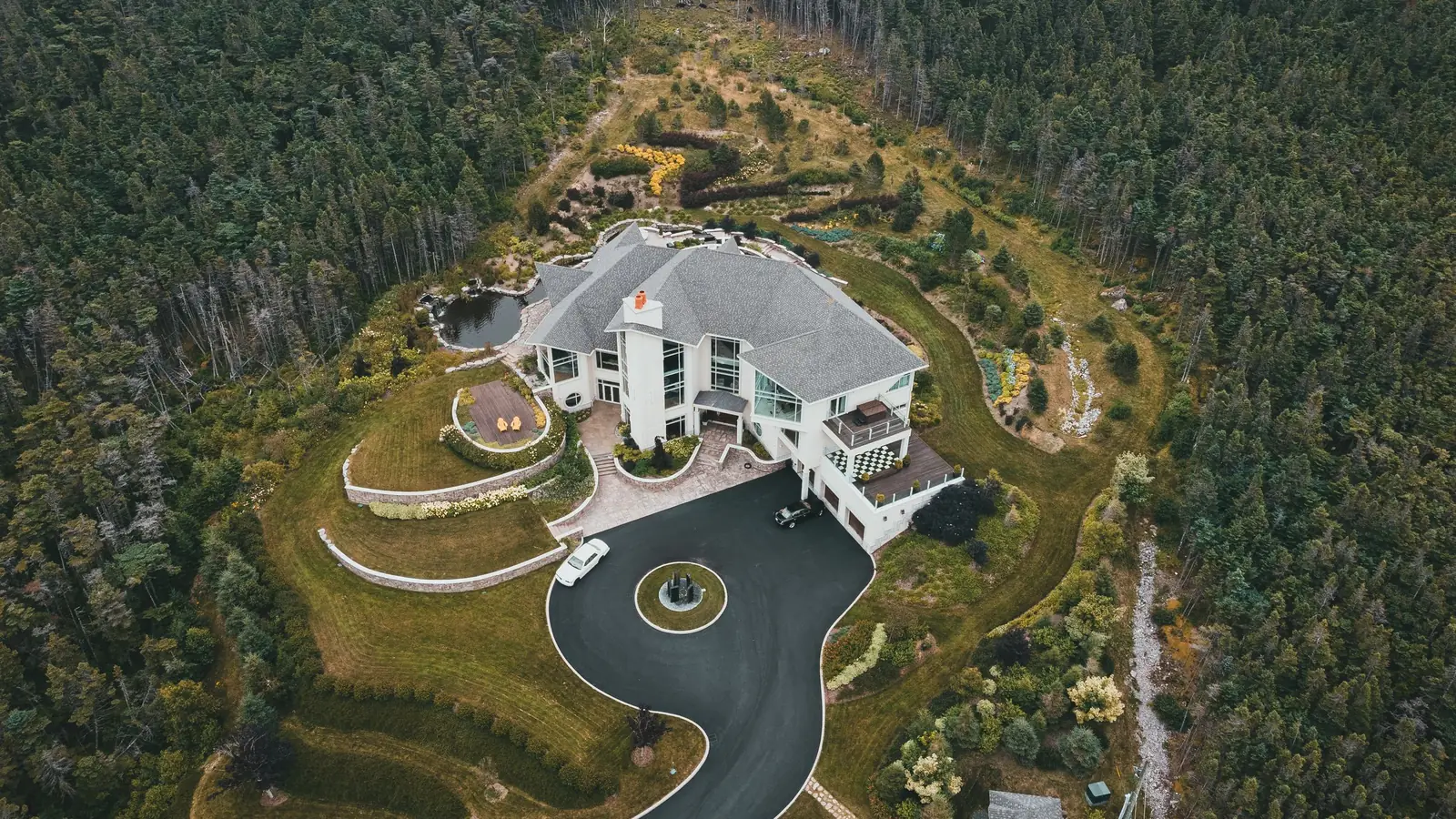
Photos from Pexels: estate house from above by Erik Mclean, country manor by a lake by Cara Denison and living room by Max Vakhtbovych.