


_-_dome.JPG)




185 days
The residency rule
You must occupy the property as your permanent residence at least 185 days a calendar year. This is settled and was reaffirmed in 2026.

Expert short-term rental marketing to grow your bookings and nightly rate in Charlottesville, Virginia, USA.
* Market averages. Properties marketed by Cavmir typically exceed these figures by 25–45%. Data sourced from AirDNA, STR market reports, and Cavmir internal analytics.
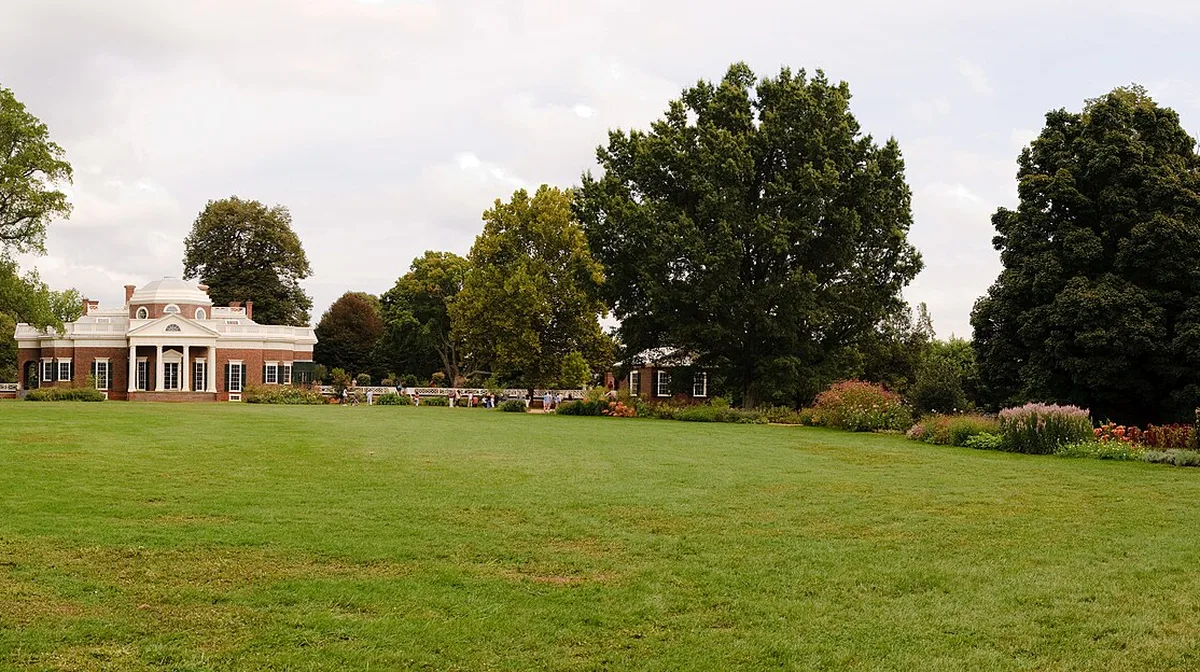
Charlottesville sits at the foot of the Blue Ridge in central Virginia, and two buildings here are jointly inscribed as a single UNESCO World Heritage Site: Monticello, which Thomas Jefferson designed and rebuilt over forty years, and the Academical Village at the University of Virginia, which he designed as well. It is the only university in the United States on the World Heritage list. Jefferson could watch the university going up from the terrace at Monticello with a telescope, which is either charming or characteristic depending on your view of him, and the modern city still arranges itself around both. The University brings roughly twenty-five thousand students, a major medical centre, and a football and basketball calendar that fills the city several times a year. The Downtown Mall, one of the longest pedestrian streets in the country, runs eight blocks through the middle of town. Around the city, the Monticello Wine Trail has grown into a genuine wine region, Carter Mountain Orchard fills every autumn weekend, and Shenandoah National Park and Skyline Drive are half an hour west. For an owner, this is a high-quality small city with real year-round demand and a rule that decides everything: you have to live here.
Charlottesville calls short-term rentals homestays, and the defining requirement is owner occupancy. The owner must occupy the property as their permanent residence for at least 185 days per calendar year, and an annual Accessory Use Permit for a homestay is required for stays of fewer than 30 days in residential and residential mixed-use districts, reported at $100 per year. The residential districts named include R-A, RN-A, R-B, R-C, RX-3 and RX-5. From 2026 there is an operational deadline worth putting in your calendar: homestay and short-term rental permits must be approved by 1 March. The city has just finished looking hard at all of this. Following a Planning Commission work session on 24 March 2026 and a City Council session on 18 May 2026, City staff recommended maintaining the current homestay ordinance without amendment for the time being. That matters for a reason beyond the obvious: the Virginia General Assembly passed legislation allowing renters to operate short-term rentals with their landlord's permission, but only where the local ordinance is amended to permit it, and because Charlottesville has not amended its ordinance, that route is not available here. A proposed amendment would have required applicants to sign an affidavit swearing under oath that they meet the residency requirement. Verify the current permit fee, the application deadline and the residency evidence required with the City before you apply.
Nearby Markets: Shenandoah Valley | Wintergreen
A few of the visual fingerprints we lean into when we shoot, brand and market a Charlottesville Virginia Downtown Mall property — courtesy of the open Wikimedia Commons archive.
Cavmir markets Charlottesville properties inside the owner-occupancy rule rather than around it, because the rule is settled and the city has just reaffirmed it. That is genuinely useful information for an owner: the framework is not about to loosen, the competition is a finite set of resident hosts rather than an open field of investors, and the returns therefore go to whoever markets and hosts best. We treat the host as part of the product, because a guest booking a homestay in a city like this is buying local knowledge as much as a room, and the listings that say who you are convert better than the ones written as though the house were empty. Then we build the calendar out properly. Most listings here sell Monticello and the University and stop. The unclaimed ground is the wine trail, which has become a real region with a real touring audience; the orchards in autumn, which are enormous locally and almost invisible in listings; graduation and parents' weekends; and Shenandoah and Skyline Drive half an hour west, which turns a city break into a mountains trip. We photograph the Blue Ridge light and the walk to the Downtown Mall, write copy that answers the practical questions about parking and the University, and build the direct booking channel. We help position and market your property. We never manage it or touch your keys.
Charlottesville has drawn travelers to look at architecture since Jefferson put a dome on his mountain, and the university he founded still does the drawing. Cavmir writes the chapter guests read now.

Charlottesville was established in 1762 and named for the wife of George III, which is a slightly awkward inheritance for a town that became so closely associated with the Revolution. Thomas Jefferson was born a few miles away, and he shaped this place more thoroughly than almost any American has shaped a town. He began Monticello in 1768 and kept rebuilding it for four decades, producing a house that is essentially an argument about architecture, agriculture and the Enlightenment conducted in brick. It was also a plantation worked by hundreds of enslaved people, and the modern site addresses that directly rather than around it, which has substantially changed what a visit here involves. Late in life Jefferson designed the University of Virginia, laying out an Academical Village around a lawn with a library, rather than a chapel, at its head, and the first students arrived in 1825. In 1987 UNESCO inscribed Monticello and the Academical Village together as a single World Heritage Site, and it remains the only university in the United States on that list. James Monroe's estate at Highland is next door to Monticello. The twentieth century made Charlottesville a university town with a major medical centre attached, and the university remains by far the largest employer. The Downtown Mall, created in 1976 by closing eight blocks of Main Street to traffic, is one of the longest pedestrian streets in the country and became the model that other cities studied. More recently the surrounding countryside has developed into a serious wine region, with the Monticello American Viticultural Area and a trail of vineyards through the foothills, and Charlottesville has acquired a food and drink economy well beyond what a city of fifty thousand would normally support. For an owner, the result is a compact, prosperous, walkable city with year-round institutional demand and a rule requiring you to live in the property you let.
Visitors climbed the little mountain to see Monticello while Jefferson still lived in it, and the Academical Village became a destination the day it opened. A 1784 tavern was hauled seventeen miles in 1927 just to stand beside the route the tourists drove. The work has not changed: presentation, positioning, and a place people travel to look at. It is the same business Cavmir is in today.
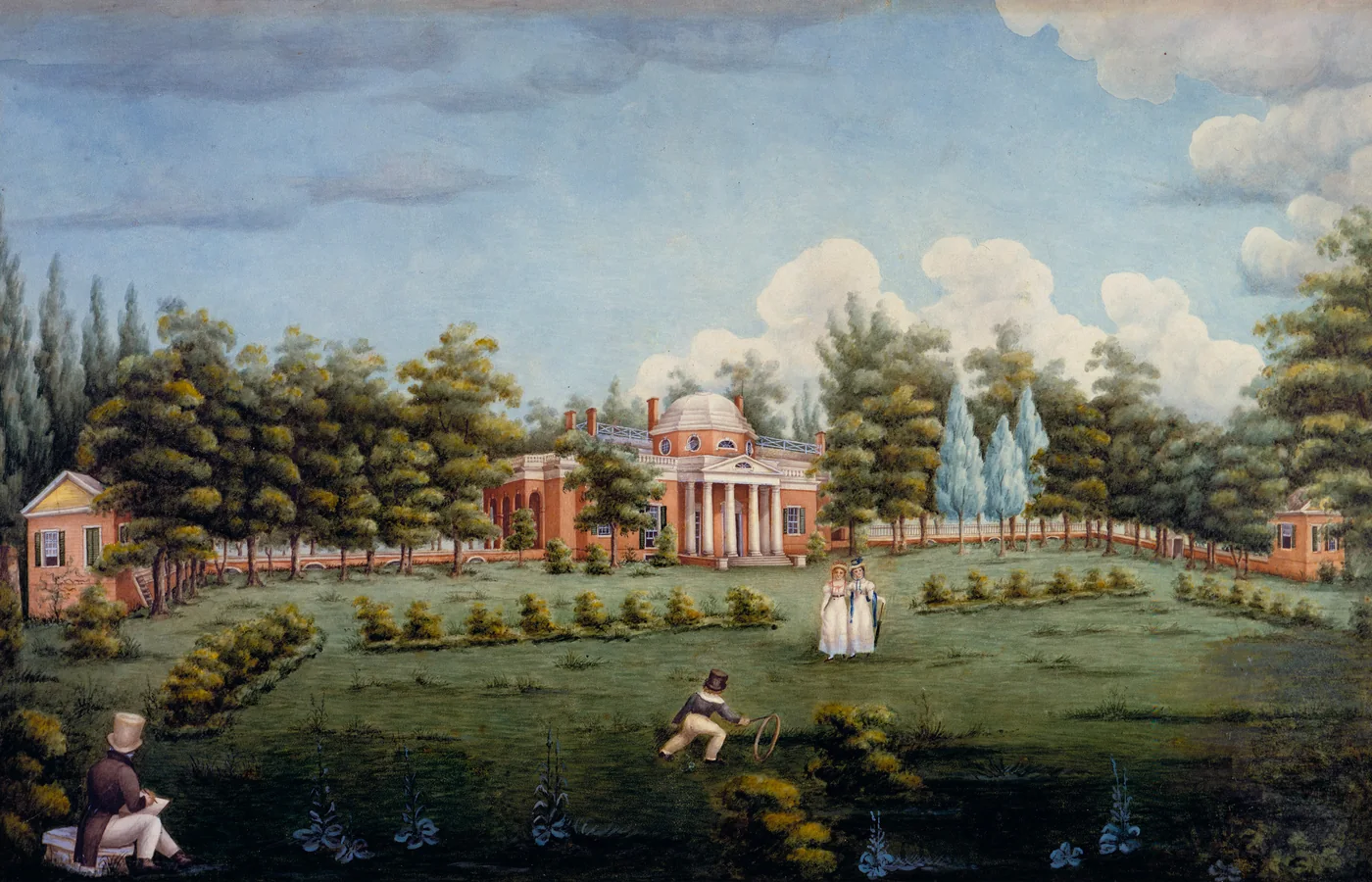
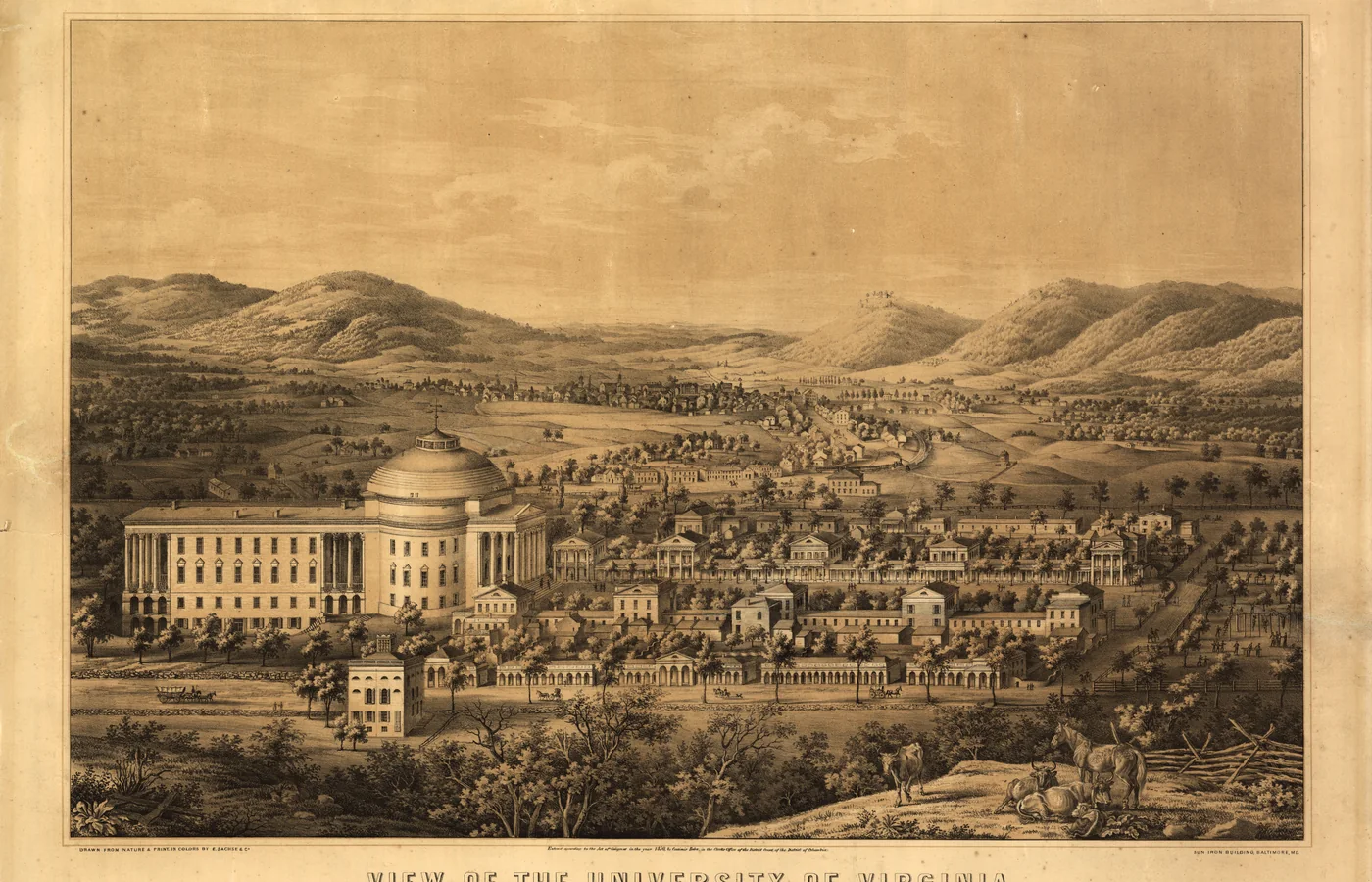
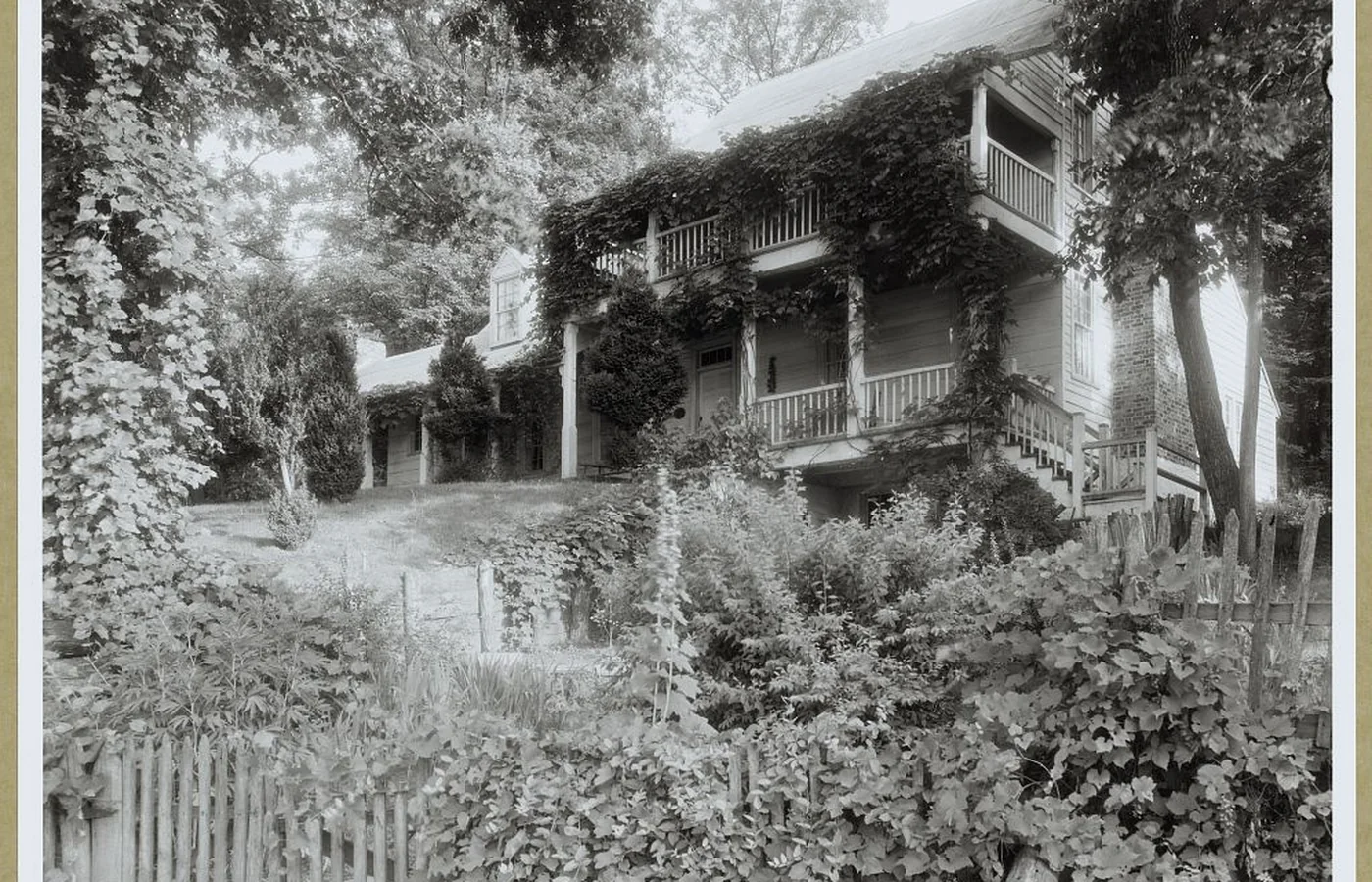
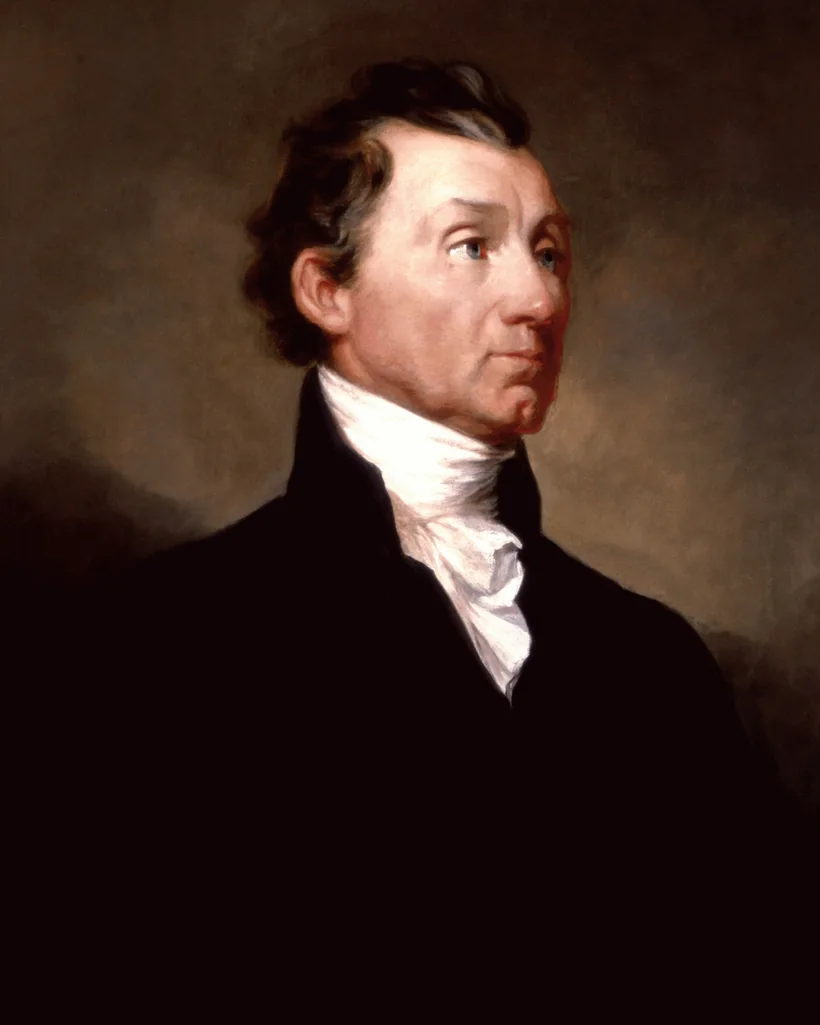
Historical images: public domain via Wikimedia Commons — Rembrandt Peale, Samuel F. B. Morse, Jane Braddick Peticolas, E. Sachse & Co. / Casimir Bohn, Frances Benjamin Johnston.
Charlottesville's calendar has four reliable peaks and a solid base, and most listings here price for two of the peaks and ignore the rest. The obvious ones are University of Virginia graduation in May, which fills the entire city at rates unrelated to the rest of the year and books extremely early, and home football Saturdays in the autumn, which do the same on a smaller scale. Move-in weekends in August and parents' weekends should be priced the same way. The under-exploited peak is autumn generally: the Blue Ridge foliage, the orchards at Carter Mountain, and the harvest season on the wine trail combine to make October the most consistently pleasant month of the year here, and rates frequently do not reflect that. The wine trail is worth treating as a season in its own right rather than an amenity, because it now supports touring visitors from spring through late autumn who behave like a destination audience and book accordingly. Underneath everything is a steady institutional floor: the university, the medical centre and the research economy produce continuous professional and family visitor traffic, much of it midweek and much of it longer than a leisure stay. Build genuine weekly rates for that, especially for medical visitors. Note that Virginia applies state sales tax and local transient occupancy tax to short-term rentals, so your guest's total exceeds your nightly rate.
Two strong seasons and no genuinely dead one. Autumn is the best stretch of the year, combining foliage in the Blue Ridge, harvest on the wine trail, the orchards, and home football weekends, and it runs comfortably from mid-September into early November. Spring is nearly as good and culminates in graduation in May, which is the single busiest period of the year. Summer is warm and humid, quieter on the university side, with the mountains and the wineries carrying demand. Winter is the softest, though the university, the medical centre and the professional economy keep a floor under it, and Wintergreen half an hour west adds a small ski trade.
Charlottesville calls short-term rentals homestays, and the defining requirement is that you live in the property. The owner must occupy it as their permanent residence for at least 185 days per calendar year. An annual Accessory Use Permit for a homestay is required for stays of fewer than 30 days in residential and residential mixed-use districts, and the fee is reported at $100 per year. Residential districts named in the ordinance include R-A, RN-A, R-B, R-C, RX-3 and RX-5. From 2026 there is a hard operational deadline that owners should put in the calendar immediately: homestay and short-term rental permits must be approved by 1 March. That is an approval deadline rather than an application deadline, so applying in late February is not a plan. The city has recently completed a full review of all of this, and the outcome is genuinely useful to know. Following a Planning Commission work session on 24 March 2026 and a City Council session on 18 May 2026, City staff recommended maintaining the current homestay ordinance without amendment for the time being. A proposed amendment considered during the review would have required applicants to sign an affidavit swearing under oath that they meet the residency requirement, which indicates where the city's enforcement attention is focused even though it was not adopted. The review's outcome has one further consequence worth understanding. The Virginia General Assembly passed legislation permitting renters to operate short-term rentals with their landlord's permission, but that route only becomes available where the local ordinance has been amended to allow it. Because Charlottesville chose not to amend, tenants here cannot use it, and the market remains restricted to resident owner-occupiers. Verify the current fee, the 1 March approval deadline and the residency evidence required with the City before you apply.
Put 1 March in your calendar and work backwards from it, because from 2026 the permit must be approved by that date and an application that goes in late will cost you a season. Second, make the host visible. The 185-day residency requirement means every compliant homestay in this city is run by somebody who actually lives here, and the guest booking one is buying local knowledge along with the room. Write in the first person, say who you are, and put genuine recommendations in the welcome material; it is both accurate and a real differentiator against listings written as though nobody lives there. Third, broaden the calendar beyond Monticello and the University. Almost every listing in this city mentions both and then stops, which leaves the wine trail, the orchards, the Blue Ridge and Skyline Drive essentially unclaimed in search and in copy. The wine trail in particular now supports a touring audience that plans a whole trip around it, and a property with a well-written, opinionated route suggestion and honest advice on designated drivers will win those bookings. Fourth, take the medical visitor seriously. The university medical centre draws patients and families from across the region for extended stays, and they need parking, laundry, quiet and flexible check-in far more than they need atmosphere. Fifth, be precise about the walk to the Downtown Mall and to Grounds, because in a city this compact those two distances decide a great many bookings.
The 185-day residency requirement rules out conventional investment purchase entirely, and the city has just declined to loosen it, so there is no reasonable expectation of change. The 1 March approval deadline is unforgiving and catches owners out. Because tenants cannot use the state legislation without a local amendment that has not been made, the pool of eligible operators is narrow. Parking is constrained near the Downtown Mall and around Grounds. And demand, while genuinely year-round, is heavily concentrated into graduation and football weekends that every owner in the city is competing for at once.
Because Charlottesville requires the property to be your permanent residence for at least 185 days a year, this is a home-sharing insurance question rather than an investment-property one, and that is the scenario standard homeowner's policies handle worst. Do not assume your existing cover responds to a paying guest; many policies exclude paid occupancy outright, and undisclosed commercial use can be grounds to deny a claim. What you want is a home-sharing endorsement on your homeowner's policy, or a dedicated short-term rental product built for hosted operation, arranged in writing with the carrier fully informed that you live there. Ask specifically about liability for guests in shared spaces, about your own possessions, which are on site in a way they would not be in a pure rental, and about loss of use if a claim makes the home uninhabitable while it is also your residence. Virginia's routine exposures are wind and hail, and remnants of tropical systems reach the Piedmont, so check the wind deductible and whether it is a flat sum or a percentage. If the property has mature trees, which most here do, ask how the policy treats tree fall. Platform host protection supplements a policy rather than replacing it.
Virginia applies state and local sales tax to accommodation charges, and localities separately levy a transient occupancy tax on stays of fewer than 30 consecutive days. Charlottesville imposes its own transient occupancy tax, and the combined figure a guest pays is therefore the sales tax plus the local occupancy tax on top of your nightly rate. Because local transient occupancy rates are set by the locality and are periodically adjusted, and because Virginia has amended how accommodations intermediaries handle collection more than once in recent years, confirm the current Charlottesville rate and your filing obligations with the City's Commissioner of the Revenue and with the Virginia Department of Taxation before you publish a total. Registration for tax is separate from your Accessory Use Permit, and holding the permit does not register you for tax. Accommodations intermediaries and platforms have statutory collection roles in Virginia and may remit some elements on your behalf, but the treatment of direct bookings is different and those generally remain your responsibility in full, which matters here because homestay operators with a resident host tend to build strong repeat and direct business. Ask your accountant how the income should be treated federally and for Virginia purposes given the property is also your home.
Charlottesville's residency requirement means you are financing a home rather than an investment, which is generally good news on terms: owner-occupier mortgages carry better rates and smaller deposits than investment products. Two cautions apply. First, read the occupancy and use covenants in the loan agreement, because some mortgages restrict commercial use of a primary residence and you need short-term letting of your own home to be permitted by the lender as well as by the city. Raise it at application rather than discovering a conflict later. Second, be careful about relying on homestay income in an affordability calculation, since the income is constrained by the ordinance to a property you live in for at least 185 days a year and a lender that understands the rule will discount it accordingly. DSCR and investor products are largely inapplicable here for the same reason, and a broker who proposes one has probably not read the ordinance. On the property side, Charlottesville prices are high relative to Virginia generally, driven by the university and by limited supply within the city, so expect to bring meaningful equity. Older housing near the Downtown Mall and in the historic neighbourhoods will attract the usual scrutiny of systems and structure.
The most useful thing about Charlottesville's regulatory position right now is that it has just been tested and left alone. The city ran a full review, took it to the Planning Commission in March 2026 and to Council in May 2026, and staff recommended keeping the ordinance as it stands. For an owner that is valuable certainty: the 185-day residency requirement is not about to be relaxed, and the state legislation allowing tenants to operate with landlord permission does not reach Charlottesville because the local ordinance was not amended to admit it. Plan on this remaining an owner-occupier market. The direction of enforcement is also visible: the amendment that was considered and not adopted would have required a sworn affidavit of residency, which tells you the city's concern is people claiming residency they do not have, and it would be sensible to keep your own documentation in order. Watch Council for any revival of that proposal. On the demand side, the fundamentals are strong and improving. The university and the medical centre are permanent, the World Heritage designation guarantees a baseline of cultural tourism, and the wine region has grown from a curiosity into a genuine draw over the past two decades with no sign of levelling off. A resident host with a direct booking channel and a returning guest base is well positioned here.
Charlottesville has two buildings that UNESCO decided were so closely related they should be inscribed together as one World Heritage Site, and it remains the only university in the United States on that list. Jefferson designed both: Monticello, which he rebuilt over four decades until it became an argument about architecture conducted in brick, and the Academical Village at the University of Virginia, where he put the library at the head of the Lawn instead of a chapel and meant it. He supervised the university's construction from his terrace at Monticello, a few miles away, through a telescope. The city that grew around all that is compact, prosperous and unusually good: the Downtown Mall runs eight blocks with no cars on it and has done since 1976, back when that idea was regarded as reckless. The Blue Ridge is half an hour west, with Skyline Drive along the top of it. The Monticello Wine Trail has turned the foothills into a real wine region over the past twenty years. Carter Mountain Orchard fills every October weekend with people buying apples and looking at the view. And the whole place sits under mountains that go blue in the afternoon in a way that explains their name better than any book. We like Charlottesville because it is small, and it is serious, and it has excellent light.
A great property in Charlottesville Virginia Downtown Mall doesn't just want a listing — it wants a point of view, an audience, and a brand the city itself would recognise.
Eight things to know about Charlottesville before writing listing copy, in a city that has just reaffirmed you must live in the property.
You must occupy the property as your permanent residence at least 185 days a calendar year. This is settled and was reaffirmed in 2026.
From 2026 homestay permits must be approved by 1 March, not merely applied for. Work backwards from it.
Created in 1976 and one of the longest pedestrian streets in the country. Give the walk from your door in minutes.
The University of Virginia calls it Grounds and the Lawn. Using the local vocabulary signals you actually live here.
Fills the entire city at rates unrelated to the rest of the year and books extremely early.
The Monticello trail supports touring visitors spring through late autumn. Offer a route and designated-driver advice.
Apples, cider and the view over the city. Enormous locally and nearly invisible in listings.
The national park and Skyline Drive turn a city stay into a mountain trip. Worth a paragraph, not a bullet.
The three examples below are composite and illustrative. They reflect patterns common in owner-occupancy university markets, and they are not accounts of any particular business or client.
An owner submitted a homestay permit application in mid-February, not realising that from 2026 the permit must be approved by 1 March rather than simply applied for, and lost the ability to operate for a substantial part of the year.
We rebuilt the annual compliance calendar backwards from the 1 March approval date, with document gathering and submission scheduled well in advance, and set out the residency evidence the City expects so the application would not stall in review.
The following year's permit was approved comfortably ahead of the deadline, and the owner stopped treating an annual, dated requirement as a piece of routine paperwork.
A homestay marketed itself entirely on proximity to Monticello and the University, competing with dozens of near-identical listings for the same visitor, and had nothing to say to anyone else.
We built out the wine trail as a genuine season with a suggested route and designated-driver advice, added the orchards and autumn foliage, and wrote Shenandoah and Skyline Drive in as a real day trip rather than a passing mention.
The property began attracting wine, orchard and mountain visitors alongside the heritage audience, and autumn in particular became a much stronger season than it had been.
A prospective buyer was evaluating a Charlottesville property purely as an investment and was waiting for the city's ordinance review to relax the owner-occupancy requirement before proceeding.
We set out that the review concluded with staff recommending the ordinance be maintained without amendment, that the state legislation permitting tenants to operate with landlord consent does not apply unless the local ordinance is amended, and that the residency requirement should be treated as settled.
The buyer stopped waiting for a change that was not coming and made a decision on the basis of the rules as they actually stand rather than as they had hoped they would become.
Demand in Charlottesville peaks around May and October and runs quietest around January, February and December. Here is how the year actually books — and what to do about each stretch of the calendar.
Two peaks carry this market. University graduation in May fills the entire city at rates unrelated to the rest of the year and books extremely early, and autumn from mid-September into early November combines foliage, harvest on the wine trail, the orchards and home football Saturdays. Price both well ahead and apply minimum stays.
Spring outside graduation is genuinely good and under-sold, and the wine trail now supports touring visitors from spring through late autumn who behave like a destination audience rather than a passing one. Move-in weekends in August and parents' weekends are fixed, predictable and consistently under-priced by local inventory.
Winter is the softest stretch, though the university, the medical centre and the professional economy keep a floor under it, and Wintergreen half an hour west adds a small ski trade. The most reliable winter demand is medical and academic and it books by the week rather than the night, which is the honest way to fill January.
Graduation books furthest ahead, frequently a year, and football weekends follow as soon as the schedule appears. Wine and foliage trips book several weeks out. Medical stays arrive with the treatment schedule and repeat.
Two and three night stays around the university and wine calendars, with graduation weekends running longer because families travel far. Medical stays are the longest and most reliable, often a week or more.
Because the city requires the owner to live in the property, every compliant listing has a resident host and saying who you are is a genuine differentiator rather than a formality. Walkability to the Downtown Mall or to Grounds is the strongest locational asset. Anything with a Blue Ridge view should lead with it.
Start with photography that shows what a guest actually gets here, then write the listing around a real itinerary rather than a feature list. Build a direct-booking site so returning guests can come back without going through a platform, and keep an email list segmented by season so you can reach last year's visitors before the calendar opens. Local search matters more than people expect in a market this size, because guests search the destination and the attraction rather than the word rental. A marketing agency layer handles the photography, the listing copy, the direct-booking site and the local SEO as one system instead of four disconnected jobs.
Two peaks carry the year. University graduation in May fills the city completely at rates unrelated to the rest of the calendar, and autumn from mid-September into early November combines foliage, wine harvest, the orchards and home football Saturdays. Winter is the softest stretch but never empties out.
Graduation books furthest ahead, frequently a year in advance, and football weekends fill as soon as the schedule is published. Wine and foliage trips book several weeks out. Medical stays arrive with the treatment schedule and tend to repeat.
A strong mid-Atlantic drive market with Washington the dominant feeder, followed by Richmond, Norfolk and Baltimore, plus a national flown-in audience for graduation and an international one drawn by the World Heritage designation.
Parking is constrained near the Downtown Mall and around Grounds, so off-street parking is worth a great deal. Beyond that, fast wifi, a workspace and flexible check-in serve the medical and academic stays, and a full kitchen suits the longer family visits.
Run your Airbnb, Vrbo, or website through Cavmir's free grader. It checks the things that decide whether guests book in Charlottesville — photos, listing copy, page speed, local search — and shows you where bookings leak. Takes about a minute, and there's no sales call attached.
If the report says your booking engine is the weak link, that's fixable: a direct-booking website of your own means repeat guests stop paying platform fees to come back to you. That's the work Cavmir does — see Airbnb website design in Charlottesville.
Send us the listing and we'll tell you what we'd change. Not a pitch deck — a straight read on your photos, your title, your rates against the Charlottesville comp set, and whether a direct-booking site would pay for itself.
You'll hear back from a person, usually inside one business day. If we don't think we can move your numbers, we'll say so. Cavmir is a short-term rental marketing agency — we position and market properties, we don't manage them.
Talk to Cavmir today. We'll show you exactly what your Charlottesville property is leaving on the table — and how fast we can change that.
Book a Free Strategy CallPhotography via Wikimedia Commons (images resized and cropped): Monitcello 47MP by Sbuckley (CC BY-SA 3.0) · Construction at the Rotunda, Univ. VA IMG 4251 by Billy Hathorn (CC BY-SA 3.0) · Charlottesville Downtown Mall by Wcedmisten (CC BY 4.0) · John Paul Jones Arena HDR by Bob Mical (CC BY 2.0) · First United Methodist, Charlottesville, VA IMG 4220 by Billy Hathorn (CC BY-SA 3.0).
