Chincoteague National Wildlife Refuge
The bridge east from town leads to the refuge and the Assateague beach. There is an entrance fee and the Wildlife Loop opens to vehicles in the afternoon. Tell guests the hours and send them at dusk.
Expert short-term rental marketing to grow your bookings and nightly rate in Chincoteague, Virginia, USA.
* Market averages. Properties marketed by Cavmir typically exceed these figures by 25–45%. Data sourced from AirDNA, STR market reports, and Cavmir internal analytics.
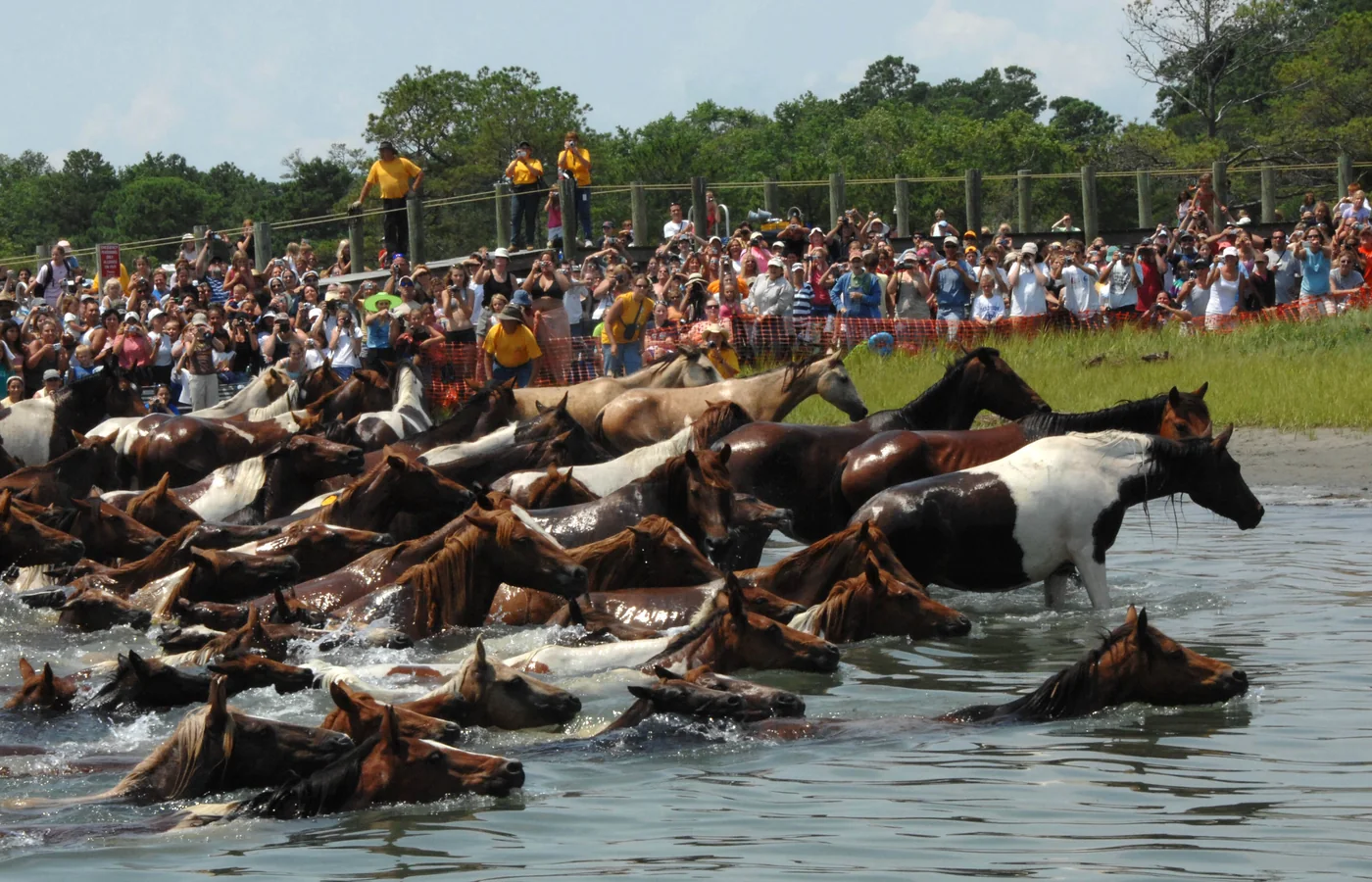
Chincoteague is a seven-mile island on Virginia's Eastern Shore, reached by a causeway off Route 175, and it exists in the public imagination mostly because of a children's book. Marguerite Henry published Misty of Chincoteague in 1947, and the annual pony swim she wrote about is still held every July — the Chincoteague Volunteer Fire Company herds the wild ponies from Assateague across the channel at slack tide, and tens of thousands of people come to watch. That single week is the largest demand event on the Eastern Shore. Behind it sits something more durable. Chincoteague is the gateway to the Virginia end of Assateague Island, which is a national seashore and a national wildlife refuge with one of the best beaches on the mid-Atlantic coast and no development on it at all. NASA's Wallops Flight Facility is a few miles away on the mainland and launches rockets that guests can watch from the island. The town itself is a working watermen's community with oyster and clam operations that predate all of it, and the local oyster has a genuine reputation.
Chincoteague is a market in open political motion right now, and an owner should understand exactly where it stands. In June 2026 the Town Council took up proposals to ban new short-term rentals in certain R-1 neighbourhoods and to increase the business licence fee for short-term rentals from fifty dollars to five hundred. After a public hearing on 1 June that drew a strong community response, the Council voted both down and tabled the ban pending a study to assess whether one is needed. So the current position is permissive, the fee remains modest, and the question is unresolved rather than closed. Owners should treat the next twelve to twenty-four months as a period in which the rules may change and should operate accordingly. What is already required is a short-term rental licence or permit before listing, with an inspection as part of the process. On tax, the Town of Chincoteague levies a transient occupancy tax of 5% on gross rental receipts and Accomack County levies 2% within the town, and Virginia applies retail sales and use tax to accommodations on top of that. Note that Virginia does not levy a separate 5% state transient occupancy tax, despite what several online summaries claim.
Nearby Markets: Ocean City | Rehoboth Beach | Virginia Beach

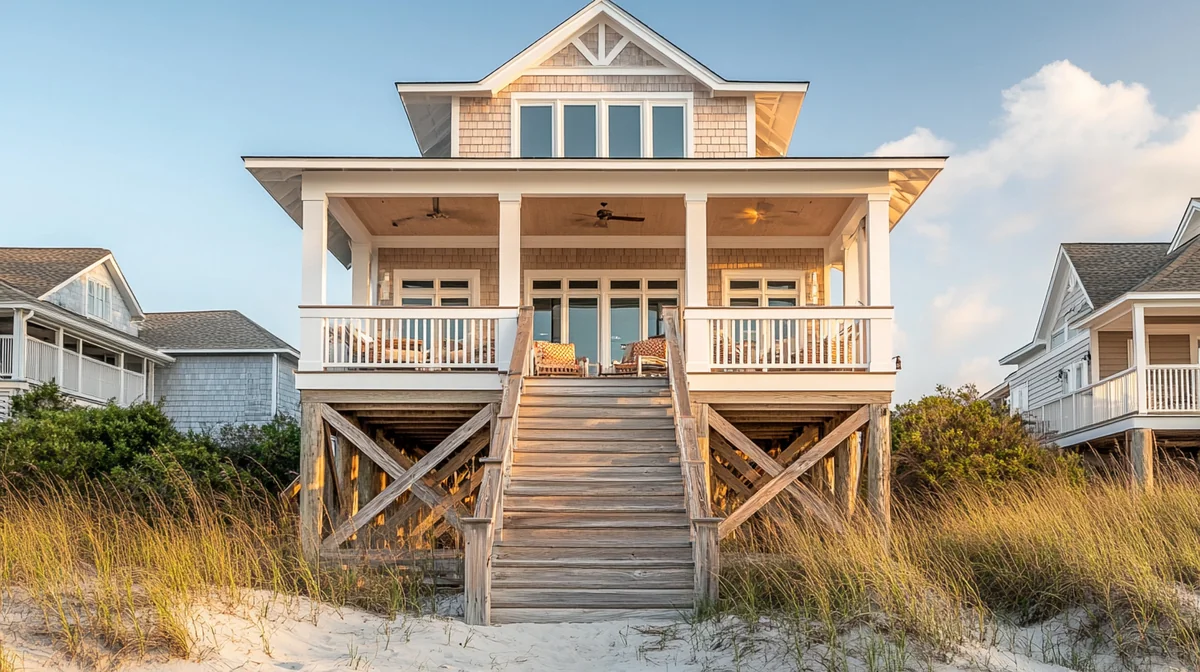
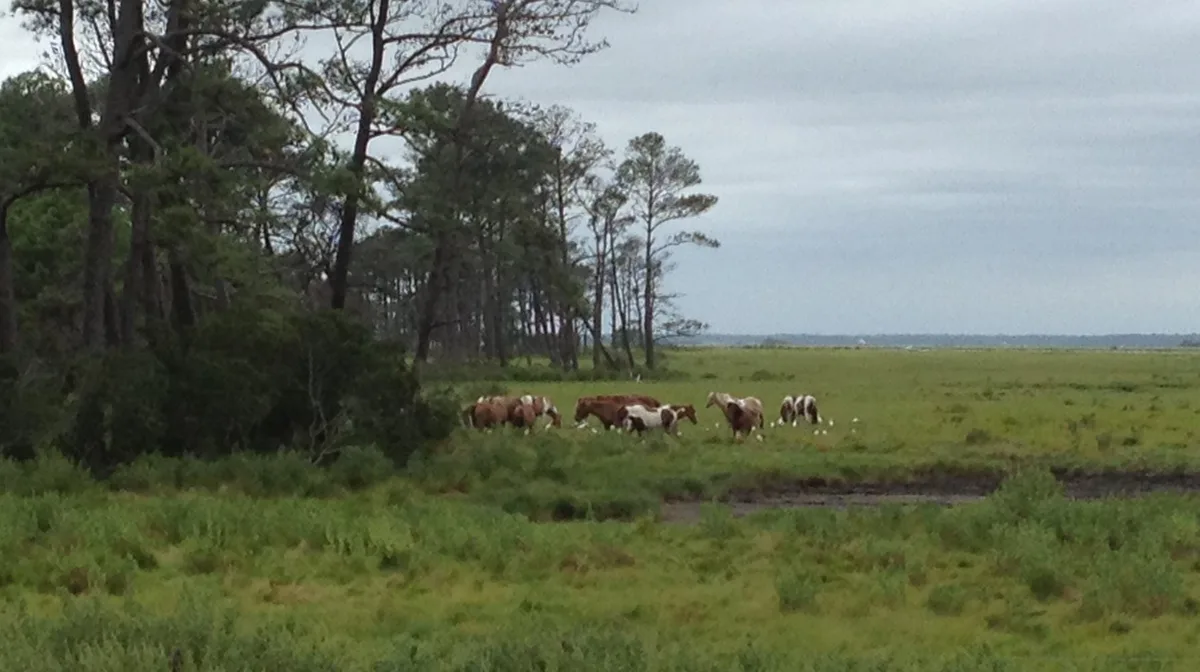
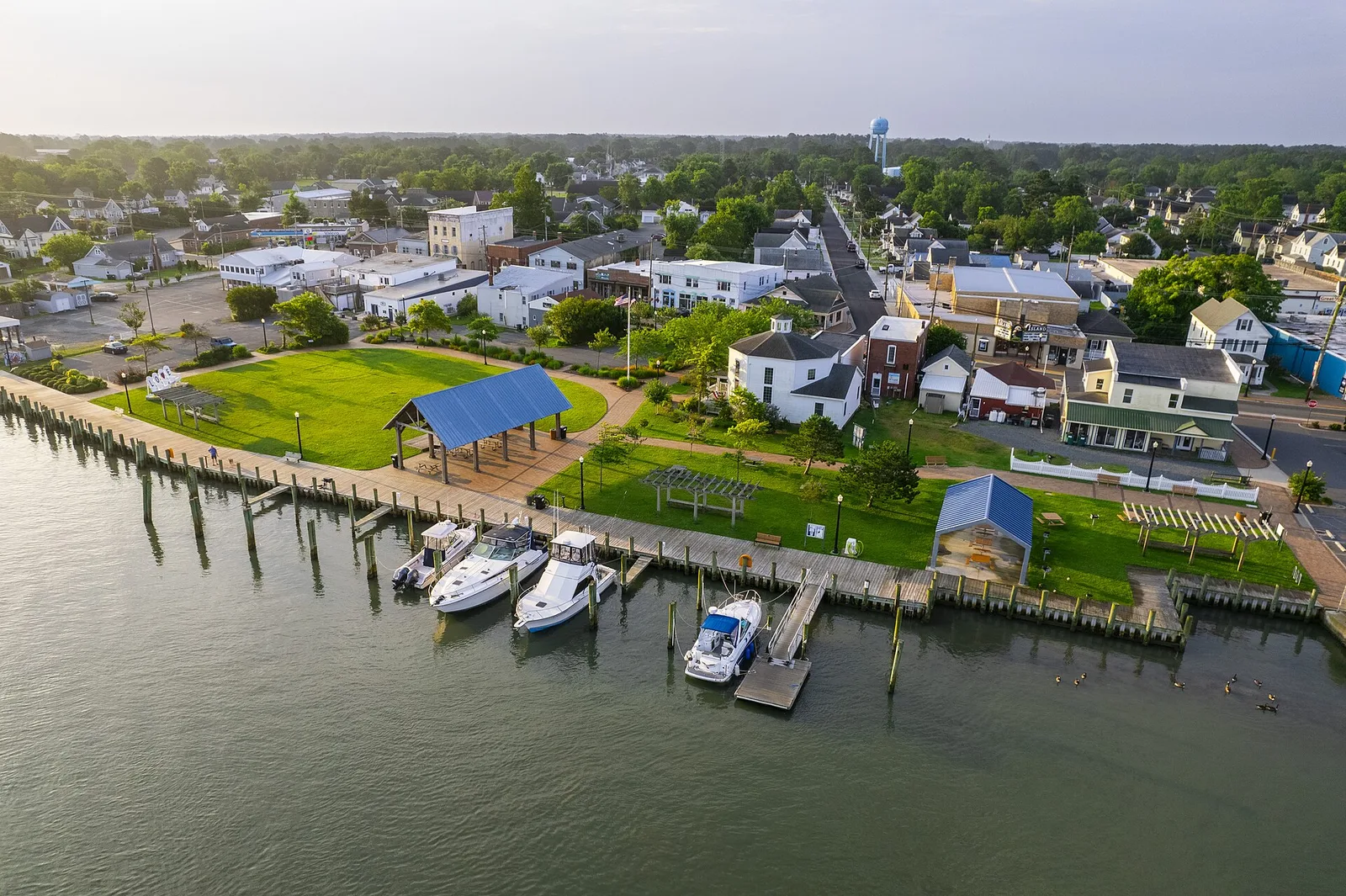
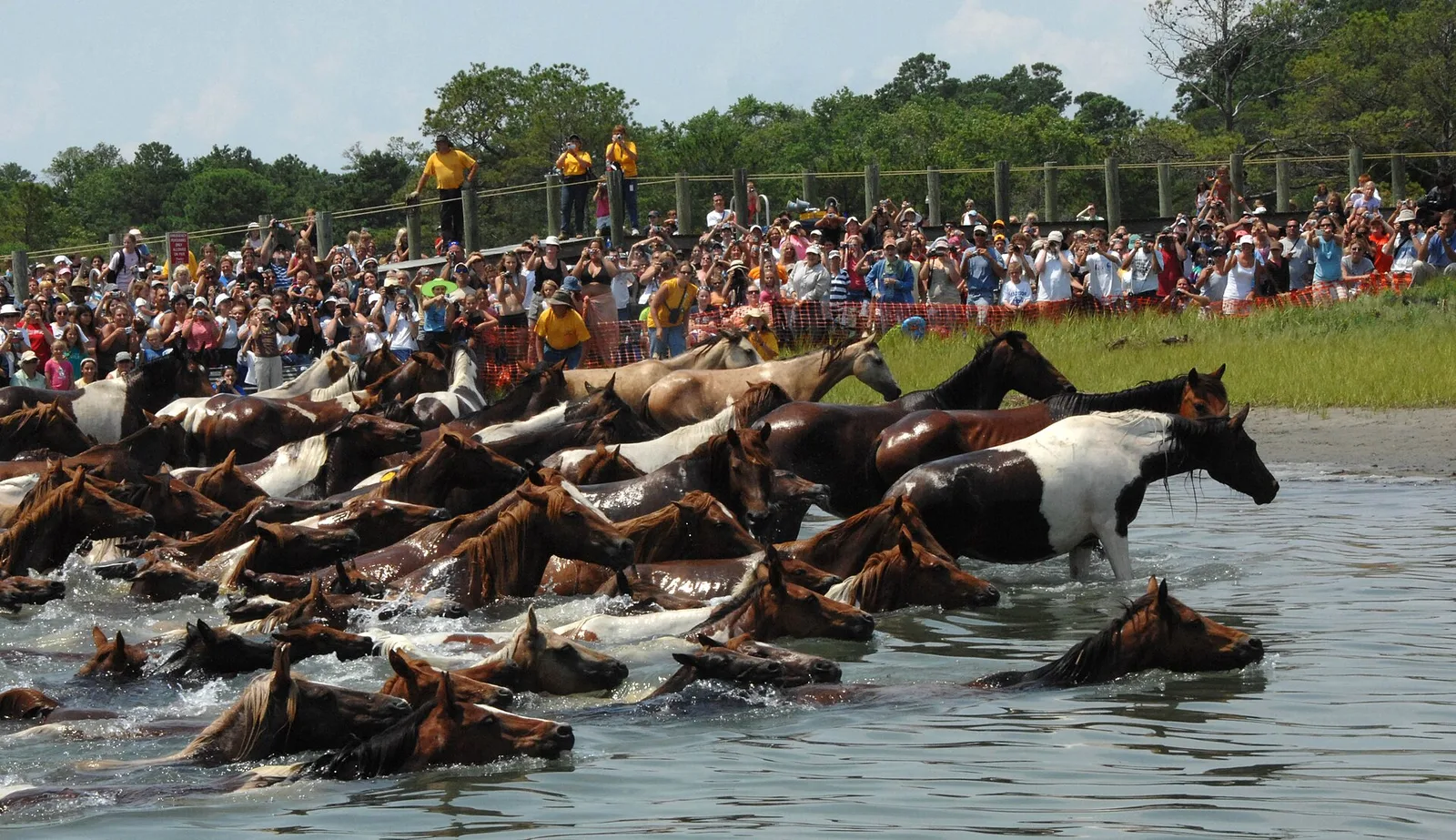
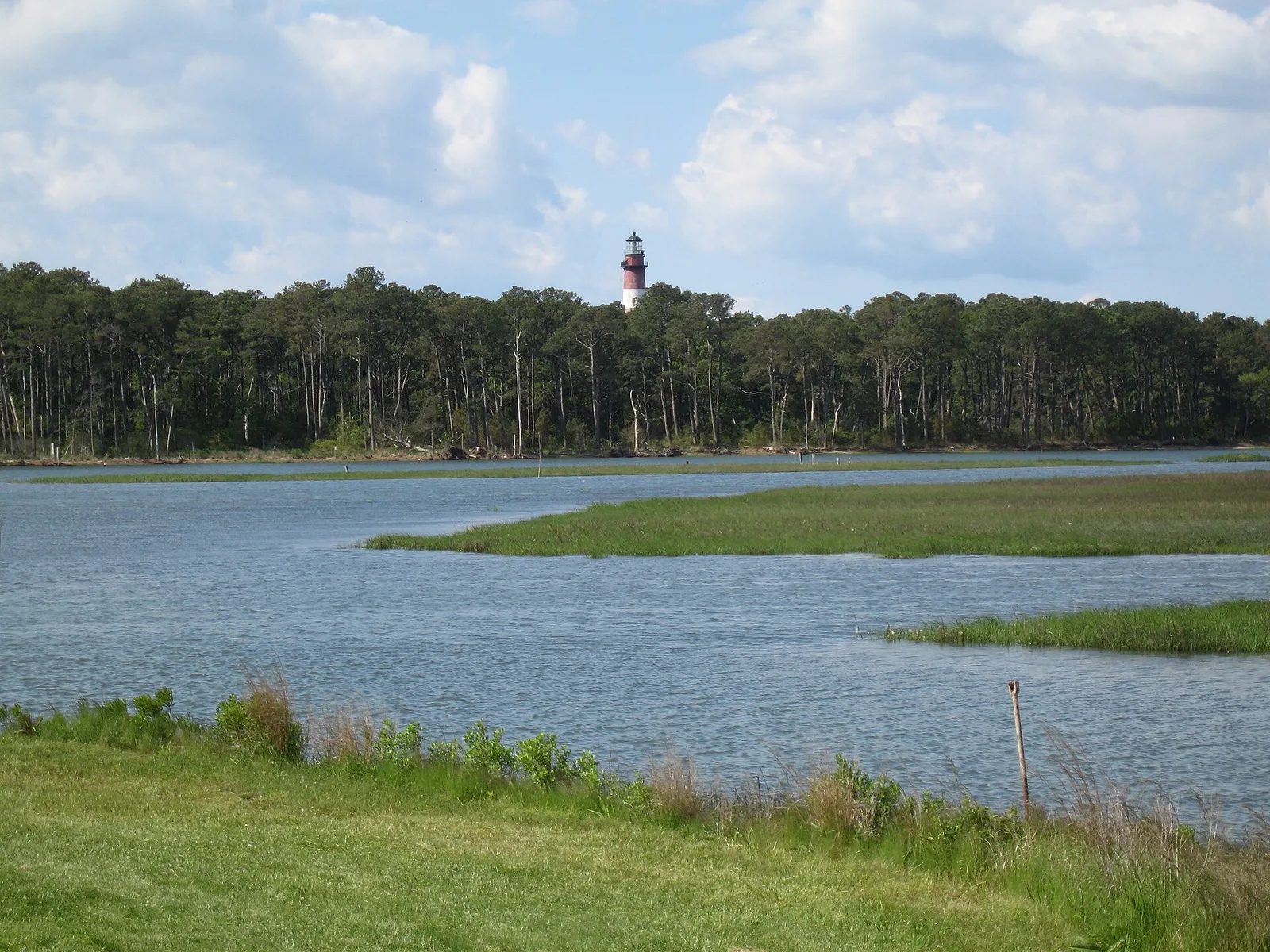
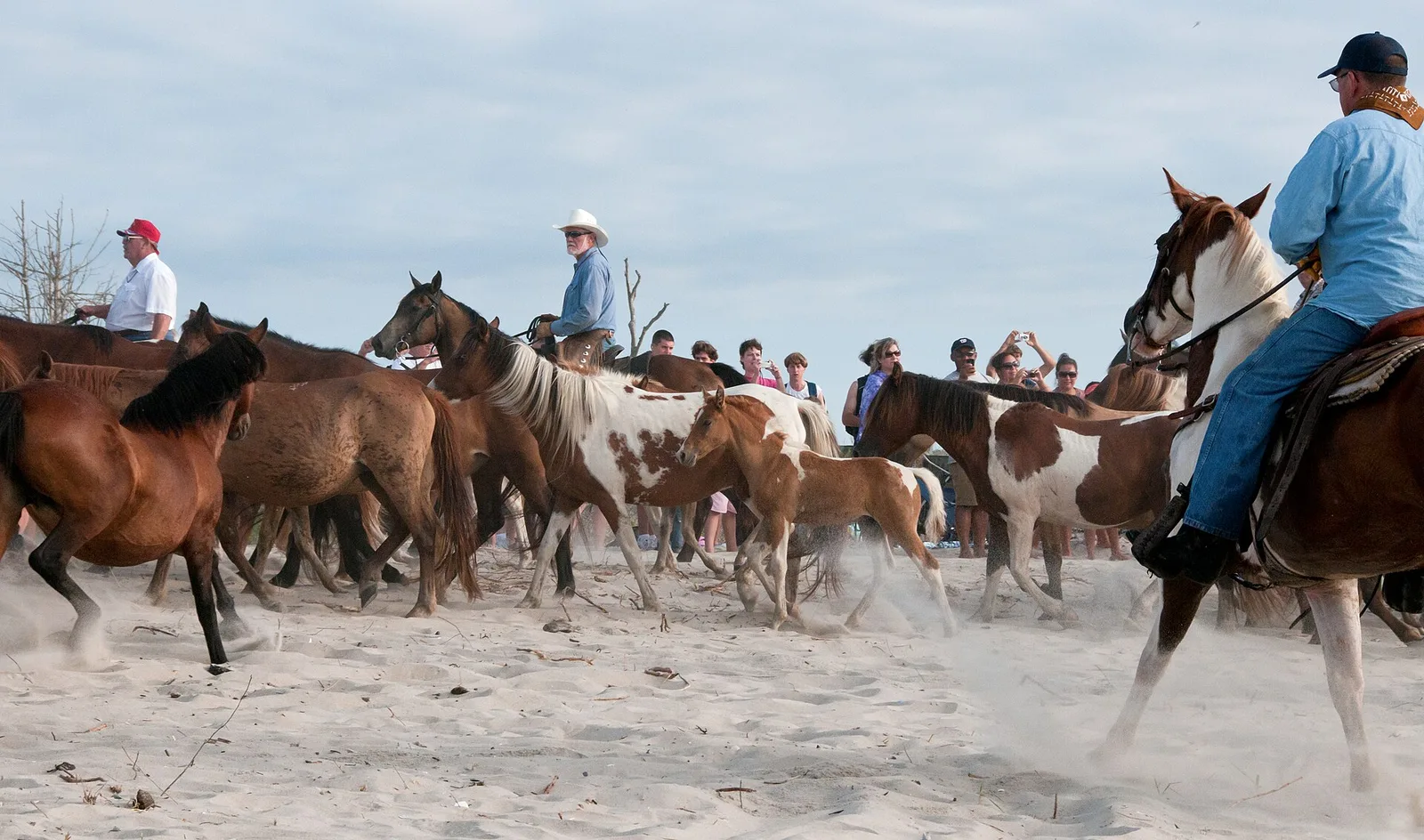
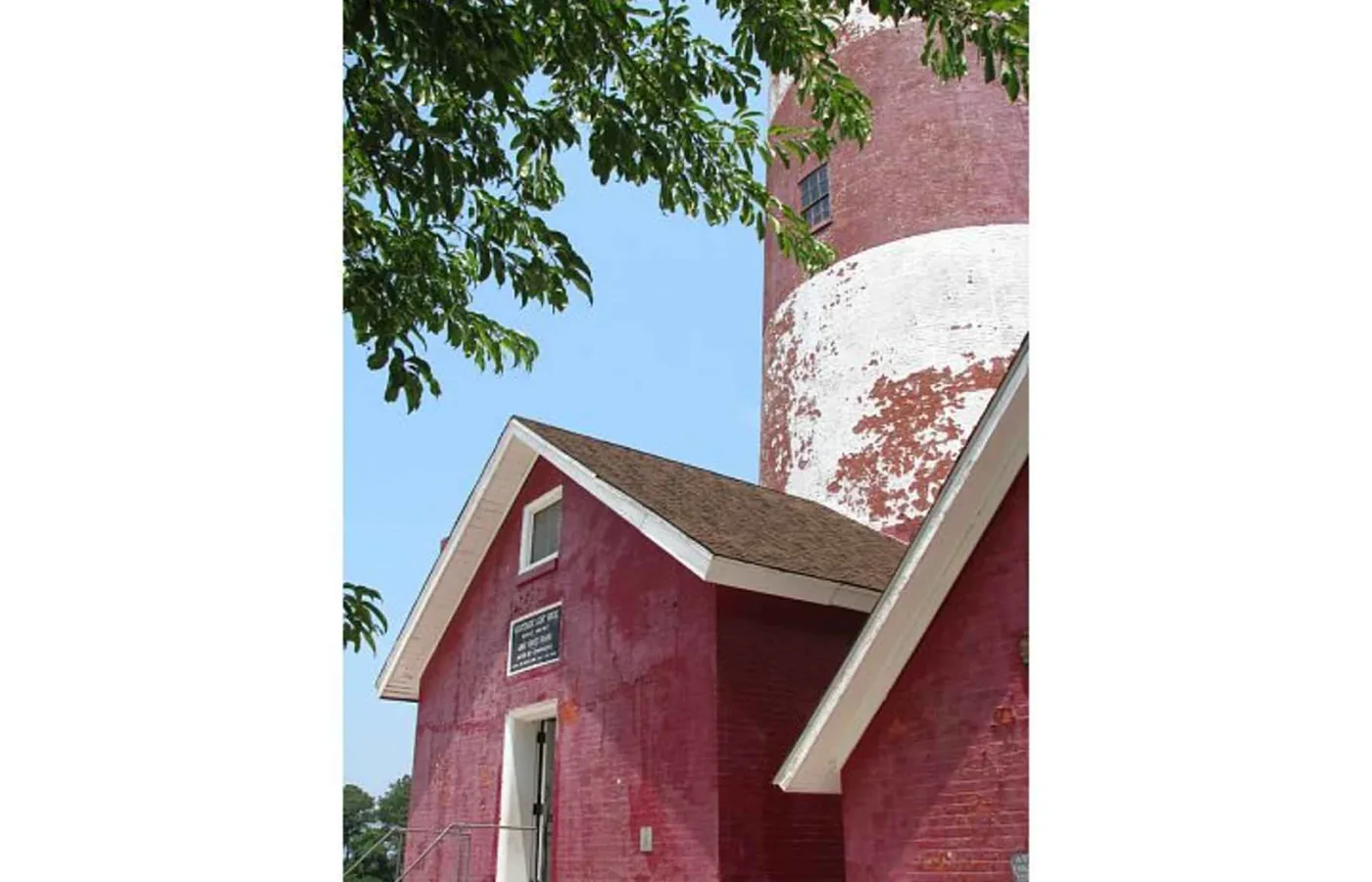
A few of the visual fingerprints we lean into when we shoot, brand and market a Chincoteague property — courtesy of the open Wikimedia Commons archive.
Cavmir markets Chincoteague properties around the two things that actually drive a booking here: the beach on Assateague and the week in July. Pony Penning is a hard date that sells out the island months ahead, and a property that is not visible and priced for it well in advance is leaving the single most valuable week of its year to chance. Beyond that week, the refuge is the product — the beach, the loop road, the birds, the ponies you can see any day of the year without a crowd — and most listings mention it in a sentence rather than selling it. We photograph the property properly and we photograph the walk or the drive to the refuge entrance, because that distance is what guests are actually choosing on. We build a direct booking site so returning families, of which this island has a great many, can book with you directly rather than being reintroduced through a platform each summer. Then we run local search, place ads against the event calendar and the launch schedule, and keep an email list warm through a long winter. We help position and market your property. We never manage it or touch your keys.
Chincoteague has been inhabited and worked for a very long time. The island's name comes from the Algonquian-speaking people who lived on the Eastern Shore, and English settlement dates to the seventeenth century. For most of its history it was a watermen's community — oysters above all, and clams, and the boats and shucking houses that went with them. The Chincoteague oyster still carries a genuine reputation, and the working docks on the channel are not a heritage exhibit.
The ponies are older than the tourism. Horses have been on Assateague Island for centuries, and the two competing explanations — survivors of a Spanish shipwreck, or livestock put out to graze by colonial farmers avoiding fencing laws and taxes — have never been settled. What is documented is that the Chincoteague Volunteer Fire Company took over the herd's management in 1924 and began the pony penning as a fundraiser, which it remains.
Then came the book. Marguerite Henry's Misty of Chincoteague was published in 1947, won a Newbery Honor, was made into a film in 1961, and turned a local fundraiser into a national event. Misty herself was a real horse, and the island still leans on that story heavily — the museum has her, and the annual swim draws crowds that dwarf the island's population.
The federal layer arrived in stages. The Chincoteague National Wildlife Refuge was established in 1943, primarily to protect migratory waterfowl on Assateague. Assateague Island National Seashore followed in 1965. Between the two, the barrier island east of Chincoteague was permanently protected from development, which is why there is a genuinely wild beach ten minutes from a town.
NASA's Wallops Flight Facility, on the mainland just west, has been launching since 1945 and now sends resupply missions to the International Space Station. Launches are visible from the island, which is an unusual thing for a beach town to be able to offer.
Chincoteague's year has one enormous spike and a reasonable season around it, and the spike is worth planning the whole calendar around.
Pony Penning week in late July is the single largest demand event on Virginia's Eastern Shore. The island fills, rates rise sharply, and a substantial share of the accommodation is booked a year in advance by people who come every year. If your property is not open, priced and visible for that week well ahead of time, you are giving away the most valuable seven days of your year. Publish those dates as soon as the fire company confirms them.
The general summer season runs from Memorial Day to Labor Day and is family-driven, tied to the refuge beach and school calendars. July is the strongest month overall.
Spring and autumn are better than most calendars reflect. May is lovely and the birding is genuinely notable — Chincoteague is a significant stop on the Atlantic Flyway and draws serious birders in both migrations. September and October have warm water, thin crowds and good weather, and the autumn birding season brings a guest segment with real willingness to travel midweek.
Winter is quiet, though not entirely dead: the refuge is open year-round, waterfowl numbers peak in winter, and there is a small but committed off-season birding and photography market.
Rocket launches from Wallops are an unpredictable but real demand event. They are scheduled in advance, they slip frequently, and a property that watches the schedule and markets to it picks up midweek nights nobody else is competing for.
Memorial Day opens the family season and Labor Day closes its core. Late July carries Pony Penning, the biggest week of the year by a wide margin. Spring migration in May and autumn migration from September into October bring a serious birding audience. September and early October have the best combination of weather, water temperature and quiet on this coast. November through March is genuinely quiet, with the refuge open, wintering waterfowl at their peak and a small photography and birding market. Rocket launches from Wallops fall throughout the year and can create demand on any date.
Chincoteague is the clearest example in this wave of a market whose rules are being actively contested rather than settled, and an owner here should know exactly where the argument stands.
In the spring of 2026 the Town of Chincoteague brought forward proposals that would have banned new short-term rentals in certain R-1 zoned neighbourhoods and raised the business licence fee for short-term rentals from fifty dollars to five hundred. A public hearing was held on 1 June 2026 and drew a strong response from residents and owners. On 23 June 2026 the Town Council voted down both the neighbourhood ban and the fee increase, and tabled any ban pending a study to assess whether one is actually needed.
So the position today is that Chincoteague remains a permissive market with a modest licence fee, and that a study is expected. That is not the same as the question being closed. Owners should assume the subject returns, should follow the council's agenda, and should participate rather than wait.
What is required now: hosts must obtain a short-term rental licence or permit before listing a property, and an inspection forms part of the permitting process. Confirm the current application, fee and inspection requirements with the Town of Chincoteague directly.
On tax, get the components right, because online summaries of Virginia frequently do not. The Town of Chincoteague levies a transient occupancy tax of 5% on gross rental receipts, and Accomack County levies a transient occupancy tax of 2% within the town. Virginia applies its retail sales and use tax to accommodations as well. Virginia does not impose a separate statewide 5% transient occupancy tax, despite a number of published guides saying so. Confirm the current combined figure with the Town and with the Virginia Department of Taxation before quoting a number to a guest.
Own Pony Penning week. Publish rates and open the calendar the moment the fire company confirms the dates, market it by name, and hold your returning guests first. This is the highest-value single action available to a Chincoteague owner and a surprising number of properties are still sitting at ordinary summer rates that week.
Sell the refuge, not just the beach. The Chincoteague National Wildlife Refuge is the reason this island has a wild beach with nothing built on it, and it has a Wildlife Loop, a lighthouse, ponies visible on any ordinary day, and a bird list that brings people from across the country. Name specific things. 'Close to the beach' is what everyone says; describing the loop road at dusk is not.
Write for birders explicitly. Two migrations a year bring a serious, midweek-travelling, shoulder-season audience that almost no rental on this island markets to. Mention the flyway, the seasons, and practical things — early departures, somewhere to leave muddy boots, a kettle at five in the morning.
Explain the launch schedule. NASA Wallops launches are visible from the island, they are published in advance, and they slip often. A property that tells guests where to watch from and warns them that dates move is providing genuine local value.
Be precise about the beach drive. The refuge beach is a drive and there is an entrance fee and a parking situation that fills on peak summer days. Telling guests to go early is worth more than any adjective about proximity.
Photograph the channel at golden hour. The working docks and the water on the west side of the island at sunset are far more distinctive than another generic beach photograph, and they tell the guest what this island actually is.
Regulatory uncertainty is the live challenge. The council voted the restrictions down in June 2026 and ordered a study, which means the question is postponed rather than answered. Anyone buying here should price that risk consciously.
The second is concentration. A very large share of the island's premium demand is one week in July, and a property that fails to capture it has lost a disproportionate part of its year.
The third is that Chincoteague is remote. It is a long way from Washington, Baltimore or Norfolk down the Eastern Shore, and there is no airport of consequence nearby. That produces committed visitors and limits casual demand.
The fourth is coastal exposure. This is a low barrier island on the mid-Atlantic, and flooding, nor'easters and hurricane season are operational realities affecting insurance and occasionally the calendar.
Chincoteague is a low-lying barrier island on the mid-Atlantic, and flood is the dominant question. Flood insurance is a separate policy from your property cover, and your specific flood zone and the elevation of the structure determine both cost and availability. Establish those before you buy, not after.
Wind coverage may carry a named-storm deductible expressed as a percentage of insured value rather than a fixed sum. Understand what that percentage means in dollars before a storm makes it relevant.
Short-term rental use must be disclosed to your carrier. A seasonal-home policy will not necessarily respond to commercial letting, and liability needs to reflect guests using decks, docks, outdoor showers and, where present, boats and kayaks.
Loss of income cover deserves a specific conversation here. Hurricane season overlaps with peak season, evacuations happen on the Eastern Shore, and policies vary considerably in how they treat lost bookings.
Winter freeze in a property closed from December to March is a routine claim. Ask how the policy treats extended vacancy and whether monitoring changes the terms. Use a broker who writes on the Virginia Eastern Shore specifically.
Get the Virginia components right, because published summaries of this state are frequently wrong.
The Town of Chincoteague levies a transient occupancy tax of 5% on gross rental receipts from short-term stays. Accomack County levies a transient occupancy tax of 2% on stays within the town limits. Virginia applies its retail sales and use tax to accommodation charges as well.
Virginia does not impose a separate statewide 5% transient occupancy tax. Several online guides state that it does, and it does not. If you are modelling the guest's total cost, build it from the town rate, the county rate and the applicable Virginia sales and use tax, and confirm all three.
The town's transient occupancy tax revenue is substantial relative to its size, drawn from short-term rentals together with hotel and motel bookings, and it is a meaningful part of why the licensing debate is politically live.
Booking platforms collect and remit some elements in Virginia depending on the arrangement in force, but registration and correct filing remain your responsibility, and direct bookings are generally handled entirely by you.
Confirm current rates with the Town of Chincoteague, Accomack County and the Virginia Department of Taxation before publishing figures, and speak to your accountant about how the income is treated on your return.
Two things shape financing on Chincoteague: flood insurance and regulatory uncertainty.
Flood cover is a lender requirement in designated zones and the cost can be a substantial part of the monthly carry. Get the flood zone, the elevation certificate and a real quote early in the process rather than at the end.
The regulatory question is worth raising with yourself even if a lender does not raise it. The town has just declined to restrict short-term rentals and has ordered a study. If a future council adopts what this one declined, an income model built on unrestricted letting in an R-1 neighbourhood could change. That is a risk to hold consciously rather than assume away.
Beyond those, the usual considerations apply. Seasonality concentrates income into a few months and should be presented realistically. Appraisal comparables on a small island can be thin. Older housing stock raises questions about wiring, roofs and elevation.
Second-home and investment-property financing differ in rate, down payment and occupancy expectation, and mixed personal-and-rental use should be described honestly at application.
This is general information rather than financial advice — confirm the specifics with your mortgage broker, insurance broker and accountant, and confirm the regulatory position with the town.
The immediate question is the study. Having voted down a neighbourhood ban and a tenfold licence fee increase in June 2026, the council committed to assessing whether restrictions are needed. What that study concludes, and what a future council does with it, is the single biggest variable for owners here over the next few years. The sensible posture is to be a visibly good operator and to participate in the process, because markets that study before they regulate usually produce rules shaped by the operators who showed up.
The physical trend is coastal. Assateague is a barrier island that moves, the beach and its parking have been affected by storms and shoreline change repeatedly, and the National Park Service has had to adapt access over time. Anything that changes beach access changes demand on Chincoteague.
The demand trends are favourable. The pony penning is not going anywhere and renews its audience with every generation of readers. Birding tourism has been growing and fits the shoulder seasons perfectly. Wallops launch activity has increased over the past decade and brings an audience nobody else on this coast can offer.
The competitive opportunity is the shoulder. May, September and October on Chincoteague are excellent and largely unmarketed. Properties that build a genuine product for birders, photographers and quiet-season travellers will extend their year while everyone else fights over July.
Chincoteague is a working island that happens to be next to a wild one, and the contrast is the whole appeal. On the west side there are oyster boats and shucking houses and a channel that smells like a working waterfront. Ten minutes east, across a bridge into the refuge, there is a beach with nothing on it, a lighthouse in the pines, and ponies grazing in the marsh that nobody put there for your benefit.
We like that the refuge came first. Established in 1943 for migratory waterfowl, with the national seashore following in 1965, the protection predates the tourism boom — which is why Assateague never became Ocean City. The birds are the reason the beach is empty, and that is a fact worth telling guests.
The pony swim is genuinely something to see, and it is not a manufactured spectacle. The fire company has been doing it since 1924, the money goes to the fire company, and the men in the water on horseback are volunteers from the island. It has been commercialised around the edges but the core of it is still a small town doing something it has always done.
And we like the rockets. There is nowhere else in America where you can eat an oyster on a dock and then watch a resupply mission to the International Space Station lift off from across the water. Wallops has been launching since 1945 and most visitors have no idea it is there until someone tells them. For an owner, that is a free, distinctive thing to give your guests, and almost nobody does.
A great property in Chincoteague doesn't just want a listing — it wants a point of view, an audience, and a brand the city itself would recognise.
Eight things a Chincoteague guest should know — the refuge, the beach parking, the pony week, and the launch schedule nobody tells them about.
The bridge east from town leads to the refuge and the Assateague beach. There is an entrance fee and the Wildlife Loop opens to vehicles in the afternoon. Tell guests the hours and send them at dusk.
The refuge beach parking fills on peak summer days and closes when full. A specific hour in your pre-arrival message saves guests a wasted morning.
Guests often think the ponies only appear during the swim. They are visible from the Wildlife Loop and the marsh year-round if you know where to look and go at the right time of day. Tell them.
Late July, run by the Chincoteague Volunteer Fire Company since 1924. Tens of thousands of people come. If your guests have booked that week, prepare them; if they have not, tell them the island will be busy.
Visible from the island, published in advance, and they slip frequently. Point guests to the schedule and tell them where the best viewing spots are.
Chincoteague oysters have a genuine reputation and the working docks are on the channel side of town. The Oyster Festival in October is the island's other big date.
Spring and autumn migration bring serious birders. If your guests are among them, the refuge is a destination rather than a nice walk — say so, and mention the early hours.
The beach faces east, so the sunset is on the town side of the island. Robert Reed Waterfront Park and the channel docks are where to send people at the end of the day.
The following are composite, illustrative examples based on patterns common in event-driven island markets. They are not descriptions of specific clients or properties.
A property that filled Pony Penning week every year, always at the same rate as any other July week, because the calendar and pricing were set months before the event dates were considered.
Restructured the calendar so the penning week was opened, priced and marketed by name as soon as dates were confirmed, and offered it to returning guests first before it went public.
The single highest-demand week of the year began earning at a rate that reflected its demand, and it booked earlier with less effort.
A property closed in practice from October to May, on an island that receives two significant bird migrations a year and a committed winter waterfowl audience.
Built specific positioning for birders and photographers, wrote the flyway seasons properly, and adjusted the practical details — early breakfast provision, boot storage, flexible check-out — to suit that guest.
Midweek shoulder-season bookings appeared where there had been none, from a guest segment with almost no competition for it on the island.
A property with a west-facing deck over the channel, marketed entirely on its proximity to the beach on the opposite side of the island, with no photograph of its own best asset.
Reshot at golden hour from the deck and the dock, rewrote the listing around the working waterfront and the sunset, and stopped competing directly with beach-adjacent inventory.
The property developed a distinct identity and started attracting guests who specifically wanted the water and the working-town side of Chincoteague.
Demand in Chincoteague peaks around July through August and runs quietest around January, February and December. Here is how the year actually books — and what to do about each stretch of the calendar.
Memorial Day to Labor Day is the family season, and inside it Pony Penning week in late July is the largest demand event on Virginia's Eastern Shore by a wide margin. That week should be opened, priced and marketed by name the moment the fire company confirms the dates.
May and September into October are better than most calendars reflect. Spring and autumn migration on the Atlantic Flyway bring serious birders who travel midweek, and September has warm water with thin crowds. Both are close to uncontested.
November through March is quiet but not dead. The refuge is open year-round, wintering waterfowl numbers peak in the cold months, and there is a small committed birding and photography market that almost nobody addresses.
Pony Penning books furthest out, in many cases close to a year, and returning guests expect first refusal. General summer weeks fill a few months ahead. Birding and launch demand is much shorter notice and rewards being flexible and visible.
Full weeks during Pony Penning and much of the summer, with shorter stays either side. Birding trips are often three and four nights midweek, which is exactly the demand a rigid seven-night minimum turns away in the shoulder months.
Houses that sleep a family group and are an easy drive to the refuge entrance. Channel-side properties with a west-facing deck have a real and under-used advantage, because the beach faces east and the sunset is on the town side.
Start with photography that shows what a guest actually gets here, then write the listing around a real itinerary rather than a feature list. Build a direct-booking site so returning guests can come back without going through a platform, and keep an email list segmented by season so you can reach last year's visitors before the calendar opens. Local search matters more than people expect in a market this size, because guests search the destination and the attraction rather than the word rental. A marketing agency layer handles the photography, the listing copy, the direct-booking site and the local SEO as one system instead of four disconnected jobs.
Memorial Day to Labor Day is the family season, and Pony Penning week in late July is by far the largest demand event of the year. May and September into October are excellent and quieter, with two bird migrations bringing a serious midweek audience. Winter is quiet but the refuge stays open and waterfowl numbers peak.
Pony Penning books furthest ahead, often close to a year, with returning guests expecting first refusal. General summer weeks fill a few months out. Birding trips and launch-driven demand book much closer in and reward flexibility rather than long-lead marketing.
A mid-Atlantic drive market from Washington, Baltimore, Richmond and Philadelphia down the Eastern Shore. There is no significant airport nearby, so visitors are deliberate rather than casual, and marketing works best aimed at people already considering the region.
An outdoor shower and bicycles do a lot of work on a flat island. A screened porch matters in summer. Boot and gear storage plus early-morning practicality reach the birding audience almost nobody writes for. If you have a channel-side deck, that sunset is a genuine differentiator.
Run your Airbnb, Vrbo, or website through Cavmir's free grader. It checks the things that decide whether guests book in Chincoteague — photos, listing copy, page speed, local search — and shows you where bookings leak. Takes about a minute, and there's no sales call attached.
If the report says your booking engine is the weak link, that's fixable: a direct-booking website of your own means repeat guests stop paying platform fees to come back to you. That's the work Cavmir does — see Airbnb website design in Chincoteague.
Talk to Cavmir today. We'll show you exactly what your Chincoteague property is leaving on the table — and how fast we can change that.
Book a Free Strategy Call