Doctor's Cave before the crowds
Send early risers to Doctor's Cave Beach when it opens, before the cruise crowds — the famously clear water, calm and empty, is the MoBay of the old postcards and the photo that sells your next booking.
Expert short-term rental marketing to grow your bookings and nightly rate in Montego Bay — Rose Hall, Ironshore, the Hip Strip and the staffed-villa estates of Round Hill and Tryall.
Sixteen services, one team. Everything below is built in-house and scoped to your property and market. Most owners start with the 12-Step System.
Every engagement is quoted to your portfolio. These are the ready-made scopes owners pick most — Summer Promo pricing shown, discount already applied. A clear proposal within 48 hours.
The work is public. Selected engagements and what changed — and reviews from the owners and managers behind them.
* Market averages. Properties marketed by Cavmir typically exceed these figures by 25–45%. Data sourced from AirDNA, STR market reports, and Cavmir internal analytics.
Montego Bay is Jamaica's tourism capital and the front door to the island's north coast, and for a short-term rental owner it is a fundamentally different market from the country as a whole. Jamaica overall is a big, varied island; Montego Bay is a concentrated, high-value corridor built around the busiest airport in the English-speaking Caribbean, Sangster International (MBJ). Nearly every visitor to the north coast — to MoBay itself, to Negril, to Ocho Rios and the resort estates in between — arrives through here, which gives Montego Bay both a captive stream of demand and the region's deepest pool of premium accommodation. If you own or are buying a rental on Jamaica's north coast, understanding the MoBay corridor specifically, rather than 'Jamaica' as an abstraction, is where the money is.
The market is defined above all by Jamaica's legendary staffed-villa tradition, which exists almost nowhere else in the Caribbean at this scale. In the estates west and east of the city — Round Hill, the Tryall Club, Spring Farm, and the private villas dotting the hills — a guest rents not just a house but a full staff: a cook who shops the local markets and prepares Jamaican and international meals, a housekeeper, often a butler and a gardener, sometimes a nanny and a driver. This is a distinct luxury product with its own guest, its own price point and its own marketing playbook, and it coexists with a completely different market of Rose Hall and Ironshore resort-community condos, Hip Strip apartments, and mid-market homes serving the broader tourist and diaspora traveler.
The guest mix is unusually rich. North American families and groups come for the winter sun, the golf and the villa experience; a very large Jamaican diaspora returns constantly from the US, UK and Canada for family events, weddings and holidays; the destination-wedding and honeymoon business is enormous, with MoBay one of the Caribbean's top wedding markets; and golf, wellness and events travelers fill the calendar around the leisure peaks. That diversity is a gift for a well-marketed property, because the diaspora and events demand runs on a different calendar from the North American winter — but only if your listing is built to be found by all of them, positioned for the right one, and backed by a direct channel rather than a single platform.
What makes the investment case compelling is that Jamaica welcomes foreign buyers with no ownership restrictions, entry prices span from accessible condos to trophy villas, and the demand corridor is both deep and premium. A staffed villa in a name estate can command extraordinary weekly rates in high season; a well-run Rose Hall condo can achieve strong occupancy year-round from the constant airport traffic. The catch is that Montego Bay is a corridor of contrasts — the same city holds five-figure-a-week villas and modest apartments — so generic marketing fails badly here. The gap between a professionally positioned property and a passive one, at either end of the market, shows up directly in the return.
Nearby Markets: Negril | Jamaica | Cayman Islands
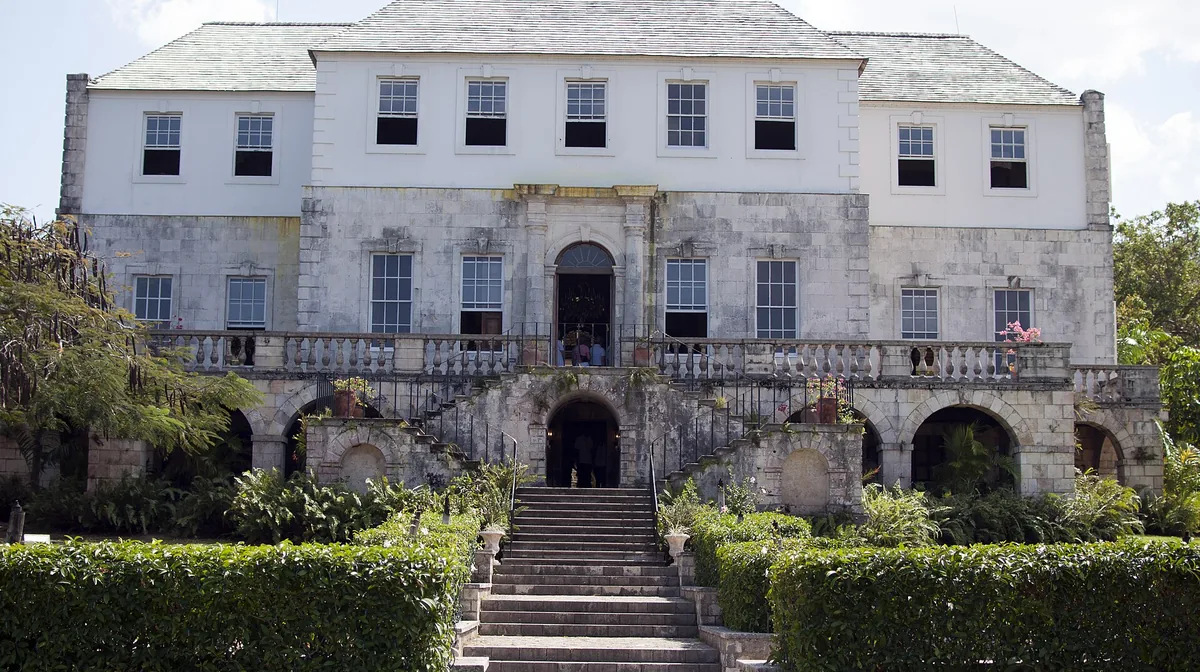
Photo: Don Ramey Logan · CC BY-SA 3.0 · via Wikimedia Commons
Cavmir markets Montego Bay rentals as the distinct products they are — a staffed luxury villa and a Rose Hall condo are not the same business. We position your property in front of the exact traveler who books it: the villa family, the destination-wedding party, the golf group, the returning diaspora guest — across Google, Instagram, the wedding and villa-broker channels that drive premium MoBay bookings, and a direct-booking site that keeps you off the commission treadmill.
Montego Bay's identity as a luxury retreat is nearly a century old, and that history still shapes the market. In the 1920s and 30s, Doctor's Cave Beach and its famously clear water drew wealthy Europeans and Americans who came to bathe in what was promoted as curative sea, and MoBay became one of the Caribbean's first fashionable resort towns. The staffed-villa culture grew from that era of grand houses and winter residents. When Round Hill opened in 1953, its cottages owned and decorated by the likes of Hollywood and society names, it cemented the template that still defines the high end: a private villa, full staff, absolute discretion, and a guest list of the famous and the merely wealthy.
Through the second half of the twentieth century Montego Bay layered a mass-tourism economy on top of that luxury foundation. Sangster Airport grew into the island's primary gateway; the Rose Hall estate east of the city was developed into resorts, golf courses and residential communities around its restored great house; the Hip Strip along Gloucester Avenue became the walkable tourist heart; and all-inclusive resorts spread along the coast. The result is the corridor's defining duality — a world-class staffed-villa market and a broad resort-and-condo market occupying the same city, serving very different guests.
The short-term rental market grew from both traditions at once. At the top, the historic villa estates and independent private villas moved onto villa-specialist platforms and Airbnb while keeping their broker relationships. In the middle, Rose Hall and Ironshore condo developments, Hip Strip apartments and suburban homes were bought by Jamaicans, diaspora investors and foreigners and placed into nightly and weekly rental. That range — from a staffed six-bedroom estate to a one-bedroom near the beach — is wider than in almost any other Caribbean market, and it is why positioning matters so much.
Today Montego Bay is Jamaica's rental engine, and the present is defined by formalization and by a booming diaspora and events economy. Jamaica has been bringing short-term rentals into a clearer regulatory and tax framework through the Tourist Board and TPDCo; the destination-wedding, family-reunion and diaspora-return markets have grown into year-round demand drivers; and the north coast keeps investing in infrastructure, from the airport to the highway network. For owners the lesson is that MoBay is a mature, high-value, increasingly formal market where clean compliance and marketing tuned to the specific product — villa, condo or home — separate the properties that thrive from the ones that quietly underperform.
Montego Bay is really two pricing markets in one corridor, and conflating them is the classic error. Staffed villas price on the total experience — the house, the full staff, the estate, the exclusivity — and can command extraordinary weekly rates in high season, especially over the holidays, with seven-night minimums the norm. The right strategy at the top is confident premium positioning, weekly and holiday pricing, and the wedding-and-events revenue that ordinary rentals cannot touch. The condo and apartment market, by contrast, competes on strong occupancy at accessible nightly rates driven by the constant airport traffic, so there the play is a competitive headline rate plus a direct-and-repeat channel that strips out platform commission.
The most underused lever in the corridor is the events and diaspora calendar, which many foreign owners never see. Jamaica is one of the Caribbean's biggest destination-wedding markets, and MoBay hosts a constant flow of weddings, honeymoons, family reunions and diaspora-return trips that peak around summer, holidays and school breaks — a rhythm distinct from the North American winter. A villa marketed explicitly for weddings and reunions, or a cluster of condos positioned for a returning family group, captures demand and rates the passive, leisure-only listing misses entirely. This is precisely the kind of segment-specific marketing that lifts a MoBay property above the crowd.
The third consideration is that at the villa end, the staff and the service are the product, and pricing should reflect and sell that. A guest paying premium villa rates is buying the cook who prepares fresh Jamaican breakfasts, the housekeeper who keeps the house immaculate, the local knowledge of a team that has worked the estate for years — and a listing that photographs and describes that service, rather than just the bedrooms, justifies a far higher rate. Underselling the staff experience is leaving money on the table; showcasing it is how the great Jamaican villas command the rates they do.
Medium-to-high seasonality with a strong events overlay. The North American winter (mid-December through April) is the rate high point, with Christmas/New Year the villa super-peak and seven-night minimums standard. Summer (June–August) is a genuine second season driven by diaspora returns, family reunions and weddings. Spring break and the wedding calendar spike around the leisure peaks. The softer window is September–October, the heart of hurricane season, where flexible terms and value pricing win the travelers still willing to come.
The revenue most MoBay owners miss sits in the summer and the events economy. The diaspora-return, wedding and reunion markets fill months that a leisure-only owner treats as shoulder season, and they book a specific kind of stay — often larger groups, longer bookings, planned well ahead. Being visible and positioned for weddings, reunions and returning families before those windows open turns a supposed off-season into a reliable second peak, and it is a marketing problem, not a pricing one.
Jamaica has been steadily formalizing short-term rentals, and Montego Bay owners operate within that national framework. Tourism accommodations are expected to be licensed and registered with the Jamaica Tourist Board and to meet the standards administered by the Tourism Product Development Company (TPDCo); registration is also what allows a property to be recognized as a legitimate tourism business. On the tax side, tourism accommodation is generally subject to General Consumption Tax (GCT) — Jamaica's value-added tax, currently 15% (with a lower rate historically applied to tourism accommodation) — and to the Tourism Enhancement Fee (TEF), a per-visitor charge. The platforms and the authorities have been tightening collection, so registration and correct tax handling are increasingly not optional.
The good news for buyers is that Jamaica places no restrictions on foreign ownership of property — non-nationals can buy, own and sell freely with the same rights as Jamaicans, which is one reason the villa and condo markets attract so much international and diaspora capital. The costs to plan for on purchase are the transfer tax and stamp duty and the legal and registration fees, and on the ownership side an annual property tax (assessed on the unimproved value of the land, and generally modest). Currency, repatriation of rental income, and the mechanics of holding property from abroad are all straightforward but worth structuring properly with a Jamaican attorney from the outset.
The practical rules that matter day-to-day sit alongside the national ones. Many Rose Hall, Ironshore and resort-community condos are inside strata or homeowners' associations whose by-laws govern whether short-term letting is permitted, minimum stays, security, and amenity use — read those before you buy. Staffed villas carry employment obligations for their teams that a professional local manager handles. And as always in this industry the specifics evolve — Jamaica's STR rules and tax rates have been changing as the sector formalizes — so treat this section as orientation, not legal or tax advice, and confirm current requirements with the Jamaica Tourist Board, the tax authority and a local attorney before you list.
The first Montego Bay tip is to know which market you are in and market only that. A staffed villa and a Rose Hall condo are different businesses with different guests, different price points and different channels — and the single biggest mistake owners make is fuzzy, try-to-please-everyone positioning. If you own a villa, sell the staff, the estate and the exclusivity, and cultivate the wedding and villa-broker channels. If you own a condo, sell the location, the value and the ease, and build occupancy and a repeat base off the airport traffic. Clarity about which product you are is the foundation everything else rests on.
Second, sell the service, not just the space — this is Jamaica's signature advantage. At the villa end, the cook, the housekeeper and the butler are the product, and a listing that photographs the breakfast on the terrace, names the team, and describes a day of being looked after commands rates a self-catering house never will. Even at the condo end, a concierge layer — pre-arranged airport transfer, a stocked fridge on arrival, a trusted driver, a tour desk — differentiates you in a crowded field. The Jamaican hospitality tradition is a genuine competitive edge; the properties that market it explicitly win.
Third, court the wedding, reunion and diaspora markets deliberately, because they are enormous and run year-round. Make it easy for a wedding planner to sell your villa with a clean media kit and event-ready photography; position a large home for the family reunion or the returning diaspora group; and be present, responsive and trustworthy for guests planning a once-in-a-lifetime Jamaican celebration from abroad. These segments book bigger, longer and further ahead than casual leisure travelers, and they are exactly where a marketing partner earns the fee.
Fourth, build the direct-and-repeat channel and lean on reviews, because MoBay's guests come back and talk. The family that had a flawless staffed-villa Christmas returns for years; the diaspora traveler who found a great condo rebooks and tells relatives; the wedding party becomes a source of referrals. A genuine direct-booking website, a strong review flywheel praising the staff, the cleanliness and the responsiveness, and a follow-up that turns a first stay into a relationship are worth more than grinding the platform algorithm — and they capture the full value of a premium corridor instead of renting your visibility back every season.
Montego Bay's first challenge is the polarization of the market and the need to pick a side. The corridor holds trophy villas and modest apartments in the same city, and a property caught in the muddy middle — too expensive to compete on value, not special enough to command a premium — struggles. That is not a flaw in the market; it is a demand to position clearly. The owners who win commit fully to a product and a guest; the ones who drift between them get lost.
The second challenge is the operational reality of running premium hospitality, especially at the villa end. Staffed villas are small businesses with payroll, training, supply chains and service standards to maintain, and a villa whose staff or upkeep slips at these rates collects brutal reviews. Even condos face the Caribbean constants — hurricane season (June–November) demanding proper insurance and a guest-friendly cancellation posture, imported-goods costs, and the security and reliability expectations of an international guest. Excellence here is operational as much as marketing, and the two are inseparable.
The third is the management-distance and reputation problem. Many MoBay condos and some villas are owned from abroad and run remotely, and a property managed by whoever answers first drifts fast — inconsistent housekeeping, slow replies, a listing that goes stale, a guest experience that no longer matches the photos. In a corridor where word-of-mouth among families, wedding networks and the diaspora travels fast, that gap is expensive. The owners who win close the distance with a real, trusted local team and a marketing partner who keeps the brand, the photography and the direct channel current, so the property delivers in July exactly what it promised the day the photos were shot.

Caribbean hurricane cover is essential and specialty-priced — you'll want named-storm/wind and flood protection, placed through Jamaican insurers and often international specialty carriers for higher-value villas. Concrete, hurricane-resistant construction lowers premiums. Confirm what any strata master policy covers versus your own responsibility, budget for meaningful per-event deductibles, and build the premium into your yield model.
Tourism accommodation is generally subject to GCT and the per-visitor Tourism Enhancement Fee, plus income tax on rental profits. On purchase, budget for transfer tax and stamp duty; annually, property tax is assessed on unimproved land value and is generally modest. Foreign owners can repatriate income, but should structure ownership and reporting — and coordinate any home-country obligations — with a Jamaican attorney and a cross-border accountant.
Financing is available to foreign and diaspora buyers through Jamaican banks, typically at lower loan-to-value and higher rates than US or UK equivalents, and many buyers use home-country financing or cash — especially at the villa tier. Whatever the structure, model debt service against realistic, seasonally-shaped occupancy that accounts for the events and diaspora calendar, not a flat annual average.
Montego Bay's near-term outlook is strong and infrastructure-led. Sangster Airport keeps growing as the region's dominant gateway, the north-coast highway network has cut travel times across the corridor, and Jamaica continues to invest in tourism as a national priority. The destination-wedding, diaspora-return and reunion economies — less cyclical than pure leisure — keep deepening year-round demand. For a well-positioned villa or condo, the fundamentals point up.
The variables to watch are formalization and competition. Jamaica's tightening of short-term-rental registration and taxation will reward clean, compliant, professionally-run operators and squeeze the informal ones — a net positive for owners who do it right. On the supply side, new condo and resort-community development around Rose Hall and along the corridor means the average unit faces more, better-marketed competition every year, so the durable winners will be the properties that behave like brands with a direct channel and a repeat base rather than interchangeable inventory.
The deeper shift is in how guests find a stay. Wedding planners, villa brokers, diaspora families and leisure travelers increasingly start with a direct search, a curated recommendation or an AI assistant rather than an anonymous platform scroll, and MoBay properties that publish clear, structured, genuinely useful information — the real service story, honest seasonality, event-ready detail, a fast site an assistant can read — are the ones that surface and convert. In a premium corridor where reputation is everything, owning that presence rather than renting visibility from a platform is the most durable advantage an owner can build, and it is exactly the work Cavmir does.
Montego Bay is the market where hospitality is genuinely an art form, and that is why I love working on it. Nowhere else in the Caribbean is the staffed-villa tradition so deep — a cook who has run the same estate kitchen for twenty years, a team that anticipates what a guest needs before they ask, a house that runs like a small, warm hotel. When a listing finally captures that service instead of just the bedrooms, it stops competing on price and starts competing on something no algorithm can commoditize: the feeling of being cared for in a place that has been perfecting the craft for a century.
What I love about the corridor is its range and its warmth. In the same city you can market a trophy villa to a wedding party planning the biggest day of their lives and a bright condo to a diaspora grandmother coming home to see the family — two completely different stories, both rooted in the same generous Jamaican hospitality. The diaspora connection especially moves me: these are not just bookings, they are homecomings, and a property that understands and honors that earns a loyalty and a word-of-mouth that no ad budget can buy.
The other reason MoBay is a joy is how richly it rewards doing it properly. It is a market that punishes the lazy, generic listing and lavishly rewards the sharp, honest, service-forward one — because the guests here, whether paying villa rates or condo rates, know the difference and talk. When a Montego Bay property finally sounds like the specific, staffed, storied place it is instead of a generic 'Jamaica getaway,' the bookings that follow feel less like transactions and more like the start of relationships that, in this corridor, genuinely last for years.
The picks Cavmir puts in a Montego Bay welcome book — the details that make a stay feel like resident knowledge instead of a printed concierge script, and that quietly earn the five-star reviews.
Send early risers to Doctor's Cave Beach when it opens, before the cruise crowds — the famously clear water, calm and empty, is the MoBay of the old postcards and the photo that sells your next booking.
Rose Hall Great House is the corridor's signature history stop, complete with the White Witch legend and a genuinely good evening candlelight tour. A host who books the right slot turns a rainy afternoon into a highlight.
A bamboo raft poled down the gentle Martha Brae river is peak Jamaica — romantic, unhurried, quintessentially local. Pre-arrange it and you've handed the guest a half-day they'll talk about.
The corridor has world-class golf — the White Witch, Cinnamon Hill, Half Moon. A host who knows which course suits the guest's game and books the tee time is invaluable to the golf-trip crowd.
Steer guests to Scotchies for the definitive open-fire jerk, and to a hillside seafood spot for sunset. Real Jamaican food beats the resort buffet every time and makes the trip feel like the island.
Gloucester Avenue runs from great to touristy fast. A host who names the genuinely good bars, the craft market worth visiting, and the blocks to skip looks like a local and saves the guest a hustle.
For a change of pace, the Rocklands bird sanctuary (hummingbirds land on your hand) or the Croydon plantation tour in the hills gets guests off the coast and into the real St. James countryside.
A short drive east, the Luminous Lagoon glows blue-green at night with bioluminescence — a magical evening boat trip most first-timers don't know about. A host who suggests it is a hero.
Tell guests where to do a proper grocery run on arrival (and, at a villa, to let the cook shop the markets), and which Jamaican rums and coffee to take home. Small logistics that read as genuine care.
For most MoBay guests a trusted local driver beats a rental car — the roads and driving take adjustment. A host with a reliable driver on call solves the single biggest guest anxiety and earns the trust.
Peak-quality weather, softened rates, and an easier corridor before the holiday rush or after the winter crowds. The windows that reward the guest willing to travel just off the calendar — and the marketer patient enough to fill them.
Representative Cavmir engagements in Montego Bay. Property identifiers redacted; figures composited from internal analytics and market benchmarks.
A beautiful full-staff villa under-earning against its neighbors, marketed on dated photos that showed the rooms but never the service, and missing the wedding market entirely.
Repositioned it around the staff and the estate experience — cinematic photography of the team, the meals and the grounds, an event-ready media kit distributed to wedding and villa brokers, and a direct-booking page for repeat families.
Peak-season weekly rates rose sharply, the villa began taking Christmas bookings a year ahead, and destination-wedding and reunion business became a durable share of annual revenue.
A resort-community condo lost among near-identical units, renting on price off the airport traffic with a generic listing and no repeat base.
Sharpened the positioning around location, value and a concierge layer — airport transfer, stocked arrival, trusted driver — with fresh photography, a direct-booking page, and a repeat-and-diaspora offer.
Occupancy strengthened across the shoulders and ADR improved; direct and repeat bookings, especially from returning diaspora guests, reduced platform commission and steadied the calendar.
A large suburban home struggling to find its guest on the nightly leisure market and sitting empty far too often outside the winter peak.
Pivoted to the reunion, diaspora and small-group market — positioning it as a family gathering house, with group-friendly photography, event capacity spelled out, and marketing tuned to the summer and holiday return calendar.
Summer and holiday occupancy climbed as family reunions and diaspora groups filled the old dead months, delivering steadier annual income than the leisure-only strategy ever had.
Yes. Cavmir works with villa, condo and home owners across the Montego Bay corridor — Rose Hall, Ironshore, the Hip Strip, and the estate villas of Round Hill and Tryall — on branding, listing optimization, photography direction, direct-booking websites, SEO and paid campaigns. Whether you own a staffed luxury villa or a resort-community condo, we position it for the exact traveler who books it.
The snapshot on this page shows average nightly rates around $265 with occupancy near 59%, but MoBay is really two markets — a staffed villa and a Rose Hall condo are worlds apart, and the villa end skews the average up. Treat these as directional averages, not guarantees; the gap between a well-positioned property and a passive one, at either end, is very wide.
MoBay peaks in the North American winter (mid-December through April, with Christmas/New Year the villa super-peak), and has a genuine second season in summer driven by diaspora returns, family reunions and weddings. The destination-wedding calendar runs year-round. The softer window is September–October. Owners who market to the events and diaspora economy turn the summer into a real peak.
Jamaica has been formalizing STR: tourism accommodation is expected to register with the Jamaica Tourist Board and meet TPDCo standards, and is generally subject to GCT and the per-visitor Tourism Enhancement Fee. Resort-community condos may also have strata rules governing rentals. The rules and rates have been changing as the sector formalizes — confirm current requirements with the Tourist Board, the tax authority and a local attorney. Cavmir handles marketing, not legal or tax advice.
Yes — Jamaica places no restrictions on foreign ownership. Non-nationals can buy, own, rent and sell freely with the same rights as Jamaicans, which is why the villa and condo markets attract so much international and diaspora investment. Budget for transfer tax, stamp duty and legal fees on purchase and a modest annual property tax, and structure ownership with a Jamaican attorney from the start.
Two things do particularly well: staffed luxury villas that sell Jamaica's signature service and win the wedding and villa-broker channels, and well-located condos (Rose Hall, Ironshore, near the Hip Strip) that convert the constant airport traffic into strong occupancy. The muddy middle struggles. Cavmir helps you position clearly for whichever product you own — and market the staff and service that set Jamaica apart.
Deliberately. Make your property easy for wedding planners and villa brokers to sell with a clean, event-ready media kit; position larger homes for reunions and returning families; and be responsive and trustworthy for guests planning big celebrations from abroad. These segments book bigger, longer and further ahead. Cavmir builds the media kit, the direct-booking site and the SEO that put you in front of them.
It depends on scope. Current plans and one-time project pricing are on the pricing page — most owners start with a listing overhaul or the 12-step system. A conversation about your property costs nothing: contact Cavmir.
Send us the listing and we'll tell you what we'd change. Not a pitch deck — a straight read on your photos, your title, your rates against the Montego Bay comp set, and whether a direct-booking site would pay for itself.
You'll hear back from a person, usually inside one business day. If we don't think we can move your numbers, we'll say so. Cavmir is a short-term rental marketing agency — we position and market properties, we don't manage them.
Talk to Cavmir today. We'll show you exactly what your Montego Bay property is leaving on the table — and how fast we can change that.
Book a Free Strategy Call