

_-_Salem,_Massachusetts.jpg)





October
The whole month
Haunted Happenings fills the city for four or five weeks at rates unrelated to the rest of the year. Price it early and firmly.

Expert short-term rental marketing to grow your bookings and nightly rate in Salem, Massachusetts, USA.
* Market averages. Properties marketed by Cavmir typically exceed these figures by 25–45%. Data sourced from AirDNA, STR market reports, and Cavmir internal analytics.
Salem is a city of about forty-five thousand people north of Boston that receives something on the order of a million visitors in October alone. The reason is the 1692 witch trials, and the way the city has handled that inheritance is more complicated and more interesting than the souvenir shops suggest. The trials themselves are only part of the story here. Salem was, for a stretch after the Revolution, one of the richest places per capita in America, because its merchants worked out the trade routes to the East Indies before anyone else did and effectively owned the American pepper trade. That money built the Federal-era houses along Chestnut Street, funded the East India Marine Society whose collection became the Peabody Essex Museum, and left a waterfront that in 1938 became the first National Historic Site in the country. Nathaniel Hawthorne was born here and worked in the Custom House. The House of the Seven Gables is on Turner Street. There is a commuter rail line to Boston in half an hour and a ferry in summer. For an owner, Salem is an unusual proposition: an extraordinarily concentrated peak, a solid year-round base underneath it, and an inspection regime stricter than anything applied to ordinary rental housing in the city.
Salem adopted its short-term rental ordinances through the City Council in 2018, and the framework is administered for the city with the assistance of a third-party compliance provider. The annual registration fee is reported at $50, which is modest, but the registration is only part of what is required. Operators also need a Certificate of Fitness, and short-term rentals in Salem are inspected annually, rather than every three years as other residential rentals are, or on a change of owner. That annual inspection cycle is the distinguishing feature of this market and it is a deliberate policy choice. If the unit is not the operator's primary residence, there is a further requirement: a special permit from the Zoning Board of Appeals, plus registration for the non-owner-occupied trash fee. That single provision is what separates a straightforward owner-occupied operation here from an investment purchase that requires a discretionary approval before it can trade at all. Enforcement is specific: failure to register draws a reported $100 fine, and failure to complete the Certificate of Fitness inspection draws a reported $50 per day until compliance. On top of the city layer, Massachusetts applies its room occupancy excise to short-term rentals, operators must register each property with the Department of Revenue through MassTaxConnect and carry liability insurance, and local option excise and any community impact fee may apply. Verify the current fees, the ZBA process and the tax stack before you buy or advertise.
Nearby Markets: Boston | Cape Cod | Kennebunkport
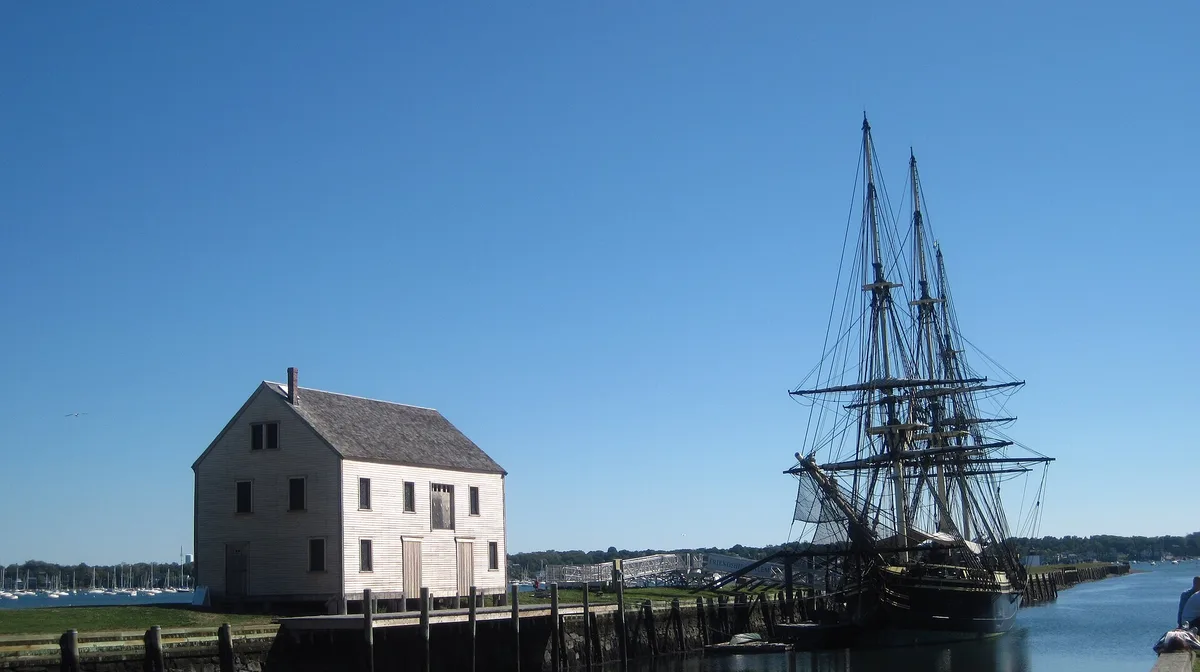
A few of the visual fingerprints we lean into when we shoot, brand and market a Salem Massachusetts Derby Wharf property — courtesy of the open Wikimedia Commons archive.
Cavmir markets Salem properties on the eleven months that are not October, because October needs no help from anybody. Haunted Happenings fills this city for the entire month, rates go to levels that have no relationship to the rest of the year, and every owner in Salem already knows it. What most of them do not have is a plan for February. The plan exists and it is better than people assume. Salem has the Peabody Essex Museum, which is one of the significant art museums in the country and has nothing to do with witches; it has a maritime national historic site and a replica East Indiaman on the wharf; it has Federal architecture that architectural travellers come specifically to see; and it is half an hour by train from Boston, which makes it a genuinely sensible base for visiting the city without paying Boston prices. Almost nobody markets that last point. We do. We photograph the property and the walk to the train and to the wharf, we write copy that gives a visitor a real reason to come in April, and we handle October with proper advance pricing and minimum stays rather than reacting to demand in August. Then we build the direct booking site, run local SEO, place ads against the shoulder seasons, and hold the guest relationship. We help position and market your property. We never manage it or touch your keys.
Salem's merchants built the wealth, McIntire built the streets, and Hawthorne wrote the stories; the city has been converting all three into visitors for over a century. Cavmir simply writes the modern chapter.
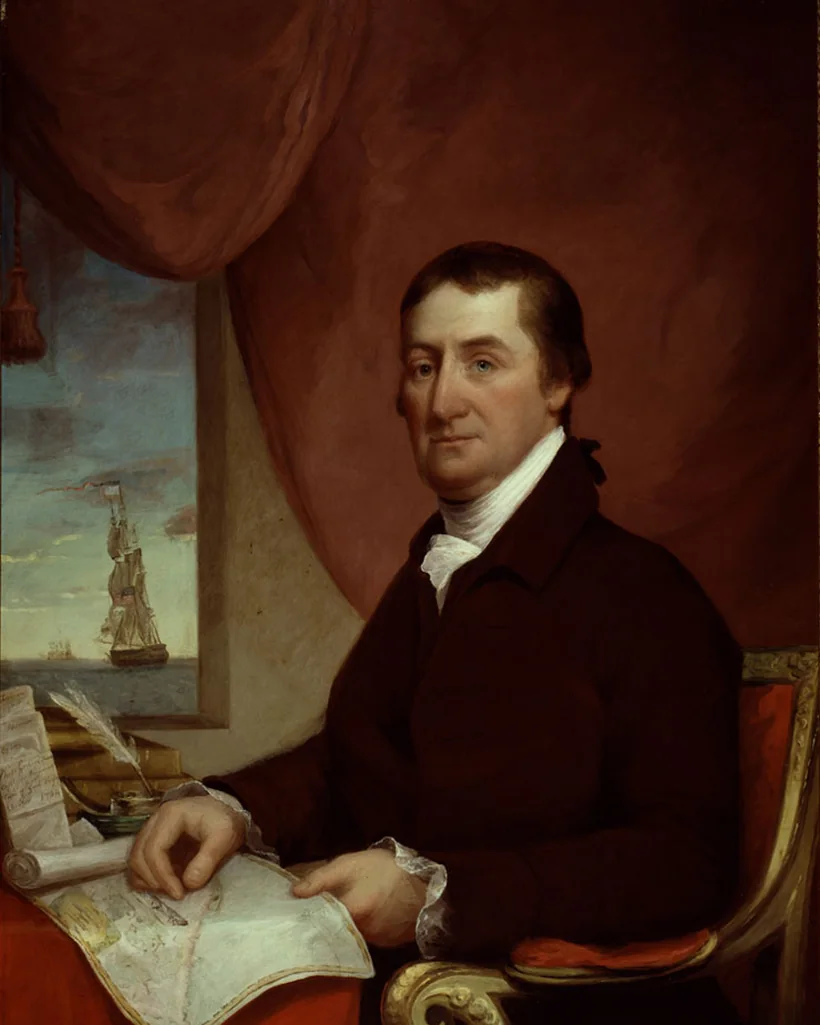
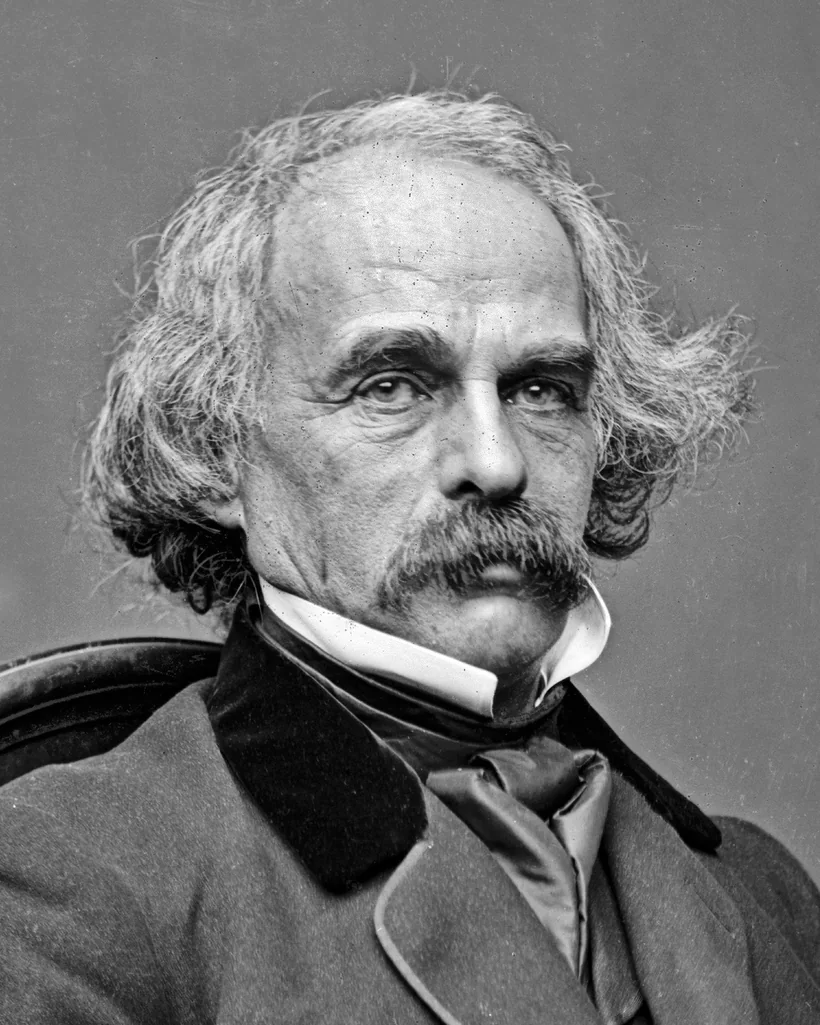
Salem was settled in 1626 and was for a time the most important town in the Massachusetts Bay Colony. The events everyone knows about happened in 1692, and the geography of them is routinely misunderstood: the accusations began in Salem Village, a farming community that is now the separate town of Danvers, while the trials, the jail and the executions were in Salem Town, which is the city that receives the visitors. Nineteen people were hanged, one was pressed to death, and several more died in custody. The colony reversed the convictions and paid restitution within twenty years, which is unusual, and the episode entered American political vocabulary permanently. What happened afterwards is the part Salem tells less often and is arguably prouder of. After the Revolution, Salem's merchants worked out the trade routes to the East Indies before their competitors, and for a period the town was extraordinarily rich; at one point Salem ships dominated the American pepper trade with Sumatra so completely that the town's name was known in ports across Asia. That money built the Federal houses along Chestnut Street, funded the East India Marine Society in 1799 whose collections became the Peabody Essex Museum, and left the wharves that in 1938 were designated Salem Maritime, the first National Historic Site in the United States. Nathaniel Hawthorne was born here in 1804, worked in the Custom House on Derby Street, and wrote about the place with the ambivalence of somebody whose own great-great-grandfather had been one of the 1692 judges. The maritime economy declined as ships outgrew the harbour, and Salem became a manufacturing town and then a commuter city. The witch tourism that now dominates October developed properly only in the later twentieth century. For an owner, the practical inheritance is a city with one overwhelming month, a genuinely excellent museum and maritime offering the rest of the year, and a commuter rail line to Boston.
Before the platforms, the first National Historic Site in the country preserved Derby's wharf, Hawthorne's novel kept a 1668 house in print, and Chestnut Street stayed the showpiece the shipping fortunes paid for. The city's past does the marketing here, and it always has. It is the same business Cavmir is in today.
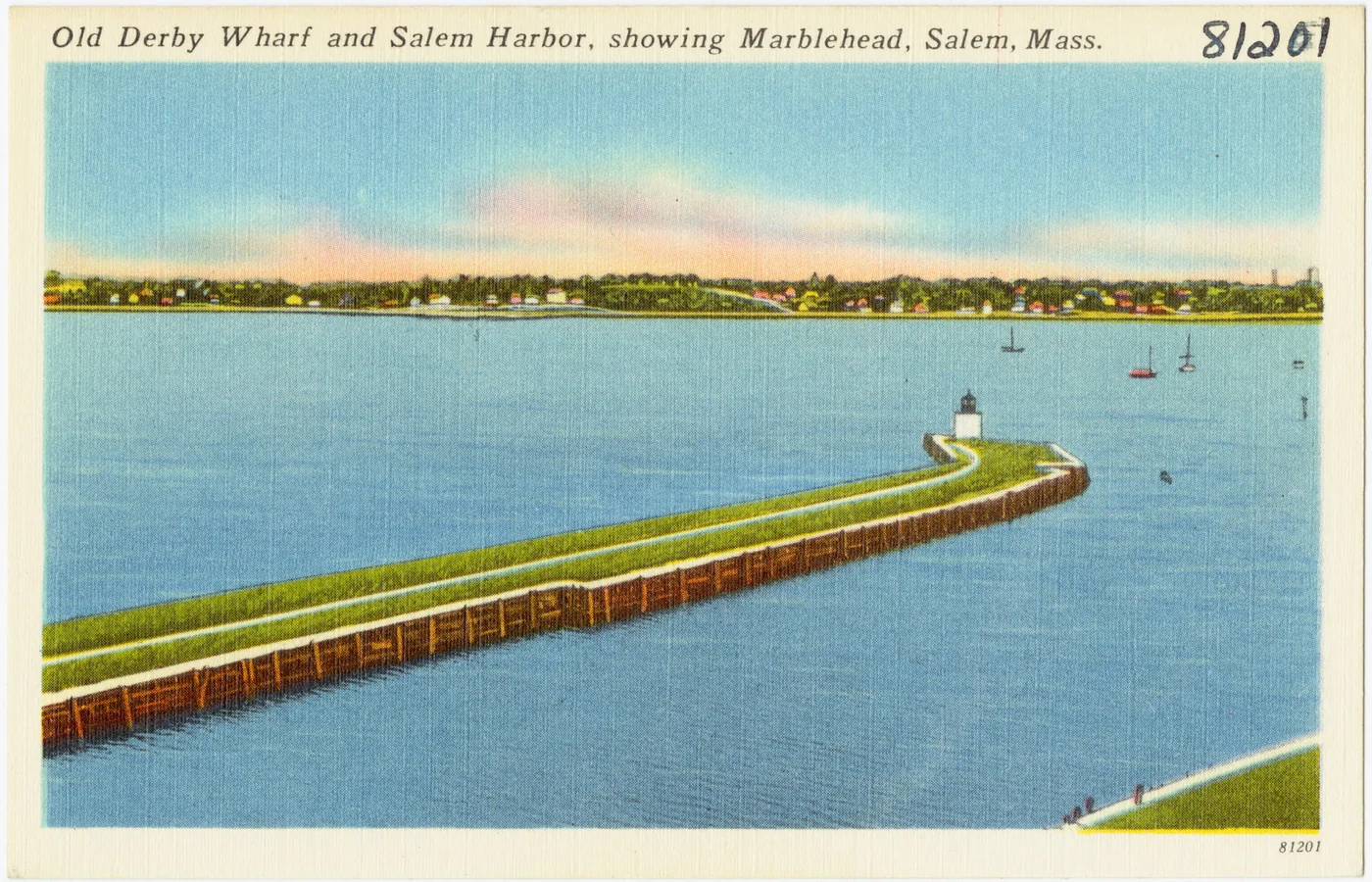
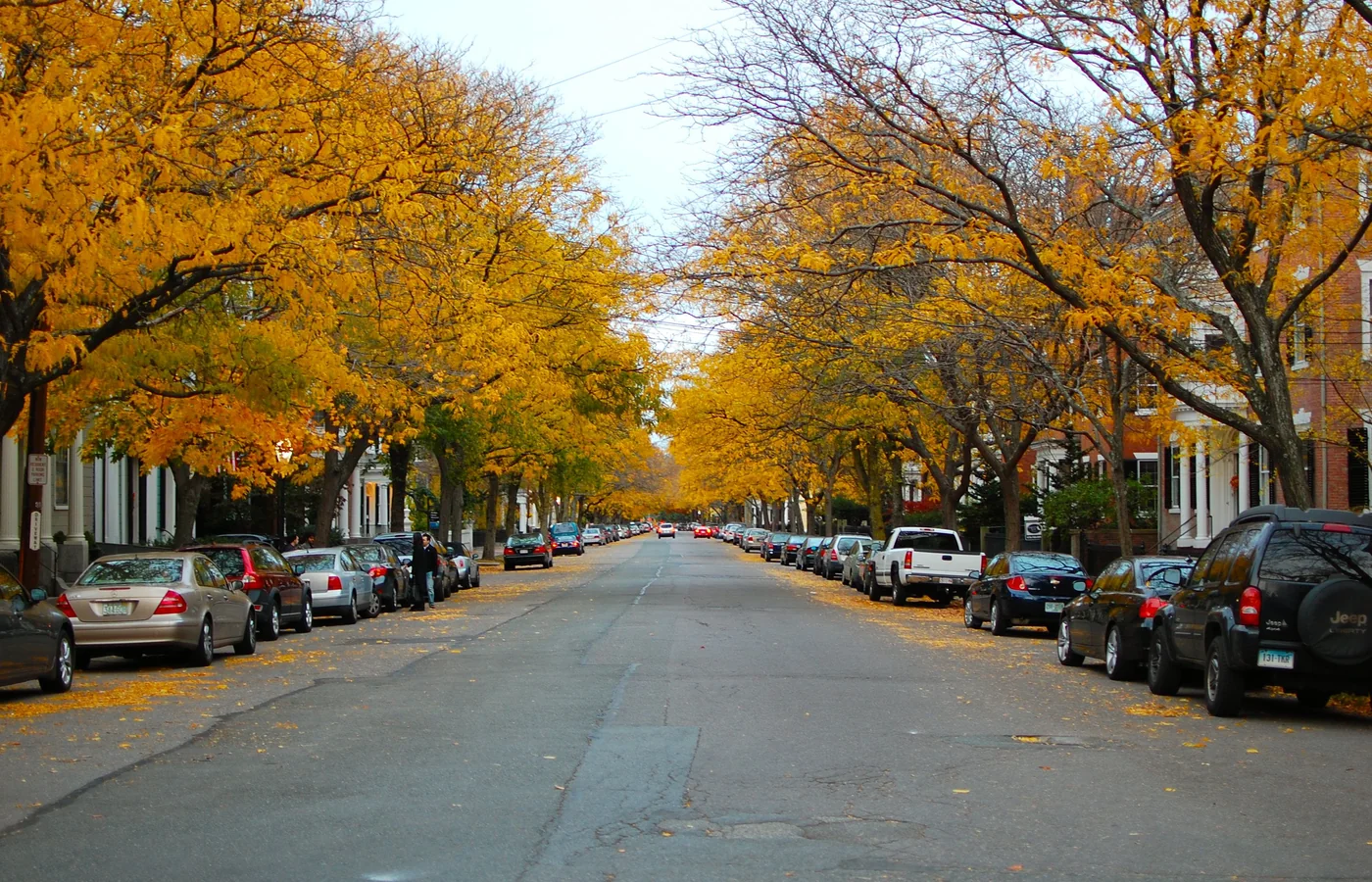
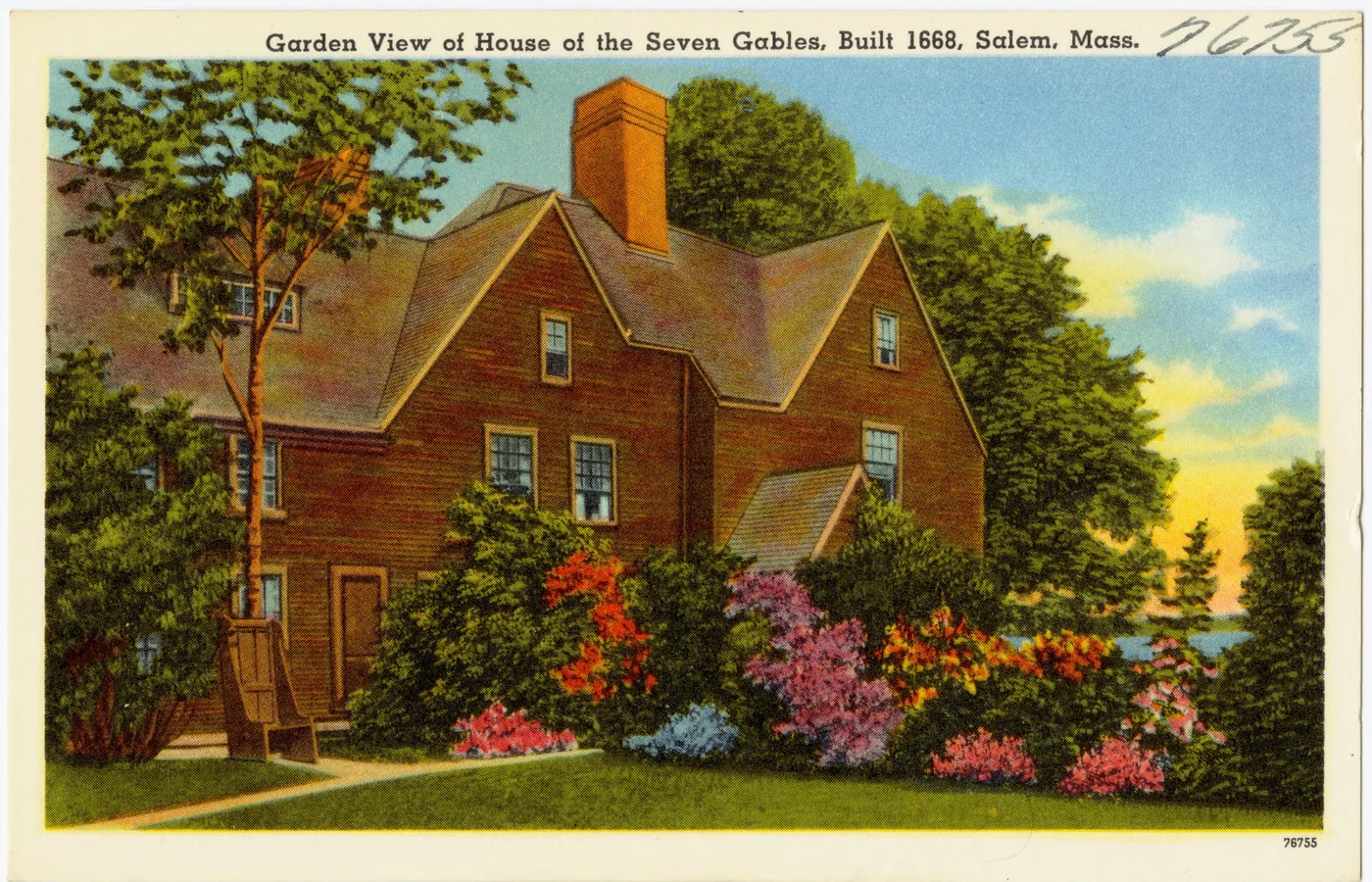
Historical images: public domain and Creative Commons via Wikimedia Commons — James Frothingham, Mathew Brady, Tichnor Brothers collection (Boston Public Library), Fletcher6, and others.
October is not a peak in Salem, it is a different market that happens to occupy the same buildings. Haunted Happenings runs the whole month, the city receives an enormous share of its annual visitors in those four or five weeks, and rates move to levels that bear no relation to the rest of the year. Price it early, price it firmly, and set minimum stays, because demand vastly exceeds supply and there is no reason to be cautious. The mistake is to let October define your whole approach. The other eleven months need a completely different pitch and most owners here do not have one. Summer is genuinely good, with the maritime site, the harbour, Salem Willows and easy access to the North Shore beaches. Spring and early autumn suit the museum and architecture trade, and the Peabody Essex is a serious enough institution to be a destination in itself. And the commuter rail to Boston in about half an hour makes Salem a rational, cheaper base for visiting the city, which is a large and almost entirely unaddressed audience. Build weekday rates that make sense for that guest. Winter outside the holidays is the genuine trough and responds to length of stay rather than to discounting. Remember the guest pays the Massachusetts room occupancy excise, the local option and possibly a community impact fee on top of your rate.
One month dominates. October is Haunted Happenings and the entire city is full, at rates several times the annual average, with the last two weekends the most extreme. Summer is a solid second season on the back of the maritime site, the harbour and the North Shore. Spring and September suit museum and architecture visitors and offer the city at its most pleasant without the crowds. Winter, outside the holiday period, is the trough, and it is the right window for maintenance, reshoots and anything requiring the property to be empty. February is the quietest month of the year here by a distance.
Salem's short-term rental ordinances were adopted by the City Council in 2018, and the framework is administered with the assistance of a third-party compliance provider. Annual registration is required and the fee is reported at $50, which is among the lowest on this map. The registration is not the demanding part. Operators must also obtain a Certificate of Fitness, and this is where Salem differs from most cities: short-term rentals here are inspected annually, rather than on the three-year cycle applied to other residential rental property, or on a change of ownership. That annual inspection requirement is a deliberate policy decision reflecting the intensity of use these properties see, and it should be built into your operating calendar and your cost base rather than treated as an occasional event. The provision that determines whether an investment purchase works at all concerns primary residence. If the unit is not the operator's primary residence, the operator additionally requires a special permit from the Zoning Board of Appeals, and must register for the non-owner-occupied trash fee. A special permit is a discretionary approval rather than an entitlement, which means a non-owner-occupied short-term rental in Salem depends on a decision by a board, and that decision should be secured or at least properly assessed before an offer is made. Enforcement is defined: failure to register draws a reported fine of $100, and failure to complete the Certificate of Fitness inspection draws a reported $50 per day until compliance is achieved, which accumulates quickly. Above the city sits the Massachusetts framework: the state room occupancy excise applies to short-term rentals, operators must register each property with the Department of Revenue through MassTaxConnect, and operators must carry liability insurance. Verify the current fees, the ZBA process and the applicable local option and community impact fee positions with the City before you buy or advertise.
Treat October as a separate business with separate pricing, separate minimum stays and separate operational planning, and then spend your marketing effort on the other eleven months, because that is where the unclaimed ground is. The single most under-used asset in this market is the commuter rail. Salem is roughly half an hour from Boston's North Station, and a guest who wants to visit Boston without paying Boston accommodation prices has an excellent reason to stay here that almost no listing articulates. Say the journey time, name the station, give the walk from your door. Second, sell the Salem that is not about witches, because it is genuinely first-rate and it reaches a different guest entirely: the Peabody Essex Museum is one of the significant art museums in the country, Salem Maritime was the first National Historic Site in the United States, the Friendship is tied up at Derby Wharf, and the Federal architecture on Chestnut Street is as good as anything in New England. Third, clear up the geography for guests: the 1692 accusations began in what is now Danvers, and visitors interested in the actual history should be told where things happened rather than left to assume every site is authentic. Fourth, be very clear about parking in October, when the city is effectively full and driving in is genuinely difficult. Fifth, build the annual inspection into your calendar so it never becomes a $50-a-day problem.
The extreme concentration of demand into October means annual revenue depends heavily on four or five weeks, which is a risky base and tempting to over-invest against. The annual inspection cycle is stricter than for other rental housing and adds recurring cost and administrative work. For anyone not living in the property, the Zoning Board of Appeals special permit is a discretionary approval that can be refused, which introduces genuine acquisition risk. Enforcement penalties accrue daily. And in October the city itself becomes difficult to operate in, with parking, access and turnover all harder exactly when the stakes are highest.
Massachusetts requires short-term rental operators to carry liability insurance, so this is not an optional consideration here; it is a statutory obligation and it should be documented. Beyond compliance, insure the property on a policy written for paid guest occupancy, either a dedicated short-term rental product or a landlord policy with an explicit short-term rental endorsement, arranged in writing. A standard homeowner's policy will generally decline a guest-related claim. Ask about liability limits, loss of income and guest belongings, and confirm the policy limits meet or exceed the state requirement. Salem's building stock drives the rest of the conversation: much of the desirable inventory is eighteenth and nineteenth century, and insurers will ask about the age and condition of wiring, heating and roofing, and may require updates as a condition of cover. Older timber-framed houses in dense historic streets also carry a different fire risk profile from modern construction. Coastal exposure matters near the harbour, where wind and flood should be considered separately, since flood is excluded from standard policies. Winter freeze and ice dam claims are routine in this climate. Platform host protection supplements a policy rather than replacing it.
Massachusetts brought short-term rentals within the room occupancy excise regime, and the obligations are layered. The state room occupancy excise applies at 5.7%, and a local option room occupancy excise may be imposed by the municipality at up to 6% on top of it. A community impact fee may also apply in municipalities that have adopted one, typically aimed at professionally managed or non-owner-occupied properties, and the Cape and Islands surcharge does not apply to Salem. Operators must register each property they offer with the Commissioner of Revenue through MassTaxConnect, and registration is per property rather than per operator. Confirm Salem's current local option rate and its position on the community impact fee with the City and with the Department of Revenue before publishing a combined figure, since these are locally adopted and can change. Intermediaries and platforms have obligations under the same framework and may collect and remit on your behalf, but the position depends on how the booking is made and direct bookings generally remain your responsibility. Registration for tax is separate from your city registration and your Certificate of Fitness. Ask your accountant how the income should be treated federally and for Massachusetts purposes.
The financing question in Salem turns on whether the property will be your primary residence, because the regulatory path diverges sharply at that point. If you will live there, the route is an ordinary owner-occupier mortgage and the city's requirements are registration, a Certificate of Fitness and the annual inspection, all of which are administrative. If you will not live there, the city additionally requires a special permit from the Zoning Board of Appeals, and that is a discretionary approval rather than a right. A lender underwriting short-term rental income on a non-owner-occupied property here is therefore underwriting income that depends on a board decision, and a well-advised lender will ask about it. Address it early: establish the ZBA position, ideally before the offer, and put the documentation in the loan file. Conventional investment mortgages and DSCR products are available for buyers whose permitting position is clear. The other significant factor is the building stock. Salem's attractive inventory is largely historic, sometimes within local historic district controls that restrict alterations, and appraisers and lenders will look hard at systems and structure. Budget realistically for what an eighteenth or nineteenth century house needs, and check whether historic district review applies before planning any work.
Two things to watch. The first is how the city manages October, because the concentration of visitors into a single month has become a civic issue in its own right, touching parking, transport, public safety and residents' patience. Measures that manage crowding, whether transport changes, event scheduling or restrictions on how properties operate during peak, would affect owners directly, and they are the sort of thing that gets decided at council in the spring for the following autumn. The second is the state framework. Massachusetts brought short-term rentals into the room occupancy excise relatively recently, community impact fees are locally adopted and have been spreading, and further local option adjustments are plausible; each one widens the gap between your rate and the guest's total. On the demand side, Salem's position is secure and probably improving. October is not going to shrink. But the more interesting opportunity is the rest of the year, where the Peabody Essex, the maritime site and the half-hour train to Boston give the city a genuine year-round case that remains largely unmade by the local inventory. The owner who builds that case, and a direct booking channel to go with it, is competing for eleven months against almost nobody.
Salem is a city that gets visited for one reason and is worth visiting for about six. The 1692 trials are the reason a million people come in October, and the city has a genuinely complicated relationship with that, since the accusations actually began in what is now Danvers and the thing being commemorated is a judicial atrocity. But walk two streets away from the souvenir shops and you find the other Salem, which is extraordinary. The Peabody Essex Museum grew out of a society founded in 1799 by sea captains who were required to bring back curiosities from beyond the Cape of Good Hope, and it is now one of the significant art museums in the country. Salem Maritime was the first National Historic Site in the United States, designated in 1938, and there is a full-size replica East Indiaman tied up at Derby Wharf. Chestnut Street is as fine a run of Federal architecture as exists in America, and it was built with pepper money, because for a while Salem merchants effectively owned the American pepper trade with Sumatra and the town was among the richest per head in the country. Hawthorne was born here and clearly never entirely forgave the place. And it is half an hour by train from Boston. We like Salem because the real history is stranger and better than the story it sells.
A great property in Salem Massachusetts Derby Wharf doesn't just want a listing — it wants a point of view, an audience, and a brand the city itself would recognise.
Eight things to know about Salem before writing listing copy, in a market where one month of the year is most of the revenue.
Haunted Happenings fills the city for four or five weeks at rates unrelated to the rest of the year. Price it early and firmly.
Salem is on the commuter rail to North Station. A cheaper base for visiting Boston, and almost nobody markets it.
Grown from a sea captains' society founded in 1799. Nothing to do with witches and a genuine reason to visit.
Derby Wharf, the Custom House and the Friendship replica. Designated 1938 and consistently under-visited.
Built on East India trade money and among the finest streets in New England. Architectural visitors come for this.
The 1692 accusations started in Salem Village, now Danvers. Worth telling guests so they know what they are seeing.
The city is effectively full. Be explicit about parking and access, or expect the review that follows.
Short-term rentals are inspected annually rather than every three years. Build it into your calendar.
The three examples below are composite and illustrative. They are drawn from patterns common in markets with a single dominant season, and they do not describe particular businesses or clients.
A well-located house earned the large majority of its annual revenue in October and produced very little from November through September, with the owner treating the rest of the year as unavoidable.
We built a year-round proposition around the Peabody Essex, the maritime site and the Federal architecture, and separately around Salem as a cheaper base for visiting Boston by train. We reshot for spring and summer and wrote copy aimed at museum, architecture and city-visit guests.
The shoulder and off-peak months began producing consistent bookings from audiences the property had never addressed, and October ceased to be the only month that mattered.
A property a short walk from the commuter rail station marketed itself entirely on witch-trial proximity, competing against dozens of similar listings for the same October guest and ignoring a year-round audience.
We built a second positioning around Boston access: named the station, measured the walk, gave the journey time to North Station, and compared the cost honestly against staying in Boston itself.
The property opened a steady year-round demand stream from visitors to Boston, filling weekday nights that the witch-tourism audience never touched.
A purchaser was buying a second property in Salem as a pure investment, intending to run it as a short-term rental, and had budgeted only for the modest annual registration fee.
We set out that a unit which is not the operator's primary residence additionally requires a special permit from the Zoning Board of Appeals and registration for the non-owner-occupied trash fee, explained that a special permit is discretionary rather than automatic, and identified what needed establishing before the offer.
The buyer assessed the zoning position before committing rather than after closing, and went into the purchase understanding that the right to operate depended on a board decision.
Demand in Salem peaks around October and runs quietest around January through March. Here is how the year actually books — and what to do about each stretch of the calendar.
October is not a peak so much as a different market occupying the same buildings. Haunted Happenings runs the whole month, the city receives an enormous share of its annual visitors in those weeks, and rates move to levels unrelated to the rest of the year. Price it early and firmly, set minimum stays, and plan the operational side well in advance.
Summer is a solid second season on the maritime site, the harbour and the North Shore beaches, and spring and September suit the museum and architecture trade with the city at its most pleasant. The genuinely under-used angle all year is the commuter rail to Boston, which makes Salem a cheaper base for visiting the city.
Winter outside the holiday period is the trough, and February is the quietest month of the year by a distance. It responds to length of stay rather than to discounting. Use it for maintenance, for the annual inspection the city requires, and for a spring reshoot before the season turns.
October books furthest ahead by a wide margin, frequently the previous winter for the final weekends. Summer fills a few weeks out. The rest of the year is close in, which is exactly why the Boston-base angle is worth marketing deliberately.
Short in October, where two and three night stays dominate and turnover is high. Longer in the shoulder seasons, particularly from Boston-bound guests who stay a week and commute in. Winter, when it books, books long.
Walkability decides most bookings here, both to the downtown and to the commuter rail station. In October, being able to leave the car parked is worth more than any interior feature. Historic character is a genuine asset in this city and should be photographed rather than modernised away.
Start with photography that shows what a guest actually gets here, then write the listing around a real itinerary rather than a feature list. Build a direct-booking site so returning guests can come back without going through a platform, and keep an email list segmented by season so you can reach last year's visitors before the calendar opens. Local search matters more than people expect in a market this size, because guests search the destination and the attraction rather than the word rental. A marketing agency layer handles the photography, the listing copy, the direct-booking site and the local SEO as one system instead of four disconnected jobs.
October dominates completely. Haunted Happenings fills the city for the whole month at rates unrelated to the rest of the year, and the final weekends are the most extreme. Summer is a solid second season, spring and September suit museum visitors, and winter outside the holidays is the trough.
October books furthest ahead by a wide margin, often the previous winter for the last weekends of the month. Summer fills a few weeks out. The remainder of the year is largely last-minute, which is why the Boston-base angle is worth marketing deliberately.
A dense New England drive market with Boston immediately next door, plus Providence, Portsmouth and Hartford, and a national flown-in audience that comes almost entirely for October. The overlooked group is people flying into Boston who would rather not pay Boston accommodation prices.
Parking is the biggest single factor, especially in October when driving into the city becomes genuinely difficult. After that, a full kitchen, laundry and enough sleeping space for a family or a group carry the most weight.
Run your Airbnb, Vrbo, or website through Cavmir's free grader. It checks the things that decide whether guests book in Salem — photos, listing copy, page speed, local search — and shows you where bookings leak. Takes about a minute, and there's no sales call attached.
If the report says your booking engine is the weak link, that's fixable: a direct-booking website of your own means repeat guests stop paying platform fees to come back to you. That's the work Cavmir does — see Airbnb website design in Salem.
Send us the listing and we'll tell you what we'd change. Not a pitch deck — a straight read on your photos, your title, your rates against the Salem comp set, and whether a direct-booking site would pay for itself.
You'll hear back from a person, usually inside one business day. If we don't think we can move your numbers, we'll say so. Cavmir is a short-term rental marketing agency — we position and market properties, we don't manage them.
Talk to Cavmir today. We'll show you exactly what your Salem property is leaving on the table — and how fast we can change that.
Book a Free Strategy CallPhotography via Wikimedia Commons (images resized and cropped): Salem Maritime National Historic Site pier by Susana M. Tejada (CC BY-SA 3.0) · Friendship of Salem by Fletcher6 (CC BY-SA 3.0) · House of the Seven Gables (front angle) - Salem, Massachusetts by unknown (Wikimedia Commons) (CC BY-SA 3.0) · Salem Willows Path by Fletcher6 (CC BY-SA 3.0) · Aerial view of Salem, Massachusetts, March 2022 by Pi.1415926535 (CC BY-SA 4.0) · Chestnut Street Salem by Fletcher6 (CC BY-SA 3.0).
