The cheapest, highest-trust booking you will ever take is from a guest who already stayed with you and loved it. No online travel agency (OTA) fee skimmed off the top. No anxious stranger reading your reviews at midnight, wondering if the photos are honest. Just someone who slept well in your bed, figured out your coffee maker, and drove away already half-planning the next trip. When we talk about Airbnb repeat guests, that's the whole prize: a warm booking that costs you almost nothing to win.
Here's the part most hosts miss. Guest retention isn't a loyalty gimmick you bolt on at the end. It's a different way of running the property from day one. A first-time guest starts at zero trust and you spend money, reviews, and ranking to earn every point of it. A return guest starts at the top. They don't need to be convinced your place is clean or your neighborhood is safe. They already know. All you have to do is be easy to find again and give them a small, human reason to come back to you instead of scrolling through forty other listings.
This playbook walks the whole path: why the economics of a rebooking beat a fresh booking every time, what actually makes someone want to return, how to capture a guest's contact details without breaking any platform rules, the follow-up that turns a five-star review into a second reservation, and the simple system that measures whether any of it is working. None of it is complicated. Most of it is stuff you can start this week.
The Economics: Why a Returning Guest Is the Cheapest Booking You'll Ever Get
Let's start with money, because that's where the case for retention is strongest. When a brand-new guest books through a big platform, a chunk of that reservation walks out the door in service fees before it ever reaches you. When a past guest books again, ideally on your own site, that fee can shrink or disappear entirely. Same guest, same nights, more of the payment staying in your pocket. That gap compounds fast across a busy season.
But the fee is only the obvious part. New-guest acquisition has hidden costs that never show up on a statement. You pay in discounted opening rates to earn your first reviews. You pay in the time you spend answering the same pre-booking questions from someone who's never met you. You pay in cancellation risk, because a stranger who booked on a whim is far more likely to bail than someone who's genuinely excited to return. A repeat guest quietly erases most of that. They cancel less, they complain less, they leave better reviews, and they trust your word when something small goes sideways.
There's a demand side too. Tools like AirDNA can show you how competitive your market has become, and in most desirable areas the answer is "very." When acquisition gets expensive and crowded, the hosts who win are the ones who don't have to re-buy the same guest every year. Retention is how you stop competing for attention you already earned once.
There's one more number that never appears on any single reservation, and it's the one that matters most: lifetime value. A guest who returns four times over five years, and sends one friend your way, is worth many times a one-night stranger, even though each individual booking looks identical on the calendar. That's the quiet math of retention. You're not comparing one booking to another. You're comparing a single transaction to a relationship that keeps paying, referral after referral, with almost no marketing cost attached to any of it after that first stay.
| Factor | New-Guest Acquisition | Repeat-Guest Rebooking |
|---|---|---|
| Platform / OTA fee | Full service fee applies on every booking | Reduced or removed when they book direct |
| Trust at booking | Starts at zero; built through reviews and photos | Already earned; they've slept in the bed |
| Marketing effort | High and ongoing; you compete for attention | Low; a warm nudge is usually enough |
| Pre-booking questions | Many; strangers need reassurance | Few; they know the place and the area |
| Cancellation risk | Higher; impulse bookings fall through | Lower; intentional and excited to return |
| Review outcome | Uncertain; a first stay can go either way | Predictably strong; they're already fans |
| Long-term value | One stay unless you capture the relationship | Compounds across years and referrals |
Read that table top to bottom and the conclusion is hard to argue with. A repeat guest isn't just a little cheaper. They're cheaper, calmer, kinder in reviews, and more likely to send you their friends. The only thing standing between you and more of them is a system to stay in touch. That's what the rest of this is about.
The Mindset Shift: From Filling the Calendar Once to Earning a Guest for Years
Most hosting advice is built around a single goal: fill tonight's calendar. Optimize the title, tweak the price, chase the next stranger. That's a fine way to survive your first season, but it's an exhausting way to run a business, because every morning you wake up at zero again. You're always hunting.
The shift that changes everything is deciding that your job isn't to win a booking. It's to earn a guest. A booking is one transaction. A guest is a relationship that can pay you for a decade if you treat it well. Once you think that way, small decisions start to look different. That $12 bottle of local wine on the counter isn't a cost. It's a deposit on a future reservation. The two extra minutes you spend answering a checkout question warmly instead of curtly isn't wasted time. It's the reason they remember you fondly in ten months when they're planning the anniversary trip.
Industry watchers at Skift have written for years about travelers craving places that feel personal and repeatable, not interchangeable. That trend runs entirely in your favor as an independent host. You can't out-spend a big chain on ads, but you can absolutely out-care them. A returning guest doesn't want a lobby and a loyalty tier. They want the little house on the quiet street where the host remembered they like the firm pillows. That's a game you can win, and it starts with deciding to play it.
Stop measuring a stay by the payout and start measuring it by the odds of a second visit. After every checkout, ask yourself one honest question: "Would that guest book me again without shopping around?" If the answer is no, the fix usually isn't your price. It's a missing human moment somewhere in the stay.
The Stay That Actually Earns a Return
Everything downstream, the emails, the offers, the loyalty ideas, is worthless if the stay itself was merely fine. Nobody drives out of your driveway thinking "that was adequate, I must come back." Retention is earned inside the four walls first, and it rests on two things that sound simple and are surprisingly rare: reliability and one memorable touch.
Reliability is the boring thing that beats everything
Before you add a single delightful extra, get the fundamentals so consistent they're invisible. The listing matches the reality. The place is genuinely clean, not "we ran out of time" clean. Check-in works the first time without a panicked call. The Wi-Fi is fast and the password is where you said it would be. Hot water, working heat or air, a bed that doesn't make anyone's back hurt. This is the floor, and most guests will forgive a lot if the floor is solid. They'll forgive almost nothing if it isn't. A memorable gift on top of a broken shower just reads as a distraction. Nail the reliability first, every single time, regardless of who cleaned that day.
The word that makes reliability real is consistency. A place that's spotless in June and rushed in August doesn't earn trust; it earns a nervous guest who books elsewhere next time just in case. Consistency comes from systems, not heroics: a written turnover checklist your cleaner follows the same way every time, a restock list so you never run out of coffee or paper towels mid-stay, and a quick pre-arrival walkthrough, yours or a trusted set of eyes, before every check-in. Guests can't see your systems, but they absolutely feel the difference between a property that's run tight and one that's held together by luck.
The one touch they'll tell people about
Once the floor is solid, you earn the return with a touch that feels personal and local. It does not need to be expensive. A handwritten welcome note that uses the guest's name and mentions the reason for their trip does more than a fruit basket ever will. A short, honest guide to the three coffee spots you actually go to. Beach chairs and a cooler already by the door. A playlist that fits the house. The point isn't luxury. It's the feeling that a real person thought about them specifically. That feeling is what they describe to friends, and it's what they remember when they're deciding where to stay next year.
If you want templates for the messages that carry that warmth from first inquiry to checkout, our guide to guest communication templates gives you language you can adapt without sounding like a robot. Warmth at scale is a skill, and it's very learnable.
Capturing Guest Contact Info the Right Way
Here's the honest tension every host runs into. You can't build a retention system if you have no way to reach the guest, but the platform sits between you and their contact details on purpose, and its terms are strict about pulling guests off-platform during an active booking. The answer isn't to bend the rules. It's to build your own audience through legitimate means, so that over time you own the relationship instead of renting it.
Think of it as three honest channels, none of which asks a guest to break a booking or dodge a platform.
- Your own direct-booking site. When a guest books with you directly, they hand you their email and name as a normal part of the transaction, the same way any hotel or shop collects it. That's your cleanest, most durable list.
- A printed welcome guide with a QR code. A quick-response (QR) code in the guidebook on the counter can point to your own site, your local recommendations page, or a simple "join our guest list for return offers" signup. Nobody's forced to scan it. The ones who do are telling you they want to hear from you.
- A post-stay email where it's permitted. After checkout, once the booking is complete, many hosts can follow up appropriately to thank the guest and invite them back. Keep it genuine, keep it optional, and always give people a clear way to opt out.
None of this is sneaky. You're not stealing anyone away mid-trip. You're giving a happy guest an easy, opt-in way to stay in touch with a host they liked. That distinction matters, both for staying inside the rules and for keeping the relationship built on goodwill instead of a workaround.
The welcome guide itself is worth doing well, because it does double duty. On the surface it's the thing guests actually want: where to park, how the thermostat works, your three favorite dinner spots, the beach access nobody else seems to know about. Underneath, it's your most natural bridge to a lasting relationship. Put the QR code on its own clean page with a real reason to scan, whether that's return offers, a local recommendations map, or first pick of holiday dates. Keep the ask honest and optional, and you'll find the guests who scan are exactly the ones worth staying in touch with.
Put the QR code somewhere it earns its scan. A tiny code buried on page nine of a binder gets ignored. A clean card on the kitchen counter that reads "Loved your stay? Scan for a returning-guest rate" gives people a reason to act while the good feeling is fresh. The offer is the bait; the code is just the hook.
Your Direct-Booking Site: The Home Base for Every Rebooking
If retention has a headquarters, it's your own website. Every other tactic in this playbook eventually points back here, because a direct-booking site is the one place a returning guest can rebook without a platform fee, without re-competing against your neighbors' listings, and without you paying to reach a person you already earned. It's the difference between renting your guest relationships and owning them.
A good direct-booking site does three quiet jobs at once. It lets a past guest book in a couple of clicks. It captures their email honestly at checkout so you can invite them back later. And it gives you a home for the returning-guest offers, the "book next year now" nudges, and the second property you might add down the road. You don't need anything elaborate. You need something fast, trustworthy, and easy to book on a phone at 11pm.
What turns that site from a brochure into a booking machine is trust and speed. Real photos that match the stay, not stock images. Honest, specific descriptions. A few guest quotes so a returning visitor feels the same confidence they had on the platform. A booking flow that works within a thumb's reach on a phone, because that's where most people actually book. And clear, visible pricing with your returning-guest rate applied, so a past guest can see at a glance that coming direct rewards them. Get those right and the site quietly does the selling for you, night and day, without a fee attached.
If you're starting from scratch, our walkthrough on getting more direct bookings covers the fundamentals, and the deeper piece on building a direct-booking system alongside Airbnb shows how to run both channels without cannibalizing your ranking. When you'd rather have it built for you, Cavmir's direct-booking website service exists for exactly this. We market and build the home base; you keep hosting the guests.
The Post-Stay Follow-Up Sequence
The days right after checkout are the warmest window you'll ever have with a guest, and most hosts waste them completely. The guest is still glowing from the trip, the memory is vivid, and then months of silence let it all fade. A short, thoughtful follow-up sequence keeps the relationship alive without ever feeling like a sales pitch. Here's a sequence that works, spaced out so you're never crowding anyone.
- Within 24 to 48 hours: the genuine thank-you. Short and human. Thank them, say you enjoyed hosting them, mention one specific thing if you can ("hope the sunrise hike was worth the early alarm"). No ask. Just warmth.
- Around a week later: the soft invitation to stay in touch. Now you can mention your guest list or your own site, and note that past guests get a returning rate. Still light. You're planting a seed, not closing a deal.
- A few months out, tied to their season: the return nudge. This is where you say "you came in July last year, and July books up fast here, want first pick of dates?" Timed to their pattern, it lands as helpful, not pushy.
To make that first message concrete, here's the shape of a thank-you that works: "Hi Maria, thank you so much for choosing our place, it was a pleasure hosting you and Tom. I hope the drive home was easy and the sunrise hike lived up to the hype. If you're ever back this way, we'd love to have you again, and past guests always get our returning rate. Take care, and safe travels." Short, specific, warm, and one gentle mention that the door's open. That's the whole art of it.
The craft here is restraint. One warm message beats five needy ones. If you want to build this out properly with timing, segments, and copy that sounds like you, our vacation rental email marketing guide is the deep version of this section.
The Review-to-Rebook Loop
There's a beautiful little loop hiding inside the follow-up sequence, and it connects reviews to rebookings. When a guest leaves you a glowing five-star review, that's not the end of a transaction. It's a signal. They just told the entire internet, and themselves, that they loved it here. That's the perfect moment to reply publicly with warmth and then follow up privately with a genuine "come back anytime, and here's a rate for when you do."
The loop runs like this: a great stay earns a great review, the great review reminds the guest how happy they were, your warm response invites them back, and the return stay produces another great review that pulls in new guests too. Reviews and retention feed each other. If you want the front half of that loop running like clockwork, our piece on the system behind consistent five-star reviews pairs perfectly with everything here.
The Returning-Guest Offer and the Code That Backs It
A warm feeling gets someone thinking about coming back. A concrete offer gets them to actually do it. The returning-guest offer is the small, specific reason you hand a past guest to choose you again without shopping around, and it works best when it's simple, honest, and a little exclusive.
You don't need a steep discount. In fact a huge markdown can cheapen the whole thing and train guests to wait for deals. What works better is a modest, clearly-labeled perk that says "you're not a stranger anymore." A returning-guest rate that's a bit below your public price. A code like WELCOMEBACK that works only on your direct site. A free early check-in or late checkout when the calendar allows. A small upgrade, a bottle of the local wine they liked, chairs already set out. The value is real, but the message underneath it is what matters: we remember you, and we'd rather have you back than chase someone new.
Deliver the code where it does the most good, on your own site, so the rebooking skips the platform fee and lands in your list. Tie the offer to a deadline or a season if you want gentle urgency ("book your return by March for last year's rate"). And track which codes actually get used, because that's the first honest signal that your retention system is producing money and not just good vibes.
A quick word on structuring the offer so it helps instead of hurts. Anchor it to your direct site, never the platform, so the fee savings are what fund the perk. Make it feel earned rather than desperate, tied to being a past guest, not a fire sale anyone can grab. And resist the urge to keep sweetening it. If guests learn that waiting produces a bigger discount, you've quietly trained them to delay. A steady, modest returning-guest rate that never wavers builds more trust than a rotating carousel of bigger and bigger markdowns.
Building and Segmenting Your Guest List
Once guests start opting in, you'll have a list, and a list is only as useful as the way you sort it. A single blast to everyone is fine to start, but the real returns come when you send the right message to the right kind of guest. Not everyone comes for the same reason, and the nudge that lands with one traveler falls flat with another.
Most short-term rental lists sort cleanly into a handful of guest types, and each one wants a different invitation back:
- Families. They book around school breaks and holidays, they care about space, safety, and the crib in the closet. Re-engage them early, before summer and winter breaks fill, and remind them the place already has everything the kids need.
- Remote workers and long-stay guests. They care about fast Wi-Fi, a real desk, and monthly value. Reach them with off-season long-stay rates and the promise of a reliable base they don't have to re-vet.
- Anniversary and special-occasion couples. They travel on a calendar you can predict to the week. A gentle "it's almost that time of year again" note, maybe with a small celebration touch, lands beautifully because you remembered what the trip meant.
- Friends' groups and repeat celebrators. Bachelorette weekends, reunions, the annual guys' or girls' trip. They rebook on a yearly rhythm and often grow the group each time. Ask when they'll do it again and offer to hold the dates; these guests bring their own crowd with them.
You don't need fancy tools for this. A basic customer relationship management (CRM) system or even a well-kept spreadsheet with a few tags, guest type, last stay, favorite room, does the job at the start. The goal is simply to stop treating a honeymoon couple and a family of five like the same inbox. When you segment, your re-engagement stops feeling like marketing and starts feeling like a host who pays attention.
Keep the tagging light enough that you'll actually do it. Three or four fields is plenty to start: guest type, dates of the last stay, one preference worth remembering, and how they found you. The discipline isn't in the tool, it's in the habit of jotting a note the day a guest checks out, while it's still fresh in your head. A messy list you actually update beats a perfect system you abandon by March.
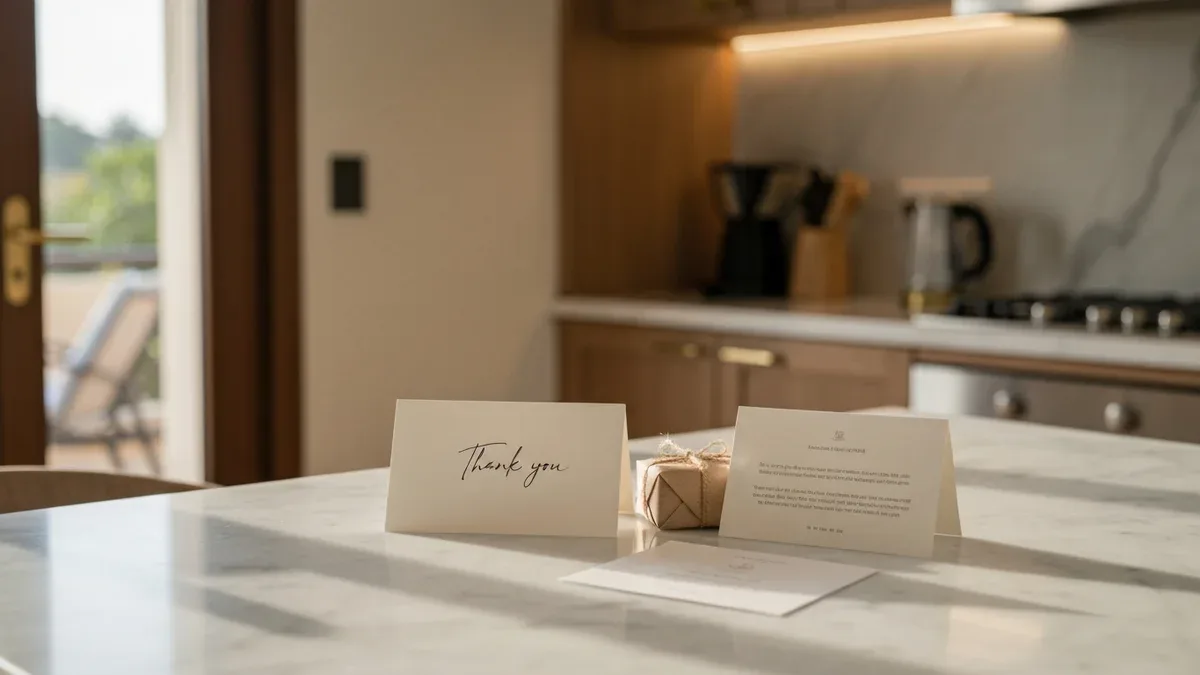
The whole retention system in one frame: a genuine thank-you, a small memorable touch, and an easy, opt-in way to stay in touch. None of it expensive, all of it human.
Remembering Preferences and Personalizing the Next Stay
The single most powerful word in guest retention is their own name, and the second most powerful is a detail you remembered. When a returning guest walks in and the firm pillows they asked about last time are already on the bed, or the pack-and-play is set up, or there's a note that says "welcome back, we saved you the good parking spot," something clicks. They stop being a customer and start being a regular. Regulars don't shop around.
This is where your notes pay off. Every stay, jot down what you learned: the guest who's gluten-free, the couple who loved the record player, the dad who asked twice about the grill. Store it against their name in your CRM or spreadsheet. Then, next time they book, spend five minutes reading it before they arrive. The effort is tiny. The impression is enormous, because almost nobody does it, and everybody notices when someone does.
If it helps, picture a small "guest profile" you keep for each returning household. Nothing formal, just a few honest lines: names, why they travel, the room or bed they preferred, one thing that delighted them, and one thing that annoyed them so you can quietly fix it before the next visit. Read it before they arrive and you can greet a returning guest by name, have the coffee they like already stocked, and skip the questions they've answered before. It's the difference between a rental and a place that feels, a little bit, like theirs.
Cross-Selling a Second Property, the Good Kind
If you host more than one place, your past-guest list is the warmest possible audience for the other one. A family who loved your beach cottage might adore your cabin for their winter trip. The trick is to make it feel like a recommendation from a host they trust, not an upsell. "You mentioned you're skiers, we actually have a place in the mountains you'd love, and as a past guest you get the returning rate on that one too." Same relationship, more inventory, zero acquisition cost. One good guest can quietly become two or three bookings a year across your portfolio if you simply tell them what else you've got.
Seasonal Re-Engagement and the "Book Next Year Now" Nudge
Some of your best rebookings are sitting in a guest's memory waiting for a reason to surface, and the calendar is that reason. Travel is deeply seasonal, and the hosts who win the return booking are the ones who reach out just before the guest starts thinking about the trip, not after they've already booked somewhere else.
The move is to map each guest's season and get there first. Someone who came for the fall colors gets a note in mid-summer. The family that visits every spring break hears from you in January, while dates are still open. And for destinations people genuinely love, the strongest nudge of all is "book next year now." A guest who just left your place on a high is more willing to lock in next year's dates than they'll ever be again. Give them the option before the glow fades.
Concrete timing beats good intentions here, so build yourself a simple re-engagement calendar. Reach summer guests in late winter, before they lock in the family trip. Nudge fall-color travelers in mid-summer. Send the ski crowd a note in early autumn. And catch anniversary and holiday guests a solid month or two ahead of their date, while your best weeks are still open. You don't need automation software to do this well; a recurring reminder and a short, personal note sent by hand often outperforms a polished mass email, because it reads like a host who remembered, not a system that fired.
This works best in places with a strong emotional pull, the kind of destination people return to for decades. A market like Maui is the classic example: someone who fell in love with it once is your warmest possible lead for next year, and a well-timed "same week next year, same returning rate?" often books itself. If your market has that kind of gravity, seasonal re-engagement isn't just smart, it's the biggest lever you've got.
Loyalty, Referrals, Gifting, and a Little Community
You don't need a points program with tiers and an app. Loyalty for an independent host is mostly about making returning feel special and making it easy for happy guests to bring their friends. A few light touches carry a lot of weight here.
A simple loyalty idea. Something a guest can count on. "Every third stay includes a late checkout and a bottle on the house." It's easy to remember, easy to deliver, and it gives people a reason to keep the streak alive with you instead of trying the place down the road.
A referral nudge that respects the friendship. Your happiest guests already tell friends about you. Make it worth their while without making it weird: "Send a friend our way and you both get a returning-guest rate on your next stays." It rewards the behavior that's already happening and turns word of mouth into tracked bookings.
Light gifting and a little community. A small, well-chosen gift at the right moment, a local treat on a repeat guest's second visit, a card on an anniversary stay, buys more loyalty than its price tag suggests. And a low-effort newsletter, a few times a year, sharing what's new at the property, a seasonal local tip, a "we saved returning-guest dates for the holidays" note, keeps you gently top of mind. It's the difference between a host people forget and a host people feel connected to.
Some of this community lives on social media too, where past guests can follow along, tag their trip, and quietly remind their own networks that your place exists. If you want that channel working for retention rather than just posting into the void, our content marketing guide lays out the approach, and Cavmir's social media service can run it for you when you'd rather host than post.
Your Repeat-Guest System, Step by Step
Everything above becomes real when it's a routine you run the same way every time, not a mood you're occasionally in. Here's the whole thing as one repeatable system. Set it up once, and every guest who walks through your door gets fed into it automatically.
- Deliver a reliably great stay. Get the fundamentals flawless every time, then add one personal, local touch. This is the foundation; skip it and nothing else works.
- Capture contact info legitimately during the visit. Put a welcome guide with a QR code on the counter pointing to your site or guest list, and let your direct-booking site collect emails honestly at checkout.
- Earn the review, then run the review-to-rebook loop. Ask well, respond warmly to the five-star review, and use that high point to invite the guest back.
- Send the thank-you within 48 hours. Genuine, specific, no ask. Just close the stay on a human note while the memory is fresh.
- Tag and segment the guest in your list. Family, remote worker, anniversary couple, plus preferences and last-stay dates. Five minutes now saves an hour later.
- Deliver the returning-guest offer. A modest, clearly-labeled rate or code that works on your direct site, so the rebooking skips the platform fee.
- Re-engage seasonally with a "book next year" nudge. Reach each guest just before their travel window, timed to the pattern you recorded in step five.
- Measure your repeat rate and double down. Track who comes back, which offers get used, and which segments respond. Then pour more effort into what's already working.
Run those eight steps for a full season and retention stops being a hope and becomes a habit. The system does the remembering so you don't have to.
How to Measure Your Repeat-Guest Rate
You can't improve what you don't count, and retention is refreshingly easy to count. Your repeat-guest rate is simply the share of your bookings, over a given stretch of time, that come from guests who've stayed with you before. Total the bookings in a season, count how many were returning guests, and there's your number. Track it season over season and you'll see the trend that actually matters.
A few other signals are worth watching alongside it, and none require special software:
- Direct-booking share. What portion of your bookings now come through your own site versus the platform? As retention grows, this should climb, and so should your take-home per stay.
- Offer redemption. How often does your returning-guest code actually get used? That's the cleanest proof your follow-up is turning into money.
- List growth and engagement. Is your guest list getting bigger, and are people opening your seasonal notes? A growing, engaged list is next year's revenue in waiting.
- Time to rebook. How long between a guest's checkout and their next booking? As your nudges get sharper, this window tends to shrink.
Don't obsess over precision, especially early on. Direction beats decimals. If your repeat-guest rate is drifting up season after season, your system is working. If it's flat, walk back through the eight steps and find the one you're skipping, it's almost always the follow-up or the capture. Retention is less about a clever trick and more about doing the unglamorous parts consistently.
Set a simple cadence for checking these numbers so measurement doesn't fall off the to-do list. Once a quarter, or at the end of each season, spend twenty minutes with your bookings and your list. Write down the four or five figures above, compare them to last time, and pick one thing to improve before the next window opens. That's the entire discipline. Hosts who glance at their repeat rate a few times a year, and actually act on what it tells them, pull steadily ahead of hosts who never look at all.
Key Takeaways
- A returning guest is your cheapest, highest-trust booking: little or no platform fee, lower cancellation risk, and predictably strong reviews.
- Shift your goal from filling tonight's calendar to earning a guest for years, and small hosting decisions start paying off differently.
- Retention is earned inside the stay first, through reliability plus one memorable, local touch, before any email ever goes out.
- Capture contact info legitimately: your own direct-booking site, a welcome guide with a QR code, and an opt-in post-stay email, never a mid-booking workaround.
- Your direct-booking site is the home base where past guests rebook fee-free and your returning-guest offers live.
- Run a short, warm follow-up sequence, tie it to the review-to-rebook loop, and back it with a modest returning-guest rate or code.
- Segment your list by guest type, remember preferences, and re-engage each guest just before their season with a "book next year now" nudge.
- Measure your repeat-guest rate and direct-booking share season over season; if the trend climbs, the system is working.
If there's one thing I'd want you to take from all of this, it's that guest retention isn't a growth hack you install. It's just hosting with a longer memory. Everything that earns a return, remembering a name, keeping a promise, following up like a real person, is stuff a good host half-does already. The system in this playbook simply makes it deliberate, so the second booking, and the fifth, stops being luck and starts being the plan.
Start small this week. Pick one step, maybe the welcome guide with a QR code, or the 48-hour thank-you, and run it every time until it's automatic. Then add the next. If you'd like a hand building the home base that makes all of it work, the direct-booking site where your returning guests land and rebook, that's exactly the kind of marketing we do at Cavmir. Tell us about your property and we'll help you turn happy first-time guests into the regulars who keep your calendar full for years.