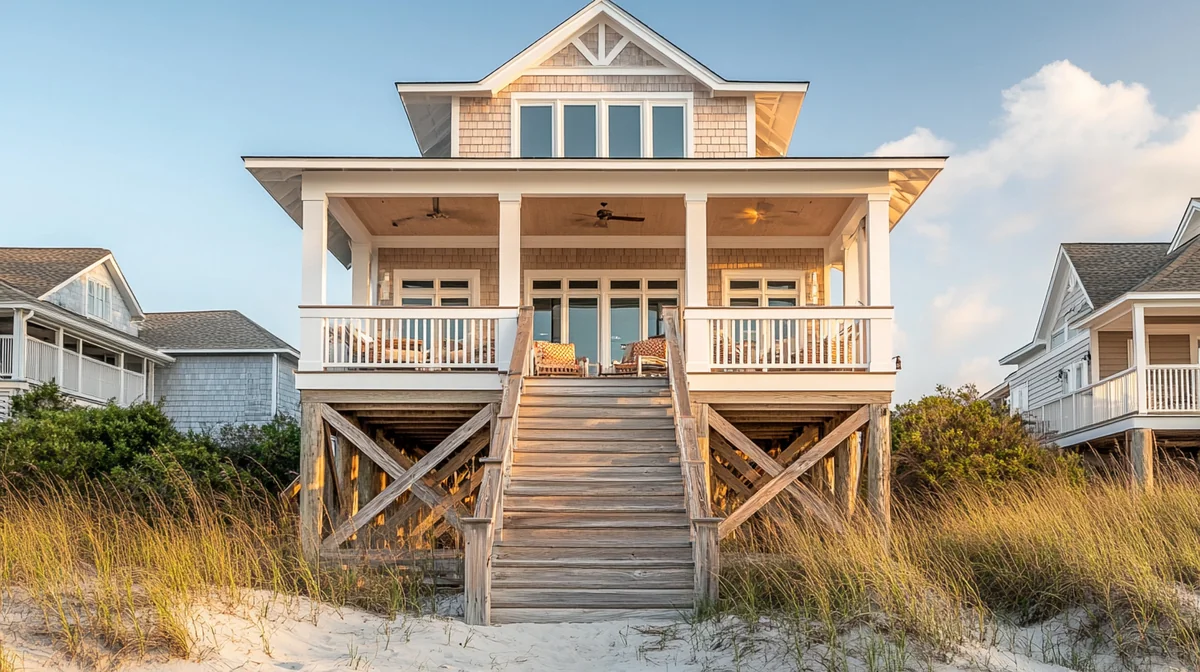




Many owners start marketing in the month the calendar looks empty. By then, the guests who plan ahead have booked somewhere else, often months earlier. A vacation rental marketing plan fixes the timing: it moves your effort to the months when guests are choosing.
Timing matters even more in 2027, because 2026 changed the ground rules. Vrbo announced a flat 12% commission that starts on October 29, Airbnb began showing AI-written descriptions of homes in US search results, Google started booking hotels inside its AI Mode, and the federal fee rule, in force since May 2025, keeps the cleaning fee inside every advertised total. Each change touches your listings, your prices or the way guests find you.
This guide gives you four things you can use this month: a one-page plan you can fill in tonight, an example budget split by channel, a month-by-month 2027 calendar from the plan builder, and a ninety-day start that begins in October 2026. None of it needs new software. Your PMS reports, a spreadsheet and a standing hour on your calendar will do. Every number is either sourced or marked as an example, and the guide is written for owners of one to ten homes and for small managers.
At Cavmir™ we plan and run marketing for vacation rentals, and the chapters follow the order we work in: what a plan does, what changes for hosts in 2027, last year's numbers, your guests, goals you can measure, the channel mix, the budget, the 2027 calendar, content, photos and video, measuring what works, and the first ninety days.
Direct bookings run through every chapter, because your own site is the one channel you control. For that channel in depth, read our direct booking strategy for 2027; this plan puts it in the context of the whole year.
What a Marketing Plan Does for a Rental
A marketing plan is a schedule of decisions made in advance: what you will do, in which month, for how much, and how you will know it worked. Most owners have plenty of ideas. What they lack is the order, and money set aside before the moment arrives. A plan supplies both, and it gives you a reason to say no to anything that does not fit.
The One-Page Plan
Keep it to one page so you will open it again. Here are the seven parts, with an example line for each from an imaginary beach house that earned $150,000 last year. Treat the numbers as illustrations only.
| Part | The question it answers | Example line |
|---|---|---|
| Last year in numbers | Where did bookings and revenue come from, month by month? | Full from late June to mid-August; May and September under 40%; 9 of 48 bookings direct |
| Goals | What will be different by December 2027? | September occupancy from 38% to 50%; direct bookings from 9 to 14 |
| Guests | Who books, from where, and when? | Families within a day's drive who book July stays between January and March |
| Channels | Where will those guests find you and book? | Airbnb and Vrbo for reach; your own site and email for past direct guests |
| Budget | How much, on what, and in which months? | $7,500 for the year, most of it spent October to March |
| Calendar | What happens each month, and who does it? | First-pick email to past direct guests in November; spring break prices set by mid-February |
| Measures | How will you know it is working? | Five numbers checked on the first Monday of every month |
Every example line has a number or a date in it. "Do more social media" cannot be checked. "Two posts a week from March to June, each linking to the summer page" can.
Why Timing Decides Most of the Result
AirDNA's 2026 analysis of US booking behavior finds that March is the single biggest month for short-term rental bookings and December the quietest, with bookings strongest in the first quarter and tapering through the year. Beach properties take about 30% of their annual bookings in the first quarter, and by October only about 20% of the year's bookings are still left to collect.
Mountain homes see two booking surges, one for ski season and one for summer trips, while city bookings spread more evenly. So one calendar does not fit every house. A beach owner who waits until May to market summer has missed the first quarter, the strongest booking stretch of the year, and AirDNA's advice to beach owners is to have rates and the calendar set by early January.
Many of the guests for an empty week chose their trip months ago. Your marketing has to reach them then.
A Plan Is a Tool You Check
The page earns its keep once a month, when you hold your real numbers up against it. If September is filling faster than planned, move money to the next gap. If the January email brought fewer bookings than last year's, find out why before the March peak. A plan nobody opens after the week it was written is a wish list.
What Changes for Hosts in 2027
Six dated changes shape a 2027 plan.
The Changes in Date Order
- May 12, 2025The Federal Trade Commission's Rule on Unfair or Deceptive Fees takes effect for short-term lodging. A mandatory cleaning fee must be part of the total price; government taxes can sit outside it but must be disclosed, and optional add-ons can be left out. It covers any business that advertises short-term lodging, an owner's own website included.
- August 27, 2026Google starts hotel booking inside AI Mode in the US, with hotel chains and large booking sites as partners. Vacation rentals are not part of it so far.
- Late August 2026Reports reveal an invite-only Airbnb test of direct booking links for selected US hosts, with a host fee of 6% or 10% instead of 15.5%. Checkout, payment and guest details stay on Airbnb.
- September 1, 2026Vrbo's sponsored listings go live: hosts bid per booked night for top search spots, with a $5 minimum, and pay only when an ad click becomes a booking.
- September 30, 2026Airbnb's autumn update brings AI search in guests' own words or voice, AI-written descriptions of a home's key features in US search results, and side-by-side AI comparisons of saved homes.
- October 29, 2026Vrbo moves hosts to a flat 12% commission that includes payment processing when Vrbo takes the payment; it can run up to 15% in some regions, and it applies to cleaning fees too. On October 7, Skift reported that Vrbo plans to soften its rate parity clause so hosts can offer lower rates on their own sites, while keeping parity with other booking platforms. The new wording was not published as of October 9.
What Each Change Means for Your Plan
Vrbo's change widens the gap between a Vrbo booking and a booking on your own site, which makes direct marketing worth more. Vrbo's new parity wording is not out yet, so read it before you price your own site below Vrbo. Until then, compete on what your site adds: perks for past direct guests, first pick of dates and a person who answers. Our guide to Vrbo's 12% fee and the parity rule covers the details.
Airbnb charges most hosts a single 15.5% fee, with the rest typically paying 14% to 16%. Its direct booking links are an invitation-only test that keeps the guest's details on Airbnb, so plan your own site and guest list as if the test did not exist.
AI search changes who reads your listing first. Airbnb's AI descriptions sum up a home's key features, and its AI comparisons draw on reviews and the details hosts provide, so clear, complete facts and recent reviews now carry more weight. Our guide to AI agents booking vacation rentals looks at where this is heading. Google's AI Mode booking covers hotels only, as of October 2026, so your way into Google is still your own site and Google's free vacation rental booking links, covered in chapter six.
Vrbo's sponsored listings charge only when an ad click becomes a booking, so they suit a small test on your weakest weeks. Airbnb's chief executive has called sponsored listings a $1 billion opportunity, but there is nothing for hosts to buy yet, so hold no budget for it.
Show the total price with cleaning included wherever you show a price: your site, your ads and your emails. States can add their own rules, and California's all-in price law has covered short-term rentals since July 1, 2024. Ask your lawyer which rules apply where your homes are.
Start With Last Year's Numbers
Last year is free market research. Your PMS and listing dashboards already know when guests booked, how far ahead, through which channel and at what price, and they know your house better than any national average in this guide.
The Numbers to Pull
| Number | Where to find it | What it tells you |
|---|---|---|
| Occupancy and average nightly rate, by month | Your PMS, or the Airbnb and Vrbo performance pages | Which months need more guests and which can carry higher prices |
| Booking lead time, by season | A reservation export: days from booking date to arrival | How early to market each season |
| Channel mix, in bookings and in revenue | Your PMS channel report | Where guests come from and what each channel costs you |
| Repeat guests | Guest records matched by email or name | The size of your cheapest audience |
| Review scores and themes | Airbnb and Vrbo reviews, plus any on your own site | What to promise in your copy and what to fix first |
| Website visits and inquiries | Google Analytics and your inbox | Whether your site wins new guests or only reassures ones who found you elsewhere |
| Weeks that never filled | Your calendar, month by month | The gaps your plan has to target |
How to Read Them
Start with lead time, because it sets your calendar. Export last year's reservations, count the days from booking to arrival, and average them by season. If, say, your summer guests booked about 120 days out and your fall guests about 25, your summer marketing belongs in winter and your fall marketing in late summer.
Then look at the gaps. An empty week often has a reason you can fix. It may have been priced like July when it was a June week, or it may have needed a two-night minimum instead of seven. Write each gap down with your best guess at the cause.
Channel mix and repeat guests show where your cheapest bookings live. A repeat guest costs nothing to find, and a direct booking avoids a platform fee. If you cannot count your repeat guests because the records are split across platforms, fixing that becomes a goal in itself.
The Market Around You in 2026
Read your numbers against the market, and watch for calendar tricks. AirDNA's August 2026 review showed US revenue per available night down 0.6% from a year earlier, with occupancy at 57.8% and the average daily rate up 2.7% to $287.34. AirDNA put the dip down to the calendar: Labor Day weekend fell in August in 2025 and in September in 2026. It falls in September again in 2027, so August and September will compare like for like next year.
As of mid-September, AirDNA said no future month was tracking less than 9% ahead of 2025, while warning that higher energy prices and softer consumer sentiment could still dent some last-minute bookings. US listings grew only 2.0% year over year in August, which AirDNA ties to mortgage rates near 6.7% to 7%. For an owner already in the market, that means competition is growing slowly.
Ski owners need one more line. AirDNA says a snow drought all but erased the January and February 2026 season in many Western destinations, so plan a thin-snow version with other reasons to visit ready to promote.
Know the Guests You Are Marketing To
Every message in your plan is written to someone, and your best guests have already described themselves, in your booking records and in their reviews.
Build Your Guest Types
- Export the bookings. For last year's stays, pull party size, length of stay, lead time, channel and, where your PMS records it, the guest's home city.
- Read the reviews. Note the occasion each guest mentions, such as a reunion, a birthday or a first trip with a baby, and the words they use to praise the house.
- Group them. Aim for two or three types; with more than four, the groups get too thin to market to.
- Write one line per type. When they book, what they need to see, which message fits and where they will see it.
Here is the template, with example rows for the imaginary beach house.
| Guest type | Books when | Message that fits | Channel |
|---|---|---|---|
| Families, summer weeks | January to March, for June to August | Total price with cleaning, bed layout, crib and baby gear, walk to the beach | Airbnb, Vrbo, email to past direct guests |
| Couples, September and October | Often a few weeks ahead | Quiet beaches, a longer-stay offer, restaurants still open | Your site, social media, Google |
| Large groups for a celebration | Six months or more ahead, for big homes | Sleeping count, parking, house rules up front | Your site, Vrbo, event and wedding partners |
The booking column matters most for your calendar. AirDNA found that for large coastal homes with five or more bedrooms, more than 30% of October to January bookings are for stays six or more months away, and only 9% are last-minute. For coastal studios and one-bedrooms it is 8% six months out and more than a quarter within a week. A big house and a small condo on the same beach need different calendars.
What Guests Weigh Before They Book
Vrbo's Built to Stay survey, run with the Harris Poll among 1,758 adults in seven countries in April 2026, works as a checklist of what guests look for.
The same survey found 59% call high or unclear cleaning fees a deal-breaker and 81% would pay more for stronger trust signals. Cleanliness and reliable core amenities topped the amenity list at 78% each. And 91% said promotions influence where they book, with 38% saying a promotion led them to extend a stay, which makes a longer-stay offer worth testing in your shoulder months.
Families have new help on both big platforms. Airbnb is rolling out BabyQuip baby gear in more than 60 US cities from November 2026, and Vrbo added same-day bookings and more flexible cancellation options in September. If families are one of your types, list what you already provide, from a crib to pool fencing, on every channel.
Past guests who booked with you directly are a type of their own, and the easiest to reach. Our guide to winning repeat guests covers how to bring them back.
Goals You Can Measure
"More bookings" is a wish. "September occupancy from 38% to 50%" is a goal, because you can check it and because it tells you what to do: promote September in July and August to the guests most likely to come then.
Turn Wishes Into Numbers
Pick three to five goals from the gaps and strengths in last year's numbers. Here are examples for the imaginary beach house.
| Example goal | Why it matters | How to measure it | When to check |
|---|---|---|---|
| September occupancy from 38% to 50% | The shoulder months have the most room to grow | PMS occupancy report by month | Monthly, from June |
| Direct bookings from 9 to 14 a year | Each avoids a platform fee and adds a guest you can email | PMS channel report | Monthly |
| Repeat stays from 5 to 8 a year | The cheapest bookings you can win | Guest records matched by email | Quarterly |
| 20 new reviews averaging 4.8 or higher | Reviews build trust and feed the platforms' AI summaries | Airbnb and Vrbo dashboards | Monthly |
| First reply to every inquiry within one hour | 56% of travelers in Vrbo's survey expect it | Response times in your PMS or inbox | Weekly |
| Website inquiries from 4 to 8 a month | Shows whether the site pulls its weight | Key events in Google Analytics | Monthly |
Two rules keep goals useful. Each needs a baseline from last year, or you will not know whether you moved it. And each needs a person and a month when the work happens, or it will sit on the page untouched.
Leave out goals you cannot control, such as ranking first on Airbnb. "Every listing photo replaced with a current one by February" is fully in your hands, so it makes a better goal.
Where Direct Share Stands
Direct share is a common goal, so it helps to know where professional managers stand. Key Data's figures for professionally managed US rentals in the second quarter of 2026 put direct bookings at 21% of reservations and 29% of revenue, down from 25% and 36% a year earlier. Airbnb grew to 51% of reservations and 43% of revenue, and Vrbo held at 20% and 23%.
Two things follow. A direct booking brings in more per stay: by our arithmetic on those shares, a direct reservation was worth about 1.4 times the average reservation in revenue. And direct share fell over the year for these managers, so do not assume yours will hold without work. If 5% of your bookings come direct today, 10% is a sensible first goal for 2027.
Goals That Change What You Do
Each goal should move something on the calendar. The September goal means a September page on your site by July, an email to past direct guests in July and August, and a longer-stay offer for the weeks still open in August. The direct goal means a first-pick email to past direct guests in the fall and a site that shows the total price. The reviews goal means a short, friendly message after every checkout.
Put each goal on the line for the month its work starts. The September occupancy goal belongs on the July line, because July is when you promote September.
Choosing the Channel Mix
Each channel in your plan has a job, and trouble starts when one channel is asked to do them all. Here is what each one does, what it costs at published rates as of October 2026, and the time it asks of a small owner.
| Channel | Its job | What it costs | Your time |
|---|---|---|---|
| Airbnb | Reach, including first-time guests | A host fee of about 15.5% for most hosts | Upkeep and fast replies |
| Vrbo | Reach, plus paid placement if you want it | 12% commission from October 29, 2026; sponsored listings from $5 per booked night | Upkeep and fast replies |
| Your own website | Repeat and direct guests | Website plans such as Lodgify's from $26 a month, plus card fees of 2.9% and 30 cents a payment | Setup, then a monthly refresh |
| Google booking links | Your rates in Google results, linking to your site | Free from Google; needs an approved connectivity partner | Setup through your PMS |
| Search and AI answers (SEO and GEO) | Being found and cited when guests ask Google or an assistant | Your time, or an agency | Monthly content and fixes |
| Email to past direct guests | Repeat stays and first pick of dates | An email tool and your time | A handful of sends a year |
| Social media | Keeps the house in mind between trips | Time, photos and video | Weekly posts in booking months |
| Digital PR and local partnerships | Mentions and links that build trust | Time, sometimes a hosted stay | A few hours a month |
| Paid ads | Tests aimed at specific gaps | The budget you set, with a cap | Weekly checks during a test |
Search, AI Answers and Google
Google shows vacation rentals at no cost, with free booking links to your own website. Individual homeowners cannot join alone: you get in through one of 63 approved connectivity partners, such as Guesty, Hostaway, Lodgify or OwnerRez. If your PMS is one of them, ask it to switch you on.
Search engines still lead trip planning. In an Expedia Group and YouGov survey from April 2026, 59% of travelers used search engines to plan and 49% used online travel agencies, while only 8% of US and UK travelers relied on AI chatbots.
Pages that answer specific questions about your area, house and season give search engines something to rank and AI assistants something to quote. Our guide to generative engine optimization for vacation rentals shows how to write them.
Email, Social, PR and Paid Ads
Email to past guests is often your cheapest channel. Build the list from guests who booked with you directly or agreed to hear from you on your website, and follow the CAN-SPAM basics: a valid postal address in every message and opt-outs honored within 10 business days. Ask your lawyer about any state rules. The vacation rental email marketing guide covers what to send and when.
Social media and digital PR do slower work: they keep the house in front of people between trips and earn the mentions and links that make your site easier to find. Our digital PR guide for vacation rentals covers pitching the press. Paid ads belong in the plan as small, dated tests aimed at one gap; the paid ads guide shows how to set one up.
Sharp Airbnb and Vrbo listings, a simple direct-booking site, a few emails a year to past direct guests, and Google's booking links through your PMS. Add one local guide a month and leave paid ads for later.
Everything for one or two homes, plus steady search content, a social calendar, local partnerships and one paid test a season for your weakest months.
Setting the Budget
There is no single right figure for every home. What follows is a method, example math and our own rule of thumb.
Fixed Costs and Flexible Spend
Fixed costs stay the same whatever happens: your website and booking engine, an email tool, and photography. Published prices show what the website part costs. Lodgify's Starter plan is $26 a month for a website builder and booking widget, and its Professional plan, $47 a month billed yearly, adds a listing on Google Vacation Rentals. Prices change, so check them before you budget.
Flexible spend is everything you can turn up or down, from ads and content to digital PR and seasonal photos, and your goals decide its split.
Example Math for One Home and for Five
Our working rule at Cavmir is to start owners at a few percent of last year's rental revenue, then adjust to fit the goals. It is a starting point, not an industry statistic. For a single home that earned $150,000 last year, 3% is $4,500 for the year and 5% is $7,500. For five homes that earned $500,000 together, 4% is $20,000.
| Line in the plan builder's starting split | Share | One home at 5% of $150,000 | Five homes at 4% of $500,000 |
|---|---|---|---|
| Search, Google and AI answers (SEO and GEO) | 25% | $1,875 | $5,000 |
| Photos and video | 15% | $1,125 | $3,000 |
| Social media | 15% | $1,125 | $3,000 |
| Digital PR and local partnerships | 15% | $1,125 | $3,000 |
| Email and repeat guests | 10% | $750 | $2,000 |
| Website upkeep and booking engine | 10% | $750 | $2,000 |
| Paid ads, as small tests | 10% | $750 | $2,000 |
This is the builder's split for an owner who already has a direct-booking website. Without one, it puts 35% of the first year into building the site. Move the lines to fit your goals: an owner with an empty September might shift photo money into a September page and a paid test aimed at that month.
What a Direct Booking Saves
Fees are the other side of the budget. On a $2,000 stay, Airbnb's 15.5% host fee is $310 and Vrbo's 12% commission is $240 from October 29, 2026. Airbnb's invite-only direct booking links cost $200 at 10% or $120 at 6%. On your own site, card processing at 2.9% plus 30 cents comes to about $58. So each booking that moves from Airbnb to your site keeps about $250 more, and from Vrbo about $180. Our direct booking calculator runs the same math on your own rates.
For a single home, fee savings alone will not cover a plan like this. At about $250 saved per booking, the $7,500 example needs 30 bookings moved from Airbnb just to break even on fees. The larger return is usually in weeks that would otherwise sit empty and in guests who come back: a gap week filled is all new revenue, and a guest who rebooks direct costs you no platform fee.
Time the flexible money to the months when guests book: for a beach house, mostly October to March. The plan builder in the next chapter suggests push months for other markets too, such as late summer and fall for a ski home's winter season.
The 2027 Calendar Month by Month
Your marketing calendar should follow the weeks when guests book. AirDNA's 2026 study maps them for the US, though your own lead times come first.
When Guests Book Each Season
- The second and third weeks of January are a booking peak. About 55% of those bookings are for January and February stays, about 20% for spring break and the rest for summer.
- March is the biggest booking month. About 60% of March bookings are for March and April stays, and AirDNA advises having spring break prices ready before February ends.
- Early June brings a spike, and 85% of those bookings are for June to August stays.
- In the week after Thanksgiving, about half of reservations are for December stays and another 25% for January and February.
- The quietest booking weeks fall around Easter, July 4, Thanksgiving and Christmas. People rarely book a vacation while they are on one.
- Bookings made six or more months ahead are only about 6% of the total, but they spike from October to January, mostly for summer.
Key Data found July 4, 2026 stays across 25 US markets were booked 134.2 days ahead on average, measured a month before the holiday, while PriceLabs puts the average window for all July stays at 29 days. The two measure different things: holiday weeks and big homes book months out, the average stay weeks out.
Short notice keeps growing too. PriceLabs says bookings made within a week of arrival are 27% of reservations, up from 21% in 2021; Lodgify's 2026 US report put the share at 32%. Lodgify also found direct bookings had windows 51.3% longer than online travel agency bookings, one more reason to start direct marketing early.
The 2027 Dates That Shape Demand
| Date in 2027 | Holiday | Long weekend and notes |
|---|---|---|
| Monday, January 18 | Martin Luther King Jr. Day | January 16 to 18, during the booking peak |
| Monday, February 15 | Washington's Birthday (Presidents Day) | February 13 to 15, with Valentine's Day on Sunday |
| Sunday, March 28 | Easter | An early Easter; many school breaks fall the week before |
| Monday, May 31 | Memorial Day | May 29 to 31 |
| Friday, June 18 | Juneteenth, observed | June 18 to 20, with Father's Day on Sunday |
| Sunday, July 4 | Independence Day, observed Monday, July 5 | July 3 to 5 |
| Monday, September 6 | Labor Day | September 4 to 6, in September as in 2026 |
| Monday, October 11 | Columbus Day | October 9 to 11 |
| Thursday, November 25 | Thanksgiving | The week after is when many December stays are booked |
| Saturday, December 25 | Christmas, observed Friday, December 24 | December 24 to 26; New Year's Day 2028 is observed Friday, December 31 |
Spring break spreads out in 2027: the University of Florida's runs March 13 to 20, Chicago Public Schools' proposed calendar has March 22 to 26, the week before Easter, and New York City public schools take April 22 to 30. Price the weeks of your guests' home districts first.
Events are in our 2027 event calendar for short-term rentals. One note: NASA places the August 2, 2027 total eclipse over southern Spain, North Africa, Saudi Arabia and Yemen; in the US it is only partial, in northern Maine.
Now turn these windows into your own year with the plan builder.
Your 2027 marketing plan in two minutes
Choose your kind of market and enter last year's rental revenue. The builder sets a budget, splits it across the channels, and lays out the year month by month: what guests are booking in each month, and what to work on. It runs in your browser and nothing is sent anywhere.
The split is a starting point to adjust, not a rule. The monthly timing follows AirDNA's 2026 analysis of when US guests book and the 2027 holiday calendar; your own booking data beats any average, so check it against last year's reservations.
Content, Photos and Video for the Year
Every channel in your plan runs on the same raw material: photos, short videos and words that describe the house and the place around it. A year of marketing needs a year of material, gathered in the season it shows and published before guests book that season.
A Seasonal Shot List
Shoot summer in summer and fall in fall. Photos taken in July sell next summer from October on, when the far-out bookings arrive, so each shoot pays off a year later. Keep a short list for every season you sell:
- Summer: the pool or beach path in morning light, outdoor dining, the sunset view, the gear you provide.
- Fall: the fireplace lit, blankets on the porch, color in the trees, a table set for two.
- Winter: the hot tub, snow on the deck, ski storage, the house lit at dusk.
- Spring: the garden, open windows, a setup for spring break with kids.
Every set should also cover each bedroom, each bathroom and the main living spaces. The bar to stand out may be lower than you think. PriceLabs says its review of more than 10,000 listings found 70% with weak or unclear photos and 40% with incomplete descriptions or inconsistencies.
Short video earns its place on social media and on your own site: a slow walk from the door to the view, sunrise from the deck, the kitchen in use. Keep clips short and shoot vertical for social. For what to capture and how, see our guides to listing photos that book and luxury rental photography and video.
Write for Guests and for the Software That Reads You
Software now reads your listing and sums it up for guests. Airbnb's autumn update added AI-written descriptions of a home's key features to US search results, and its side-by-side comparisons are built from reviews and the details hosts provide. Interactive 3D floor plans are due on Airbnb later this autumn.
So trade adjectives for facts. Give bed sizes by room, the steps to the front door, minutes on foot to the beach, parking spaces, pet rules and what is in the kitchen. Use the same facts on your listing, your website and your Google results. When software summarizes your house, it can only use what you wrote and what guests said.
A Useful Piece Every Month
Publish one useful guide or post a month, one booking window ahead of the season it serves. In October, a page about next summer at the house, with dates open. In January, the 2027 spring break weeks for your guests' home districts. In March, summer events within an hour's drive. In June, the case for September. In August, fall weekends. Our vacation rental content marketing guide has the full method.
Your reviews are content too. Quote short lines from recent reviews on your site and in emails, matched to the guest type they speak to. Recency matters: in Vrbo's survey, 64% of travelers rated review recency very or extremely important.
Measuring What Works
Measurement turns a plan into a habit. You need the same few numbers, checked the same way on the same day each month, so that a change stands out.
A 30-Minute Monthly Review
- Pull the five numbers. Nights booked for the next three months against the same date last year; bookings and revenue by channel; website visits and inquiries; your average first-reply time; and new reviews with their average score.
- Compare them with your goals. Mark each goal ahead, on track or behind.
- Look two months ahead. Check that the next emails, posts and price changes on your calendar are ready.
- Change one thing. Move money or time toward the goal that is furthest behind.
- Write it down. One line a month is enough to see by next October what worked.
Where Each Number Lives
| Question | Where to look | When |
|---|---|---|
| Is next season ahead of last year? | Nights on the books in your PMS, against the same date last year | Monthly |
| Which channels booked, and at what cost? | Your PMS channel report | Monthly |
| Is the website bringing guests? | Google Analytics: visits by channel, and key events such as inquiries and booking clicks | Monthly |
| Are AI assistants sending visitors? | The AI Assistant channel in Google Analytics, plus referral traffic | Monthly |
| Do you show up in Google's AI features? | Search Console's generative AI performance reports | Monthly |
| Do Copilot and Bing cite your site? | The AI Performance report in Bing Webmaster Tools | Quarterly |
| Did that email or post bring bookings? | Links tagged with UTM parameters, read in Google Analytics | After each send |
| How did direct guests find you? | "How did you hear about us?" on your booking form or in the welcome email | Every booking |
Reading the AI Numbers
Google Analytics added a default AI Assistant channel on May 13, 2026, for visits from assistants such as ChatGPT, Gemini, DeepSeek, Copilot and Grok. Google's own AI Overviews and AI Mode stay in Organic Search, and Perplexity is not named, so check referral traffic too. ChatGPT adds utm_source=chatgpt.com to the links it sends, which makes those visits easy to spot.
Search Console's generative AI performance reports reached all sites by August 31, 2026, and show impressions only, with no clicks or queries. Bing Webmaster Tools' AI Performance report, in public preview since February 2026, counts how often Copilot and Bing's AI summaries cite your site. A citation may never become a click, so read these numbers as reach.
Two habits stop the numbers from misleading you. Compare like with like: AirDNA's August 2026 dip came from Labor Day moving into September, and any holiday that shifts can make a month look better or worse than it was. And give each change a full booking window before you judge it, since a summer offer sent in January cannot be judged until spring. Track lead time as well: if summer guests start booking later than last year, move your summer push later.
The First Ninety Days
The best time to start a 2027 plan is this month. Far-out bookings for next summer are already arriving, Vrbo's fee change lands on October 29, and the January booking peak is about three months away.
From October to January
- Mid to late October 2026Audit. Pull last year's numbers, read every review, mark the gaps and write down your channel mix.
- October 29, 2026Vrbo's 12% commission starts. Check your Vrbo prices, and read the revised parity wording when Vrbo publishes it.
- Early NovemberPlan. Write three to five goals, name your guest types, set the budget and run the plan builder.
- NovemberFix. Show the total price with cleaning included, update listing facts, refresh tired photos, and set up key events and UTM tags.
- November 30 to December 4The week after Thanksgiving, when about half of bookings are for December stays. Fill December gaps and send past direct guests first pick of summer 2027.
- DecemberSet summer 2027 prices, open the calendar and draft January's emails and posts.
- Early January 2027Rates and calendar ready before the booking peak in the second and third weeks of January.
- Before February endsSpring break prices set, at the latest. About 20% of mid-January bookings are already for spring break, so earlier is better.
Your first ninety days
Tick items off as you finish them. Nothing leaves your device.
- Audit, in October
- Plan, by early November
- Fix, in November
- Launch, December to February
What Can Wait Until Spring
Leave some things out on purpose. A new logo, a rebuild of a site that already works and your first paid ads can wait until after the January launch, and so can any channel you cannot keep up. If you have no direct-booking site at all, a simple one is worth starting now.
If you do one thing this week, export last year's bookings and look at when each season booked; that report tells you when to market. Then run the plan builder and copy the result into your one-page plan.
A plan does not need to be perfect. It needs to exist before the January booking peak, and to be opened again every month.
If you would like help running a plan like this one, Cavmir's monthly marketing plans are built for vacation rental owners and managers, and our services page lists the websites, search, AI search and content work we do. Tell us about your homes and ask where we would start.
Sources
Every figure in this guide comes from the sources below, opened and checked in October 2026.
- AirDNA, When Guests Book (And When They Don't), May 2026, updated August 2026. airdna.co
- AirDNA, U.S. Review August 2026, September 2026. airdna.co
- Key Data, July 4th 2026 Short-Term Rental Performance Report, June 2026. keydata.co
- KeyData via Hotel-Online, US vacation rental revenue pacing 26% higher YoY for September as summer travel extends later into the season, July 2026. hotel-online.com
- PriceLabs, 2026 Short-Term Rental Trends, September 2026. pricelabs.co
- Short Term Rentalz, Lodgify report outlines stats of US vacation rental market, January 2026. shorttermrentalz.com
- Expedia Group Newsroom, Vrbo Compensation Model Changes, October 2026. expedia.com
- Skift, Vrbo Faces Blowback on Rising Commissions, Plans to Ease Rate Parity Rule, October 2026. skift.com
- Expedia Group, Expedia Group Accelerates Vacation Rental Growth With Largest-Ever Product Launch for Vrbo and Escapia, September 2026. expediagroup.com
- The Host Report, Airbnb Sees $1 Billion Opportunity in Sponsored Listings, September 2026. thehostreport.com
- The Host Report, Airbnb Tests Direct Booking Links With a 6% Host Fee, September 2026. thehostreport.com
- Airbnb Help Center, Airbnb service fees, October 2026. airbnb.com
- Airbnb Newsroom, Airbnb 2026 autumn update, September 2026. news.airbnb.com
- The Host Report, Airbnb's 2026 Fall Update: What Shipped and What's New for Hosts, October 2026. thehostreport.com
- Google, Book travel in AI Mode, August 2026. blog.google
- Federal Trade Commission, FTC Rule on Unfair or Deceptive Fees to Take Effect on May 12, 2025, May 2025. ftc.gov
- Federal Trade Commission, Rule on Unfair or Deceptive Fees: Frequently Asked Questions, October 2026. ftc.gov
- California Attorney General, Hidden Fees (SB 478), October 2026. oag.ca.gov
- Hospitality Net, Quality Pays: New Vrbo Research Finds Travelers Will Spend More on Vacation Rentals They Trust, July 2026. hospitalitynet.org
- Google Hotel Center Help, Free booking links for vacation rentals, October 2026. support.google.com
- Google Hotel Center Help, Vacation rental connectivity partners, October 2026. support.google.com
- Hospitality Net, Expedia Group Reveals the AI Trust Gap, April 2026. hospitalitynet.org
- Federal Trade Commission, CAN-SPAM Act: A Compliance Guide for Business, October 2026. ftc.gov
- Lodgify, Pricing, October 2026. lodgify.com
- Stripe, Pricing, October 2026. stripe.com
- US Office of Personnel Management, Federal Holidays, October 2026. opm.gov
- University of Florida Registrar, 2026-2027 Dates and Deadlines, October 2026. catalog.ufl.edu
- WBEZ and Chicago Sun-Times, Chicago Public Schools releases 2026-2027 calendar with longer summer break, January 2026. wbez.org
- NYC Public Schools, 2026-2027 School Year Calendar, October 2026. schools.nyc.gov
- NASA Science, Future Eclipses, October 2026. science.nasa.gov
- Google Analytics Help, Default channel group, October 2026. support.google.com
- OpenAI Help Center, Publishers and developers FAQ, October 2026. help.openai.com
- Google Search Central Blog, Introducing Search Generative AI performance reports in Search Console, June 2026. developers.google.com
- Bing Webmaster Blog, Introducing AI Performance in Bing Webmaster Tools (Public Preview), February 2026. blogs.bing.com
The paintings in this guide are AI-generated illustrations made for it. They do not show real properties, people or businesses.