

Hiring a marketing agency for a Florida Airbnb pays off when three things line up: your calendar has nights the platforms leave empty, your nightly rate leaves enough after costs to earn the fee back inside the first year, and you're ready to accept reservations through a site you own, with Florida's tourist taxes set up correctly. As for which agencies are good, start with firms that do vacation rental work and can show it. Villa Marketers gives a Saint Cloud, Florida address, RealTech keeps an office in Lakewood Ranch, and Cavmir™ lists a Miami address. BuildUp Bookings, Scurto Marketing and Magnetic Strategy show Florida clients on their own sites. Bluetent, ICND, Q4Launch, Rentamira and Casavate serve rental companies nationwide. Most of these firms say their main clients are property managers; Villa Marketers, Magnetic Strategy and Cavmir say individual owners are welcome too.
We wrote this guide, and we're among the firms it covers, so read our chapter with that in mind. Each company fact was taken from that firm's website in November 2026. License and tax rules come from Florida state and county pages, linked where they're used. Our prices sit in a single labeled chapter near the end.
What an Airbnb Marketing Agency Does for a Florida Rental
An Airbnb marketing agency works on demand: the travelers who see your home, click on it and book it. For a Florida rental, that's usually some mix of listing rewrites and photo direction, a site on your own domain, search work for Google and for AI assistants, paid campaigns on Google, Facebook and Instagram, press mentions, area guides, social posts, and email to people who joined a list on your site.
It doesn't run the house. Guest messages, cleaners, pool service, repairs and nightly pricing stay with you, your co-host or a local management company. Plenty of Florida owners pair the two: a local manager for turnovers and an agency for marketing. If that's your setup, put in writing who controls the listing text and photos, so neither side quietly undoes the other's changes.
Florida adds three jobs a general agency may not think about until you raise them.
- The booking quote. A direct booking site has to add Florida's sales tax, the county surtax and the county tourist tax to each stay, at the rates for your address. The agency or your booking software sets those lines up. Filing and paying the tax stays with you.
- The seasons. Winter visitors from colder states and Canada, summer family trips and the storm months each call for different pages, ads and budgets. A flat monthly plan overspends in some months and misses demand in others.
- Licensing. Florida ties its vacation rental license partly to how a home is advertised, so the marketing carries legal weight of its own. The licensing chapter explains how.
For pricing models, account ownership and contract clauses that apply in any state, see the full playbook for choosing a vacation rental marketing firm. This guide sticks to what changes in Florida: the break-even math, the companies, the tax and license rules an agency touches, and the calendar.
When Hiring an Agency Is Worth It in Florida
An agency earns its keep when the bookings it adds are worth more than it costs, and when the calendar has room for those bookings. People tend to forget the second condition. A house that's full every week from Christmas to Easter gains little from more winter marketing. The value sits in the nights that don't sell today.
Signs It's Worth It
- You can point to the empty nights. Export last year's calendar and count unbooked nights month by month. If the gaps add up to weeks, an agency has something to sell.
- You own or manage several homes. Retainers are often priced by tier rather than per home (each of Cavmir's monthly plans covers a range of homes, for instance), so one fee spreads across more calendars.
- Your rate can carry the cost. The higher the nightly rate, the more of the fee each added stay pays back. The calculator in the next chapter does the arithmetic.
- You want bookings on your own site and can handle them. Those stays skip the platform fee, but you take on the payment, the deposit, the rental agreement and the tax returns. If property management software (a PMS) with its own booking engine already runs your calendar, most of that is in place.
- You manage homes for owners. Managers hire agencies to sign new owners as well as to find guests, and several firms below sell both.
Signs to Wait
- It's your first season. You don't have a year of calendar data yet, and that first year is what shows you which months need help.
- You're booked solid at prices you're happy with. A rate review may do more than marketing.
- Guests are telling you something. Recent reviews about cleanliness, the pool or photos that oversell the home point to a fix in the house. Marketing brings more people to the same problem.
- The paperwork isn't settled. If your DBPR license, county tax accounts, city registration or condo rules aren't in order, deal with those first. No agency can advertise around them.
- You can't fund a slow start. SEO and press work take months to show in bookings. If the budget covers one quarter, buy a single fixed-price project, not a retainer.
The Florida Factors That Tip the Math
Two Florida numbers shape the decision. One is competition. Our count of the state's vacation rental license file found 50,295 records in July 2026. Kissimmee led all markets with 4,137, and Kissimmee, Panama City Beach and Davenport together held about a fifth of the total. Our tally of Florida's vacation rental licenses explains the method and is clear that a license isn't a listing, since some licenses cover several units and some licensed homes sit empty. Even so, where that many homes chase the same guests, a listing indistinguishable from the next fifty ends up fighting on price.
The other is the commission. Airbnb's fee article says that for most hosts the host-only fee comes to 15.5%, and it lists software-connected hosts among those who must use that structure (Airbnb's fee rules). When the reservation comes through your own site, that 15.5% stays with you, minus what the card processor and booking software take. That retained fee, plus the profit on a stay you'd otherwise have missed, is the money that repays an agency.
One limit shapes everything an agency does for you: new direct guests must be people who found you some other way. Airbnb's off-platform policy forbids discounts for booking outside Airbnb and moving an Airbnb reservation off the platform, and listings that break those rules can be suspended or taken down (Airbnb's off-platform rules). A sound Florida plan builds direct demand from search, AI answers, ads, press and your own site, and leaves guests who booked on Airbnb on Airbnb.
A Break-Even Example for a Florida Pool Home
Here's a made-up example worked from start to finish. Every input is invented to show the method, not a Florida average, so treat the figures as placeholders and use yours in the calculator.
The home is a four-bedroom pool house in Kissimmee, in Osceola County. Its typical stay is five nights at $250 a night, so $1,250 in rent before tax. After the platform fee, cleaning, pool service, utilities, supplies and repairs, the owner keeps 45% of a platform stay, or $562.50. On a booking taken directly, the owner also keeps most of the 15.5% host fee. Assume 3.5 points of it go to card processing and booking software, so a direct stay leaves 57%, or $712.50.
Now three agency offers, also made up:
| Offer | What it buys | Year-one cost | Kept per added stay | Stays to break even | Nights those stays fill |
|---|---|---|---|---|---|
| A: one-time listing project | Listing rewrite, photo order and captions, amenity check | $1,500 | $562.50 (Airbnb stay) | 3 | 15 |
| B: website and a light monthly plan | A $3,000 direct booking site, then $600 a month for SEO and content | $10,200 | $712.50 (direct stay) | 15 | 75 |
| C: website, monthly plan and ads | Offer B plus $300 a month in Google and Meta ads | $13,800 | $712.50 (direct stay) | 20 | 100 |
Hold those numbers against the calendar. Suppose the home sold 250 nights last year, which leaves 115 open. Offer C needs 100 of those 115 empty nights filled by first-time direct guests within twelve months, with almost no slack for a slow start. Offer B needs 75. Offer A needs three more Airbnb stays, which a stronger listing can plausibly win. For this one home, A first and B a season later is the lower-risk order. Most of a website's cost lands in year one: in year two, Offer B costs $7,200 and breaks even at 11 direct stays.
Change one input and the answer moves. If the same owner had three similar homes on one plan priced per company, Offer C's 20 stays would spread across three calendars, about seven per home. At $450 a night instead of $250, each direct stay would leave $1,282.50, and Offer C would break even at 11 stays.
The Tax Lines Are Pass-Through
Florida's taxes ride on the rent and belong to the state and county, so they don't count as income here, but they still have to be right. An Osceola County stay in 2026 owes 6% state sales tax, a 1.5% county surtax and a 6% tourist development tax, 13.5% in total, going by the revenue department's county tourist tax chart and 2026 surtax chart. On the example's $1,250 direct stay, the guest pays $168.75 in tax: $93.75 of it is owed to the state revenue department and $75 to Osceola. The tax chapter covers who collects what on Airbnb stays.
Florida Agency Break-Even Calculator
Use a real quote and last year's booking records. The sums run on this page only.
The starting figures describe an invented Kissimmee pool home, not Florida averages. Swap in the quote and your own records. Taxes stay out of the sum because the guest pays them and you hand them on.
Run it twice: once with the agency's actual quote and once with the smallest scope it offers. If the small scope breaks even with room to spare and the large one doesn't, start small and let the first season's results fund the next step.
Airbnb Marketing Agencies That Work in Florida
These firms came up when we asked AI assistants which agencies to hire for a Florida Airbnb, plus two more from our own research. Each profile repeats only the firm's own claims, taken from its site in November 2026: its services, the clients it names and any prices it posts. Where a home page names no Florida work, we mention it so you know to ask for examples. It doesn't mean the firm has none.
Villa Marketers
Villa Marketers calls itself a specialist vacation rental marketing company and dates its work in the field to 2005. Its contact details put it in Saint Cloud, Florida, in Osceola County. The service list covers direct booking websites, SEO and AI visibility, digital marketing, owner acquisition, branding and positioning, plus a luxury villa offer. Its About page names its clients as single-property owners, boutique cottage resorts, luxury villa brands and growing property managers, and says engagements begin with a Direct Booking Growth Review, in which a strategist looks at your brand, site, market and booking funnel. Florida examples on its home page include KonTiki Falls in Jupiter and a testimonial from Blue Water Cove on Singer Island. No prices are posted; the first step is a strategy call (Villa Marketers).
RealTech
The old realtechwebmasters.com address now forwards to realtechvr.com. There, RealTech pitches complete direct booking sites plus marketing, aimed at rental management companies large and small. It has two offices, one in Lakewood Ranch, Florida and one in Asheville, North Carolina. Alongside custom builds and its RealTech Direct product, it sells an AI chat tool for property questions, a score that rates booking risk, and maps for resorts, and it assigns marketing clients a dedicated account manager. It also claims that nine in ten support tickets are resolved within a day. Its Florida testimonials are from Casago Fort Lauderdale and Harborview Realty of Naples. Pricing isn't posted, and the site invites you to request a demo (RealTech).
BuildUp Bookings
BuildUp Bookings bills itself as both an agency and a consultancy for vacation rental companies and puts its client history at 300-plus rental companies. Its services stretch from organic search, paid search, Meta campaigns, social and email to web development, branding, advisory work and GEO and LLM optimization. Much of its messaging is about helping rental companies sign more homeowners, and the industries it names are resorts, vacation rentals, destination marketing and real estate. Anna Maria Island Beach Rentals is among its featured clients. It's one of only two firms here with posted prices, covered in the pricing chapter (BuildUp Bookings).
Scurto Marketing
Scurto Marketing's site calls it a trusted digital partner for rental companies and cites more than 24 years of short-term rental experience. Its product lineup: a booking-website platform, automated email, organic search, paid media, social growth and a content studio. The title of its home page speaks to vacation rental managers. On its blog, an April 2019 post announces a new website for Florida Luxury Vacation Rentals, described there as a Destin company. You won't find prices on the site (Scurto Marketing).
Magnetic Strategy
From Phoenix, Arizona, Magnetic Strategy says it was built to help vacation rental property managers, and it also mentions owners. Its toolkit spans websites, SEO, email, copywriting and blogging, booking engine integration, pay-per-click, organic social and property descriptions. A case study on its site covers Kismet Properties of 30A. No prices are posted (Magnetic Strategy).
Bluetent
Bluetent's headline offers digital marketing to vacation rental professionals. It builds direct booking websites for rental companies of every size and adds email marketing, SEO, answer engine optimization, content marketing and a channel management service called Boost. Its platforms go by the Rezfusion and ResCMS names. The office it lists is in Carbondale, Colorado, and since its home page names no Florida clients, ask for Florida examples. Pricing isn't posted (Bluetent).
ICND
ICND (InterCoastal Net Designs) traces its start to 1999, serving rental and real estate firms, and counts 450-plus vacation rental clients around the world. Its offer covers web design and development, automation tools, and marketing through email, search, pay-per-click, social and AI optimization, with website support around the clock and a platform it calls Axis. Its address is on Ocean Isle Beach in North Carolina. The client examples on its home page are outside Florida, so ask for Florida work. Prices come by quote (ICND).
Q4Launch
From its Charleston, South Carolina office, Q4Launch markets itself as a hospitality digital marketing agency, with separate sections for rentals, hotels, inns, lodges and B&Bs. It builds responsive, ADA-compliant sites, runs social, email, SEO and paid search, and lays out a six-step process that it says gets a new website live in 30 days. Its rental material is written for management companies. Neither prices nor Florida clients appear on its home page (Q4Launch).
Rentamira
Rentamira's pitch is two-sided: more direct bookings and more homeowners for a manager's portfolio, run as one system with results reconciled to the PMS. The work spans owner-acquisition campaigns, search including AI search, Google Ads, social media, lifecycle email, conversion work and reporting, for rentals, hotels and resorts. It sets itself a goal of $7 or more in bookings per $1 of spend, which it presents as an aim. Its home page gives no location or prices (Rentamira).
Casavate
Casavate works with vacation rental management companies, covering growth strategy, site optimization, organic and AI search, Google ad campaigns, email, and listings and social, offered through three engagement types: strategic advisory, full service and fractional CMO. Its home page shows neither a location nor prices (Casavate).
Our own entry, with posted prices and Florida case studies, has its own chapter further down so you can judge it apart from the rest.
How the Agencies Compare
The table lines the firms up on the four things a Florida owner asks first. The Florida column reflects only what each firm's own site showed in November 2026.
| Agency | Clients it names | Florida link shown on its site | Posted prices |
|---|---|---|---|
| Villa Marketers | Single-home owners, cottage resorts, villa brands, managers | Saint Cloud address; Jupiter and Singer Island examples | No |
| RealTech | Managers of every portfolio size | Lakewood Ranch office; Fort Lauderdale and Naples testimonials | No |
| BuildUp Bookings | Rental companies, resorts, destinations, real estate | Anna Maria Island Beach Rentals featured | Yes, $699 a month and up |
| Scurto Marketing | Rental managers | 2019 launch for a Destin firm | No |
| Magnetic Strategy | Property managers, some owners | Kismet Properties of 30A case study | No |
| Bluetent | Rental companies of every size | No Florida client named | No |
| ICND | Rental firms and real estate offices | No Florida client named | No |
| Q4Launch | Rentals, hotels, inns, lodges, B&Bs | No Florida client named | No |
| Rentamira | Rentals, hotels, resorts | No Florida client named | No |
| Casavate | Management companies | No Florida client named | No |
| Cavmir | Owners of one to five homes, managers, estates, small hotels | Miami address; Orlando, Fort Lauderdale, Singer Island and Key West work | Yes; regular plan prices start at $290 monthly ($245 holiday) |
How to Read the Table
A Florida office isn't a requirement. Search, ads and websites work the same from anywhere, and a firm that knows booking engines well can learn your county's tax lines. Local presence can add market knowledge: which towns compete for the same guests, which events fill which weekends, which photographers and videographers work near you. Whichever firm you pick, ask for two live Florida rental sites it built or markets, start a booking on each without paying, and see whether the tax lines on the quote match the county.
The bigger split is owner versus manager. For an owner with a home or two, note that most of these firms say they focus on companies with portfolios, and their packages and reporting are built that way. Villa Marketers, Magnetic Strategy and Cavmir say they work with owners. Management companies can consider every firm here, and owner acquisition is a fair question to put to all of them.
What Florida Owners Pay an Agency
Most firms in this guide quote by proposal. Two post their prices, and those give you a frame for reading any quote that lands in your inbox.
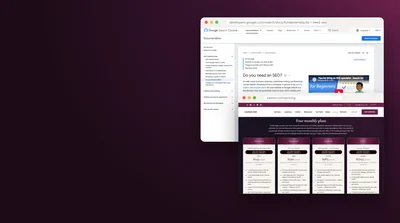
BuildUp Bookings' posted rates in November 2026 put its retainer band at $1,500 to $5,000 monthly. Advisory work starts at $699 per month on quarterly billing, and a fractional chief marketing officer starts at $7,500 per month. All three add a setup charge paid once, with no amount given, and paying for a year up front cuts 10% (BuildUp Bookings pricing). Our numbers are in the Cavmir chapter.
Whatever the quote, four items decide what year one costs:
- Setup or build fees. A website, a brand, a photo shoot or an onboarding fee, paid once.
- The monthly fee times the minimum term. Six required months on a $1,000 plan commits you to $6,000 before you can leave.
- Ad spend. It nearly always comes on top of the fee, and it should go on your own card inside ad accounts you own.
- Ad management fees. Some firms take a share of ad spend for running the campaigns, often with a monthly floor, in addition to the retainer.
Seasonal Budgets in Florida
Florida demand moves with the seasons, so ask for a budget that moves too. A flat ad budget spends the same in a February you've already sold out as in a September with open weeks. A better plan keeps a small year-round budget for search ads on your home's brand name and town, eases off in months that are already full, and puts the rest behind the weeks with gaps. Content needs a longer runway: pages meant to win winter stays should be live by late summer, so search engines and AI tools have time to find them before travelers plan.
Also ask what happens to the monthly fee in your slower months. Some owners like paying the same all year for steady work; others want a lighter scope when there's less to sell. Either is fair as long as it's written into the plan.
Florida Licensing an Agency Has to Respect
DBPR, Florida's business and professional regulation agency, issues vacation rental licenses through its hotels and restaurants division. This chapter is short on purpose: our guide to taking direct bookings for a Florida rental walks through the license, fees, inspections and local rules in depth. Here's what matters when you hire marketing help.
Advertising Can Trigger the License
Section 509.013 of the 2026 Florida Statutes puts a unit in the category the law calls transient public lodging in either of two cases: it takes guests for stays shorter than 30 days in a row more than three times within one calendar year, or it's marketed as a place that regularly takes guests for such short stays (Florida Statutes, s. 509.013). Section 509.242 then says a vacation rental is any condo or co-op unit, or any house with up to four dwelling units, that falls in that category and isn't a timeshare (s. 509.242).
The marketing half matters for you. A campaign, website or listing that presents a home as a regular short-stay rental helps bring it under the license, so a careful agency asks for your license number before it advertises anything. DBPR's licensing guide for vacation rentals and timeshare projects says vacation rentals are licensed as condominiums or dwellings, and that a new application costs a $50 application fee and a $10 Hospitality Education Program fee on top of the license fee itself (DBPR).
For Managers With Many Homes
Management companies often hold a collective license. DBPR describes it as a license given to a licensed agent for a group of homes at different addresses, capped at 75 units and kept to counties within one district. When an agency runs owner-acquisition campaigns for a manager, its launch dates for each newly signed home should leave time for the manager to bring that home under a license before short stays begin.
Local Rules Still Apply
State law limits what cities and counties can do. Section 509.032(7)(b) stops local governments from outlawing vacation rentals or capping how often or for how long they're rented, except for local rules that already existed on June 1, 2011 (s. 509.032). Cities and counties can still set rules that do neither, and those vary from town to town, as do condo association rules. An agency planning to market a home in a building or town with tight rental rules should read them first.
Florida Tourist Taxes and Your Booking Quote
A Florida rental lasting no more than six months is taxed in three layers: state sales tax at 6%, the county's discretionary surtax if it has one, and a local tax on short stays that counties and some cities levy, usually called the tourist development tax. The revenue department's chart adds the local tax to the other two, routes the state and surtax portions to the department in every county, and shows many counties collecting their local portion directly. Its July 2025 bulletin ending the sales tax on commercial rent keeps the tax on living or sleeping accommodations let for half a year or less (TIP 25A01-04).
Every row below also owes the 6% state tax, which is included in the combined figure.
| Market | County | Combined rate | Tourist tax | Surtax in 2026 | Airbnb names this county for tourist tax |
|---|---|---|---|---|---|
| Orlando | Orange | 12.5% | 6% | 0.5% | Yes |
| Kissimmee and Celebration | Osceola | 13.5% | 6% | 1.5% | No |
| Davenport | Polk | 12% | 5% | 1% | Yes |
| Miami, apart from three cities with their own rates | Miami-Dade | 13% | 6% | 1% | Yes, with city exceptions |
| Fort Lauderdale | Broward | 13% | 6% | 1% | Yes |
| Florida Keys | Monroe | 12.5% | 5% | 1.5% | No |
| South Walton and 30A | Walton | 12% | 5% | 1% | No |
| Destin and Fort Walton Beach | Okaloosa | 13% | 6% | 1% | No |
| Panama City Beach | Bay, some ZIP codes | 12% | 5% | 1% | No |
| Clearwater and St. Pete | Pinellas | 13% | 6% | 1% | Yes |
| Naples and Marco Island | Collier | 11% | 5% | None | Yes |
The rates come from the revenue department's two charts as published in November 2026, and each county in the table collects its own tourist tax. The tourist tax chart itself cautions that some counties don't report rate changes to the state, so check the figure with the county first. Cities can differ as well: for Miami-Dade, the chart gives Miami Beach 7% and Surfside and Bal Harbour 4%. Walton's 5% covers the south end of the county, and Bay's applies only in the ZIP codes the chart lists.
Who Collects on Airbnb Stays
Airbnb's Florida tax article lists what it handles itself: the state's 6% and the county surtax for any reservation up to 182 nights, and adds the county tourist tax just for the counties on its list. Orange, Polk, Broward, Pinellas, Collier and Miami-Dade (with city exceptions) are named. Osceola, Walton, Okaloosa, Monroe and Bay are absent (Airbnb's Florida tax list).
Two of those counties say the same from their side. Osceola's tax collector puts it bluntly: the county has no contract with Airbnb, Vrbo, Evolve or other booking platforms, and the 6% tax is for owners and their agents to collect and pay (Osceola tax collector). Walton County's tax sheet warns that no rental ad platform sends it any tourist tax, and sets South Walton's combined rate at 12% (Walton County Clerk).
What That Means for the Agency
- Direct stays. You collect all three layers. The agency or your booking software should show them as separate lines on the quote, at the rates for your address, and run a test booking before launch. Walton's sheet applies its tax to the whole rental charge, mandatory fees such as cleaning included, so mark those fees taxable.
- Airbnb stays in counties it doesn't name. The county tax on those bookings is still yours to file. That's not marketing work, but an agency that reports on your bookings should know which ones carry a tax you owe.
- Filing. Filing is yours or your accountant's, never the agency's. Per the revenue chart, state and surtax amounts belong on the transient rentals line of the DR-15 return, and counties that collect their own tax use their own forms.
The Florida direct booking guide linked in the licensing chapter covers registration, filing schedules and the rest of the setup.
Planning Marketing Around Hurricane Season
NOAA's hurricane center dates the Atlantic season from the first of June to the last day of November and marks September 10 as its peak, with the busiest stretch running from mid-August into mid-October (National Hurricane Center). For a Florida rental, that's half the year, summer break and early fall included. An agency that plans for it does four things.
- Puts the storm policy where guests see it. Someone booking for August or September wants to know what happens if a storm forces a cancellation or an evacuation. The policy is your call. The agency's job is to state it in plain words on the screen where guests choose dates and in the summary of your rental agreement, before they pay.
- Has a pause plan for ads. Once forecasters name a storm headed toward your coast, ads should stop or switch to later dates within hours, not at the next monthly review. Write into the contract who makes that call and how quickly.
- Keeps storm content factual. A page about traveling during the season should help a guest decide: what the season is, what your policy says, where official updates are posted. Skip any claim that a beach or town is safe from storms, and don't make the season sound worse than it is.
- Plans the fall weeks early. Fall gaps are often where an agency earns its fee. Local events, fishing trips, cooler-month stays for remote workers and rates that reflect the season can all be planned months ahead, so pages and ads are ready before those dates come up.
One more storm item belongs in the contract: what happens to scheduled posts and emails. A cheerful beach post shouldn't go out while a storm is bearing down on the coast. Ask how the agency checks its publishing calendar when a storm threatens, and who can pull a post on a weekend.
Snowbird Season and Longer Winter Stays
Winter brings Florida's snowbirds: travelers from colder states and Canada who stay a few weeks or a whole season. VISIT FLORIDA, the state's tourism marketing corporation, estimated 143.3 million visitors for 2025 and called its October-to-December estimate of 33.5 million a record for any fourth quarter. In May 2026 it revised its count of Canadian visitors in 2025 to 3.17 million (VISIT FLORIDA releases).
For marketing, winter splits into two products.
Short Winter Stays
Holiday weeks, school breaks and long weekends behave like any other short stay, and in many homes they sell without help. If yours already sell out, an agency adds little here beyond pricing advice you may already get from your PMS or a pricing tool.
Monthly and Seasonal Stays
Selling a month-long or longer stay is different. The guest might be a retiree, a remote worker, a traveling nurse or a family between homes, and they compare places on details a listing barely covers: a real workspace, laundry, parking for weeks, the drive to groceries and a pharmacy, and how the monthly price is built. A website gives you room for all of it. Our work for Libema Properties, thirteen furnished Orlando houses taking nightly, weekly and monthly guests, included a corporate housing hub and pages written for employers and hospitals.
Two Florida rules apply to these longer stays. The license test keys on stays below 30 days in a row, but the sales tax and tourist tax cover any rental up to six months. A two-month winter booking therefore still owes all three tax layers, and the quote must list each one. An agency building monthly-stay pages should set the quote up that way, and check whether your condo or homeowners association sets a minimum or maximum stay.
Timing the Winter Push
Someone planning a month away has more to arrange than a weekend guest. Ask each agency when its winter campaign starts, what goes live first, and how it will know which pages or ads produced the inquiries. Winter pages that first appear in November reach only the travelers who haven't booked yet.
Questions to Ask a Florida Agency
The general hiring playbook has a long list of questions on scope, ownership, methods and money. Add these Florida ones to it, and ask every agency to answer in writing so the replies can sit side by side.
Florida questions for every agency
Florida experience
1. Which Florida rental sites have you built or marketed, and can I click through two of them today?
2. Which Florida towns do those clients compete in, and how is my market different?

Licensing and taxes
3. Will you ask for my DBPR license number and local registration before you advertise my home?
4. On a direct booking, how will the quote show state sales tax, the county surtax and the tourist tax for my address?
5. Who tests the tax lines before launch, and who updates them when a county rate changes?
6. Will your booking reports flag the stays that carry a county tax I file myself?

Seasons and storms
7. Walk me through your plan for winter, summer and fall in my market, month by month.
8. When forecasters name a storm heading for my area, what happens to ads, scheduled posts and emails?
9. Where will guests see my storm and cancellation policy before they pay?

Platform rules and accounts
10. How does your plan keep guests who booked on Airbnb on Airbnb?
11. Whose name goes on the domain, Google Analytics, Search Console and the ad accounts?

Money
12. What will year one cost in total, counting setup, the minimum term, ads and any management fee?
Then grade each proposal. The scorecard gives the most weight to the things that are painful to change once a contract is signed: tax-correct quotes, platform rules, ownership of accounts, dated deliverables and no promised rankings.
Florida Agency Scorecard
Grade one proposal at a time, using only what the agency put in writing. Answers stay in this browser.
Google's own advice for anyone hiring an SEO is to ask about expected results and timing and about experience in your industry, and it warns that nobody can promise the top spot in Google results (Google Search Central). Hold every channel an agency sells you to that standard, from ads to AI answers.
Contract Points for a Florida Agency
The general clauses (accounts in your name, rights to the work, approvals, exit and handover) are in the hiring playbook. A Florida contract should add a few lines of its own.
- Tax setup. Who configures the tax lines in the booking engine, who tests them, and a line confirming that filing stays with you or your accountant.
- Storm protocol. Who can pause ads and scheduled posts, how fast, and whether paused weeks extend the term or lower the fee.
- Seasonal scope. The months with heavier work and the months with lighter work, with the ad budget for each.
- License before launch. The agency doesn't advertise a home until you confirm its license and local registration, and adds license or registration numbers to listings and pages wherever your county or city requires them.
- Owner-lead terms, for managers. If the agency runs homeowner campaigns: what counts as a lead, who owns the lead data, and whether any fee is tied to signed homes.
- Two review dates. A formal review in late spring, before the storm months, and another in late summer, ahead of winter, so changes land when they count.
Have a Florida attorney read the final contract before you sign. This guide is practical guidance, not legal or tax advice.
Where Cavmir Fits in Florida
Here's our own entry, judged by the rules we applied to everyone else. The facts are from our live pages, checked November 13, 2026. Prices change; check the live pages again before you set a budget.
- Scope. Cavmir markets vacation rentals and the companies that run them. We design the brand, build the site (either a booking site pulling live prices from your PMS, or a showcase site whose buttons open your Airbnb listing), then promote it through search, AI-answer work (GEO), Google and Meta advertising, press, content, monthly email to your subscribers and social posting. Running the house, setting nightly prices and talking to guests stay in your hands or your manager's.
- Location. Our About page gives a Miami address.
- Florida work. Case studies include Turtle Nest Bungalow (three bedrooms, a heated pool, sleeps ten, central Fort Lauderdale), which went live with direct booking through the hosts' own Lodgify checkout; OASENA (two bedrooms on Singer Island, reserve buttons still pointing to Airbnb); Libema Properties in Orlando; and Colocada, a Key West rental company run by a family, where our role has been consulting.
- Ownership. On ownership, the pricing page is explicit: domain, code, content and photos belong to the client.
- Not promised. Bookings, rankings, press coverage and AI answers.
Website builds on the Cavmir pricing page are one-time fees, split 50/50 between kickoff and go-live. Regular prices come first, and the bracketed figures are what a fall special listed in November 2026:
- Starter Website: $3,278 regular (the fall special showed $1,475), launching in roughly two or three weeks per the page.
- Mid Tier: $6,680 regular ($2,850 under the same special), ready in four to five weeks by the page's estimate.
- Full site with Direct Booking: $8,293 regular (special price $3,732), six to eight weeks, longer or shorter with the PMS connection.
The monthly plans, per the plans page, with regular prices first and Holiday Discount prices, valid until January 1, 2027, in brackets:
| Plan | Monthly fee | Sized for |
|---|---|---|
| Foundation | $290 regular ($245 holiday) | Site upkeep and search work, no social posting |
| Destination | $800 regular ($590 holiday) | A home or two |
| Landmark | $1,250 regular ($985 holiday) | From two homes up to five |
| ICON | $2,200 regular ($1,645 holiday) | From five homes up to ten |
Plans lock in for six months, after which a 30-day notice ends them. Google or Meta bills you for ad spend directly, and if we run the campaigns, management is a fifth of monthly spend, at least $300.
When Cavmir Is Not the Right Fit
- Day-to-day help running the home is a manager's or co-host's job, not ours.
- If the calculator says a retainer won't pay for itself on your calendar yet, begin with a single fixed-price job, such as our $350 Consulting Intro or a listing fix from any firm, and come back to a bigger plan after a season of results.
- A large portfolio that mainly wants owner acquisition may do better with a firm that puts owner leads at the center of its offer; several are listed above.
- If you want a firm with an office in your own county, ask the firms with Florida offices which areas they cover in person.
For what we do for Florida owners market by market, see our Florida page and the overview of our agency services.
Your First Two Weeks of Agency Shopping
Most of the groundwork happens before you talk to anyone, and it fits in two weeks of evenings.
- Days 1 to 2Export last year's calendar from the PMS or the platforms and count the empty nights in each month.
- Days 3 to 4Check the paperwork: DBPR license, revenue department account, county tourist tax account and any city registration.
- Day 5Run the break-even calculator on two scopes: the smallest project you'd buy and the full plan.
- Days 6 to 8Shortlist three agencies from this guide or your own search, and ask each for two live Florida rental sites.
- Days 9 to 11Send the Florida questions together with the general ones, and ask for written proposals.
- Days 12 to 14Score each proposal, test a quote on one of each agency's Florida sites, and phone two of its clients.
If you have empty nights in the months that matter and the math works, an agency earns back its cost within a year. If not, a well-chosen one-time project is the better first step, and the calculator will show you when the bigger plan starts to make sense.
Sources
What we read, and when: every page below was opened on November 13, 2026. Figures move, so recheck before relying on any of them.
- DR-15TDT tourist tax rate chart (PDF, revision 10/26), from the state revenue department
- DR-15DSS surtax chart for 2026 (PDF, revision 11/25), same department
- TIP 25A01-04 on the commercial rent tax repeal (PDF, July 24, 2025)
- Overview of county option taxes, revenue department
- Osceola tax collector's tourist tax compliance page
- Walton clerk's sheet on what to charge short-term renters (PDF)
- Chapter 509 statute text for 2026, sections 509.032, 509.013 and 509.242, Florida Legislature
- DBPR guide to licensing vacation rentals and timeshare projects
- Airbnb articles on tax it collects in Florida, its fee structures and off-platform conduct
- NOAA hurricane climatology
- VISIT FLORIDA release list, entries of February 20 and May 22, 2026
- Google on whether you need an SEO
- Agency sites: Villa Marketers, RealTech, BuildUp Bookings prices, the 2019 Scurto post on a Destin launch, Magnetic Strategy, Bluetent, ICND, Q4Launch, Rentamira and Casavate
- Our own pages: website prices, plan prices and the July 2026 license count