


For an owner with three vacation cabins who wants more bookings without paying Airbnb's fees, these are the marketing companies to contact first. KIN's entry plan, labeled for individual hosts, costs $299 monthly. Hudson Creative Studio's booking websites begin at $2,000. Boostly makes WordPress booking sites and sells a $97-per-month course for hosts who'd rather do the marketing in-house. Slamdot, a Knoxville, Tennessee agency, names log cabin rentals in its client list. Five other hospitality firms, Villa Marketers, O'Rourke Hospitality, BuildUp Bookings, Q4Launch and RealTech, mainly work for management companies, hotels and resorts, so ask any of them how they'd handle three cabins. Cavmir™, the firm behind this guide, designs cabin websites and promotes them for set monthly fees.
Picking one comes down to arithmetic more than reputation. Per Airbnb's help pages, the typical host now gives up 15.5%, deducted before the payout lands. When a guest reserves on the cabins' website instead, that cut disappears, though only for guests who discovered you somewhere besides Airbnb, and you inherit card charges, lodging tax filings and calendar syncing in return. With three cabins, the fee you stop paying seldom covers a retainer by itself. The plan has to sell nights that would have gone unbooked. Below you'll find the fee arithmetic at cabin prices, the first purchases for a small budget, how cabin seasons should steer spending, and a fair way to line the companies up against each other.
Which Marketing Company to Hire for Three Cabins
The firms that surface when cabin owners ask this question sell quite different things. A few build the booking website, hand it over and step back. Others run posts, search work or ads month after month. One mostly teaches hosts to handle the marketing themselves. Several grew up serving management companies with dozens or hundreds of doors and say so plainly. Group them by what they sell before comparing prices, since three cabins rarely need every service at once, and buying a manager-sized program when the real gap is a website is the quickest route to overspending.
Monthly Marketing Plans for Individual Owners
KIN presents itself as an agency for vacation rental marketing. Its home page leads by pitching more direct reservations with less reliance on Airbnb. It names eight services, from a booking website and Google Business optimisation to lead tracking, SEO, social posts, paid advertising, email and strategy calls. Its price table, headed "Simple. Flat rate. No surprises.", showed three tiers in November 2026:
- Starter at $299 monthly. Tagged as the pick for individual hosts. Covers two social platforms with eight posts each month, a monthly performance report, and email help answered within 48 hours.
- Growth at $899 monthly. Tagged for cutting reliance on booking sites. Adds 14 social posts monthly, Google Ads built and run for you, automated email, Google Vacation Rentals, strategy calls every other week and 24-hour priority replies.
- Portfolio from $1,699 monthly. Scoped case by case once you reach five properties, with Meta plus Google advertising, a brand identity and calls every week.
Each tier carries a six-month commitment. KIN's page about direct booking sites quotes websites individually, based on the property, the build and any integrations. That page also promises a site ready to take bookings 30 days after signing, checkout through Stripe and PayPal, and two-way calendar updates with Airbnb and Vrbo over iCal links. Testimonials on the home page come from hosts with rentals around Myrtle Beach and Kissimmee.
Booking Website Builders
Hudson Creative Studio designs booking websites for rental operators, builds them, then keeps running them, and HomeRunner, the engine behind the booking button, is its in-house product. The logos on its site show it connecting with eight systems, among them OwnerRez, Hospitable, Guesty and Track. Few firms in this field print prices this fully. A templated site begins at $2,000, a custom one at $8,000. Upkeep and hosting add $100 monthly. HomeRunner is billed per site, from $45 monthly while five or fewer listings are live, and Hudson takes no commission on bookings. The project fee can be spread over as many as four months without a surcharge, and on custom work the site says you deal directly with Eli, its founder.
Boostly makes booking sites as well. Its main website refused our research tools, so no Boostly build prices appear here; request one in writing. A Hospitable podcast write-up dated November 13, 2026 has founder Mark Simpson describing Boostly as the WordPress side for hosts who want their direct site wired into Hospitable. Boostly's paid course gets its own section further down.
An Agency With Cabin Clients
Slamdot works out of 2099 Thunderhead Road in Knoxville and keeps a page just for log cabin businesses, offering site design, SEO, optimization for AI search, paid search, social media management and managed WordPress hosting. Most of its staff, the page says, sit in Knoxville. Among its named cabin clients are Thunderhead Ridge Cabins, a pet-friendly Smoky Mountains rental business, plus Mountain Mint Cabins and Log Cabins for Less. Slamdot keeps its prices off the site and offers a free proposal instead, noting that its fees are invoiced apart from your ad budget and stay flat when that budget grows. Its cabin page treats the website as where every campaign starts and ends.
Firms Built Mostly for Managers, Hotels and Resorts
The remaining names in AI answers to this question are hospitality agencies whose sites talk mainly to management companies, hotels and resorts. BuildUp Bookings prints its retainers. RealTech builds booking sites and runs marketing for rental managers, large or small. Q4Launch builds for inns, lodges, hotels, bed-and-breakfasts and rentals. O'Rourke Hospitality names hotels, resorts and higher-end rentals. Villa Marketers addresses hosts as well as managers. The comparison chapter gives each a paragraph. None of them says it declines small owners, so if one appeals, ask to see a client running three homes or fewer.
What Airbnb's Fees Cost on Cabin Rates
Airbnb currently runs two fee models and is folding every home host into one of them. Its help article on service fees explains the older split model: the typical host gave up 3%, while guests carried a checkout charge of at least 14.1% and as much as 16.5% of the subtotal. On the single-fee model, the typical host rate is 15.5%, a minority land somewhere from 14% to 16%, and Airbnb deducts the entire amount before paying the host. The article says every home host is being transitioned to that single fee, that it covers reservations made after the change, and that no one can move back.
Cabin owners in the United States are already on it. A Hostfully explainer dated September 28, 2026 lays out the dates: US and Canadian hosts using management software were moved to a mandatory 15.5% on October 27, 2025, and independent hosts everywhere outside the European Union followed as of September 15, 2026. Listing your cabins by hand, with no software at all, doesn't exempt you.
What the Fee Is Charged On
Airbnb's percentage reaches past the nightly rate. The help article bases it on the price per night plus every fee a host adds, with taxes excluded. Hostfully spells out that cleaning fees, pet fees and extra-guest fees all fall inside that base. So when a cabin's cleaning charge is high because of a hot tub to drain and a wood stove to clear out, or when you add a pet fee, Airbnb's 15.5% applies to those dollars too. Our Airbnb fee calculator runs your actual rates through both models.
Vrbo's New Commission
Vrbo reworked its own terms this fall. Hospitable's help desk reports that a 12% commission began rolling out on October 29, 2026, with Vrbo choosing when each account changes over. That 12% already includes Vrbo's card processing and is charged on nightly rates plus extras guests pay, cleaning and pet charges included. Vrbo handles taxes and refundable damage deposits apart from it. Owners still on Vrbo's yearly subscription switch to the commission when that subscription lapses, since Vrbo has stopped renewing them. Hospitable cautions that your exact rate depends on region, connection type and contract, so confirm it inside your Vrbo account. Our explainer on Vrbo's 12% commission and its rate rules covers the pricing conditions attached to it.
The Fee on One Cabin Stay
Take one invented cabin reservation: three nights at $225 and a $125 cleaning charge, for an $800 subtotal before tax. Here's where the money goes on each route.
| Booking route | Fee on the $800 | Left for you before tax | Worth knowing |
|---|---|---|---|
| Airbnb at the 15.5% single fee | $124 | $676 | Withheld from the payout. Airbnb processes the payment and, across most US states, files the lodging tax. |
| Vrbo at its new 12% | $96 | $704 | Card processing is built in. Your own rate depends on account and region. |
| The cabins' website, with a sample 3% card charge | $24 | $776 | The site, its marketing and the lodging tax return all land on you. |
Over twelve months it compounds. Suppose each cabin books 45 reservations like that one. The three together produce $108,000 in subtotals, and 15.5% of that is $16,740. A figure that size is what sends cabin owners looking for a website. The next chapter shows how much of it a site and a plan can recover, and why recovering it shouldn't be the main reason you hire anybody.
The Fee Math for Three Cabins
Marketing can pay for itself along two routes, and owners usually count only the first one.
- Fees avoided. A reservation made through the cabins' website escapes Airbnb's 15.5%, less your card processor's charge. It counts only when the guest reached you some other way: a Google search, your Instagram, a travel article, or a repeat guest whose last stay came through your site. A traveler who met your cabins on Airbnb belongs on Airbnb, for reasons the next chapter explains.
- Stays that wouldn't have happened. When a guest takes a January Tuesday because your winter page or a search ad caught them, the year gains that entire stay, well beyond the fee you skipped. Here's where a plan justifies its cost.
Put your cabins' figures into the calculator. Its starting values are invented for illustration, not market averages: three cabins, 45 reservations apiece, $800 per reservation, one stay in five on the website, ten extra stays a year and a plan costing $600 monthly.
Airbnb Fees on Three Cabins and the Break-Even for a Plan
Type in your cabins' figures and a quote you're weighing. The math runs in this browser only.
These defaults belong to a made-up owner. Swap in your calendars, your processor's rate and the quote you were sent.
At the starting figures, Airbnb's share across all three cabins is $16,740 a year. Moving one reservation in five to the website keeps $2,700 of it after card charges: 15.5% avoided minus 3% paid to the processor, on $21,600 worth of stays. Useful, yet the $600 monthly plan comes to $7,200. The missing $4,500 must come from extra stays. Keeping $400 out of each additional $800 reservation, the plan needs 12 of them yearly to break even, four for each cabin.
Count Your Empty Nights First
Whether four more reservations per cabin is achievable depends on how many vacant nights you have and where in the year they sit. Export two years of calendars for every cabin and tally unbooked nights month by month. When the cabins already sell out each weekend from June into October, marketing can't create more peak nights; it can only back a higher rate or fill weekdays and quiet months. When January and March sit half vacant, that's the pool extra stays come from. The seasonality chapter shows the shape of that gap around the Smokies.
When the Math Says Wait
Should the calculator demand more extra stays than your calendar has vacancies, hold off on any retainer. Put the money into one-time work that keeps earning: sharper photos, a single booking site for the three cabins, tidier listings. Come back to monthly marketing after the website has a full year of numbers. Savings climb as the website's share climbs, and a plan that fails the test in its first year can pass it in the second, once the build is paid off.
What Direct Bookings Change for You
Accepting reservations on the cabins' website hands you several chores Airbnb used to absorb, and Airbnb sets rules on how those guests may find you. None of that argues against a booking site. It's the small print to budget for before celebrating the savings.
Airbnb's Rules on Moving Guests
Airbnb draws the line in a help-center policy about keeping prices and payments visible on the platform. Before a reservation exists, neither side may push the conversation outside Airbnb, and listings or messages can't carry links steering anyone toward a different way to reserve. Nobody may dangle or request a discount for reserving elsewhere. Existing Airbnb reservations can't be shifted or lengthened outside Airbnb, and cancelling one to rebook it elsewhere counts. Required fees must be paid on Airbnb too, save for a narrow allowance for certain software-connected hosts who enter those amounts in the proper fee fields. Airbnb says breaking these rules can bring anything from a warning to the removal of listings or of the account itself.
So website guests come from search engines, the website itself, your social channels, press and people who reserved with you directly before. Anything pointed at travelers who came through Airbnb is off limits, whether a note after checkout or a printed sign on the kitchen counter. A marketing firm whose plan depends on your Airbnb guest list is selling you a path to losing the listings. Ask each firm which written platform rule permits any tactic that touches those travelers.
Lodging Taxes
Airbnb publishes the places where it files occupancy tax on hosts' behalf, a list taking in DC, Puerto Rico, the USVI and most US states, and it warns hosts there that every other tax duty is still theirs to work out. A website reservation never touches Airbnb, so on that stay you charge the guest whatever lodging tax the state and county are owed, then remit it. Before the website's first reservation, check with your county and state about which taxes apply, register where required, and load those rates into the booking software.
Payments, Deposits and Rental Terms
Selling stays on a website requires a payment processor, which takes a cut of each transaction; look up its published rate for your country and the cards your guests carry. You also write the paperwork Airbnb used to supply: a cancellation policy, a rental agreement, house rules, a deposit or damage plan, and refund terms. Ask your insurance carrier, in writing, if the policy protects reservations taken off the platforms. It isn't difficult work, but finish it before buying ads that point at a Book Now button.
Calendar Sync and Double Bookings
Airbnb's calendar-sync help article says imported calendars refresh by themselves every 3 hours, linked calendars can refresh at different moments, and a night you close somewhere else isn't certain to close on Airbnb. With three cabins and a handful of website reservations each month, iCal links generally cope. As website bookings pick up, ask every builder how its calendar talks to the platforms: plain iCal links, or management software or a channel manager connected by API. Two parties holding the same cabin for the same October Saturday is a headache worth designing out.
What a Small Cabin Owner Should Buy First
On a three-cabin budget, the sequence of purchases matters more than which vendor sells them. Each step makes the one after it earn more, and the first three are one-time costs whose results you keep.
- Repair the photos and listings. Every channel, the website included, draws on one set of pictures and descriptions. A cabin that photographs gloomy, or whose hot tub appears in a single fuzzy frame, loses reservations everywhere simultaneously. Our photo guide for rental listings lays out the shots worth getting.
- Give the three cabins one name. A shared brand and domain let a traveler see all three side by side, choose, and find them again next season. One site holding three cabin pages costs less to build and promote than three sites.
- Pick a booking site sized to the budget. The choices: the website bundled with your booking software, a designer's site such as Hudson Creative Studio's, or an agency build that comes with marketing. For the software route, read our 2026 builder roundup for rental sites.
- Install measurement before spending. Configure Google Analytics with key events for inquiries and finished reservations, and verify the domain in Search Console, so each later dollar ties to an outcome.
- Write search pages ahead of each season. Area guides, trip pages for each season and a page per cabin give Google and AI assistants concrete material. They need months to gain ground, so fall pages belong online in summer and winter pages in autumn.
- Save ads and social for last. Modest, steady ad budgets pointed at quiet months and at the booking site, paid to Google or Meta from your own card. Social posts keep followers and past website guests thinking about another trip.
If running a full booking engine seems like too much for year one, there's an in-between option. A brand website can carry the cabin pages, area guides and reviews while its booking button passes the traveler's dates to the cabin's Airbnb or Vrbo page. You start building search visits and a recognizable name immediately, keep paying the platform's cut on those stays for now, and turn on website booking once traffic arrives. Cavmir set up the website for four hot-tub log cabins outside Malone, New York on that model, leaving calendars and rates on the platform listings.
Google's Rules for Single Owners
Google's getting-started guide for rental managers places individual homeowners in a group that can't currently show in its vacation rental results, and says individuals can't currently hold a Google Business Profile covering their own house. The same guide treats property managers as the merchant of record and opens direct integration to managers holding at least 500 properties. A separate Google overview of rental listings notes that Google takes no fee on bookings or referrals sent through those links.
Before paying anyone for Google Vacation Rentals or Business Profile setup, then, ask precisely how your cabins will qualify under those rules and which integrated partner would carry them. The cabins' website needs none of it to rank in ordinary search results. Helpful pages about the cabins, the surrounding area and each season do that work.
Year-One Budgets From Published Prices
The table prices each route for a first year, using only figures the firms printed in November 2026. Ad budgets, a photographer and booking software sit outside these totals unless a row includes them.
| Route | Coverage | First-year cost from printed prices |
|---|---|---|
| Learn it, then do it | Boostly Accelerator: video lessons, a workbook, templates, live coaching and a host forum | $1,067 (one free month, then 11 at $97), before your website software |
| A designer's booking site | Hudson Creative Studio templated build, hosting and upkeep, and HomeRunner for five or fewer listings | From $3,740 ($2,000 + $1,200 + $540) |
| Social posting alone | KIN Starter: two platforms, eight posts monthly, a monthly report | $3,588 |
| Booking site with search upkeep | Cavmir Mid Tier build for up to three properties with booking switched on, plus the Foundation plan | $10,160 at regular prices ($6,680 + $3,480); $5,790 at the current fall and holiday offers |
| Monthly marketing with Google Ads run for you | KIN Growth: social, Google Ads setup and running, automated email; website priced separately | $10,788, before a website and ad spend |
| Monthly marketing with guides, video and press | Cavmir Landmark, aimed at owners of two to five homes: guide pages, social and video, a newsletter, backlinks and press releases | $15,000 at the regular $1,250 a month ($11,820 at the holiday rate), before a website |
| Agency retainer at manager scale | BuildUp Bookings marketing retainer | $18,000 to $60,000 a year (retainers of $1,500 through $5,000 each month) |
Offer prices end. Cavmir's lower monthly figures come from a Holiday Discount ending January 1, 2027, and its lower website figures are a fall special, which is why the regular prices come first here. Recheck both pages before setting a budget. Put any row through the calculator above: a $3,740 site needs far fewer extra stays than an $18,000 retainer, and the site still belongs to you in year two.
Seasonality in Cabin Markets
Demand for cabins rises and falls steeply through the year, and that curve should decide what you buy and when the money goes out. Month-by-month booking figures for rental markets mostly live inside paid tools, but the National Park Service tallies visitors to the Smokies' park every month, and the pattern is a reasonable proxy for the cabin towns along its edge. The park borders Gatlinburg, where companies such as Elk Springs Resort rent out cabins. Writing about its project for that resort, the content agency Siege Media observed that "The Smoky Mountain vacation rental market is saturated and has strong seasonality."
Pigeon Forge's tourism site reprinted Great Smoky Mountains National Park's 2025 monthly counts, drawn from the Park Service's statistics database, in a visitation summary for the park. We calculated the third column.
| Month, 2025 | Recreation visits | Portion of the year |
|---|---|---|
| January | 276,999 | 2.4% |
| February | 409,449 | 3.6% |
| March | 845,724 | 7.3% |
| April | 986,442 | 8.6% |
| May | 1,114,160 | 9.7% |
| June | 1,336,144 | 11.6% |
| July | 1,435,337 | 12.5% |
| August | 998,056 | 8.7% |
| September | 981,366 | 8.5% |
| October | 1,561,683 | 13.5% |
| November | 867,677 | 7.5% |
| December | 714,902 | 6.2% |
| Whole year | 11,527,939 | 100% |
October ranked first, with July and June behind it. January ranked last, below a fifth of October's figure. The summary says the 2025 total, a little over 11.5 million, came after a change in how attendance is measured, and 2024 recorded 12,191,834, so compare the curve from year to year rather than the totals. Visits aren't reservations, either: day-trippers, campers and hotel guests are all counted. For planning, though, the curve is the useful part, and the park's September 2025 autumn notice warns visitors about crowds, traffic congestion and scarce parking during leaf season.
Other Cabin Markets Peak Differently
A cabin in a ski town may peak in January and fall silent by May. A lakeside cabin may earn most of its income in the warm weeks while schools are out. One beside a national park may trace something like the curve above. Rather than borrowing another region's calendar, export your cabins' occupancy and average rate for each month of the past two years, flag the months that fall under your average, and build the marketing plan around those.
What the Curve Means for Your Plan
- The busiest months largely fill through the platforms. If October books up without any help, marketing money spent on October mostly supports a higher rate. Check October's price before touching the ad budget.
- Shoulder months reward search pages. In the Smokies figures, April, May, September and November each carried 7.5% to 9.7% of annual visits. A page on spring wildflower walks or on quiet November weekdays reaches exactly those travelers.
- The deepest months need a pitch. January and February together held 6% of 2025's visits. Weekday stays, couples' getaways, a winter rate for website guests and a page showing the cabins under snow all give those months a reason.
- Publish early. A leaf-season page that appears in October arrives too late. Our article on autumn demand in foliage and cabin markets and our playbook for the in-between months deal with timing.
Here's a cabin marketing calendar built around that curve. Slide the months to match your peaks.
- January to FebruaryDo the build work while bookings are thin: new photos including snow scenes, listing repairs, website pages and analytics.
- March to AprilPost summer and autumn trip pages. Begin a modest search ad budget aimed at spring weekdays.
- May to JuneFoliage pages go online. Send your mailing list, made up of website subscribers and past website guests, a note about autumn openings.
- July to AugustRevisit October pricing. Shift ad dollars toward weekdays in September and November.
- OctoberPhotograph the autumn color for next year. Put winter and holiday pages online.
- November to DecemberPush winter stays through your channels, measure the year against the starting numbers, and set next year's spending.
The Ten Companies in One Table
The table places every company from this guide on identical lines, drawing only on what each publishes about itself. Prices reflect each site in November 2026.
| Company | Services it lists | Customers it names | Prices on its site |
|---|---|---|---|
| KIN | Social posts, SEO, Google Ads, email, booking websites | Hosts and managers; Starter is labeled for individual hosts | $299, $899 or $1,699 and up monthly, six-month commitment; websites quoted |
| Boostly | WordPress booking sites, plus a course with coaching | Short-term rental hosts | Course at $97 monthly after one free month; build prices unverified |
| Hudson Creative Studio | Builds and runs booking sites on its HomeRunner engine | Rental operators and management companies | Templated sites $2,000 and up; custom $8,000 and up; hosting $100 monthly; engine from $45 monthly |
| Slamdot | Site design, SEO, AI search, paid search, social | Log cabin businesses, among other industries; Knoxville | Unpublished; agency fees kept apart from ad spend |
| BuildUp Bookings | SEO, paid ads and social, email, websites, branding, AI search | Rental companies; cites 300-plus it has worked with | $699 and up monthly for advisory; retainers $1,500 through $5,000 a month |
| RealTech | Booking websites, marketing, guest-facing tools | Rental managers, small and large; Asheville and Lakewood Ranch offices | Unpublished; book a demo |
| Q4Launch | Hospitality websites, social, email, SEO | Bed and breakfasts, inns, lodges, hotels and rentals; Charleston | Unpublished |
| O'Rourke Hospitality | SEO, AI search, advertising, websites, abandoned-booking recovery, social | Hotels, resorts, higher-end rentals; Newburyport | Unpublished |
| Villa Marketers | Booking websites, branding, search and AI visibility, owner acquisition | Hosts and managers; Saint Cloud, Florida | Unpublished |
| Cavmir | Branding, booking websites, SEO, AI search, PR, social, email, ads | Owners, managers, boutique hotels, private estates | Websites from $3,278 ($1,475 on the fall special); plans from $290 monthly ($245 holiday rate) |
The Firms That Mostly Serve Managers
BuildUp Bookings prints three price points: strategy advisory starting at $699 monthly and billed quarterly, marketing retainers costing anywhere from $1,500 through $5,000 per month, and, at the top, fractional CMO work from $7,500 monthly. Each of the three lists a one-time setup payment and knock 10% off for annual billing. The home page addresses companies growing a rental business, and the service menu stretches from SEO and paid social to AI search and agent and skill building. Fed into the calculator at the sample figures, an $18,000 year requires 39 extra stays over three cabins, 13 apiece, so advisory or a defined project looks like the closer match for an owner your size.
RealTech, once called RealTech Webmasters, sells complete booking websites and marketing to rental managers whatever their size. It lists two offices, one in Asheville, North Carolina, the other in Lakewood Ranch, Florida, and its products include RealTech Direct, an AI chat for property questions, a risk score for bookings and resort maps. It keeps pricing off its website.
Q4Launch sits at 100 Coastal Drive in Charleston, South Carolina, presents itself as a marketing agency for hospitality, and names bed and breakfasts, inns, lodges, hotels and rentals as its customers. Its home page promises a new website running within 30 days, alongside social, email and SEO services. Pricing isn't listed.
O'Rourke Hospitality, based in Newburyport, Massachusetts, frames its work around return on investment for hospitality brands, aiming to raise direct reservations and trim what clients pay booking sites in commission. Its client types include hotel management companies, independent and boutique hotels, resorts and higher-end vacation rentals, and its services cover SEO, GEO, advertising, websites, recovery of abandoned bookings and social media.
Villa Marketers, whose address is in Saint Cloud, Florida, cites more than two decades of building rental brands and more than 100 brands launched or grown, and offers booking websites, branding, search and AI visibility, paid traffic, automation and owner acquisition. It invites owners to request what it calls a Direct Booking Growth Review.
What the Table Leaves Out
A printed price marks where a firm begins, not what three cabins will cost. Ask each one for the complete twelve-month figure on paper: the build, monthly charges, ad budget, software, photography and anything charged per listing. Then put that figure through the calculator. Fit doesn't show in a table either. An agency whose typical client runs 200 homes might still suit you if it has a small-owner package, while one with cabin clients might not if its plan skips your quiet months.
Training, a Freelancer or a Full Agency
Three cabins sit right at the size where handling much of the marketing personally is workable, provided the hours exist. The real decision is whether those hours pay better on the cabins, the guests or the search for a fourth property.
A Training Program
Boostly's Accelerator combines training, coaching and a member community for hosts chasing website bookings. The first month is free with a code shown on the page; after that it's $97 monthly, with neither a contract nor a setup charge. Members get lessons on demand, a stepwise plan with a workbook, prewritten guest messages and booking templates, live sessions with Boostly coaches, and a community the page sizes at over 2,000 hosts. Boostly's page tells hosts who follow the plan that they'll reach 65% direct bookings inside a year; otherwise, it says, its team keeps helping at no charge until they do and adds $1,000, and it refunds members whose fees the program hasn't earned back within a year. Read those conditions closely before relying on them. With any course, make sure every message you send inside Airbnb respects Airbnb's rules.
Freelancers for Single Jobs
A local photographer for the snow shoot, a designer for the website, a specialist to set up search ads and analytics: each job has edges and an end date, and freelancers quote it that way. The weak spots are the hand-offs between them and logins created under someone else's name. On this route, open every account yourself on day one and keep a one-page record of who built what.
An Agency
Hiring an agency fits when marketing tasks keep sliding, when you want a single plan tying together the site, search, social and ads, or when your hours earn more spent on the cabins. It's the costliest of the three routes, and it still needs you for photos, sign-offs and facts about the cabins. Our guide to choosing and contracting a rental marketing firm goes deep on the hiring process; the chapters below stick to what's particular to cabins.
Least cash out. Works for an owner with spare evenings, an eye for pictures and words, and patience while search traffic builds over months. Progress moves only as fast as your free time.
More cash out, a quicker start and steadier output. Works for an owner short on hours. The plan must pass the calculator's break-even test, and the contract must keep every login under your name.
Questions to Ask a Cabin Marketing Company
Email each firm an identical set of questions and weigh their written replies, not your impression from a sales call. These suit someone running a few cabins; paste them straight into a message.
Questions for a cabin marketing company
Fit
1. How many of your clients own five rentals or fewer? Please send two of their live websites.
2. Which cabins or mountain rentals have you marketed?
3. Who on your team works on my account each month, and who replies to my emails?

The numbers
4. In my quiet months, where would extra stays come from, and roughly how many?
5. How will I see which reservations your work produced?
6. Add up my first year for me: build, monthly fees, ad budget, software, photos, extras.

Booking setup
7. What booking engine or software would my website use, and what does it cost monthly?
8. Does my calendar link to Airbnb and Vrbo through iCal or through an API connection?
9. Who handles payments, lodging tax setup, the rental agreement and the cancellation policy?

Seasons
10. What will you publish before my peak and shoulder months, and on what dates?
11. How does the ad budget change between full months and empty ones?

Ownership and rules
12. Will the domain, site, GA4 property, Search Console property and ad logins be registered to me?
13. Do the photos, video and copy you make for me become mine?
14. Does anything in your plan touch travelers who reserved through Airbnb? Under which platform rule?
15. Given Google's limits on individual owners, how would my cabins get into Google's rental results?

Ending the contract
16. How long is the commitment, how much notice do I give, and what do I receive when we stop?
Answers Worth Hearing
- A count of extra stays tied to months. "Six more weekday stays across the three cabins between January and March, logged as key events" can be checked. "Better visibility" can't.
- The booking setup in everyday words. Which software, its monthly price, how calendars sync and who files taxes.
- Logins under your name from day one. The firm gets user access you can revoke whenever you like.
- A firm no on platform travelers. No messages, printed cards or offers directed at people who reserved through Airbnb or Vrbo.
- A small-owner reference. A live site for an owner of a few cabins, not only a case study about a 200-home manager.
Contract Points for a Three-Cabin Owner
A three-cabin owner can absorb a bad agreement far less easily than a manager with 100 homes, so check five areas: length, money, ownership, methods and how it ends. Pay a lawyer to read the ownership and termination wording before signing.
Terms to Read Closely
- Length. KIN attaches a six-month commitment to each plan. Cavmir's plans can't be cancelled inside their first six months, and afterward you may stop with 30 days' warning. Boostly's course has no contract at all. Hudson Creative Studio lets the build fee stretch across four months. Know which arrangement you're entering.
- Money. Fees, due dates and how renewals are priced, with software, photography, per-listing charges and the ad budget each on their own line. Ad spend belongs on your card, billed by Google or Meta, with any management percentage written down.
- Ownership. Your domain, the website files, the GA4 property, Search Console and every ad login held by you, with the firm working through user access. The agreement should transfer to you the rights in photos, video and text made for your cabins, and list any licensed stock images or fonts.
- Methods. A written pledge never to pay for links, reviews, followers or views; also to respect each platform's terms.
- Ending. A fixed number of days after termination to deliver every file, move over anything registered on your behalf and switch off the firm's access.
Red Flags
- A promised count of reservations, an occupancy figure or a top-of-Google position. Dated goals with a measurement method are fine; outcomes inside Google or Airbnb aren't anyone's to promise.
- A domain, website or ad account opened under the firm's own login for convenience.
- Any tactic for steering Airbnb travelers to the website, from messages after checkout to printed cards on the counter.
- Purchased reviews, followers or links, or reviews the firm writes for you.
- A plan that never names your quiet months.
- A vague reply, or none, when you ask the full first-year cost.
Sample clause wording for your lawyer appears in our hiring guide's chapter on contracts, linked one chapter back.
Score Each Company on Your Shortlist
Fill in the scorecard separately for every firm, based on its proposal and draft agreement. Triple weight goes to the five lines that cost the most to repair after signing: a credible source of extra stays, logins in your name, respect for platform rules, no promised outcomes, and clean link and review practices. Price should only break a tie between firms that each reach Good or higher.
Cabin Marketing Company Scorecard
Grade the firms one at a time, straight from their paperwork. The tally is computed on this page alone.
Picture an invented owner weighing two offers. The lower one buys a year of posts and ads without ever naming the nights it will sell, and it would open the ad account under the agency's login. The higher one lists its target extra stays month by month and registers every account to the owner. The lower offer drops points on two triple-weighted lines and falls behind before the price difference even matters.
A Year-One Plan for Three Cabins
To see the pieces work together, follow an invented owner through her first year. She owns three two-bedroom cabins close to a national park. Each cabin took 45 reservations last year at an $800 average subtotal, all of them through Airbnb, and her calendars show gaps across January to March and on most weekdays outside summer and October. She can spend roughly $6,500 in the first year.
What She Buys
- A snow-season photo shoot covering all three cabins, which a local photographer quotes at $900 (an invented figure).
- A single booking website carrying the three cabins under one brand: $3,000 to build plus $100 monthly for hosting and the engine, $4,200 for the year. These are invented figures; set them beside the designer prices printed earlier.
- Search ads of $200 monthly through her six quietest months, $1,200 total, charged by Google to her card.
Altogether that's $6,300, and the fresh photos go onto her Airbnb listings as well, so every channel gains.
What It Has to Earn
Because her website starts from zero, she plans on one reservation in ten booking there during year one: 13.5 out of 135, roughly $10,800 in subtotals. At 15.5% avoided less 3% in card charges, she keeps $1,350. The other $4,950 depends on extra stays. Clearing $400 on each extra $800 reservation, she needs 13, four or five per cabin, aimed at the January-to-March gaps and at spring and November weekdays.
Year two changes the picture. Photos and the build are already paid, so costs fall to $2,400: hosting and the engine, plus six months of ads again. If one reservation in five comes through the website by then, avoided fees alone reach $2,700, and every extra stay adds to the result.
Set that beside a $900-a-month retainer with no build in year one: $10,800. At the same one-in-ten website share, it needs 24 extra stays to break even, eight per cabin, and costs the same again the following year. It may still be the better call if it delivers a site, content and ads her schedule can't, but then it ought to arrive with a written plan for those 24 stays.
Her Review Points
- Week 1Starting numbers: two years of reservations, rates and vacant nights by month for each cabin.
- Weeks 2 to 8Photo shoot, website build, analytics, lodging tax registration and a rental agreement.
- Day 90First check: website inquiries, search impressions and clicks, and which ads produced key events.
- Month 6Second check before renewing or adding spend. Drop whatever isn't moving.
- Month 12Compare quiet-month reservations with last year, along with the website share and fees kept. Set the year-two budget.
Where Cavmir Fits Cabin Owners
Here the agency behind this guide faces the same questions as the others. Cavmir sells marketing to rental owners and managers and doesn't manage property: no guest messaging, no cleaning schedules, no nightly rate setting. It creates the brand and the booking website, then promotes them through press outreach, SEO, guide content, email, social posts, paid Meta and Google campaigns, and work on how AI assistants describe you.
What It Does for Cabins
Our cabins and mountain retreats page sets out the method: each cabin positioned as a named destination, photo shoots by season, printed welcome books, a booking website able to switch between winter and summer content, short video, and Meta ads aimed at three different kinds of guest. If you run the cabins from a calendar and the platform apps, our page for owners running without management software explains how a website with checkout can operate beside your current setup, with nothing to migrate.
The nearest example is the Adirondack project above: four log cabins, each fitted with a hot tub of its own and a separate listing, spread over two wooded parcels on the park's northern fringe. The scope ran from name research and a logo to the website, a short film of the homes, 92 area guides in seven sections, a satellite map, reviews and the search launch, with the booking button passing dates to the Airbnb and Vrbo listings.
Prices and Terms
- Websites. The pricing page in November 2026 lists the Mid Tier build, which handles up to three properties and offers booking, at $6,680 ($2,850 on November 2026's fall special), delivered in four to five weeks. The top build, called Full, syncs booking with management software for up to five properties and is listed at $8,293 ($3,732 under the fall special), launching in six to eight weeks. Builds are invoiced in two halves, at the start and at launch, and the launch date is signed off before any work begins.
- Monthly plans. On the plans page, Foundation lists at $290 monthly, dropping to $245 while the Holiday Discount lasts (it ends January 1, 2027), for search upkeep, fresh pages and a report each month. Landmark, for two to five homes, is $1,250 a month ($985 with the same discount) and layers on social, video, a newsletter, backlinks and press releases. No plan can be cancelled before month six; from then on, 30 days' warning ends it.
- Ads. Google or Meta charges your card for the ad spend itself. Campaign management costs a fifth (20%) of your monthly ad spend, and at least $300.
- Ownership and commission. Cavmir's pricing FAQ assigns you the domain, the site's code, its text and its photos. It takes no percentage of reservations either.
- Nothing promised. Press coverage, AI answers and Google indexing of any single page are listed as not promised on the plans page.
Who Should Look Elsewhere
- You need the cabins run day to day. Guest messages, turnovers and pricing belong with a local management company or co-host.
- Your break-even test fails. Begin with one-time work, the $350 Consulting Intro, or a course like Boostly's.
- You won't accept any commitment. Our plans hold you for six months. Boostly's course and a freelancer paid per job don't.
- Posts are all you're after. KIN's Starter handles two social platforms for $299 monthly.
- You want reservations promised. No outside firm controls what Google or Airbnb show, and we won't sign such a promise.
Whichever firm gets the job, hold it to three things: a plan naming the nights it intends to sell, accounts that remain yours, and no tactic that endangers your listings. With those on paper, the choice comes down to price.
Sources
Every company fact below was checked on that company's website on November 13, 2026, except where a third-party page is named. Recheck prices on the live pages, since firms change them.
- KIN's plans and monthly prices
- KIN on building direct booking sites
- Boostly Accelerator course page
- Hospitable's podcast write-up with Mark Simpson of Boostly, November 13, 2026
- Hudson Creative Studio packages, hosting and HomeRunner pricing
- Slamdot's page for log cabin businesses
- BuildUp Bookings price list
- RealTech's overview of its products
- Q4Launch on its services and location
- O'Rourke Hospitality's agency overview
- Villa Marketers' services and track record
- How Airbnb charges hosts and guests its service fee
- Hostfully's dated rollout of Airbnb's single 15.5% fee, September 28, 2026
- Hospitable's note on Vrbo moving hosts to 12%
- Airbnb's off-platform payment and messaging rules
- Airbnb's list of tax collection areas
- Airbnb on linking a host calendar to outside sites
- Google's eligibility guide for rental managers
- Google on showing rentals at no cost
- Pigeon Forge tourism summary of Smokies park visits by month, 2023 to 2025, from Park Service figures
- Park Service autumn advisory for the Smokies, September 23, 2025
- Siege Media's write-up of its Elk Springs Resort project
- Cavmir's website prices and plan prices, November 2026
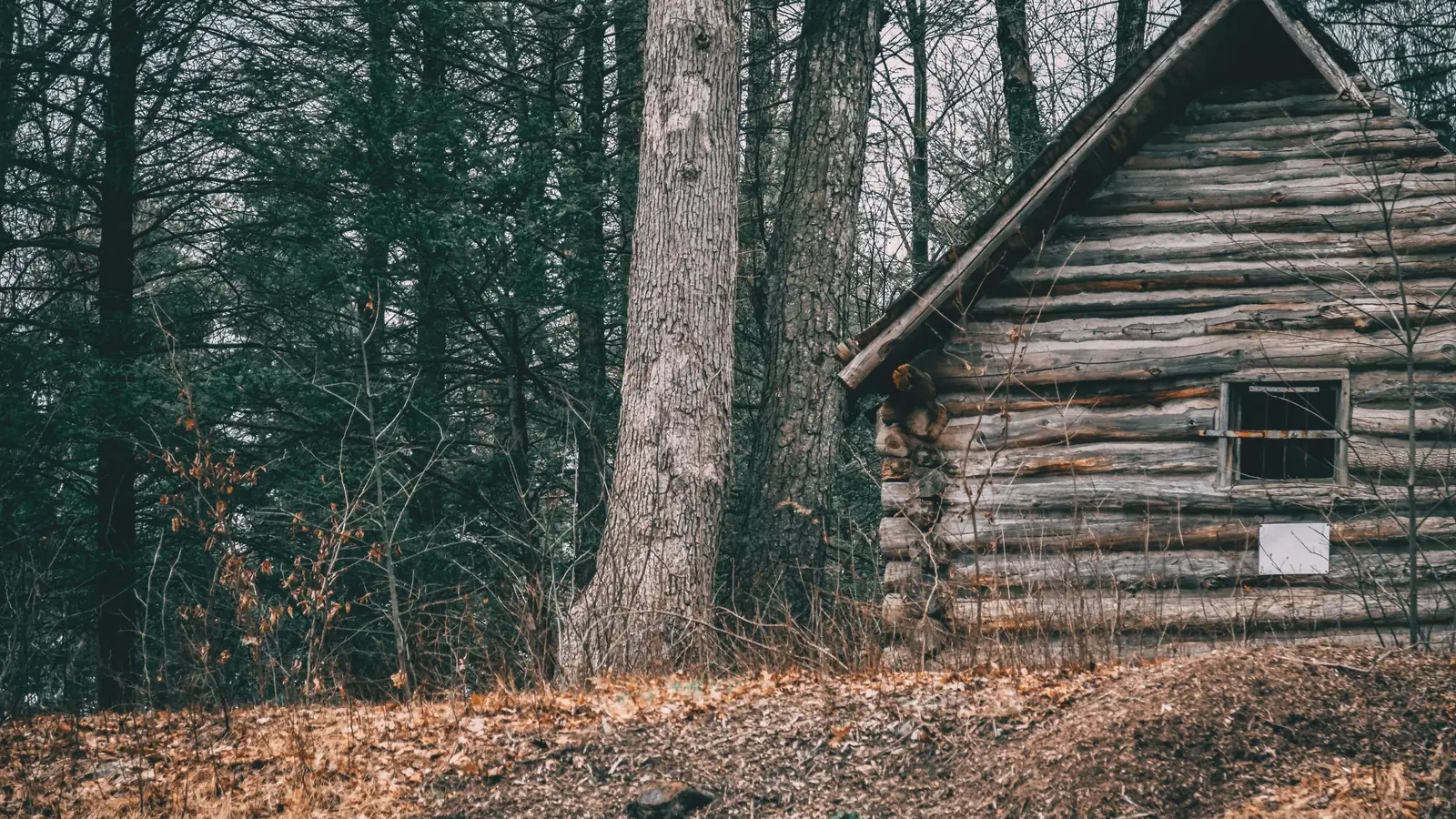
Photos from Pexels: log cabin in autumn woods by Craig Adderley, pine cabin living room by Erik Mclean and wooden hot tub in snow by Barnabas Davoti.