





The ferries
Point Judith and seasonally more
Also New London, Montauk and Newport in season. Vehicle reservations sell out in August. This is your most important guest information.

Expert short-term rental marketing to grow your bookings and nightly rate in Block Island, Rhode Island, USA.
* Market averages. Properties marketed by Cavmir typically exceed these figures by 25–45%. Data sourced from AirDNA, STR market reports, and Cavmir internal analytics.
Block Island lies about thirteen miles off the Rhode Island coast, a triangle of land roughly seven miles by three with a year-round population of around a thousand people that multiplies many times over in July and August. It is reached by ferry from Point Judith, and seasonally from New London, Montauk and Newport, or by a short flight. What makes it remarkable is how much of it has been kept: something approaching half the island is conserved land, a result of decades of deliberate effort by residents and land trusts, and The Nature Conservancy has named it among its Last Great Places. The consequence is an island of stone walls, open moorland, ponds and beaches with very little of the development that has overtaken comparable places. Mohegan Bluffs on the south side are clay cliffs about a hundred and fifty feet high with a long wooden staircase down to the beach. The Southeast Light stands above them. The Greenway trail system crosses the middle of the island. Old Harbor has a row of Victorian hotels facing the ferry landing. For an owner, this is a short and expensive season, a genuinely constrained supply of inventory, and a regulatory position that requires registration in two places and somebody who can be standing in front of a police officer within two hours.
You register twice on Block Island. The Town of New Shoreham, which is the island's municipality, adopted a short-term rental ordinance in 2024 requiring annual registration, applying occupancy limits reported at two persons per bedroom, and requiring that the registration number appear on the listing. The provision that most affects how a property must be run is the local representative requirement, and the town's own ordinance language is specific about it: the owner must designate an individual who shall be physically present in New Shoreham during short-term rental periods as the owner's local representative, authorised to receive any process, notice or demand required or permitted to be served upon the owner, and that representative must respond to inquiries from town officials, including but not limited to the police department, promptly and in no event more than two hours from the time of inquiry. On an island thirteen miles offshore, that is not a formality. It means you either live here, or you have a real arrangement with somebody who does, and it should be settled before you buy rather than after. Separately, any Rhode Island property advertised for stays of thirty nights or fewer on a hosting platform must be registered with the Rhode Island Department of Business Regulation before it is listed. Confirm the current New Shoreham fee schedule, occupancy standard and the DBR registry requirements directly.
Nearby Markets: Newport | Mystic | Martha's Vineyard
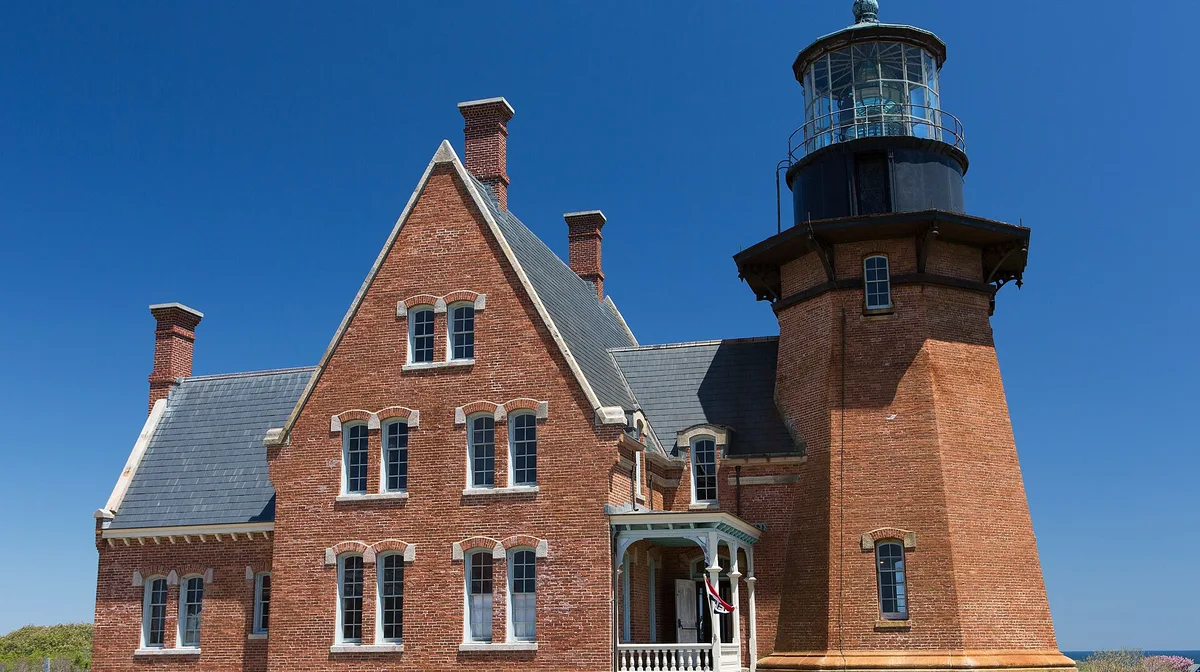
A few of the visual fingerprints we lean into when we shoot, brand and market a Block Island Rhode Island property — courtesy of the open Wikimedia Commons archive.
Cavmir markets Block Island properties on scarcity and on the shoulder, which are the two things this market actually runs on. The island's supply is genuinely constrained, by geography, by the amount of land that has been permanently conserved, and now by a registration regime that requires a physically present local representative. That makes a compliant, well-run property here a scarce asset and it should be marketed as one rather than priced against mainland coastal inventory. The season is the harder problem. July and August sell themselves; the work that pays is June and September, when the weather is often excellent, the ferries are running, the island is quiet and rates are typically set as though the season had not started or had already ended. We build those months into a real proposition with their own photography and their own pitch rather than treating them as a discount. We handle the ferry properly in the listing, because ferry logistics, vehicle reservations, what to bring and whether you need a car at all are the largest source of guest anxiety here and the largest source of pre-arrival messages. We photograph the bluffs, the moorland and the light, which is the reason people fall in love with this island. Then we build the direct booking site, run local SEO and hold the guest relationship, because island guests are among the most loyal anywhere. We help position and market your property. We never manage it or touch your keys.
Steamboats and grand wooden hotels made Block Island a resort in the 1870s, and a conservation campaign a century later kept it one. Cavmir picks the story up from there.
The Narragansett called it Manisses, the island of the little god. Adriaen Block, a Dutch navigator, put his name on European charts of it in 1614, and English settlers from Massachusetts arrived in 1661 and established the town of New Shoreham, which remains the island's only municipality. For two and a half centuries this was a farming and fishing community, and a hard one: thirteen miles offshore with no natural deep harbour, a coastline that wrecked a great many ships, and winters that cut the island off. The Great Salt Pond was landlocked until 1895, when a channel was cut through to the sea and created New Harbor, which transformed the island's prospects. The Victorian era brought the tourists. Steamers ran from the mainland, and the enormous wooden hotels that still line Old Harbor were built in the 1870s and 1880s to receive them; several are still operating, which is remarkable given how few of their contemporaries anywhere survived. The twentieth century was less kind, and by the 1960s and 1970s the island was declining, with property cheap and development pressure beginning to build. What happened next is the reason Block Island looks the way it does today. Residents, led substantially by the Block Island Conservancy and later joined by The Nature Conservancy and the Block Island Land Trust, set out to buy and protect land, funded partly by a local real estate transfer fee that islanders voted on themselves. Something close to half the island is now permanently conserved. The Nature Conservancy named it one of its Last Great Places. That decision, taken by a community of a few hundred people, is why there is open moorland and a two-mile Greenway rather than subdivisions, and it is also why the supply of rental inventory here is structurally limited in a way that no ordinance could achieve.
Before the platforms, mainland steamers landed guests at Old Harbor and the great wooden hotels of the 1870s put them up by the hundred, verandas facing the water. A century later the islanders bought back the land itself, and close to half of Block Island is now conserved. The channel changed; the work is identical: presentation, positioning, and an island that stayed worth the crossing. It is the same business Cavmir is in today.
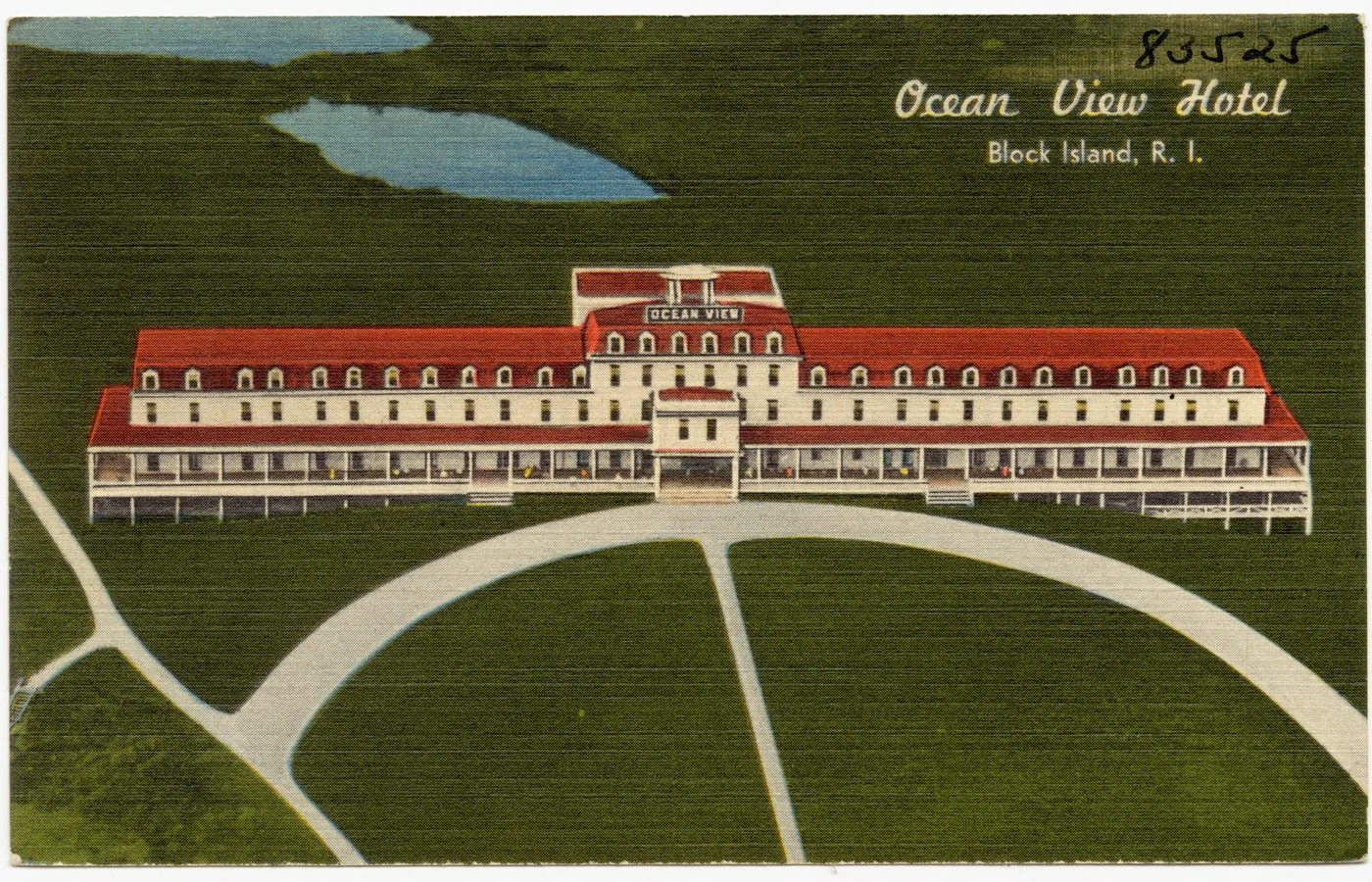
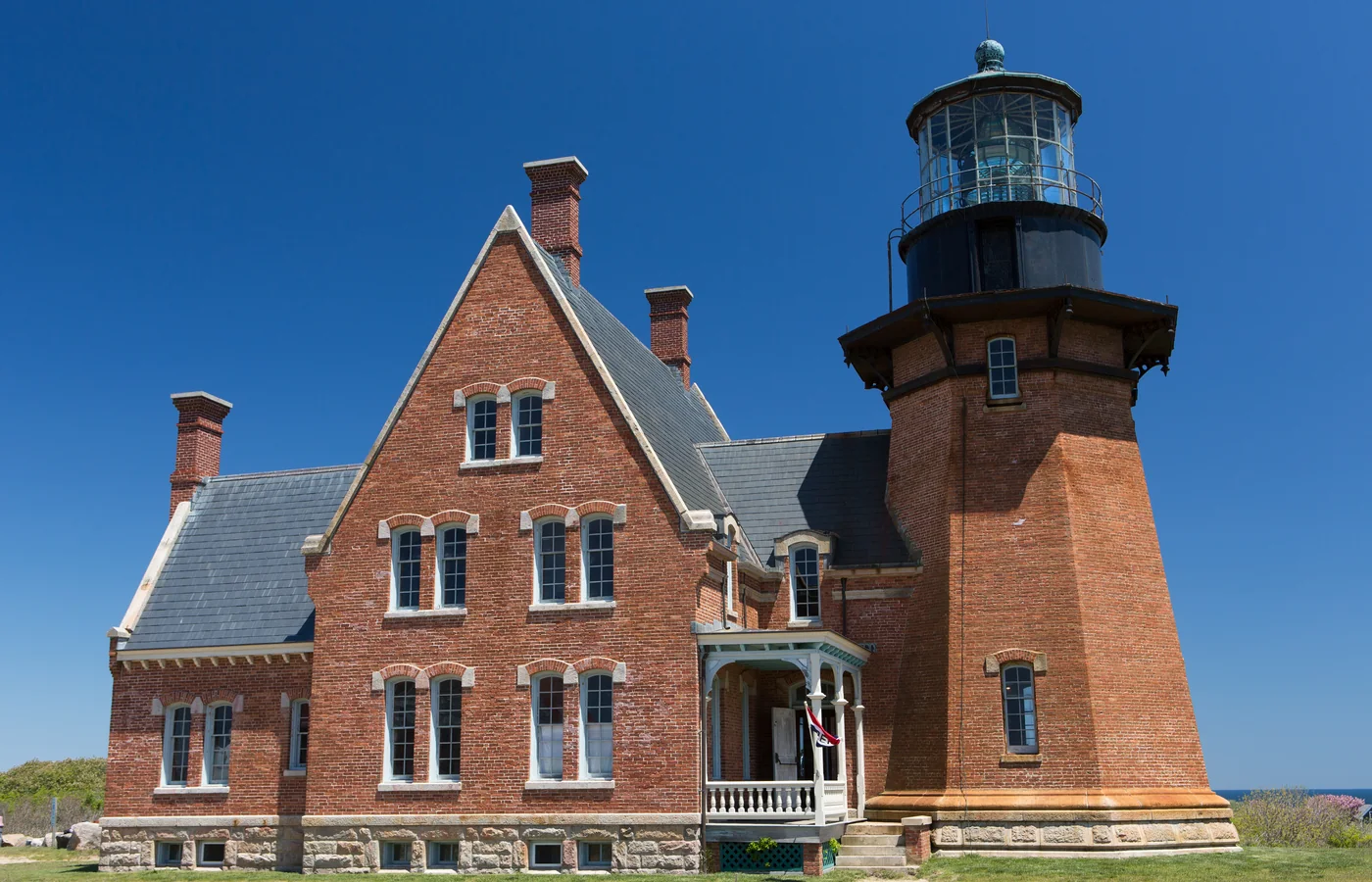
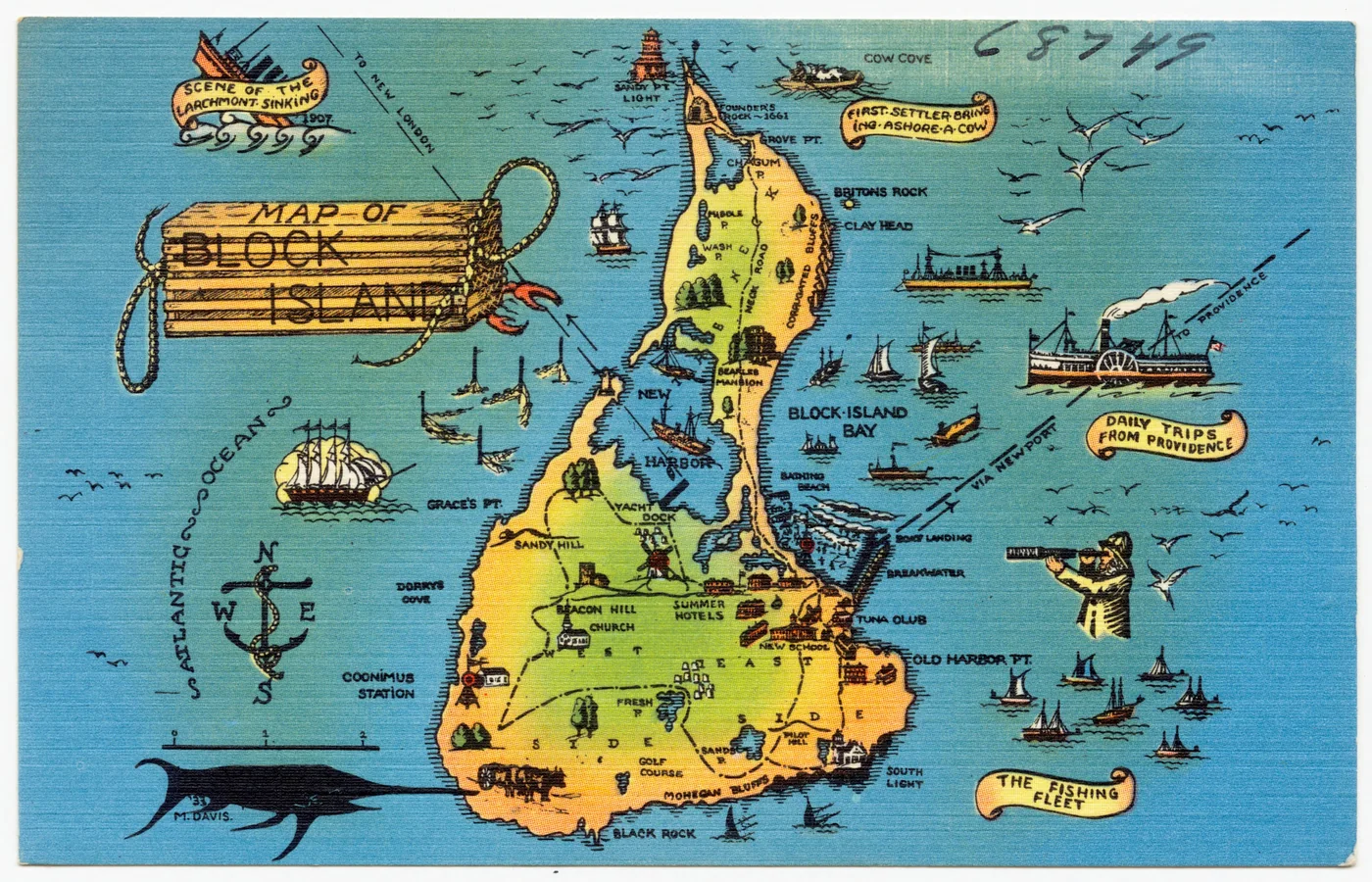
Historical images: public domain and Creative Commons via Wikimedia Commons — Tichnor Brothers collection (Boston Public Library), Brett Weinstein, and others.
Block Island has the shortest effective season and the highest rates of any market in this batch, and the arithmetic is unforgiving: a small number of weeks has to carry the year. July and August are the peak, they book far in advance, and they should be priced firmly with weekly or long-weekend minimums. Do not discount into them. The commercial work that actually changes an owner's year happens in June and September. Both months frequently offer excellent weather, full ferry service, quiet beaches and an island that is genuinely more pleasant than it is at peak, and both are routinely priced as though they were off-season. Build them as distinct products with their own photography and their own pitch, aimed at couples, walkers, birders and people who have been at peak before and would rather not repeat it. The other lever is the mid-week. Peak-season weekends sell themselves; peak-season Mondays to Thursdays are softer than the rates suggest and respond to a genuine multi-night offer. Two structural points. First, supply here is constrained by geography, by the extraordinary amount of land that has been permanently conserved, and now by a registration regime that requires a physically present local representative, which means a compliant property is a scarce asset and should be priced as one. Second, the guest's total includes ferry cost and time, which is part of their decision even though it is not part of your rate, so make the logistics easy.
Short and concentrated. July and August are the market, with the island's population multiplying many times over and rates at their peak. June and September are the genuine opportunity: reliable ferry service, often excellent weather, far fewer people, and rates that usually do not reflect any of that. Late May and early October carry a small shoulder for walkers and birders, since the island sits on a major migratory flyway and autumn birding here is nationally regarded. From November to April the island is very quiet, the ferry schedule reduces, most businesses close, and the year-round population of around a thousand has the place to itself.
Block Island requires registration in two separate places and an owner needs both. At municipal level, the Town of New Shoreham adopted a short-term rental ordinance in 2024. It requires annual registration, applies occupancy limits reported at two persons per bedroom, and requires that the registration number appear on the listing itself. It also sets a minimum stay and requires owners to publish contact information. The provision that most changes how a property must actually be run is the local representative requirement, and the ordinance language is worth quoting closely because owners routinely underestimate it. The owner must designate an individual who shall be physically present in New Shoreham during short-term rental periods as the owner's local representative, authorised to receive any process, notice or demand required or permitted to be served upon the owner of the dwelling unit. That representative must respond to inquiries from town officials, including but not limited to the police department, promptly, and in no event longer than two hours from the time of inquiry, to ensure that the use of the dwelling unit complies with the ordinance and with other town ordinances and state law. On an island thirteen miles offshore, reachable only by ferry or light aircraft and with a reduced schedule outside summer, a two-hour response obligation cannot be met from the mainland. In practice it means you either live here or you have a genuine, contracted, reliable arrangement with somebody who does, and that arrangement should be in place before you complete a purchase rather than sought afterwards. At state level, any Rhode Island property advertised for stays of thirty nights or fewer on a hosting platform must be registered with the Rhode Island Department of Business Regulation before it is listed. That is a precondition of advertising, not a formality to be caught up on later. Confirm the current New Shoreham fee schedule, the minimum stay, the occupancy standard and the DBR registry requirements directly with the Town and with DBR before you buy or advertise.
Solve the ferry in writing, before anything else. Ferry logistics generate more guest anxiety and more pre-arrival messages on this island than every other topic combined, and the questions are always the same: which ferry, from where, do I need a vehicle reservation, how far ahead do they sell out in August, can I manage without a car, what happens if it is cancelled. A clear, honest, well-organised section answering all of that is the highest-return piece of writing you will do for a Block Island property. The correct answer to the car question, for most guests staying near Old or New Harbor, is that they do not need one and will have a better week without it, and saying so builds enormous trust. Second, sell June and September with real conviction and separate photography, because they are the best value on the island and the market treats them as leftovers. Third, be specific about which part of the island you are on, since Old Harbor, New Harbor, the west side and the south end near the bluffs are genuinely different experiences in terms of walkability, quiet and what you can reach on foot. Fourth, use the conservation story, because it is true, it is unusual and guests find it genuinely moving: about half of this island is protected because the people who live here decided to protect it and taxed their own property sales to pay for it. Fifth, and most important before purchase: settle who your local representative is going to be. Without a reliable one you do not have a business here.
The two-hour local representative requirement is the defining operational constraint and it makes remote ownership genuinely difficult; finding and keeping a reliable island-based representative is a real problem in a community of a thousand people where everybody is already busy in summer. The season is very short and very expensive, so a poorly priced July cannot be recovered. Ferry dependence adds friction to demand and creates weather cancellations that fall on you. Costs are high for everything, since materials, trades and supplies all arrive by boat, and finding contractors is difficult. And the conserved-land ethos that makes the island wonderful also means a community that watches short-term rental activity closely.
Insure a Block Island property on a policy written for paid guest occupancy, either a dedicated short-term rental product or a landlord policy with an explicit short-term rental endorsement, arranged in writing. Standard homeowner's cover will generally decline a guest-related claim. Ask about liability limits, loss of income and guest belongings. Coastal exposure dominates everything else here and you should approach it with your eyes open. This is an island in the open Atlantic, directly exposed to hurricanes and nor'easters, and wind cover is expensive, sometimes hard to obtain, and typically carries a separate hurricane deductible set as a percentage of insured value; on a high-value property that is a very large number, so calculate it. Flood is excluded from standard policies and is a separate purchase; check your parcel's designation. Erosion and coastal land loss are generally excluded entirely and matter near the bluffs. Because most inventory closes for winter, read the vacancy conditions, and note island repairs take longer and cost more, which is worth reflecting in your loss of income cover. Platform host protection supplements a policy rather than replacing it.
Rhode Island taxes short-term rentals through a combination of state sales tax and hotel tax applied to the rental of accommodation, with the state hotel tax and a local component both potentially in play, and platforms and the state have specific collection roles. Because the composition of the stack depends on the type of accommodation, whether the whole unit or a room is let, and how the booking is made, and because Rhode Island has adjusted its treatment of short-term rentals more than once, confirm the current rates and your specific obligations with the Rhode Island Division of Taxation before you publish a total or assume a platform is handling everything. Registration with the Rhode Island Department of Business Regulation is a separate obligation and is a precondition of advertising a property for stays of thirty nights or fewer on a hosting platform, so it should be completed before you list rather than in response to a notice. That DBR registration is not a tax registration and does not substitute for one, and neither substitutes for your New Shoreham town registration. Ask your platform explicitly which taxes it collects and remits and which it does not, file the remainder yourself, and ask your accountant how the income should be treated federally and for Rhode Island purposes.
Financing here is at the difficult end of the spectrum and should be planned well ahead. Prices are high, the season is very short, and a debt service coverage calculation built on ten to twelve weeks of income is unforgiving, so expect to bring substantial equity regardless of which product you use. Island property also raises specific underwriting questions that mainland lenders may not be equipped for, which is why local and regional Rhode Island lenders who understand Block Island are usually the better route: they know the market, the seasonality and the comparables, and they will not be surprised by the appraisal. Insurance is frequently the binding constraint rather than the loan itself. Wind and flood cover on an exposed Atlantic island has become expensive and conditional, lenders require it in place at closing, and buyers who leave it to the last fortnight sometimes find the cost materially changes their model or that cover is not readily available for a particular property. Get quotes early. Also factor in that construction, repair and maintenance costs on the island run well above mainland equivalents because everything and everybody arrives by boat, which affects both your reserve planning and the appraiser's view of condition.
The 2024 town ordinance is the immediate thing to watch, because it is new and because new ordinances in small communities almost always get amended once the first full season has revealed what does and does not work. The local representative requirement in particular is the sort of provision that gets tightened, clarified or given teeth after enforcement experience, and any movement there directly affects whether remote ownership remains practical. Follow New Shoreham town council business directly rather than waiting for coverage; in a town this size, that is entirely feasible. At state level, Rhode Island has been actively developing its short-term rental framework through the Department of Business Regulation registry, and further requirements are plausible. The longer-term picture, though, is unusually favourable for owners who are already established and compliant. Supply on this island is limited by geography, by roughly half the land being permanently conserved by the community's own choice, and now by a registration regime that effectively requires a real island presence. Demand from Boston, New York and Connecticut is not going to fall. That combination means a well-run, properly registered, well-marketed Block Island property with a direct booking channel and a loyal returning guest base is one of the more defensible positions in New England.
Block Island is thirteen miles off the Rhode Island coast, seven miles by three, with about a thousand year-round residents and roughly half of its land permanently protected because the people who live there decided it should be and taxed their own property sales to pay for it. That single fact is why the island looks the way it does: stone walls, open moorland, ponds, two lighthouses and a two-mile Greenway, instead of the subdivisions that took most comparable places. The Nature Conservancy calls it one of its Last Great Places, and for once the phrase is doing real work. Mohegan Bluffs on the south shore are a hundred and fifty feet of clay cliff with a long wooden staircase down to a beach that is usually nearly empty. The Southeast Light stands above them, and in 1993 they jacked up the entire two-thousand-ton building and moved it three hundred feet inland because the cliff was catching up with it. Old Harbor still has its row of Victorian hotels facing the ferry, built in the 1870s and 1880s and improbably still working. The island sits on a major migratory flyway, so the autumn birding is nationally regarded. And in September, when the crowds have gone and the ferries are still running, it is as good as anywhere on the eastern seaboard.
A great property in Block Island Rhode Island doesn't just want a listing — it wants a point of view, an audience, and a brand the city itself would recognise.
Eight things to know about Block Island before writing listing copy, starting with the requirement that somebody must be able to reach a police officer within two hours.
Also New London, Montauk and Newport in season. Vehicle reservations sell out in August. This is your most important guest information.
Guests near Old or New Harbor generally have a better week without one. Saying so plainly builds real trust.
Victorian hotels, shops and restaurants. The walkable centre and where most first-time visitors want to be.
Boating, moorings and a quieter base. The pond was landlocked until a channel was cut through in 1895.
A hundred and fifty feet of clay cliff and a long staircase to the beach. The island's defining view.
Miles of paths through conserved land. About half the island is permanently protected.
The island sits on a major flyway and the autumn birding draws a serious national audience nobody markets to.
New Shoreham annual registration plus Rhode Island DBR registration before you may advertise at all.
The three examples below are composite and illustrative. They are drawn from patterns common in constrained island markets with short seasons, and they are not accounts of specific businesses or clients.
A well-appointed house said almost nothing about how guests would actually get to the island, and generated a constant stream of pre-arrival questions about ferries, vehicle reservations and whether a car was needed.
We wrote a complete ferry section covering each route, when vehicle reservations sell out, what to do if a sailing is cancelled, and an honest recommendation that most guests staying near the harbours would have a better week without a car at all.
Pre-arrival messages dropped sharply, guests arrived better prepared and less anxious, and the honesty about not needing a car became a recurring point of praise in reviews.
A property sold out in July and August and sat largely empty in June and September, which were priced as off-season despite full ferry service and frequently better weather than the peak.
We built June and September as distinct products with their own photography and their own pitch, aimed at couples, walkers and birders, and priced them as a premium quiet season rather than as a discount on summer.
Both shoulder months began filling at rates far closer to peak, materially lengthening the earning season without adding a single night in July or August.
An off-island owner was preparing to buy and had not accounted for the requirement that a designated local representative be physically present in New Shoreham during rental periods and able to respond to town officials within two hours.
We set out the ordinance requirement in full, explained why a two-hour response obligation cannot be met from the mainland given the ferry schedule, and identified that a contracted, reliable island-based arrangement had to be in place before completion rather than sought afterwards.
The buyer resolved the local representative question before closing rather than discovering the obligation during their first season, and entered the market with a compliant operating structure from day one.
Demand in Block Island peaks around June through August and runs quietest around January, February and March. Here is how the year actually books — and what to do about each stretch of the calendar.
July and August are the market, the island's population multiplies many times over, and rates are at their highest of the year. Book minimums and firm pricing are both accepted here. The season is short enough that a badly priced peak cannot be recovered anywhere else in the calendar.
June and September are where the real commercial work is. Both offer full ferry service, frequently excellent weather, quiet beaches and an island that is genuinely more pleasant than it is at peak, and both are routinely priced as though they were off-season. Build them as distinct products aimed at couples, walkers and birders.
From late autumn through spring the island is very quiet, the ferry schedule reduces and most businesses close. The honest strategy is to use the closed months for maintenance and for reaching last year's guests directly, because island visitors are among the most loyal anywhere and a great many of them will rebook the same week.
Peak weeks book very far ahead and a large share go to returning guests directly. June and September book much closer in. Anything outside the season is opportunistic and weather-dependent.
Full weeks through the peak, with long weekends in the shoulders. Because getting here takes a ferry, guests rarely come for a single night and stays skew longer than mainland coastal markets.
Proximity to Old Harbor or New Harbor matters enormously, because a guest without a car needs to be able to walk to dinner and to the ferry. Water views command a real premium. Outdoor space that is sheltered from the wind is worth more here than an equivalent open deck.
Start with photography that shows what a guest actually gets here, then write the listing around a real itinerary rather than a feature list. Build a direct-booking site so returning guests can come back without going through a platform, and keep an email list segmented by season so you can reach last year's visitors before the calendar opens. Local search matters more than people expect in a market this size, because guests search the destination and the attraction rather than the word rental. A marketing agency layer handles the photography, the listing copy, the direct-booking site and the local SEO as one system instead of four disconnected jobs.
July and August are the market, when the island's population multiplies and rates peak. June and September are the real opportunity, with full ferry service, often excellent weather and far fewer people, and they are routinely priced as off-season. Late autumn through spring is very quiet.
Peak summer weeks book very far ahead and many go to returning guests directly, before they reach a platform. June and September book much closer in, which is part of why they stay under-priced.
A southern New England and New York market, with visitors driving to the ferry from Providence, Hartford, Boston, New York and Connecticut. Because the ferry is part of the journey for nearly everyone, clear ferry guidance is the most valuable thing you can put in a listing.
An outdoor shower and somewhere for wet and sandy things matter most in a beach and boating market. Bicycles are a genuine differentiator on an island this size, and a full kitchen matters because eating out every night here is neither cheap nor always possible.
Run your Airbnb, Vrbo, or website through Cavmir's free grader. It checks the things that decide whether guests book on Block Island — photos, listing copy, page speed, local search — and shows you where bookings leak. Takes about a minute, and there's no sales call attached.
If the report says your booking engine is the weak link, that's fixable: a direct-booking website of your own means repeat guests stop paying platform fees to come back to you. That's the work Cavmir does — see Airbnb website design on Block Island.
Send us the listing and we'll tell you what we'd change. Not a pitch deck — a straight read on your photos, your title, your rates against the Block Island comp set, and whether a direct-booking site would pay for itself.
You'll hear back from a person, usually inside one business day. If we don't think we can move your numbers, we'll say so. Cavmir is a short-term rental marketing agency — we position and market properties, we don't manage them.
Talk to Cavmir today. We'll show you exactly what your Block Island property is leaving on the table — and how fast we can change that.
Book a Free Strategy CallPhotography via Wikimedia Commons (images resized and cropped): Block Island Southeast Light, May, 2015 by Brett Weinstein (CC BY-SA 4.0) · Block Island ocean waves IMG 1147 by Billy Hathorn (CC BY-SA 3.0) · Boating off Block Isalnd IMG 1057 by Billy Hathorn (CC BY-SA 3.0) · Harborside Inn, Block Island, RI IMG 1150 by Billy Hathorn (CC BY-SA 3.0) · Settler's Rock on Block Island IMG 1082 by Billy Hathorn (CC BY-SA 3.0) · Mohegan Bluffs by PA Uploader (CC BY-SA 4.0).
