Coffee in Thomas, then the gorge rim
Grab a coffee on Front Street in Thomas before nine, then drive down to Blackwater Falls and take the boardwalk while the mist is still sitting in the gorge. Best hour of the day here.
Expert short-term rental marketing to grow your bookings and nightly rate in Davis, West Virginia, USA.
* Market averages. Properties marketed by Cavmir typically exceed these figures by 25–45%. Data sourced from AirDNA, STR market reports, and Cavmir internal analytics.
Davis is the highest incorporated town in West Virginia, sitting just over three thousand feet at the top of the Blackwater River, and it has quietly become one of the strongest cabin markets in the mid-Atlantic. The reason is a short list of very good reasons to drive four hours: Blackwater Falls, Canaan Valley, Dolly Sods, Timberline, White Grass, and a downtown two blocks long that punches far above its size. Thomas is two miles up the road with the Purple Fiddle and a row of storefronts that turned into a real music and art scene. The guests come from Washington, Baltimore, Pittsburgh and Northern Virginia, and they come in every season — ski and nordic in winter, wildflowers and whitewater in spring, mountain biking and swimming holes in summer, and a fall that runs three weeks later than the lowlands. Rental stock is cabins, A-frames, converted houses in town and larger valley homes. Ownership is overwhelmingly local or regional. Very little of it is professionally marketed.
Tucker County is a four-season market with real winter demand, which puts it in a small club on the East Coast. Timberline's return brought lift-served skiing back to the valley, White Grass keeps the nordic crowd loyal, and Canaan Valley Resort holds the family trade. Summer is not a filler season here either — the trail network around Blackwater and Canaan draws riders all season and the swimming holes fill on hot weekends. That gives an owner something rare: genuine year-round demand rather than one big season and nine months of hoping. The constraint is supply and sentiment. Davis grew fast on short-term rentals after 2020, and in 2024 the town put an ordinance to a vote that would have capped rentals in part of the residential area. Voters rejected it, but the conversation is not over and owners here should assume the rules will keep being discussed. In marketing terms, the practical effect is a crowded, largely undifferentiated cabin field where nearly every listing leads with a hot tub photo. The properties that win are the ones with a clear story and photography that shows what the valley looks like in the month a guest is booking for.
Nearby Markets: Snowshoe | New River Gorge | Deep Creek Lake

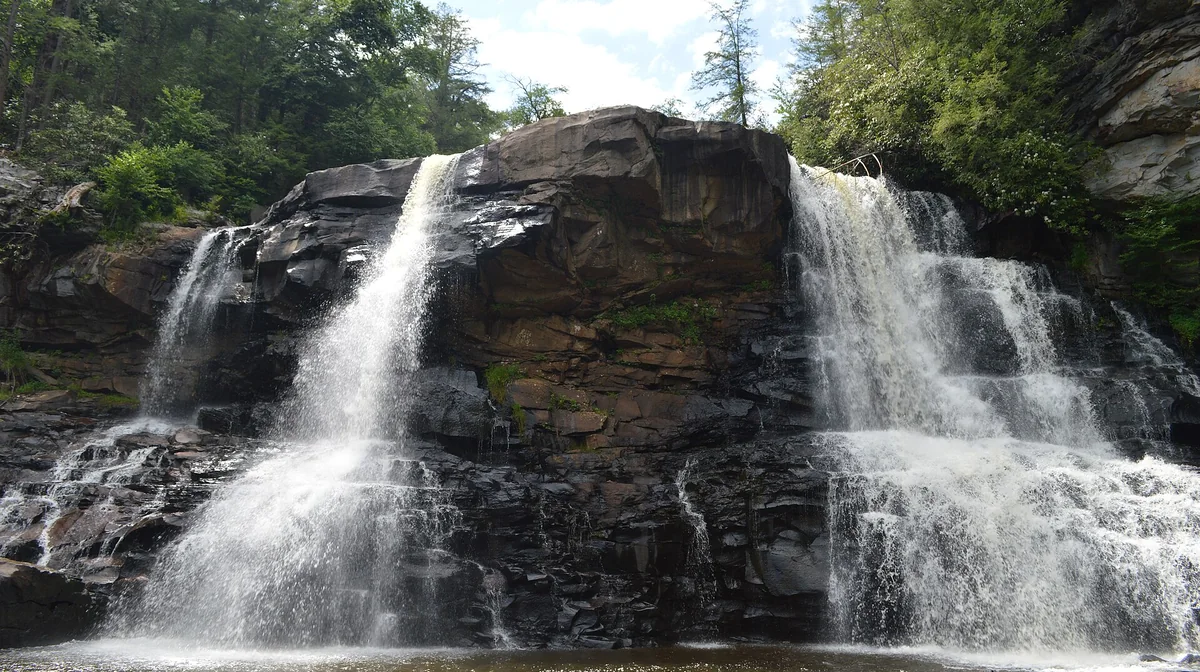
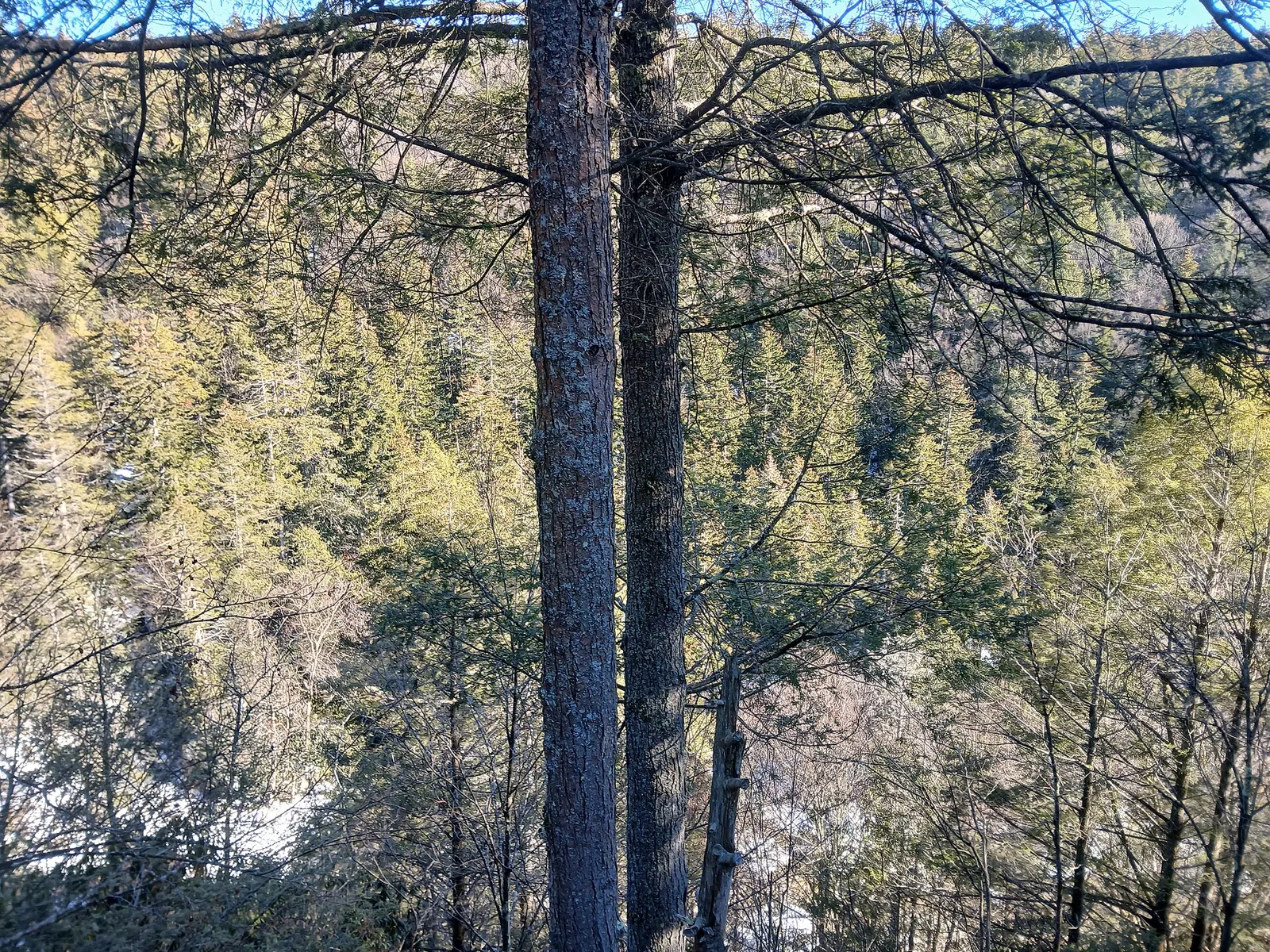
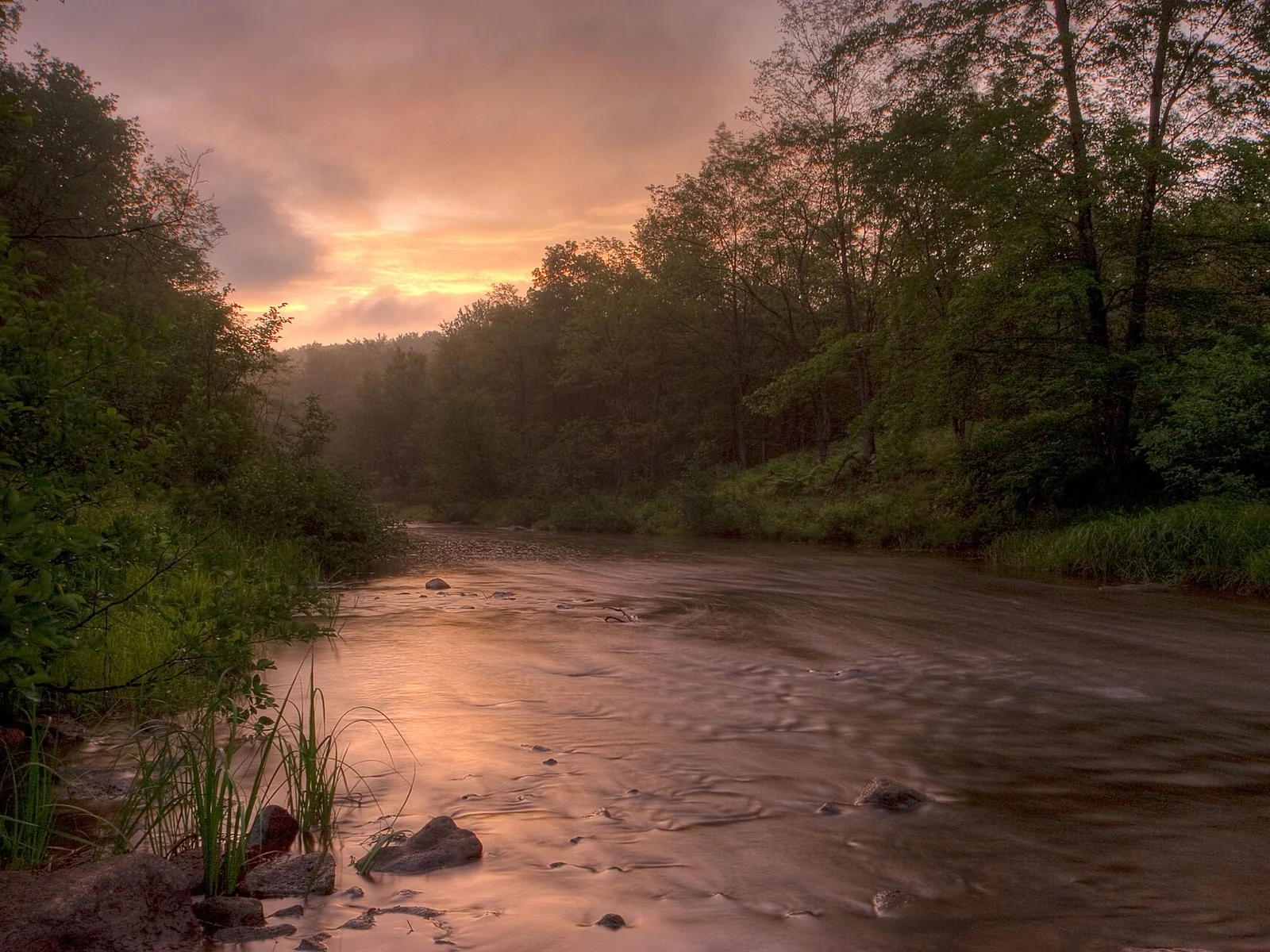
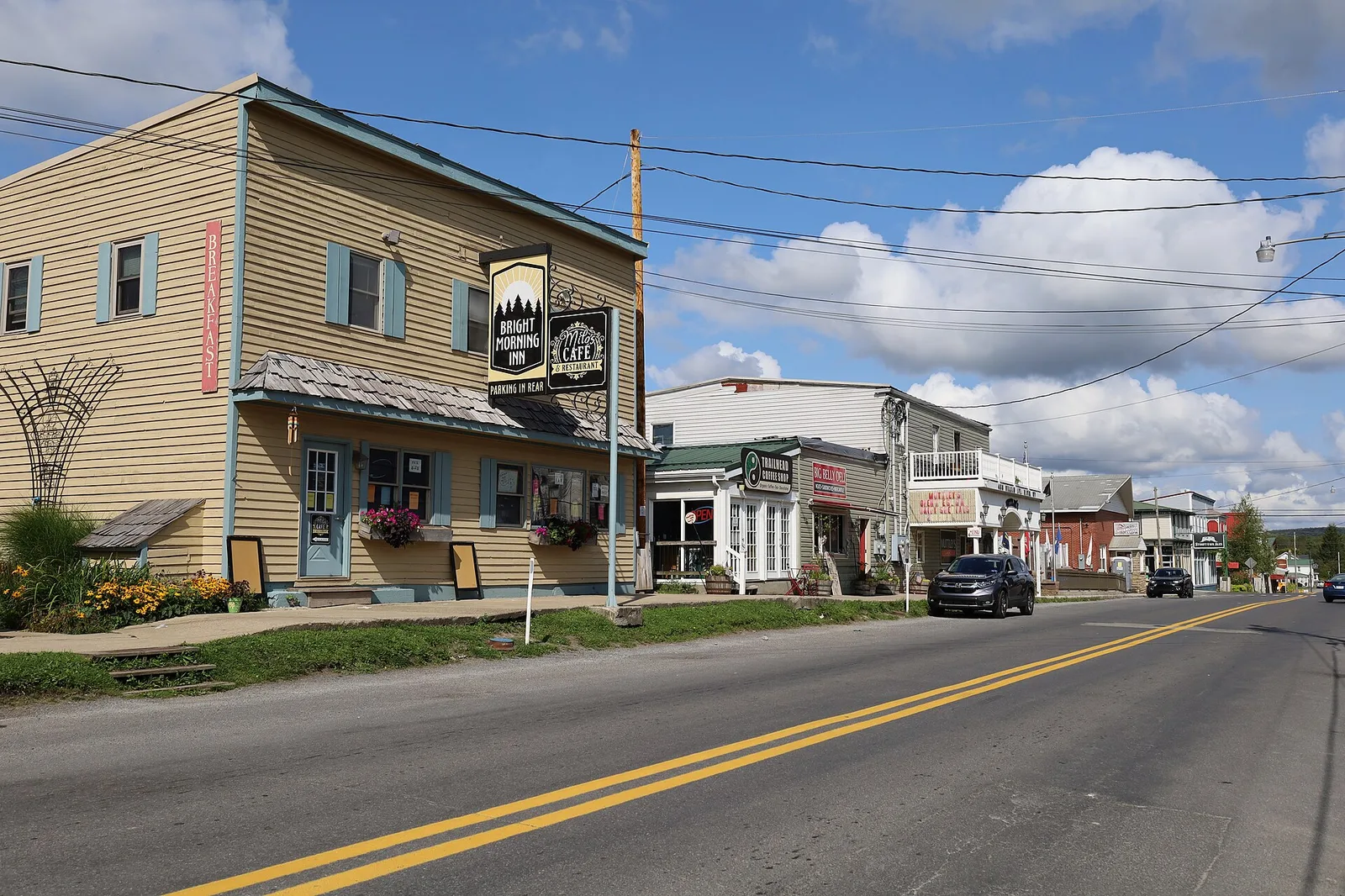
A few of the visual fingerprints we lean into when we shoot, brand and market a Davis property — courtesy of the open Wikimedia Commons archive.
Cavmir markets Davis, Thomas and Canaan Valley cabins as the year-round places they are. We photograph in more than one season, because a listing that only shows October loses the January skier and the June rider. We write the copy against real trailheads, real drive times and the actual reasons a family from Bethesda picks this valley over Deep Creek. We build the direct-booking website, get it visible for the Blackwater Falls, Canaan and Dolly Sods searches that already bring people here, and stand up the email list that makes a winter guest a summer guest. We run local search and paid campaigns against the DC, Baltimore and Pittsburgh drive markets that feed Tucker County. We keep an eye on how the town's rental rules develop and we will tell you when something changes that affects how you should be positioned. We help position and market your property. We never manage it or touch your keys.
Davis was built to cut trees. Henry Gassaway Davis, a senator and railroad man, put a town at the top of the Blackwater River in the 1880s to work the red spruce and hemlock that covered this plateau, and for about forty years the mills ran hard. What followed is the part that shaped the landscape you see today: the cut-over ground caught fire, repeatedly and catastrophically, and the fires burned deep enough to take the soil down to rock in places. The high heath barrens of Dolly Sods, which look ancient and arctic, are partly the scar tissue of that. The forest that came back is different from the one that was taken, and the recovery is still going on.
What saved the town was the fact that nobody could farm here. The elevation is over three thousand feet, Davis is the highest incorporated town in West Virginia, and Canaan Valley next door sits in a bowl at around thirty-two hundred feet with a climate closer to Canada's than to Virginia's. That produced snow, and snow produced skiing. Canaan Valley Resort opened runs in the early 1970s. White Grass started grooming nordic trails at the old Weiss Knob area at the end of that decade and has been the soul of the cross-country scene ever since. Blackwater Falls State Park, established in the 1930s, gave the county its postcard: fifty-odd feet of tannin-stained amber water dropping into a gorge. Canaan Valley became a national wildlife refuge in 1994. Then the mountain-bike people arrived, then the climbers and the birders, and then, after 2020, a wave of people from Washington and Baltimore who wanted a cabin four hours from home. Davis grew fast on that, and it is still working out what it wants to be as a result. Two miles up the road, Thomas turned a row of nineteenth-century storefronts into one of the best small music and art scenes in Appalachia. Together they are the reason this county rents.
Tucker County is one of the few East Coast markets where an owner can build a genuinely four-season rate calendar rather than one peak and a long wait. Winter is real here: ski weekends at Timberline and Canaan Valley Resort, plus the nordic crowd at White Grass, hold rates from late December through early March, with the holiday stretch and Presidents Day weekend at the top. October is the second peak and the most predictable, since fall color at this elevation runs later than the lowlands and the leaf traffic is dependable regardless of temperature. Summer is a genuine third season driven by riding, paddling, swimming holes and heat refugees from the Piedmont, and it should not be priced as filler. That leaves two real soft patches — the mud weeks from mid-March through April, and the stretch from early November until the snow arrives — and those are where the discounting belongs, not in June. Practically: four tiers, minimum stays that tighten around holidays and festival weekends, and midweek rates in the shoulder that are aggressive enough to be worth a guest's Tuesday. Cabins that sleep eight or more should be priced for groups rather than per-head, because the dominant booking here is two or three families sharing.
Four working seasons, which is rare on this side of the country. Winter runs from the first dependable cold in late December to early March and is weekend-heavy and snow-sensitive. Spring is the weakest stretch — March and April are mud, though the wildflower and birding traffic picks up through May. Summer is strong from mid-June through Labor Day with riding, swimming and festivals. Fall is the best-looking and best-booked run of the year, roughly late September through the third week of October, and it starts earlier and finishes later up here than it does two thousand feet lower. November before the snow is dead. Those two dead patches are what a shoulder-season strategy is for, and they are the difference between a good year and an average one.
Tucker County is a light-touch environment on paper, but it is also a place where short-term rentals are an active local argument, and an owner who ignores that is not paying attention. The Town of Davis grew quickly on rentals after 2020, enough that residents began raising concerns about housing availability for people who work here. The town council brought forward an ordinance that would have capped short-term rentals at roughly the number then operating within a defined residential area, while leaving the business district along William Avenue and areas governed by homeowner associations uncapped. It went to a vote in 2024 and residents rejected it, 115 to 80. That is where things stand: no cap in force, and a town that has demonstrated it will keep discussing the question. Assume the topic returns, and structure your business so a future rule would not be fatal — meaning documented, continuous, compliant operation and a direct relationship with your guests rather than total dependence on one channel.
The compliance basics still apply and they are not optional. West Virginia requires a Business Registration Certificate from the State Tax Department before you rent, and that is the first piece of paper to get. West Virginia's consumer sales tax applies to lodging stays under thirty days. On top of that, state law authorizes municipalities and counties to levy a hotel occupancy tax of up to six percent — the municipality collects within town limits, the county collects outside them — and that revenue is what funds the Tucker County convention and visitors bureau that markets this whole area. Confirm the current rate that applies to your specific address, because a cabin in Davis, a cabin in Thomas and a cabin out in unincorporated Canaan Valley are not necessarily in the same bucket. If your property is in a homeowner association in the valley, the association's rules apply on top of everything above and can be stricter than either the town or the county. Read them before you buy. Finally, get your septic and occupancy limits straight: a lot of the valley runs on septic systems sized for a family, not for the twelve people your listing says it sleeps.
Shoot winter. This is the single biggest miss in Tucker County. Most listings here were photographed in summer or fall and then try to sell January to a family from Arlington who cannot picture the place with snow on it. If you have a wood stove, a hot tub and a view, you need all three in the snow, at dusk, with the lights on inside. Second, be honest and specific about which mountain. Timberline, Canaan Valley Resort and White Grass are three different products for three different guests, and your drive time to each of them belongs in the listing in minutes. Third, sell Thomas. A lot of guests do not know it exists, and the Purple Fiddle and Front Street are a genuine reason to pick this valley over Deep Creek or Wisp. Put the show calendar in your guest guide and reference it in your copy. Fourth, take the riders seriously — the trail network around Canaan and Blackwater is one of the better ones in the mid-Atlantic and riders travel in groups, book midweek and come back. Covered bike storage, a hose and a drying room are worth photographing. Fifth, warn about the road and the cell service. Route 32 in a snow squall and the dead spots in the valley both surprise first-timers. Written in advance, they are character; discovered on arrival, they are a review. Sixth, build the email list around the seasons: a note in early September to last winter's skiers, and a note in January to last summer's riders, is the cheapest occupancy you will ever buy.
The housing conversation is the real one. Rental growth in a town of a few hundred people has consequences for the people who work here, that tension is public and unresolved, and an owner who behaves like a neighbor will fare better than one who does not. Beyond that: winter is snow-dependent and a warm season hurts; the mud stretch in spring is genuinely hard to sell; the cabin field is crowded and undifferentiated, with an awful lot of listings leading on the same hot-tub photograph; and the four-hour drive from the DC and Baltimore markets means you are competing directly with Deep Creek Lake, which is closer and better known.
A homeowner's policy written for an owner-occupied house will generally not respond to a paying-guest claim, so plan on a proper short-term rental policy with real liability limits. Tucker County adds specifics your agent should hear about up front. Winter is the first: a vacant cabin at three thousand feet can lose a pipe in a single cold night, and carriers will ask how the property is heated and monitored when empty. Wood stoves and fireplaces are extremely common here and they change underwriting; be honest about them and about your chimney maintenance schedule. Hot tubs are close to universal and are always a named consideration. If guests can access the river, a pond or trails from your property, ask specifically how injury on the land is handled. Long gravel driveways matter too, both for guest access in winter and for how fast a claim gets serviced. Ask for guest injury, guest property damage and loss of rental income after a covered event to be confirmed in writing.
Start with the West Virginia Business Registration Certificate, which the State Tax Department requires before you rent. West Virginia's consumer sales tax applies to lodging rentals of under thirty days. On top of that sits a local hotel occupancy tax, which state law allows municipalities and counties to levy at up to six percent — collected by the town inside Davis or Thomas and by the county outside town limits. Some West Virginia municipalities also add a small municipal sales tax, so confirm what actually applies to your address rather than assuming the county rate. Booking platforms collect and remit a portion of this on the reservations they process, which does not relieve you of the obligation on direct bookings. Because a real marketing program grows direct bookings deliberately, get registered and get your filing calendar set before you turn that on. Your accountant should also look at how personal-use days, rental days and depreciation interact for your ownership structure.
Financing in Tucker County is mostly ordinary with a few rural complications. A cabin bought as a second home carries a different down payment and rate than one bought as an investment property, and lenders increasingly ask what the intended use is, so answer honestly and price the loan accordingly. The friction points here are access and utilities: private or shared gravel roads may need a recorded maintenance agreement, well and septic properties need their inspections scheduled early in a market where inspectors are busy, and unusual construction — an A-frame, a converted structure, an off-grid or partially off-grid build — can narrow the pool of lenders willing to underwrite it. Properties inside valley homeowner associations bring dues that belong in the model. Buyers going past their first property commonly move to debt-service-coverage lending underwritten on projected rental income, which is available across West Virginia. Whatever the structure, model the mud season honestly. An annual average occupancy assumption hides the fact that April exists.
Three threads to watch. The first is the rental rules. The 2024 vote settled nothing permanently, and a town this small with this much visitor pressure will keep revisiting the question of how many rentals it wants and where. The likeliest outcome over time is more formality, not less. Position yourself as a compliant, good-neighbor operator now and it is a non-event later. The second is the ski product. Timberline's reopening under new ownership changed the winter picture for this valley materially, and continued investment there and at Canaan Valley Resort is the single biggest external factor in your winter rates. The third is the trail economy. Tucker County has been steadily adding and connecting trails, and every mile of it strengthens the summer and shoulder seasons that make this a four-season market instead of a ski town. Longer term, warm-winter risk is real for any mid-Atlantic ski market, and the counties that will absorb it best are the ones with strong non-winter demand. Tucker County already has that. The owners who market it — rather than treating June as the off-season — are the ones who will not notice a bad snow year.
Davis is two blocks long and it does not need to be longer. There is a bike shop, a couple of places to eat, a brewery, a bakery, and then the town stops and the plateau starts. Two miles up the road Thomas has a row of old storefronts on Front Street and a music room called the Purple Fiddle where a Tuesday night can be better than most Saturdays in a city. Between and around them you have Blackwater Falls dropping amber water into a gorge, Canaan Valley sitting in its bowl at thirty-two hundred feet with weather that belongs several hundred miles further north, and Dolly Sods up on the rim looking like somebody moved a piece of Labrador down to West Virginia. It is one of the most distinctive landscapes on the East Coast and it is four hours from the Capital Beltway. What we like about marketing here is how much of the story is untold. Almost every listing in this county leads with a hot tub. Almost none of them explain that the fall color runs three weeks later than Virginia's, or that White Grass has been grooming nordic trails since the seventies and is a cult in its own right, or that you can swim in the Blackwater in July. The demand already exists and it repeats — this is a drive-to market where guests come back annually for a decade. What is missing is the storytelling and the direct relationship. That is a very good gap to be standing in.
A great property in Davis doesn't just want a listing — it wants a point of view, an audience, and a brand the city itself would recognise.
Eight things to put in the guest guide. Specific answers, real names, no filler — this is what earns the review.
Grab a coffee on Front Street in Thomas before nine, then drive down to Blackwater Falls and take the boardwalk while the mist is still sitting in the gorge. Best hour of the day here.
The town has a handful of good kitchens and they all fill when there is a band at the Purple Fiddle. Check the show calendar first and reserve around it, not after.
A nordic touring center at the old Weiss Knob area that has been grooming trails since the late seventies, with a lodge kitchen people plan trips around. Guests who have never skied nordic should still be sent there for the soup.
The falls are better in rain, the boardwalk is short, and Front Street in Thomas gives you an hour of galleries and shops afterward. A wet day here is not a lost day.
The valley wakes up late, so mid-May is when the wildflowers and the migrating birds arrive and the refuge is at its best. Almost nobody books it, and the light on the bog in the evening is worth the trip on its own.
The high plateau on the rim, about forty minutes out on forest road. Windswept heath, boulder fields and blueberries in late summer. Tell guests the road is rough, the weather turns fast, and to mind the old ordnance warnings and stay on trail.
Coming over the top into the valley, the whole bowl opens up below you. Late afternoon in October is the shot everybody wants, and the pull-off is small, so go early.
In much of the valley, no. Say so plainly, put the wifi password and offline driving directions in the guide, and it becomes part of the appeal instead of a complaint.
A few composite engagements, drawn from how Cavmir typically works with cabin owners in a four-season mountain market like this one. Illustrative rather than a specific client's file.
Photographed once, in August, and losing every winter enquiry to cabins that showed snow — despite being one of the few properties guests could walk to dinner from.
Reshot in deep winter and again in October, rebuilt the photo sequence to lead with the stove and the snow-covered deck at dusk, rewrote the copy around walkability and the Thomas music calendar, and built a direct-booking site with a season-segmented email list.
Winter enquiries stopped falling off, and returning guests began booking the following season directly rather than re-shopping the valley every year.
A large group property priced per night against much smaller cabins, so it looked expensive rather than good value for the twelve people it actually served.
Repositioned entirely toward multi-family and group trips with per-group framing, photographed the kitchen, the big table and the gear-drying space as the hero features, and targeted ski-club and riding-group traffic out of DC, Baltimore and Pittsburgh.
The property started attracting the group bookings it was built for instead of competing with two-bedroom cabins, with more repeat annual trips from the same groups.
Two properties in two towns marketed as interchangeable, with guests regularly booking the one that did not suit their trip and saying so in reviews.
Split the positioning cleanly — the Davis cabin for trail and ski access, the Thomas property for the music and arts weekend — with separate photography and copy, joined by one owner-branded site with cross-referral between them.
Guest expectations matched what they arrived to, review sentiment improved, and dates blocked on one calendar were retained by the other instead of lost.
Demand in Davis peaks around January, February and October and runs quietest around April. Here is how the year actually books — and what to do about each stretch of the calendar.
Two real peaks. Winter from late December through early March runs on Timberline, Canaan Valley Resort and White Grass, and holds rates when the snow cooperates. Fall colour, which arrives three weeks later here than in the lowlands, peaks in the first three weeks of October and is the most reliable stretch of the year. Have both photographed and priced well ahead.
June through September is a genuine season rather than filler, carried by riding, paddling and swimming holes, and it is where most owners leave money. Mid-May brings wildflower and birding traffic to the valley. Push midweek rates at the Washington and Baltimore drive market in both windows.
Mid-March through April is mud season and the first half of November is dead. Discount honestly, offer longer stays, and use the time for maintenance and a winter or summer reshoot rather than holding rates that will not clear.
Holiday ski weeks and October colour weekends book earliest, often several months out. Ordinary winter weekends book on the forecast and can go inside a week. Summer runs on a three to six week window. Mud season is last minute if it happens at all.
Two and three-night weekends dominate, with longer stays in summer and over holiday weeks. Midweek exists in summer and shoulder season and is almost entirely unclaimed.
Cabins and A-frames sleeping six to twelve with a wood stove, a hot tub and real gear-drying space are the core product. Walkable properties in Davis or Thomas are a distinct and under-supplied product for the music and arts audience. Larger valley houses that genuinely serve two or three families sharing are the top of the market and should be priced per group rather than benchmarked against small cabins.
Start with photography that shows what a guest actually gets here, then write the listing around a real itinerary rather than a feature list. Build a direct-booking site so returning guests can come back without going through a platform, and keep an email list segmented by season so you can reach last year's visitors before the calendar opens. Local search matters more than people expect in a market this size, because guests search the destination and the attraction rather than the word rental. A marketing agency layer handles the photography, the listing copy, the direct-booking site and the local SEO as one system instead of four disconnected jobs.
There are two. Winter from late December through early March runs on Timberline, Canaan Valley Resort and the nordic trails at White Grass. Autumn colour peaks in the first three weeks of October and arrives about three weeks later here than in the lowlands, which makes it the most dependable stretch of the year. Summer is a genuine third season on riding and swimming rather than a filler.
Holiday ski weeks and October colour weekends book several months out. Ordinary winter weekends often book inside a week because guests wait on the snow forecast. Summer runs on a three to six week window. That mix means your calendar needs to be open early for the predictable dates and priced sharply for the last-minute ones.
Almost entirely the four-hour drive markets: Washington, Baltimore, Northern Virginia, Pittsburgh and increasingly Columbus and Morgantown. Very few guests fly. Deep Creek Lake sits between those cities and this valley, so your marketing has to give people a specific reason to keep driving.
A hot tub and a wood stove carry the winter, and somewhere to dry boots and gloves matters more than guests expect. For the riding crowd, covered bike storage and a hose. For summer groups, a kitchen and bunk space that genuinely serve two or three families. Fast wifi is worth noting honestly, because cell coverage in the valley is patchy and guests need to know that in advance.
Run your Airbnb, Vrbo, or website through Cavmir's free grader. It checks the things that decide whether guests book in Davis — photos, listing copy, page speed, local search — and shows you where bookings leak. Takes about a minute, and there's no sales call attached.
If the report says your booking engine is the weak link, that's fixable: a direct-booking website of your own means repeat guests stop paying platform fees to come back to you. That's the work Cavmir does — see Airbnb website design in Davis.
Talk to Cavmir today. We'll show you exactly what your Davis property is leaving on the table — and how fast we can change that.
Book a Free Strategy Call