Start here Work with Cavmir in Glenwood Springs
Get a Proposal (786) 751-3426
$372
Avg. Nightly Rate
47%
Avg. Occupancy Rate
$5,100
Avg. Monthly Revenue
4–7%
Est. Cash-on-Cash ROI
MODERATE
Seasonality
HIGH
Regulatory Burden

* Market averages from AirROI data for Glenwood Springs, Colorado, twelve months to September 2026 (updated October 1, 2026). ROI is Cavmir's estimate. A single home's numbers depend on its size, its location and how it is marketed.

The Market

Why Glenwood Springs is Colorado's Hot Springs Rental Market

Cavmir is an Airbnb marketing agency. We build the brand, the direct-booking website and the marketing for short-term rentals in Glenwood Springs.

Glenwood Springs is a small city in Garfield County, Colorado, built at the confluence of the Colorado and Roaring Fork rivers, and the county courthouse is here. It sits on Interstate 70 between Vail and Aspen, just west of the 18-mile Glenwood Canyon. Getting in is easier than in most mountain towns. Amtrak's California Zephyr, which runs daily between Chicago and Emeryville, stops at the depot on 7th Street downtown; Bustang coaches connect the West Glenwood Park and Ride with Denver and Grand Junction; RFTA buses run up the valley from Rifle to Aspen; and the Canyon Spirit rail journey between Denver and Moab or Salt Lake City spends a night in town. In AirROI's Glenwood Springs data, nine in ten listings rent the entire home, about 60 percent of the market is houses and another 12 percent cabins, and 37 percent of listings sleep eight or more guests.

The market is several products sold under one name. Inside city limits, a whole-home rental needs a city short-term rental permit, and because permits are capped and, outside the city's General Improvement District, spaced 250 feet apart, a permitted house within easy reach of the pools and downtown is a scarce asset. The unincorporated Garfield County land around the city has allowed short-term rentals in its standard zone districts since 2015, under much lighter rules, which matters to owners of larger homes outside town. Condos and apartments make up about 13 percent of AirROI's listings, and owners who live in their homes can rent a single bedroom under a separate city permit. West of town, New Castle is a quieter and cheaper product: AirROI's separate New Castle data set counts 41 listings averaging $223 a night and about $29,600 a year, with stays of 4.6 nights against 3.4 in Glenwood. A listing that only says 'mountain getaway near the hot springs' is up against every one of those, plus the hotels that sell a room and the soak together.

The calendar peaks in summer and gets a second lift in December. July 2026 was the top month in AirROI's monthly series, at about $11,050 a listing with 65.6 percent occupancy and $440 a night, and April 2026 the weakest, about $3,390 at 34.8 percent. December 2025 brought in about $6,020, with a nightly rate of $387 and the longest stays of the year at 3.7 nights, when holiday trips and ski weeks overlap. The guests are nearly all American, 96 percent by AirROI's count, and Colorado's Front Range leads: Denver is the top origin city with 17.3 percent of guests, followed by Colorado Springs at 3.2 percent. That's a drive market, and most of it arrives through Glenwood Canyon.

The best houses here earn well above the state's norm. AirROI's average Glenwood Springs listing took about $61,260 in the twelve months to September 2026, at $372 a night and 47.2 percent occupancy, up 2 percent on the year before, against a Colorado average of about $42,100 at $400 a night and 41 percent. Averages hide a lot here. Half the listings charge less than about $315 a night and fill fewer than 49 percent of their available nights, while a listing needs $460 a night and 66 percent occupancy to reach the top quarter, and $650 and 79 percent to reach the top tenth. Monthly revenue runs from about $4,990 at the median to $7,890 or more for the top quarter, and AirROI's single best earner, a four-bedroom home, took about $241,000 at $1,113 a night. The listings near the top tend to share a product aimed at one kind of guest, a private hot tub or a canyon view in the first photos, a permit that's in order and printed on the listing, and a calendar priced separately for summer, December and the quiet months. A marketing plan can build each of those.

Top Attractions & Landmarks

  • Glenwood Hot Springs Pool, open since 1888
  • Iron Mountain Hot Springs
  • Yampah Spa and Vapor Caves
  • Hanging Lake in Glenwood Canyon (timed-entry permit)
  • The Glenwood Canyon Recreation Path to Dotsero
  • Glenwood Caverns Adventure Park and the Glenwood Gondola
  • Sunlight Mountain Resort
  • Strawberry Days (third weekend of June)

Nearby Markets: Aspen  |  Beaver Creek  |  Vail

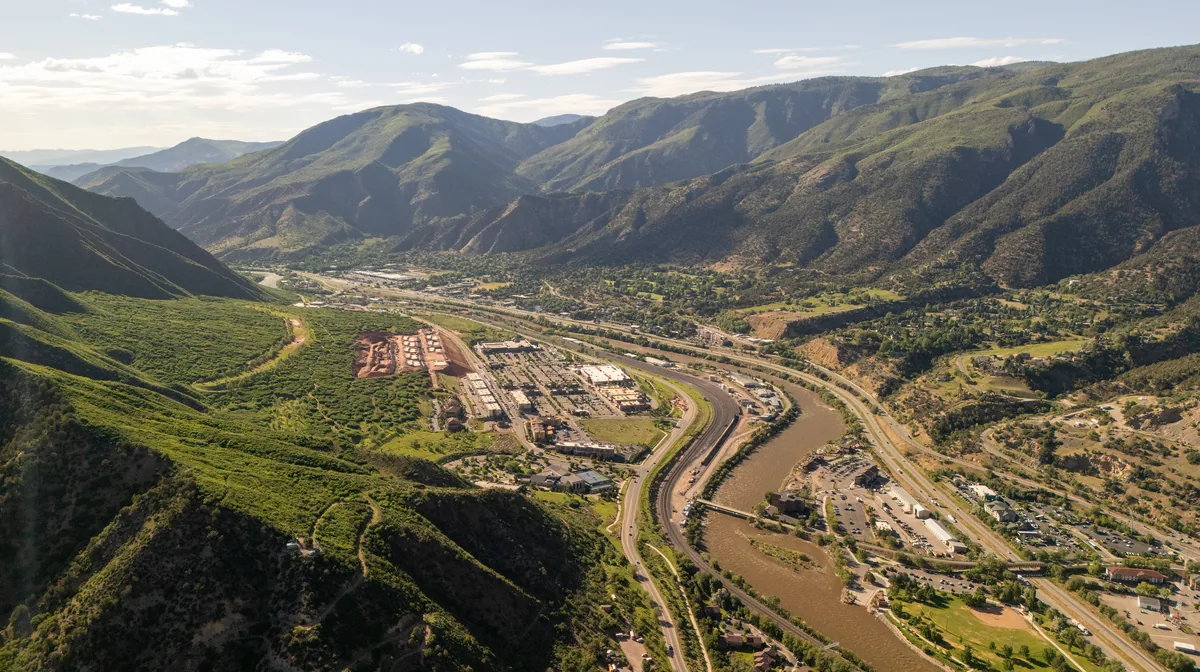
Glenwood Springs from the air, with the Colorado River winding through the valley, Colorado

Photo: Nils Huenerfuerst · CC BY 4.0 · via Wikimedia Commons

Why Cavmir

The Cavmir Advantage
in Glenwood Springs

Cavmir builds each Glenwood Springs listing around the guest that house was made for: the permitted house near downtown that a Denver family comes back to every July, the mountain home on county land that hosts a group of friends for Sunlight's opening weekend, the New Castle house that sells a week of rafting, biking and soaking at a fair rate. Then we find the traveler already set on Glenwood, the couple planning a November soak weekend, the Front Range group lining up Hanging Lake permits, the family stepping off the California Zephyr with a pool day planned, on Google, in AI assistants and through the email that reminds last summer's family to rebook.

State of the Industry · History

The Glenwood Springs STR Market — Past & Present

The springs were here long before the town, in country the Ute have called home for centuries; the tourism office's history begins with the nomadic Ute bands who first lived here. The Ute called the springs Yampah, which the hot springs resort translates as Big Medicine, and the vapor cave spa in town writes that the Ute visited its caves for centuries and regarded them as a sacred place for ceremony, healing and rejuvenation. Those bands live on: the Southern Ute Indian Tribe's own history names the Tabeguache, Grand, Yampa and Uintah bands as today's Northern Ute Tribe, on the Uintah-Ouray reservation next to Fort Duchesne, Utah. Captain Richard Sopris came upon the springs in 1860, and in the early 1880s James Landis homesteaded the confluence of the Roaring Fork and the Grand River, as the Colorado was then called here. In 1882 Isaac Cooper, a Joliet, Illinois, man who had first come to Colorado as a prospector in 1859, helped form the Defiance Town and Land Company and bought the ground with the hot springs and the vapor caves. The settlement was called Defiance until Cooper's wife, Sarah, asked for a more refined name, and he renamed it for their old hometown of Glenwood, Iowa.

Money and the railroad turned it into a resort. Walter Devereux, a Princeton graduate who reached Aspen in 1883 during the silver boom, bought the land around the springs from Cooper in 1885 for $125,000 and formed the Glenwood Light and Water Company. The railroads arrived in 1887 with the first trainloads of tourists, the hot springs pool opened in 1888, and the bathhouse and lodge followed, which the resort dates to 1890: designed by Theodore von Rosenberg, it cost $100,000 and held 44 bathing rooms. Devereux opened the Hotel Colorado in June 1893, and in 1905 it served as President Theodore Roosevelt's temporary White House during a three-week hunting expedition. The town's most famous guest came earlier and stayed at the Hotel Glenwood, which had opened in 1884 and grew to 75 rooms. John 'Doc' Holliday, sick with tuberculosis, came hoping the springs and vapor caves would help, spent the last 57 days of his life here and died on November 8, 1887; Isaac Cooper died less than a month later, on December 2, at 48. Holliday's marker stands in Linwood Cemetery, at the end of a short trail, and the Hotel Glenwood burned to the ground in December 1945.

The twentieth century added the road, the river's name and the town's biggest party. Edward Taylor, who served in the state senate from 1896 to 1908, won $40,000 in 1899 for a road through the canyon, finished in 1906 as the first continuous wagon road from Denver to Grand Junction, and he lobbied until the Grand River officially became the Colorado River in 1921. Strawberry Days began in 1898 as a promotion for local fruit growers, with special railroad fares for miners' families; strawberries aren't grown here the way they used to be, but the festival kept the name. During World War II the Navy leased the Hotel Colorado and the pool as a convalescent hospital, and Sunlight Mountain has run its lifts since 1966. Fire has marked the place too. The Storm King Fire killed 14 firefighters on July 6, 1994. The Coal Seam Fire, which broke out of a mine fire smoldering underground since 1910, burned 29 homes and more than 12,000 acres in June 2002 and forced thousands out of West Glenwood and Four Mile. The Grizzly Creek Fire of August 2020 burned more than 32,000 acres in Glenwood Canyon and shut I-70 through the canyon from August 10 to August 24, though Hanging Lake came through unharmed.

Today's rental market is large for a town this size and still adding listings. AirROI counts 262 active listings under Glenwood Springs, up 21 percent on the year, including 14 private rooms and 12 hotel rooms. Inside its boundaries the city has pushed the other way. When the council tightened the rules in May 2024, the ordinance noted that vacation rentals in the city had grown by more than 1,000 percent since 2013, cited a regional housing study that found a shortage of 2,000 housing units, and folded permits in the General Improvement District into the citywide cap. Five problems are worth checking first on any Glenwood listing, each one costing bookings or risking the permit: a listing with no permit or business license number, though the city requires both in every ad and AirROI found 0 percent of listings showing a permit; a first photo of the kitchen when the house has a hot tub or a view down the valley; a guest count above the occupancy written on the permit; no plan for the week the canyon closes; and no way for the Denver families who return each summer to book without a platform.

Pricing Strategy & Seasonality

Pricing, Seasonality & When to Capture ROI

Pricing Strategy

Glenwood pricing climbs steeply with bedrooms, because the groups and extended families who come for the pools and the river pay for beds. AirROI's figures show it clearly: one-bedroom listings average about $208 a night with a median of $40,100 a year, two-bedroom homes $305 and $49,800, three-bedroom homes $408 and $60,200, four-bedroom homes $549 and $86,900, and homes with five or more bedrooms $733 and $108,000, with an average for that top group of about $124,000. Across the market, the median listing charges about $315 a night, the top quarter $460 or more, the top tenth $650 or more and the cheapest quarter $210 or less. AirROI's amenity figures tell a similar story. In a town famous for its hot water, only about one listing in five has a private hot tub, and those averaged about $96,400 a year against $52,300 for the rest; listings with an indoor fireplace averaged $78,400 against $45,600, and the 71 percent with a patio or balcony $70,100 against $40,000. That's a correlation across houses, and other things set those homes apart too, but the figures say plainly what guests reward here: a soak at the end of the day without a drive, a fire in winter and somewhere outside to sit.

Then comes the calendar. AirROI groups June, July and August as high season, with about $8,800 in monthly revenue, 64 percent of nights filled and $402 a night; its shoulder months, March, September and December, average about $5,830 at 51 percent and $347; and the low months, January and February, April and May, October and November, average about $4,500 at 43 percent and $332. Guests book about 51 days ahead on average, but the window moves a lot: July 2026 stays were booked about 73 days out, June about 63, August and December about 60, and March and April only 36 to 38. Guests stay 3.4 nights on average, from 3.7 in December down to 2.8 in April, and a typical listing takes about 41 bookings a year. Check-in is most often at 4 p.m. and check-out at 10 a.m.

Two habits cost Glenwood owners money: one price for every month, and extras that pile up at checkout. Nine in ten listings in AirROI's data add a cleaning fee, $172 at the median and $235 on average, about 11 percent of gross revenue, which works out to roughly $69 a night across a 3.4-night stay. Inside city limits the guest also pays 14.35 percent in state, county, transit, early childhood district and city taxes on the stay in 2026, so the total at checkout is well above the nightly rate you advertise; quote it plainly and make the house earn it. Two-night minimums are the norm at 53 percent of listings; 28 percent take one-night stays and 13 percent require three, and the firm cancellation policy is the most common at 55 percent. A one-night minimum fills April midweek nights but brings more turnovers; a three-night minimum suits July and the December holidays. New Castle is a separate price point: AirROI's New Castle median listing charges about $180 a night and earns about $2,730 in a typical month, so a home there wins on value and length of stay rather than by chasing Glenwood's rates.

Seasonality & ROI Windows

Moderate seasonality with a summer peak and a December bump. July 2026 earned about 3.3 times what April 2026 did in AirROI's data, and in its two-year monthly averages June through August bring in about 37 percent of the year's revenue. Summer belongs to the rivers and the canyon: rafting through Class III and IV rapids in Glenwood Canyon, the 16.3-mile recreation path east to Dotsero, Hanging Lake on a timed permit, and Strawberry Days on the third weekend of June, held every year since 1898. September still ran 55 percent occupancy in 2025, and the fall has its own events: Mountain Top OctoberFest at Glenwood Caverns ran on four Saturdays from September 19 to October 10 this year, and there's the historical society's Ghost Walk at Linwood Cemetery over several weekends each October. Winter starts with the Caverns' Winter on the Mountain kickoff on November 21, 2026, and Sunlight's opening day, set for December 11.

The revenue most owners miss sits in April and November. April 2026 earned about $3,390 a listing at 34.8 percent occupancy and November 2025 about $4,050 at 39 percent, yet the pools stay open all year: Glenwood Hot Springs opens every day, closing only now and then for maintenance, and Iron Mountain Hot Springs runs from 9 a.m. to 10 p.m. daily. Those months reward a soak-weekend product sold to the Front Range: a weekday rate, a two-night offer, robes and a towel bag by the door, the drive time to each pool, and a welcome book that also covers year-round fly fishing on Gold Medal water. They book late, about 36 days out for April, so keep the price open close in. The second gap is the ski week. Sunlight's 749 acres, 77 runs and 2,010 feet of vertical are Glenwood's own ski area, daily lift tickets start at $74, and the resort sells ski, swim and stay packages, so a house with a mudroom, boot dryers and a hot tub can sell January and February weeks that a summer-only listing leaves empty.

Regulation & Licensing · 2026

What the Law Requires in Glenwood Springs

Glenwood Springs is a Colorado home rule city, and it regulates and requires a permit for every home rented for less than 30 consecutive days. There are two permits. A short-term rental permit covers renting the whole dwelling. An accessory tourist rental permit covers one bedroom in a home of at least two bedrooms where the owner or a resident manager lives and stays on the premises for the whole rental, with a maximum of two guests and no kitchen in the guest room. The rules sit in Section 070.030.030(e)(7) and (e)(9) of the municipal code, as amended by Ordinance No. 09, Series of 2024, which passed on second reading on May 16, 2024. Outside the city's General Improvement District (GID), short-term rentals are capped at 5 percent of the city's free-market residential units, and each must sit at least 250 feet from any other; a parcel that falls entirely inside another rental's buffer can't apply, and the city's interactive vacation rental map shows where the buffers fall. Inside the GID the cap is 15 percent of its free-market units, there's no buffer, and since 2024 those permits count toward the citywide total. The GID is a special tax district of roughly ten blocks downtown, running from 7th to 10th Street as the Post Independent described it in May 2024, and its line can be redrawn, so check the city's map for your address. That same report, drawing on the city staff memo, counted 121 short-term rental permits against a citywide cap of about 210 units, and said the move to 15 percent cut the downtown district's limit from 36 permits to 31; ask the planning department for today's count before you count on a permit. Accessory tourist rentals have no cap and no buffer. An accessory dwelling unit can't be rented for stays under 30 days at all, and a multifamily building under one owner may permit no more than 10 percent of its units, or two per building inside the GID. Permits issued before August 1, 2019 can keep renewing, but when such a house sells the buyer applies under today's rules, buffer included.

The application is detailed. The applicant must be a natural person aged 18 or older who owns at least 33 percent of the property, a trust or LLC files a business entity or ownership affidavit, a house under contract can't apply, and the unit must already have a certificate of occupancy, so a new build waits until it's finished. The whole process has to be completed within six months of a complete application, with one six-month extension at the director's discretion. A new short-term rental permit costs $613.62 and a renewal $409.08; an accessory tourist rental costs $368.17 new and $184.09 to renew. Every new permit and every renewal needs a passed building inspection: an emergency escape opening in every sleeping room, handrails on any run of four or more risers, guards on raised walking surfaces, a smoke alarm in each sleeping room and outside each sleeping area, carbon monoxide alarms near the bedrooms as Colorado law requires, a 1A10BC fire extinguisher on every floor, and a fire escape plan drawn for guests. Occupancy follows the International Property Maintenance Code and is written on the permit: bedrooms need at least 70 square feet and 50 square feet per occupant. After the inspection, new applicants mail the city's notice to every property owner within 250 feet and sign a notarized affidavit. The owner names a local responsible party within thirty minutes of the house who is reachable around the clock, posts the license, permit, emergency contacts and the location of extinguishers and exits inside, parks guests in driveways, garages or legal street spaces and never on lawns, and prints the city permit number and business license number in every ad, on every booking site.

Taxes and renewals are tied together. Every operator also needs a city business and sales tax license, filed through the city's MUNIRevs portal. On lodging inside city limits in 2026, guests pay the city's 4.2 percent sales tax and 5 percent accommodations tax, both paid directly to the city; 2.9 percent to the State of Colorado, 1 percent to Garfield County and 1 percent to the RTA, the regional transit authority, all three filed with the state; and a new 0.25 percent for the Confluence Early Childhood Development Service District, approved as Ballot Issue 7A. The city puts the total at 14.35 percent, up from 14.1 percent in 2025. Airbnb's Colorado tax page says it collects Colorado's 2.9 percent sales tax, cleaning fees included, on reservations of 29 nights or less, and names the City of Glenwood Springs' 4.2 percent sales tax and 5 percent lodging tax, cleaning and guest fees included, as local taxes it also collects. Its state section also mentions county and local taxes whose rates vary, without naming Garfield County or the transit authority, so confirm the rest on your own accounts, and for direct bookings every filing is yours. All permits expire at the end of odd-numbered years: today's run to December 31, 2027, and renewals are taken from September 1 to December 31, 2027. A renewal needs a new inspection, a renewed sales tax license and proof that you collected more than $0 in lodging tax during the permit period, so a permit that sits unused can't renew, and a holder who fails to collect lodging tax is barred from the next two-year cycle. Permits expire when a home is sold and can't be transferred. Violations draw fines of $250, $500, $750 and then $1,000 per offense, each day counts separately, and a third cumulative conviction tied to the rental revokes the permit automatically. One cost is on the November 3, 2026 ballot: the city's Issue 2B would add 7.9 mills of property tax for fire, rescue and emergency medical services, which the city estimates at about $493 a year for a $1 million home, and the rural fire district's Issue 6A would add 5.9 mills, about $369 a year on a $1 million home, across the district's 72 square miles from the city out through Glenwood Canyon.

Outside city limits, Garfield County takes a lighter approach. By Resolution 2015-68, adopted on December 7, 2015, after a unanimous Planning Commission recommendation that October, the county made short-term rentals a use by right without specific standards in all of its zone districts, and it defines a short-term rental as a home rented for a year or less, nightly, weekly, monthly or by the season. The county notes that the approval doesn't extend to Planned Unit Developments, so a house in a PUD subdivision follows that PUD's approvals, and the city says plainly that it isn't a party to private covenants and doesn't enforce them, though covenants may restrict rentals; read your HOA documents before you buy anywhere. The county's page says owners may rent all or part of a home for any period without a land use change permit, though they still need a Colorado sales tax license and must pay the sales taxes that apply, and a remodel may still need a building permit. We found no county short-term rental license or county lodging tax on the county pages we opened, and Airbnb's Colorado page lists no Garfield County entry; outside the city, the city's 4.2 percent and 5 percent don't apply. New Castle is its own incorporated town with its own code. We couldn't confirm its licensing rules or town taxes for this page, and Airbnb's list has no New Castle entry, so ask Town Hall before you list there. Use this as orientation, not legal advice: before a guest books, confirm what applies to your address with Glenwood's planning department, Garfield County, New Castle's Town Hall, the Colorado Department of Revenue and your HOA. Cavmir handles the marketing side; the owner keeps the permit, the inspection and the tax returns, with a Colorado attorney or accountant where needed.

Market-Specific Tips & Challenges

Local Tips & Unique Market Challenges

Tips That Actually Move Revenue in Glenwood Springs

First, sell the soak as a product, with the minutes to each pool spelled out. Guests come to Glenwood for the water, and the town has three very different places to get in it: Glenwood Hot Springs, open every day with its Grand Pool and Therapy Pool, plus the Sopris Splash Zone for kids from spring to fall; Iron Mountain Hot Springs, which lists 35 pools between 89 and 108 degrees and stays open until 10; and the Yampah Vapor Caves, where reservations are required and guests must be 13 or older. Tell guests which one suits a family, which one suits a couple and how long each drive or walk takes from your door. Then give them the soak at home too. Only about a fifth of AirROI's listings have a private hot tub, and they average far more than the rest, so if you have one, put it in the first three photos, show it in snow and at night, and say how many people it seats.

Second, write the permit into the marketing. Inside the city, the permit number and the business license number have to appear in every ad, the occupancy on the permit sets the guest count, and the fire escape plan has to be in the house, so put the numbers in the description, set the maximum guests to match the permit and make the escape plan a clean page in a guidebook guests will actually open. Because the cap and the buffer keep supply tight, a permitted house within reach of downtown, the depot and the pools has something most listings can't copy: say how far it is on foot to the Hot Springs Pool, the Amtrak station and dinner on Grand Avenue. On county land, the selling points are different, space, views and room for a group, and the detail guests need most is the road: say whether the drive is steep, whether it's plowed and what kind of car a guest needs in January.

Third, plan for the canyon before it closes. Most guests drive I-70 through Glenwood Canyon from Denver, and when the Grizzly Creek Fire closed the interstate on August 10, 2020, it stayed shut until August 24; CDOT's reopening notice warned drivers to expect more safety closures after rain. Write a road-closure policy now, add it to your house rules and your direct-booking terms, and have a message ready that points guests to CDOT's COtrip site, the Amtrak California Zephyr into downtown and the Bustang coach from Denver. The same goes for Hanging Lake: a timed-entry permit is required year-round, it costs $12 a person including parking, there's no shuttle, ride shares can't drop hikers off and only service animals are allowed on the trail, so put the booking link in your confirmation email and tell guests to reserve before they arrive. A guest who learns about the permit at the trailhead blames the trip, and sometimes the house.

Fourth, build for return visits, and run the house so the reviews sell it. A Denver family that comes back for the same summer week, and a ski group that returns for Sunlight's opening weekend, can be worth more across a decade than any single busy season, so give them a way to come straight back: a quick direct-booking website, a past-guest list kept with each stay's dates and party, and an email to everyone on it announcing next year's Strawberry Days and holiday dates ahead of the public. The bar is high: AirROI's Glenwood listings average 4.84 stars, 61 percent carry Airbnb's Guest Favorite badge, nearly three in four are run by Superhosts, and guests mark value lowest of the six categories, at 4.74; once the taxes and cleaning fee are added, the total has to look worth it. Operations sell too: a responsible party who answers at 2 a.m., snow cleared before a 4 p.m. arrival, a 10 a.m. check-out explained the night before, and a guidebook that gets guests to the right pool on the first try.

Unique Glenwood Springs Challenges

Inside the city, the rules decide which houses can rent at all. Permits are capped, spaced 250 feet apart outside the GID, held only by a natural person who owns at least 33 percent, and void when the house sells, so the seller's permit is worth nothing to a buyer, who should check the city's interactive map and the cap before making an offer. A new house can't apply until it has a certificate of occupancy, and a permit that isn't used, or whose holder doesn't collect lodging tax, can't renew in the fall of 2027. On county land the zoning is simpler, but PUD subdivisions are outside the county's 2015 approval and many HOAs write their own limits. Run the numbers on the product you can actually permit, at the guest count the inspection will allow, before you price the house.

The mountains ask for preparation. This valley has lived through the Storm King, Coal Seam and Grizzly Creek fires, the city's fire department keeps a current fire restrictions page, and a closure in Glenwood Canyon can cut off the Front Range drive market for days or weeks. Insure for wildfire and lost rental income, clear brush back from the house, and spell out for guests what the road and the fire season can bring. Carrying costs are moving as well: the 2026 tax rate on in-city stays rose with the new early childhood district, and the fire-service property tax question on the November 3 ballot would add a few hundred dollars a year for a typical rental home if it passes. Owners who live in Denver or farther away also watch listings slip from a distance: photos from three winters ago, messages answered the next day, quiet months nobody prices. A capable local operator and marketing that's kept up to date fix most of it.

Competition is getting deeper. AirROI counts 262 Glenwood Springs listings, 21 percent more than a year earlier, with an average rating of 4.84, and the ten largest hosts run 31 percent of them; about 13 percent are professionally managed and a third have a co-host. A top-quarter listing brings in $7,890 or more in a typical month and a bottom-quarter one $2,860 or less, so the gap between a well-marketed house and an ordinary one is several thousand dollars a month. The hotels are competitors too: the hot springs resort sells rooms at its own Hotel 1888, and the historic Hotel Colorado sells its story. A house wins its guest by offering what a hotel room can't, a kitchen, a private hot tub, bedrooms for the whole family or group and a place to dry the river gear, and by saying so clearly.

A Curious Glenwood Springs Fact
The river guests raft through Glenwood Canyon wasn't officially the Colorado until 1921. When James Landis homesteaded the confluence in the early 1880s, and when Strawberry Days began in 1898 to promote local fruit growers, it was the Grand River. Edward Taylor, who served in the state senate from 1896 to 1908 and is remembered as the Father of Water Rights on the Western Slope, lobbied for the new name, and in 1921 the Grand became the Colorado. Put it on the rafting page of the guidebook.
Finance Essentials — Glenwood Springs
🛡️

Insurance

Insurance for a Glenwood rental starts with a carrier that knows the house hosts paying guests: either a homeowner policy that permits short-term renting or a policy written for rentals, with liability limits large enough for the groups and extended families who book here, wildfire coverage reviewed against the valley's fire history, cover for lost rental income if a fire or a canyon closure cancels bookings, and a careful look at the hot tub, the deck and winter slip-and-fall exposure. Your carrier needs to know about the rental use, and a broker who insures Garfield County homes should quote the house before closing.

🧾

Property & Income Tax

The IRS and Colorado both tax what the house earns. Inside city limits, guests pay 14.35 percent in 2026 across the state's 2.9 percent, Garfield County's 1 percent, the transit authority's 1 percent, the new 0.25 percent early childhood district and the city's 4.2 percent sales tax and 5 percent accommodations tax; Airbnb's Colorado page says it collects the state tax and the city's two taxes, so confirm who files the county and transit share for your listing. Keep the records, because a city permit renews only with proof of lodging tax collected. On direct bookings you collect and file everything. Budget property tax with the November 3, 2026 fire-service levies in mind, and hire a Colorado accountant with short-term rental clients.

🏦

Mortgages & Financing

Expect a jumbo loan for most houses that sleep a group, second-home or investment pricing depending on your own use, and an underwriter who wants to see summer, December and the quiet months modeled separately. Zillow put the typical Glenwood Springs home value at about $853,400 as of September 30, 2026, up 2.9 percent on the year, and the median list price at about $1.21 million. Underwrite the permit as carefully as the house: a city permit ends at sale, so run the numbers twice, once with a new permit and once without, and check the cap and the 250-foot buffer before you commit.

Future Outlook · 2027 & Beyond

Where Glenwood Springs is Headed Next

Several things keep Glenwood's demand steady. The hot springs have drawn visitors since the pool opened in 1888, the railroad has brought tourists since 1887 and the California Zephyr still stops downtown every day, Sunlight is marking its sixtieth year, and Glenwood Caverns has a new gondola up to its mountaintop park and a coaster, Defiance, that it calls the highest looping roller coaster in the United States. Denver, the largest source of guests, is a straight drive on I-70, and Strawberry Days has run since 1898. Every one of those draws guests no matter how a platform ranks your listing.

Three things could squeeze returns: permits, taxes and the road. Every city permit comes up for renewal between September 1 and December 31, 2027, and the cap, the buffer and the end of every permit at sale hold new supply inside the city down. The tax on an in-city stay rose to 14.35 percent in 2026, and the fire-service levies on the November 3, 2026 ballot would raise carrying costs if voters approve them. I-70 through the canyon is the main road in, and a closure there changes a week's bookings overnight. Careful owners will handle each of these; the ones who wing it will notice them first.

Guests are also changing how they search. A growing share type a question into an AI assistant or Google rather than browsing a booking platform, and the answers favor houses whose own sites state the facts: the minutes to each hot springs pool, the bedroom layout for a family or a ski group, the permit number and guest limit, the road in winter and the plan if the canyon closes, all on a fast page a machine can read. For the method, read generative engine optimization for vacation rentals. Glenwood's guests ask practical questions, which pool, which permit, which road, and the owners who answer them clearly now will keep that position for years.

From the Desk of Sofie Sinag

Why We Love Marketing in Glenwood Springs

Glenwood Springs sells itself on true details. There's a pool that has drawn bathers since 1888, steam caves in the rock under the town, a canyon lake you need a permit to hike to, a hotel that served as a president's White House for three weeks in 1905, and a gunfighter's marker in Linwood Cemetery. When a listing states plainly what the house has, how far it is to the water and what the road is like in January, it draws the guest who came looking for Glenwood specifically, and that's the guest who books again.

The thing I love most about marketing Glenwood is how many different trips one town holds. June belongs to Strawberry Days and the first rafting trips, July to Denver families on the bike path, October to fall color and the Ghost Walk among the graves at Linwood, December to the ski groups heading up to Sunlight, and April and November to the couples who only want to soak. An owner who stops marketing one all-purpose mountain house and starts marketing those separate trips usually discovers nights and rate the house could have had all along.

And the stories are generous. A settlement called Defiance renamed because a founder's wife wanted something more refined, Doc Holliday looking at his bare feet and saying 'This is funny' on his last day, a festival named for a crop nobody grows here anymore, and a river that changed its name in 1921 give a host plenty to tell. I can't remember needing to invent a story for a house here. Usually the true one is already there, overlooked by an owner who sees it every day, and our work is to write it down simply and show it to the guests searching for exactly that.

Cavmir's Glenwood Springs Cheat Sheet

The Picks We Recommend for Your Welcome Book

What Cavmir would put in a Glenwood Springs guidebook: specific, current tips a local would give a friend, the kind guests mention in their reviews.

Morning Soak

Glenwood Hot Springs Pool

The spring water that started the resort has drawn bathers since 1888. The Grand Pool and the Therapy Pool open every day, the Yampah Mineral Baths are included in admission, and the Sopris Splash Zone, with the Hanging Lake Falls Pool for children, runs daily from spring to fall as weather permits. Admission varies by age, time of day and season, parking is free, and the resort closes now and then for maintenance and posts the dates on its site, so tell guests to check before they go.

Evening Soak

Iron Mountain Hot Springs

The resort lists 35 pools of mineral water between 89 and 108 degrees, open from 9 a.m. to 10 p.m. every day, and its Sauna Summit adds five saunas and three cold plunge pools. Good for a couple's last night, and reservations can be made online.

Steam

Yampah Spa and Vapor Caves

Mineral water at 125 degrees runs through three rock chambers underground, and the steam rooms hold at about 110 to 112 degrees. The building has been open to the public since 1893. Reservations are required for the caves, the mineral baths and every spa service and open three months ahead, it's open from 9 a.m. to 9 p.m. seven days a week, and guests must be 13 or older for the caves and 18 for massage.

Hike

Hanging Lake

A 1.2-mile trail one way with about 1,200 feet of climbing, rated moderate to strenuous, up to Hanging Lake in Glenwood Canyon. A timed-entry permit is required all year at $12 a person, parking included, for a three-hour window. There's no shuttle, ride shares can't drop off or pick up, only service animals are allowed, and nobody swims or steps on the log in the lake.

Bike

Glenwood Canyon Recreation Path

The path runs 16.3 miles one way from the trailhead past Yampah Spa to Dotsero at the east end of the canyon, with trail access at the Grizzly Creek, No Name and Bair Ranch rest areas. Local businesses rent bikes and drop riders off so they only ride one way. CDOT closes it in late fall and reopens it in spring, so check COtrip.org first.

River

Rafting Glenwood Canyon

The Colorado River through Glenwood Canyon has Class III and IV rapids, and Visit Glenwood Springs lists outfitters including Blue Sky Rafting, Defiance Rafting, Glenwood Canyon Rafting and Glenwood Adventure Company. Private boaters launch at the Shoshone or Grizzly Creek rest areas and take out at Two Rivers Park. The Roaring Fork is shallower and colder, with a different set of challenges.

Fly Fishing

Roaring Fork Anglers

The Roaring Fork Valley holds Colorado's longest stretch of designated Gold Medal water, with brown, rainbow, brook and cutthroat trout, and fly fishing works all year; some anglers prefer winter. Roaring Fork Anglers and Alpine Angling are among the shops Visit Glenwood Springs lists for guides and gear.

Dinner

The Riviera Supper Club

At 702 Grand Avenue downtown, owned since June 2016 by chef Travis Owen and Graham Hardy, with a seasonal, scratch-made menu built on fresh local ingredients, an extensive wine list and inventive cocktails. It serves dinner Wednesday through Sunday from 4:30, and online reservations have to be made at least four hours ahead. The right table for an anniversary or the last night of a family trip.

Dinner by the Depot

The Pullman

On 7th Street at number 330, a short walk from the Amtrak station, a restaurant pairing simple, imaginative food with wine, 80 seats plus 12 at the bar, and communal tables in a room of subway tile and distressed concrete. Dinner runs nightly from 4:30, with takeaway ordered online. An easy first dinner for guests who arrive by train.

Skiing

Sunlight Mountain Resort

The local ski area has 749 acres, 77 runs and 2,010 feet of vertical, from wide greens to the 52-degree drop on The Heathen, and it's been running since 1966. Opening day is set for December 11, daily tickets start at $74, and its ski, swim and stay packages pair a day on the slopes with a soak in town.

History

Linwood Cemetery and the Frontier History Museum

The short Doc Holliday Trail climbs to Linwood Cemetery, where Holliday's marker stands and the bandit Kid Curry is also buried. Down in town, the Frontier History Museum at 1001 Colorado Avenue is open 10 a.m. to 4 p.m., Tuesday through Saturday, $5 for visitors 17 and older and free for younger ones, and the historical society's Ghost Walk brings actors playing figures from the town's past to the cemetery over several weekends each October.

Local Playbook · Three Property Types

How Cavmir Markets Glenwood Springs Properties

Three property types that do well in Glenwood Springs, a common starting point for each, and the plan Cavmir builds for it.

5BR Mountain Home · Garfield County land outside the city
The Situation

A large house on county land with valley views and a hot tub that lists as a generic 'mountain retreat', shows the kitchen first, says nothing about the drive in winter or the minutes to the pools and Sunlight, prices every month the same and sits half empty from November to March.

The Plan

Confirm the zoning, whether the lot sits in a PUD and what the HOA allows first, then rebuild the listing around groups: a bed list for every adult, the hot tub in snow as the first photo, the drive to Sunlight and to each hot springs pool, plain winter road notes, and a ski, soak and stay page for December through March with a three-night holiday minimum. Add a direct-booking site and give each group that stays this winter first claim on the same dates next year.

What It Targets

Built to raise the winter nightly rate and turn one-off ski and holiday trips into annual ones. The numbers to watch: December-to-March occupancy against last winter, the share of ski and holiday stays of three nights or more, repeat groups, the accuracy and value ratings, and the nights booked on the house's own site.

4BR Permitted House · Glenwood Springs city neighborhood
The Situation

A permitted house within a short trip of downtown whose listing omits the permit and business license numbers, advertises more guests than the permit's occupancy, sells nothing about the pools, the depot or Hanging Lake, and drops to a trickle of bookings in April and November.

The Plan

Fix compliance first: permit and license numbers in every ad, the guest count matched to the permit, the fire escape plan in a clean guidebook. Then rebuild around the walkable hot springs trip: distances to the pool, the Amtrak station and Grand Avenue restaurants, a Hanging Lake permit note in the confirmation email, a road-closure policy, and a weekday soak offer for April and November aimed at Denver and Colorado Springs couples.

What It Targets

Aimed at protecting the permit through the 2027 renewal while filling the quiet months at a steady rate. Measure April and November occupancy, midweek nights, summer nightly rate, guest questions about access and parking, and returning-guest and direct bookings.

3BR Family Home · New Castle
The Situation

A comfortable family house west of Glenwood that prices itself against downtown Glenwood rentals it can't match on location, lists a one-night minimum all year, never mentions the river, the bike path or the pools, and wins only weekend bookings.

The Plan

Start by confirming New Castle's licensing and tax rules with Town Hall, then sell the house as a week-long base: a weekly and four-night rate, a family itinerary with the canyon path, rafting, Glenwood Caverns and a pool day, the drive times to each, a washer and dryer and room for gear in the photos, and search content for family trips to the Glenwood area backed by a direct-booking page.

What It Targets

Designed to lengthen stays and raise occupancy at a fair rate instead of chasing Glenwood's prices. Measure average length of stay, summer weekly bookings, midweek occupancy, search traffic for family-trip terms and how many families rebook.

FAQ

Glenwood Springs Airbnb Marketing:
Questions, Answered

Does Cavmir offer Airbnb marketing services in Glenwood Springs?

Yes. Cavmir works with owners in Glenwood Springs, on the Garfield County land around it and in New Castle, on the brand, the listing copy and photos, direct-booking websites, Google and AI search, and ads. Permitted houses near the pools, mountain homes for ski groups and family homes for a week on the river all fit what we do. Cavmir is a marketing agency, so cleaning, guest messages and maintenance remain with you or your manager.

How much do Glenwood Springs short-term rentals earn?

For the year to September 2026, AirROI's average Glenwood Springs listing ran about $372 a night at 47.2 percent occupancy, roughly $61,260 in revenue, 2 percent more than the year before. The range is wide: the median listing earns about $4,990 a month and the top quarter $7,890 or more, and the median for five or more bedrooms is about $108,000 a year. Those figures describe the whole market and say little about one specific house; what you offer, how you show it and how you price it decide where yours falls.

Which months are busiest for Glenwood Springs rentals?

Summer. July brings the most revenue, and June through August filled about 57 to 66 percent of nights in 2026. December is the second peak, with holiday trips, Sunlight's opening and the longest stays of the year. September stays fairly strong, January through March hold steady on skiing and soaking, while April and November trail the year; guests book those late, and a weekday soak offer helps most then.

What rules apply to short-term rentals in Glenwood Springs?

Inside the city, detailed ones. A whole-home rental needs a city short-term rental permit, which is capped at 5 percent of free-market units citywide and 15 percent inside the General Improvement District, must sit 250 feet from other rentals outside that district, requires a building inspection and notice to neighbors, and ends when the house is sold. Every ad must show the permit and business license numbers. Outside the city, Garfield County has allowed short-term rentals as a use by right in its zone districts since 2015, except in PUDs. Check the current rules with the city, the county and your HOA; Cavmir works on the marketing and can't advise on law or permits.

Which Glenwood Springs lodging taxes does Airbnb collect?

Most of them. According to Airbnb's Colorado tax page, it collects the state's 2.9 percent sales tax on reservations of 29 nights or less, and it says it also collects the city's 4.2 percent sales tax and 5 percent lodging tax for listings inside Glenwood Springs. The full rate on an in-city stay in 2026 is 14.35 percent, including Garfield County's 1 percent, the transit authority's 1 percent and a 0.25 percent early childhood district, so confirm who files each piece for your listing. You still need a city business and sales tax license, and any booking you take directly is yours to collect and report in full.

What happens to my bookings when I-70 closes in Glenwood Canyon?

Most guests drive in from the Front Range through the canyon, so a closure hits arrivals at once; the Grizzly Creek Fire shut the interstate from August 10 to August 24, 2020. Write a road-closure policy before you need it, put it in your house rules and direct-booking terms, and keep a message ready that points guests to CDOT's COtrip site, the daily Amtrak California Zephyr into downtown and the Bustang coach from Denver. A clear plan sent early gives guests a reason to move their dates rather than cancel.

If I buy a permitted Glenwood Springs rental, does the permit come with it?

No. Glenwood's permits expire when a home is sold and can't be transferred, so a buyer applies again under the current rules, including the cap, the 250-foot buffer outside the General Improvement District, the inspection and the neighbor notice. Even permits issued before August 1, 2019 lose their protection at sale. Check the city's interactive vacation rental map and ask the planning department about the cap before you make an offer.

What does Cavmir charge to market a Glenwood Springs rental?

Fees follow the scope of the work. Monthly plans and one-off projects are priced on the pricing page; a Glenwood owner usually starts with a rebuilt listing or the 12-step system, and vacation rental SEO covers how search works for rentals. Talking through your house costs nothing: contact Cavmir.

Free Property Review

What is your Glenwood Springs property actually worth per night?

Send us the listing and we'll tell you what we'd change. Not a pitch deck — a straight read on your photos, your title, your rates against the Glenwood Springs comp set, and whether a direct-booking site would pay for itself.

You'll hear back from a person, usually inside one business day. If we don't think we can move your numbers, we'll say so. Cavmir is a short-term rental marketing agency — we position and market properties, we don't manage them.

  • No obligation, and no automated call sequence
  • We market and position — we never manage your property or hold keys
  • Works whether you're on Airbnb, Vrbo, or direct

Market Intelligence · Seasonality

Airbnb seasonality in Glenwood Springs, month by month

Demand in Glenwood Springs peaks around July and runs quietest around April. Here is how the year actually books — and what to do about each stretch of the calendar.

Peak demandSteadyQuiet

Peak season

Summer is the peak in Glenwood Springs. July is the strongest month for revenue, June through August run the highest occupancy of the year, and July stays book furthest ahead, about ten weeks out. Hold summer rates firm, set a three-night minimum on the best weeks, and have the hot tub, river and family photos and the drive times to each pool in the listing by early spring.

The shoulders

December is the second peak, with holiday trips, Sunlight's opening and the longest stays of the year, and September, March and the ski weekends of January and February keep a steady pace. Sell the holidays and ski weeks to groups with a hot tub, a mudroom and a soak in town, and give September its own offer for couples once the summer families have gone home.

The quiet stretch

April and November are the quiet stretch, with April the lowest month of the year. The hot springs pools stay open all year, so a weekday soak offer for Front Range couples, a two-night package and a flexible minimum fill nights a summer-only listing leaves empty. Those months book late, often only about five weeks out, so keep pricing open close in and use the slow weeks to refresh photos and plan next summer's offer to past guests.

Dates that fill first

Strawberry DaysJune
One of Colorado's oldest festivals, held every year since 1898 on the third weekend of June, with a Saturday parade and free strawberries and ice cream afterward; book the weekend early for families and say how far the house is from the festival.
Mountain Top OctoberFest at Glenwood CavernsSeptember to October
Fall Saturdays at the adventure park on top of the gondola give a shoulder-season weekend a reason to book; mention it next to the fall color and the hot springs in the listing.
Glenwood Springs Ghost WalkOctober
The historical society's annual walk at Linwood Cemetery, with actors playing figures from the town's past, runs over several October weekends and suits couples and families booking an autumn weekend.
Winter on the Mountain at Glenwood Cavernslate November and December
The park's winter season opens with a kickoff party in late November and brings holiday lights and visits from Santa, which helps fill early-winter weekends before ski season gets going.
Market Intelligence · Guests

Who books Glenwood Springs Airbnbs — and how far ahead

Front Range families
Families from Denver and Colorado Springs who come in summer for the pools, rafting, the canyon bike path and the adventure park. They book months ahead, want a full kitchen and a bed for everyone, and come back for the same week if the house works.
Couples on a soak weekend
Couples who drive over for two or three nights in the quieter months to soak at the hot springs and vapor caves and have a good dinner downtown. They pay for a private hot tub, a fireplace and a quiet setting, and they book on shorter notice.
Ski and holiday groups
Friends and extended families who come for Sunlight and the December holidays. They need larger homes with a bed for every adult, a mudroom for boots and gear, a hot tub and plain winter driving directions.
Outdoor and rail travelers
Hikers, anglers and rafters planning around Hanging Lake, the Colorado and Roaring Fork rivers and Gold Medal fishing, plus guests arriving on the California Zephyr, who value a walkable location and clear trip-planning notes.

The booking window

Guests book about seven weeks ahead on average. Summer books furthest out, with July stays arriving about ten weeks early, while spring bookings for March and April come in only about five weeks ahead. Have summer ready by early spring, open December and Strawberry Days dates early, and keep spring and fall pricing flexible for late planners.

Typical stays

Most stays run a long weekend of about three nights. They're longest around the December holidays and shortest in April, and homes in New Castle, west of town, tend to host longer stays built around a full week in the area.

Where guests drive from

DenverColorado SpringsBoulderLittletonFort CollinsGrand Junction

Where guests fly from

DallasHoustonChicagoLos Angeles
Denver is the top origin city by a wide margin and almost every guest is American, so the Front Range drive market on I-70 carries the year, with Grand Junction a short drive the other way. Fly-in guests from the big Texas, Chicago and California markets land in Denver and drive or take the train, and the California Zephyr from Chicago stops downtown every day; geo-target the Front Range for weekends and soak trips, and the fly-in cities for summer weeks and ski holidays.
Market Intelligence · What Wins

The Airbnb that wins in Glenwood Springs

The winner is a house built for the trip it sells: a home in town within easy reach of the hot springs pools, downtown and the Amtrak depot for families and couples, or a larger mountain home on the county land around Glenwood with a hot tub, views and a bed for every adult for groups. Homes in New Castle win on value and longer stays rather than by chasing Glenwood's rates.

Amenities that move bookings here

private hot tubindoor fireplacepatio or decka bed for every adultoff-street parkingmudroom and gear storagefast wifi
The highest-leverage move is the private hot tub, shown in the first photos in snow and at night. In a town known for its hot water, only about one rental in five has one, and those listings earn far more than the rest in the market data.
FAQ

Glenwood Springs Airbnb marketing questions, answered

How do I market my Airbnb in Glenwood Springs?

Start by naming the trip your house is built for, a family summer near the pools, a couples' soak weekend or a ski and holiday group, and sell it in the title and first photos. Spell out the minutes to each hot springs pool, the drive in winter and what guests should do if the canyon road closes. Price summer, December and the quiet months separately, and add a direct-booking site and a past-guest list so returning Denver families can rebook directly. That's the marketing layer Cavmir builds: photography direction, listing copy, a direct-booking website and local search.

When is peak season for Glenwood Springs Airbnbs?

Summer is the peak, with July the strongest month for revenue and June through August the busiest for occupancy. December is a second peak around the holidays and the start of ski season, January through March hold steady, and April and November are the quietest months of the year.

How far in advance do guests book Glenwood Springs Airbnbs?

About seven weeks ahead on average. July stays book furthest out, about ten weeks early, and December books well ahead too, while March and April bookings arrive only about five weeks before the stay. Have summer ready by early spring and keep the quiet months priced for late planners.

Where do most Glenwood Springs Airbnb guests come from?

Colorado's Front Range leads: Denver is the top origin city by a wide margin, followed by Colorado Springs, with Boulder, Littleton and Fort Collins next. Almost every guest is American. Fly-in visitors usually land in Denver and drive I-70 through Glenwood Canyon, and some arrive on the daily California Zephyr from Chicago or Denver.

What amenities matter most for a Glenwood Springs Airbnb?

A private hot tub leads, because only about one rental in five has one and they earn far more than the rest in the market data; an indoor fireplace and a patio or deck help too. Groups need a bed for every adult, off-street parking and a mudroom for ski boots and river gear, and fast wifi matters for longer stays.

Free Tools · Websites That Book

See what your listing in Glenwood Springs is leaving on the table

Run your Airbnb, Vrbo, or website through Cavmir's free grader. It checks the things that decide whether guests book in Glenwood Springs — photos, listing copy, page speed, local search — and shows you where bookings leak. Takes about a minute, and there's no sales call attached.

If the report says your booking engine is the weak link, that's fixable: a direct-booking website of your own means repeat guests stop paying platform fees to come back to you. That's the work Cavmir does — see Airbnb website design in Glenwood Springs.

What the grader measures

  • ✓Photos and the first-impression frame
  • ✓Listing title and copy
  • ✓Your direct-booking website (or the lack of one)
  • ✓Page speed and mobile experience
  • ✓Local search and Google visibility
Grade My Listing — Free
Ready to Grow in Glenwood Springs?

Let's Put Your Glenwood Springs
Property on the Map

Talk to Cavmir today. We'll show you exactly what your Glenwood Springs property is leaving on the table — and how fast we can change that.

Book a Free Strategy Call