Start here Work with Cavmir in Gold Bar & Skykomish
Get a Proposal (786) 751-3426
$324
Avg. Nightly Rate
44%
Avg. Occupancy Rate
$3,800
Avg. Monthly Revenue
6–10%
Est. Cash-on-Cash ROI
MODERATE
Seasonality
MODERATE
Regulatory Burden

* Market averages from AirROI data for Gold Bar, Washington, twelve months to September 2026 (published October 1, 2026). ROI is Cavmir's estimate. A single home's numbers depend on its size, its location and how it is marketed.

The Market

Why Gold Bar and Skykomish Are Washington's River Cabin Market

Cavmir is an Airbnb marketing agency. We build the brand, the direct-booking website and the marketing for short-term rentals in Gold Bar & Skykomish.

The upper Skykomish River valley is a string of small places along US 2 east of Everett: Startup and the City of Gold Bar where the valley opens, the Town of Index, the unincorporated communities of Baring and Grotto farther up the highway, and the Town of Skykomish, the old railroad town near the head of the valley. Monroe and Sultan sit downriver to the west, and the City of Gold Bar puts the Stevens Pass ski area 16 miles east of Skykomish, so the valley is the last stretch of US 2 before the climb to the pass. The Sky Valley Chamber of Commerce calls US 2 one of Washington's two primary east-west travel corridors, and the rental market here is built for the people who drive it: in AirROI's Gold Bar market data, every one of the 119 active listings is an entire home, and 56 percent are typed as cabins.

Cabins here fall into four groups, and no two of them sell to the same guest in the same month. Riverfront cabins carry the summer, and AirROI counts 56 percent of Gold Bar listings as waterfront and 39 percent with a river view. Small cabins for couples, one-bedroom places that make up 30 percent of the market, sell a hot tub, a fire and a quiet weekend, and the best of them earn far more than their size suggests: one of the six top earners in AirROI's Gold Bar data is a one-bedroom that took about $116,300 at $434 a night. Two- and three-bedroom family cabins, 62 percent of listings between them, sell the trails and the river to Seattle households, and homes inside the Town of Skykomish sell the railroad history, the winter and the short drive to the pass, under a licensing system with a cap. A listing titled 'mountain cabin near Seattle' invites comparison with all four and usually loses to the one that says what it is.

Gold Bar peaks in summer, and the upper valley adds a winter high season of its own. Over AirROI's twelve months to September 2026, the best month per Gold Bar listing was July, at about $8,380, and the weakest was April, at about $3,360. June through August ran 56 to 61 percent occupancy, and September 2025 still filled 56 percent of its nights. In Skykomish, AirROI's high season covers December through February as well as summer, and February 2026 ran 44 percent occupancy at $349 a night. The guests are close to home: by AirROI's count 97 percent of Gold Bar's guests and 94 percent of Skykomish's are domestic, and Seattle is the top origin city at about a quarter of Gold Bar's guests and 28 percent of Skykomish's, followed in Gold Bar by Tacoma, Portland, Vancouver and New York, and in Skykomish by Portland, Bellevue, Spokane and Tacoma.

What sets the valley apart is how far the best cabins pull ahead of the rest. AirROI's average Gold Bar listing takes about $45,600 a year at $324 a night and 43.7 percent occupancy, while the Washington-wide average is about $36,100 at $285 a night, and its revenue is close to flat on the year, down 0.6 percent, even as the count of listings grew 18 percent. Half the market charges less than about $285 a night and books under 47 percent of its open nights. A quarter of listings get $370 or more and book at least 66 percent, and a tenth get $475 or more and book at least 80 percent. Monthly, that works out to about $4,230 for the median cabin against $6,520 or more for the top quarter. What the top cabins have in common shows in their listings: water or heat in the first photo, a calendar priced separately for summer and for wet-season weekdays, and a base of guests who return. Each of those is something marketing builds.

Top Attractions & Landmarks

  • Wallace Falls State Park in Gold Bar
  • The Skykomish River and the Boulder Drop rapid
  • Lake Serene and Bridal Veil Falls
  • Heybrook Lookout above US 2
  • The Iron Goat Trail on the old Great Northern grade
  • Historic Skykomish and the 1905 Skykomish Hotel
  • Gold Dust Day in Gold Bar (late July)
  • Deception Falls and Alpine Falls

Nearby Markets: Seattle  |  Leavenworth  |  Cle Elum & Suncadia

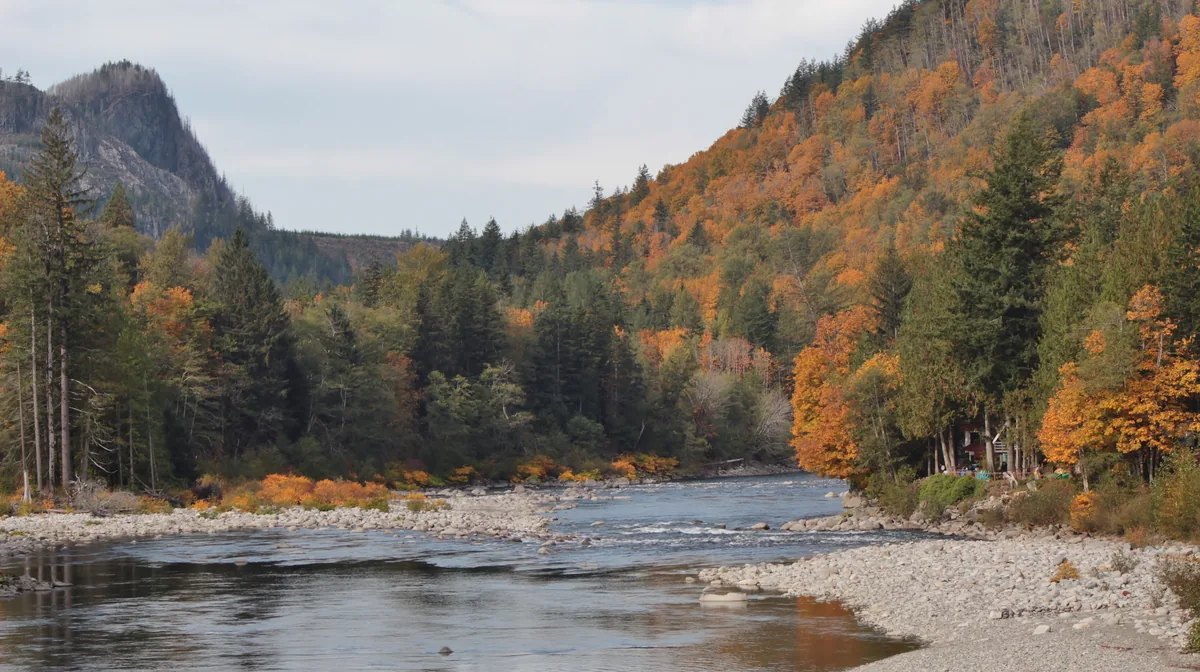
The North Fork Skykomish River in autumn near Index, Washington, seen from US Highway 2

Photo: SounderBruce · CC BY-SA 4.0 · via Wikimedia Commons

Why Cavmir

The Cavmir Advantage
in Gold Bar & Skykomish

Cavmir treats each Skykomish valley cabin as its own small hospitality brand: the riverfront cabin a Seattle family books for the same August week every year, the one-bedroom with a hot tub and a wood fire that a Bellevue couple keeps for rainy February weekends, the house in Skykomish that sends its guests up the Iron Goat Trail and down to the old hotel. A valley full of listings that read alike is a valley where price decides, so ours read like the place. We reach the guest who has already picked this valley, the Tacoma family planning a waterfall summer, the remote worker who wants a desk by the river for a week in November, the friends who drive over from Spokane for a winter weekend, on Google, in AI assistants and through a past-guest email list that brings last summer's families back for another week.

State of the Industry · History

The Gold Bar & Skykomish STR Market — Past & Present

Gold Bar's name is a mining story. The city's own history tells of a prospector named Boyce who is said to have found traces of gold in the Skykomish River, and that the mining operation which followed hired Chinese laborers for a dollar a day; working the gravel with equipment made of wood, each of them recovered about three dollars of gold a day for their employer. In 1892 land at Gold Bar went to the Great Northern Railroad for its right-of-way, but timber, not gold, built the town. Andrew Haggerty bought timber from the settlers in 1890 and logged the area, and the Gold Bar Lumber Company at one time employed 300 men, about 100 of them Japanese workers who did the common labor. The Gold Bar Improvement Company platted the town on September 18, 1900, and a 1906 account the city keeps described a sawmill town of two or three hundred people, 29 miles east of Everett. The city's banner still reads 'est. 1910.'

Skykomish is the railroad's town. James J. Hill decided in 1889 to take his railroad to the Pacific and hired John F. Stevens to find the route over the Cascades, through the pass that now carries Stevens's name. The site was called Maloney's Siding when construction was underway in 1892, the first scheduled train ran on June 18, 1893, and the depot, roundhouse, coal chute and water tank went up in 1894. The town was platted in 1899 and incorporated on June 5, 1909. The division point moved back and forth between Gold Bar and Skykomish until it settled in Skykomish in 1922, the year the depot began its move across the tracks. D.J. Manning built the Skykomish Hotel in 1905, after an earlier hotel burned in 1904, and its restaurants and card rooms stayed open around the clock for railroad crews. The town's history page notes that a December 1970 fire destroyed the old false-front buildings between the hotel and the tavern, and that the last passenger service ended in May 1971; about 20 trains a day still pass through.

The railroad left a second legacy up the valley. The Great Northern's first grade over the Cascades, built in 1893 by some 800 workers, many of them Japanese immigrants, climbed with switchbacks, tunnels and snow sheds, and after the Wellington avalanche disaster the railroad added more tunnels and snow bridges. When the new Cascade Tunnel opened in 1929 the old grade was abandoned, and today it's the Iron Goat Trail, with almost three miles of ADA-accessible path in its first section. From March 5, 1927, electric engines worked east from Skykomish, and the last one left on July 31, 1956. That history, the river and the trails are what the rental market sells: Wallace Falls State Park sits in Gold Bar, Lake Serene and Heybrook Lookout are short drives up US 2, and the Town of Skykomish calls the river, which draws rafters and kayakers, one of the finest whitewater rivers in the country.

Today the market is mid-sized, cabin-heavy and growing faster than its revenue. AirROI counts 119 active listings under Gold Bar, up 18 percent on the year, 68 under Skykomish, up 24 percent, 34 under Baring and 18 under Index, the last in a data set that runs only to April 2026. Gold Bar's average revenue was essentially flat, down 0.6 percent, and Skykomish's rose 0.7 percent, so new supply is splitting a steady pool of guests. AirROI found no Gold Bar or Skykomish listing showing a permit or registration number. About 29 percent of Gold Bar listings have a professional manager, 45 percent belong to the ten largest hosts, and the biggest of those is a company with 26 listings. When we audit a cabin here, the expensive problems show up first: a riverfront cabin that opens its photos with the kitchen, a listing silent on the distance to the water and whether guests can get down to it, a hot tub that only appears in photo twelve, a Skykomish house advertising more guests than its septic inspection allows, no wet-season product, and no direct channel for the Seattle families who come back every summer.

Pricing Strategy & Seasonality

Pricing, Seasonality & When to Capture ROI

Pricing Strategy

Valley pricing follows bedrooms first and then the water and the heat. In AirROI's Gold Bar data, one-bedroom listings average about $233 a night with a median of $32,600 a year, two-bedroom cabins $319 and $50,600, and three-bedroom cabins $384 and $55,100; only seven listings have four bedrooms or more. Across the market, half the listings charge under about $285 a night; the top quarter starts at $370, the top tenth at $475, and the cheapest quarter tops out at $220. The amenity data shows what guests pay for. Listings with a hot tub, three in four of the market, averaged about $52,700 a year against $24,700 for those without; waterfront listings $56,000 against $32,300; listings with a river view $57,400 against $37,900; listings with a sauna, about one in six, $69,600 against $40,800; and listings with an indoor fireplace $49,800 against $33,800. A gap like that isn't proof, since a cabin with a sauna tends to be a better cabin in other ways too, but the pattern reads like a brief: water you can see, heat you can sit in and a fire for the evening.

The calendar does the rest. AirROI's Gold Bar high season, June through August, averaged about $6,890 a month per listing at 61 percent occupancy and $351 a night; December stands on its own at about $5,090, 48 percent and $311; September is the shoulder at about $4,740 and 56 percent; and the seven slow months, January to May with October and November, averaged about $3,610 at 42 percent and $279. Guests booked about 44 days ahead on average, about 70 days for July and about 26 for March, and stayed 3.1 nights, longest in July and shortest in March. Where listings set times, 4 p.m. check-in and 11 a.m. check-out are the norm. Up the valley, Skykomish runs a little differently: AirROI's high season there covers June through August and December through February, averaging about $4,990 a month at 46 percent and $348 a night, its median rate is about $280 but its top tenth charges $545 or more, and January stays averaged 4.3 nights, among the longest of its year.

The common mistakes are pricing a small cabin like a lodge and letting the fees undo a fair rate. Nearly every Gold Bar listing, about 97 percent, adds a cleaning fee; the typical one is $172 and the mean $196; spread over a 3.1-night stay that's about $55 a night, and AirROI counts cleaning fees at 14.6 percent of gross revenue. Two-thirds of the market sets a two-night minimum and about a quarter allows one night, and 57 percent run a firm cancellation policy. Guests score value lower than anything else, 4.74 against 4.88 overall, so the total a couple sees at checkout has to feel right for two nights in a cabin. Price weekends and weekdays as separate products, keep the cleaning fee in proportion to a short stay, and let the river, the tub and the fire carry the rate in the photos instead of asking the fees to carry it.

Seasonality & ROI Windows

Seasonality is moderate: Gold Bar peaks in summer, and the winter holds up better the farther up the valley you go. In AirROI's Gold Bar data, July 2026 earned about $8,380 per listing at 60 percent occupancy and $401 a night, July earns about 2.4 times April, and the three strongest months bring in 37 percent of the year's revenue. Summer is river and trail season: Gold Dust Day takes over Gold Bar on the last full weekend in July, and the Town of Skykomish hosts a public fireworks display from the Railroad Avenue area on the Fourth of July while banning personal fireworks on the days around it. September 2025 still ran 56 percent occupancy, December lifts the rate for holiday cabins, and the months from January to May ran between about 33 and 44 percent. In Skykomish the winter held up: February 2026 ran 44 percent occupancy at $349 a night, ahead of every month there from March through June, when snow brings winter weekend guests up the highway.

The revenue owners leave behind sits in the weekdays and the wet months. From October to May, guests book later, often four to seven weeks out, and they book for reasons a summer listing never mentions: steam off a hot tub in the rain, a sauna, a wood fire, the river running high and the waterfalls at their loudest, a weekday with a desk and a fast connection. Build that product on purpose. Shoot winter photos with light in the windows, set a two-night weekday rate and a weekly rate for remote workers, keep the minimum flexible, and write a welcome book that sends guests to Wallace Falls in the rain and the Iron Goat Trail's accessible first miles on a dry afternoon, with plain notes on driving US 2 in snow. Fall whitewater adds a reason of its own: Alpine Adventures, based in Gold Bar, scheduled its Skykomish River trips for October and November 2026.

Regulation & Licensing · 2026

What the Law Requires in Gold Bar & Skykomish

Washington sets the floor for every short-term rental in the valley. The state's short-term rental law, RCW 64.37, passed in 2019, defines a short-term rental as a dwelling, or part of one, rented for fewer than 30 consecutive nights; it leaves out an owner-occupied home with fewer than three rooms rented and a unit booked by the same person for 30 nights or more. Every operator has to give guests a contact who can respond at the property during the stay, meet the state's carbon monoxide alarm rules, and post in plain sight the street address, emergency numbers for police, fire and medical help, a floor plan marking exits and escape routes, the occupancy limit, and the operator's contact details. Each unit needs at least $1 million of primary liability cover, unless every booking runs through a platform whose primary coverage is the same or better. A first safety violation brings a warning letter from the city or county attorney, and a repeat is a class 2 civil infraction. Platforms must register with the Department of Revenue, tell operators about their tax and safety duties, and warn them in writing that a personal homeowner policy may not cover rental use.

Tax is the second state layer, and the rate depends on which side of a town line you're on. The Department of Revenue's lodging rate chart for October 1 to December 31, 2026, puts the total tax on a stay at 11.1 percent in the City of Gold Bar and the Town of Index, including a 2 percent special hotel-motel tax, and at 8.9 percent in the Town of Skykomish, which shows no special hotel-motel tax for places with 59 or fewer units. On unincorporated land, Snohomish County's rows run from 9.9 to 12.5 percent, each with the 2 percent hotel-motel tax, depending on which transit districts an address falls in, and unincorporated King County outside the regional transit district shows 11.7 percent, including a 2.8 percent convention and trade center tax; the department's lookup tool gives the rate for an exact address. Airbnb says it collects Washington's combined sales tax, 7.0 to 9.6 percent of the listing price with cleaning fees in the base, for any reservation up to 29 nights, along with all locally imposed taxes on transient lodging, and the only place it names in the state is Seattle. State law leaves the operator responsible for any tax a platform doesn't remit, so direct bookings are yours to collect and file. One change to watch: Engrossed Substitute Senate Bill 5576 would let a county, city or town add a special excise tax of up to 4 percent on short-term rentals booked through a platform, to pay for affordable housing. It passed the state Senate 27 to 21 on March 11, 2025, went back to the Senate Rules Committee on April 27, 2025, and on January 12, 2026, was reintroduced and sent to Ways and Means; the Legislature's bill page shows no action since. It isn't law.

All three towns in the valley license short-term rentals, and the Town of Skykomish has the most detailed rules. Ordinance 474, published on January 26, 2021, after a moratorium passed on July 27, 2020, and a Planning Commission hearing on September 25, 2020, reworked rules first adopted in 2012 and created Chapter 18.16 of the town code. No one may advertise or operate a short-term rental in town without a town STR license, which is issued to the owner, allowed in the R-10,000, R-5,000, Commercial and Historic Commercial zones, and limited to one per parcel. The town is divided into seven districts, A through G, each with its own limit, for a total cap of 18; the limits don't apply in the Commercial and Historic Commercial zones, so in practice the cap falls on the two residential zones. Renewals are processed first, new licenses went first come, first served from February 1, 2021, and once a district is full, applicants go on a wait list and are drawn at random. The licensing guidance lists a $100 administration fee, a $500 property inspection, $100 for a reinspection and $50 to renew; licenses expire on May 1, and renewals are due April 1 to 15. Before a first license the house is inspected for building, fire and health code compliance, including a certified septic inspection that sets the maximum occupancy on a septic system, smoke alarms less than ten years old, carbon monoxide detectors, GFCI outlets near sinks, tubs and hot tubs, a hot tub disconnect, a tagged fire extinguisher in each unit and proper bedroom egress, and any outdoor fire pit or fireplace needs a current burn permit from the Skykomish Fire Department. A responsible party who lives within an hour's drive has to be reachable around the clock and answer within half an hour, and a sign inside the house lists the address, the maximum occupancy, that 24-hour contact and Town Hall's details. The ordinance also requires snow removal in winter so guests can walk in safely and park off the street, written consent from a neighbor who shares your driveway, and no weddings, corporate retreats or other events. Civil penalties are capped at $500 per violation, each day counts separately, and noise, occupancy or parking violations can cost the license. So can failing to collect and pay the Skykomish Lodging Tax, which the 2021 guidance set at 8 percent of gross revenue, due by January 28 of the following year. That town tax doesn't appear on the state's current rate chart, and the town's home page still describes the ordinance as 'in process' with a last update of February 1, 2021, so ask the town clerk which version is in force, whether the 8 percent is still collected, and whether any platform pays it for you before you buy.

Gold Bar and Index both cap their rentals as well. In the City of Gold Bar, a short-term rental needs a business license that meets the conditions in Chapter 5.20 of the city code and the council's conditional use approval as a short-term rental dwelling, and the license isn't issued until the approval is granted. The zoning criteria, as amended by Ordinance 776 in 2024, keep rental buildings at least 250 feet apart and allow no new rental once short-term rentals reach 6 percent of the homes in the residential zones, counted from the assessor's data. In 2026 the council looked at going further. A May draft of Ordinance 793 would have stopped new rentals after June 1, 2026, and the version heard on June 16 would cut the cap to half of one percent, which the public works director said would leave room for one more rental. The council then took Ordinance 793 off its July 7 agenda, and it wasn't on any agenda we read through October 20, 2026, so call City Hall at 360-793-1101 for its status. Those drafts also show the approval tied to a specific owner, so a buyer should plan to apply in their own name rather than inherit the seller's. The Town of Index adopted Chapter 17.60 of its code in 2023 with Ordinance 508 and amended it in 2024 and 2025. Owner-occupied rentals there have no cap and need no STR license, though they still go through the business license process. A non-owner-occupied rental needs a town STR license, issued to the owner after council review, and the posted code caps those at six in one section while another still refers to a cap of seven, so confirm the number with the town. Before a first license, a licensed home inspector and a septic professional inspect the house, with a property inspection every ten years and a septic inspection every five, and on a septic system the inspected capacity sets the occupancy. A responsible party living within a 30-minute drive has to answer within 30 minutes around the clock, licenses expire on January 1 with renewals due November 1 to 15, winter parking has to be kept clear of snow, outdoor fire facilities need a burn permit, and civil penalties run up to $250 per violation, with each day counted separately.

Outside the three towns, the local layer is thin, and that's worth confirming rather than assuming. In unincorporated Snohomish County, which takes in Startup and much of the land between the towns, a September 8, 2020 staff report to the county Planning Commission said short-term rentals such as Airbnb and VRBO listings 'are not regulated under Snohomish County Code' and that the term isn't defined there. The county's list of code development projects showed nothing on short-term rentals when we checked in October 2026, but the online county code wouldn't open for us, so treat the 2020 statement as a starting point and confirm it with Snohomish County Planning and Development Services. Its rules for bed and breakfasts are another matter: as that report described them, the owner must live in and run the place, a guesthouse may have no more than three guest rooms and an inn no more than six, and in 2020 the use needed a conditional use permit in most zones where it was allowed, so don't describe a whole-house rental as a B&B. Inside the towns, don't rely on the online codes alone: Gold Bar posts its municipal code for reference only and notes that newer code may not be online yet, and it sells business licenses through the state's Business Licensing Service. In unincorporated King County, the zoning code's definitions chapter, updated September 9, 2026, defines a bed and breakfast guesthouse but not a short-term rental. Along the river, shoreline and floodplain rules can matter more than rental rules: Gold Bar posts its Shoreline Master Program online, and any deck, hot tub pad or stair to the bank on a riverfront lot should be cleared with the city or county before it's built. US 2 crosses from Snohomish County into King County between Index and Skykomish, so confirm which county and which town line your parcel sits in. All of the above is orientation, not legal advice. Before taking a booking, check each rule against the town, the city, the county and the Department of Revenue as they stand that week, and read any covenants or association rules that bind the lot. Cavmir handles the marketing side; licenses, inspections and tax returns remain the owner's, with help from local professionals.

Market-Specific Tips & Challenges

Local Tips & Unique Market Challenges

Tips That Actually Move Revenue in Gold Bar & Skykomish

First, describe the river exactly. On AirROI's numbers, a cabin on the water or with a view of it brings in between about half and three-quarters more than one without, and guests know it, so they read the details: say whether the cabin sits on the bank, across a road from it or above it, which rooms and which deck look onto the water, the distance to the edge, and whether there's a safe way down. Lead with the river, follow with the deck or tub that faces it, and close the set with the evening fire. Put a plain river note in the house manual, because the Boulder Drop at milepost 34 is a Class 5 rapid; guests who want to be on the water should go with a guided trip. And never call a cabin riverfront when the river is a walk away, since accuracy complaints are the fastest way to lose the Guest Favorite badge that 67 percent of Gold Bar listings carry.

Second, sell heat for the wet months. Three in four Gold Bar listings already have a hot tub and about as many have an indoor fireplace, so those features are the entry ticket rather than the selling point; what separates the top of the market is how well they're shown and what comes with them. A sauna, a covered tub you can use in the rain, a wood stove with the wood already stacked, good towels and robes, and a boot-drying spot by the door turn a February weekend into something a couple plans around. Photograph the cabin in the rain and the snow as well as in July, and lead the winter listing with those photos. If you add a sauna, check the electrical work, the septic and any town inspection before you advertise it.

Third, market to Seattle like a neighbor. A quarter of Gold Bar's guests and 28 percent of Skykomish's come from Seattle, and Tacoma, Bellevue, Portland and Spokane follow, so the valley is a drive market that decides late and books often. Build offers for the way those guests live: a Sunday-night extension at a reduced rate, a two-night midweek price for October to May, a weekly rate with a real desk and a fast connection for remote workers, and summer weeks held for families who book months ahead. A fast direct-booking website with winter photos, search content on the trails, waterfalls and river near your cabin, and an email list of past guests reach the guest who's planning from the city, not scrolling a platform.

Fourth, build for return visits and run the cabin like the brand it is. Guests here expect a lot: AirROI's Gold Bar listings average 4.88 stars, check-in is the top-scoring category at 4.93, 83 percent of hosts are Superhosts and only about 27 percent use Instant Book. One family that takes the same August week for a decade, or one couple that returns each winter, is worth more than a summer of strangers, so offer next year's dates to past guests before anyone else sees them. The daily running of the cabin is part of the marketing too: the state's posted safety sheet with the floor plan and exits, a contact who answers at night, a guest count your septic system can carry, a plowed and sanded driveway and walk, clear directions for a dark arrival after work, and a responsible party close enough for the town rules, within an hour's drive in Skykomish and 30 minutes in Index.

Unique Gold Bar & Skykomish Challenges

The rules are light on county land and tight inside the towns. On unincorporated Snohomish County land, the county's own 2020 report said short-term rentals weren't regulated in county code, which makes it easy to start and easy to assume nothing will change. All three towns cap licenses: 18 in Skykomish's residential zones, where new applicants in a full district wait for a random draw; six or seven non-owner-occupied rentals in Index; and in Gold Bar a share of the city's homes that the council has already weighed cutting, with the approval tied to the owner. Skykomish and Index set occupancy on a septic system by inspection, so a buyer can't count on renting the house the way the seller did. A state bill that would have let local governments add up to 4 percent on platform-booked stays stalled in 2026, and the idea could return. Before an offer, get the town's or county's answer for the parcel, the septic capacity on paper, and a revenue model built on the guest count you'll really be allowed.

The river and the weather ask for preparation. A riverfront lot means shoreline and floodplain rules, insurance that names flood and water damage clearly, and a plan for the bank, the deck and the hot tub after high water. Winter brings snow and ice on US 2 and on steep cabin driveways, and dry summers bring burn bans: Wallace Falls State Park posted a Level 2 burn ban on September 18, 2026, limiting wood fires to designated pits. Tell guests plainly what to expect about fire pits, traction and the drive. Owners who live in Seattle face a quieter problem: a cabin up US 2 that the owner rarely sees drifts, with stale photos, a winter calendar nobody prices and slow replies, and a strong local cleaning and maintenance partner plus marketing that's kept current solve it.

Competition is growing, and much of it is professional. AirROI's Gold Bar listings grew 18 percent in a year while average revenue slipped 0.6 percent, Skykomish's listings grew 24 percent while revenue rose 0.7 percent, and the top ten Gold Bar hosts run 45 percent of the market, led by a professional company with 26 listings. In a typical month a top-quarter Gold Bar listing takes in 2.6 times or more what a bottom-quarter one does, so a cabin that stands still slides toward the bottom as new ones arrive. The way out is specific product and specific marketing: a cabin that says exactly what it offers, for exactly the guest who wants it, at a price built for that guest's season.

A Curious Gold Bar & Skykomish Fact
Skykomish's trains once ran on electricity. From March 5, 1927, electric engines hauled trains east from town toward the pass, and the last electric engine left Skykomish on July 31, 1956. The town still has many buildings from its railroad boom, including the Skykomish Hotel that D.J. Manning built in 1905, and about 20 trains a day still pass through, so guests who stay in town hear the railroad that built it.
Finance Essentials — Gold Bar & Skykomish
🛡️

Insurance

Insurance for a valley cabin has to cover more than the house. Washington requires at least $1 million of primary liability cover for a short-term rental, or booking every stay through a platform that provides it, and a homeowner policy may not cover rental use at all. If FEMA's maps put the lot in a flood zone, carry flood insurance, review water and storm damage for a riverfront lot, and make sure the policy knows about the hot tub, the sauna and any wood stove. Tell the carrier the cabin is rented, and get a quote from a broker who insures cabins along US 2 before closing.

🧾

Property & Income Tax

Guests pay Washington's combined sales tax and the local lodging taxes, which Airbnb says it collects on Washington stays of up to 29 nights, cleaning fees included. A guest who books through your own site owes the same taxes, but you're the one who collects them and files with the Department of Revenue, at 11.1 percent in Gold Bar and Index or 8.9 percent in Skykomish under the October to December 2026 chart, and in Skykomish ask the town whether its own lodging tax still applies. Rental income is federal income too, and a Washington accountant with short-term rental clients can sort out the state's business registration rules.

🏦

Mortgages & Financing

A lender will treat the cabin either as a second home or as a rental investment, depending on how often you use it yourself, and it pays to find one who will read a revenue model that follows the seasons instead of one flat monthly figure. Zillow put the typical Gold Bar home value at about $467,200 on September 30, 2026, down 0.2 percent on the year, while the median asking price was about $565,500, and the typical Skykomish home at about $477,700, up 6.6 percent. Put the town rules into the underwriting as well. Inside Gold Bar, Index or Skykomish the seller's license or approval may not carry over to you and the cap may already be full, so run the numbers twice, once as a licensed rental and once as a second home you only rent if a license opens up.

Future Outlook · 2027 & Beyond

Where Gold Bar & Skykomish is Headed Next

The valley's outlook is steady for structural reasons. Seattle, which sends more guests here than anywhere else, is close enough for a weekend decided late in the week; the river, the waterfalls and the trails don't depend on a platform's search ranking; and the railroad history in Skykomish and on the Iron Goat Trail gives the upper valley a story that no new listing can copy. Summer will stay strong, and a cabin built for the wet months has a second season to sell.

Three things deserve watching: supply, rules and costs. The listing count grew 18 percent in Gold Bar and 24 percent in Skykomish in a year while revenue per listing held flat, so the cabins that win will be the ones with a clear product. The caps in Skykomish, Index and Gold Bar keep licenses scarce inside the towns, and Gold Bar's council has already weighed a much lower one. The Legislature has also weighed a local tax of up to 4 percent on platform bookings in Engrossed Substitute Senate Bill 5576 and could take the idea up again, and insurance for riverfront cabins needs a fresh look every year. A well-run cabin can absorb all of it; a neglected one feels each change first.

Search is changing as well. A growing share of trips now starts with a question typed into an AI assistant or a search box rather than a booking app, and the cabins those answers recommend are the ones whose own pages spell out the facts: whether the cabin is on the river, how far it is to Wallace Falls or the Iron Goat Trail, the hot tub and sauna, the winter driving notes and the guest limit, all on a quick page that software can parse. The mechanics are laid out on our generative engine optimization for vacation rentals page. Seattle guests ask pointed questions before a weekend away, and a cabin that answers them clearly today keeps that edge for years.

From the Desk of Sofie Sinag

Why We Love Marketing in Gold Bar & Skykomish

In this valley the plain facts do the selling. There's a whitewater river, a three-tiered waterfall in Gold Bar, a lake under the cliffs of Mount Index, a fire lookout at the end of a two-mile round trip, and a railroad town with a 1905 hotel at the end of the road. Spell those out, skip the stock mountain phrases, and the listing finds the guest who wanted this valley in the first place, the kind who returns and treats the cabin well.

What I love about working here is that the guest lives so close. A Seattle family can decide on Thursday and be on the deck by Friday dinner, which means the cabin that answers fast, prices its weekdays and shows its winter photos gets the booking the slow one never hears about. Owners who split one summer listing into three offers, the August river week, the rainy-season weekend and the remote-work week, usually discover nights they'd been leaving empty for years.

Then there's the history. A town named for gold that grew on timber, Chinese and Japanese workers who built the early valley, a railroad grade turned into a trail, electric engines working east of town for nearly thirty years, and a hotel where the card rooms never closed add up to more true material than any guidebook needs, so there's never a reason to make anything up. We find the story the owner has stopped noticing, say it plainly, and put it where the guest who wants it will see it.

Cavmir's Gold Bar & Skykomish Cheat Sheet

The Picks We Recommend for Your Welcome Book

What goes in a Cavmir welcome book for the Skykomish valley: the trails, river stops and town walks that make a stay feel like local knowledge, with the passes and details guests need before they go.

Waterfall Hike

Wallace Falls State Park

At 14503 Wallace Lake Road in Gold Bar, open from 8 a.m. to dusk all year. The hike to the top of the three-tiered falls is 2.8 miles, and the Greg Ball Trail runs more than four miles on to Wallace and Jay lakes. Parking takes a Discover Pass, $10 for a day or $45 for a year, so a pass left in the cabin saves guests a step; the park also rents five cabins that sleep up to five.

Alpine Lake

Lake Serene and Bridal Veil Falls

The Washington Trails Association lists 8.2 miles round trip with about 2,000 feet of gain, counting the one-mile side trip up steep stairs to Bridal Veil Falls from the junction at 1.7 miles; across the lake, the cliffs of Mount Index rise about 3,000 feet. It's very popular and parking runs out on nice days, so send guests on a weekday or early, with a Northwest Forest Pass on the dash.

Short Climb

Heybrook Lookout

A 2.0-mile round trip with 980 feet of gain from a gravel lot on the north side of US 2 just past milepost 37, with no parking pass needed. Eighty-nine steps take you up the lookout, and on a clear day you see Index Mountain, Mount Persis and Mount Baring. The best short hike in the welcome book for an arrival afternoon.

Rail Trail

The Iron Goat Trail

The Great Northern's 1893 grade over the Cascades, built by about 800 workers, many of them Japanese immigrants, and abandoned when the new Cascade Tunnel opened in 1929. The trail association lists 6.0 miles round trip with 700 feet of gain from the Martin Creek trailhead, and almost three miles of the first section are ADA-accessible gravel. A Northwest Forest Pass or America the Beautiful pass is required.

Whitewater

Skykomish River trips with Alpine Adventures

The outfitter, based in Gold Bar, lists its Skykomish River Whitewater trip at Class 3 to 5 and scheduled it for October and November 2026. Everyone signs a waiver, with a parent or guardian signing for anyone under 18. It's the way for guests to see the river from the inside; check the season dates each year.

Roadside Stop

The Boulder Drop

The City of Gold Bar's recreation guide marks this Class 5 rapid at milepost 34 on Highway 2. Watching it from the shore at high water explains in one look why the river trips run with guides, and it's a good line for the house manual's river note.

Waterfalls

Deception Falls and Alpine Falls

Two short stops off US 2 on the way up the valley toward the pass. The city's guide lists Alpine Falls, which drops nearly 50 feet, and Deception Falls at the end of a tenth-of-a-mile trail, short enough for grandparents, small children and a rainy afternoon.

Railroad Town

A walk through Skykomish

The town's history page lists what still stands: the Skykomish Hotel, built in 1905 by D.J. Manning, whose restaurants and card rooms once stayed open around the clock for railroad crews; the depot, moved across the tracks in 1922 and 1923; John Maloney's original store; and the Whistling Post Tavern, which opened in 1897 as the Olympia. About 20 trains a day still roll through.

Easy Walk

Maloney Creek Trail

From the end of Thelma Street in Skykomish, an ADA-accessible gravel path heads toward Maloney Creek and winds upstream about 0.18 mile to an overlook. A good after-dinner walk for guests staying in town, and one that works with a stroller or a wheelchair.

July

Gold Dust Day in Gold Bar

The 2026 festival ran on July 25 with a pancake breakfast at VFW Post 9417 from 7 to 9:30 a.m., a 10 a.m. parade from Gold Bar Family Grocer down Lewis Avenue to Gold Bar Elementary, and art and food vendors, music, a car show and activities for kids. The city's recreation guide puts it on the last full weekend in July, with gold panning, local crafts, live music and food.

Fishing

Big Eddy and the Wallace River Salmon Hatchery

The city's recreation guide points anglers to the Big Eddy boat launch on the Skykomish River and lists the Wallace River Salmon Hatchery among the valley's stops. Ask guests to read the state's current fishing rules before they cast, since river seasons change from year to year.

Local Playbook · Three Property Types

How Cavmir Markets Gold Bar & Skykomish Properties

Three property types that do well in Gold Bar & Skykomish, a common starting point for each, and the plan Cavmir builds for it.

2BR Riverfront Cabin · Skykomish River near Gold Bar or Index
The Situation

A two-bedroom cabin on the bank that lists as a 'cozy mountain getaway', leads its photos with the kitchen, never says how close the water is or whether guests can reach it, hides the hot tub in photo twelve and prices a July weekend and a February Tuesday almost the same.

The Plan

Confirm the jurisdiction, the shoreline rules and the septic capacity first, then rebuild the listing around the river: a first photo from the deck to the water, the distance and the path to the bank in words, the hot tub at dusk, a river-safety note in the house manual, a summer rate built on the July and August peak, and a two-night weekday offer for Seattle couples from October to May. Then give returning families a direct-booking page and a mailing list of their own.

What It Targets

The plan targets a stronger summer rate and fuller low-season weekdays. Track June to August nightly rate, October to May weekday occupancy, the accuracy score in reviews, inquiries that mention the river, and the count of direct and returning-guest stays.

3BR Cabin with Hot Tub and Sauna · in the Town of Skykomish
The Situation

A family cabin in town that advertises sleeping for ten against a septic-based limit of eight, says nothing about the railroad history or the Iron Goat Trail, lists 'near the ski area' as its only winter line and lets its town license renewal slip toward the April deadline.

The Plan

Confirm the license, the district cap, the inspected occupancy and the responsible party first, and set a renewal reminder for April 1. Then rebuild around two seasons: summer as the trail-and-river base with the Iron Goat Trail, Deception Falls and the town walk, and winter as the warm cabin with the sauna, the tub in the snow and plain notes on the plowed driveway and the drive to the pass. Price December to February as a high season of its own, with a weekly winter rate.

What It Targets

Aimed at more winter nights at a stronger rate and fewer accuracy and occupancy complaints. Track December to February occupancy and nightly rate, average stay length, guest-count accuracy, review scores for check-in and value, and on-time license renewal.

1BR Couples Cabin · Startup, Gold Bar or Index
The Situation

A small, well-built one-bedroom cabin with a fireplace and a covered hot tub that competes on price with family cabins it can't match on space, uses one-night stays all winter and never mentions the waterfalls, the lookout or a desk.

The Plan

Check the jurisdiction first, since a non-owner-occupied cabin inside Gold Bar or Index needs one of a capped number of town approvals, then reposition it as the couples' cabin for every season: design-led photos of the fire, the tub and the morning coffee view, Wallace Falls and Heybrook Lookout in the guidebook, a two-night minimum on weekends with a midweek rate, a five-night remote-work offer with the desk and connection shown, anniversary and winter-weekend offers, and search content on couples' getaways from Seattle backed by a direct-booking page.

What It Targets

Designed to move the cabin toward the top-quarter rate for its size and to fill weekdays without discounting weekends. Measure average nightly rate, weekday occupancy, stays of two nights or more, repeat couples, search traffic and bookings made on the cabin's own site.

FAQ

Gold Bar & Skykomish Airbnb Marketing:
Questions, Answered

Does Cavmir offer Airbnb marketing services in Gold Bar and Skykomish?

Yes. Cavmir works with owners across the upper Skykomish River valley, from Startup and Gold Bar to Index, Baring, Grotto and the Town of Skykomish, on the brand, the listing copy, the photo plan, direct-booking websites, local search and paid ads. Riverfront cabins, hot tub and sauna cabins and homes in the old railroad town are the properties we know best. Cavmir is a marketing agency, so housekeeping, repairs and guest operations remain with you or the team you hire.

What do short-term rentals earn in Gold Bar and Skykomish?

AirROI's figures for the year through September 2026 show an average Gold Bar listing at about $324 a night and 43.7 percent occupancy, or roughly $45,600 a year. A median listing earns about $4,230 a month, a top-quarter one at least $6,520. In Skykomish, AirROI's average is about $342 a night and 37.3 percent occupancy, or about $38,800 a year. Those are market figures, not a prediction for any one cabin, and a given cabin's result comes down to its product, its photos and its prices.

When is demand highest in the Skykomish valley?

Summer, with July the top month for revenue in Gold Bar and June through August running about 61 percent occupancy in AirROI's high season. September still filled about 56 percent of its nights, December lifts the rate for holiday stays, and in Skykomish the winter months from December to February count as a second high season. April is the quietest month in Gold Bar, when guests book late and the hot tub and the fire sell the stay.

Are short-term rentals regulated in Gold Bar and Skykomish?

Washington's short-term rental law applies everywhere: a posted safety sheet with the floor plan and exits, carbon monoxide alarms, a guest contact during stays and $1 million in primary liability cover. All three towns add their own layer. Skykomish requires a town license, capped at 18 in its residential zones, with an inspection, a septic-based occupancy limit and a responsible party within an hour's drive. Gold Bar requires the council's conditional use approval and a business license, with a cap tied to 6 percent of the city's homes, and Index licenses non-owner-occupied rentals under a cap of six or seven. On unincorporated Snohomish County land, a 2020 county report said county code didn't regulate short-term rentals, so confirm the current answer with the county. Permits and legal questions sit outside what Cavmir does; marketing is our part.

Does Airbnb collect the lodging taxes on Gold Bar and Skykomish rentals?

Airbnb says it collects Washington's combined sales tax, 7.0 to 9.6 percent including cleaning fees, and all locally imposed taxes on transient lodging on Washington reservations of 29 nights or fewer. The state's October to December 2026 chart puts the total at 11.1 percent in Gold Bar and Index and 8.9 percent in Skykomish. For direct bookings, the collecting and filing are yours, and in Skykomish ask the town whether its own lodging tax still applies.

What makes a Skykomish River cabin book well?

Water and heat, shown accurately in the first photos. In AirROI's Gold Bar data, waterfront listings, listings with a river view, a hot tub, a sauna or an indoor fireplace all average far more than those without. Say exactly where the river is and whether guests can reach it, build a wet-season product with weekday and weekly rates, and keep a direct channel for the Seattle families who come back. For the search side, read our notes on vacation rental SEO.

Can I buy a house in Skykomish and rent it right away?

Not necessarily. The town's license goes to the owner, the residential districts share a cap of 18, and once a district is full new applicants go on a wait list and are drawn at random, so a buyer can't count on the seller's rental history. Occupancy on a septic system is set by a certified inspection. Ask the town clerk about the district, the wait list and the version of the ordinance in force before you make an offer. Gold Bar and Index cap their rentals too, and Gold Bar ties its approval to the owner, so ask the same questions there.

How much does Airbnb marketing cost for a Gold Bar or Skykomish property?

Scope sets the price. Plans and one-off projects are on the pricing page, and a lot of cabin owners open with a full rewrite of the listing or the 12-step system. A first call to talk about your cabin is free: contact Cavmir.

Free Property Review

What is your Gold Bar & Skykomish property actually worth per night?

Send us the listing and we'll tell you what we'd change. Not a pitch deck — a straight read on your photos, your title, your rates against the Gold Bar & Skykomish comp set, and whether a direct-booking site would pay for itself.

You'll hear back from a person, usually inside one business day. If we don't think we can move your numbers, we'll say so. Cavmir is a short-term rental marketing agency — we position and market properties, we don't manage them.

  • No obligation, and no automated call sequence
  • We market and position — we never manage your property or hold keys
  • Works whether you're on Airbnb, Vrbo, or direct

Market Intelligence · Seasonality

Airbnb seasonality in Gold Bar & Skykomish, month by month

Demand in Gold Bar & Skykomish peaks around July through August and runs quietest around April. Here is how the year actually books — and what to do about each stretch of the calendar.

Peak demandSteadyQuiet

Peak season

Summer is the peak along this stretch of the Skykomish. July is the strongest month for revenue in Gold Bar, June through August run the highest occupancy of the year, and July stays book furthest ahead, around ten weeks out. Hold summer rates firm on river and hot tub cabins, set two- or three-night minimums on the best weeks, and have the river photos, the distance to the water and the trail notes finished by spring.

The shoulders

September keeps much of the summer pace, December lifts the rate for holiday cabins, and up the valley in Skykomish the winter months from December to February count as a second high season. Sell those weeks with winter photos, the hot tub and sauna in the snow, plain notes on driving US 2, and a weekly rate for remote workers. October and November bring the fall whitewater trips on the Skykomish, which gives a weekday stay one more reason.

The quiet stretch

Late winter and spring are the slow stretch in Gold Bar, with April the lowest month of the year. Guests book late then, often only four or five weeks ahead, so a wet-season product with a two-night weekday rate, flexible minimums and a fire and a covered tub in the first photos fills nights a summer listing leaves empty. Spring is also the time to service the hot tub and sauna, refresh photos and plan next summer's offer to past guests.

Dates that fill first

Fourth of July fireworks in SkykomishJuly
The Town of Skykomish hosts a public fireworks display from the Railroad Avenue area and asks hosts to tell their guests they're welcome, while personal fireworks are banned in town around the holiday; say so in the listing and the house rules.
Gold Dust Daylate July
Gold Bar's town festival on the last full weekend in July brings a pancake breakfast, a parade down Lewis Avenue, vendors, music and a car show, so it suits a family weekend offer in the busiest month of the year.
Fall whitewater season on the SkykomishOctober to November
A Gold Bar outfitter runs guided Class 3 to 5 trips on the Skykomish in the fall, which gives a cabin near the river a shoulder-season reason to book; point guests to the guided trips rather than the river on their own.
Market Intelligence · Guests

Who books Gold Bar & Skykomish Airbnbs — and how far ahead

Seattle-area families
Families from Seattle, Tacoma and the Eastside who come for the river, Wallace Falls and the short hikes up US 2. They book summer weeks well ahead and want room for everyone, a deck by the water and clear directions to the trails.
Couples on a cabin weekend
Couples who drive up for two nights of quiet in every season. They pay for a hot tub, a sauna, a wood fire and a view of the river, and they decide late, especially from fall to spring.
Hikers and outdoor groups
Friends who come for Lake Serene, Heybrook Lookout, the Iron Goat Trail and the river trips. They want a base close to the trailheads, parking for a couple of cars, a place to dry gear and an early start.
Winter and remote-work stays
Guests who come up the valley for snow weekends near the pass or a week of work by the river. They look for a desk, a fast connection, reliable heat and a plowed driveway, and they stay longer than summer guests.

The booking window

Guests book about six weeks ahead on average. Summer books furthest out, with July stays arriving around ten weeks early, while late-winter and spring stays come in only four or five weeks ahead. Have summer ready by spring, open winter weekends early for the upper valley, and keep low-season pricing flexible for late planners.

Typical stays

Most stays are long weekends of two to four nights. Summer trips run a little longer, with July the longest month on average in Gold Bar, while spring stays are the shortest; in Skykomish, winter stays in January run long as well.

Where guests drive from

SeattleTacomaBellevueSpokane

Where guests fly from

PortlandVancouverNew York
Seattle is the top origin city by a wide margin, with Tacoma and Bellevue behind it, so the Puget Sound drive market carries most weekends; Spokane guests come over the pass on US 2. Portland, Vancouver and New York show up as smaller sources, so geo-target the Puget Sound metros for weekend and weekday offers and use the farther cities for summer weeks.
Market Intelligence · What Wins

The Airbnb that wins in Gold Bar & Skykomish

The winner is a cabin built for the guest who's coming: a riverfront or river-view cabin whose first photo is the water, a couples' one-bedroom with a hot tub and a fire, or a family cabin close to the trailheads with room for everyone. Inside the towns, a house has to match its listing to the town license or approval and the inspected guest count, and a Skykomish house can sell both the summer trails and the winter. A generic mountain-cabin listing competes with every cabin on US 2.

Amenities that move bookings here

river frontageriver viewhot tubsaunaindoor fireplacesmart lockfast wifi and a deskplowed parking
The highest-leverage move is describing the river exactly, where the water is, which rooms and decks see it and whether guests can reach the bank, and leading the photos with it. Waterfront and river-view cabins earn far more than the rest, and guests check those claims closely.
FAQ

Gold Bar & Skykomish Airbnb marketing questions, answered

How do I market my Airbnb in Gold Bar & Skykomish?

Start by naming your product, a riverfront cabin, a couples' hot tub cabin or a family base near the trailheads, and sell that advantage in the title and the first photos. Price around the real calendar, holding summer firm, treating December and the upper valley's winter as their own season, and building a weekday and weekly rate for the wet months. Add a direct-booking site and an email list of past guests so returning Seattle families can rebook you directly. That's the marketing layer Cavmir builds for owners here: photography direction, listing copy, a direct-booking website and local search.

When is peak season for Gold Bar & Skykomish Airbnbs?

Summer is the peak, with July the strongest month for revenue and June through August the busiest for occupancy. September keeps much of that pace, December lifts the rate, and in Skykomish the winter months from December to February count as a second high season. April is the quietest month in Gold Bar.

How far in advance do guests book Gold Bar & Skykomish Airbnbs?

About six weeks ahead on average. Summer books furthest out, with July stays arriving around ten weeks early, while late-winter and spring stays come in only four or five weeks ahead. Have summer ready by spring and keep low-season pricing flexible for guests who decide late.

Where do most Gold Bar & Skykomish Airbnb guests come from?

Seattle leads by a wide margin, followed by Tacoma and Bellevue, so the Puget Sound drive market fills most weekends. Spokane guests drive over the pass on US 2, and smaller numbers come from Portland, Vancouver and New York.

What amenities matter most for a Gold Bar & Skykomish Airbnb?

River frontage and a river view lead, and a hot tub, a sauna and an indoor fireplace all sell the cooler months; cabins with them earn far more than those without in the market data. Add a desk and fast wifi for remote workers, a smart lock for late arrivals and a plowed, sanded driveway in winter.

Free Tools · Websites That Book

See what your listing in Gold Bar & Skykomish is leaving on the table

Run your Airbnb, Vrbo, or website through Cavmir's free grader. It checks the things that decide whether guests book in Gold Bar & Skykomish — photos, listing copy, page speed, local search — and shows you where bookings leak. Takes about a minute, and there's no sales call attached.

If the report says your booking engine is the weak link, that's fixable: a direct-booking website of your own means repeat guests stop paying platform fees to come back to you. That's the work Cavmir does — see Airbnb website design in Gold Bar & Skykomish.

What the grader measures

  • ✓Photos and the first-impression frame
  • ✓Listing title and copy
  • ✓Your direct-booking website (or the lack of one)
  • ✓Page speed and mobile experience
  • ✓Local search and Google visibility
Grade My Listing — Free
Ready to Grow in Gold Bar & Skykomish?

Let's Put Your Gold Bar & Skykomish
Property on the Map

Talk to Cavmir today. We'll show you exactly what your Gold Bar & Skykomish property is leaving on the table — and how fast we can change that.

Book a Free Strategy Call