The Market
Why Guadeloupe is the Caribbean's French-European Rental Market
Guadeloupe is a piece of France in the tropics, and for a short-term rental owner that is the single most important fact about the market. As an overseas region of France, it is fully part of France and the European Union — the currency is the euro, the law is French, the infrastructure and healthcare are European, and there is no currency risk or customs barrier for the huge base of French and European travelers who make up most of the demand. That combination of Caribbean beauty and European familiarity produces a distinct guest and a distinct, stable market that operates by different rules from the independent island nations around it, and marketing effectively here means understanding both the French guest and the French system.
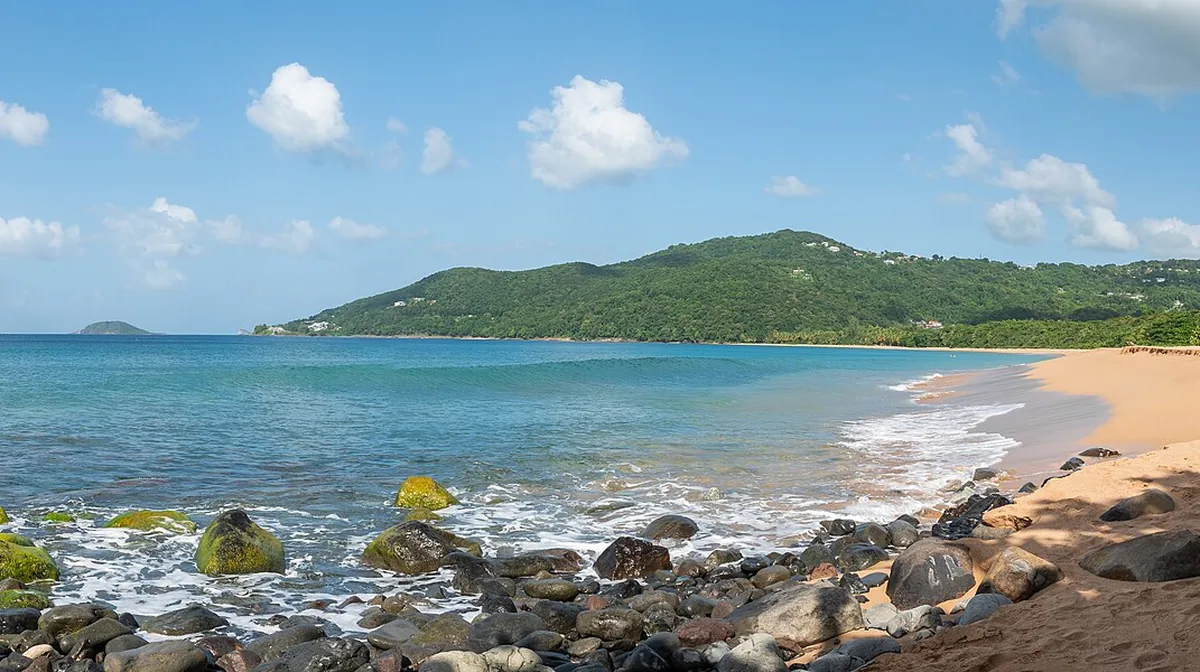
The archipelago is shaped like a butterfly, and its two wings are two completely different products. Grande-Terre, the eastern wing, is the beach-and-resort side: the calm, white-sand beaches of Sainte-Anne and Saint-François, the lively hub of Le Gosier, the dramatic cliffs of Pointe des Châteaux, and most of the island's classic seaside rental inventory. Basse-Terre, the western wing, is the wild side: the active La Soufrière volcano, the rainforest and waterfalls of the Guadeloupe National Park, the black-sand beaches, and the Jacques Cousteau marine reserve off Malendure that makes it a premier dive destination. Add the smaller islands — chic little Les Saintes, timeless Marie-Galante, quiet La Désirade — and Guadeloupe is really a collection of markets under one name, each speaking to a different traveler.
The guest mix is overwhelmingly French and European, and that shapes everything from language to season to expectations. The largest wave comes from metropolitan France — families and couples escaping the European winter, often for one to three weeks, deeply familiar with the gîte (self-catering rental) tradition and expecting French standards of value and communication. Add French-Canadian, Belgian, Swiss and other European travelers, plus a domestic Antillean market, and you have a base that books in French, travels on the European calendar, and rewards the property that meets it on its own terms. Reaching this guest is not about competing in the English-language, dollar-priced Caribbean; it is about winning the French-speaking, euro-priced one.
What makes the investment case distinctive is stability rather than tax-haven economics. Guadeloupe offers EU-grade legal security, no currency risk for European owners, a large and loyal domestic-French demand base, and French tax regimes for furnished rentals that can be genuinely favorable — but it also carries French social charges, French bureaucracy and a higher cost base than the low-tax independent islands. This is a market for the owner who values security, a deep built-in audience and a stable framework over the lighter-touch, higher-variance economics elsewhere. And because so much of the inventory is marketed unambitiously, the gap between a professionally positioned, properly French-facing listing and an amateur one is wide.
Top Attractions & Landmarks
- La Soufrière volcano & the National Park
- Chutes du Carbet (Carbet Falls)
- Sainte-Anne & Saint-François beaches
- Pointe des Châteaux
- Jacques Cousteau Reserve diving (Malendure)
- Les Saintes — Terre-de-Haut & Pain de Sucre
- Marie-Galante & its rum distilleries
- Pointe-à-Pitre markets
Nearby Markets: Martinique | St. Barts | Dominica