Start here Work with Cavmir in Martinique
Get a Proposal (786) 751-3426
$170
Avg. Nightly Rate
61%
Avg. Occupancy Rate
$3,350
Avg. Monthly Revenue
6–10%
Est. Cash-on-Cash ROI
MEDIUM
Seasonality
MODERATE
Regulatory Burden

* Market averages. Properties marketed by Cavmir typically exceed these figures by 25–45%. Data sourced from AirDNA, STR market reports, and Cavmir internal analytics.

The Market

Why Martinique is the Refined Heart of the French Caribbean

Martinique is the polished, cultured sister of the French West Indies, and for a short-term rental owner its refinement is the market's signature. Like Guadeloupe it is fully part of France and the European Union — euro currency, French law, European infrastructure, no currency risk for the French and European travelers who dominate demand — but it carries a more elegant, sophisticated reputation: the island of rum agricole, of zouk music and Aimé Césaire, of the empress Joséphine, of chic marinas and refined creole cuisine. That cultured self-image attracts a particular guest, and marketing here means understanding both the French system that governs the market and the discerning, francophone traveler who fills it.

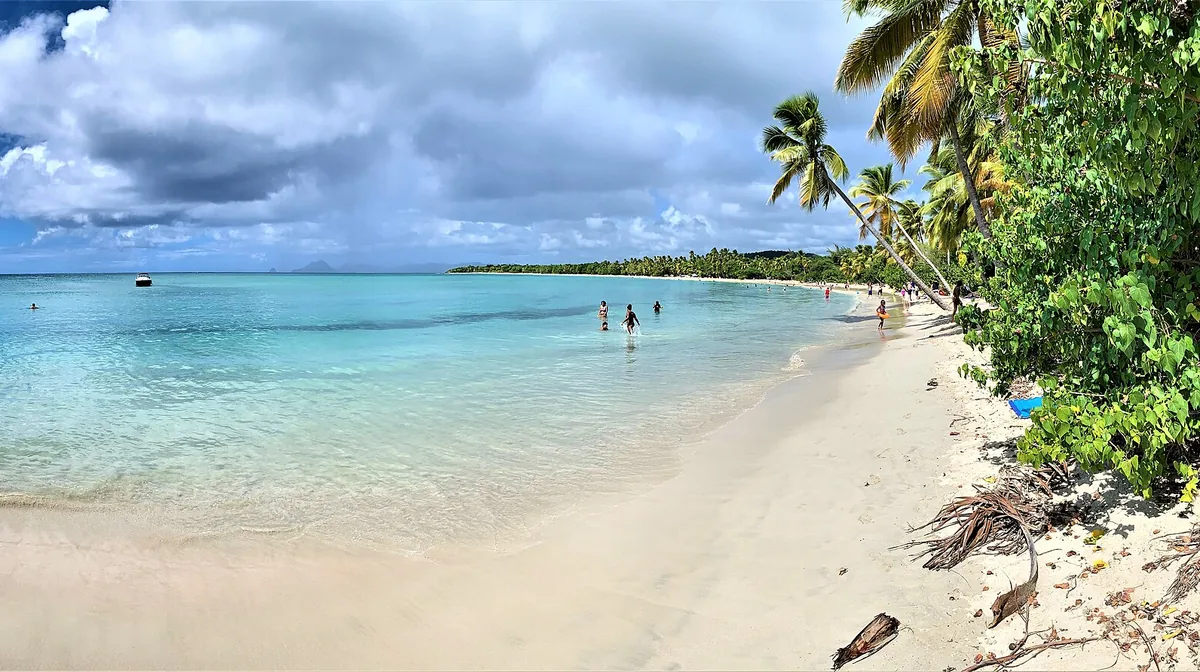
The island's geography sorts the rental market into clear zones. The south is the beach heartland: Sainte-Anne and the legendary Les Salines, Le Diamant beneath its iconic offshore rock, and the tourist hub of Les Trois-Îlets across the bay from Fort-de-France with its marina, beaches and Pointe du Bout resort strip. Le Marin, further south, is the sailing capital — home to one of the largest yacht-charter bases in the Caribbean — which gives the whole southern coast a nautical, cosmopolitan flavor. The north is the wild, dramatic Martinique: Mont Pelée, the volcano whose 1902 eruption destroyed Saint-Pierre, the rainforest and the Route de la Trace, the rum estates and the lush Atlantic coast. A listing that names its zone and sells that specific Martinique outperforms a generic island reference every time.

The guest is overwhelmingly French and European, refined and repeat-prone. Metropolitan-France travelers make up the bulk — families and couples escaping the winter, often for one to three weeks, fluent in the gîte tradition and drawn by Martinique's cultured reputation — alongside French-Canadian, Belgian, Swiss and other European visitors, a lively sailing crowd, and a domestic Antillean market. This is a base that books in French, travels on the European calendar, and rewards properties that meet French expectations of quality, value and communication. Reaching it means competing in the francophone, euro-priced Caribbean, not the English-language, dollar-priced one — a fundamentally different marketing game.

What makes the investment case distinctive is the same French stability that defines Guadeloupe, with an even more established, upmarket tourism economy layered on. Martinique offers EU-grade legal security through the notaire system, no currency risk for European owners, a deep and loyal domestic-French audience, and French furnished-rental tax regimes that can be favorable — balanced against French social charges, French bureaucracy and a European cost base. It is a market for the owner who values security, sophistication and a built-in audience over the higher-variance economics of the low-tax islands. And because so much of the inventory is marketed unambitiously, a professionally positioned, genuinely French-facing listing stands out sharply.

Top Attractions & Landmarks

  • Les Salines & Sainte-Anne beaches
  • Le Diamant & Diamond Rock
  • Mont Pelée volcano
  • Saint-Pierre — the 'Pompeii of the Caribbean'
  • Rum agricole distilleries (Clément, Depaz, Trois Rivières)
  • Jardin de Balata botanical garden
  • Les Trois-Îlets & Pointe du Bout
  • Le Marin sailing & charter base

Nearby Markets: Guadeloupe  |  St. Lucia  |  Dominica

Airbnb marketing services in Martinique, Martinique, French West Indies, Caribbean

Photo: Sapakagadewmoinjadiw · CC BY-SA 4.0 · via Wikimedia Commons

Why Cavmir

The Cavmir Advantage
in Martinique

Cavmir markets Martinique rentals to the refined French and European guest who actually books them, in their own language and on their own calendar. We position your villa, gîte or beachfront apartment in front of the traveler who chooses the French Caribbean's most cultured island — the metropolitan-France family, the sailing visitor, the rum-and-culture traveler — in French as well as English, across Google, the French booking landscape, Instagram and a direct-booking site that captures the long stays and loyal repeats this market runs on.

State of the Industry · History

The Martinique STR Market — Past & Present

Martinique's history is French, dramatic and deeply woven into its brand. Colonized by France in the seventeenth century, shaped by the sugar-and-rum plantation economy and the history of enslavement, it became the cultural and administrative jewel of the French Antilles — birthplace of the empress Joséphine, later of the poet and statesman Aimé Césaire, and cradle of zouk, the music that Kassav' carried worldwide. In 1902 the eruption of Mont Pelée obliterated Saint-Pierre, then the island's cosmopolitan 'Paris of the Caribbean,' killing tens of thousands in minutes and leaving a haunting ruin that draws visitors to this day. Made an overseas department in 1946 and later a region, Martinique has spent generations fully inside the French state.

That French integration shaped a tourism market oriented, from the start, toward the metropolitan-French traveler and built on the deeply-rooted gîte tradition of self-catering holiday rentals. The south coast developed as the beach-holiday heart — Les Trois-Îlets and Pointe du Bout with hotels and a marina, Sainte-Anne and Le Diamant with their celebrated beaches — while Le Marin grew into a major Caribbean sailing and yacht-charter hub, and the north remained the wild, cultural, rum-country counterpoint. The individually-owned rental model was second nature here long before the global platforms arrived, giving Martinique a mature base of gîtes and villas.

The short-term rental market thus sits on two layers, much as it does across the French Antilles. Beneath the Airbnb era lies an established French meublé-de-tourisme culture, with its classement star-rating system and a French audience that has rented gîtes for decades. On top of it, the international platforms brought villas with pools in the hills above Trois-Îlets and Sainte-Anne, beachfront apartments, and creole houses onto a wider — though still predominantly European — market. The inventory reflects the island's refinement: a notable share of design-conscious villas and well-appointed gîtes aimed at a discerning traveler.

Today Martinique is a mature, upmarket, stable market anchored by its French demand and European framework. It weathered global tourism shocks on the cushion of loyal domestic-French travel; it operates under an evolving but predictable French regime for furnished rentals; and it competes for the French traveler's Caribbean euro chiefly against Guadeloupe, St. Barts and St. Martin. For an owner the reality is a secure, sophisticated, loyal market that rewards those who market properly to the refined French guest and run cleanly within the French system — and that quietly under-rewards anyone treating it as a generic, English-language Caribbean listing.

Pricing Strategy & Seasonality

Pricing, Seasonality & When to Capture ROI

Pricing Strategy

Martinique pricing is set inside a French, euro-denominated, upmarket market, and it should be benchmarked against the French-Caribbean alternatives the traveler is actually weighing — Guadeloupe, St. Barts, St. Martin — not the dollar-priced independent islands. In the south, proximity to Les Salines, Sainte-Anne, Le Diamant and the Trois-Îlets hub commands premiums, as does a genuine sea view or a design-led villa with a pool; near Le Marin, the sailing and charter crowd is its own audience. The island's refined reputation means quality and character are genuinely rewarded, so pricing should reflect the guest's expectation of a cultured, well-appointed stay rather than a bargain beach room.

The defining dynamic, as across the French Antilles, is the length and timing of the French holiday stay. Metropolitan-French travelers book longer — one to three weeks — around the French school-holiday and winter-escape calendar, and they judge value in the experienced way of a nation raised on gîtes. That rewards clear weekly and multi-week pricing and a confident presentation of quality and self-catering practicality, and it penalizes a fragmented nightly-only approach aimed at a one-week, English-speaking audience that barely exists here. Price for the French guest who thinks in weeks, and align to their calendar.

The third consideration is the French tax and regulatory reality's effect on net economics. Furnished-rental income falls under French regimes — micro-BIC, réel, LMNP status — that can be genuinely favorable but carry French social charges and obligations, and the taxe de séjour must be collected from guests. Intelligent pricing here means understanding the after-tax, after-charges outcome within the French system, not merely the headline euro rate. It is one reason a capable local expert-comptable and a marketing partner who understands the French market are both worth their fee — they let you price on the reality rather than the illusion.

Seasonality & ROI Windows

Medium seasonality driven by the French and European calendar. The high season runs December through April — the European winter escape, with Christmas/New Year and the February French school holidays as super-peaks, and Carnival a major cultural event. The French summer holidays (July–August) bring a strong second wave, boosted by the sailing season around Le Marin. The softer window is the September–November hurricane-and-rain stretch, where value pricing and flexible terms win the travelers still willing to come.

The revenue most Martinique owners miss lies in aligning tightly with the French calendar and the longer, higher-value stay rather than a generic Caribbean-winter posture. The February school holidays, Carnival and the summer sailing season are demand surges that an English-only, nightly-minded listing underexploits. Being visible, euro-priced and positioned in French for those specific windows — with weekly and multi-week rates ready and the sailing crowd courted around Le Marin — converts the calendar's real peaks into captured income.

Regulation & Licensing · 2026

What the Law Requires in Martinique

Because Martinique is fully part of France, its short-term-rental rules are French rules — the same regime that governs a gîte in the Dordogne or an apartment in Nice, adapted locally. A furnished tourist rental (meublé de tourisme) generally must be declared to the local town hall (déclaration en mairie); some municipalities require a registration number and, in higher-demand zones, additional authorizations; and a property may pursue an official classement (star rating) that shapes its tax treatment and positioning. The taxe de séjour (tourist tax) is collected from guests and remitted to the local authority, a task the major platforms often handle. This is a formal, paperwork-bearing system, and operating legitimately means complying with it properly.

On the tax side, furnished-rental income is taxed under the French regimes for meublés de tourisme — typically micro-BIC with a standard allowance, or the réel regime, frequently under LMNP (non-professional furnished landlord) status — and is subject to French income tax and French social charges. These regimes can work in an owner's favor, but they are French in their complexity, and a local expert-comptable who knows Antillean furnished rentals is not a luxury but a necessity. Larger operations can trigger further obligations. The tax structure materially affects net yield, so it should be set up correctly from the very beginning rather than improvised.

For buyers, ownership is open and legally secure: as part of France and the EU there are no barriers to European purchasers, non-EU buyers may also acquire freely, and the French notaire system provides strong protection — though transfer and notaire costs on an existing property are meaningful (commonly around 7–8% of price). Martinique sits in the hurricane belt and is dominated by an active volcano, Mont Pelée, so construction norms and comprehensive insurance genuinely matter. As ever the rules evolve — French STR regulation has been tightening in busy areas — so treat this as orientation, not legal or tax advice, and confirm current requirements with the mairie, a notaire and an expert-comptable before you buy or list.

Market-Specific Tips & Challenges

Local Tips & Unique Market Challenges

Tips That Actually Move Revenue in Martinique

The first Martinique tip is to market to the refined French guest, in French, on the French calendar — because that is the audience that fills this island. A listing available and marketed in French, priced in euros, aligned to the French school-holiday and winter-escape calendar, and written with an understanding of the gîte tradition and Martinique's cultured reputation will out-convert an English-only, dollar-thinking listing decisively. Speaking to the metropolitan-France family or couple planning a February stay, in their language and to their expectations, is the highest-leverage move a Martinique owner can make, and it is exactly the French-facing marketing most listings neglect.

Second, sell the specific Martinique your property offers, because the island's range is real. A south-coast property sells Les Salines, Sainte-Anne, Le Diamant and the easy beach holiday; a Trois-Îlets villa sells the marina, the ferry to Fort-de-France and the resort-strip convenience; a Le Marin location sells the sailing and charter world; a northern gîte sells Mont Pelée, the rainforest, Saint-Pierre's haunting history and the rum estates. Map the experience honestly — beaches, distilleries, dive sites, drive times — and match the listing to your zone rather than defaulting to a generic island pitch.

Third, lean into Martinique's cultural sophistication, because it is a genuine differentiator the discerning French guest responds to. The rum agricole heritage — Martinique's rhum carries a protected appellation of origin, unique in the world — the zouk and creole culture, the refined cuisine, the elegant history: these are marketing assets, not footnotes. A listing that connects a guest to the rum route, the cultural sites and the island's distinctive character, presented with quality photography and honest practical detail, sells the cultured escape the guest is actually seeking and justifies a stronger rate.

Fourth, build the direct-and-repeat channel and get the French system right together, because both compound over time. Martinique's guests return — the family to the same south-coast villa, the sailor to the same Le Marin base — and a French-language direct-booking site plus warm follow-up turns that loyalty into your own bookings rather than the platforms'. Meanwhile, running cleanly within the French framework — the déclaration, the taxe de séjour, the correct tax regime — protects the business and earns the trust the French guest expects. Getting marketing and compliance right in tandem is precisely the combined work a knowledgeable partner provides.

Unique Martinique Challenges

Martinique's first challenge is the French cost base and bureaucracy that accompany EU status. Registration, the taxe de séjour, the French tax regimes and social charges, and the European costs of labor, goods and insurance mean the economics reward stability and a loyal audience rather than outsized yield. For the owner who wants security, sophistication and a deep built-in market that is precisely the appeal; for anyone expecting the light-touch, high-margin model of a tax-haven island it is a real adjustment. Working the French system well is part of the craft here, not a hurdle to avoid.

The second challenge is language and audience fit. Demand is overwhelmingly French-speaking and European, and an owner marketing only in English to a dollar-priced, one-week-vacation audience is aimed at the wrong guest. The market's great strength — its deep, loyal, discerning French base — can only be reached by genuinely speaking to it, in French, on its calendar, to its standards. Listings that fail this underperform not for lack of a market but for lack of alignment with the market that exists.

The third is the physical and operational reality of a hurricane-belt, volcanic island with a sophisticated guest. Hurricane season (June–November) requires proper insurance and a guest-friendly cancellation posture; Mont Pelée is an active volcano and the terrain is varied; and a refined, experienced French clientele holds high expectations for quality and communication that a drifting, remotely-managed property cannot meet. Many Martinique rentals are second homes owned from mainland France, and the ones that win close the management distance with a trustworthy local team and a marketing partner who keeps the French-facing story, photography and direct channel current — so the cultured stay the guest booked is the one they actually receive.

A Curious Martinique Fact
Martinique makes the only rum in the world with its own protected appellation of origin: rhum agricole AOC Martinique, distilled from fresh sugarcane juice rather than molasses, governed like a fine Bordeaux. The island is also home to one of history's most dramatic natural disasters — the 1902 eruption of Mont Pelée that erased Saint-Pierre, the 'Paris of the Caribbean,' in minutes, leaving a ruin now called the 'Pompeii of the Caribbean.' A Martinique listing is marketing an island of world-protected rum and world-famous catastrophe, and saying that specifically beats any generic beach line.
Finance Essentials — Martinique
🛡️

Insurance

As a hurricane-belt island crowned by an active volcano, Martinique needs serious cover — French property insurance including named-storm/wind and natural-disaster protection, structured through France's catastrophe naturelle framework. Confirm precisely what your policy covers for a furnished rental let to guests, budget for the premium, and treat resilient, code-compliant construction as both a safety and a cost matter. Fold insurance into a yield model that already reflects the European cost base.

🧾

Property & Income Tax

Furnished-rental income is taxed under French regimes — micro-BIC with a standard allowance, or the réel regime, often under LMNP status — subject to French income tax and social charges; the taxe de séjour is collected from guests. These regimes can be favorable but are genuinely complex, so a French expert-comptable familiar with Antillean rentals is essential, and non-French owners must coordinate home-country reporting. Setting the tax structure up correctly from the start materially affects net yield.

🏦

Mortgages & Financing

Financing is available through French banks on French terms, which can be attractive to European buyers — no currency risk, EU rates — though subject to French lending criteria; non-EU buyers may find financing harder and often use cash or home-country funds. Notaire and transfer costs on purchase are meaningful (commonly ~7–8%). Whatever the structure, model debt service against realistic, French-calendar-shaped occupancy rather than a flat nightly average.

Future Outlook · 2027 & Beyond

Where Martinique is Headed Next

Martinique's near-term outlook is the same secure stability that defines the French Antilles, with an upmarket edge. Its loyal metropolitan-France base cushions it against the swings that hit dollar-priced islands; its EU infrastructure, legal security and euro pricing keep it attractive to European owners; and reliable air links to mainland France sustain the funnel of travelers. For the owner who values security and a deep, discerning built-in audience, that steadiness — not a boom — is exactly the appeal.

The variables to watch are French regulation and intra-French-Caribbean competition. France continues to tighten short-term-rental rules in high-demand areas, so Martinique owners should expect the framework to keep formalizing in ways that reward compliant, professional operators. On the demand side, Martinique competes for the French traveler's euro against Guadeloupe, St. Barts and St. Martin, so differentiation — the specific zone, the rum-and-culture sophistication, the sailing world, the quality of the guest experience — grows more important every year.

The deeper shift is in how French and European guests find a stay. They increasingly begin with a direct search, a French-language platform or an AI assistant rather than an anonymous global scroll, and Martinique properties that publish a clear, French-facing, well-structured and honest presence — the real experience, the specific zone, the cultural and practical detail, a fast site an assistant can read in French — are the ones that will surface and convert. In a market defined by a loyal, discerning French audience, owning that French-language presence rather than renting visibility from a platform is the most durable advantage an owner can build, and it is exactly the work Cavmir does.

From the Desk of Sofie Sinag

Why We Love Marketing in Martinique

Martinique is the market where culture is genuinely part of the product, and I love working on it for that reason. This is not a blank beach to slap adjectives onto — it is the island of rhum agricole AOC, of zouk and Césaire, of Saint-Pierre's haunting ruins and the elegant creole table. When a listing connects a guest to that sophistication — the rum route, the cultural history, the refined character of the place — instead of defaulting to sun-and-sand clichés, it speaks to exactly the discerning French traveler who chooses Martinique over a generic island, and that traveler pays for the depth.

What I love is the same thing that makes the French Antilles so rewarding: the demand for precision. Martinique's guest is French, experienced and discerning, and reaching them takes real craft — their language, their calendar, their expectations, the gîte tradition they grew up with. Get that right and you unlock a deep, loyal audience that most English-only competitors cannot even see; get it wrong and a beautiful property sits half-empty. There is deep satisfaction in pointing a property at the right guest, in the right language, and watching the bookings follow.

The other reason Martinique is a joy is the combination of refinement and range under one secure, euro-stable roof. The south's celebrated beaches, the sailing world of Le Marin, the volcanic drama and rum estates of the north — three sophisticated stories for three kinds of traveler, all EU-secure and francophone. When a Martinique listing finally sounds like the specific, cultured slice of the French Caribbean it is, speaks to its guest in French, and runs cleanly within the French system, the bookings that follow feel less like marketing and more like introductions to travelers who were always going to return.

Cavmir's Martinique Cheat Sheet

The Picks We Recommend for Your Welcome Book

The picks Cavmir puts in a Martinique welcome book — the details that make a stay feel like resident knowledge instead of a printed concierge script, and that quietly earn the five-star reviews.

The Great Beach

Les Salines at Sainte-Anne

Send guests to Les Salines, the island's most celebrated beach, early before the crowds and the midday heat. A host who names the quieter end and the best coco-vendor turns a famous beach into a personal discovery.

The Rum Route

Distillery visits, decoded

Martinique's rhum agricole AOC is world-unique. Point guests to the right distilleries for their taste — Clément for the estate and gardens, Depaz beneath Mont Pelée, Trois Rivières for the view — and a tasting becomes the trip's cultural highlight.

Volcano & History

Mont Pelée and Saint-Pierre

The volcano and the ruins of Saint-Pierre, the 'Pompeii of the Caribbean,' are a moving half-day in the north. A host who frames the 1902 story and suggests the small museum hands the guest real depth, not just a view.

Diamond Rock

Le Diamant and its beach

The dramatic offshore Rocher du Diamant and the long beach at Le Diamant are pure Martinique. A host who knows the swimming conditions and the sunset timing looks like a local.

Across the Bay

The ferry to Fort-de-France

From Trois-Îlets, the little ferry across the bay to the capital beats driving — the markets, the Schoelcher library, the Savane. A host who explains the ferry schedule saves the guest the traffic and the parking.

Garden in the Rainforest

Jardin de Balata

The Balata botanical garden, with its canopy walkways above the rainforest, is a gentle, gorgeous outing on the Route de la Trace. A host who pairs it with a scenic drive north gives guests the lush interior.

Sailing & the Sea

Le Marin and a day on the water

Le Marin is one of the Caribbean's great sailing hubs. A host who can arrange a catamaran day trip to the southern islets and bays serves the water-loving guest perfectly — the sea is Martinique's second stage.

Creole Table

Where to eat properly

Steer guests to genuine creole cooking — accras, colombo, grilled fish, ti-punch made correctly — and a good Sunday-lunch spot. Martinique's refined food culture is a highlight worth guiding, not leaving to chance.

Market Morning

Fort-de-France or the village markets

Send guests to a spice-and-produce market for vanilla, rum-punch fixings and creole color. A host who explains what to buy turns a shop into an experience and a souvenir into a story.

Getting Around Honestly

A car is essential

Martinique's beaches, distilleries and volcano are spread across the island, so a rental car is genuinely needed. A host who says so plainly and flags the drive times and the Fort-de-France traffic sets the guest up right.

Off-Peak Magic

May–June and late autumn

Warm seas, softened rates and thinner crowds between the French holiday peaks. The windows that reward the guest willing to travel just off the calendar — and the marketer patient enough to fill them.

Local Work · Composite Case Vignettes

What Cavmir Has Done for Martinique Properties

Representative Cavmir engagements in Martinique. Property identifiers redacted; figures composited from internal analytics and market benchmarks.

Villa with Pool · Les Trois-Îlets
The Brief

A design-led hillside villa under-earning on an English-only listing that never reached its natural metropolitan-France audience or conveyed its refinement.

What We Did

Rebuilt the listing in French and English around the bay views, the marina, the beaches and the rum route, aligned pricing to the French school-holiday calendar with weekly rates, and launched a French-language direct-booking page.

The Result

Bookings from metropolitan France rose sharply, the February and winter holiday weeks filled well ahead, and a loyal repeat base of discerning French travelers began rebooking directly.

Beachfront Apartment · Sainte-Anne
The Brief

A near-Les-Salines apartment competing on price with generic listings and unclear on French compliance, leaving revenue and legitimacy on the table.

What We Did

Repositioned it on the celebrated-beach holiday for French families and couples, with honest self-catering presentation and clear practical detail, while putting the déclaration, taxe de séjour and tax regime in order.

The Result

Occupancy and ADR improved on a clearer, French-facing positioning, and running cleanly within the French system earned the guest trust and reviews that lifted it above nearby competitors.

Creole Gîte · Northern Coast
The Brief

A characterful gîte near the rum estates and Mont Pelée, its cultural setting undersold and its calendar over-reliant on the platforms.

What We Did

Built a proper brand and direct-booking channel around the rum route, the volcano and the authentic north — atmospheric photography, a French-language site, and warm follow-up that turned first stays into returns.

The Result

Direct and repeat bookings grew into a meaningful share of the calendar, capturing the full value of a distinctive, culture-rich property and reducing platform commission.

Straight Answers

Martinique Airbnb Marketing:
Questions, Answered

Does Cavmir offer Airbnb marketing services in Martinique?

Yes. Cavmir works with villa, gîte and apartment owners across Martinique — Les Trois-Îlets, Sainte-Anne and Les Salines, Le Diamant, Le Marin and the cultural north — on branding, listing optimization, photography direction, direct-booking websites, French- and English-language SEO and paid campaigns. We position your property for the refined French and European traveler who books the French Caribbean's most cultured island.

What do short-term rentals earn in Martinique?

The snapshot on this page shows average nightly rates around $170 (euro-denominated in practice) with occupancy near 61%, in a market driven by longer French-holiday stays. Treat these as directional averages, not guarantees; the French tax framework, euro pricing and length of stay shape the real net economics, and marketing properly to the discerning French guest moves the number a lot.

When is demand highest for Martinique rentals?

Martinique follows the French and European calendar: the high season is December–April (the winter escape, with Christmas/New Year and the February school holidays as super-peaks, plus Carnival), with a strong second wave in the French summer holidays (July–August) boosted by the sailing season. The softer window is September–November. Aligning pricing and marketing to these French windows is where owners capture the real peaks.

Do I need to register a short-term rental in Martinique?

Yes — Martinique is governed by French law, so a furnished tourist rental (meublé de tourisme) generally must be declared to the town hall (déclaration en mairie), some communes require registration numbers, and the taxe de séjour must be collected from guests. Furnished-rental income falls under French tax regimes (micro-BIC or réel, often LMNP). Work with the mairie, a notaire and an expert-comptable — Cavmir handles the marketing, not legal or tax advice.

Can foreigners own a rental property in Martinique?

Yes. As part of France and the EU, Martinique is fully open to European buyers, and non-EU buyers can also purchase freely, with the strong legal security of the French notaire system. Budget for meaningful notaire and transfer costs on purchase (commonly around 7–8% for existing property) and for hurricane and natural-disaster insurance. Confirm the details with a notaire before buying.

How is Martinique different from Guadeloupe for owners?

Both are French, euro-based and governed by the same framework, but Martinique carries a more refined, upmarket reputation — the rhum agricole AOC, the culture of zouk and Césaire, the sailing world of Le Marin, the volcanic history of Saint-Pierre. That sophistication attracts a discerning guest who rewards quality and cultural connection. Cavmir helps you market that distinctive character rather than a generic island pitch.

Why is marketing in French so important here?

Because Martinique's demand is overwhelmingly French-speaking and European. A listing available and marketed in French, priced in euros and aligned to the French holiday calendar reaches the metropolitan-France family and the loyal European base that English-only listings never see. Cavmir builds that French-facing reach across SEO, direct booking and the listings themselves, so you compete in the market that actually books here.

How much does Airbnb marketing cost for a Martinique property?

It depends on scope. Current plans and one-time project pricing are on the pricing page — most owners start with a listing overhaul or the 12-step system. A conversation about your property costs nothing: contact Cavmir.

Free Property Review

What is your Martinique property actually worth per night?

Send us the listing and we'll tell you what we'd change. Not a pitch deck — a straight read on your photos, your title, your rates against the Martinique comp set, and whether a direct-booking site would pay for itself.

You'll hear back from a person, usually inside one business day. If we don't think we can move your numbers, we'll say so. Cavmir is a short-term rental marketing agency — we position and market properties, we don't manage them.

  • No obligation, and no automated call sequence
  • We market and position — we never manage your property or hold keys
  • Works whether you're on Airbnb, Vrbo, or direct

Ready to Grow in Martinique?

Let's Put Your Martinique
Property on the Map

Talk to Cavmir today. We'll show you exactly what your Martinique property is leaving on the table — and how fast we can change that.

Book a Free Strategy Call