Start here Work with Cavmir in Isla Holbox
Get a Proposal (786) 751-3426
$225
Avg. Nightly Rate
63%
Avg. Occupancy Rate
$4,300
Avg. Monthly Revenue
7–11%
Est. Cash-on-Cash ROI
HIGH
Seasonality
MODERATE
Regulatory Burden

* Market averages. Properties marketed by Cavmir typically exceed these figures by 25–45%. Data sourced from AirDNA, STR market reports, and Cavmir internal analytics.

The Market

Why Isla Holbox is the Riviera Maya's Barefoot-Luxury Outlier

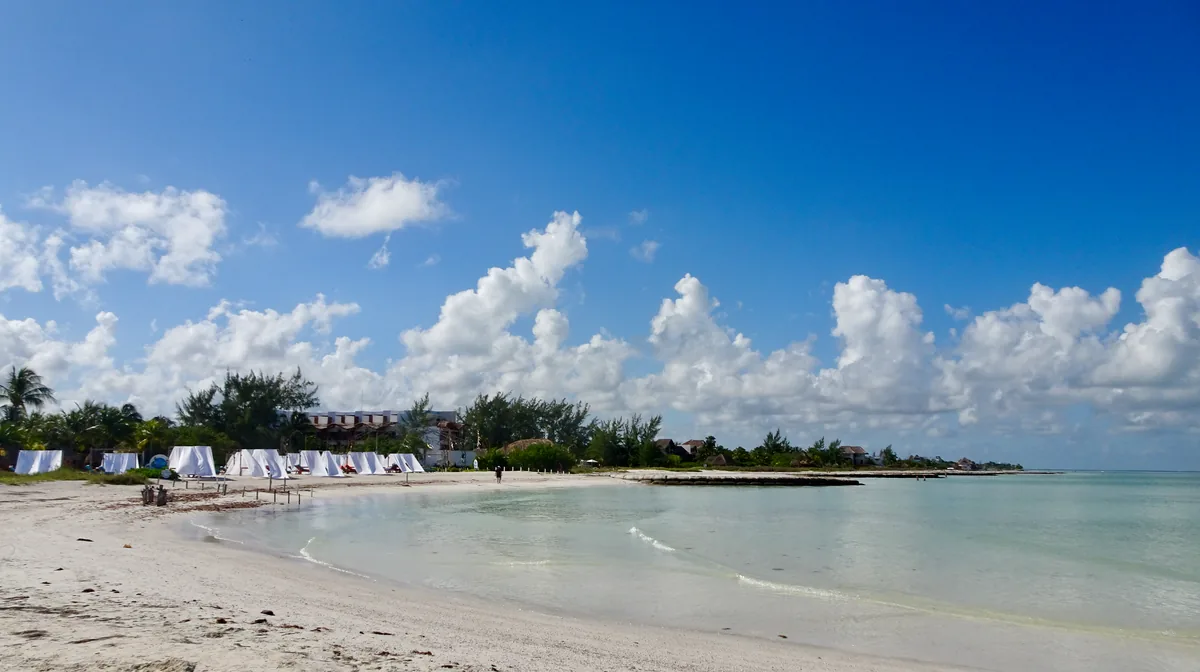
Isla Holbox is the anti-Cancún, and that is precisely its value to a short-term rental owner. There are no cars — you get around by golf cart, bicycle or on foot along sand streets. There are no high-rise resorts and, by the design of the nature reserve it sits inside, there never will be. The island is a thin sandbar at the northern tip of the Yucatán, separated from the mainland by a lagoon, reachable only by a short ferry from the fishing village of Chiquilá. What that scarcity produces is a barefoot-luxury market with genuinely limited supply, a guest willing to pay for the privilege of unplugging, and pricing power that the saturated condo corridors to the south simply cannot match.

The market here is small, boutique and experience-driven rather than volume-driven. Inventory runs from beachfront palapa-roofed cabañas and adults-only boutique suites to a handful of private eco-villas and casitas tucked behind the dunes. There is no Zona Hotelera and no wall of identical condos; the whole island is essentially one long beachfront and a village, so the differentiators are design, sustainability, the exact stretch of beach, and the story. A well-marketed Holbox property is not competing on price against two hundred lookalikes — it is competing on desirability against a small field, which is a fundamentally more profitable game if you play it right.

The guest who comes to Holbox self-selects, and understanding that guest is the whole marketing job. They are here for the whale sharks that gather offshore in summer, for the bioluminescent plankton on a moonless night, for the flamingos and the birdlife of the Yum Balam reserve, for the yoga-and-slow-mornings rhythm, and for the specific romance of an island with no traffic. They skew couples, honeymooners, design-conscious travelers and a European and Mexican crowd that discovered Holbox before the Americans did. They will pay for authenticity and punish anything that feels mass-market. A listing that speaks their language — and shows the island's real texture — books at rates that surprise mainland owners.

What makes the investment case unusual is that scarcity is legally protected. Holbox lies within the Yum Balam protected natural area, which constrains construction, height and density and keeps the supply of new rooms far tighter than anywhere else in Quintana Roo. That same protection is why access, power, water and infrastructure are more limited than on the mainland — a real operating challenge — but it is also the moat. Entry prices are higher per room than in Playa or downtown Cancún, and yields depend heavily on marketing the premium experience rather than chasing occupancy, but a Holbox property that is positioned as the rare, design-led, sustainable escape it is can command rates that the volume markets only dream about.

Top Attractions & Landmarks

  • Whale shark tours (summer season)
  • Bioluminescence at Punta Cocos on dark nights
  • Isla Pasión & Isla de los Pájaros bird sanctuary
  • Punta Mosquito sandbar & flamingos
  • The car-free sand streets & village murals
  • Kitesurfing on the shallow lagoon flats
  • Yum Balam reserve mangrove & wildlife tours
  • Sunset from the west-end beach

Nearby Markets: Cancún  |  Isla Mujeres  |  Cozumel

Airbnb marketing services in Isla Holbox, Isla Holbox, Quintana Roo, Mexico, Caribbean

Photo: dronepicr · CC BY 2.0 · via Wikimedia Commons

Why Cavmir

The Cavmir Advantage
in Isla Holbox

Cavmir markets Isla Holbox properties as the rare, design-led, sustainable escapes they are — never as generic beach rentals. We position your cabaña, suite or eco-villa in front of the exact traveler who seeks out a car-free island: the honeymooner, the design-conscious couple, the whale-shark and slow-travel guest — across Google, Instagram and a direct-booking site that captures the premium and the repeat visits an experience this specific earns.

State of the Industry · History

The Isla Holbox STR Market — Past & Present

For almost all of its history Holbox was a fishing village and nothing more. Its economy ran on lobster and shark fishing; its handful of families lived on a sandbar that flooded in storms and had no road, no cars and, for a long time, no reliable power. Even as Cancún exploded into a metropolis just a couple of hours to the southeast in the 1970s and 80s, Holbox stayed almost untouched — too remote, too small, too hard to reach to be swept into the resort machine. That accident of remoteness preserved the island exactly long enough for a different, slower kind of tourism to find it.

The turn came in the 1990s and 2000s, when the whale sharks — which gather in huge numbers in the plankton-rich waters off the island each summer — put Holbox on the map for adventurous travelers and then for the wider world. Small posadas and beach cabañas grew into boutique hotels; Italian, Argentine and other expatriate entrepreneurs opened restaurants and design-led guesthouses; and the island developed a reputation as the bohemian, barefoot alternative to the Riviera Maya's polish. Crucially, its inclusion in the Yum Balam protected area capped how big and how tall any of this could get, so the growth stayed low-rise and low-density even as demand climbed.

The short-term rental market grew out of that boutique-hotel and expat-guesthouse layer rather than out of condo development, because condo towers are not permitted here. The inventory that reaches Airbnb and Vrbo is therefore distinctive: individually-owned cabañas, casitas, apartments above shops, and a small number of private villas, most of them design-forward and sustainability-minded because that is what the island and its guest demand. This is a market of characterful one-offs, not interchangeable units, which changes the entire marketing approach.

Today Holbox is one of the most talked-about small islands in the Caribbean, riding the same slow-travel, Instagram-driven wave that made Tulum famous — with all the promise and all the strain that implies. Demand and rates have climbed sharply; so have concerns about water, waste, power and whether the island's fragile infrastructure and ecosystem can carry the crowds. For an owner the present reality is a high-desirability, supply-constrained market with real operating challenges and a guest who cares deeply about authenticity and sustainability — a market that rewards thoughtful, honest, premium marketing and quietly punishes anyone who treats it like a mainland condo.

Pricing Strategy & Seasonality

Pricing, Seasonality & When to Capture ROI

Pricing Strategy

Holbox is a scarcity-and-experience market, the opposite of the mainland condo corridors, and pricing should lean into that. Supply is legally constrained, the guest self-selects for a premium escape, and the right property competes on desirability rather than on being the cheapest option in a crowded search. That means confident, premium pricing for design, beachfront position and the specific experience — sunset side versus sunrise side, steps-to-the-water versus village-center — rather than a race to the bottom. The mistake mainland owners import to Holbox is under-pricing a genuinely rare product because they are used to fighting on price; here, the story and the scarcity justify the rate.

Seasonality drives the pricing calendar more sharply on Holbox than in most Caribbean markets, and there are two peaks to manage rather than one. The North American and European winter (roughly December to April) is the classic high season, with the Christmas and New Year super-peak commanding the year's top rates and longest minimum stays. Then summer — roughly mid-May through September — brings the whale-shark season, a genuine second peak that many owners under-exploit because they assume 'summer equals low season' as it does elsewhere. A property marketed explicitly around the whale sharks, priced for that demand, captures a lucrative window the passive owner discounts by mistake.

The third pricing consideration is that Holbox rewards the longer, higher-value stay and the direct relationship more than the churn of one-nighters. The island's guest tends to book a real getaway — several nights minimum, often a week — and the cost and hassle of turnovers on a car-free island with limited staff make long stays operationally attractive as well as commercially. Building a direct-booking channel and a repeat-and-referral base among design-conscious travelers, who talk to each other and return, is worth more here than squeezing the platform calendar, and it is exactly the kind of premium, relationship-driven marketing this market pays for.

Seasonality & ROI Windows

High seasonality with two distinct peaks. The winter escape (December–April) is the rate high point, with Christmas/New Year as the super-peak and long minimum stays. Whale-shark season (roughly mid-May to September) is a genuine second peak that rewards owners who market it deliberately. The softer windows are the late-spring gap before the whale sharks and the October–November tail during the rainier, more storm-prone stretch — where honest positioning and value for the slow-travel guest still fill the calendar.

The revenue most Holbox owners miss is the summer whale-shark window, because they wrongly assume summer is dead season. It is the opposite: it is the island's signature experience and its second peak. An owner who builds the listing and the pricing around the whale sharks — and around the bioluminescence and birdlife that share the warm months — turns a supposed off-season into some of the year's best weeks. Being visible and correctly positioned before that window opens is the whole game.

Regulation & Licensing · 2026

What the Law Requires in Isla Holbox

Holbox sits under the same Mexican and Quintana Roo tax and ownership framework as the rest of the coast, plus an extra environmental layer that defines the island. On the tax side there is no single federal STR licence, but you must register with the tax authority (the SAT) for an RFC, pay income tax (ISR) and generally value-added tax (IVA, 16%), and the state's roughly 3.5% lodging tax (Impuesto al Hospedaje) is collected from guests, alongside the Quintana Roo Visitax tourist fee. The platforms now withhold Mexican taxes at source, but your own registration and filing obligations remain — a local accountant (contador) is essential from the start.

The layer that makes Holbox different is that it lies inside the Yum Balam flora-and-fauna protected area, administered under federal environmental law. That means construction, expansion, height, density and land use face genuine restrictions and require environmental authorizations (through SEMARNAT and the management program for the reserve), and there have historically been serious concerns and enforcement actions over illegal building and inadequate water and waste infrastructure. If you are buying to develop, renovate or expand, environmental compliance is not a formality — it is the central risk, and it must be verified with specialist local counsel before you commit. If you are buying an existing, already-permitted property, you are inheriting whatever compliance status it carries, which makes due diligence critical.

Ownership follows the same coastal rules as the rest of Quintana Roo: as foreign land within Mexico's restricted zone, residential property is held through a fideicomiso bank trust (or a Mexican corporation), set up with a reputable notario público. And as everywhere, the practical day-to-day rules — where any condominium or community regime governs rentals, plus the island's own infrastructure realities around water, power and waste — matter enormously. Treat this section as orientation, not legal advice: environmental and tax rules here are strict and evolving, so confirm current requirements with a Quintana Roo notario, an environmental attorney, a contador and the Lázaro Cárdenas municipality before you buy or list.

Market-Specific Tips & Challenges

Local Tips & Unique Market Challenges

Tips That Actually Move Revenue in Isla Holbox

The first Holbox-specific tip is to sell the island's soul, not a room. Guests do not choose Holbox for square footage; they choose it for the car-free sand streets, the whale sharks, the bioluminescence, the flamingos and the feeling of being somewhere the world has not paved over. A listing that leads with the experience — that shows the golf-cart-only street, the dark-sky beach, the sunset from the west end — and treats the room as the comfortable base for all of it, dramatically outperforms one that leads with a bed count. This is a market where storytelling is the product.

Second, market both peaks, and especially the whale sharks. The single biggest revenue leak on Holbox is owners who price and promote only the winter and let the summer sit soft, when summer is the island's signature season. Build the whale-shark window into the listing, the photography and the calendar; pre-arrange reputable, responsible tour operators and say so; and capture the traveler who is specifically planning a whale-shark trip. The same applies to the bioluminescence and the birdlife — name the experiences and price for the demand they create.

Third, make sustainability and honesty part of the brand, because this guest checks. Holbox travelers care about the reef, the reserve and the island's fragility, and they are quick to punish greenwashing or a property that clearly strains the infrastructure. Be transparent about water, power (many properties run on generators or limited grid supply), and how you handle waste; highlight genuine eco practices without overclaiming; and set expectations honestly about the barefoot, off-the-grid texture of island life. Authenticity is not a nice-to-have here — it is the entire positioning, and it earns the reviews that drive the next booking.

Fourth, lean hard on the direct-and-repeat channel, because Holbox's guest is loyal, high-value and talks. The design-conscious traveler who has the perfect Holbox stay comes back and sends friends, and on a small island reputation compounds fast. A genuine direct-booking website, a beautiful media presence, and a follow-up that turns a first stay into a relationship are worth more than grinding the platform algorithm — and they let you capture the full premium of a scarce, sought-after property instead of renting your own visibility back every season. That relationship-first, premium marketing is exactly what Cavmir builds.

Unique Isla Holbox Challenges

Holbox's challenges are the flip side of its charm, and the honest listing names them. Access is genuinely limited — guests drive or bus to Chiquilá, park, and take a ferry, and there are no cars on the island — so a property that does not explain the journey clearly, arrange the golf-cart transfer, and set expectations invites frustrated arrivals. Infrastructure is fragile: power, water and internet are less reliable than on the mainland, and the island periodically wrestles with flooding, sargassum on some shores, and the strain of more visitors than its systems were built for. These are manageable, but only if you are transparent and prepared rather than surprised.

The second challenge is regulatory and environmental risk, which is higher here than almost anywhere in Mexico. Building inside a protected reserve is tightly constrained, enforcement against illegal construction has been real and at times dramatic, and an owner who buys or renovates without airtight environmental and permitting due diligence is exposed in ways a mainland condo owner is not. This is a market where cutting corners on compliance is not just a fine risk — it can threaten the asset itself, which is exactly why professional local counsel and honest operators matter so much.

The third is the tension between popularity and fragility that shadows the whole island. Holbox is riding a fame wave, and with it come overcrowding worries, rising prices, and the danger of the very authenticity that draws guests being eroded by mass tourism. For an owner that is both a risk and an opportunity: the properties that will endure are the ones that market the real, sustainable, low-impact Holbox and attract the guest who respects it — not the ones chasing the highest-volume, lowest-care crowd. Positioning for quality over quantity is the long game, and it is the smart one on a small, protected island.

A Curious Isla Holbox Fact
On a moonless night, the water off Punta Cocos can glow. Bioluminescent plankton light up with every movement, so a midnight swim leaves trails of blue-green light around your arms — one of the few places in the Caribbean you can reliably experience it. And each summer some of the world's largest gatherings of whale sharks assemble in the plankton-rich water offshore. A Holbox listing is really selling access to two of nature's rarest shows, and saying that specifically beats any beach adjective.
Finance Essentials — Isla Holbox
🛡️

Insurance

Island and coastal exposure make cover essential and specialty-priced: named-storm/wind and flood protection matter, and Holbox's low-lying, flood-prone geography deserves particular attention. Confirm exactly what any building or community policy covers versus what you must insure yourself, budget for meaningful deductibles, and factor the premium into a yield model that already accounts for the island's operating costs.

🧾

Property & Income Tax

Rental income is subject to Mexican income tax (ISR) and generally 16% IVA, with platforms withholding at source; the ~3.5% state lodging tax and Visitax are guest-collected. Annual property tax (predial) is low, but budget for the fideicomiso's annual trustee fee and plan for capital-gains tax (ISR) on sale. Any environmental or reserve-related obligations are a separate, specialist matter. Foreign owners should coordinate home-country reporting with a cross-border accountant and a local contador.

🏦

Mortgages & Financing

Financing is harder here than on the mainland — lenders are cautious about protected-area, off-grid and island assets, so most Holbox purchases are cash, developer-financed, or funded by borrowing against assets at home. If you do finance, model debt service against realistic, sharply seasonal occupancy and the island's higher operating costs, not a smooth annual average.

Future Outlook · 2027 & Beyond

Where Isla Holbox is Headed Next

Holbox's near-term trajectory is rising demand meeting a hard supply ceiling, which is an unusual and, for a well-positioned owner, favorable combination. The slow-travel and experiential-tourism wave that made the island famous shows no sign of reversing, regional access keeps improving as the wider Yucatán invests in airports and rail, and the whale sharks and bioluminescence are permanent draws. Because the Yum Balam protections keep new supply tightly constrained, that climbing demand has nowhere to go but into rates and desirability for the properties that already exist and are marketed well.

The central variable — the one that will define the next few years more than any market cycle — is sustainability and regulation. How Holbox manages water, waste, power, construction and crowds will determine whether it preserves the magic that commands premium rates or erodes it. Expect environmental enforcement and infrastructure rules to tighten, not loosen. The owners who thrive will be the ones who got ahead of this: fully compliant, genuinely low-impact, and marketed to the guest who values a protected island rather than the one who would love it to death.

The other shift is how these guests discover a stay. The Holbox traveler is design-literate and research-driven, increasingly starting with an AI assistant, a curated recommendation or a direct search rather than an anonymous platform scroll. Properties that publish a clear, beautiful, structured, honest presence — the real experience, the sustainability story, the practical access details, a fast site an assistant can read — will be the ones that surface and convert. On an island where reputation and authenticity are everything, owning that presence, rather than renting visibility from a platform, is the most durable advantage there is, and it is precisely the work Cavmir does.

From the Desk of Sofie Sinag

Why We Love Marketing in Isla Holbox

Holbox is the market I find most romantic to work on, because everything about it resists the mass-tourism playbook. There are no cars to photograph around, no resort logo to work against, no wall of identical condos to differentiate from — just sand streets, hammocks over shallow water, a sky full of stars, and whale sharks in the summer sea. When a listing is allowed to be quiet and specific and true to that, it does not need hype. The island sells itself to exactly the right person, and our job is simply to make sure that person can find it and feel, instantly, that it was made for them.

What I love is that Holbox rewards restraint and honesty, which is rare in this industry. The guest here is sophisticated and allergic to overselling; the property that wins is the one that shows the real texture — the golf cart in the sand, the generator hum you are honest about, the genuine eco practices, the sunset that needs no filter — rather than the one shouting five-star superlatives. It is a market where telling the truth beautifully outperforms exaggeration, and where a repeat guest who fell in love with the real island is worth ten who were oversold and disappointed.

The other joy is the loyalty. People do not casually visit Holbox; they fall for it, and they come back, and they tell the exact kind of friends who will love it too. On an island this small, that word-of-mouth compounds into something no ad budget can buy — a repeat-and-referral base of design-conscious travelers who book direct and treat the place with respect. When a Holbox listing finally sounds like the singular, protected, barefoot island it is instead of a generic beach getaway, the bookings that follow feel less like transactions and more like the start of a long relationship — which, on Holbox, is exactly what they usually become.

Cavmir's Isla Holbox Cheat Sheet

The Picks We Recommend for Your Welcome Book

The picks Cavmir puts in an Isla Holbox welcome book — the details that make a stay feel like the island let a guest in on its secrets, and that quietly earn the five-star reviews.

First Hour

Golf cart, cash and slow down

Tell guests the moment they land: there are no cars, so sort the golf cart or bikes, bring cash (ATMs are limited and unreliable), and downshift. Setting the barefoot, unplug rhythm on arrival is the whole Holbox experience — and it heads off the frustration of expecting the mainland.

Whale Sharks

The summer bucket-list swim

From roughly June to September, book a reputable, responsible whale-shark tour early — the good operators sell out and the ethical ones limit numbers. A host who pre-arranges the right guide turns a stay into the trip of a lifetime and earns the review to match.

The Glowing Water

Bioluminescence on a dark night

On moonless nights, send guests to Punta Cocos to swim in water that lights up with every movement. Tell them the timing (dark moon, away from lights) and it becomes the most magical hour of their trip.

The Sandbar Walk

Punta Mosquito & the flamingos

At low tide, the walk out to Punta Mosquito reveals a shallow sandbar and, often, flamingos and wading birds. A host who explains the tide timing looks like a local and hands the guest a free, unforgettable morning.

Sunset Ritual

West end, feet in the water

Holbox's west-facing beach delivers the sunset. Point guests to the right spot with a drink from a beach bar, hammock optional, and it becomes the nightly ritual they remember and photograph.

Dinner, Island-Style

The pizza, the ceviche, the taco truck

The island's food is a happy surprise — Italian-run trattorias, fresh ceviche, and the beloved evening taco and lobster-pizza spots in the plaza. Two or three specific picks save guests from wandering and make you the hero.

The Murals

A wander through the village art

Holbox's sand streets are an open-air gallery of murals. Suggest a slow morning walk with a coffee to find them — a free, charming, very photogenic activity that fills a low-key day perfectly.

On the Water

Kayak the mangroves or kitesurf the flats

The lagoon side is shallow, warm and windy — ideal for beginner kitesurfing and for mangrove kayak tours through the Yum Balam reserve. Match the guest to the right one and pre-arrange it where you can.

Isla Pasión

The boat-tour trio

The classic three-stop boat tour — the bird island, the freshwater cenote spring, and tiny Isla Pasión — is a Holbox rite of passage. Recommend a small, responsible operator and the guest sees the reserve the right way.

Provisioning & Honesty

What the island can and can't do

Be upfront: shops are small, some services are limited, power and water can hiccup, and that is part of island life. A host who prepares guests honestly — and stocks the essentials — turns potential complaints into charm and trust.

Off-Peak Magic

The shoulder weeks

Late spring and the quieter autumn weeks bring softer rates and an emptier island for the traveler who wants Holbox at its most peaceful. The windows that reward the guest willing to travel just off the calendar — and the marketer patient enough to fill them.

Local Work · Composite Case Vignettes

What Cavmir Has Done for Isla Holbox Properties

Representative Cavmir engagements in Isla Holbox. Property identifiers redacted; figures composited from internal analytics and market benchmarks.

Beachfront Cabaña · West End
The Brief

A characterful palapa-roofed cabaña under-earning against boutique hotels, marketed on a few phone photos and a generic 'beach hut' title that hid everything special about it.

What We Did

Rebuilt it as a design-led barefoot-luxury escape — proper photography of the sunset beach and the sand-street setting, a story-driven listing, and a direct-booking page positioned for honeymooners and design-conscious couples.

The Result

ADR rose substantially and the property began earning boutique-hotel rates; repeat and referral bookings from the couples market gave it a loyal base that filled the shoulders.

2BR Eco-Villa · Village Edge
The Brief

A sustainable private villa treating summer as dead season and sitting empty from May onward, missing the island's signature demand entirely.

What We Did

Reengineered the whole calendar around the whale-shark and bioluminescence season — a summer-forward listing, pre-arranged responsible tours, and pricing that matched the real demand instead of discounting it.

The Result

The old 'off-season' became a genuine second peak; summer occupancy and rate climbed sharply and the villa now earns strongly across both winter and whale-shark seasons.

Boutique Suite · Plaza Area
The Brief

A stylish suite over-reliant on the platforms, paying heavy commission and lacking any direct relationship with the design-savvy guests who loved it.

What We Did

Built a proper brand and direct-booking channel — a beautiful website, an email follow-up that turned first stays into relationships, and a media presence aimed at the repeat-and-referral traveler.

The Result

Direct and repeat bookings grew into a meaningful share of the calendar, cutting platform fees and capturing the full premium of a sought-after, scarce property.

Straight Answers

Isla Holbox Airbnb Marketing:
Questions, Answered

Does Cavmir offer Airbnb marketing services on Isla Holbox?

Yes. Cavmir works with cabaña, suite and eco-villa owners across Isla Holbox on branding, listing optimization, photography direction, direct-booking websites, SEO and paid campaigns. Holbox is a storytelling, experience-led market, and we position your property in front of the exact traveler who seeks out a car-free, whale-shark island.

What do short-term rentals earn on Isla Holbox?

The snapshot on this page shows average nightly rates around $225 with occupancy near 63%, reflecting a premium, scarcity-driven, seasonal market rather than a high-volume one. Treat these as directional averages, not guarantees; because supply is legally constrained and the guest pays for experience, a well-marketed, well-positioned property can command rates the mainland condo corridors can't.

When is demand highest on Isla Holbox?

Holbox has two peaks: the winter escape (December–April, with Christmas/New Year as the super-peak) and the whale-shark season (roughly mid-May to September). The biggest revenue mistake owners make is treating summer as low season, when it's actually the island's signature draw. The softer windows are late spring and the rainier autumn tail.

Are there special rules for building or renting on Isla Holbox?

Yes — beyond the usual Mexican tax stack (SAT/RFC, ISR, 16% IVA, ~3.5% lodging tax, Visitax), Holbox sits inside the Yum Balam protected natural area, so construction, expansion and land use face genuine environmental restrictions and require authorizations. Enforcement against illegal building has been real. Do airtight environmental and permitting due diligence with specialist local counsel before you buy or renovate. Cavmir handles marketing, not legal or environmental advice.

Can foreigners own property on Isla Holbox?

Yes, through the same structure as the rest of coastal Mexico: as land in the restricted zone, residential property is held via a fideicomiso bank trust (or a Mexican corporation), set up with a reputable notario. The added layer on Holbox is environmental — anything touching construction or land use in the Yum Balam reserve needs specialist verification. Confirm the details with local counsel before committing.

How do I market a Holbox property differently from a mainland condo?

You sell the experience and the scarcity, not square footage. Holbox competes on desirability against a small field, so the winning approach is story-driven photography, an honest sustainability and island-life narrative, both seasonal peaks (especially the whale sharks), and a direct-and-repeat channel among loyal, design-conscious travelers. Cavmir builds exactly that premium, relationship-first marketing — branding, direct booking and SEO.

Is the limited infrastructure a problem for renting?

It's a reality to manage, not a dealbreaker. No cars, ferry-only access, and less reliable power, water and internet than the mainland mean the honest listing explains the journey, arranges the golf-cart transfer, and sets expectations for barefoot island life. Handled transparently, these become part of the charm; ignored, they become bad reviews. Cavmir helps you frame the island's texture as an asset rather than a surprise.

How much does Airbnb marketing cost for an Isla Holbox property?

It depends on scope. Current plans and one-time project pricing are on the pricing page — most owners start with a listing overhaul or the 12-step system. A conversation about your property costs nothing: contact Cavmir.

Free Property Review

What is your Isla Holbox property actually worth per night?

Send us the listing and we'll tell you what we'd change. Not a pitch deck — a straight read on your photos, your title, your rates against the Isla Holbox comp set, and whether a direct-booking site would pay for itself.

You'll hear back from a person, usually inside one business day. If we don't think we can move your numbers, we'll say so. Cavmir is a short-term rental marketing agency — we position and market properties, we don't manage them.

  • No obligation, and no automated call sequence
  • We market and position — we never manage your property or hold keys
  • Works whether you're on Airbnb, Vrbo, or direct

Ready to Grow in Isla Holbox?

Let's Put Your Isla Holbox
Property on the Map

Talk to Cavmir today. We'll show you exactly what your Isla Holbox property is leaving on the table — and how fast we can change that.

Book a Free Strategy Call