Croissants and espresso in town
Send guests to a genuine French or Italian bakery for breakfast — the legacy of the town's settlers and a daily delight most Caribbean beach towns can't offer. It sets the whole Las Terrenas mood in one morning.
Expert short-term rental marketing to grow your bookings and nightly rate in Las Terrenas — Playa Bonita, Playa Cosón, Las Ballenas and the European-flavored heart of the Samaná Peninsula.
Sixteen services, one team. Everything below is built in-house and scoped to your property and market. Most owners start with the 12-Step System.
Every engagement is quoted to your portfolio. These are the ready-made scopes owners pick most — Summer Promo pricing shown, discount already applied. A clear proposal within 48 hours.
The work is public. Selected engagements and what changed — and reviews from the owners and managers behind them.
* Market averages. Properties marketed by Cavmir typically exceed these figures by 25–45%. Data sourced from AirDNA, STR market reports, and Cavmir internal analytics.
Las Terrenas is the Dominican Republic that Punta Cana travelers do not know exists, and for a short-term rental owner that contrast is the entire proposition. On the north coast of the Samaná Peninsula, Las Terrenas grew up not around all-inclusive resorts but around a European expatriate community — French, Italian, German and Swiss settlers who arrived over the past few decades and built a boho-chic beach town of bakeries, trattorias, beach bdistros and palm-lined sand that feels more like a Mediterranean village transplanted to the tropics than a Caribbean resort strip. That distinct character attracts a distinct guest — one who wants authenticity, uncrowded beaches and a real town over a wristband and a buffet — and marketing to that guest is a fundamentally different, and often more profitable, game than fighting the resort tide.
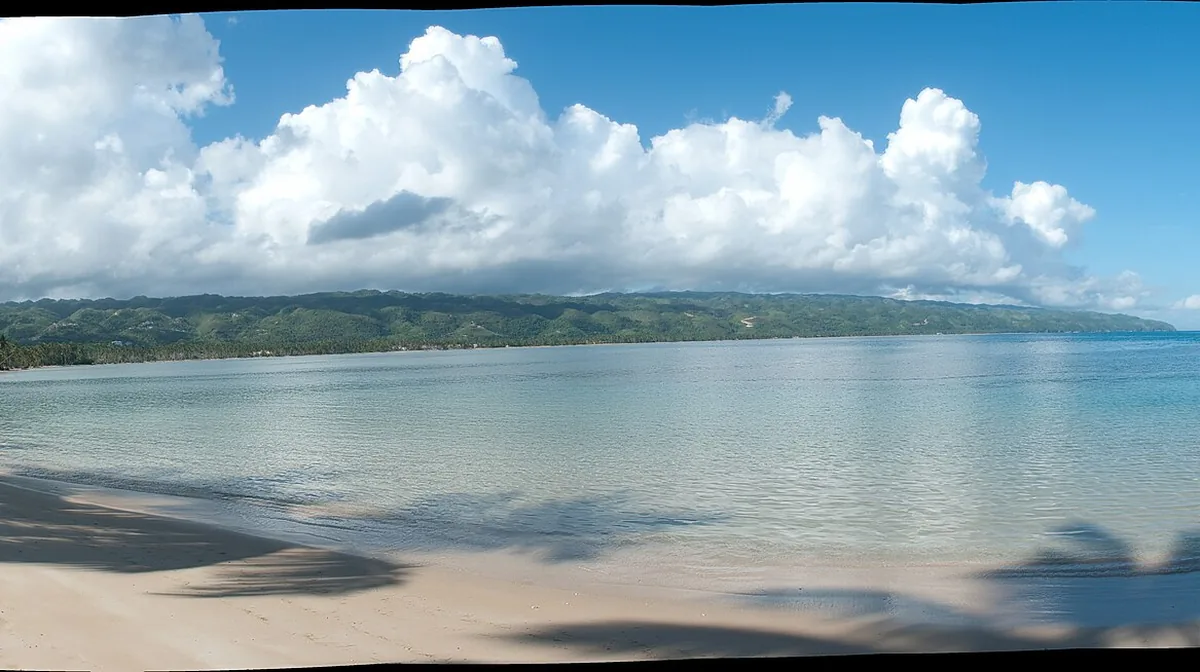
The market is organized around a string of exceptional beaches, each with its own personality and price. Playa Las Ballenas and the town beach anchor the walkable center near El Pueblo, the former fishermen's village turned restaurant-and-nightlife strip. Playa Bonita, just west, is the boutique-hotel and villa beach — quieter, chic, favored by design-conscious travelers. Playa Cosón stretches for miles of near-empty golden sand backed by coconut groves, the address for beachfront villas and the sense of having a Caribbean beach almost to yourself. Inland and on the hillsides, villas with sweeping sea views and gated condo developments serve the second-home and long-stay market. A listing that names its beach and sells that specific stretch outperforms a generic 'villa in Las Terrenas' every time.
The guest mix leans European and long-staying, which shapes everything. A large share of demand comes from Europe — French and Italian travelers especially — escaping the northern winter for weeks or months at a time, alongside second-home owners, remote workers, and a growing North American and Dominican leisure market discovering the peninsula. Whale season brings a distinct wave of visitors to nearby Samaná Bay. This is not a one-week-and-gone market; it is a place people settle into, which rewards owners who price for the long stay, present the property as somewhere to live rather than just visit, and market in more than one language across more than one country.
What makes the investment case genuinely attractive is the Dominican Republic's investor-friendly framework layered onto Las Terrenas's lower entry prices and rising accessibility. The country's CONFOTUR tourism-incentive law can exempt qualifying properties from transfer tax and years of annual property tax; foreign buyers hold the same ownership rights as nationals; and El Catey International Airport, roughly forty minutes away, plus improved highways from Santo Domingo, have opened the peninsula to travelers who once found it too remote. Strong yields on accessible prices in an authentic, under-marketed town is a rare combination — and the gap between a professionally marketed listing and an amateur one is especially wide in a market this reliant on story and atmosphere.
Nearby Markets: Punta Cana | Dominican Republic | Turks & Caicos
Photo: mbosio (Flickr) · CC BY 2.0 · via Wikimedia Commons
Cavmir markets Las Terrenas rentals as the authentic, European-flavored escapes they are — never as budget stand-ins for a Punta Cana resort. We position your villa or condo in front of the exact traveler who seeks out the Samaná Peninsula: the long-staying European, the design-conscious couple, the whale-season visitor, the remote worker — in the languages they search, across Google, Instagram and a direct-booking site that captures the long stays and repeat visits this market runs on.
Las Terrenas began as a fishing settlement, and its modern character was shaped by an unusual twist of Dominican history. In the mid-twentieth century, families were relocated to this remote corner of the Samaná Peninsula, and for decades it remained isolated — reachable only by rough roads over the mountains, known to almost no one. That isolation is exactly what preserved it. While the rest of the Dominican coast was being developed into all-inclusive resort zones, Las Terrenas stayed small, wild and undiscovered, its miles of beaches empty and its fishing-village rhythm intact.
The transformation came from Europe. Starting in the 1980s and accelerating through the 1990s and 2000s, French, Italian, German and Swiss expatriates discovered the peninsula's beauty and began settling, opening restaurants, bakeries, small hotels and bistros and giving Las Terrenas the distinctly European, bohemian flavor it carries today. El Pueblo de los Pescadores — the old fishermen's huts — evolved into a beachfront strip of restaurants and bars (later rebuilt after a fire) that became the town's social heart. This was development on a human scale, town-first and owner-operated, not resort-first and corporate.
The short-term rental market grew directly from that expat and second-home tradition. As Europeans and, later, North Americans bought villas on the hillsides and beaches and condos in small developments — many as winter homes they wanted to rent when away — a pool of individually-owned, characterful rental properties entered the market. Improved infrastructure, especially the opening of El Catey International Airport and better highways to Santo Domingo, turned what had been a hard-to-reach hideaway into an accessible one, and the rental inventory grew accordingly, from beachfront condos at Playa Cosón to design-led villas above Playa Bonita.
Today Las Terrenas is one of the Dominican Republic's most distinctive and fastest-appreciating markets, and the present is defined by growth against a still-intact character. Property values and demand have climbed as the peninsula's accessibility improved and word spread among Europeans and, increasingly, North Americans and remote workers; the CONFOTUR incentive framework has drawn investors; and yet the town has largely kept the low-key, authentic feel that distinguishes it from the resort coasts. For an owner the reality is a rising, under-marketed, story-driven market with a loyal European and long-stay base — one that rewards owners who capture and sell its authenticity and quietly punishes those who treat it as a generic beach rental.
Las Terrenas pricing turns on the beach and the length of stay more than on bedroom count. Beachfront at Playa Cosón and the boutique cachet of Playa Bonita command premiums; a walkable-to-El-Pueblo condo sells convenience and value; a hillside villa sells the sea view and the privacy. The right strategy is to price each product for what it actually is and for the guest it attracts, rather than benchmarking blindly against the Punta Cana resort corridor, which is a different market entirely. Because this is an authenticity-driven town, character and location often justify more than raw finishes do.
The defining pricing lever in Las Terrenas is the long stay, because the European winter-escape and second-home rhythm dominates demand. A very large share of guests book for weeks or months — French and Italian travelers wintering, remote workers settling in, snowbirds avoiding the northern cold — and an owner who prices only for one-week vacations is invisible to them. A well-structured monthly and multi-week rate that fills the winter with long, low-turnover bookings often out-earns chasing fragmented nightly stays, and presenting the property as a place to live for a season is central to capturing this base.
The third consideration is the multi-market, multi-currency, multi-language nature of demand. Las Terrenas draws heavily from France and Italy, increasingly from North America, and from Dominican and regional travelers, each on its own calendar and in its own language. A listing built and priced for only one of these misses whole seasons of demand — the European winter, the North American peaks, the Dominican holidays and the whale-season wave. Managing rate and visibility across these overlapping audiences, in the right languages, is exactly where a marketing partner earns the fee and where the single-language, single-price amateur listing bleeds occupancy.
Medium seasonality with a strong European long-stay overlay. The winter (December through April) is the high season, driven by European winter-escape travelers and North Americans, with Christmas/New Year the super-peak; whale-watching season in nearby Samaná Bay (roughly January to March) adds a distinct draw. Summer brings European school-holiday and Dominican domestic travel. The softer window is the late-summer and autumn hurricane-and-rain stretch, where long-stay value pricing and flexible terms win the travelers still willing to come.
The revenue most Las Terrenas owners miss sits in the extended European winter and the shoulders, because they price for one-week vacations instead of the season-long stays that actually dominate here. Marketing the property in French and Italian, offering a genuine multi-week and monthly rate, and courting the remote-work and snowbird guest turns the whole winter into long, steady, low-turnover income — and captures the shoulder months a nightly-only owner leaves empty. Being visible and correctly positioned before the European planning season is the whole game.
The Dominican Republic keeps short-term rental regulation comparatively light and actively courts foreign investment, and Las Terrenas operates under that national framework rather than a heavy local STR ordinance. There is no restriction on foreign ownership — non-nationals buy, own, rent and sell with the same rights as Dominicans, which is exactly why the peninsula's market is so international. Rental income is taxable, and the country's value-added tax (ITBIS, 18%) and income tax apply to tourism activity, so registering properly with the tax authority (the DGII) and working with a local accountant from the outset is essential.
The framework that most shapes the investment math is CONFOTUR, the Dominican tourism-incentive law. Qualifying tourism properties — often new developments and designated projects — can receive exemption from the property-transfer tax on purchase and from the annual property tax (IPI) for a period of years, a significant saving that many Las Terrenas condo and villa projects are structured to offer. Whether a specific property carries CONFOTUR benefits is a crucial due-diligence question, because it materially changes the numbers. Outside CONFOTUR, budget for the roughly 3% transfer tax on purchase and the annual IPI property tax above the exemption threshold.
The practical rules that matter day-to-day are the ownership and community layer. Buyers should confirm clean title and, where relevant, whether a condominium or development's rules govern short-term letting, minimum stays and amenity use. Because so many owners are foreign and absentee, using a reputable local attorney for purchase, a competent accountant for tax, and a trustworthy property manager for operations is not optional — it is the difference between a smooth investment and a costly one. As always the specifics evolve, so treat this section as orientation, not legal or tax advice, and confirm current requirements and any CONFOTUR status with Dominican counsel and the DGII before you buy or list.
The first Las Terrenas tip is to sell the authenticity and the European soul, because that is what distinguishes the town from every resort on the island. Guests choose Las Terrenas precisely because it is not Punta Cana — because it has real bakeries and trattorias, uncrowded beaches, a fishing-village-turned-bistro-strip, and a lived-in, human-scale charm. A listing that leads with that character — the walk to fresh croissants, the near-empty stretch of Cosón, the sunset at El Pueblo — and positions the property as part of a real town, dramatically outperforms one that recycles generic Caribbean-beach adjectives.
Second, build and market for the long stay and the European winter, because that rhythm defines the demand. Offer and highlight genuine multi-week and monthly rates; present the property as a place to settle in for a season, with the workspace, the kitchen and the neighborhood shown as a resident would see them; and be ready to convert the French or Italian traveler planning a two-month winter escape. Capturing one long winter booking is worth a dozen fragmented nightly stays in turnover cost and stability, and it is exactly the guest most Las Terrenas listings fail to speak to.
Third, market in more than one language and to more than one country. This is one of the most genuinely multi-lingual markets in the Caribbean — a listing available and marketed in French and Italian as well as English and Spanish reaches demand that English-only owners never see, and it signals to the European guest that the property understands them. Pair that with distribution tuned to the European planning calendar and the whale-season wave, and you unlock audiences the single-language listing leaves on the table. This multi-market visibility is precisely the work Cavmir is built to run.
Fourth, lean on the direct-and-repeat channel and treat operations as a marketing asset, because Las Terrenas's guest returns and refers. The European who found the perfect winter villa comes back the next year; the couple who loved Playa Bonita tells their friends; the remote worker rebooks the same condo. A genuine direct-booking website, a warm multi-lingual follow-up, and a wall of reviews praising the location, the responsiveness and the accuracy of the listing turn that loyalty into your own bookings rather than the platforms', and capture the full value of a rising, under-marketed market.
Las Terrenas's first challenge is that its value lives in intangibles — authenticity, atmosphere, a European soul — which are exactly the things a lazy listing fails to capture. A property here can be beautiful and still under-earn if its marketing reads like a generic beach rental, because the guest is specifically shopping for the feeling of the place. Conveying that character convincingly, in the right languages, to the right audiences, is harder than posting photos of a pool, and it is where most listings in this market fall short.
The second challenge is remoteness and its operational demands, even as accessibility improves. The Samaná Peninsula is more distant and less resourced than the resort coasts; getting guests there smoothly (from El Catey airport or the Santo Domingo highway), maintaining a property through the humidity and the occasional infrastructure hiccup, and delivering reliable service from a market with a thinner professional-management pool all take real effort. Hurricane season (June–November) adds the usual Caribbean insurance and cancellation considerations. The honest listing sets expectations and the well-run property closes the gaps.
The third is the management-distance problem intrinsic to a market built on absentee European and North American owners. A great many Las Terrenas villas and condos are second homes run remotely, and a property managed by whoever is available drifts fast — the atmosphere fades, upkeep slips, communication lags, and the listing stops matching reality. In a market where the guest is discerning and the bookings often long, that gap is costly. The owners who win close the distance with a trustworthy local team and a marketing partner who keeps the property's story, photography and direct, multi-lingual channel current, so the authentic Las Terrenas the guest booked is the one they actually find.

Caribbean hurricane cover is essential and specialty-priced — you'll want named-storm/wind and flood protection, placed through Dominican insurers and, for higher-value villas, international carriers. Confirm what any condominium or development master policy covers versus your own unit and contents, budget for meaningful deductibles, and build the premium into a yield model that also accounts for the peninsula's operating and management costs.
Rental income is subject to Dominican income tax and 18% ITBIS on tourism activity. The big variable is CONFOTUR: qualifying properties can be exempt from the ~3% transfer tax and years of annual IPI property tax — confirm any property's status before buying. Outside exemptions, budget for the transfer tax on purchase and annual IPI above the threshold. Foreign owners should coordinate home-country reporting (French, Italian, US, Canadian) with a cross-border accountant and a Dominican contador.
Financing is available to foreign buyers through Dominican banks, typically at lower loan-to-value and higher rates than European or North American equivalents, and many buyers use cash or home-country financing. Whatever the structure, model debt service against realistic, seasonally-shaped occupancy that reflects the long-stay, European-winter pattern rather than a flat nightly average.
Las Terrenas's near-term outlook is continued appreciation and rising demand as accessibility and awareness grow. Improved highways from Santo Domingo and the El Catey airport have already transformed the peninsula from a hard-to-reach hideaway into an accessible one, and each improvement widens the pool of European, North American and remote-work travelers who can reach it. The Dominican Republic's investor-friendly CONFOTUR framework and its status as one of the Caribbean's fastest-growing tourism economies keep drawing capital to the market.
The central variable is whether Las Terrenas can grow while keeping the authentic, low-key character that is its entire competitive advantage. The town's charm — the European soul, the uncrowded beaches, the human scale — is precisely what commands its premium and its loyalty, and overdevelopment that eroded it would undermine the market. The owners who thrive will be the ones who market and protect that authenticity, attracting the guest who values a real town over a resort, rather than chasing the highest-volume crowd.
The deeper shift is in how these guests find a stay. The Las Terrenas traveler is research-driven, multi-lingual and increasingly likely to start with a direct search, a curated recommendation or an AI assistant rather than an anonymous platform scroll. Properties that publish a clear, atmospheric, multi-lingual and well-structured presence — the real character of the town, the specific beach, honest long-stay detail, a fast site an assistant can read — will be the ones that surface and convert across European and North American audiences alike. In a market this reliant on story and loyalty, owning that presence rather than renting visibility from a platform is the most durable advantage there is, and it is exactly the work Cavmir does.
Las Terrenas is the market that proves authenticity outsells polish, and I love it for that. This is a place where the marketing writes itself if you simply tell the truth beautifully — the French bakery on the corner, the miles of empty golden sand at Cosón, the whales in the bay, the espresso-and-baguette mornings that make guests forget they are in the Caribbean at all. When a listing captures that real, lived-in, European-flavored soul instead of defaulting to generic beach adjectives, it finds exactly the traveler who has been quietly looking for somewhere the resorts have not reached.
What I love is how the market rewards speaking a guest's language, literally. Las Terrenas is one of the few genuinely multi-lingual rental markets in the region, and there is real magic in a French or Italian traveler finding a listing that speaks to them in their own language, understands their winter-escape rhythm, and treats the property as a home for the season rather than a room for a week. That understanding earns a loyalty and a repeat-and-referral base that is quiet gold — the returner who comes back every winter is worth more than any campaign.
The other reason Las Terrenas is a joy is that it is still, genuinely, a discovery. It is rising and appreciating and yet largely under-marketed, which means a property that is positioned properly can stand out in a way that is much harder in a saturated market. The raw material is extraordinary — the beaches, the food, the whales, the character — and most listings are not doing it justice. When a Las Terrenas listing finally sounds like the singular, authentic, European-tropical town it is instead of a budget alternative to somewhere else, the bookings that follow feel less like marketing and more like introductions to travelers who will fall for it exactly as its owners did.
The picks Cavmir puts in a Las Terrenas welcome book — the details that make a stay feel like resident knowledge instead of a printed concierge script, and that quietly earn the five-star reviews.
Send guests to a genuine French or Italian bakery for breakfast — the legacy of the town's settlers and a daily delight most Caribbean beach towns can't offer. It sets the whole Las Terrenas mood in one morning.
Point guests to the long, near-empty golden stretch of Playa Cosón, especially early or late, for the sensation of having a Caribbean beach almost to themselves. It's the photo and the memory that sells the town.
Playa Bonita is the chic, quieter beach with boutique hotels and good beach dining. A host who steers design-minded guests here — and knows the best beach bistro — looks like a local.
In winter, one of the world's great whale gatherings is a short trip away in Samaná Bay. Pre-arrange a responsible whale-watching operator and you've handed a winter guest a bucket-list morning.
A ride (often on horseback) through the countryside to the El Limón waterfall is the classic Samaná excursion. A host who arranges a reputable guide gives guests the lush, green interior most beach visitors miss.
A boat trip into Los Haitises National Park — mangroves, caves, birdlife, Taíno pictographs — is one of the DR's most spectacular days out. Recommend a good operator and it becomes a trip highlight.
El Pueblo de los Pescadores, the old fishing huts turned beachfront restaurant strip, is the town's social heart. A host who names the standout tables — and the sunset timing — is invaluable.
Near Las Galeras, Playa Rincón is regularly ranked among the world's most beautiful beaches. It's a proper day trip, and a host who explains how to get there right hands the guest an unforgettable day.
Tell guests where the fresh fish comes in, where the produce market is, and which European deli has the good cheese and wine — the town's international food culture is a genuine perk to point out.
Locals zip around on scooters (quatriciclos and motos), but a car or a trusted driver suits most visitors better, especially for the outlying beaches and excursions. A host who explains the trade-off honestly earns the trust.
Softer rates, an emptier town, and the space to actually settle in — ideal for the remote worker or the traveler wanting a real stay. The windows that reward the guest willing to travel just off the calendar, and the marketer patient enough to fill them.
Representative Cavmir engagements in Las Terrenas. Property identifiers redacted; figures composited from internal analytics and market benchmarks.
A walkable-center condo renting only on the one-week nightly market and sitting empty much of the European winter, its long-stay potential untapped.
Rebuilt the listing in French and English around the walk-to-bakeries town life, added genuine multi-week and monthly rates, showed a real workspace, and launched a direct-booking page aimed at European winter-escapers and remote workers.
Long winter bookings filled the calendar with low-turnover stays, occupancy and net income rose, and a repeat base of returning European guests began rebooking directly year after year.
A design-led hillside villa with sea views under-earning on a generic English-only listing that failed to convey its boutique character or reach its natural European audience.
Repositioned it as an authentic, design-conscious Samaná escape — atmospheric photography, a multi-lingual listing, whale-season and El Limón itineraries, and distribution tuned to the French and Italian planning calendar.
ADR rose and the villa began attracting the boutique European traveler it was built for; multi-lingual reach and a direct channel steadied bookings across both winter and summer.
A beachfront unit over-reliant on the platforms and competing on price, with no direct relationship with the loyal guests who loved the near-empty beach.
Built a proper brand and direct-booking channel — beach-forward photography, a multi-lingual site, and warm follow-up that turned first stays into relationships across European and North American markets.
Direct and repeat bookings grew into a meaningful share of the calendar, cutting platform fees and capturing the full premium of a genuine beachfront position on one of the DR's best beaches.
Yes. Cavmir works with villa and condo owners across Las Terrenas — Playa Bonita, Playa Cosón, Las Ballenas and the town center near El Pueblo — on branding, listing optimization, photography direction, direct-booking websites, multi-lingual SEO and paid campaigns. Las Terrenas is an authenticity- and long-stay-driven market, and we position your property for the exact traveler who seeks out the Samaná Peninsula.
The snapshot on this page shows average nightly rates around $165 with occupancy near 63%, but Las Terrenas runs heavily on longer European-winter and monthly stays, which changes the real economics. Treat these as directional averages, not guarantees; in a story- and language-driven market, the gap between a well-marketed, multi-lingual listing and a generic one is wide.
Las Terrenas peaks in the winter (December–April), driven by European winter-escape travelers and North Americans, with Christmas/New Year the super-peak and whale season (January–March) adding a distinct draw. European summer holidays and Dominican travel fill more of the calendar. The softer window is the autumn hurricane-and-rain stretch. Owners who market long stays in French and Italian turn the whole winter into steady income.
The Dominican Republic keeps STR regulation comparatively light, but rental income is taxable: register with the DGII, and 18% ITBIS and income tax apply to tourism activity. Confirm clean title and any condominium rules on renting. The big due-diligence item is CONFOTUR status, which can exempt qualifying properties from transfer and property taxes. Confirm current requirements with Dominican counsel and the DGII — Cavmir handles marketing, not legal or tax advice.
CONFOTUR is the Dominican tourism-incentive law. Qualifying properties — often new developments and designated projects — can be exempt from the ~3% property-transfer tax on purchase and from annual property tax (IPI) for a period of years, a significant saving many Las Terrenas projects are structured to offer. Whether a specific property carries CONFOTUR benefits is a crucial due-diligence question that materially changes the numbers. Verify it with a Dominican attorney before buying.
Because its demand is genuinely multi-national — heavily French and Italian, increasingly North American, plus Dominican and regional. A listing available and marketed in French and Italian as well as English and Spanish reaches winter-escape and long-stay demand that English-only owners never see, and signals to the European guest that the property understands them. Cavmir builds that multi-lingual reach — SEO, direct booking and listings — across the audiences that actually book here.
Properties that sell authenticity and suit the long stay do best: beachfront at Cosón or Bonita, walkable condos near El Pueblo, and sea-view villas positioned as a place to settle for a season rather than a week. Character and location matter more than raw luxury finishes here. Cavmir helps you identify and market the specific advantage of your property — the beach, the town life, the view — to the guest who values it.
It depends on scope. Current plans and one-time project pricing are on the pricing page — most owners start with a listing overhaul or the 12-step system. A conversation about your property costs nothing: contact Cavmir.
Send us the listing and we'll tell you what we'd change. Not a pitch deck — a straight read on your photos, your title, your rates against the Las Terrenas comp set, and whether a direct-booking site would pay for itself.
You'll hear back from a person, usually inside one business day. If we don't think we can move your numbers, we'll say so. Cavmir is a short-term rental marketing agency — we position and market properties, we don't manage them.
Talk to Cavmir today. We'll show you exactly what your Las Terrenas property is leaving on the table — and how fast we can change that.
Book a Free Strategy Call