

.jpg)






The blockface
One side of one block
The 10% cap is measured per blockface, so two houses a hundred yards apart can be in different positions. Check yours first.

Expert short-term rental marketing to grow your bookings and nightly rate in Annapolis, Maryland, USA.
* Market averages. Properties marketed by Cavmir typically exceed these figures by 25–45%. Data sourced from AirDNA, STR market reports, and Cavmir internal analytics.
Annapolis is a small city of about forty thousand people on the Chesapeake Bay that has been the capital of Maryland since 1695 and was, for roughly nine months, the capital of the United States. The State House is the oldest state capitol still in continuous legislative use in the country, and its dome, built in the 1780s and 1790s, is the largest wooden dome in America put together without nails. The historic district around it holds an unusual concentration of surviving eighteenth-century buildings, and the street plan, with its baroque circles and radiating streets, is still the one laid out in 1696. The United States Naval Academy occupies the point where the Severn meets the bay, and its presence shapes the city's calendar in ways no other institution could. Then there is the water. Annapolis calls itself the sailing capital of the United States and the claim is defensible: the harbour is full of masts, the two boat shows in October are the largest in-water shows in the country, and a substantial part of the local economy is boats. Washington and Baltimore are both under an hour away. For an owner, this is a high-demand historic city with a genuinely unusual rulebook: the cap on short-term rentals here is measured one side of one block at a time.
Annapolis adopted Ordinance 17-25, which bars the city from issuing new short-term rental licences on a blockface once 10% of the units on that blockface are short-term rentals. A blockface is one side of one city block, which makes this one of the most finely grained caps in the country: your ability to obtain a licence depends not on a citywide number but on what the handful of properties across the street from you happen to be doing. Owner-occupied short-term rentals are exempt and do not count toward the cap, which is a substantial carve-out and the clearest route into this market for anyone willing to live here. Blockfaces already over the 10% line get a transition rather than an eviction: existing licences may be renewed until November 2027, after which the city moves to a lottery designed to bring the number back under the cap, with priority given to Annapolis and Anne Arundel County residents who already hold a licence over owners who live elsewhere. And there is one exception that tells you exactly how seriously this city takes two events: the cap does not apply during the Naval Academy's Commissioning Week or during the city's boat shows. Rental unit licences generally sit at Code Chapter 17.44. Verify the current licence fee, your blockface's position and the lottery mechanics with the City before you buy or apply.
Nearby Markets: Baltimore | St Michaels | Washington DC

A few of the visual fingerprints we lean into when we shoot, brand and market a Annapolis Maryland City Dock property — courtesy of the open Wikimedia Commons archive.
Cavmir markets Annapolis properties on the two calendars that run this city, which are the water and the Academy, and on the fact that a licensed property here is becoming a genuinely scarce thing. When a cap is measured by the blockface and a lottery is scheduled for 2027, the licence attached to your address stops being paperwork and starts being the asset. We make that legible, in the listing and on your own booking site, because a guest comparing your property with an unlicensed one elsewhere has no idea they are not comparing like with like. Then we sell the calendar properly. Commissioning Week in May, with the Blue Angels overhead and families arriving from across the country, and the sailboat and powerboat shows in October are the two moments when this city is completely full and the cap is deliberately switched off. Those dates should be priced a year ahead, not in August. Around them sits a long, pleasant sailing season, a steady government and legal trade tied to the State House, and year-round visitors to one of the best-preserved historic districts in America. We photograph the water and the walk to it, write copy that handles the parking honestly because the historic district is genuinely difficult, and build the direct booking channel. We help position and market your property. We never manage it or touch your keys.
Annapolis has been receiving the nation's guests since it was, briefly, the capital of the United States, and its Georgian streets are the product it has sold ever since. Cavmir writes the chapter today's visitors read.


Annapolis was settled in 1649 by Puritans moving down from Virginia and became Maryland's capital in 1695, when the seat of government was moved from St Mary's City. Governor Francis Nicholson laid out a new plan for it based on baroque principles then fashionable in Europe: two circles on the high ground, one for the State House and one for the church, with streets radiating out from them. That plan is still the street plan today, which is why driving in the historic district is a puzzle and walking it is a pleasure. The eighteenth century was Annapolis's golden age. Tobacco money made it wealthy and briefly fashionable, and the Georgian houses built then survive in unusual numbers; the city is generally credited with more surviving eighteenth-century buildings than almost any other in the country. The State House, begun in 1772, is the oldest state capitol still in continuous legislative use in the United States, and its enormous wooden dome, built between 1788 and 1794 by Joseph Clark, was assembled without nails, held together with wooden pegs and iron straps. For about nine months across 1783 and 1784 the Confederation Congress met in that building and Annapolis was, in effect, the capital of the United States. Two things happened there that mattered: George Washington resigned his commission as commander-in-chief in the Old Senate Chamber in December 1783, and the Treaty of Paris ending the Revolutionary War was ratified in the same room the following month. The United States Naval Academy was established on the point in 1845 and has shaped the city ever since. Sailing became the other defining industry in the twentieth century, and Annapolis now hosts what are generally the largest in-water boat shows in the country each October. For an owner, the practical inheritance is a compact, walkable, historic city with an intense event calendar and severe constraints on parking and on building.
Before the platforms, Thomas Hyde advertised his new inn on Church Circle as "one of the first houses in the state for a house of entertainment," and the State House drew the Confederation Congress, the general who came to resign his sword, and every traveler who followed. The channel changed; the work is identical: presentation, positioning, and a capital whose streets are the attraction. It is the same business Cavmir is in today.
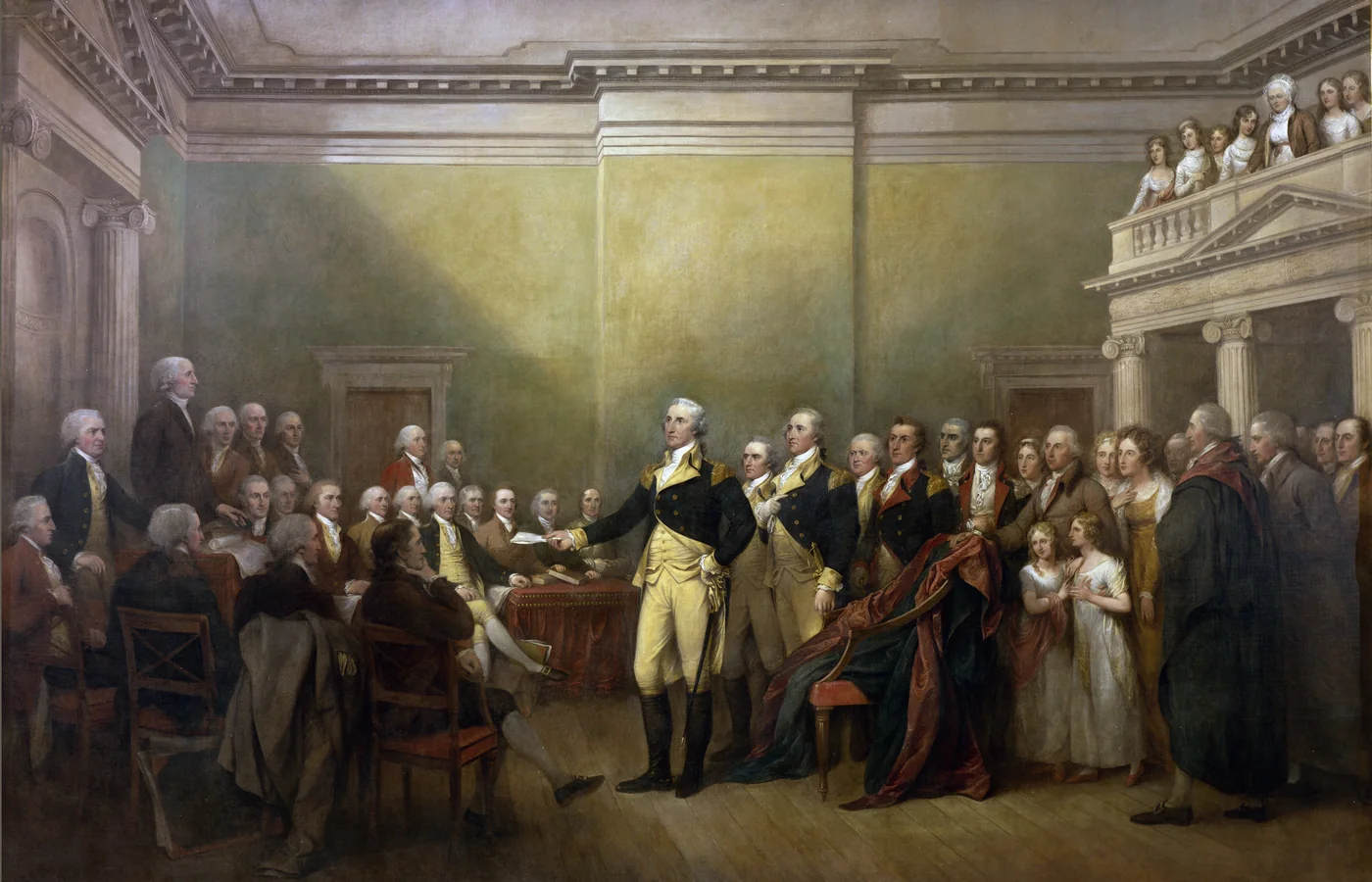
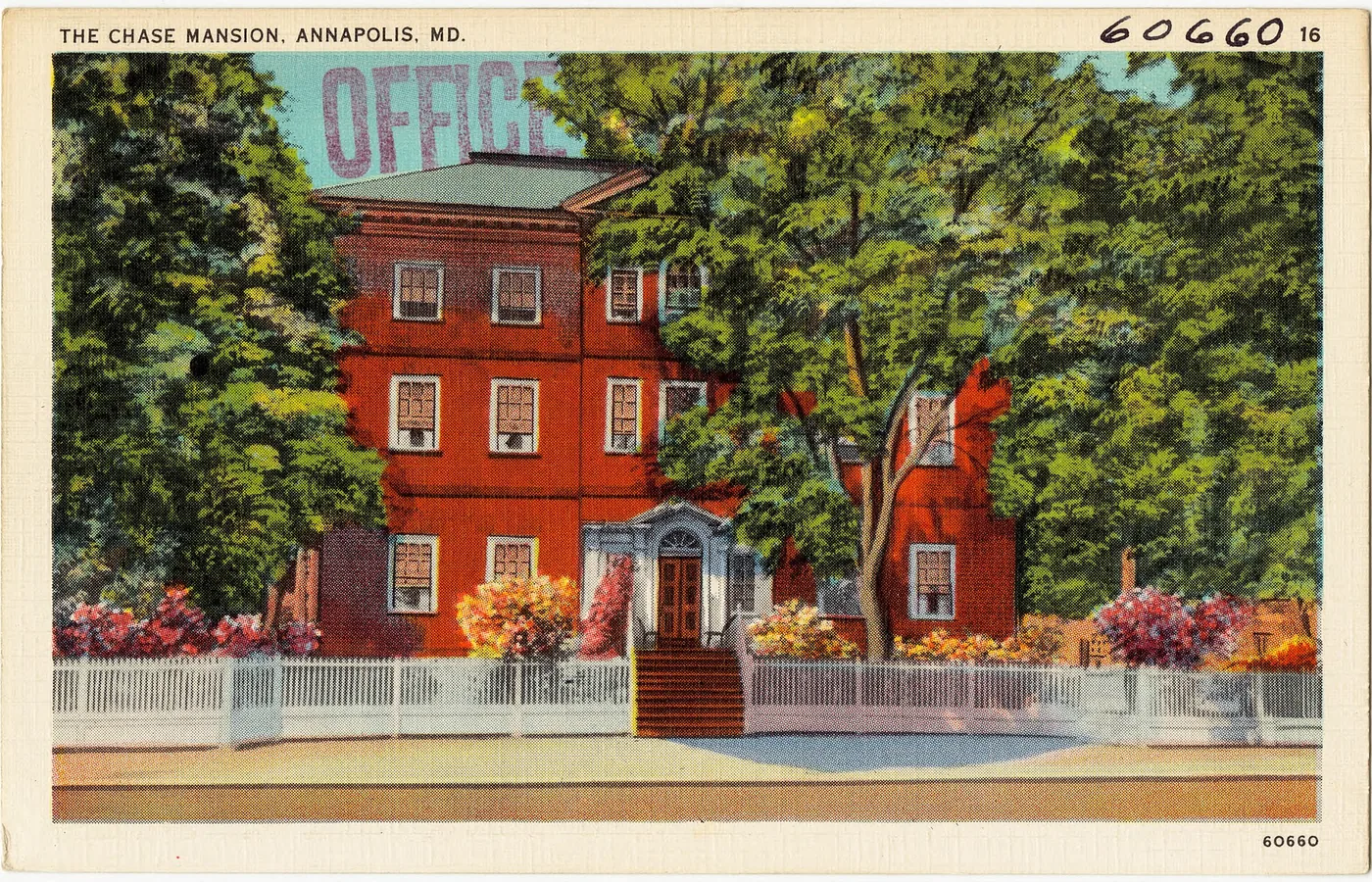
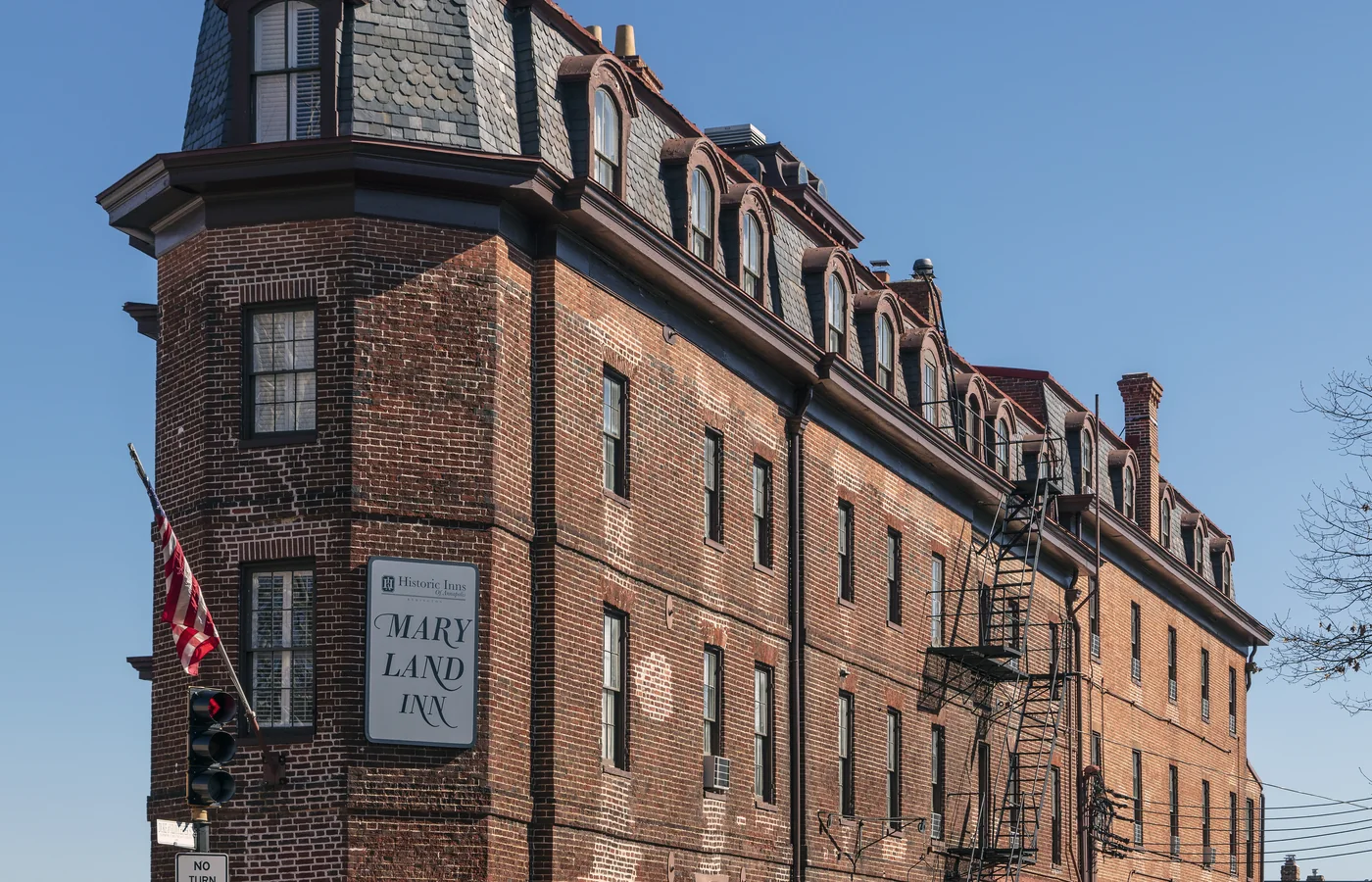
Historical images: public domain and Creative Commons via Wikimedia Commons — John Trumbull, Charles Willson Peale, the Steve Shook postcard collection, Acroterion, and others.
Annapolis has two dates that are worth more than any others and both of them are visible a year ahead. Commissioning Week at the Naval Academy in May brings families from across the country, fills every room in the city, runs at rates several times the annual average, and books extremely early. The sailboat and powerboat shows in October do the same thing for a different audience, and they are the largest in-water shows in the country. Price both a year in advance with firm minimum stays; there is no reason for caution and every reason to be early, and note that the city's blockface cap is deliberately switched off during both, which tells you how thoroughly they fill the place. Around those peaks sits a long, pleasant sailing season from spring through October, with weekends consistently stronger than weekdays. Underneath everything is a steady institutional floor: the General Assembly sits in Annapolis from January into April, which produces reliable midweek demand from legislators, lobbyists and staff during a period that would otherwise be the weakest of the year, and almost nobody markets to it. Build weekly and monthly rates aimed squarely at the session. Washington and Baltimore are both under an hour, which makes this a viable and cheaper base for visitors to either, and that is a further under-addressed audience. Remember Maryland's 6% state sales tax and the county occupancy tax sit on top of your rate.
Two spikes and a solid base. May is Commissioning Week and the city is completely full. October brings the boat shows and the best sailing weather of the year, and it is the strongest month overall. The sailing season broadly runs April through October with strong weekends throughout, and summer brings general Chesapeake tourism plus families. Winter is the quiet stretch, but it is materially softened by the General Assembly session from January into April, which fills midweek nights with a professional audience. February is the weakest month and the right window for maintenance and reshoots.
Annapolis has one of the most finely grained short-term rental caps in the country, and understanding its geometry is the whole exercise. Under Ordinance 17-25 the city may not issue a new short-term rental licence on a blockface once 10% of the units on that blockface are already short-term rentals. A blockface is one side of one city block. That means the question of whether you can obtain a licence is answered not by a citywide register but by the handful of properties immediately around you, and it can be answered differently for two houses a hundred yards apart. Before you make an offer on anything in this city, establish the current position of that specific blockface with the City. There is a significant carve-out: owner-occupied short-term rentals are exempt and do not count toward the cap. For anyone prepared to live in the property, that is the clearest and most durable route into this market, and it is likely to remain so, because a cap designed to limit whole-house investment rentals is unlikely to be extended to resident hosts. Blockfaces already above the 10% threshold are handled by transition rather than by immediate removal. Existing licences on those blockfaces may be renewed until November 2027. After that date the city moves to a lottery intended to bring the number of licences on over-cap blockfaces back under the limit, and the lottery is weighted: priority goes to Annapolis and Anne Arundel County residents who already hold a licence, over owners who live outside the area. If you are a non-local owner on an over-cap blockface, that is a real and dated risk to your business and it should be in your financial model now rather than discovered in 2027. Finally, the cap does not apply during the Naval Academy's Commissioning Week or during the city's boat shows. Rental unit licences generally sit at Code Chapter 17.44. Verify the licence fee, your blockface position and the lottery mechanics with the City directly.
Establish the blockface position before anything else, and treat it as the first question in any purchase rather than a due diligence footnote. Two comparable houses on the same street can be in completely different regulatory positions, and the seller may not know. Second, if you are or could be owner-occupied, understand what that exemption is worth. It takes you outside the cap entirely and outside the 2027 lottery, and in a city with a shrinking licensed pool that is a materially more secure position than a non-resident licence on a crowded blockface. It should also change how you market, because a resident host in a historic district has genuine local knowledge to offer. Third, price Commissioning Week and the boat shows a year out. Families booking Commissioning Week are planning around a fixed, once-in-a-lifetime date and they book as soon as they can; an owner who waits until spring has already lost the best of it. Fourth, address parking directly and early. The historic district was laid out in 1696, the streets are narrow, permit zones are real, and this is the single most common source of guest friction here. If parking is difficult, say so plainly and explain the alternative. Fifth, sell the General Assembly session, because January to April is otherwise your weakest quarter and there is a professional audience in town midweek for three months that almost no short-term rental in this city is written for.
The blockface cap makes acquisition genuinely uncertain and requires address-level diligence that many buyers skip. The November 2027 lottery is a dated, known risk for non-resident licence holders on over-cap blockfaces, and it is weighted against them by design. Parking in the historic district is difficult and generates constant guest friction. Much of the attractive inventory is eighteenth or nineteenth century, sitting within historic district controls that restrict what can be altered and raise maintenance costs. And the demand calendar, while strong, is concentrated around two events that everyone in the city is competing for simultaneously.
Insure an Annapolis property on a policy written for paid guest occupancy, either a dedicated short-term rental product or a landlord policy with an explicit short-term rental endorsement, arranged in writing. Standard homeowner's cover will generally decline a guest-related claim. Ask about liability limits, loss of income and guest belongings. Two local factors dominate. The first is water. Annapolis floods, and the historic district around City Dock sees regular tidal flooding that has been increasing; flood is excluded from standard policies and is a separate purchase, so check your parcel's flood zone designation and take it seriously. Storm surge from the Chesapeake during tropical systems is a genuine exposure and wind cover may carry a separate percentage deductible. The second is the age and status of the building. Much of the desirable inventory is eighteenth or nineteenth century and sits within historic district controls, which means repairs may have to be done in specified materials and by approved methods, and that can make a claim substantially more expensive to settle; ask whether the policy carries ordinance or law coverage, which addresses exactly this. Platform host protection supplements a policy rather than replacing it.
Maryland applies its state sales and use tax at 6% to taxable lodging transactions, and Anne Arundel County levies a hotel or occupancy tax on top of it. Published figures for the county rate differ between sources, with both 7% and 8% reported, which is precisely the kind of discrepancy you should not resolve by guessing; confirm the current rate directly with Anne Arundel County before you publish a total or quote a figure to a guest. The county tax generally applies to short stays, with a threshold beyond which a stay is no longer treated as transient. Registration for these taxes is separate from your city short-term rental licence, and holding the licence does not register you for tax. Platforms may collect and remit some elements and not others, and the position on county occupancy tax in particular varies, so ask your platform explicitly which lines it files and file the remainder yourself; direct bookings are generally your responsibility in full, which matters in a market like this where repeat guests around Commissioning Week and the boat shows are common. Ask your accountant how the income should be treated federally and for Maryland purposes, particularly if you are operating under the owner-occupied exemption.
Financing in Annapolis turns on the licence, and specifically on whether your position survives 2027. A lender underwriting short-term rental income needs to understand that the city caps licences by blockface, that owner-occupied properties are exempt from the cap, and that non-resident licences on over-cap blockfaces face a lottery from November 2027 with priority given to local residents who already hold licences. If you are buying as a non-resident on a crowded blockface, that is a dated risk to the income and a well-advised lender will treat it accordingly; be ready to demonstrate the blockface position in writing. Owner-occupied purchases are materially easier to finance for exactly this reason, and they also open the door to owner-occupier mortgage products with better terms, though you should check the loan's use covenants permit short-term letting of your home. On the property side, expect close scrutiny of anything in the historic district: appraisers and lenders look hard at older structures, and historic district controls on alterations can affect both valuation and your renovation plans. Flood zone status will also be checked, and flood insurance may be a condition of closing.
November 2027 is the date to build your plan around, because it is when the transition period ends for licences on blockfaces already over the 10% cap and the lottery begins. The lottery is explicitly weighted toward Annapolis and Anne Arundel County residents who already hold a licence, which means the policy direction is clear: this city intends short-term rentals to be operated predominantly by people who live here. Anyone holding or considering a non-resident licence on an over-cap blockface should treat that as a known, dated risk rather than a distant possibility, and should be thinking now about whether the owner-occupied route is available to them. Watch the City Council for amendments to Ordinance 17-25 and for how the lottery mechanics are actually specified, since the details will matter enormously to individual owners and have not all been settled in public. On the demand side, nothing is going anywhere. The Naval Academy will hold Commissioning Week every May, the boat shows will run every October, the General Assembly will sit every winter, and the Chesapeake will keep drawing sailors. Supply is being deliberately constrained while demand stays flat or grows, which is a good position for a compliant owner with a direct booking channel and a returning guest base.
Annapolis is a city of forty thousand people that was the capital of the United States for nine months, and it has never entirely got over it, nor should it. The State House is the oldest state capitol still being used by a legislature in the country, and its dome, put up in the 1780s and 1790s, is the largest wooden dome in America assembled without a single nail, held together with pegs and iron straps. In the Old Senate Chamber, George Washington resigned his commission in December 1783, which is arguably the most important thing anyone has ever done by choosing not to do something else. The street plan is the one drawn in 1696, with circles on the high ground and streets radiating out, which makes it a nightmare to drive and a delight to walk. The historic district has an astonishing number of surviving eighteenth-century buildings. And then there is the water: masts everywhere, a harbour the locals call Ego Alley because of the slow parade of boats coming in to be admired, and the largest in-water boat shows in the country every October. In May the Naval Academy holds Commissioning Week, the Blue Angels come over the Severn, and the whole city stops. We like Annapolis because it is small, old, serious and entirely surrounded by boats.
A great property in Annapolis Maryland City Dock doesn't just want a listing — it wants a point of view, an audience, and a brand the city itself would recognise.
Eight things to know about Annapolis before writing listing copy, in a market where your right to a licence depends on the other side of your own street.
The 10% cap is measured per blockface, so two houses a hundred yards apart can be in different positions. Check yours first.
Owner-occupied short-term rentals do not count toward the 10%. It is the clearest route in and it survives the 2027 lottery.
Naval Academy families from across the country, the Blue Angels overhead. Price it a year ahead.
The largest in-water shows in the country. The cap is switched off for them, which tells you how full the city gets.
Legislators, staff and lobbyists in town midweek for three months. Almost nobody markets to them.
Narrow streets, permit zones and genuine difficulty. Be explicit in the listing rather than at check-in.
Tidal and nuisance flooding is regular and increasing. Check the flood zone and get proper cover.
Over-cap blockfaces renew until then, after which a lottery favours local residents who already hold licences.
The three examples below are composite and illustrative. They reflect patterns common in capped historic markets, and they are not accounts of specific businesses or specific clients.
A purchaser was under contract on a historic district property intending to operate it as a non-owner-occupied short-term rental, working from the assumption that a citywide licence was available on application.
We set out how the 10% blockface cap actually works, established what needed confirming with the City about that specific blockface, and explained the November 2027 transition and the lottery weighting toward local residents who already hold licences.
The buyer assessed the address against the cap before committing rather than after, and understood the 2027 exposure attaching to a non-resident licence before it became their problem.
A well-located house priced firmly for Commissioning Week and the boat shows and then treated January through April as a write-off, discounting nightly rates without much effect.
We built a proposition for the General Assembly session, which brings legislators, staff and lobbyists into the city midweek from January into April, equipped and photographed the property for longer professional stays, and introduced genuine weekly and monthly rates.
The weakest quarter of the year began producing consistent midweek revenue from longer bookings, and the property stopped depending entirely on two event weeks.
An owner set Commissioning Week rates each March, by which time most Naval Academy families had already booked their accommodation for a date they had known about for a year.
We moved rate-setting for both Commissioning Week and the October boat shows to a full year ahead, set minimum stays, and wrote listing copy addressed specifically to families travelling for a graduation rather than to general visitors.
Both peak periods began selling far earlier and at materially higher rates, and the property stopped competing for the leftover late bookings in its two most valuable weeks.
Demand in Annapolis peaks around May and October and runs quietest around January, February and December. Here is how the year actually books — and what to do about each stretch of the calendar.
Two dates are worth more than any others and both are visible a year ahead. Commissioning Week at the Naval Academy in May brings families from across the country and fills every room in the city, and the sailboat and powerboat shows in October are the largest in-water shows in the country. Price both a year in advance with firm minimum stays.
The sailing season broadly runs April through October with consistently strong weekends, and summer adds general Chesapeake tourism and family travel. The most under-used demand in the market sits underneath all of it: the Maryland General Assembly sits from January into April and fills midweek nights with a professional audience almost nobody writes for.
February is the weakest month and the right window for maintenance and reshoots. Winter outside the legislative session is genuinely quiet, and the honest plays are longer stays and the professional trade rather than discounting into a market that is not searching. Washington and Baltimore are both under an hour, which makes this a viable cheaper base year-round.
Commissioning Week books furthest ahead, frequently a year, because families plan around a fixed once-in-a-lifetime date. The boat shows follow. General weekends fill a few weeks out and winter is close to last-minute outside the session.
Short and weekend-weighted through most of the year, with Commissioning Week and the boat shows commanding longer minimum stays. The legislative session is the exception and books by the week or the month.
Walkability to the historic district and the City Dock is the strongest asset in this market and worth more than any interior upgrade, largely because parking is genuinely difficult. Owner-occupied properties sit outside the blockface cap, which makes them a structurally more secure proposition. Anything with a water view should lead with it.
Start with photography that shows what a guest actually gets here, then write the listing around a real itinerary rather than a feature list. Build a direct-booking site so returning guests can come back without going through a platform, and keep an email list segmented by season so you can reach last year's visitors before the calendar opens. Local search matters more than people expect in a market this size, because guests search the destination and the attraction rather than the word rental. A marketing agency layer handles the photography, the listing copy, the direct-booking site and the local SEO as one system instead of four disconnected jobs.
Two dates dominate: Commissioning Week at the Naval Academy in May, and the sailboat and powerboat shows in October, which make October the strongest month of the year. The sailing season runs April through October with strong weekends throughout. Winter is quiet but softened considerably by the legislative session from January into April.
Commissioning Week books furthest ahead, frequently a year, because families are planning around a fixed date they have known about for a long time. The boat shows follow closely. General weekends fill a few weeks out and winter is largely last-minute outside the session.
A dense mid-Atlantic drive market with Washington and Baltimore both under an hour away, plus Philadelphia and Richmond, and a genuinely national flown-in audience arriving for Commissioning Week from every state. Those two groups want very different things from a listing.
Parking matters more here than almost anywhere, because the street plan dates from 1696 and the historic district is genuinely difficult to drive in. After that, walkability to the City Dock, a full kitchen and laundry carry the most weight.
Run your Airbnb, Vrbo, or website through Cavmir's free grader. It checks the things that decide whether guests book in Annapolis — photos, listing copy, page speed, local search — and shows you where bookings leak. Takes about a minute, and there's no sales call attached.
If the report says your booking engine is the weak link, that's fixable: a direct-booking website of your own means repeat guests stop paying platform fees to come back to you. That's the work Cavmir does — see Airbnb website design in Annapolis.
Send us the listing and we'll tell you what we'd change. Not a pitch deck — a straight read on your photos, your title, your rates against the Annapolis comp set, and whether a direct-booking site would pay for itself.
You'll hear back from a person, usually inside one business day. If we don't think we can move your numbers, we'll say so. Cavmir is a short-term rental marketing agency — we position and market properties, we don't manage them.
Talk to Cavmir today. We'll show you exactly what your Annapolis property is leaving on the table — and how fast we can change that.
Book a Free Strategy CallPhotography via Wikimedia Commons (images resized and cropped): Maryland State House from College Ave by Martin Falbisoner (CC BY-SA 3.0) · Annapolis, Maryland - view of Maryland State House from Francis Street 2013 by m01229 (CC BY 2.0) · Severn River Maryland (32751153416) by formulanone (CC BY-SA 2.0) · Annapolis Old Treasury Building from 1735 by Don Ramey Logan by Don Ramey Logan (CC BY 4.0) · Some Annapolis commercial strip by high limitzz (CC BY 2.0) · Maryland Inn MD1 by Acroterion (CC BY-SA 4.0) · Annapolis Maryland sign by Don Ramey Logan by Don Ramey Logan (CC BY 4.0).
