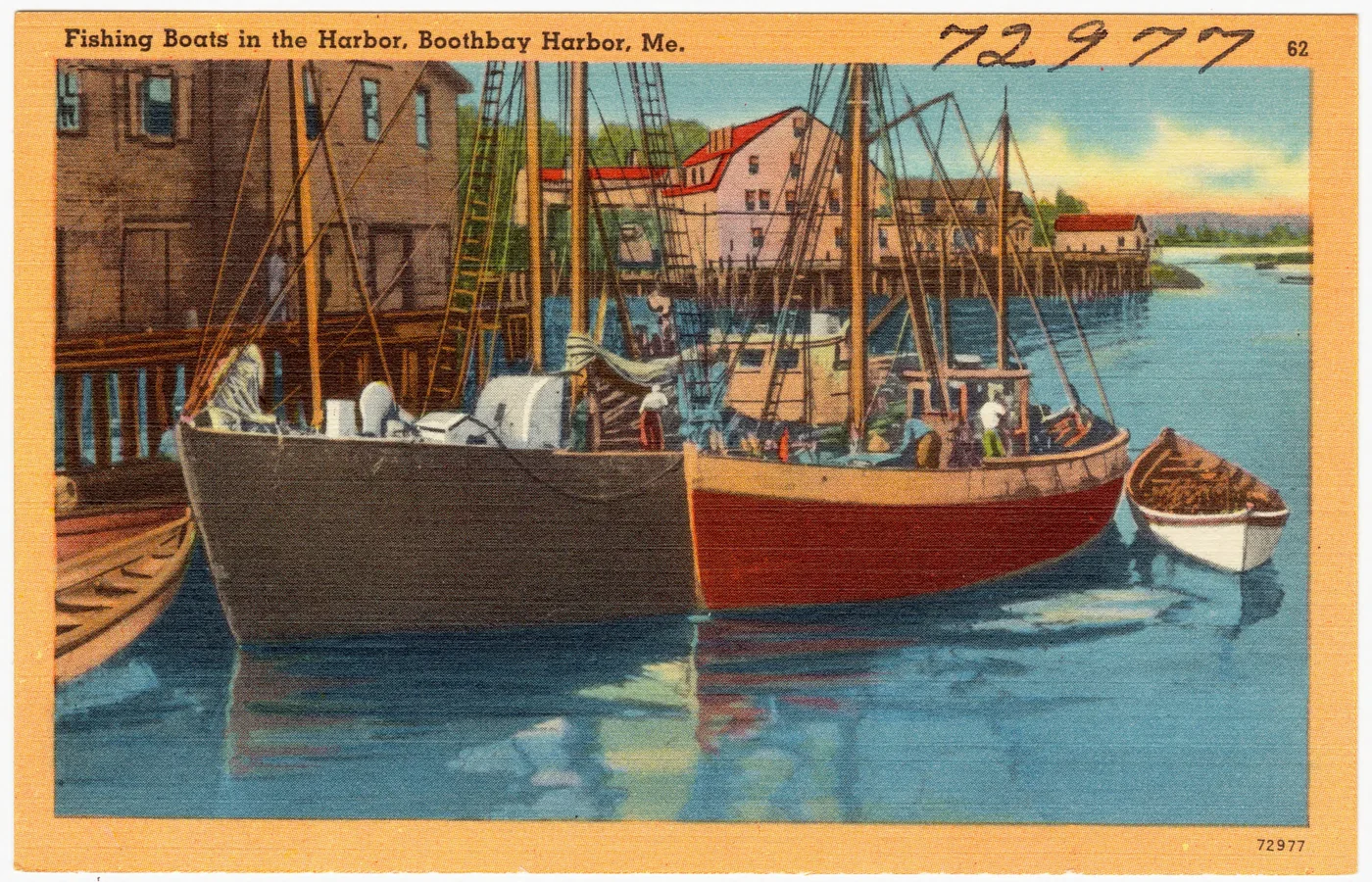
The footbridge, and walking the village
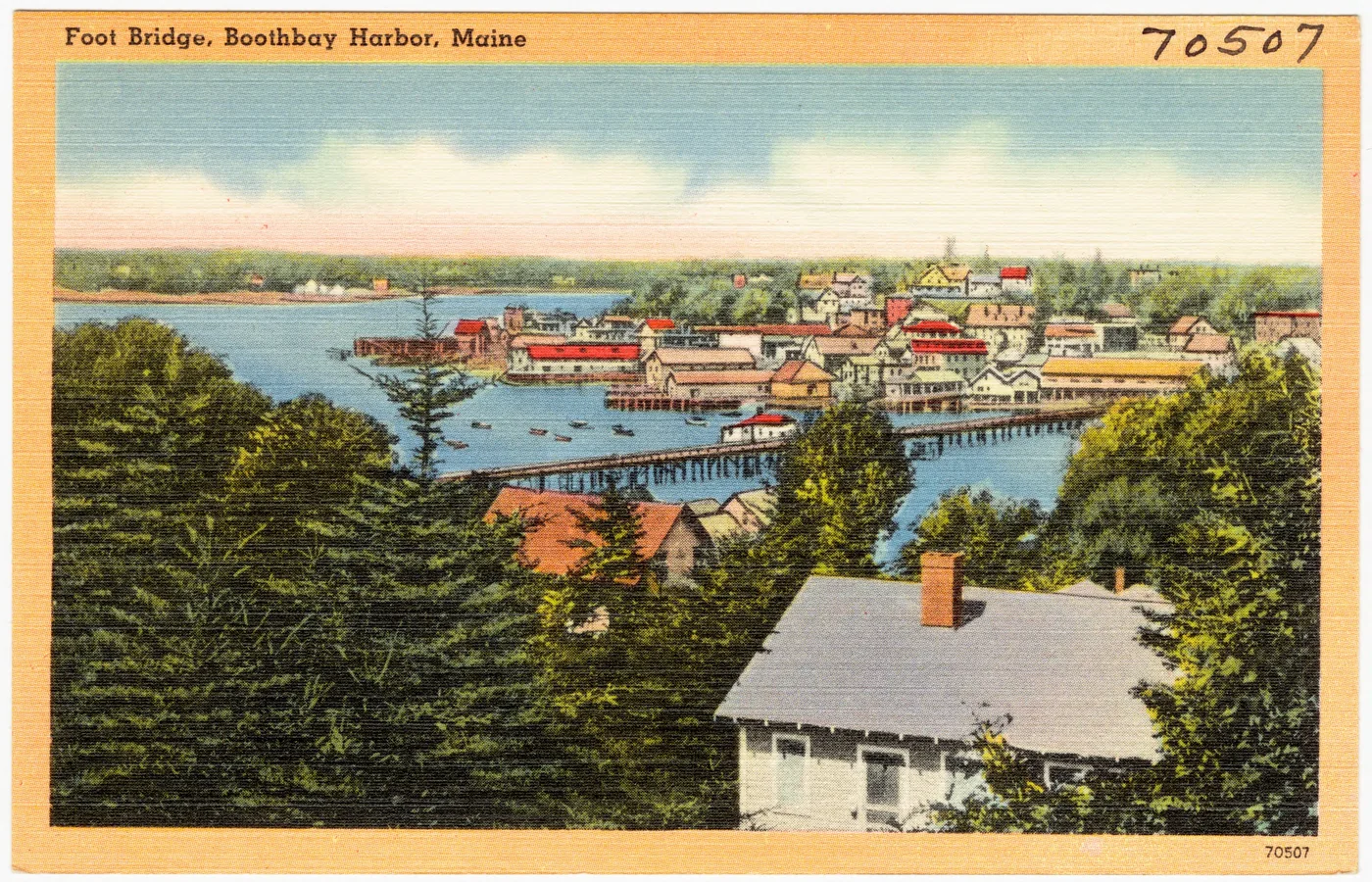
The pedestrian bridge across the inner harbour has been there in some form since 1901 and it is the quickest way between the two sides of town. Tell guests to walk it rather than drive around.
Expert short-term rental marketing to grow your bookings and nightly rate in Boothbay Harbor, Maine, USA.
* Market averages. Properties marketed by Cavmir typically exceed these figures by 25–45%. Data sourced from AirDNA, STR market reports, and Cavmir internal analytics.
Boothbay Harbor is the mid-coast Maine harbour that fills the gap most itineraries leave between Portland and Camden. The peninsula runs south off Route 1 at Wiscasset, past Boothbay village, and ends at a working harbour ringed by wharves, a footbridge that has crossed the water since 1901, and a fleet that is part lobster boat and part excursion vessel. Offshore are the islands — Squirrel, Southport, Monhegan an hour out by ferry with its artists' colony and its cliffs. Inland, the Coastal Maine Botanical Gardens has become one of the most visited attractions in the state, and its winter light installation has done something genuinely unusual for this coast by creating real demand in November and December. The town is small, the season is short and intense, and the harbour is the whole product. What makes Boothbay Harbor distinctive for an owner right now is timing: the town has been working through how to regulate short-term rentals rather than having already done it, which means this is one of the few markets on our list where the rules are still being written.
Boothbay Harbor is, at the time of writing, a market without an adopted short-term rental licensing regime. The town has been working the question — a task force, public forums held in October 2024 on amendments to the land use code, and selectmen advocating for a programme that would involve registration, fees to cover administration, and verification of insurance. None of that is the same as an ordinance in force, and owners should treat the current position as provisional rather than permanent. The practical implication is worth stating plainly: markets that regulate late tend to regulate with an eye to who was already operating, and being visibly compliant, well-run, properly insured and easy to identify is a better position to be in when a registration scheme arrives than being invisible. Maine applies a 9% lodging tax to short-term rental income statewide, and that obligation exists regardless of what the town decides. The commercial shape of the market is a hard summer season from late June through Labor Day, a strong and underrated September and early October when the coast is at its best, a genuine winter lull, and a December exception created almost single-handedly by the botanical gardens' light event.
Nearby Markets: Camden | Portland | Bar Harbor

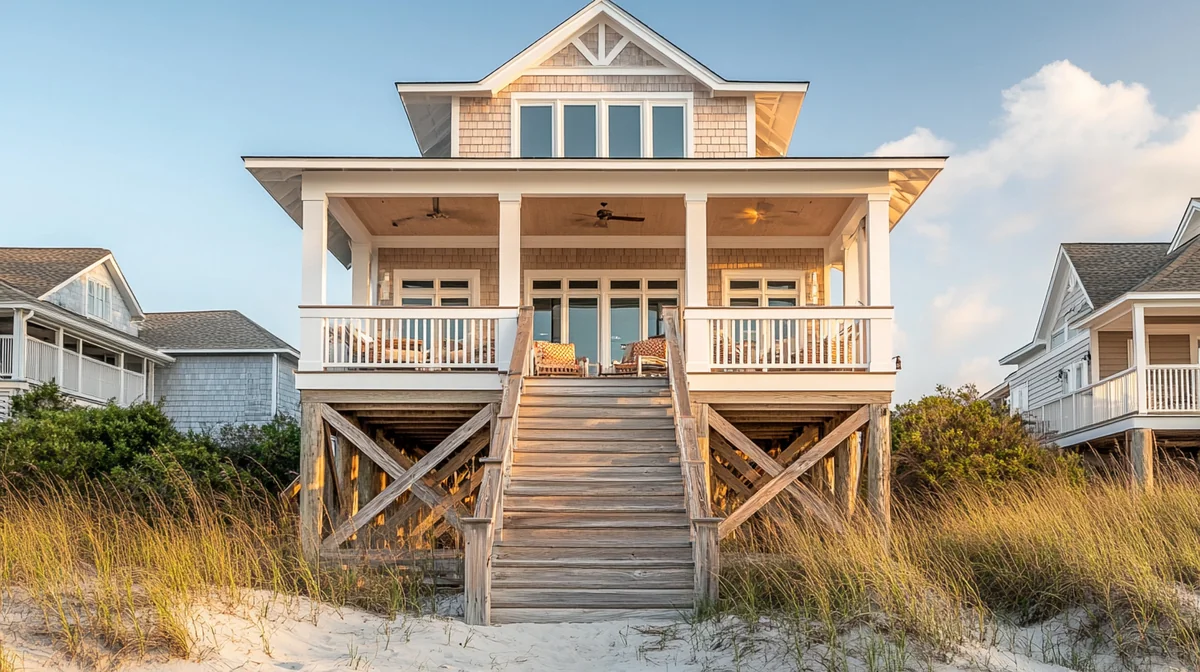
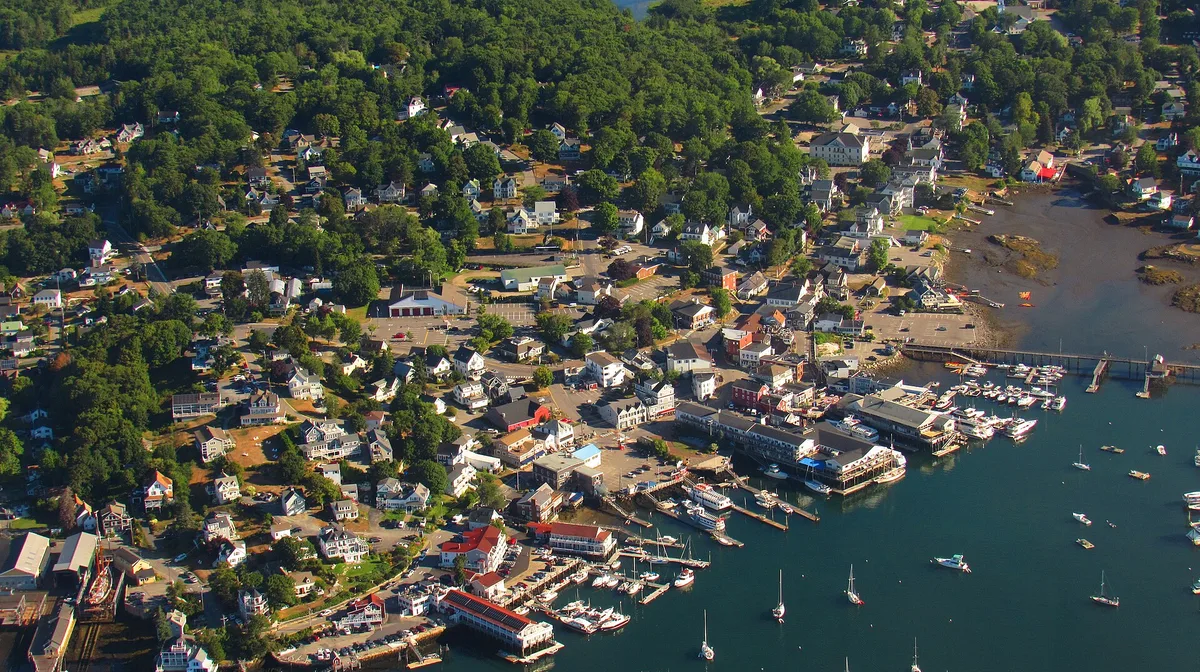
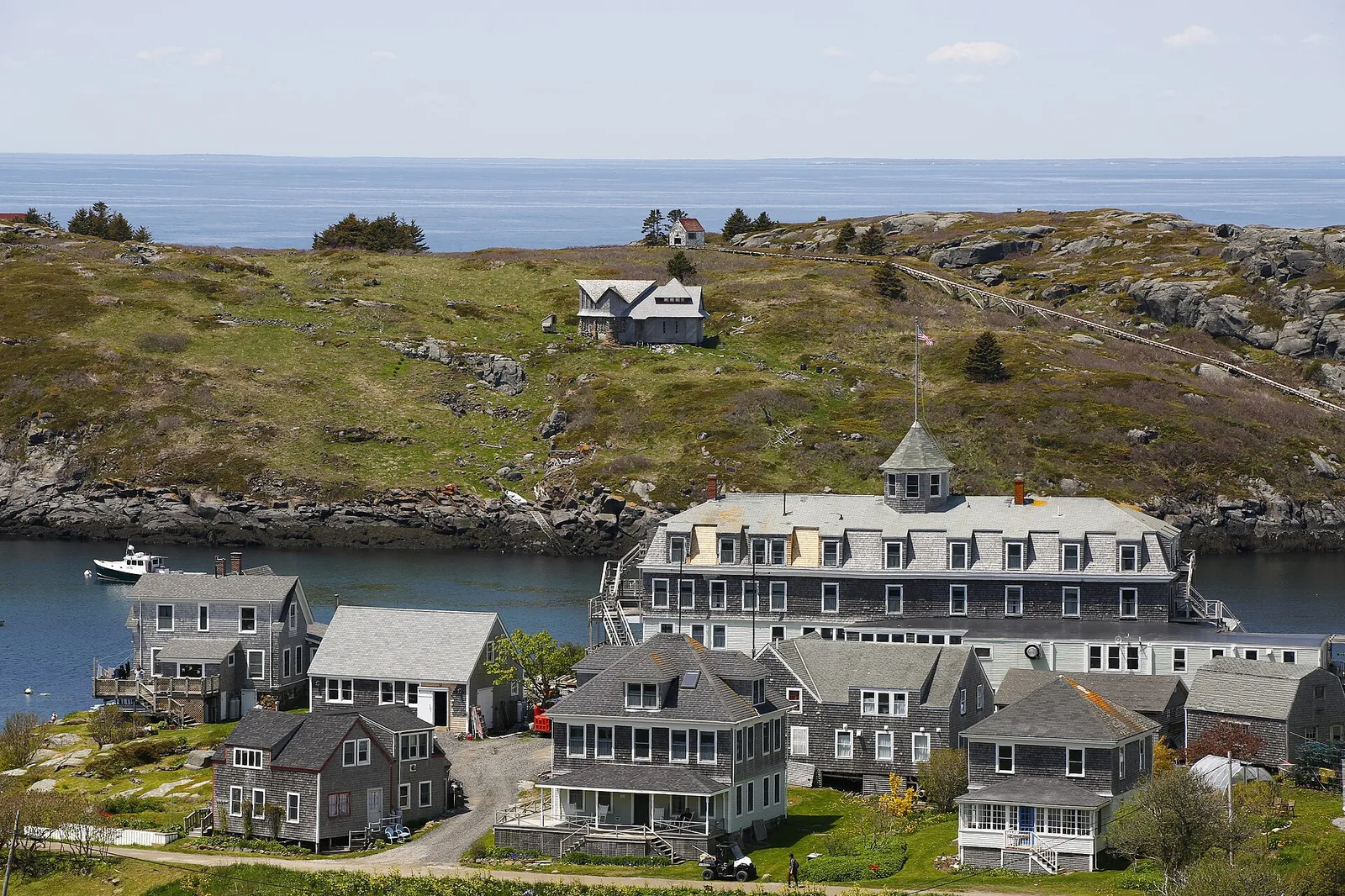
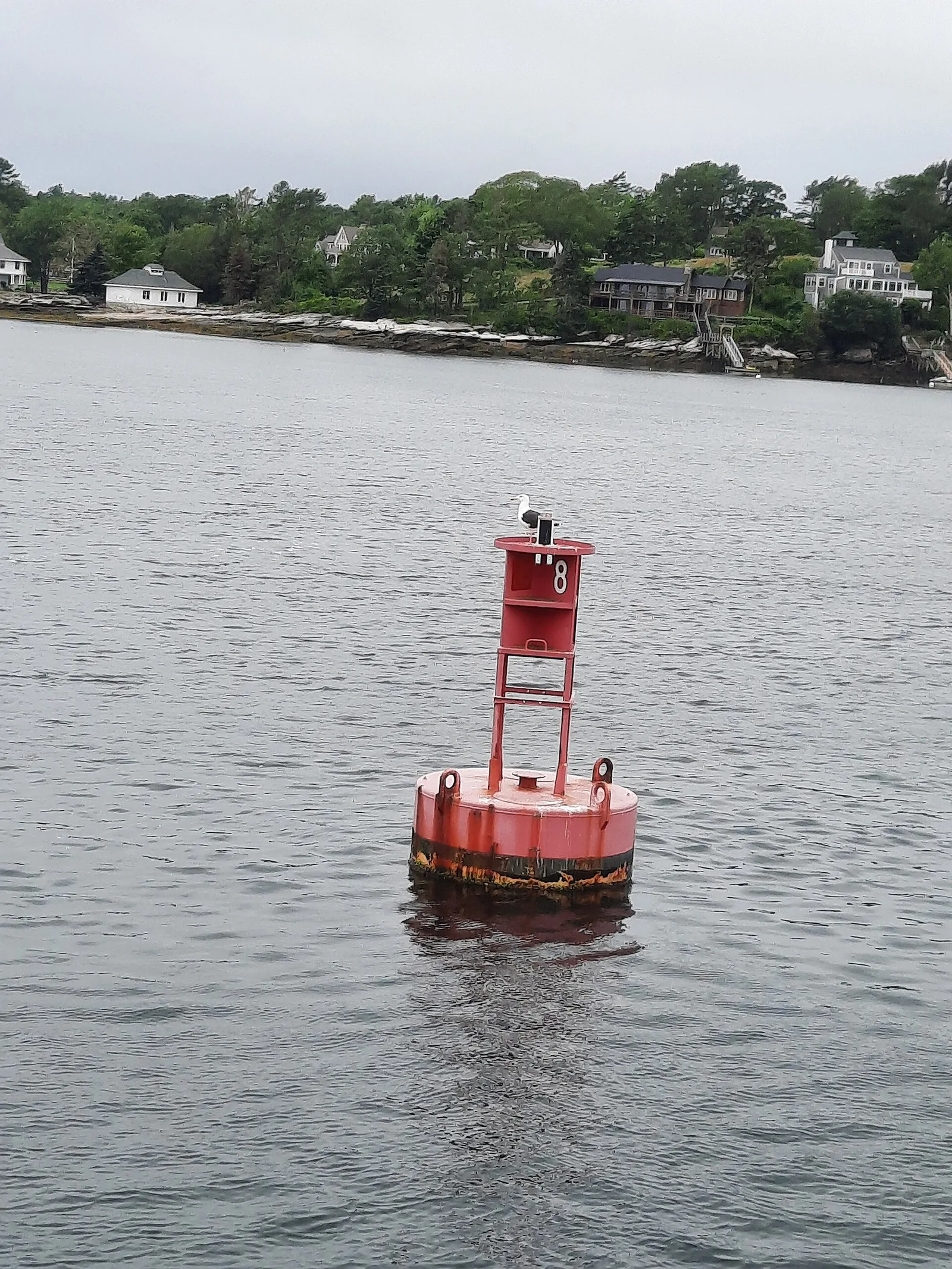
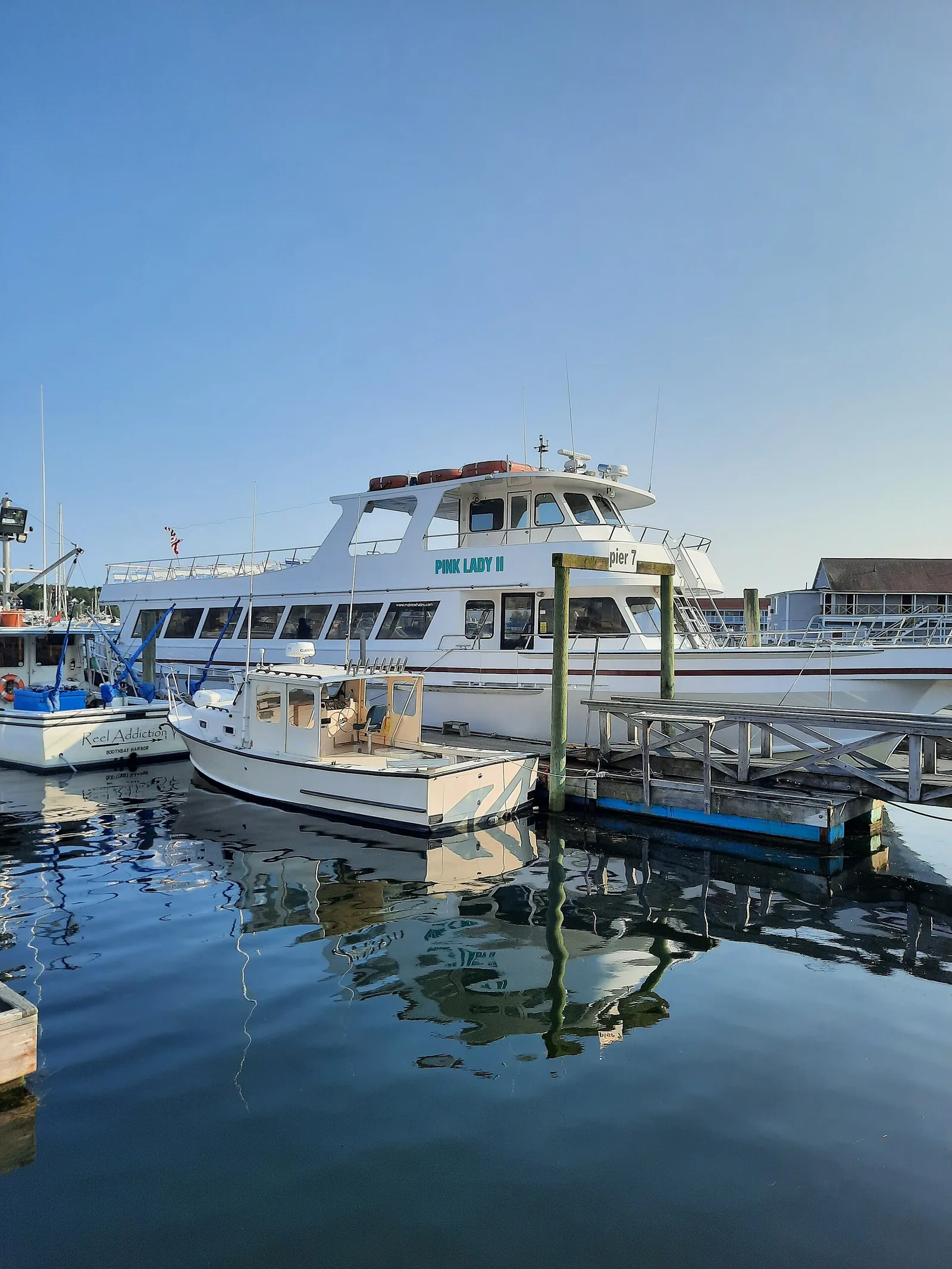
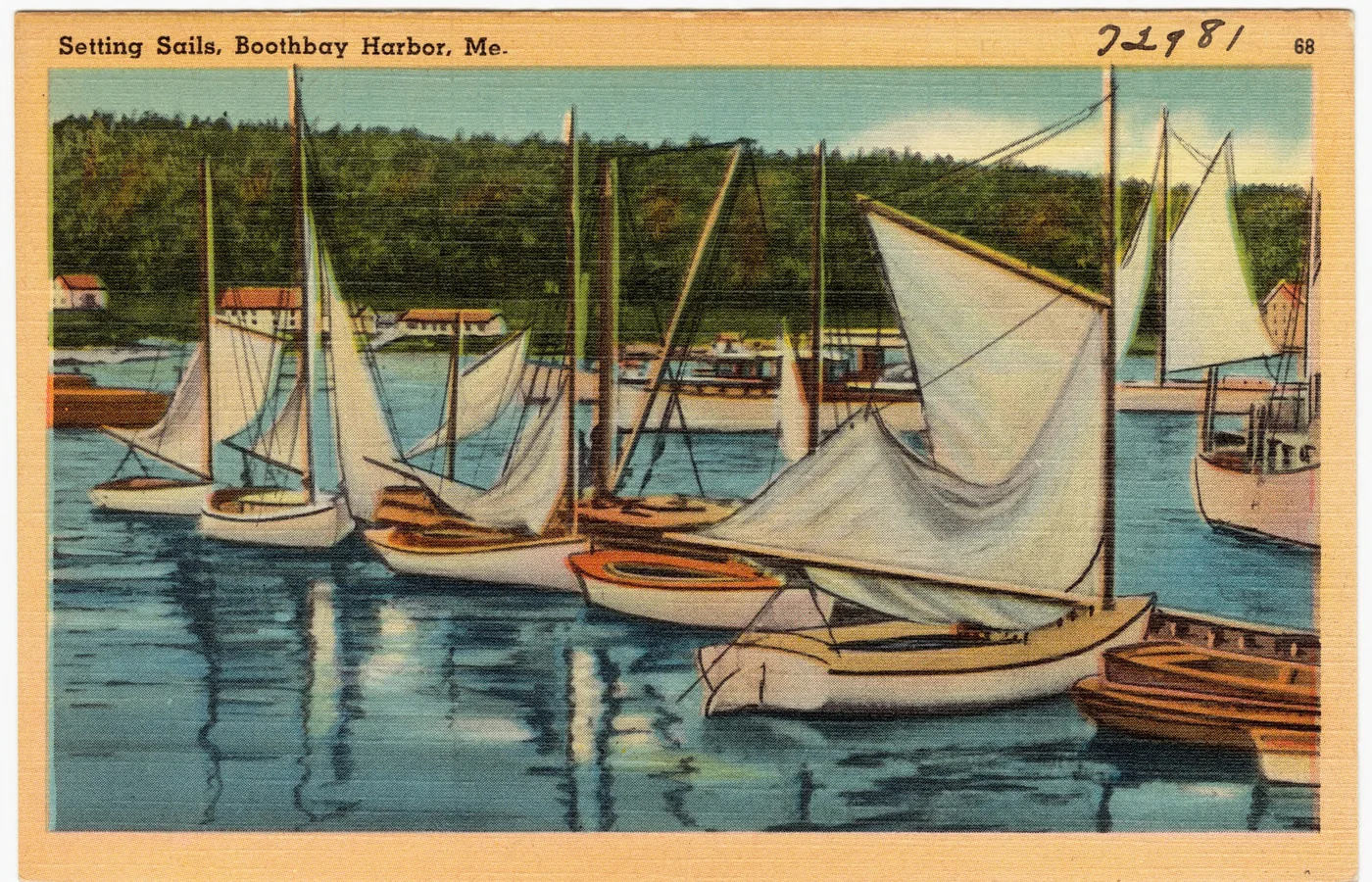
A few of the visual fingerprints we lean into when we shoot, brand and market a Boothbay Harbor property — courtesy of the open Wikimedia Commons archive.
Cavmir markets Boothbay Harbor properties around the water and the calendar, and we build the direct channel first because in a market whose rules are still being drafted, owning your own guest relationship is the most durable asset you can have. We photograph the harbour honestly — the actual view, the actual walk to the footbridge, the actual distance to the wharves — because mid-coast Maine listings are full of generic coastal photography that could be anywhere from Kittery to Lubec. We write the season properly, including the two shoulders most owners give away: September and early October, when the weather is often better than August and the crowds are gone, and the December light-installation weeks, which are real, bookable demand in a month that used to be empty. We build a direct booking site that takes reservations without an intermediary, run local search that reaches people planning a mid-coast trip rather than a generic Maine one, and keep an email list so the guests who came for a week in July hear from you in January. We help position and market your property. We never manage it or touch your keys.
The Boothbay peninsula was fished and settled early — Europeans were working these waters in the seventeenth century, and the town of Boothbay was incorporated in 1764. Boothbay Harbor separated from it in 1889, which tells you something about how distinct the harbour village had become from the farming and inland part of the peninsula.
The nineteenth century here was built on fish and ice. Boothbay Harbor was a major centre for the menhaden fishery, and later for lobster and groundfish, and the deep sheltered harbour supported a shipbuilding trade that produced schooners into the twentieth century. The ice trade — cutting freshwater ice from Maine ponds and shipping it south and even to the Caribbean — was another mid-century industry that has vanished entirely from view but shaped the wharves that are still there.
Tourism arrived with the steamboats. By the late 1800s, Boston boats were bringing summer visitors up the coast to the harbour, and the pattern of a working port with a summer population layered on top was established well over a century ago. The footbridge across the inner harbour, first built in 1901, is the physical symbol of that arrangement: a pedestrian crossing that lets people walk from one side of a working harbour to the other.
Monhegan Island, ten miles out, developed its own separate identity as an artists' colony — Rockwell Kent, Edward Hopper, the Wyeths — and remains a day trip that a large share of Boothbay Harbor visitors take.
The most consequential recent development is not maritime at all. The Coastal Maine Botanical Gardens opened to the public in 2007 on the peninsula outside the village and has grown into one of the most visited attractions in Maine. Its winter light installation has done something genuinely rare for a mid-coast town: created substantial visitor demand in November and December, months that were previously dead. Any current rental strategy here has to account for it.
Boothbay Harbor has a short, hard summer season and two shoulders of very different quality, and pricing the difference correctly is most of the job.
The peak runs from late June through Labor Day. July and August are the core, and the harbour is busy in a way that surprises people who think of Maine as empty. Rates should be at their highest here and minimum stays are defensible.
September and the first half of October are excellent and consistently underpriced. The weather on the mid-coast in September is often better than in August, the water is at its warmest, the crowds have gone, the restaurants are still open and the leaf colour arrives in early October. This is the clearest pricing opportunity in the market.
The December exception is real and worth planning for. The botanical gardens' winter light event draws substantial evening visitation across several weeks, and it has created bookable demand in a month that used to have none. Properties that market to it specifically — with warm interiors, easy parking and honest drive times to the gardens — can fill weeks that would otherwise be empty. Very few do.
The rest of the winter is genuinely quiet, and the spring shoulder before Memorial Day is thin. This is a coast where a great many businesses close, and pretending otherwise to a guest produces a bad stay.
Location within the peninsula drives rate: in the village and walkable to the footbridge and the wharves is a different product from out on Ocean Point or up toward Boothbay, and each should be sold as itself rather than as a compromise.
Late June through Labor Day is the peak, with July and August the busiest weeks of the year. September into early October is superb and underpriced — warmest water, best weather, thin crowds, foliage arriving. Late October through November is quiet. Late November and December carry a genuine and growing exception created by the botanical gardens' winter light installation. January through April is the deep off-season with much of the village closed. May and early June are a thin spring shoulder as the town reopens. The mid-coast year is short and sharply defined, and honest communication about what is open matters as much as the rate.
Boothbay Harbor is, at the time of writing in mid-2026, one of the few markets in this wave without a formally adopted short-term rental licensing regime — and that is a temporary condition rather than a settled position.
The town has been actively working toward regulation. A short-term rental task force has been examining a licensing framework, public forums were held in October 2024 on amendments to the land use code, and selectmen have advocated for a programme that would involve registration of rental properties, fees set to cover the cost of administering the programme, and verification that operators carry proper insurance. Reporting has consistently described a permit system in development rather than one in force.
Because this is live, do not treat the absence of a licensing scheme as a permanent feature of the market. Confirm the current position directly with the Town of Boothbay Harbor's Code Enforcement Office before making any assumption, and expect that position to have moved by the time you read this.
What does apply regardless is state-level obligation. Maine applies a 9% lodging tax to short-term rental income, and operators are required to register with Maine Revenue Services and to collect and remit it. That obligation exists whether or not the town licenses you.
Practically, the sensible posture for an owner in a market that is about to regulate is to operate as though the rules already exist: be properly insured, be findable, keep accurate records, meet fire and life-safety standards, and be a property the town would have no reason to object to. Markets that regulate late tend to write rules with an eye to who was already operating well, and grandfathering provisions — where they appear — reward operators who were visible and compliant rather than invisible.
Get your direct channel built now. In a market where regulation is coming, the guest relationships you own outright are the asset least affected by whatever the town decides. A direct booking site, an email list and a base of returning guests are worth more in Boothbay Harbor over the next few years than a marginal improvement in platform ranking.
Be visibly well-run. Proper insurance, working smoke and carbon monoxide detection, a clear local contact, accurate records. This is good practice anywhere and it is specifically strategic in a town drafting rules, because the operators who are already doing it are the ones any grandfathering provision is likely to accommodate.
Sell September properly. It is the best month of the year on this coast — warmest water, best weather, foliage arriving in early October — and most listings price it as a discount on August. Write it as its own product for couples and older travellers rather than as leftover summer.
Market the December light weeks specifically. The botanical gardens' winter installation has created real bookable demand in a month that used to be empty on this peninsula. Say how far you are from the gardens, mention parking, and make the interior look warm in your photography. Almost nobody is competing for this and it is genuine incremental revenue.
Be honest about what is open. A guest arriving in April expecting a bustling harbour village will have a bad time. Tell people plainly what operates in the month they are booking, and they will thank you for it rather than resent it.
Photograph the water from where guests will see it. Mid-coast Maine listings are full of interchangeable coastal photography. If your property sees the harbour, the footbridge, a working wharf or the outer islands, shoot that specifically and in evening light.
Explain the Monhegan trip. The ferry, the crossing time, that there are no cars on the island, that it is a full day. It is one of the best things a guest can do from here and it needs planning.
The obvious challenge is regulatory uncertainty. Buying into a market whose rules are being written means accepting that the framework you operate under in three years may not be the one you bought into. Owners should price that risk rather than ignore it.
The second is season length. A hard summer, a good September and a small December exception still leave a great many months with very little demand, and carrying costs run all year.
The third is that the peninsula is a cul-de-sac. Boothbay Harbor is not on the way to anywhere; guests come off Route 1 at Wiscasset and drive down deliberately. That produces committed visitors but it also means there is no passing trade and no accidental demand.
The fourth is competition from better-known Maine names. Bar Harbor, Camden and Portland all have stronger national recognition, and Boothbay Harbor's marketing has to actively explain where and what it is rather than assuming the name does the work.
Coastal Maine property has a specific risk set, and the biggest one is what happens when nobody is there.
A property closed from January to April in Maine is a freeze claim waiting to happen if it is not properly managed. Carriers will ask how the building is winterised, whether the water is shut off and drained, whether the heat is maintained and monitored, and whether there is a low-temperature alarm. The answers change your terms and your risk materially.
Coastal exposure — wind, storm surge, and for waterfront properties flood — needs to be established for your specific parcel rather than assumed from the town. Flood insurance is a separate policy.
Short-term rental use must be disclosed, and any future town licensing scheme is expected to include verification that operators are properly insured, so getting this right now is doubly sensible.
Older building stock is common on the peninsula, and underwriters ask about wiring, heating systems and roof age. Liability should reflect guests using docks, water access, steep coastal steps and wood stoves where present.
Work with a broker who writes short-term rental policies on the Maine coast specifically and can speak to the winter vacancy question directly.
Maine applies a 9% lodging tax to short-term rental income statewide. It is collected from the guest and remitted to Maine Revenue Services, and operators are required to register.
Maine does not have the layered county-and-town lodging tax structure found in many states; the 9% state rate is the principal charge on accommodation. That relative simplicity is genuinely useful compared with markets where three or four components stack.
Booking platforms collect and remit Maine lodging tax in many cases, but the registration obligation remains yours, and direct bookings are generally your responsibility to handle end to end. If your strategy involves building a direct channel — which in this market it should — make sure the tax collection and remittance mechanics for direct bookings are set up properly from the first reservation rather than retrofitted later.
Any future Boothbay Harbor registration programme is expected to involve fees to cover administration rather than a new tax, but that is a proposal rather than an adopted position and should be confirmed with the town.
Confirm current rates and filing requirements with Maine Revenue Services, and talk to your accountant about how the income is treated on your return, particularly if the property has mixed personal and rental use.
Financing a Boothbay Harbor property carries one consideration that most markets do not: the regulatory framework is still being written, and a lender underwriting rental income is underwriting income that is not yet governed by a settled local scheme.
That is not necessarily a problem — there is no adopted restriction to fall foul of — but it is a risk that a careful buyer should hold consciously. If a future registration programme imposes limits or costs, the income model changes.
Beyond that, the usual coastal Maine considerations apply. Seasonality means annual income is concentrated in a few months, and that should be presented realistically rather than annualised from a July week. Older housing stock raises appraisal and insurability questions. Waterfront parcels carry flood and shoreland zoning questions, and Maine's shoreland zoning rules can affect what may be altered or built near the water.
Second-home and investment-property financing differ in rate, down payment and occupancy expectations, and a mixed-use plan should be described honestly at application.
Use a lender familiar with mid-coast Maine seasonal property. This is general information rather than financial advice — confirm the specifics with your mortgage broker, your insurance broker and your accountant, and confirm the regulatory position with the town.
The defining near-term question in Boothbay Harbor is what the town adopts. A registration and fee programme with insurance verification has been the direction of travel, and that is a moderate outcome by national standards — it formalises rather than restricts. But the details matter, and owners should follow the process rather than waiting to be told the result. Attending or reading the record of a public hearing is cheap; discovering a new requirement after the fact is not.
The second trend is the extension of the season. The botanical gardens have proven that demand can be created in months this coast had written off, and there is no reason that effect is finished. Shoulder and off-season demand on the mid-coast has been growing, and the properties positioned for it will benefit first.
Third, the working harbour is not decoration. Lobstering remains a real industry here and it faces its own regulatory and economic pressures. A harbour that stopped working would be a genuinely different product, and it is worth understanding that the authenticity guests come for depends on an industry with its own troubles.
Finally, the competitive picture. As Bar Harbor and Portland get more expensive and more crowded, the mid-coast becomes more attractive by comparison. Boothbay Harbor's opportunity is to be found by people who were going to go somewhere else, and that is a marketing problem with a marketing solution — proper photography, a real direct channel, and copy that explains where this peninsula is and why it is worth the drive off Route 1.
Boothbay Harbor is a working harbour with a town wrapped around it, and the fact that the two have coexisted for well over a century is the whole appeal. Lobster boats go out early and the excursion boats go out later, and the footbridge across the inner harbour — a version of which has been there since 1901 — lets you walk from one side to the other over water that is genuinely in use.
We like that the peninsula is a dead end. You come off Route 1 at Wiscasset and drive south deliberately, and nobody arrives by accident. That produces a visitor who chose to be here, which is a better guest than one who was passing.
Monhegan is the day we would send everyone on. An hour out by ferry to an island with no cars, a hundred-odd year-round residents, cliffs on the seaward side and an artists' colony that has drawn Hopper, Kent and the Wyeths. It is a completely different place from the mainland and most visitors do not know it is an option.
And we like what the botanical gardens did. A garden on a peninsula in Maine, opened in 2007, has become one of the most visited places in the state and has manufactured a December season where none existed. That is a rare thing to be able to point at — a single institution changing the shape of a town's year — and for an owner it is an opportunity sitting in plain sight that almost nobody is marketing to. September and December are where the interesting work is here, and both are wide open.
A great property in Boothbay Harbor doesn't just want a listing — it wants a point of view, an audience, and a brand the city itself would recognise.
Eight things worth telling a Boothbay Harbor guest — the footbridge, the ferry, what is actually open in the month they booked, and the garden that changed the calendar.
The pedestrian bridge across the inner harbour has been there in some form since 1901 and it is the quickest way between the two sides of town. Tell guests to walk it rather than drive around.
About an hour out, no cars on the island, cliffs on the far side and an artists' colony with a serious history. It is a full day and the ferry schedule matters — give guests the practical details.
One of the most visited attractions in Maine, on the peninsula outside the village. Worth a half day in summer, and in late autumn the winter light installation is a genuine reason to visit in a month nobody used to.
Boats leave the wharves through the season for seal watching, puffin trips to the outer islands and harbour tours. Tell guests which wharf and roughly what each trip involves.
The road out to Ocean Point at the tip of the peninsula gives you open ocean, rocky shore and almost no development. A short drive and the best coastal views close to town.
Half an hour up the coast: one of the most photographed lighthouses in Maine and a good small town with oysters. An easy alternative day when the harbour is busy.
A great deal of the village closes outside the summer. Tell guests booking in April, November or February exactly what will be operating. They would far rather know in advance.
Warmest water of the year, best weather, no queues at the wharves and foliage starting in early October. If your guests enjoyed August, tell them about September on their way out.
The following are composite, illustrative examples drawn from patterns common in seasonal coastal markets. They are not descriptions of specific clients or properties.
A well-run property entirely dependent on a single booking platform, in a town publicly working toward a registration scheme, with no direct guest relationships and no record of its own past guests.
Built a direct booking site, started collecting guest contact details with consent, established a returning-guest offer, and put proper insurance and safety documentation in order ahead of any town requirement.
The property developed a booking channel it controlled outright, and entered the town's regulatory conversation as a visibly well-run operator rather than an unknown one.
A property with strong July and August occupancy that discounted September heavily by default, despite September being the best-weather month on the mid-coast.
Repositioned September as its own product for couples and older travellers, reshot the property in autumn light, and emailed past guests specifically about the month rather than about the summer.
September occupancy improved at rates materially above the previous default discount, extending the earning season without touching the peak.
A property fifteen minutes from the botanical gardens with an entirely empty November and December calendar, and no mention of the gardens anywhere in its marketing outside the summer months.
Rewrote the winter positioning around the light installation with drive time and parking stated plainly, added interior photography that made the property look warm rather than seasonal, and targeted the specific weeks the event ran.
A block of previously dead weeks began to book, at rates that did not require a shoulder-season discount to sell.
Demand in Boothbay Harbor peaks around July through August and runs quietest around January through March. Here is how the year actually books — and what to do about each stretch of the calendar.
Late June through Labor Day, with July and August the core. The harbour is busier than people expect of mid-coast Maine, and rates should be at their highest with defensible minimum stays through the peak.
September and the first half of October are excellent and consistently under-priced. The weather is often better than August, the water is at its warmest, the restaurants are still open and the colour arrives in early October. This is the clearest pricing opportunity on the peninsula.
January through April is the deep off-season with much of the village closed, and May is thin as the town reopens. The exception is late autumn and December, where the botanical gardens' winter light installation has created genuine bookable demand in months that used to have none.
Summer books several months out, and returning guests renew earlier than that. September and October are shorter notice and reward flexibility. The winter light weeks book close in and are largely uncontested, which makes being visible for them unusually cheap.
Full weeks in July and August, with long weekends and shorter stays in the shoulders. The December light-installation demand is typically two and three nights, which is a different product from the summer week and should be priced as one.
Properties with a genuine harbour or water view and a walkable position near the footbridge and the wharves win the summer. Out on Ocean Point or up the peninsula, the product is quiet and open water, and it should be sold as that rather than as second-best.
Start with photography that shows what a guest actually gets here, then write the listing around a real itinerary rather than a feature list. Build a direct-booking site so returning guests can come back without going through a platform, and keep an email list segmented by season so you can reach last year's visitors before the calendar opens. Local search matters more than people expect in a market this size, because guests search the destination and the attraction rather than the word rental. A marketing agency layer handles the photography, the listing copy, the direct-booking site and the local SEO as one system instead of four disconnected jobs.
Late June through Labor Day, with July and August the core of it. September and early October are excellent and consistently under-priced, often with better weather than August. Late autumn and December now carry real demand thanks to the botanical gardens' winter light installation. January through April is genuinely quiet.
Summer books several months ahead and returning guests renew earlier still. September and October are shorter notice. The winter light-installation weeks book close in and face almost no competition, which makes them unusually easy to capture.
A north-east drive market led by Portland and Boston, with air visitors mostly through Boston. Because the peninsula is a dead end off Route 1, nobody arrives by accident, so guests are committed and worth marketing to deliberately rather than broadly.
A genuine harbour or water view is the thing guests choose on, and off-street parking matters in a compact village. A wood stove or fireplace makes the shoulder and winter seasons sellable. Kayaks or paddleboards convert well, and fast wifi reaches the longer-stay autumn guest.
Run your Airbnb, Vrbo, or website through Cavmir's free grader. It checks the things that decide whether guests book in Boothbay Harbor — photos, listing copy, page speed, local search — and shows you where bookings leak. Takes about a minute, and there's no sales call attached.
If the report says your booking engine is the weak link, that's fixable: a direct-booking website of your own means repeat guests stop paying platform fees to come back to you. That's the work Cavmir does — see Airbnb website design in Boothbay Harbor.
Talk to Cavmir today. We'll show you exactly what your Boothbay Harbor property is leaving on the table — and how fast we can change that.
Book a Free Strategy Call