The Davidson River before the day warms up
Pull off along the Pisgah Highway early and the river runs through fog with nobody else on it. It is ten minutes from town and it is the best free thing a guest can do before breakfast.
Expert short-term rental marketing to grow your bookings and nightly rate in Brevard, North Carolina, USA.
* Market averages. Properties marketed by Cavmir typically exceed these figures by 25–45%. Data sourced from AirDNA, STR market reports, and Cavmir internal analytics.
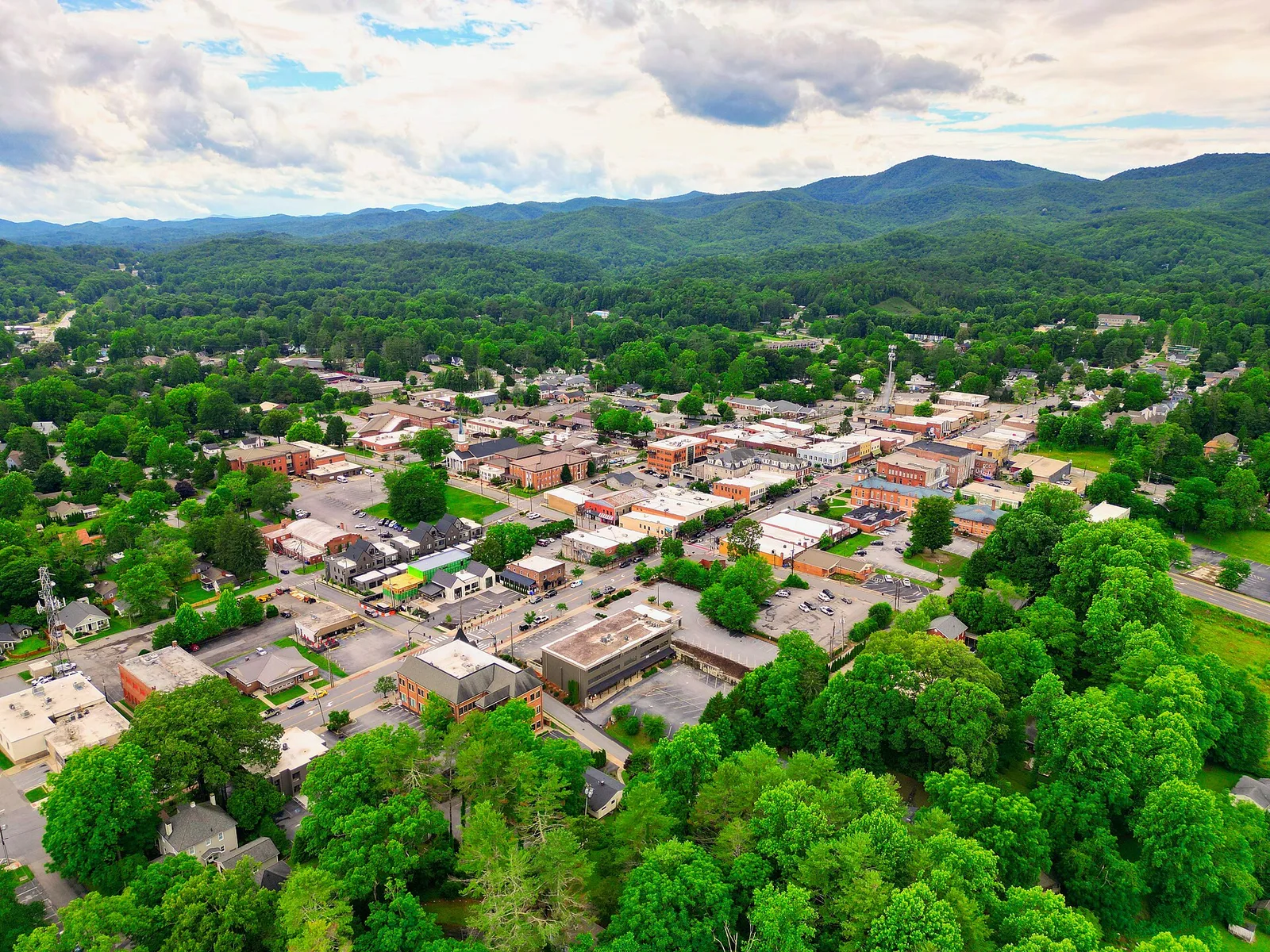
Brevard is the seat of Transylvania County, a college town of a few thousand people at the edge of Pisgah National Forest with more than two hundred and fifty waterfalls inside the county line. It is forty minutes from Asheville and it does not feel like Asheville at all. The town has a summer music festival that has run since the 1930s, a downtown you can walk end to end in fifteen minutes, white squirrels that residents take very seriously, and a mountain-bike scene that draws people from three states. DuPont State Recreational Forest is on one side, Pisgah is on the other, and between them the county absorbs a steady flow of hikers, paddlers, riders, climbers and families who want a cabin with a creek instead of a hotel with a parking deck. Rental stock is cabins, cottages, small lodges and a handful of restored houses in town. Most of it is owner-held and most of it is marketed thinly. If you own here, your competition is not sophisticated. That is worth more than it sounds.
Two things shape this market right now. The first is geography: Brevard is the practical basecamp for DuPont and Pisgah, so demand is activity-driven and it spreads across more of the year than a pure leaf-season town. Riders come in spring and fall, paddlers come when the Davidson and the French Broad are up, families come in July for Sliding Rock and the music festival, and photographers come whenever the falls are running. The second is regulation. In August 2023 the city adopted amendments that stopped new short-term rentals in its general residential zones while protecting rentals already in continuous operation, including through a sale. That did two things at once. It made an existing, compliant in-town rental meaningfully more valuable, and it pushed new supply out into unincorporated Transylvania County, toward Cedar Mountain, Pisgah Forest, Lake Toxaway and the Rosman side. So the county is where the new cabins are going up and the town is where the scarce, grandfathered inventory sits. Both need marketing, for opposite reasons. The in-town owner has an asset worth protecting and pricing correctly. The county owner has a new build competing against a dozen other new builds with the same hot tub and the same three photos.
Nearby Markets: Asheville | Lake Lure | Boone & Blowing Rock

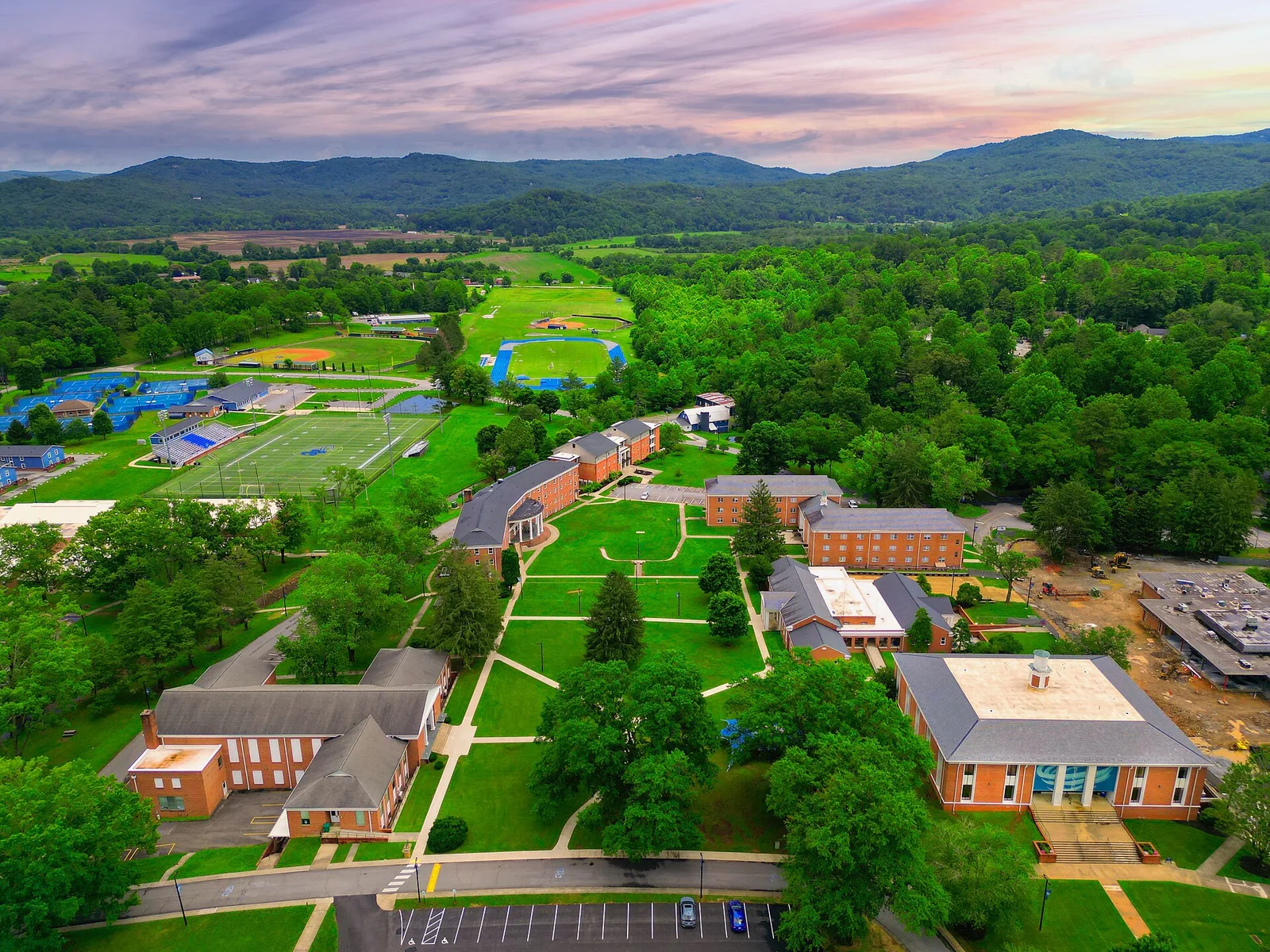
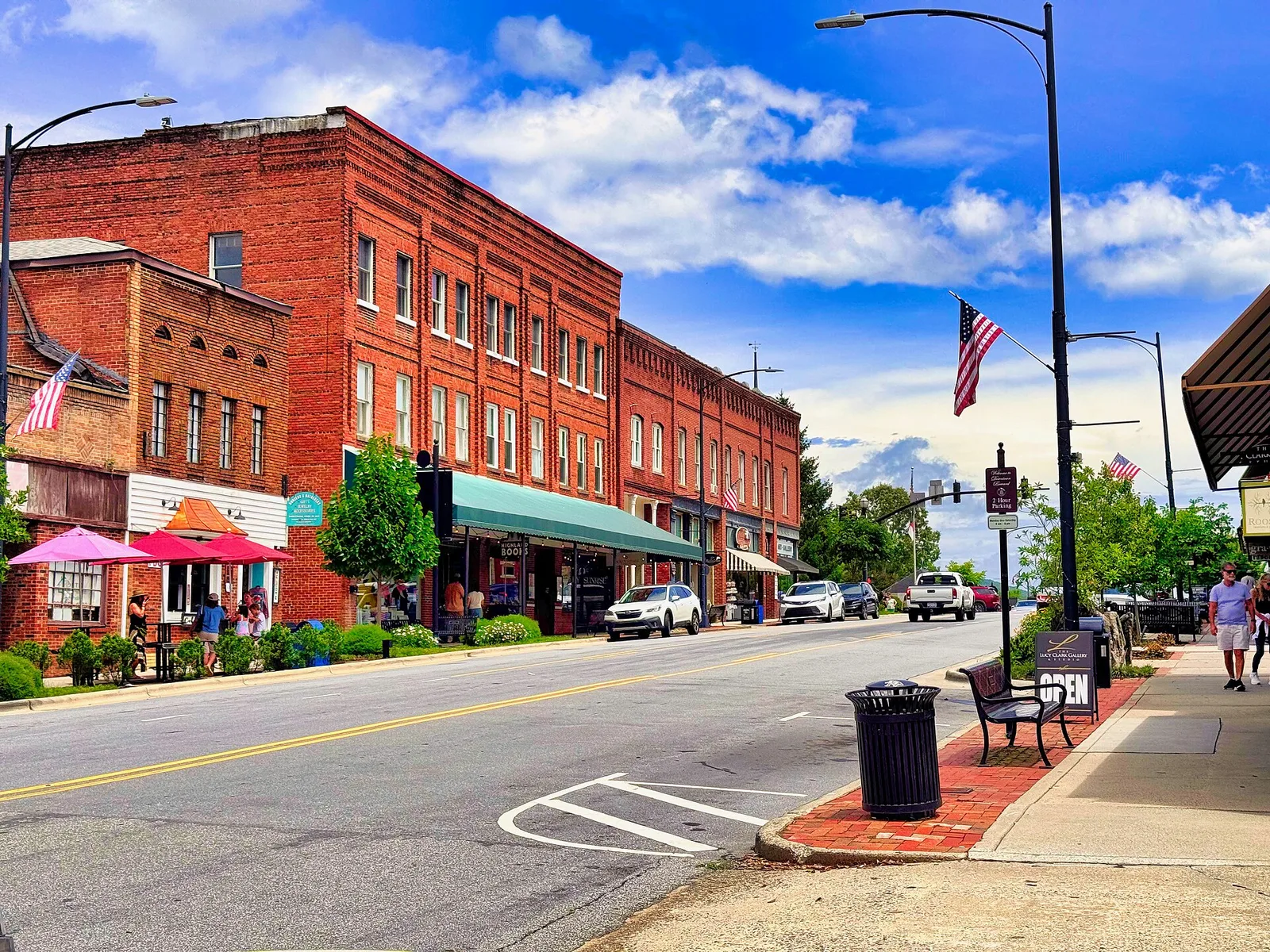
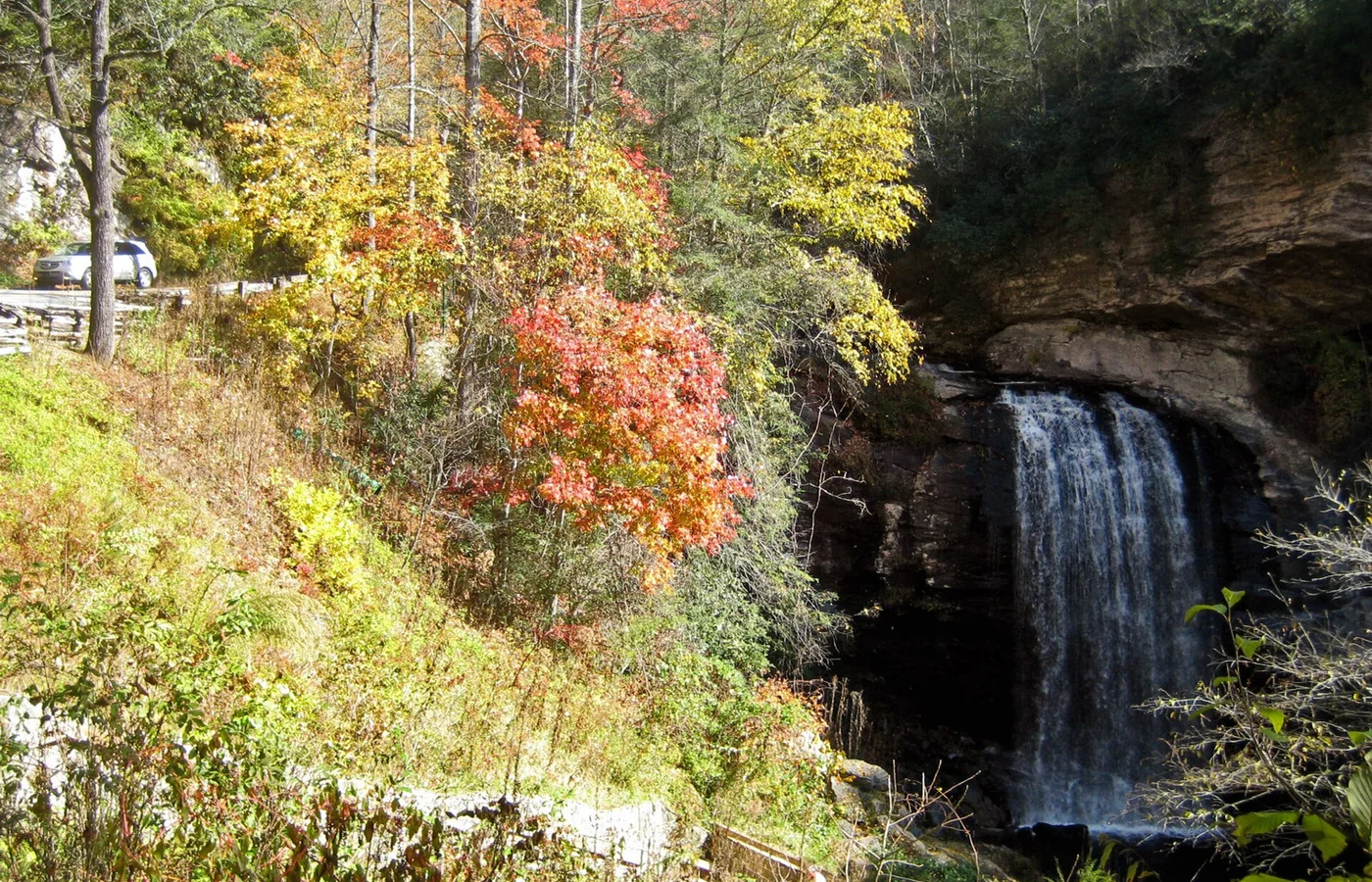
A few of the visual fingerprints we lean into when we shoot, brand and market a Brevard property — courtesy of the open Wikimedia Commons archive.
Cavmir treats Brevard as the year-round market it actually is instead of a fall-color market with dead months attached. We photograph the property in the light it deserves and in the season that sells it, then we write the listing and the site around what a guest will do here on a Saturday, by name, with real trailheads and real distances. We build the direct-booking website, get it ranking for the waterfall, mountain-bike and Pisgah searches that bring people to this county, and set up the email and repeat-guest flow that a drive-to market rewards. We run local search and paid campaigns against Atlanta, Charlotte, Greenville and the Triangle. Where your rental sits matters to how we position it, so we get your zoning and permit status straight before we write a word of copy. We do not make revenue promises and we do not invent numbers. We show you what the market looks like and we build the marketing that competes in it. We help position and market your property. We never manage it or touch your keys.
Transylvania County was carved out of Henderson and Jackson counties in 1861 and Brevard became its seat almost immediately. For the first half of its life the economy was timber, tanning and a paper mill, and the mountains were something you worked rather than visited. Two things changed that. The first was federal land. George Vanderbilt's Pisgah Forest holdings became the core of the Pisgah National Forest in 1916, and the old Biltmore Forest School site above Brevard is now the Cradle of Forestry, where American forestry education started. That put hundreds of thousands of acres of public land at the town's back door permanently. The second was music. A summer music camp arrived in the 1930s and grew into the Brevard Music Center, which has brought students, faculty and audiences into this small town every summer for the better part of a century.
The modern visitor economy is younger than either. It grew out of mountain biking, waterfall tourism and, more recently, the transfer of DuPont's corporate land into what is now the DuPont State Recreational Forest. DuPont has waterfalls you can walk to in twenty minutes and it turned up in a couple of well-known films, which is why a forest most people had never heard of in 2000 now has parking problems on a Saturday in July. Craft brewing arrived in the 2010s, the paper mill in nearby Pisgah Forest wound down, and the town's identity shifted decisively from industry to outdoors. The white squirrels — a genuine local population, and the reason for a festival every Memorial Day weekend — have become the mascot for a place that decided to be charming on purpose. The result is a county with real, layered, activity-based demand rather than a single tourist season, which is unusual in the southern Appalachians and very good news for anyone renting a cabin here.
Brevard rewards owners who price by activity rather than by month. The peak is the summer stretch from mid-June through mid-August, when the music festival, Sliding Rock, the swimming holes and family travel all land at once, followed closely by the October leaf window. But the shape underneath that is what most owners miss. Mountain-bike traffic runs heavy in spring and again in the cool part of fall, and those guests book midweek far more often than families do. Fly-fishing on the Davidson brings people in months nobody markets. Parents' weekends and graduation at the college fill specific dates every year that have nothing to do with weather. Waterfall photographers come when the water is up, which usually means the exact weeks a flat-rate calendar has discounted. A practical structure here is four tiers — summer peak, October peak, spring and early-fall shoulder, and true off — with holiday and event minimums layered on top and midweek discounting that turns on automatically in the shoulder tiers. In-town properties that are legally grandfathered under the city's rules should be priced with their scarcity in mind rather than benchmarked against the newer county cabins, because they are not the same product and there will not be more of them.
Summer is the strongest and longest season, roughly Memorial Day through Labor Day, driven by families, the music festival and the water. October is the sharpest peak but the shortest. Spring, from late March through May, is genuinely good and underbooked — the waterfalls are at their best and the riding is prime. September is quietly excellent and cooler than the lowlands. The soft months are January and February, when the forest roads can close and the town goes quiet, and the first half of March. Unlike a pure ski or beach market, Brevard never fully switches off, because the trails and the fishing are there year-round. That gives an owner something to sell in every month, provided the listing gives a guest a reason to come in that specific month.
This is the most important thing to understand before you buy or list in Brevard, and it splits the market cleanly in two. In August 2023 the Brevard City Council adopted amendments to the Unified Development Ordinance, by Ordinance 2023-37, that stopped the creation of new short-term rentals in the city's general residential zones. New short-term rentals remain allowed in the mixed-use and institutional campus districts. Critically, the ordinance did not shut down rentals already operating: existing short-term rentals in continuous use were protected, and that protection was written to survive a change of ownership. The practical consequence is that an in-town, compliant, continuously operating rental is now a scarce asset with a fixed supply, and a buyer purchasing one is buying the right along with the house — provided the use really has been continuous and can be documented. Verify that history in writing during due diligence. A gap in operation can cost the status.
North Carolina also limits how far a city can go. State law and appellate decisions have restricted municipalities from imposing rental registration and permitting schemes on residential rentals, which is part of why Brevard's approach is zoning-based rather than a license program. Do not read that as an absence of rules — zoning is the rule, and it is enforced. Outside the city limits, unincorporated Transylvania County is a different and considerably more open environment, which is where most new cabin supply has gone: Pisgah Forest, Cedar Mountain, the Rosman side and out toward Lake Toxaway. County-side owners should still confirm current zoning, septic capacity for the occupancy they advertise, and any private covenants on their subdivision, because a restrictive covenant will stop a rental faster than any ordinance. On the tax side, Transylvania County levies a five percent occupancy tax on gross receipts from short-term accommodations, and owners renting fifteen or more days a year are expected to register with the county and remit. Platforms handle much of this for bookings made through them; direct bookings are on you. Confirm your specific situation with the city planning department or the county before you list, and get it in writing.
Lead with water. This county has more than two hundred and fifty waterfalls and that is the single reason most first-time guests choose it over a dozen other mountain towns, so your first image should either be your property with water in frame or your property looking like the kind of place you stay when you spend a day chasing waterfalls. Second, name your trailheads. A listing that says close to hiking is invisible. A listing that says eleven minutes to the Hooker Falls parking area at DuPont and eighteen to Looking Glass converts, because the guest can plan their morning from your description. Third, take the bike guests seriously. Pisgah is a destination for riders across the Southeast, they travel in groups of four to eight, they book midweek and in shoulder season, and almost nothing in this market is marketed to them. Secure covered bike storage, a hose, a place for muddy shoes and a drying rack are worth photographing and worth a paragraph. Fourth, be exact about your zoning story if you are in town — a legally grandfathered in-town rental is a real advantage and it should be reflected in how the property is priced and presented, not buried. Fifth, sell September. It is one of the best months here and one of the emptiest, and a targeted email to last summer's guests in mid-August is the cheapest fix. Sixth, mind the drive. Some county properties are up gravel with no cell signal, and a guest who did not expect that writes about it. Say it plainly, add offline directions to the guide, and it becomes a feature rather than a complaint.
The county's growth has outpaced its infrastructure in places — summer parking at DuPont and Sliding Rock is a genuine problem, and guests who arrive expecting an empty forest at noon on a July Saturday are disappointed. Winter is quiet and forest roads close, so a property with no winter story sits. The zoning split means an owner shopping for a new investment in town has almost no path in, while the county side is filling with similar new cabins that compete hard on price. And a lot of local sentiment about rentals is unsettled, which means the rules deserve watching rather than assuming.
Standard homeowner's coverage generally will not follow you into short-term rental use, so plan on a dedicated short-term rental or landlord policy with meaningful liability limits. Transylvania County adds a few specifics your agent should hear about. Water is the theme: creekside and riverside properties need an honest flood conversation, and being outside a mapped flood zone is not the same as being safe on a mountain creek in a heavy rain event. Wood stoves and fireplaces change the underwriting. Hot tubs need to be disclosed. If you host mountain bikers or have trail access from the property, ask specifically how guest injury on your land is treated. Gravel access roads and steep drives are worth mentioning too, since access affects both risk and how quickly a claim gets resolved. Ask for guest injury, guest property damage and loss of rental income to be spelled out in the policy rather than described on a call.
Two things stack on a Brevard stay. North Carolina sales tax applies to accommodations at the combined state and local rate, and Transylvania County levies a five percent occupancy tax on gross receipts from rentals of rooms, lodgings and similar accommodations subject to sales tax. Owners renting fifteen or more days in a year are expected to register with the county tax office, collect the occupancy tax and file on the county's schedule. Stays of ninety or more consecutive days are treated differently. Booking platforms collect and remit much of this on the reservations they process, which is convenient right up until you start taking direct bookings — and direct bookings are precisely what good marketing produces, so get registered before you turn that on. Keep your platform and direct-booking records separate from day one; reconciling them a year later is miserable. Your accountant should look at how rental days, personal use and depreciation interact for your particular ownership structure.
Financing here is straightforward for most properties and awkward for a few. A cabin or house in unincorporated Transylvania County finances normally as a second home or an investment property, with the usual difference in down payment and rate between the two. The wrinkles are rural: properties on shared or unmaintained gravel roads, on well and septic, or with significant acreage can complicate appraisal and slow conventional underwriting, and a few lenders will not touch a private-road property without a recorded maintenance agreement. Get that agreement identified early. In town, the more interesting question is not financing but status — if the value of the property depends on it being a grandfathered short-term rental under the 2023 ordinance, your lender's appraisal may or may not reflect that, and your own due diligence certainly should. Debt-service-coverage loans underwritten on rental income are available in this market and are common for buyers scaling past one property. Have your accountant model the county occupancy tax and realistic seasonal occupancy into the numbers rather than a flat annual average.
The direction of travel here is more visitors, more slowly. The Ecusta Trail, the rail-trail being built between Hendersonville and Brevard, is the biggest single change on the horizon: a paved, connected cycling and walking corridor into town would give this market a second kind of visitor and a genuinely new reason to come in months that are currently soft. Watch its phased openings. The second thread is the split between city and county supply. With new in-town short-term rentals closed off in residential zones, the pressure has moved outward, and unincorporated areas will keep absorbing new cabins until the county decides otherwise. Expect that conversation to come. The third is capacity at the natural attractions themselves — parking, shuttles and timed access have all been discussed for the busiest sites, and any of them would change how you advise guests to plan a day. None of this is a threat to a well-marketed property. It is a reason to build a direct relationship with your guests now, so you are not dependent on a single channel or a single season when the market shifts.
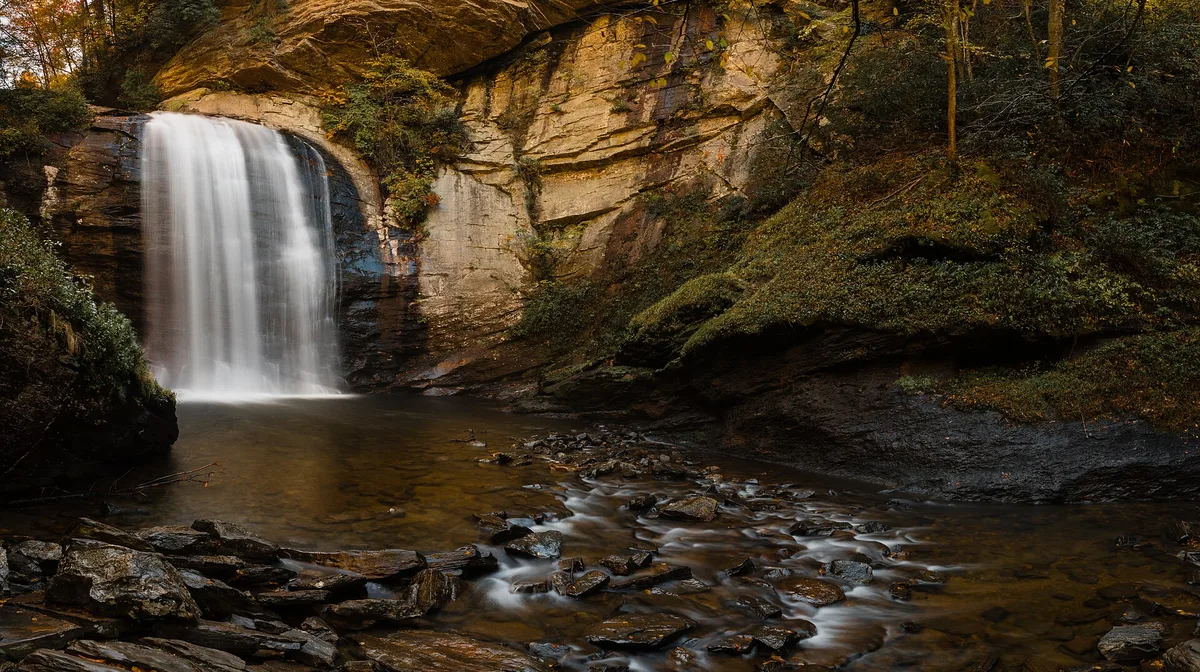
Brevard is a small town that is genuinely good at being itself. There is a main street you can walk in fifteen minutes with a bookstore, a couple of good restaurants and a brewery, and then there is a national forest that starts about four miles away and runs for hundreds of thousands of acres. That combination is the whole appeal. You can spend a morning on a trail nobody else is on and be eating lunch downtown by one. The waterfalls are the headline and they earn it — Looking Glass drops sixty feet right beside the road, and DuPont has three big ones you can string together on an easy loop. But the thing that keeps people coming back is quieter than that. It is the Davidson River in the fog at seven in the morning, the way the town smells like woodsmoke in November, the fact that a summer evening concert at the music center is a real event in a real hall and not a tourist show. From a marketing standpoint what we like is the honesty of the demand. Nobody comes to Brevard by accident. Every guest chose it for a specific reason — a trail, a waterfall, a race, a concert, a river — and that means the marketing job is precise rather than vague. You are not trying to persuade someone that a generic mountain weekend is nice. You are trying to reach the person already planning a Pisgah ride or a DuPont hike and show them that your place is the obvious basecamp. That is a much better problem to have.
A great property in Brevard doesn't just want a listing — it wants a point of view, an audience, and a brand the city itself would recognise.
Eight answers to put in your guest guide. These are the questions guests ask anyway, and getting them right is the cheapest review insurance there is.
Pull off along the Pisgah Highway early and the river runs through fog with nobody else on it. It is ten minutes from town and it is the best free thing a guest can do before breakfast.
Brevard's restaurant count is small and the music-festival crowd fills it. Tell guests to book a table the same week they book the stay, especially in July.
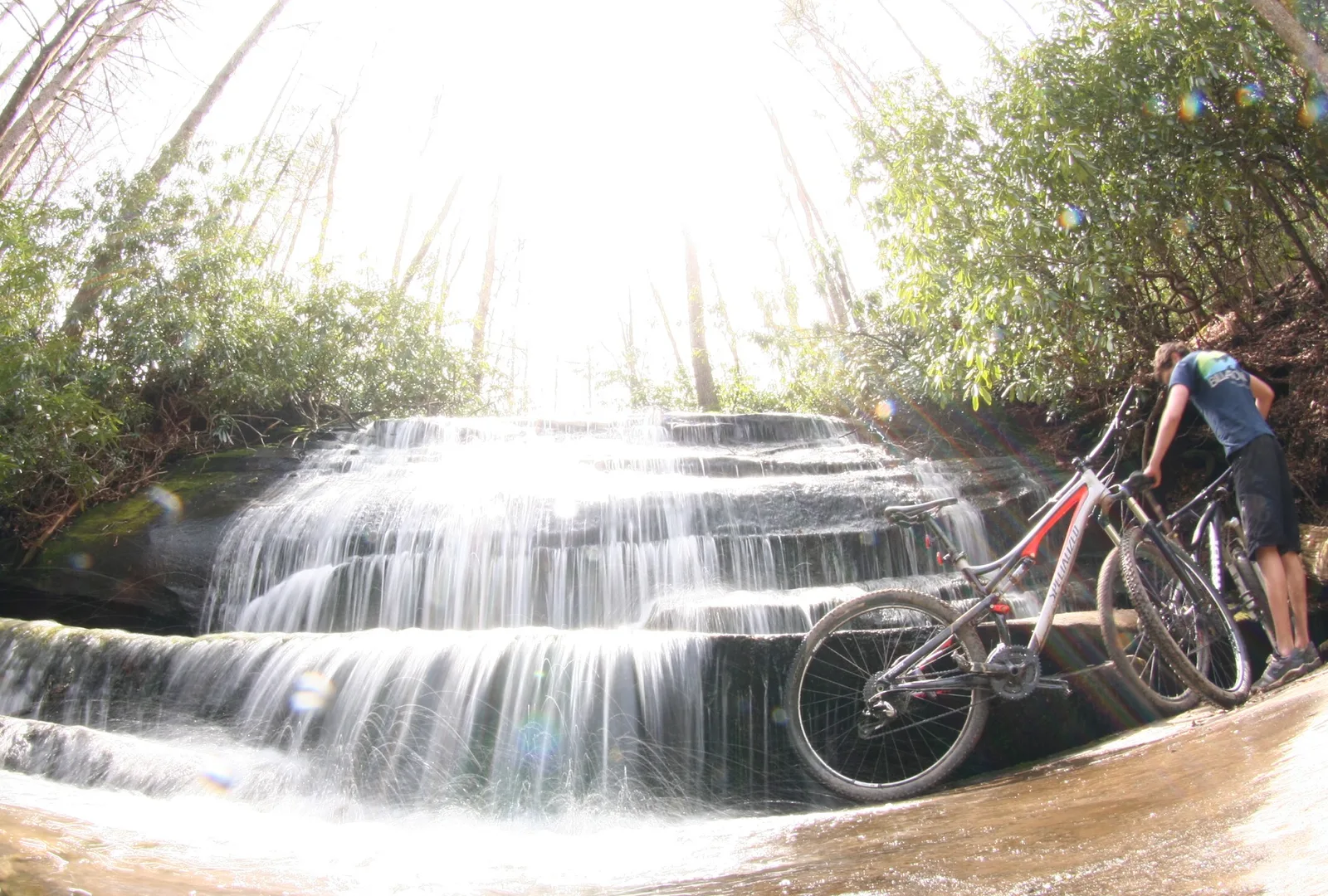
Riders come from all over the Southeast for the trails out of the Davidson River area and Bracken Preserve. If your property has bike storage and a hose, say so — this crowd books midweek and comes back.
The historic site above town where American forestry education began, with indoor exhibits and short covered walks. It works when the trails are running mud.
The waterfalls are at their fullest with snowmelt and spring rain, the parking lots are empty, and the light through bare trees is better for photographs than summer's canopy.
Toward Sapphire, about forty minutes out. A steeper hike than DuPont and far fewer people. Good for guests who have already done the easy waterfalls and want the next one.
The classic Transylvania County photograph. Fifteen minutes up the Parkway from the forest entrance, best in late afternoon light.
It is, once, early. Tell them the water is cold year-round, the lot fills by mid-morning in July, and give them a backup swimming hole for when it does.
A few composite engagements, drawn from how Cavmir typically works with cabin and cottage owners in an activity-driven market like this one. Illustrative rather than any single client's file.
Priced and presented like the newer county cabins despite being a walk-to-downtown property with a protected zoning status that cannot be replicated.
Repositioned around walkability and the festival calendar, reshot to show the porch and the street rather than the mountains, built a direct-booking site targeting music-festival and college-weekend searches, and set date-specific minimums around the events that recur every year.
The property stopped being compared against cabins fifteen minutes out of town and started booking the high-demand event dates earlier in the year, with more of those bookings arriving direct.
New build competing against a dozen similar new builds with the same hot tub, the same fire pit and the same three photos, so guests were choosing on price alone.
Built the positioning around mountain biking and waterfall access with named trailheads and real drive times, photographed the bike storage and gear-drying setup as features, and ran shoulder-season campaigns aimed at riding groups out of Greenville, Charlotte and Atlanta.
Midweek and spring occupancy improved against a calendar that had been almost entirely weekend-dependent, and group bookings began repeating year over year.
Three cabins competing with each other on the same platform, cannibalizing enquiries and splitting review history across three unconnected listings.
Built a single owner-branded site with all three properties, cross-referral when a date was unavailable, one email list across the portfolio, and distinct positioning for each property rather than three versions of the same copy.
Enquiries that would previously have been lost to a blocked date were retained inside the portfolio, and the shared email list produced repeat stays across different properties.
Demand in Brevard peaks around June, July and August and runs quietest around January, February and December. Here is how the year actually books — and what to do about each stretch of the calendar.
Summer from mid-June through mid-August is the volume peak, driven by families, the music festival and the swimming holes. October is the rate peak but it is short, concentrated in two or three weekends. Have the listing photographed and the autumn rates set by August, because the October guest books earlier than the July one.
Spring from late March through May is the most under-booked good weather in this county — the waterfalls are at their fullest and the riding is prime. September is quietly excellent and cooler than the lowlands. Both respond well to midweek pricing aimed at mountain bikers and to email sent to last summer's guests.
January, February and early March are genuinely quiet, with forest roads closing and the town going still. Put a longer-stay winter rate in the market, target the fly-fishing and quiet-getaway audience, and use the window for maintenance and a spring reshoot.
October weekends book earliest, often several months ahead. Summer family weeks fill through spring. Spring and autumn midweek is closer to a two to four week window, and winter is largely last minute. The practical implication is that your autumn rates need to be right by late summer.
Weekend and long-weekend stays dominate through the year, with week-long family stays in July and August. Riders and anglers skew midweek and are the main source of non-weekend nights.
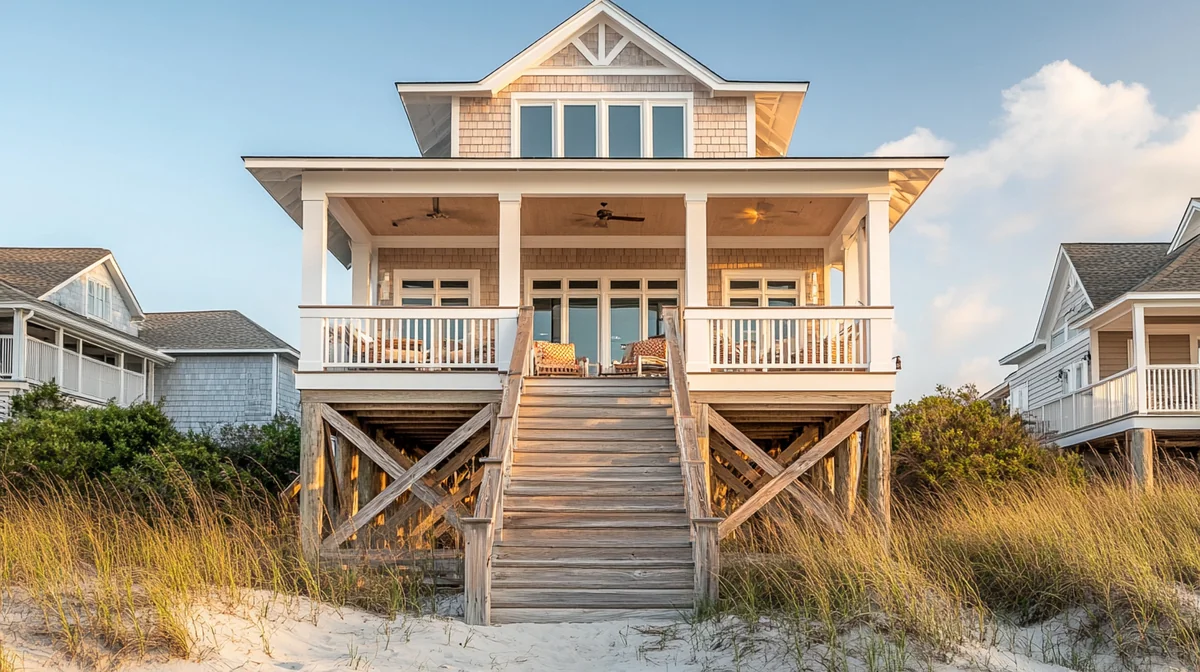
Cabins and cottages sleeping six to eight, within fifteen minutes of a DuPont or Pisgah trailhead, are the core of this market. In town, a legally grandfathered short-term rental within walking distance of Main Street is a scarce asset and should be priced as one. Creekside properties command a genuine premium if the water is actually in the photographs.
Start with photography that shows what a guest actually gets here, then write the listing around a real itinerary rather than a feature list. Build a direct-booking site so returning guests can come back without going through a platform, and keep an email list segmented by season so you can reach last year's visitors before the calendar opens. Local search matters more than people expect in a market this size, because guests search the destination and the attraction rather than the word rental. A marketing agency layer handles the photography, the listing copy, the direct-booking site and the local SEO as one system instead of four disconnected jobs.
Summer from mid-June to mid-August is the busiest stretch, driven by families, the music festival and the waterfalls. October is the highest-rate period but it is short, concentrated in two or three weekends of leaf traffic. Spring and September are genuinely good and much less crowded, which makes them the best value for guests and the biggest opportunity for owners.
October weekends and July family weeks book the furthest ahead, often several months. Spring and autumn midweek runs on a shorter two to four week window, and winter is largely a last-minute market. Getting your autumn rates set by late summer is the single most useful timing discipline here.
Mostly drive markets within four or five hours: Greenville, Charlotte, Atlanta, Columbia, Knoxville and the Triangle. Asheville's airport handles the smaller share who fly. Because so much demand is drive-to and repeat, an email list of past guests is worth more here than in a market where visitors come once.
For families, space, laundry and short drives to trailheads. For the riding crowd — who fill midweek and shoulder season and are barely marketed to — covered bike storage, an outdoor hose and somewhere to dry wet gear are what decide the booking. A hot tub and a fire pit help across the board, and creek or river frontage supports a real premium if it appears in the first three photographs.
Run your Airbnb, Vrbo, or website through Cavmir's free grader. It checks the things that decide whether guests book in Brevard — photos, listing copy, page speed, local search — and shows you where bookings leak. Takes about a minute, and there's no sales call attached.
If the report says your booking engine is the weak link, that's fixable: a direct-booking website of your own means repeat guests stop paying platform fees to come back to you. That's the work Cavmir does — see Airbnb website design in Brevard.
Talk to Cavmir today. We'll show you exactly what your Brevard property is leaving on the table — and how fast we can change that.
Book a Free Strategy Call