

The Stroll
The Promenade, unhurried
Gstaad's main street is ten minutes end to end and meant to take an hour — chocolatiers, galleries and the valley's slow theatre. The evening passeggiata is the village's true event.

Expert short-term rental marketing for the Saanenland — Gstaad's chalet-only village and the valley of Saanen, Rougemont and Schönried around it.
Sixteen services, one team. Everything below is built in-house and scoped to your property and market. Most owners start with the 12-Step System.
Every engagement is quoted to your portfolio. These are the ready-made scopes owners pick most — our Fall Special (55% off list or more) is already applied to the website, King Broker, Hotels and à la carte scopes. A clear proposal within 48 hours.
The work is public. Selected engagements and what changed — and reviews from the owners and managers behind them.
* Market averages from AirDNA and STR market reports. A single home's numbers depend on its size, its location and how it is marketed.
Cavmir is an Airbnb marketing agency. We build the brand, the direct-booking website and the marketing for short-term rentals in Gstaad.
Gstaad's promise fits on a postcard: 'Come up, slow down.' The village in the Saanenland — the high valley where the Bernese Oberland meets the Vaud Alps — has spent a century perfecting a specific product: alpine glamour with the volume turned all the way down. Building codes keep every structure in chalet form, the promenade is walkable end to end in ten minutes, the famous residents go deliberately unphotographed, and the institutions — the Palace on its hill, the Menuhin Festival in its churches, the Eagle Club above — operate on discretion as policy. For rental owners, that discretion translates into the Alps' most loyal guest economics: families who have taken the same chalet weeks for decades, referred within circles no platform reaches, at rates the quiet fully justifies.
The market's geography is the valley, not just the village. Gstaad itself — the promenade, Oberbort's chalet slopes above it — carries the address premium. Saanen, the valley's historic capital two minutes away, offers heritage character at gentler pricing. Schönried and Saanenmöser, up the sunny shelf, trade on ski access and light; Rougemont, across the language border into Vaud, adds Pays-d'Enhaut charm the connoisseurs seek out; and Lauenen and Gsteig hold the end-of-valley quiet. The lift network ties the valley together and the guest chooses by character — a listing that names its village's case captures its actual audience rather than renting the famous name generically.
The guest is the market's true asset. Gstaad's winter families are generational to a degree unusual even in Switzerland — grandparents who learned to ski at the Eagle's altitude booking for grandchildren at the international school's gates — and its summers draw an older, quieter version of the same circles for the festival, the hiking and the valley's farmed green. They plan across years, not seasons; they book through relationships and direct channels as much as platforms; and they reward operators who understand the local grammar: understatement in copy, exactness in operations, warmth without theatre. Marketing that shouts is not merely wasted here — it disqualifies.
Access suits the clientele: the GoldenPass rail line winds into the village itself, Geneva is roughly ninety minutes by road for the winter arrivals, and Saanen's small airfield handles the private traffic the valley absorbs without comment. Nothing about the journey is accidental — the valley sits deliberately off the through-routes, and its guests, like Zermatt's, choose it as a destination rather than passing by. That self-selection is the marketing foundation: everyone in the valley meant to be here, and the listing's job is to deserve them.
Nearby Markets: Verbier | Zurich | Courchevel
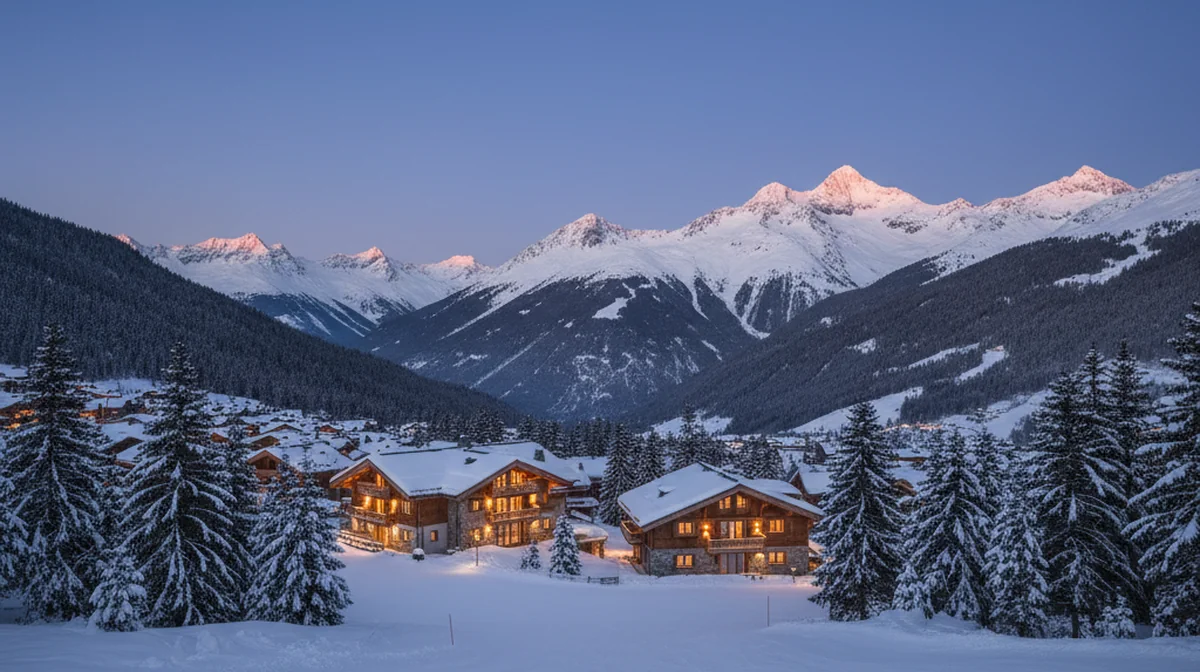
Cavmir markets Saanenland chalets as the discreet hospitality brands they are — never shouted, always exact. We position your chalet or apartment in front of the traveler who chooses this valley on purpose: the generational winter family, the festival summer guest, the connoisseur of quiet — wherever in the world they search.
The Saanenland farmed and cheesed its way through most of history — the valley's wealth was alpine dairy long before it was alpine tourism — and the railway's arrival in the early twentieth century brought the first winter guests to a village that decided, early and firmly, what it would and would not become. The Palace rose on its hill in 1913; the boarding school that would anchor the valley's international families arrived; and Gstaad entered the postwar era as the discreet counterpoint to the louder resorts — the place the famous went to not be seen.
The mid-century built the legend quietly: film stars and financiers bought chalets under the same building code that kept every roofline alpine, the Menuhin Festival began in 1957 and gave the valley Europe's most elegant summer season, and the village's institutions perfected the art of knowing everyone and saying nothing. Crucially, the valley never overbuilt — the chalet-form code and the communes' conservatism kept supply humane while demand compounded across generations of the same families.
The rental economy grew inside those relationships: chalets moving winter by winter through the same circles, agencies serving the valley's particular discretion, and — later — a platform era that arrived here more gently than anywhere in the Alps, because the top of this market never needed it. Switzerland's second-home politics then locked the map here as everywhere: Lex Weber's caps bind in the Saanenland's communes, Lex Koller filters foreign purchase, and new rentable supply is structurally scarce.
Today the market is the Alps' most relationship-driven: modest public inventory, deep private calendars, and rates at the top of the table for chalets that may never appear on a platform at all. For owners, the implication is precise: the marketing that works here is the professional direct channel — discreet, exact, beautifully presented — that lets the valley's loyalty economics find your property and keep it.
Gstaad prices on discretion's terms: chalet character, village address and season, with the top of the market moving privately at figures the public listings never display. Oberbort and promenade-adjacent Gstaad addresses anchor the premium; Schönried and Saanenmöser price the sunny shelf's ski access; Saanen and Rougemont offer heritage value; the end-of-valley villages trade quiet for rate. A chalet's presentation — the fabric of the thing, photographed honestly — moves pricing here more than any amenity list, because the guest is buying the valley's specific texture.
The winter calendar peaks at Christmas–New Year — the valley's society season, booked among the returning families a year ahead — and again through the February school matrix, with the international school's rhythms adding their own currents. March runs gentler than the high-altitude resorts (the valley skis lower than Zermatt or St. Moritz; the Glacier 3000 sector is the altitude hedge), which argues for pricing the season's shoulders honestly rather than stretching peak rates thin. Summer is the valley's quiet strength: the Menuhin Festival structures July and August, the hiking and the farmed green draw the same circles at gentler rates, and the season's length rewards owners who market it deliberately.
The plays that work are the valley's own: seven-night patterns in the winter peaks, festival-week positioning in summer, presentation at the standard the guest lives at, and above all the direct channel — first-refusal continuity for returning families, referral-friendly professionalism, and the kind of quiet precision in copy that signals belonging. In Gstaad, the marketing that converts is the marketing that would never call itself marketing.
High seasonality with relationship-driven peaks: Christmas–New Year is the society season booked a year ahead among returning families; the February matrix follows; March gentles earlier than the high-altitude resorts. Summer — festival season, hiking, the farmed green — is the valley's quiet strength, and the inter-seasons rest genuinely.
The revenue most owners miss is continuity: the valley's guests rebook across generations when given a graceful direct channel, and a chalet that relies on public platforms alone never meets its own best market. The second miss is summer's festival season, undersold by winter-only presentation everywhere in the valley.
The Swiss pattern — supply regulated harder than operation — holds with a Saanenland accent. Lex Weber's second-home caps bind in the valley's communes and Lex Koller filters foreign purchase; the communes' building codes go further than most, holding every structure to chalet form and protecting the valley's visual coherence with a rigor that is itself the brand. Operating a rental is orderly: guest registration, the per-night Kurtaxe, and cantonal (Bern, or Vaud for Rougemont) taxation of rental income.
The local layer is characterological: the communes expect operators to run quiet, exact houses — noise, parking and neighborly conduct carry real weight in villages where everyone is known — and the valley's professional layer (fiduciaries, agencies, house staff) works to standards set by its most demanding residents. None of it is burdensome to the operator who runs a proper house; all of it is uncomfortable for the volume player, which is precisely how the valley likes it.
Treat this section as orientation rather than legal advice: Kurtaxe rates, commune procedures and the cantonal seam through the valley (Bern–Vaud) vary and evolve. Confirm current requirements with the commune and a Swiss fiduciary before you list. Cavmir handles the marketing; compliance sits with you and your local professionals.
First, write in the valley's register. Gstaad's guest is allergic to superlatives — the copy that converts is precise, warm and understated: the chalet's fabric named honestly, the village's case made quietly, the season's truth told plainly. 'Come up, slow down' is the master brand; a listing that sounds like it belongs beneath it inherits the valley's trust before the first inquiry.
Second, name your village's case. The valley is a constellation, not a suburb of the promenade: Schönried's sun shelf, Saanen's heritage lanes, Rougemont's Vaudois charm, Lauenen's lake-end silence each have their own loyalists. A chalet positioned for its actual village — with honest minutes to the lifts and the promenade — captures its true audience and stops discounting against an address it never needed.
Third, present at the resident standard. This market prices fabric: the photography must honor old wood and good linen, the styling must look inhabited rather than staged, and the operational details — flowers, firewood, the exact check-in choreography — must match what the guest's own houses deliver. Presentation is not decoration here; it is the pricing argument itself.
Fourth, build the continuity engine. The valley's economics run on returning families: hold their weeks with first-refusal notes each spring, keep a discreet direct channel that makes rebooking effortless, and let referrals move through the circles that actually book this valley. One well-kept family relationship in Gstaad is worth a season of platform strangers — and the valley has been proving it for a century.
The bar is the residents' own: guests who live beautifully expect to stay beautifully, and the valley's service economy — excellent and expensive — prices accordingly. Margins survive on rates that respect costs, and on the continuity economics that make each retained family compound. The winter's altitude profile is the structural note: the home slopes ski lower than the giants', making snow-season breadth a real variable and the Glacier 3000 sector, plus a deliberately marketed summer, the hedges.
Discretion complicates distribution: the market's best demand moves through private channels, public inventory is a partial picture, and a newcomer owner can misread the quiet as softness. The demand is deep and loyal; it simply must be met on its own terms — professional presentation, referral-worthy operations and the patient building of a direct reputation the valley's circles can pass along.
And the valley's conservatism binds operators as it protects them: building work moves at heritage pace, commune expectations are exact, and the social fabric notices everything. The operator who runs a quiet, generous, exact house inherits the valley's goodwill — its most valuable distribution channel — while the shortcut-taker finds the Saanenland politely, permanently closed.
Swiss chalet coverage at Saanenland values: building and contents at high-fabric rebuild costs, letting-use liability properly declared, staff and household particulars where chalets run serviced, and heritage-sensitive renovation cover for the old wood. Premiums are orderly; the discipline is declaration and documentation. A Bernese Oberland broker who knows the valley earns the mandate.
Rental income is taxable at cantonal and federal levels — Bern for most of the valley, Vaud for Rougemont — with the Kurtaxe per guest-night on top; foreign owners coordinate Swiss-source filing with home-country treatment under treaty, and wealth-tax particulars reward advice. The valley's fiduciaries have served exactly this clientele for a century.
Swiss lending is conservative and, at Gstaad values, private-banking territory: substantial equity, stressed affordability, relationship-driven terms — with Lex Koller's gates preceding any foreign purchase. Values here move on scarcity and discretion rather than credit; the financing culture matches.
Three layers of law decide what you can buy and let in the Saanenland. The federal Second Homes Act decides whether a home may be used as a holiday home at all, the Lex Koller decides whether you may own it if you live abroad, and the commune and its tourism office decide how the visitor's tax is billed once guests arrive. Gstaad itself isn't a commune. The village belongs to the commune of Saanen, along with Saanen, Schönried, Saanenmöser, Turbach and Abländschen; Lauenen and Gsteig are communes of their own; and Rougemont, just down the line, answers to the canton of Vaud. So the first question about any listing is which commune's rulebook it sits under, and the second is what the land register says about how the home may be used.
Since 1 January 2016 the Second Homes Act, the law behind the 2012 vote everyone here still calls Lex Weber, has barred communes with more than 20% second homes from approving new ones. The share comes from each commune's housing inventory, which the Federal Office for Spatial Development publishes at the end of March, so confirm the current figure with the commune. Saanen isn't near the line. Its inventory counts 7,668 homes, of which 3,397 are primary homes and 341 more are treated as primary, which puts the second-home ratio at 51.2% against 48.8% primary, and the federal map lists the commune as still above 20% and subject to the Act's building rules. New homes in a commune like that go up as primary residences or, when strict criteria are met, as flats run for tourists, and a primary-residence condition is noted in the land register. A post-2012 flat with that note can't simply become your ski chalet, whatever the brochure suggests.
Gstaad's holiday-home market runs on old-law homes: chalets and flats that lawfully existed, or held a final permit, on 11 March 2012. They may be used, sold and let as second homes unless the canton sets stricter rules, and the Act requires cantons and communes to act against unwanted developments from their free use. Their rules loosened on 1 October 2024. Since then an old-law home may grow by up to 30% of its living area, the extension may include additional flats, and the building may be demolished and rebuilt, even shifted slightly on its plot. Parliament passed the change in March 2024 and no referendum was called by the 4 July 2024 deadline. The published summaries don't settle whether every flat created that way may be used as a second home, so get the Saanen building department's answer in writing before you pay for extra square metres, along with the property's status under the Act and any land-register note.
If you live abroad, or you're a non-EU/EFTA national living in Switzerland without a settlement permit, you count as a person abroad and need a cantonal permit to buy a holiday home. Bern grants it only to natural persons buying in their own name, only in tourist places the canton has designated, and each approval is charged to a yearly quota the Confederation allocates to the canton, so ask whether the commune is on Bern's list and how much quota is left. Today a resale between foreigners uses no quota if the seller already held a permit for that unit. A Lex Koller holiday home may be let from time to time but not all year round, and you must be able to use it yourself at any time, so it can't carry a full-time rental business. EU and EFTA citizens who live in Switzerland buy as residents do. The rules may tighten: a consultation that ran from 15 April to 15 July 2026 covered a draft that would cut the cantons' holiday-home quotas, charge every foreign purchase to the quota and bring back the permit for resales between foreigners. None of it is in force, so check its progress before you sign, and have a Swiss property lawyer confirm both laws for the specific home.
Guests book Gstaad, but the law and the tax bill follow the commune. That matters twice: the second-home share tells you how scarce your kind of property will stay, and the commune decides which tourism office bills you and which canton taxes your rent. The shares below come from the federal housing inventory on the government's map portal, updated each spring, so confirm the current figure with the commune before you rely on it. Then match the property to the guest already searching for that corner of the valley. It's the read Cavmir starts from when we market a chalet here.
The commune of Saanen holds the address everyone searches for. Gstaad's promenade and the Oberbort slope above it carry the valley's top rates, and Saanen village down the road adds painted chalets, the church that hosts Menuhin Festival concerts and the airfield. With more than half its homes used as second homes, the commune sits far above the federal line, so new holiday homes come only from the old-law stock, the 2024 extension rules and flats run for tourists. The main villages share one visitor's-tax rate: hotel guests in Gstaad, Saanen, Schönried, Saanenmöser and Turbach pay CHF 5.80 per person per night. The guests here are returning winter families and festival-season couples who want to walk to dinner, and a chalet within walking distance of the promenade, or a generous flat in Saanen village, wins them. In a chalet split into flats, check the old-law status of each unit, because one building can hold both kinds.
Up the GoldenPass line toward Zweisimmen, Schönried and Saanenmöser are still the commune of Saanen, so the same second-home status, building rules and hotel rate apply. What changes is the guest. Both villages have their own stations with lifts close by, which suits ski families heading for the Horneggli and Saanerslochgrat slopes in winter and hikers in summer, and a family chalet with a boot room and a sauna fits them. Turbach, the side valley above Gstaad, suits guests who want farmland quiet a short drive from the promenade, and a farmhouse-style chalet fits it. Abländschen, the commune's most remote village, has a lower hotel rate of CHF 3.00 per person per night and suits walkers who want the quietest corner of the valley. Name the exact village in the listing and give the real minutes to Gstaad, because these guests compare.
Lauenen and Gsteig are separate communes with their own councils and building codes, and both sit above the federal limit as well. Lauenen counts 722 homes, about 49.6% of them second homes; its guests come for the Lauenensee, the trails under the Wildhorn and the quiet at the end of the road, and a traditional chalet with a view and a fireplace wins them. Gsteig, which includes Feutersoey, counts 835 homes with about 40.5% second homes, the lowest share of the four communes here. It sits on the road up to the Col du Pillon and the glacier ski area above it, which makes it the base for guests who want reliable snow in a thin winter and the pass in summer. Rougemont, just down the line, is in Vaud, with 1,359 homes, about 61.2% of them second homes, Vaud's tax rules and a French-speaking guest base. Airbnb collects a CHF 3.00 tourist tax in the Vaud localities that take part in its scheme, so check whether Rougemont is one of them before you set prices.
Once you own the right kind of home, the set-up runs through three offices: the tourism organisation that bills the visitor's tax, the cantonal tax office that taxes your rent, and the commune that keeps your building file. Each step is easier before the first guest arrives than after. Here's the order that works for an owner who lives abroad and lets a chalet or flat in Saanen, Lauenen or Gsteig; Rougemont owners follow the same logic with Vaud's offices. The visitor's-tax rules were revised recently, so confirm the current figures with Gstaad Saanenland Tourismus before you price.
Gstaad Saanenland Tourismus, GST to locals, collects the visitor's tax for the four communes that levy it, Saanen, Gsteig, Lauenen and Zweisimmen, and a supervisory commission of the four oversees the money, which pays for visitor information, infrastructure and events. The tax runs on two tracks. Hotel guests pay per night, CHF 5.80 per person in Gstaad and the commune's main villages, with children under six exempt. Owners of second homes, holiday apartments and private rooms get an annual flat-rate bill set by the number of rooms, regardless of how many nights are occupied. Ask GST in writing which track applies once you let to paying guests, because the published summaries describe the flat rate and leave that question open. The flat-rate invoice carries the login for ordering annual Gstaad Cards for you and your family, provided you aren't registered as a resident of that commune. Your guests get their own free card from the first night, with public transport on arrival and departure days, once you send them the registration link before they arrive. Holiday-flat rentals also count among the businesses that pay a separate tourism promotion levy, which isn't charged to guests.
Airbnb's list of Swiss places where it collects and remits tourist tax includes Vaud and several other cantons but not Bern, so nothing is remitted for you on a Saanen, Lauenen or Gsteig booking, on the platform or on your own website. Build the visitor's tax into direct-booking quotes, keep a guest register that matches your GST account, and ask GST which tool covers the Swiss rule that commercial hosts register foreign guests. The rent is taxed where the home sits. As a non-resident owner you're taxable in Switzerland on the Swiss property and its income only: net rental income goes on a Bernese return, or a Vaud one for Rougemont, and is taxed by the canton, the commune and the Confederation, while the home's value counts toward cantonal wealth tax. The rate usually follows your worldwide income and wealth, so expect to declare those too, and your home country will normally credit or exempt the Swiss tax under its treaty. A large letting operation can also cross the Swiss VAT threshold. Book a Swiss fiduciary or tax adviser in your first month and let them file.
Swiss voters approved a reform of home-ownership taxation in September 2025, and on 1 April 2026 the Federal Council set its start for 1 January 2029. From then the imputed rental value, the notional rent owners are taxed on for a home they use themselves, is abolished for first and second homes alike. In return, cantons may levy a special tax on second homes their owners mainly use themselves, so watch what Bern decides. Let property is treated differently: maintenance costs stay deductible, while mortgage interest becomes deductible only in proportion to the value of your let property against your total assets. For a Gstaad owner, the split between your own weeks and your let weeks becomes a tax question as well as a calendar one, so keep a clean record of both from your first season.
Gstaad's future is continuity, which is the point. The chalet code will keep the valley composed, Lex Weber keeps the map locked, the school and the festival keep renewing the generational base, and the discreet-wealth demographic the valley serves is compounding globally faster than anywhere its guests could alternatively go. The valley's bet — that restraint appreciates — has paid for a century and shows no sign of stopping.
The watch items are snow and succession: the home slopes' altitude makes winter breadth a real long-term variable (the valley's answer — Glacier 3000, snowmaking, and a summer season strengthened every year — is already visible), and the generational handover of both chalets and guest relationships will redistribute calendars to the operators who built graceful direct channels before the handover came. Both currents favor professionalism with manners.
And discovery's shift suits the valley: its guests already search directly and increasingly ask AI assistants precise questions — which village suits a family, when the festival runs, what the promenade's season holds. Properties that publish exact, quiet, structured answers will surface first, in exactly the register this market trusts. Discretion and visibility were never opposites here; they are the valley's next marketing advantage, waiting to be built.
Gstaad is the market that proves restraint outperforms. Everything the valley refused — the towers, the noise, the logo-luxury — became the premium it commands, and writing for it is a masterclass in the persuasive power of understatement. The copy that works here would read as too quiet anywhere else, and that is exactly why it converts.
What I love about the Saanenland is the loyalty's depth: families who measure their relationship with a chalet in decades, children who learned the promenade before they learned to read, summers structured around a violin festival begun in 1957. Serving that continuity — the first-refusal note, the house kept exactly as remembered — is stewardship dressed as marketing, and it is the most durable revenue model in the Alps.
And the valley photographs like its own argument: weathered timber against farmed green, the Palace's turrets over the promenade, the February light on the sun shelf. Nothing needs exaggerating; everything needs honoring. A listing that honors the fabric — of the chalet, of the village, of the valley's century-old bargain — has already said everything Gstaad's guest needs to hear.
The picks Cavmir puts in a Gstaad welcome book — the details that make a stay feel like resident knowledge instead of a printed concierge script, and that quietly earn the five-star reviews.
Gstaad's main street is ten minutes end to end and meant to take an hour — chocolatiers, galleries and the valley's slow theatre. The evening passeggiata is the village's true event.
The Gstaad Palace has watched over the valley since 1913 — afternoon tea or an evening drink in its bars is the classic initiation. Book ahead in season; the hill walk up is part of it.
Yehudi Menuhin's festival has filled the valley's churches with world-class chamber music since 1957. Secure concert tickets early — Saanen's church acoustics are the valley's summer soul.
The valley's high card — glacier snow, the peak walk between summits, and the long view from the Diablerets. The weather-proof excursion and the winter's altitude insurance.
Two minutes from the promenade, the valley's historic capital keeps its painted chalets and its church tower — the Saanenland before the glamour, still farming. The quiet afternoon that explains the valley.
One stop into Vaud, the Pays-d'Enhaut's prettiest village — heritage chalets, the château's silhouette, a French-speaking calm the connoisseurs seek out. Lunch there earns local credentials.
The end-of-valley lake beneath the Wildhorn — rowboats in summer, silence always. The half-day that guests remember as the valley's secret.
The home mountains do lunch the valley's way — long, sunlit, unhurried. Teach the ritual: ski or hike until one, table until three.
Map the constellation honestly — the promenade's address, Schönried's sun, Saanen's heritage, Rougemont's charm, Lauenen's silence — with real minutes to lifts and shops. Precision in the valley's register is the welcome itself.
The Saanenland was cheese before it was chalets — the alp dairies and the château's cellar in Rougemont tell the older story. A wedge from the source in the welcome basket says everything.
The village shops are complete and priced like the address; the valley's bakeries and dairies deserve their own line. One honest note on costs — and the market morning worth planning for — reads as genuine care.
Guests who find a Gstaad rental on Airbnb search its name afterwards, and the page they should land on is the owner’s own site. Cavmir builds vacation rental websites of 40 to 125 pages in the owner’s brand. For a home that only lists on Airbnb, that is a website for your Airbnb: your name and domain, your photos, your area guides and your reviews, with a button that sends guests to the listing. For homes on Hostaway, Guesty or Hospitable it is a direct booking website: live availability and prices from the PMS, the whole stay priced before checkout, and the booking completed in the PMS. Both start from the same vacation rental website design, run the TrollBuster™ compliance scan before launch, and are yours at launch: domain, code, content and photos.
The guide pages of a Gstaad site can start with the picks on this page: The Promenade, unhurried, Tea at the Palace and The Menuhin Festival (Jul–Aug). Each one is a search a guest makes before choosing a home, and each becomes a page that leads to the booking button.
Packages start at $1,475 for the Starter Website (40 pages, two to three weeks) and run to $3,732 for Full with Direct Booking (125 pages, booking synced with your PMS); the current prices are on the pricing page.
Representative Cavmir engagements in Gstaad. Property identifiers redacted; figures composited from internal analytics and market benchmarks.
A serviced chalet of real fabric renting below its tier through one agency's quiet list, invisible to the direct and referral channels that book its actual market.
Built the discreet direct brand — fabric-honoring photography, understated copy in the valley's register, a private site with first-refusal continuity for returning families — alongside the agency channel.
The chalet's winter closed a season ahead among returning families, summer festival weeks filled for the first time, and rates moved to the tier the fabric always justified.
A sun-shelf chalet marketed as 'Gstaad' generically, losing the promenade comparison while underselling its own village's case.
Made Schönried the brand — the shelf's light, ski-access minutes, family ease — with accurate positioning against the address premium and dual-season photography.
Occupancy rose across both seasons at corrected rates, and the chalet found the loyal families who choose the shelf on purpose — several now rebooking annually direct.
A heritage-lane apartment priced timidly and photographed like a rental, in a village whose character was its entire case.
Positioned it as the valley's heritage value — painted-lane photography, festival-season packaging for Saanen's church concerts, and quiet copy that let the village speak.
The apartment stopped competing on price, filled its festival and February weeks at repriced rates, and built a small returning base of the valley's summer loyalists.
Yes. Cavmir works with owners across the Saanenland — promenade and Oberbort chalets, Schönried and Saanenmöser sun-shelf properties, Saanen and Rougemont heritage homes and the end-of-valley villages — on discreet branding, listing optimization, photography direction, direct-booking websites, SEO and referral-channel visibility.
The snapshot on this page shows average nightly rates around $720 with occupancy near 52%, but the market's top moves privately at figures public listings never display — chalet fabric, village address and continuity relationships drive spreads wider than anywhere in the Alps. Treat these as directional averages.
Christmas–New Year is the society season, booked a year ahead among returning families; the February school matrix follows; March gentles earlier than the high-altitude resorts. Summer — anchored by the Menuhin Festival in July and August — is the valley's quiet strength and most undersold season.
Operation is orderly Swiss administration — guest registration, per-night Kurtaxe, cantonal tax — while supply is locked by Lex Weber's caps and the valley's chalet-form building code, with Lex Koller filtering foreign purchase. Commune conduct expectations carry real weight. Confirm specifics with the commune and a Swiss fiduciary. Cavmir handles marketing; we don't provide legal advice.
In the valley's register: precise, warm, understated. Superlatives disqualify here — the copy that converts names the chalet's fabric honestly, makes the village's case quietly and lets the photography honor the wood and the linen. A listing that sounds like it belongs beneath 'Come up, slow down' inherits the valley's trust.
Through continuity and referral: a discreet direct-booking website, first-refusal notes each spring for returning families, and operations worth passing along in the circles that book this valley. The platforms show a partial market; the valley's real calendar moves on relationships — see vacation rental SEO for the visibility layer that starts them.
Your actual one, proudly. Schönried's sun shelf, Saanen's heritage, Rougemont's Vaudois charm and Lauenen's silence each have deliberate loyalists — and accurate positioning with real minutes to the lifts captures them, while generic 'Gstaad' borrowing loses both audiences. It is the first thing we fix on most valley listings.
It depends on scope. Current plans and one-time project pricing are on the pricing page — most owners start with a presentation-and-positioning overhaul. A conversation about your property costs nothing: contact Cavmir.
Send us the listing and we'll tell you what we'd change. Not a pitch deck — a straight read on your photos, your title, your rates against the Gstaad comp set, and whether a direct-booking site would pay for itself.
You'll hear back from a person, usually inside one business day. If we don't think we can move your numbers, we'll say so. Cavmir is a short-term rental marketing agency — we position and market properties, we don't manage them.
Demand in Gstaad peaks around January through February and runs quietest around May and October. Here is how the year actually books — and what to do about each stretch of the calendar.
Gstaad runs two peaks. Winter is the marquee season, roughly December through March, with the February school-holiday weeks the height, when the ski crowd and the chalet set fill the valley and the best places book far ahead. Summer builds a second peak in July and August around the Menuhin Festival and the beach-volleyball and polo events. Price both peaks firm, hold minimum stays over the holiday weeks, and have the chalet dialed before each season opens.
December's early weeks and the late-summer stretch into September are the workable shoulders. Snow reliability and the Christmas run lift December, while September keeps hiking demand alive after the festival crowds thin. Court couples, hikers and the events-adjacent travelers, and price the shoulders to keep occupancy moving rather than holding out for peak-week rates.
The mud shoulders, May and late October into November, are genuinely quiet, when the lifts pause between seasons and the valley empties. This is the honest downtime. Use it for chalet maintenance, deep cleaning and a photography refresh, and lean on the occasional longer stay from a guest who wants the mountains at their emptiest.
The winter holiday and February weeks book the furthest out, often close to a year ahead for the best chalets, and summer festival dates fill months in advance. Shoulder and short-notice trips move inside a few weeks. Lock your peak weeks early and firm in both seasons, then keep the shoulders responsive to later planners.
Winter runs on week-long stays anchored to the holiday and February weeks, while summer mixes shorter event trips with longer hiking stays. The luxury chalet layer skews to full weeks in both seasons. It is a two-season calendar that rewards hosts who market to the skier and the summer traveler alike.
The Gstaad winner is a classic timber chalet with alpine warmth, a fireplace, a balcony with a valley view, and easy access to the lifts and the village. Space for a family or group is a plus, and genuine Saanenland character beats generic modern finishes. In both seasons the goal is a place that feels like a mountain home, cozy in winter and open to the view in summer.
Market to two seasons, because Gstaad's winter ski crowd and its summer festival and hiking guests want different things. Lead with photography that sells the fireplace and snow in winter and the balcony view and trails in summer, and listing copy that speaks to skiers over the holidays and to Menuhin Festival and polo travelers in summer. Price both peaks firm and lock the February and holiday weeks early. A direct-booking site keeps the repeat chalet clientele coming back, and local SEO helps event travelers find you, which is the marketing layer Cavmir builds for Gstaad hosts.
Winter is the marquee peak, December through March, with the February school-holiday weeks the busiest. Summer builds a second peak in July and August around the Menuhin Festival, the beach-volleyball and the polo. The mud shoulders of May and late October into November are the quiet stretch when the lifts pause.
The winter holiday and February weeks book the furthest out, often close to a year ahead for the best chalets, and summer festival dates fill months in advance. Shoulder and short-notice trips move inside a few weeks. Lock your peak weeks early and firm in both seasons, then stay responsive for the shoulders.
Geneva is the main gateway with a scenic drive or the Golden Pass train, and London supplies much of the international chalet crowd. A regional drive market from Bern, Lausanne and Montreux fills weekends. Target London and Geneva for the season planners and the Swiss cities for shorter trips.
A sauna or hot tub leads, prized after a day on the slopes or the trails, followed by a fireplace and a ski storage or boot room for winter guests. A balcony with a mountain view sells the summer stay, and fast wifi and a well-equipped kitchen round out the essentials. In both seasons the chalet should feel like a warm mountain home.
Talk to Cavmir today. We'll show you exactly what your Gstaad property is leaving on the table — and how fast we can change that.
Book a Free Strategy Call