


Homestay or STR
The whole distinction
A homestay is up to two bedrooms let while the owner occupies the unit. Everything else is a short-term rental, permitted in fewer zones.

Expert short-term rental marketing to grow your bookings and nightly rate in Lancaster, Pennsylvania, USA.
* Market averages. Properties marketed by Cavmir typically exceed these figures by 25–45%. Data sourced from AirDNA, STR market reports, and Cavmir internal analytics.
Lancaster is an old city in the middle of extraordinarily good farmland, and the two facts are related. The county has some of the most productive non-irrigated soil in the country, farmed intensively for close to three centuries, much of it by Amish and Mennonite families whose presence is the single thing most visitors associate with the name. That association is worth handling carefully, because these are working communities and not an attraction, and the towns visitors drive through, Strasburg, Bird-in-Hand, Intercourse and the rest, are places where people live. The city itself is a genuine small city of about sixty thousand with a downtown that has come back hard: Central Market, chartered in 1730 and generally reckoned the oldest continuously operating farmers market in the country, sits on Penn Square with a restaurant and gallery scene around it that would not embarrass a much larger place. The Fulton Theatre has been staging shows since 1852. Philadelphia is about ninety minutes east, Baltimore about the same south. For an owner, Lancaster offers two distinct markets, the county's inn and bed-and-breakfast economy and the city's own restaurant and market trade, and a zoning code that draws one very sharp line.
The City of Lancaster's code separates a homestay from a short-term rental, and the difference is whether the owner is in the building. Under the zoning definition adopted on 10 May 2022, a homestay is a single-family dwelling unit in which a maximum of two bedrooms are rented short-term by written contract while the owner concurrently occupies the unit. A short-term rental is everything else. That distinction is not cosmetic, because the two are permitted in different zones: homestays are allowed in a broader set of districts, reported as R3, R4, RO, MU, CB1, CB, C1 and C2, while short-term rentals are reported as permitted in the narrower set of RO, MU, CB1, CB, C1 and C2. In May 2023 Council widened things slightly, allowing buildings with ground-floor storefronts and one or two apartments above to let those units short-term. Units register as a transient dwelling and must pass a City housing inspection, the maximum continuous stay is 30 days per party, and there is a management requirement that follows the same logic as the zoning: a short-term rental requires a designated property manager, while a homestay requires the owner to be the manager and to be present. On tax, Lancaster County hotel taxes comprise a 1.1% excise and a 3.9% room rental tax, totalling 5%, and Pennsylvania's 6% state hotel occupancy tax applies separately.
Nearby Markets: Philadelphia | Poconos | Jim Thorpe
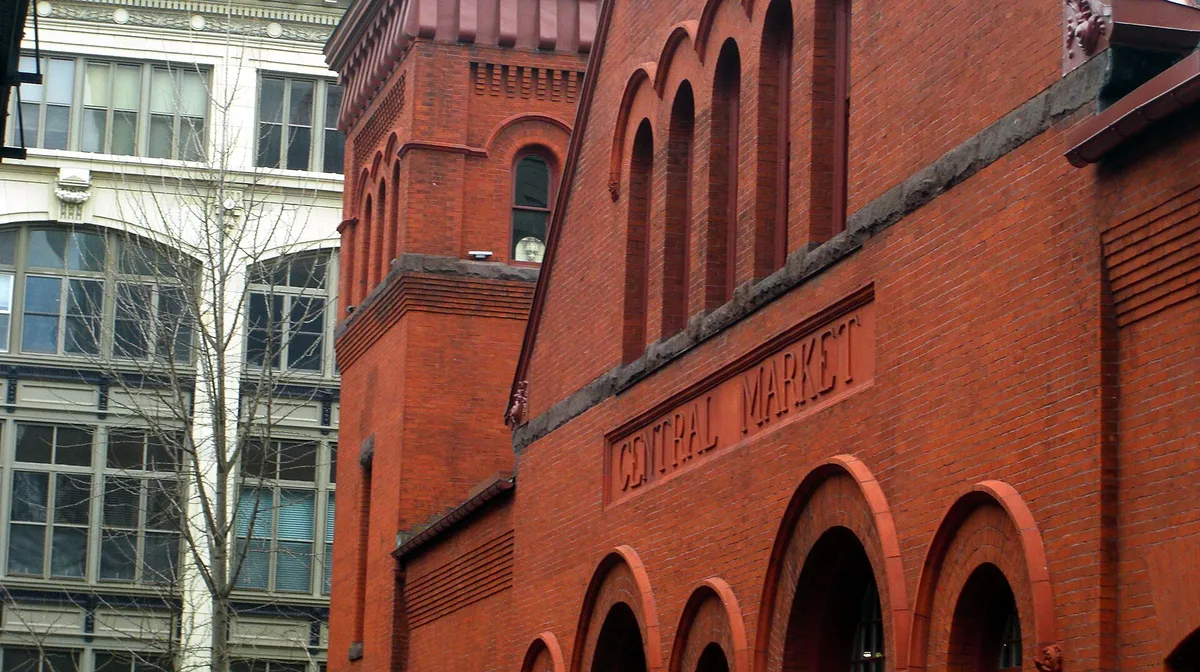
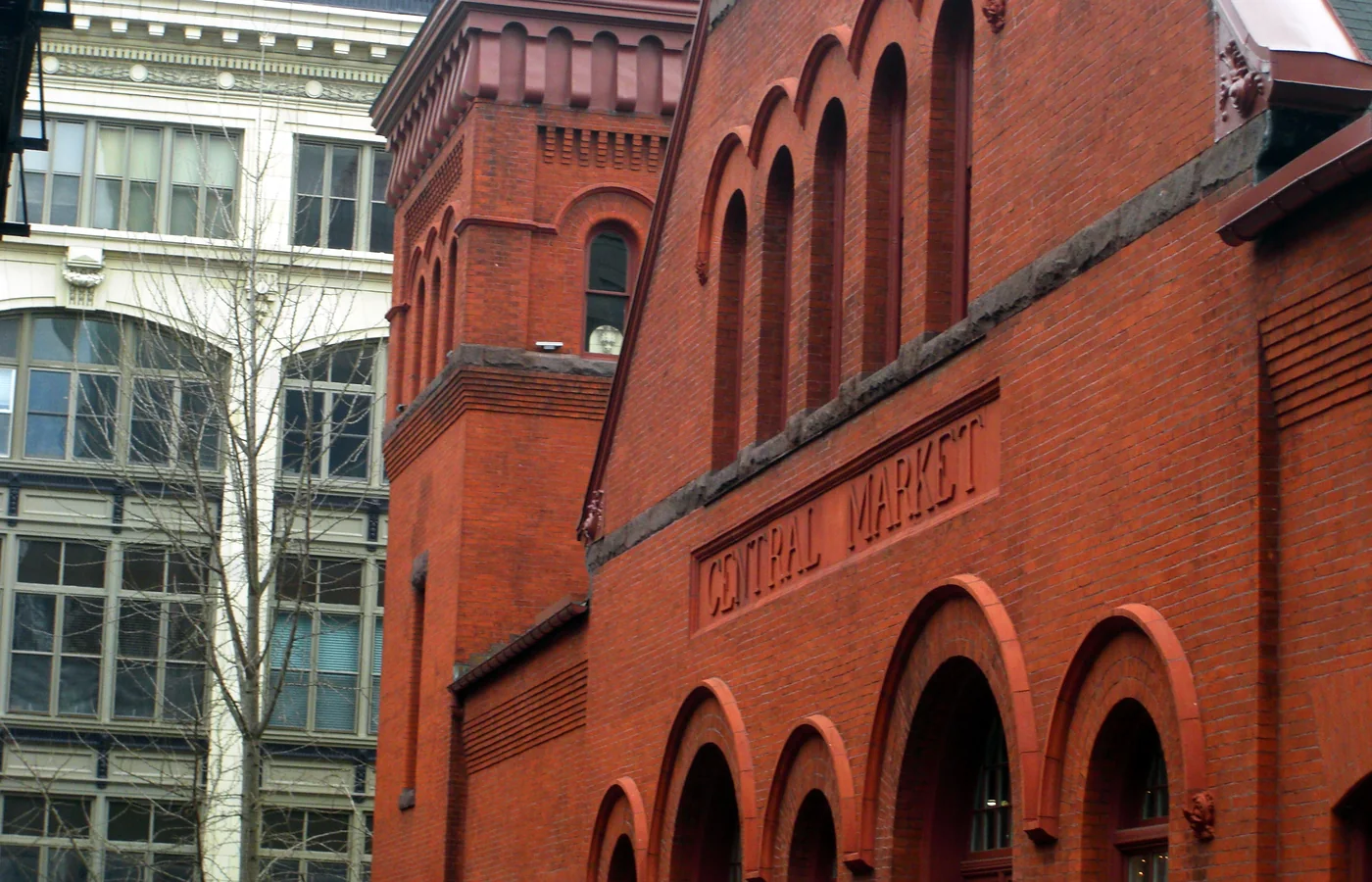
A few of the visual fingerprints we lean into when we shoot, brand and market a Lancaster Pennsylvania Central Market property — courtesy of the open Wikimedia Commons archive.
Cavmir markets Lancaster properties by first getting the guest right, because there are two completely different visitors here and most listings write for neither. One is coming for the county: farmland, the Strasburg Rail Road, the markets, Sight and Sound, a family trip built around driving between small towns. The other is coming for the city: Central Market on a Saturday morning, the restaurants, First Friday, the Fulton, a weekend that never leaves the walkable core. A property downtown and a property out toward Bird-in-Hand are not competitors and should not read as though they were. We work out which one you are and build everything around it. Then we handle the thing this market most often gets wrong, which is how to write about the Amish and Mennonite communities. The right approach is respectful, factual and practical: what is open on a Sunday, which markets are which, where photography is unwelcome, and how to be a good visitor. Guests genuinely want that guidance and almost nobody provides it. We photograph the light this county gets across open farmland in the early evening, write copy that is honest about the drive times between towns, and build a direct booking site that states your homestay or short-term rental position plainly. We help position and market your property. We never manage it or touch your keys.
Lancaster has kept a public market on Penn Square since 1730, and the Lincoln Highway delivered its first automobile tourists after 1913. Cavmir simply writes the modern chapter.
Lancaster was laid out in 1730 and named for the English county, and it grew quickly on the strength of the land around it, which is some of the most productive non-irrigated farmland in North America. German-speaking settlers, including Mennonite and later Amish families, came in numbers through the eighteenth century, drawn by William Penn's guarantee of religious tolerance, and their descendants still farm the county. By the time of the Revolution, Lancaster was the largest inland city in the American colonies, and it made rifles, wagons and iron. On 27 September 1777, with the British marching on Philadelphia, the Continental Congress fled west and held a session in Lancaster, which technically made this the capital of the United States for a single day before they moved on to York the following morning. Lancaster was then the capital of Pennsylvania from 1799 to 1812, when the seat moved on to Harrisburg. Central Market on Penn Square traces its charter to 1730 and is generally described as the oldest continuously operating farmers market in the country; the current building went up in 1889. The Fulton Theatre opened in 1852 and is among the oldest continuously operating theatres in America. James Buchanan, the only president from Pennsylvania, lived at Wheatland on the edge of town. The nineteenth and twentieth centuries brought manufacturing, and its decline left the usual problems, but Lancaster's downtown revival from the 1990s onward has been genuine and substantial, built around the market, the arts and a restaurant economy. Tourism to the surrounding Plain communities developed alongside it, and the relationship between the county's farming families and its visitors remains a subject requiring care rather than a marketing opportunity to be exploited.
Before the platforms, the market drew the county to Penn Square twice a week, the Lincoln Highway brought the first motor tourists through the middle of town, and the working farm country around the city drew travelers of its own by mid-century. Visitors here are guests of that landscape and of the families who keep it working, and presenting it with respect is the whole job. It is the same business Cavmir is in today.
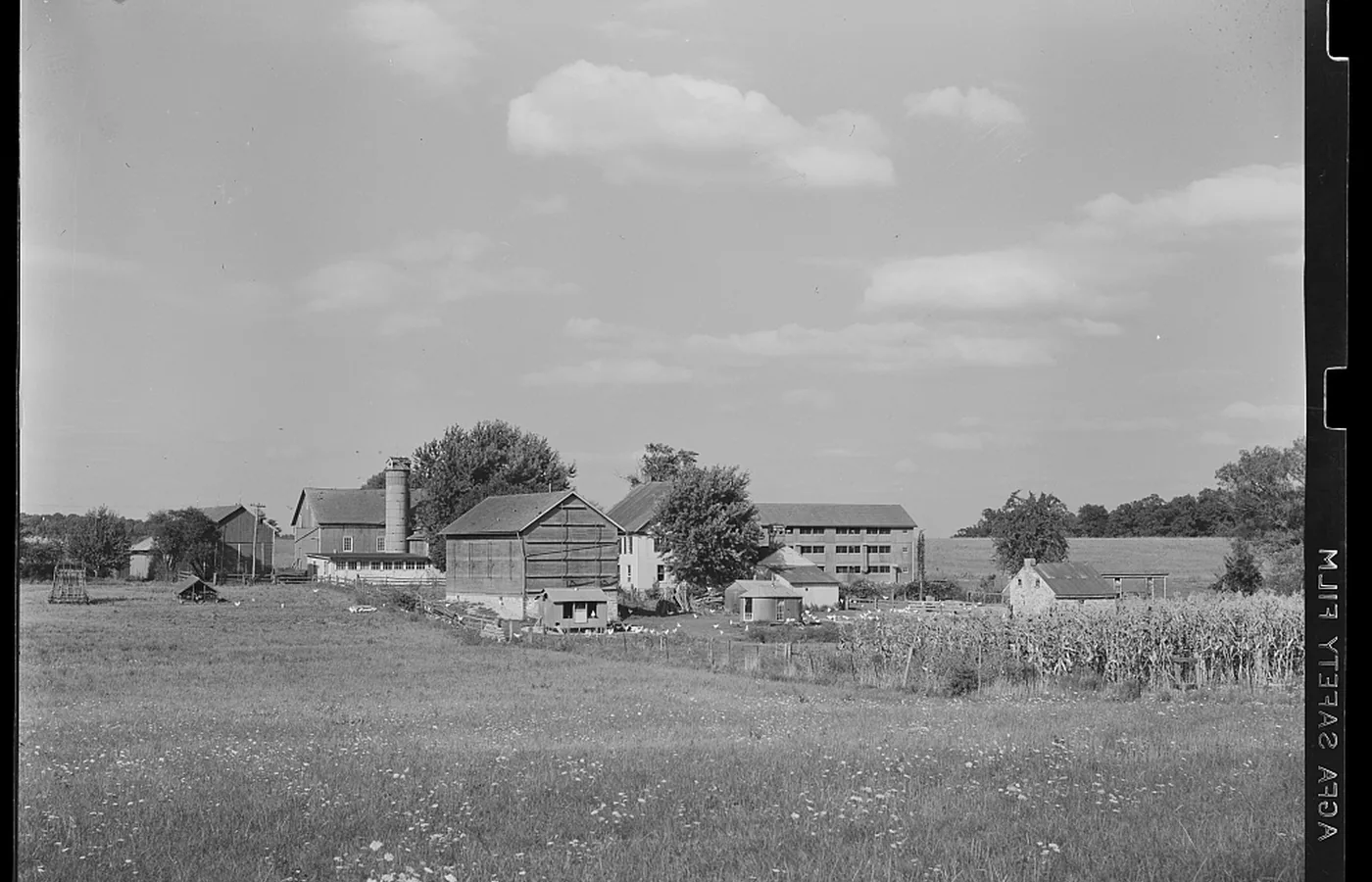
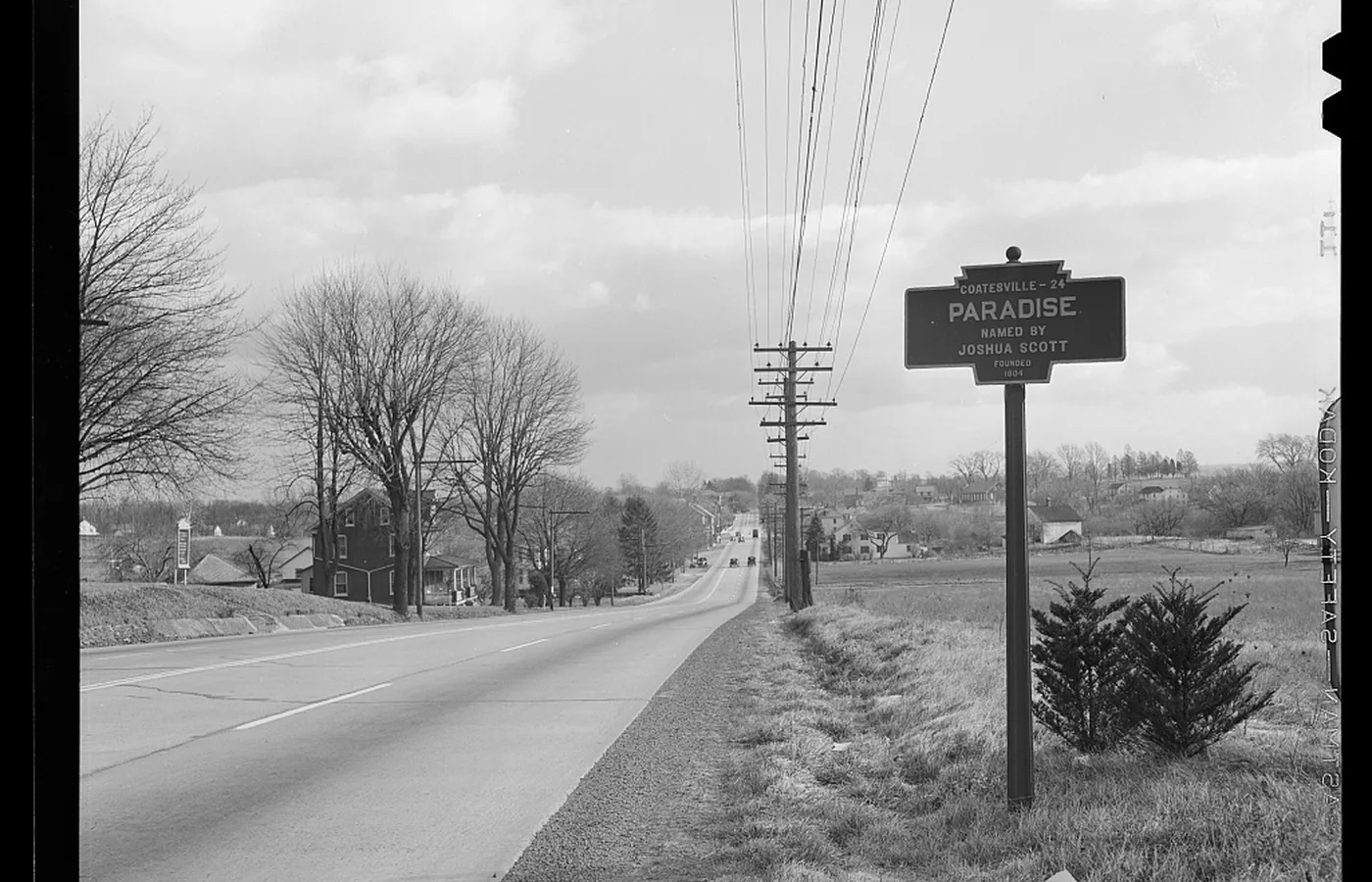
Historical images: public domain and Creative Commons via Wikimedia Commons — Sheldon Dick and Arthur Rothstein for the FSA, Jared Kofsky, and others.
Lancaster has a longer and flatter season than most heritage destinations, and the pricing should reflect steady demand rather than a short peak. Summer is the strongest stretch, driven by family travel through the county, the Strasburg Rail Road, Sight and Sound and the farm attractions. Autumn is close behind and arguably nicer, with harvest, the markets at their best and comfortable weather, and it is the most reliably under-priced period in the market. Spring is solid. Winter is quiet apart from the Christmas trade, which is genuinely substantial here because the county's holiday markets, light displays and theatre programming draw regionally. Two specific pricing points. First, this is a weekend-weighted market and midweek is soft, so build real multi-night value rather than discounting single nights; a three-night midweek rate that is worth taking will outperform three separately discounted nights. Second, the city and the county behave differently. A downtown property is competing on Saturday market mornings, restaurants and First Friday, and can hold rates on weekends year-round; a county property is competing on family attractions and space, with a stronger summer and a weaker January. Price them differently rather than applying one curve. Remember the guest pays Pennsylvania's 6% state hotel occupancy tax plus the county's 5% in hotel taxes on top of your rate.
A long, moderate season rather than a sharp peak. Summer is the strongest, carried by family travel to the county attractions. Autumn is nearly as strong and often more pleasant, with harvest, the markets and good weather, and it is consistently the most under-priced stretch of the year. Spring is solid and steady. Winter is the quiet period, but far less dead than in comparable markets because the Christmas trade here is substantial, with holiday markets, light displays and theatre programming drawing from Philadelphia, Baltimore and beyond through December.
The City of Lancaster's zoning code draws one line that determines everything else, and it is whether the owner is in the building. Under the definition adopted on 10 May 2022, a homestay is a single-family dwelling unit in which a maximum of two bedrooms are rented on a short-term basis by written contract while the owner concurrently occupies the unit. Anything that does not meet that description is a short-term rental. The two categories are permitted in different sets of zoning districts, and the homestay list is broader: homestays are reported as permitted in R3, R4, RO, MU, CB1, CB, C1 and C2, while short-term rentals are reported as permitted in the narrower RO, MU, CB1, CB, C1 and C2. In practical terms that means a residential address which cannot host a whole-house short-term rental may still be able to host a homestay, and for many owners in this city that is the difference between a business and no business. In May 2023 Council added flexibility at the commercial edge, allowing buildings with a ground-floor storefront and one or two apartments above to rent those units on a short-term basis. Beyond zoning, units register as a transient dwelling and must pass a City housing inspection. The maximum continuous stay is 30 days per party. And the management requirement follows the same logic as the zoning distinction: a short-term rental requires a designated property manager, whereas a homestay requires the owner to be the manager and to be present. One factual warning specific to this county. A widely repeated claim online states that Lancaster County's occupancy tax is 2% and was adopted by a Board of Supervisors in 2018. That is wrong in both particulars: Pennsylvania counties are governed by Commissioners rather than a Board of Supervisors, and the county's hotel taxes comprise a 1.1% excise plus a 3.9% room rental tax, totalling 5%. Do not repeat the 2% figure. Verify the zoning position for your specific address, the registration process and the inspection requirements with the City of Lancaster before you buy or advertise, and note that properties outside the city limits fall under their own municipality's rules entirely.
Decide whether you are selling the city or the county, and then commit, because they are different products for different guests and a listing that straddles them persuades nobody. The city sells Central Market on a Saturday morning, the restaurants, the Fulton, First Friday and a walkable historic downtown. The county sells farmland, the Strasburg Rail Road, the markets and roadside stands, Sight and Sound, and space for a family. Second, handle the Amish and Mennonite communities properly, because this is where most listings in this market go wrong and where a good one can genuinely differentiate. These are working religious communities, not an attraction. The useful, respectful things to tell a guest are practical: many businesses close on Sundays, photography of individuals is generally unwelcome and should not be attempted, buggies travel slowly on roads with fast traffic and require real care when driving, and which markets and shops actively welcome visitors. Guests want this guidance and almost nobody provides it well. Third, be specific about drive times, because the county is larger than visitors expect and Strasburg, Intercourse and Lititz are not five minutes apart. Fourth, sell autumn deliberately with its own photography; it is the best season here and the most under-priced. Fifth, if you are a homestay, remember the code requires you to be the manager and to be present, so build your marketing around that presence rather than treating it as a limitation.
The homestay and short-term rental distinction confuses a great many owners and the zoning lists are not intuitive, so mistakes here are common and consequential. The city and county boundary matters enormously and a Lancaster postal address tells you nothing about which municipality's rules apply. Midweek demand is soft outside summer. Competition is broad, with a large established inn and bed-and-breakfast sector in the county that has been doing this for decades and does it well. And the tourism relationship with the Plain communities requires genuine care; owners who market it crudely attract criticism locally and disappointed guests.
Insure a Lancaster property on a policy written for paid guest occupancy, either a dedicated short-term rental product or a landlord policy with an explicit short-term rental endorsement, in writing. Standard homeowner's cover will generally decline a guest-related claim. Ask about liability limits, loss of income and guest belongings. Two considerations shape the local picture. The first is the building stock. Downtown Lancaster's inventory is largely eighteenth and nineteenth century brick rowhousing, often in historic districts, which means older wiring and heating, party walls and repair requirements that raise the cost of a claim; ask about ordinance or law coverage. The second applies if your property is on or near a working farm: agricultural equipment, ponds, outbuildings and livestock are distinct liability exposures your insurer must know about. Pennsylvania winters bring the routine freeze and burst pipe claims, so check the policy's requirements during any vacancy. If you operate as a homestay with the owner present, tell the insurer that specifically, because it is a different risk profile from an empty rental. Platform host protection supplements a policy rather than replacing it.
Two layers apply and one of them is widely misreported online. Pennsylvania charges a 6% state hotel occupancy tax on short-term accommodation, matching the state sales tax rate, and registration is with the Pennsylvania Department of Revenue for a Sales, Use and Hotel Occupancy Tax licence, with filing through myPATH where a platform is not collecting on your behalf. Lancaster County's own hotel taxes comprise a 1.1% excise tax and a 3.9% room rental tax, which together total 5%. You will find guides asserting that the county rate is 2% and that it was adopted by a Board of Supervisors in 2018; that claim is wrong on both counts, since Pennsylvania counties are governed by Commissioners and the actual combined figure is 5%, and it should not be repeated in your listing or your accounts. Confirm all current rates with the Pennsylvania Department of Revenue and with Lancaster County before publishing a combined figure. Some platforms voluntarily collect and remit the Pennsylvania hotel occupancy tax and some do not, and the position on the county taxes may differ from the position on the state tax, so ask explicitly which lines yours files and register and file for the remainder yourself. Ask your accountant how the income is treated federally and for Pennsylvania purposes.
Financing here is more straightforward than in capped markets, but the homestay and short-term rental distinction has direct consequences for how you should present a purchase to a lender. If the property will be a homestay, you are buying a home you will live in and rent up to two bedrooms of, which points to owner-occupier mortgage products with better rates and lower deposits, subject to checking that the loan's use covenants permit it. If it will be a whole-unit short-term rental, you are buying an investment property in a narrower set of zoning districts, and the lender will reasonably want zoning confirmation for the specific address before relying on short-term rental income. Obtain that from the City in writing and put it in the file early. Conventional investment mortgages and DSCR products are both available and Lancaster's price points are moderate, so deposits are attainable and the debt service maths generally works. The main property-level factors are the age and condition of downtown rowhousing, where lenders and appraisers scrutinise systems, roofs and party-wall issues, and, in the county, whether a property carries agricultural land or preservation easements, which can complicate both valuation and permitted use.
Two things worth watching. The first is how the city handles the homestay and short-term rental split over time. The May 2023 change permitting short-term letting of apartments above ground-floor storefronts suggests a council willing to make targeted adjustments where they support the downtown economy, and further refinement in that direction is plausible. Equally, the zoning district lists are the obvious lever if pressure builds from residents, so an owner should follow the city's zoning agenda rather than assume the current lists are permanent. The second is the county, where the towns and townships each set their own rules and where the growth in visitor accommodation has been substantial; regulation there has been lighter and more fragmented than in the city, which is exactly the pattern that tends to precede a wave of local ordinance-making. On demand, Lancaster is in a solid position. The downtown revival has proven durable rather than fashionable, the county's agricultural tourism is long-established, the Christmas season is genuinely strong, and the city sits within a short drive of Philadelphia, Baltimore and Washington. Steady rather than spectacular, which for an owner buying at these price points is a perfectly good place to be.
Lancaster is an old brick city sitting in the middle of some of the best farmland in North America, and both halves of that are worth the trip. Central Market on Penn Square traces its charter to 1730, which makes it the oldest continuously operating farmers market in the country, and on a Saturday morning it is still doing exactly what it was built to do. The Fulton Theatre has been staging shows since 1852. The downtown has come back properly over the past thirty years, with restaurants and galleries and a First Friday that people actually turn out for, and it has done it without becoming a theme park. Out in the county there is farmland worked by Amish and Mennonite families, which visitors come for and which deserves rather more care than it usually gets, because these are working communities and not an exhibit. There is the Strasburg Rail Road, chartered in 1832 and still running steam. There is Wheatland, where James Buchanan lived. And there is the fact, which Lancaster mentions to almost nobody, that on 27 September 1777 the Continental Congress fled Philadelphia, met here for a single day, decided the Susquehanna would make a better barrier against the British army, and left the next morning, making this the capital of the United States for exactly twenty-four hours.
A great property in Lancaster Pennsylvania Central Market doesn't just want a listing — it wants a point of view, an audience, and a brand the city itself would recognise.
Eight things to know about Lancaster before writing listing copy, starting with the distinction the zoning code turns on.
A homestay is up to two bedrooms let while the owner occupies the unit. Everything else is a short-term rental, permitted in fewer zones.
A Lancaster postal address tells you nothing. The city's code applies only inside the city; townships set their own rules.
The oldest continuously operating farmers market in the country, on Penn Square. Saturday mornings are the thing to send guests to.
Strasburg, Bird-in-Hand, Intercourse and Lititz are spread out. Give honest drive times or guests plan badly.
Many businesses close Sundays, photography of individuals is unwelcome, and buggies need real care on fast roads. Say all of this.
Still running steam and the anchor of most family trips to the county. Book ahead in summer.
Harvest, the markets and good weather. Consistently the most under-priced stretch of the Lancaster year.
Lancaster County hotel taxes are 1.1% excise plus 3.9% room rental. The widely repeated 2% figure is simply wrong.
The three examples below are composite and illustrative. They are drawn from patterns common in markets split between a walkable city and a rural county, and they are not accounts of specific clients.
A well-finished apartment a few minutes from Central Market was marketed almost entirely on Amish country imagery and drew guests expecting a rural stay, who then found themselves in a city and said so in reviews.
We repositioned it firmly as a city property: Central Market on a Saturday, the restaurants, the Fulton, First Friday and the walkable historic core, with honest drive times out to the county for guests who wanted a day there.
Guest expectations matched the property, location-related complaints stopped, and the listing began attracting visitors who specifically wanted a walkable downtown base.
An owner living in a single-family house and letting two bedrooms believed they were operating a short-term rental and thought their residential zoning district did not permit it.
We set out the code's distinction between a homestay, which is up to two bedrooms let while the owner concurrently occupies the unit, and a short-term rental, and identified that the homestay category is permitted in a broader set of districts, then confirmed what the City required for registration and inspection.
The owner established which category actually applied to their situation and pursued the correct registration path rather than abandoning a business the code permitted.
A county property attracted guests who arrived with no understanding of local customs, attempted to photograph people, and were surprised to find businesses closed on Sundays.
We wrote a respectful, practical section into the listing and the welcome material covering Sunday closures, why photography of individuals is unwelcome, how to drive safely around buggies, and which markets and businesses actively welcome visitors.
Guests arrived better informed and behaved better, feedback improved noticeably, and the guidance became one of the most commonly praised elements of the stay.
Demand in Lancaster peaks around June through August and runs quietest around January through February. Here is how the year actually books — and what to do about each stretch of the calendar.
Summer is the strongest stretch, driven by family travel through the county to the railroad, the markets and the farm attractions. Weekends substantially outperform midweek. Set summer weekend rates early and build genuine multi-night value rather than discounting single nights, because a three-night midweek offer worth taking beats three separately discounted nights.
Autumn is nearly as strong and arguably nicer, with harvest, the markets at their best and comfortable weather, and it is the most reliably under-priced period in the market. Spring is solid and steady. Both suit the city's own restaurant and gallery trade as much as the county's farm attractions.
Winter is the quiet period but far less dead than in comparable markets, because the Christmas trade here is genuinely substantial, with holiday markets, light displays and theatre programming drawing from Philadelphia, Baltimore and beyond through December. January and February are the true trough and the right window for maintenance.
Summer weekends and the December holiday period book several weeks to a couple of months ahead. Autumn books closer in, which is part of why it stays cheap. Midweek is largely last-minute year-round.
Two and three night stays dominate and the market is weekend-weighted. Family county trips often extend to four nights in summer. Midweek is soft outside the peak and rewards a genuine multi-night rate.
The deciding question is whether you are selling the walkable city or the county, and the property should commit to one. Downtown, walkability to Central Market and the restaurants is the whole proposition. In the county, space, parking and a genuine sense of the farmland are what get booked.
Start with photography that shows what a guest actually gets here, then write the listing around a real itinerary rather than a feature list. Build a direct-booking site so returning guests can come back without going through a platform, and keep an email list segmented by season so you can reach last year's visitors before the calendar opens. Local search matters more than people expect in a market this size, because guests search the destination and the attraction rather than the word rental. A marketing agency layer handles the photography, the listing copy, the direct-booking site and the local SEO as one system instead of four disconnected jobs.
Summer is the strongest stretch on family travel through the county, and autumn is nearly as strong and arguably nicer, with harvest and the best weather of the year. Autumn is also the most under-priced period in this market. Winter is quieter but December carries a substantial Christmas trade.
Summer weekends and the December holiday period book several weeks to a couple of months ahead. Autumn books closer in. Midweek outside the peak is largely last-minute, which is why a genuine multi-night rate works better than nightly discounting.
A dense mid-Atlantic drive market led by Philadelphia and Baltimore, with Washington, New York and Harrisburg behind them. Almost every guest arrives by car, which makes parking and clear driving directions unusually important in a listing here.
Parking is essential because this is a driving market. Beyond that, a full kitchen, laundry and enough sleeping space for a family carry the most weight, along with air conditioning in the summer months.
Run your Airbnb, Vrbo, or website through Cavmir's free grader. It checks the things that decide whether guests book in Lancaster — photos, listing copy, page speed, local search — and shows you where bookings leak. Takes about a minute, and there's no sales call attached.
If the report says your booking engine is the weak link, that's fixable: a direct-booking website of your own means repeat guests stop paying platform fees to come back to you. That's the work Cavmir does — see Airbnb website design in Lancaster.
Send us the listing and we'll tell you what we'd change. Not a pitch deck — a straight read on your photos, your title, your rates against the Lancaster comp set, and whether a direct-booking site would pay for itself.
You'll hear back from a person, usually inside one business day. If we don't think we can move your numbers, we'll say so. Cavmir is a short-term rental marketing agency — we position and market properties, we don't manage them.
Talk to Cavmir today. We'll show you exactly what your Lancaster property is leaving on the table — and how fast we can change that.
Book a Free Strategy CallPhotography via Wikimedia Commons (images resized and cropped): Lancaster Central Market by Jared Kofsky/PlaceNJ.com (CC BY-SA 3.0) · North Duke Street Lancaster (cropped) by Scanlan (CC BY-SA 3.0) · Strasburg Railroad 60 Donald E.L. Hallock by Eli Christman (CC BY 2.0).
