




Coffee & First Light
Broadway before the shops open
The historic downtown is at its best at seven on a Saturday, before the day traffic arrives. Grab a coffee, walk up the hill and look back down over the rooftops and the spires.

Expert short-term rental marketing to grow your bookings and nightly rate in Jim Thorpe, Pennsylvania, USA.
Sixteen services, one team. Everything below is built in-house and scoped to your property and market. Most owners start with the 12-Step System.
Every engagement is quoted to your portfolio. These are the ready-made scopes owners pick most — our Fall Special (55% off list or more) is already applied to the website, King Broker, Hotels and à la carte scopes. A clear proposal within 48 hours.
The work is public. Selected engagements and what changed — and reviews from the owners and managers behind them.
* Market averages from AirDNA and STR market reports. A single home's numbers depend on its size, its location and how it is marketed.
Cavmir is an Airbnb marketing agency. We build the brand, the direct-booking website and the marketing for short-term rentals in Jim Thorpe.
Jim Thorpe is a Victorian railroad town wedged into a gorge on the Lehigh River, about ninety minutes from Philadelphia and a little over two hours from New York. People call it the Switzerland of America, which is a nineteenth-century marketing line that stuck, and it is not entirely unearned — the streets run up the hillside in terraces, the church spires stack above the rooftops, and the whole downtown is a preserved historic district you can walk end to end. What makes it a rental market rather than a day trip is the combination around it: a rail-trail through the Lehigh Gorge that riders shuttle to the top of and coast down, dam-release whitewater on the Lehigh, a scenic railroad that runs foliage trains through October, and a fall season that turns this valley into one of the busiest small towns in Pennsylvania. Rental stock is mostly historic: row houses on Race Street, converted downtown buildings, hillside Victorians. The regulatory environment is genuinely strict, which matters enormously to how you buy and how you market here.
Two forces define this market. The first is proximity. Jim Thorpe is inside the weekend radius of Philadelphia, New York, North Jersey and the Lehigh Valley, which is an enormous population reachable in under three hours. That produces reliable weekend demand nearly year-round and a hard midweek problem in the off months. The second is the ordinance. The borough adopted short-term rental rules in 2021 that grandfathered existing operations and restricted new rentals to specific zoning districts, with occupancy limits, a licensing process and a liability-insurance requirement written into it. That has capped growth in the most desirable parts of town. If you already hold a licensed rental here, you own something that cannot simply be replicated by the next buyer with cash, and your marketing should reflect that rather than pricing you against the general Poconos cabin field an hour away. October is the peak and it is a serious one — foliage weekends on the train and the trail sell out the whole valley. Summer runs on rafting and riding. Winter is quiet apart from the Christmas market weekends, which the town does well. The single largest missed opportunity is the trail and river crowd, who arrive by the thousands and mostly still drive home the same day.
Nearby Markets: Poconos | Cook Forest | Catskills | New Hope
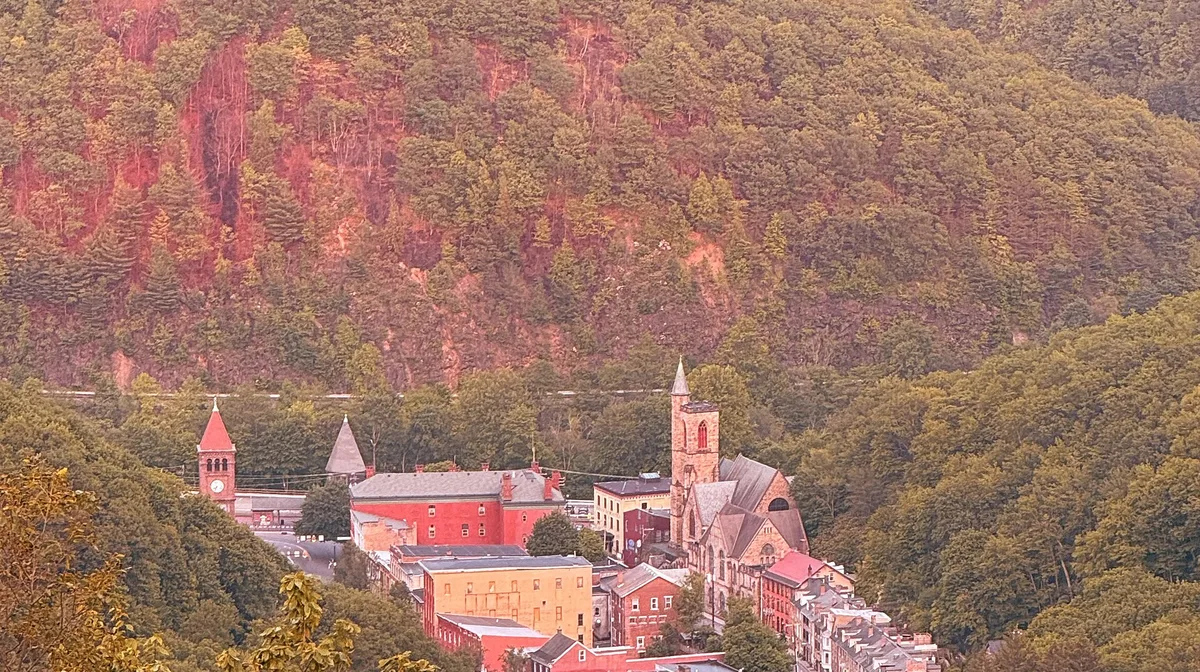
A few of the visual fingerprints we lean into when we shoot, brand and market a Jim Thorpe property — courtesy of the open Wikimedia Commons archive.
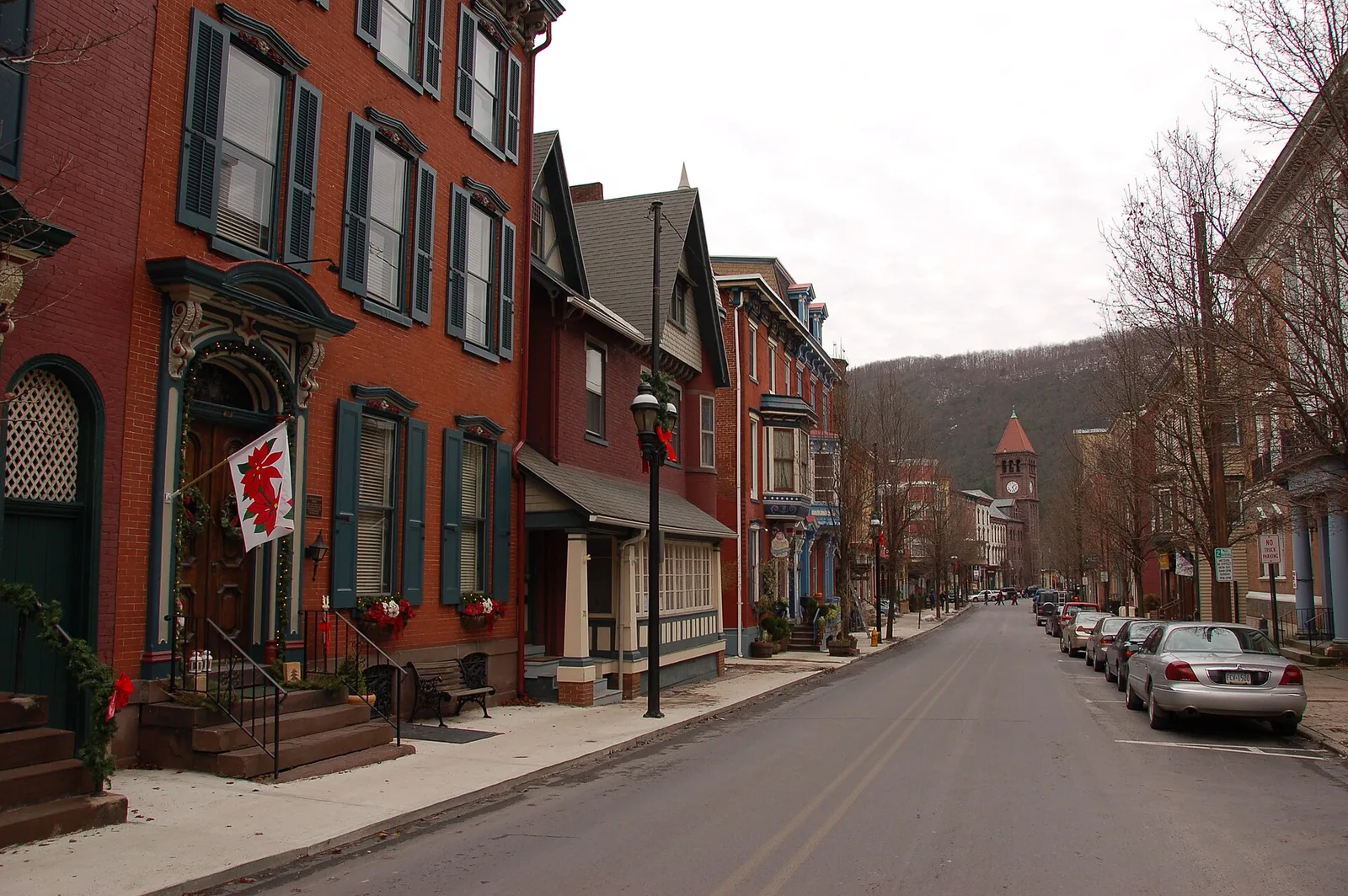
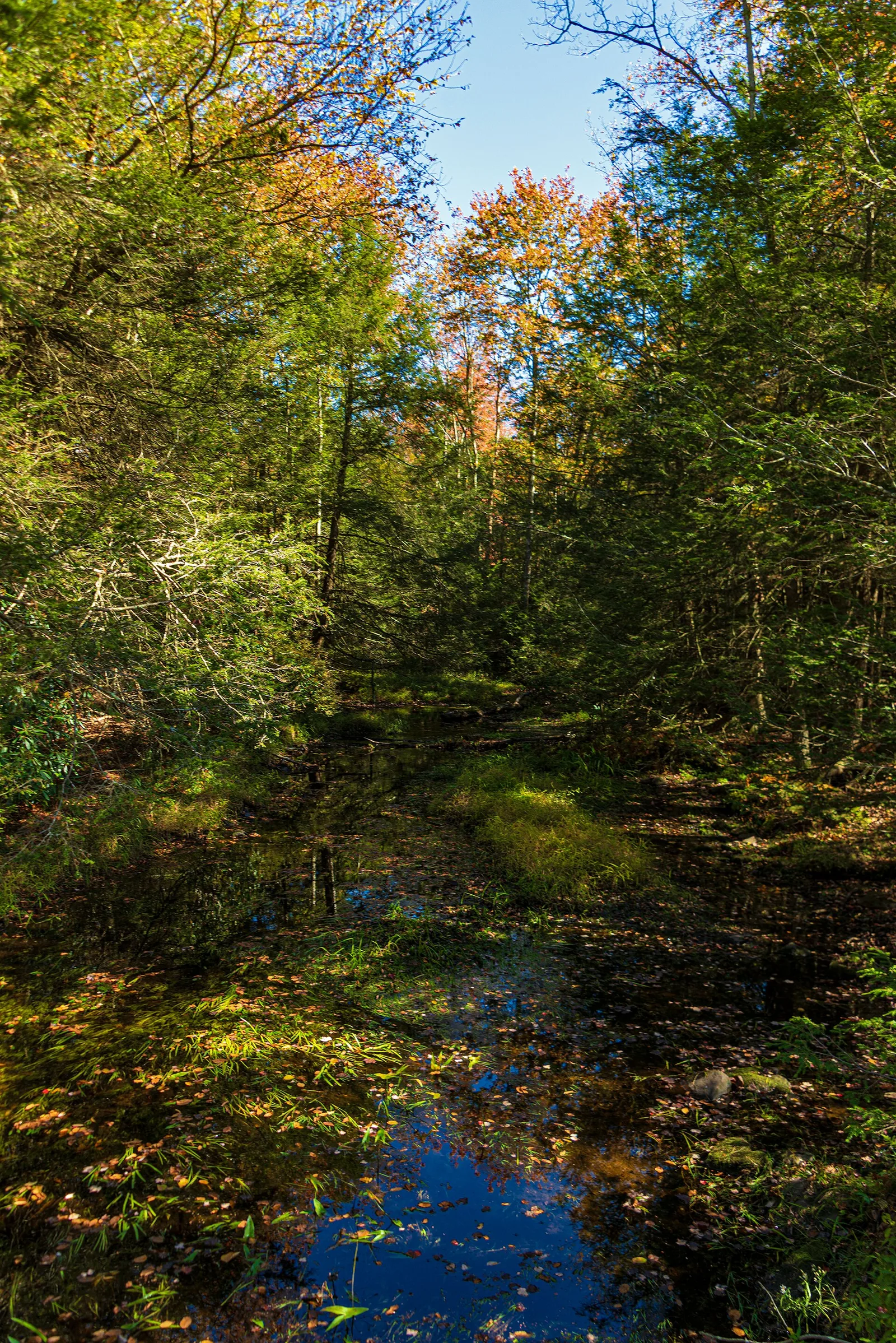
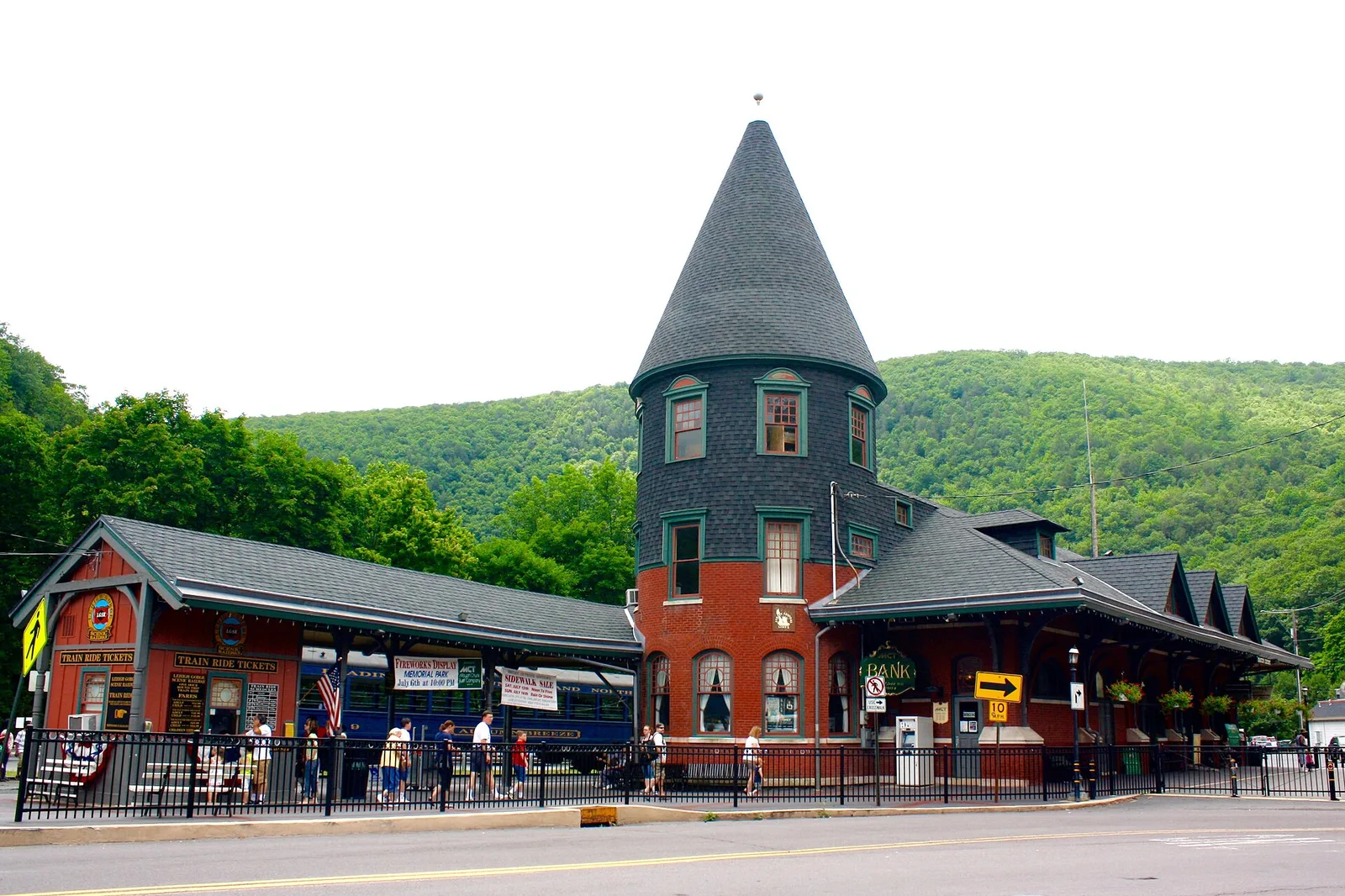
Cavmir markets Jim Thorpe properties around the two things that actually decide a booking here: walkability and the trail. We photograph the property so a guest can see the street, the stairs, the porch and the church spires, because in a town this compact where you are is most of what you are selling. We write the copy against real distances — to the trailhead, to the station, to the shuttle pickup, to dinner — and we build a direct-booking site that ranks for the searches that already bring people to this valley. We set up an email list that turns an October foliage guest into a June rafting guest, and we run paid campaigns aimed at Philadelphia, North Jersey and the Lehigh Valley in the months you need them. We take your license status and your zoning district seriously and we get them straight before writing a word, because in a borough this regulated they shape what you are allowed to say. We do not invent numbers and we do not promise revenue. We help position and market your property. We never manage it or touch your keys.
Mauch Chunk called itself the Switzerland of America and turned a coal railroad into one of the country's first tourist rides. The name changed in 1954; the pitch never did, and Cavmir writes its modern chapter.


For most of its life this town was called Mauch Chunk, from a Lenape name for the bear-shaped mountain above it, and it was one of the wealthiest places in Pennsylvania. Anthracite coal came down from the Panther Creek valley, and in 1827 the Switchback Gravity Railroad was built to move it — a gravity-powered line that let loaded cars run downhill under their own weight. When the coal traffic moved to other routes, the Switchback became a tourist ride, and it is generally credited as an ancestor of the roller coaster. Coal money built the town you see now: the Asa Packer Mansion above Race Street, the opera house, the churches stacked up the hillside, and the terraced row houses that most of today's rentals occupy. Packer founded the Lehigh Valley Railroad and Lehigh University with the same money.
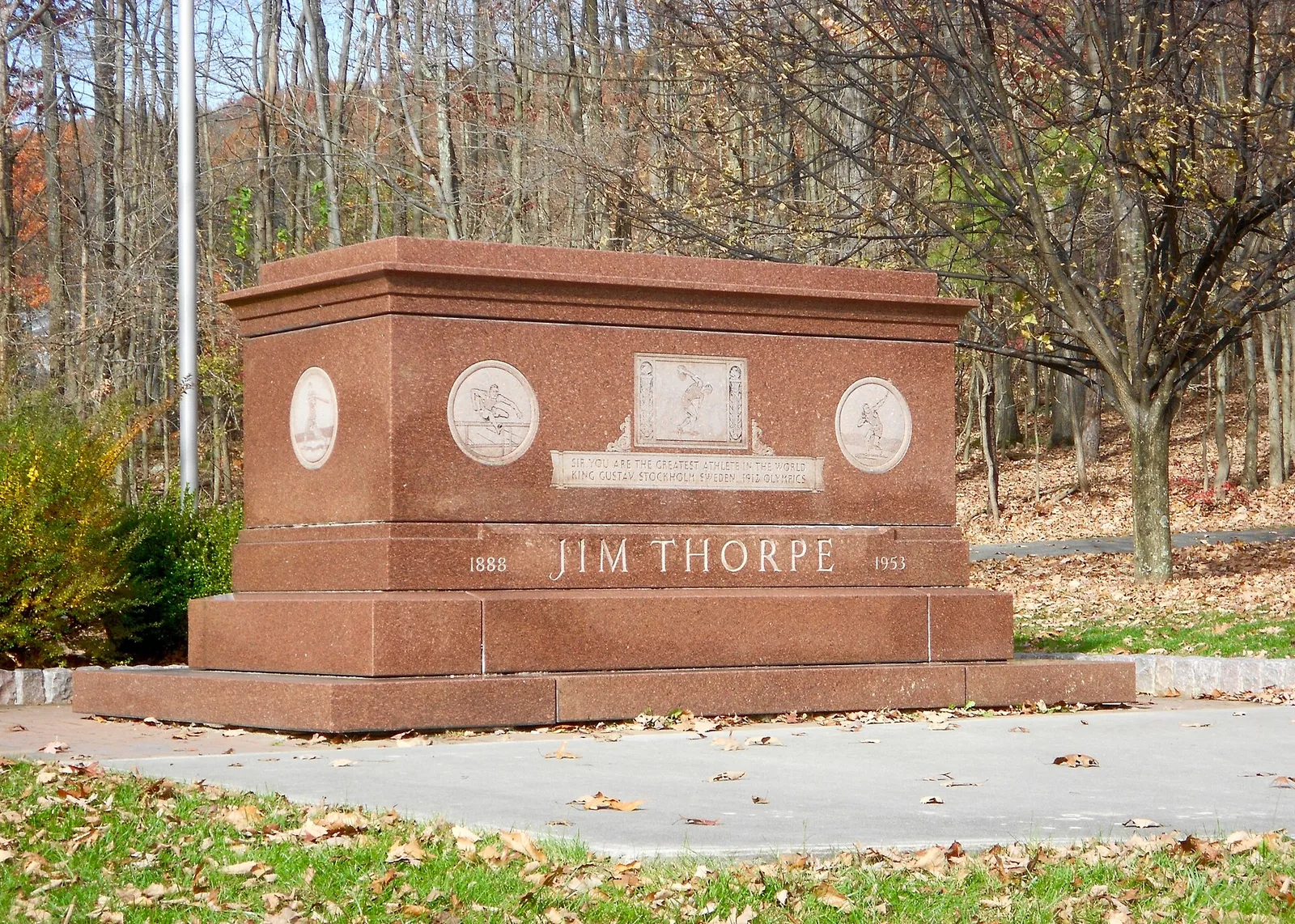
The name changed in 1954. The town had merged with East Mauch Chunk and was looking for a way to reverse decades of decline after the coal economy collapsed. Jim Thorpe, the Olympic champion and professional athlete, had died the year before, and an arrangement was reached with his widow: the merged borough would take his name and build a memorial, and he would be buried here. He had no connection to the town in life. The tomb sits on the edge of it now, and the borough has carried the name ever since. What actually revived the place came later and was less dramatic — the historic downtown was never torn down, the state built a rail-trail up the Lehigh Gorge, dam releases created reliable whitewater on the river, and a scenic railway started running excursions out of the old station. By the 2000s a town that had nearly emptied out was one of the busiest fall-foliage destinations in the state. The short-term rental market grew on that, quickly enough that the borough wrote rules for it in 2021.
Before the platforms, a gravity coal railroad carried excursionists down nine miles of mountain at speed, guidebooks called the town the Switzerland of America, and the Lehigh Valley Railroad printed summer-tour brochures to fill it. The channel changed; the work is identical: presentation, positioning, and a town the scenery built. It is the same business Cavmir is in today.


Historical images: public domain via Wikimedia Commons — P.S. Duval & Son lithograph (Library of Congress), Agence Rol, and others.
October is the year. Foliage weekends here fill the whole valley, the train sells out, the trail shuttles run all day, and rates can carry a genuine premium if you set them early and hold. Everything else is a supporting act, and pricing it flat is the most common mistake in this borough. Summer runs on the river and the trail, and it is weekend-loaded with a soft midweek. Spring is quiet until the dam releases start. Winter is the true off-season apart from the holiday market weekends in late November and December, which do real business and are routinely underpriced. The practical structure is four tiers with October carved out as its own tier, two- and three-night minimums on foliage and holiday weekends, and midweek rates in summer that are aggressive enough to catch the riders and rafters who currently drive home the same day. Because the borough's ordinance limits occupancy in licensed rentals, most properties here are selling to couples and small groups rather than to families of ten, and the pricing should reflect that — this is a two-couples market and it prices closer to a good inn room than to a Poconos cabin.
One enormous peak and three quieter seasons. October is the strongest month by a wide margin, with the first three weekends carrying most of it. Summer, roughly Memorial Day through Labor Day, is steady on weekends and thin midweek, driven by rafting on dam-release days and the rail-trail. Late November and December do surprisingly well on the strength of the town's Christmas markets and the lit-up hillside. January through March is genuinely quiet, and April is slow until the water comes up. That gives you one month you cannot afford to price wrong, two seasons worth working, and a winter stretch where the honest answer is to discount, target locals and couples, and not pretend otherwise.
Jim Thorpe is one of the more tightly regulated small boroughs in Pennsylvania and you need to understand the rules before you buy, not after. The borough adopted a short-term rental ordinance in 2021. It grandfathered rentals already operating and restricted new short-term rentals to specific zoning districts — the commercial districts and one residential district, plus special districts — with anything outside those requiring a variance or a conditional use approval. It set occupancy limits, which in practice cap how many guests a licensed rental can host and therefore what kind of property makes economic sense here. It requires a license, and it requires each owner to carry general liability insurance at a specified minimum for the full term of that license and to give the borough proof of it. It also requires owners to show current tax credentials, including a Pennsylvania sales tax license and a Carbon County hotel room excise tax certificate where applicable.
The practical effects are worth spelling out. First, a licensed, compliant rental in the walkable part of town is a constrained asset. New supply cannot simply appear next door, and that scarcity should inform how you price and how you present the property. Second, if you are buying, the license and its history are part of the due diligence, not an afterthought — confirm with the borough in writing what the property is permitted to do, how many guests it may host and whether the status transfers. Third, the insurance requirement is not a suggestion; it is a condition of holding the license, and your policy has to be a genuine short-term rental liability policy, not a homeowner's policy with a rider you have not read. On taxes, Pennsylvania levies a state hotel occupancy tax, Carbon County levies a hotel room excise tax, and the borough's ordinance provides for a local occupancy tax as well. Confirm all three current rates with the borough and the county before your first filing. Rules in this borough have been revised more than once since 2021, so verify the current version rather than a summary you read somewhere.
Sell the walk. In a town built on a hillside where everything worth doing is within ten minutes on foot, your address is your main feature. Say which street, say how many steps up from Broadway, say how long to the station and the trailhead. Second, photograph the stairs and the hill honestly. Guests who arrive at a fourth-floor walkup in a Victorian row house they thought was a ground-floor apartment leave that in a review. Shown up front, the same stairs are charm. Third, own October but sell the other eleven months. The single biggest revenue gain available to most owners here is not a higher foliage rate, it is a functioning June and a functioning February. Build the copy and the email calendar for rafting season and for the Christmas markets specifically. Fourth, take the trail crowd seriously. Thousands of people ride the gorge every good weekend and most of them are day-trippers who could be overnight guests. Secure bike storage, a hose and a shuttle-schedule page in your guest guide convert some of them. Fifth, respect the occupancy limit in your marketing — advertising a capacity your license does not permit is the fastest way to lose it. Sixth, put parking in the listing in plain language. It is the number one practical question in this borough and the honest answer, whatever it is, prevents a bad arrival.
The ordinance is the defining constraint. It limits where new rentals can exist, how many guests they can host and what insurance you must carry, and it has been revised since adoption, so staying current is part of the job. Beyond that, the season is lopsided — October carries the year and February does not, and owners who do nothing about the gap accept a mediocre annual number. Parking in the historic district is tight, the hillside streets are steep and ice in winter, and the town's popularity on foliage weekends can itself become the complaint when a guest cannot get through traffic on Broadway.
In Jim Thorpe this is not just prudent, it is a condition of your license: the borough's ordinance requires owners to maintain general liability coverage at a specified minimum for the full license term and to provide proof of it. Get a genuine short-term rental policy rather than a homeowner's policy with an endorsement, and make sure the limits meet or exceed what the borough requires. The building stock adds specifics. These are old houses — knob-and-tube remnants, coal-era chimneys, steep interior stairs and shared walls in row houses are all common, and each one is something a carrier will ask about. Stairs are the leading injury risk in this town's inventory. If your property is a converted commercial building, make sure the policy matches its actual classification. Ask for guest injury, guest property damage and loss of rental income after a covered event to be spelled out in the policy language, and keep the certificate current with the borough so a lapse never puts the license at risk.
Three layers apply here and the ordinance requires you to document them. Pennsylvania levies a state hotel occupancy tax on stays of under thirty days. Carbon County levies a hotel room excise tax, and the borough's ordinance requires owners to provide a current county certificate where applicable along with a current Pennsylvania sales tax license. The borough's own ordinance also provides for a local occupancy tax collected on rentals within the borough. Confirm all three current rates directly with the borough and the county — they have changed since the ordinance was adopted and a summary from a third-party site is not good enough when your license depends on compliance. Booking platforms remit some of these on the bookings they process, but not necessarily all of them and not on your direct bookings, which is exactly the revenue a marketing program is designed to grow. Get registered, get the filing calendar set, and keep platform and direct revenue in separate ledgers from the start.
The housing stock here is old, attached and often converted, which is where the financing friction lives. Row houses on Race Street and the hillside streets can raise appraisal questions about shared walls, party structures and deferred maintenance. Properties in converted commercial buildings may not qualify for residential financing at all and can need a commercial or portfolio product. Old roofs, aging electrical and coal-era chimneys turn up in inspections and can affect both the loan and the insurance quote. Second-home financing is available and cheaper than investment-property financing, but be clear about intended use, particularly in a borough where the license is a matter of public record. Debt-service-coverage lending underwritten on rental income is common for buyers scaling here. Whatever the structure, model the licensing reality into the numbers: the occupancy cap limits your maximum nightly rate, and the seasonality means an annual average will flatter a calendar that is genuinely empty in February. Have your accountant look at it before you commit.
The steady trend here is more visitors and tighter rules, and both are likely to continue. The trail and river economy keeps growing — the D&L corridor along the Lehigh has been extended and improved in stages for years, and every connected mile pushes more traffic through this town. The scenic railway and the opera house keep the downtown busy in a way most former coal towns cannot manage. Against that, the borough has demonstrated it will regulate, and the 2021 ordinance has already been revisited. The most probable direction is continued restriction on new rentals rather than loosening, which is good news for existing licensed owners and a real barrier for new buyers. The other thing to watch is the balance between day-trippers and overnight guests. This town gets enormous day traffic on good weekends and converts relatively little of it into stays. An owner who builds a direct relationship with guests and markets the shoulder seasons deliberately is capturing the part of the market that is actually available for growth.
Jim Thorpe is one of the few American towns that looks like it was drawn rather than built. The streets climb the side of a gorge in terraces, the church steeples line up above the rooftops, and the Lehigh River runs at the bottom of it all with a rail-trail on the bank. You park once and you walk, up and down and up again, past a nineteenth-century opera house that still books bands, a mansion that a railroad baron built with coal money, and a jail with a story about the Molly Maguires that people still argue about. Then you rent a bike, get shuttled twenty-five miles up the gorge, and coast back down to town along the water. In October the whole thing turns orange and the valley fills up and the train runs excursions all weekend. What we like about marketing here is that the town does most of the selling and almost nobody's listing shows it. Property after property leads with an interior photograph of a living room that could be anywhere, when the actual product is a walkable historic town in a river gorge ninety minutes from Philadelphia. The other thing we like is the scarcity. The borough decided in 2021 that it was not going to let short-term rentals spread everywhere, and that means a licensed property in the walkable core is genuinely limited inventory. Owners who understand that market their property very differently from owners who do not.
A great property in Jim Thorpe doesn't just want a listing — it wants a point of view, an audience, and a brand the city itself would recognise.
Eight answers to keep in the guest guide. These are the things people ask on arrival, and a good answer beats a welcome basket every time.
The historic downtown is at its best at seven on a Saturday, before the day traffic arrives. Grab a coffee, walk up the hill and look back down over the rooftops and the spires.
The restaurant count is small and October fills every one of them. Tell guests to book their Saturday table the week they book the stay, not the day they arrive.
Rent a bike in town, take the shuttle up the gorge, and ride the whole way back downhill along the river. It is the single best thing to do here and it works for almost every fitness level.
Two very different indoor hours. The mansion is preserved to an unusual degree, and the jail's Molly Maguires history is grim but genuinely part of this valley's story.
Whitewater on the Lehigh runs on scheduled releases, not on luck. Check the release calendar and a May weekend can be as good as an October one, with none of the crowds.
Ten minutes out of town with a beach, boat rentals and quiet trails. The right answer for a hot afternoon or for guests with kids who have had enough of walking hills.
The road up the mountain gives you the whole valley and the river bend below the town. Late afternoon in October is the photograph everyone comes back with.
Parking in the historic district is tight and the streets are steep. Put your exact arrangement in writing with a photograph of the spot, and half your arrival problems disappear.
Guests who find a Jim Thorpe rental on Airbnb search its name afterwards, and the page they should land on is the owner’s own site. Cavmir builds vacation rental websites of 40 to 125 pages in the owner’s brand. For a home that only lists on Airbnb, that is a website for your Airbnb: your name and domain, your photos, your area guides and your reviews, with a button that sends guests to the listing. For homes on Hostaway, Guesty or Hospitable it is a direct booking website: live availability and prices from the PMS, the whole stay priced before checkout, and the booking completed in the PMS. Both start from the same vacation rental website design, run the TrollBuster™ compliance scan before launch, and are yours at launch: domain, code, content and photos.
The guide pages of a Jim Thorpe site can start with the picks on this page: Broadway before the shops open, Dinner downtown on a foliage weekend and The Lehigh Gorge Trail. Each one is a search a guest makes before choosing a home, and each becomes a page that leads to the booking button.
Packages start at $1,475 for the Starter Website (40 pages, two to three weeks) and run to $3,732 for Full with Direct Booking (125 pages, booking synced with your PMS); the current prices are on the pricing page.
A few composite engagements, drawn from how Cavmir typically works with owners in a regulated, walkable historic town. Illustrative rather than any one client's file.
Priced against Poconos cabins forty minutes away despite being a licensed, walk-everywhere property in a borough where new licenses are hard to get.
Repositioned around walkability and the license scarcity, reshot to lead with the street and the hillside view rather than the sofa, and built a direct-booking site targeting foliage-weekend and rail-trail searches with a seasonal email list.
The property stopped competing on cabin terms, October weekends began booking further ahead, and returning guests started rebooking direct for the following autumn.
A genuinely good space losing bookings to arrival surprises — three flights of stairs, no dedicated parking — that were not mentioned anywhere in the listing.
Rewrote the listing to state the stairs and the parking plainly up front with photographs of both, then leaned into what the location actually offers with a walk-time map to the station, the trailhead and every restaurant.
Fewer mismatched expectations on arrival and a clear improvement in review sentiment, with the accurate access description filtering out the guests who were never going to be happy there.
Two units listed separately, competing against each other for the same enquiries, with no way to serve a group that wanted both.
Built one owner-branded site presenting the units individually and as a combined booking for larger groups, with cross-referral when one date was gone and a single shared email list.
Group enquiries that previously went unanswered could be served by booking both units, and dates blocked on one calendar were more often retained by the other.
Demand in Jim Thorpe peaks around October and runs quietest around January through March. Here is how the year actually books — and what to do about each stretch of the calendar.
October carries the year. Foliage weekends fill the valley, the scenic railway sells out and the trail shuttles run all day. Set those rates and minimum stays months ahead and do not discount into them. The rest of the calendar is a supporting act and should be priced as a separate business.
May through September runs on dam-release rafting and the rail-trail, strong on weekends and thin midweek. Late November and December do genuine business on the town's Christmas market weekends and are routinely under-priced. Both windows reward targeting Philadelphia and North Jersey directly.
January through March and early April are the real off-season in the gorge. Discount honestly, market to couples and locals, offer longer stays, and use the window for maintenance and a spring reshoot.
October weekends book earliest and can go months ahead. Rafting weekends follow the published release schedule. Christmas market weekends fill through the autumn. Winter and early spring are close to last minute.
Two-night weekends are the norm, with three nights on holiday and foliage weekends. Because the borough's rules cap occupancy in licensed rentals, this is largely a couples and small-group market rather than a large-family one.
Licensed properties in the walkable historic core outperform anything on the outskirts, because the entire product here is parking once and walking. Restored row houses and converted downtown units suit the couples and small groups the occupancy rules point you toward. Anything with genuine off-street parking has a real and under-stated advantage.
Start with photography that shows what a guest actually gets here, then write the listing around a real itinerary rather than a feature list. Build a direct-booking site so returning guests can come back without going through a platform, and keep an email list segmented by season so you can reach last year's visitors before the calendar opens. Local search matters more than people expect in a market this size, because guests search the destination and the attraction rather than the word rental. A marketing agency layer handles the photography, the listing copy, the direct-booking site and the local SEO as one system instead of four disconnected jobs.
October, and it is not close. Foliage weekends fill the whole valley, the scenic railway sells out and the rail-trail shuttles run all day. Summer is the second season, driven by dam-release rafting and cycling, and it is weekend-heavy. Late November and December do real business on the strength of the town's Christmas markets.
October weekends book the earliest, often several months ahead, and holiday market weekends fill through the autumn. Rafting weekends follow the published dam-release calendar, so guests book against those dates rather than the weather. Winter and early spring are close to a last-minute market.
Philadelphia, North Jersey, New York, the Lehigh Valley and Scranton supply almost all of it, and nearly everyone drives. A very large population sits within three hours, which is the whole reason this small town works as a rental market. Ads should be geo-targeted at those metros rather than spread nationally.
Walkability first — where you are in town is most of what you are selling. After that, off-street parking, which is genuinely scarce in the historic district, and secure bike storage for the rail-trail crowd. A fireplace and somewhere to dry wet gear do real work in autumn and spring. Be aware that the borough's rules limit how many guests a licensed rental may host, so advertise only what your licence permits.
Run your Airbnb, Vrbo, or website through Cavmir's free grader. It checks the things that decide whether guests book in Jim Thorpe — photos, listing copy, page speed, local search — and shows you where bookings leak. Takes about a minute, and there's no sales call attached.
If the report says your booking engine is the weak link, that's fixable: a direct-booking website of your own means repeat guests stop paying platform fees to come back to you. That's the work Cavmir does — see Airbnb website design in Jim Thorpe.
Send us the listing and we'll tell you what we'd change. Not a pitch deck — a straight read on your photos, your title, your rates against the Jim Thorpe comp set, and whether a direct-booking site would pay for itself.
You'll hear back from a person, usually inside one business day. If we don't think we can move your numbers, we'll say so. Cavmir is a short-term rental marketing agency — we position and market properties, we don't manage them.
Talk to Cavmir today. We'll show you exactly what your Jim Thorpe property is leaving on the table — and how fast we can change that.
Book a Free Strategy CallPhotography via Wikimedia Commons (images resized and cropped): Jim Thorpe Broadway Buildings 3008px by Photo by and (c)2008 Derek Ramsey (Ram-Man) (GFDL 1.2) · Lehigh river near source, Lehigh Twp, PA by Daniel Case (CC BY-SA 4.0) · Central Railroad of New Jersey Station, Jim Thorpe, PA 01 by Hshuvaeva (CC BY-SA 3.0).
