Start here Work with Cavmir in North Norfolk Coast
Get a Proposal +1 (786) 751-3426
£236
Avg. Nightly Rate
40%
Avg. Occupancy Rate
£2,030
Avg. Monthly Revenue
83 days
Avg. Booking Lead Time
MODERATE
Seasonality
MODERATE
Regulatory Burden

* Market averages in pounds from AirROI data for North Norfolk, October 2025 to September 2026 (2,137 active listings, updated 1 October 2026); the lead time is the average number of days between booking and arrival. A single home's numbers depend on its size, its location and how it is marketed.

The Market

Why the North Norfolk Coast Works as a Holiday Let Market

Cavmir is a holiday let marketing agency. We build the brand, the direct-booking website and the marketing for holiday lets on the North Norfolk Coast.

This page covers the North Norfolk coast from Brancaster and the Burnhams east through Holkham, Wells-next-the-Sea, Blakeney and Cley to Sheringham and Cromer, with the market town of Holt a short drive inland. Most of it sits in North Norfolk District. Brancaster and Burnham Market, at the western end, belong to the Borough Council of King's Lynn and West Norfolk, which matters when you check council tax, planning and business rates. The Norfolk Coast Path runs the whole way, and most of the trail lies inside the Norfolk Coast National Landscape. Distances are short: Visit North Norfolk puts Burnham Market two miles from Brancaster beach and six miles from Wells, and Wells sits between Holkham beach and Blakeney Point. In August a family wants Wells beach and a beach hut; in November a couple wants a Burnham Market pub and a fire; in May the birders head for the Cley hides, and in October the walkers want the coast path. Those are four different buyers, and a listing works best when it picks one.

The numbers are strong for an English coast. AirROI's North Norfolk figures take in the whole district: 2,137 active listings in the year to September 2026, charging an average of £236 a night, booked on 40% of their open nights and grossing £24,355 each, 12.7% more than a year earlier. Against AirROI's averages for England, £19,455 a year and £180 a night, that's roughly a quarter more revenue and nearly a third more per night, and by number of listings AirROI ranks the district third in England. The western edge, Brancaster and the Burnhams, falls in AirROI's King's Lynn and West Norfolk market, a separate figure of 1,089 listings at £221 a night, 38% occupancy and £22,835 a year. Every figure on this page is AirROI's in pounds unless it says otherwise, and the box above uses the North Norfolk market.

It's a domestic market. In AirROI's guest data, 96% of the North Norfolk guests who left reviews live in the UK. London alone accounts for about 11.5% of them, followed by Cambridge, Norwich and Nottingham, and the United States sends about 1%. The coast also works without a car: Visit North Norfolk says trains from London Liverpool Street and King's Cross reach Norwich or King's Lynn in just under two hours, the Bittern Line runs on from Norwich to Cromer and Sheringham, and the Coasthopper bus runs seven days a week all year between Wells-next-the-Sea and Cromer, through Blakeney and Cley, and on to Mundesley. Norwich International and London Stansted are the nearest airports.

England has no holiday let licence and no register yet, though plenty of rules already apply. GOV.UK's guidance for self-catering owners, revised on 2 October 2026, expects registration of short-term lets to start nationally in March 2027. Council tax is the sharper issue on this coast: North Norfolk and King's Lynn and West Norfolk both doubled the bill on second homes from 1 April 2025, and a let escapes that only by qualifying for business rates, which takes 140 nights on offer and 70 actually booked in a year. On top of that come a written fire risk assessment and the ban on drip pricing in force since 6 April 2025, which puts any compulsory cleaning fee into the first price shown.

Those rules shape the marketing. A let that keeps its business rates status needs enough booked nights, which means selling the winter as well as August; a second home the owners use for part of the year needs its letting weeks chosen with care; and every listing needs a price that shows the full cost up front. Cavmir handles the selling side, from the brand, listing copy and photo brief to the direct-booking site, search and AI visibility, and ads pointed at London, Cambridge, Norwich and the East Midlands. Planning, tax, the fire assessment and the yearly gas check remain with the owner, helped by an accountant, a solicitor or a cottage agency. Below are the market, the rules from Westminster down to the two councils, a calendar that runs from Cromer Carnival in August to the seal pups on Blakeney Point, and the plans Cavmir would build for a flint cottage in Blakeney, a family house in Burnham Market and a Victorian flat near Cromer pier.

Top Attractions & Landmarks

  • Holkham beach and the Holkham National Nature Reserve
  • Holkham Hall, begun in 1734 for Thomas Coke
  • The grey seal colony on Blakeney Point
  • Cley and Salthouse Marshes, the Norfolk Wildlife Trust reserve
  • Cromer Pier and the Pavilion Theatre
  • The Poppy Line steam railway from Sheringham to Holt
  • Wells-next-the-Sea quay, beach and beach huts
  • Burnham Market and Nelson's birthplace at Burnham Thorpe

Nearby Markets: London  |  York  |  Cotswolds

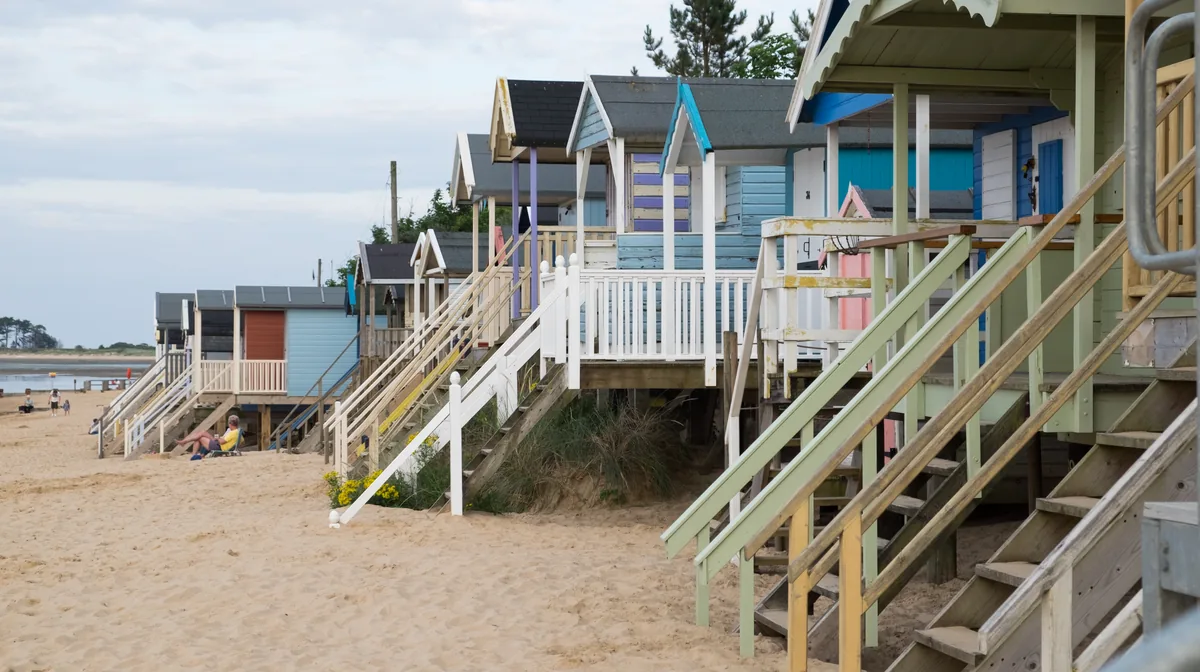
Beach huts on stilts above the sand at Wells-next-the-Sea, on the North Norfolk coast

Photo: DeFacto · CC BY-SA 4.0 · via Wikimedia Commons

Why Cavmir

The Cavmir Advantage
on the North Norfolk Coast

Every house between Brancaster and Cromer has its own best guest, and that guest is who we write for. A flint cottage in Blakeney goes to couples and birdwatchers with the quay, the marsh and the seal boats in its first lines; a big house near Burnham Market goes to families and groups by the week in the school holidays and by the short break the rest of the year; and a flat near Cromer pier sells the beach, the show and the train. A London family pricing up August usually starts on Google, a Cambridge couple might put their autumn break to ChatGPT, and coast path walkers often find a weekend on Instagram, so we work all four routes: Google, the AI assistants, Instagram and an email to past guests that brings a family back to the same house. On this coast Cavmir is a marketing agency and nothing more: no keys, no cleaning rotas, no messages to guests. The owner or their cottage agency takes every booking and every question, including the ones that arrive through the direct-booking site.

State of the Industry · History

The North Norfolk Holiday Let Market — Past & Present

The coast's story starts a long way back. North Norfolk District Council's tourism site calls this the Deep History Coast, home to the earliest evidence of humans in Britain, including the footprints found on the beach at Happisburgh, east of this page's area. The find that started the modern story came in 1990, when a local couple noticed a large bone at the foot of the cliffs at West Runton. Norfolk Museums Service confirmed it as the pelvic bone of a Steppe mammoth, and digs in 1991 and 1995 recovered 85% of the skeleton, the largest nearly complete mammoth skeleton known in Britain and the oldest found in the UK. A Discovery Trail with eleven discovery points now runs about 22 miles (36 km) along the clifftops from Weybourne to Cart Gap. Offshore lies the Cromer Shoal Chalk Bed, which the same site calls the longest chalk reef in the world at about 20 miles, and the feeding ground behind the Cromer crab and the Sheringham lobster.

The harbours came next. Blakeney Haven, the sheltered inlet behind Blakeney Point where the River Glaven reaches the sea, was a major shipping area in the Middle Ages, with ports at Wiveton, Cley and Blakeney itself. Cley and Wiveton silted up in the 17th century, but Blakeney prospered, especially after its channel was deepened in 1817, and packet ships ran from there to Hull and London from 1840. Wells-next-the-Sea, with Blakeney, ranked highly as a port on Waghenaer's map of 1586, and in the 18th century its harbour exported a third of England's malt to the continent; together with Great Yarmouth it sent more than 250,000 quarters across the Channel in 1750, the century in which the town's great houses were built. The granary that still overlooks the quay dates from 1904, and the harbour now serves sailing and crabbing boats, a fishing fleet, the RNLI station and the Sheringham Shoal offshore wind farm.

Holkham shaped the western half of the coast. Sir Edward Coke, the lawyer who served as Speaker of the House of Commons, Attorney General and Lord Chief Justice, bought Neales Manor in Holkham parish and founded what became the Holkham Estate. Thomas Coke, orphaned at ten, inherited the estate when he came of age; sent on a six-year Grand Tour at 15, he met William Kent on the way, and work on his Palladian house on the coast began in 1734. Thomas was made Earl of Leicester and died in 1759 before it was finished, and his widow, Lady Margaret, saw the hall completed; the housekeeper gave public tours on Tuesday afternoons, and the first guidebook followed in 1775. His great-nephew Thomas William Coke, known as Coke of Norfolk, pioneered four-course crop rotation, and his sheep shearings at Holkham drew hundreds of farmers and dignitaries every year. Humphry Repton finished his very first Red Book, with designs for Holkham's pleasure grounds, in 1789. Today the Holkham National Nature Reserve covers 10,000 acres of coast between Stiffkey and Burnham Norton.

The villages carry the rest of the history. Burnham Thorpe, a short drive inland from Burnham Market, is the birthplace of Horatio Nelson, whose father was rector of All Saints Church; when the church was restored in 1890, the Admiralty gave it wood from HMS Victory, from which the lectern, altar and rood screen were made. Burnham Market itself is a Georgian village around a green, and The Hoste, its coaching inn, has stood at the heart of the village since the 17th century. Holt, a Georgian town of 18th-century buildings around a market place, has Gresham's, the school founded there in 1555, and the 13th-century church of St Andrew. Blakeney's flint cottages were once fishermen's homes, its Guildhall keeps a 15th-century brick-vaulted undercroft, and St Nicholas church, built between the 13th and 15th centuries, unusually has two towers.

The Victorians turned the fishing towns into resorts. Cromer was developed into a seaside resort by the late Victorians, and its pier, which holds the lifeboat station and the Pavilion Theatre, has survived storms, tidal surges and even a Second World War attempt by the government to blow it up. The theatre stages what Visit North Norfolk calls the UK's only remaining traditional end-of-the-pier variety show, every summer and every winter. Cromer's lifeboat crew is the most decorated in RNLI history, and Henry Blogg is its best-known coxswain: the RNLI says that in 38 years as coxswain he helped save 873 lives in 387 rescues, winning three gold and four silver RNLI medals as well as the George Cross and the British Empire Medal. Sheringham, a few miles west and once a fishing village, sits at one end of the Poppy Line, the heritage railway that runs to Holt, where the station is a recreation of a Midland and Great Northern country station. The original Norfolk Coast Path ran from Hunstanton to Cromer; extensions in both directions, created as stretches of the King Charles III England Coast Path, now take it 112 miles along the whole Norfolk coast.

Conservation is part of what guests come for. The Norfolk Wildlife Trust bought Cley Marshes in 1926 to be held in perpetuity as a breeding bird sanctuary, and an appeal in 2012 bought 57 more hectares to join Cley and Salthouse into one reserve of more than 300 hectares, which now draws more than 110,000 visitors a year. Spoonbills, which began breeding regularly in the UK again in 2010 after an absence of more than 300 years, feed on its pools. Along the coast, the National Trust's Blakeney Point, a four-mile shingle spit, holds England's largest grey seal colony, with around 9,000 pups born each winter. The Morston boatmen were carrying passengers long before seal watching began: Beans Boats was founded in the mid-1930s, came back in 1946 after the war, and took its first seal trips once the seals were protected in 1976 and grew used to the boats.

The holiday let market has grown on those foundations, and whole homes dominate it: 94% of AirROI's listings are entire homes, 75% are houses, two-bedroom homes are the most common size and four guests the most common capacity. Cottage agencies are a big part of it. AirROI names Holidaycottages.co.uk as the largest company host, with 274 listings, about 13% of the market, followed by Norfolk Hideaways, Norfolk Stay & HB Short Lets, Sykes Holiday Cottages and Hoseasons, and it counts 30% of listings as professionally managed. Standards are high: listings average 4.83 stars, 45% hold Airbnb's Guest Favourite badge and about half are run by Superhosts. Second homes are common too; the Borough Council of King's Lynn and West Norfolk counts more than 3,000 in its area, about one in 20 of the borough's homes. The North Norfolk listings that fall behind tend to slip in the same few places: a kitchen as the lead photo when the quay is two minutes away, silence on parking and dogs, a cleaning charge that turns up at the last step, and an empty calendar from New Year to Easter. Those are the first things a Cavmir audit looks for.

Pricing Strategy & Seasonality

Pricing, Seasonality & When to Capture ROI

Pricing Strategy

AirROI's figures describe a market that charges for space. In the year to September 2026 half of North Norfolk's listings charged less than about £170 a night; a quarter asked £120 or less, a quarter £280 or more, and one in ten £450 or more. Two-bedroom homes, the most common size, averaged £182 a night at 42% occupancy, and the typical one earned about £18,200 in the year; three-bedroom homes averaged £258 a night and about £22,800, four-bedroom homes £392 and £31,800, and homes with five or more bedrooms £676 a night and about £55,000. One-bedroom homes averaged £139 a night at the highest occupancy of any size, 44%. Size is what lifts a house into the top bracket: AirROI's best-earning North Norfolk listing, an eight-bedroom coastal house with a hot tub, grossed about £250,000, and every one of its six highest earners has at least five bedrooms.

The £2,030 in the box is the year's average spread over twelve months, closed months included. Count only the months a listing was open and the middle listing made about £2,150 a month, with a quarter making £3,510 or more and one in ten £5,790 or more. Three-quarters of listings are open to guests for more than 180 days a year, but only 26% are booked or blocked for that many. July 2026 brought the average listing about £4,140 and August £4,638, and over a normal year August earns roughly 2.8 times what January does. AirROI also costs out two ways up: another ten nights a year at the £170 median would add about £1,710, while charging 10% more on the nights the average listing already sells would add about £2,190. Take off Airbnb's host fee, which is 15.5% on Simplified Pricing, the setting 94% of listings here use, then utilities, guest supplies, repairs, insurance and a sum put by for registration, and what AirROI's model has left is about £15,505 a year, near £1,290 a month, to cover the mortgage, council tax or business rates and everything else the house costs.

Fees and stay rules decide how a total looks. About seven in ten North Norfolk listings charge a cleaning fee, with a median of £59, which adds roughly £13 a night to the average stay of 4.6 nights and makes up about 10% of gross revenue for the listings that charge one. Minimum stays cluster at two nights (40% of listings); one listing in five takes a single night, about a quarter want three, and 12% set four to six. Firm is the most common cancellation policy, and more than seven in ten listings use Firm or something stricter. Stays run longest in July, about five nights in July 2026, and shortest in April, so a minimum of four nights or a week in the school summer holidays matches how families already book, while two nights is the norm for the rest of the year. Guests score location highest, at 4.90, and value lowest, at 4.73, so the final bill weighs on reviews as heavily as the nightly price.

Quote the full price. The Competition and Markets Authority defines drip pricing as an initial price shown first, with extra fees brought in later; the 2024 Digital Markets, Competition and Consumers Act has banned it outright since 6 April 2025, and the CMA can now fine a business as much as 10% of its global turnover. A compulsory cleaning fee or linen charge therefore belongs in the first price a guest sees, on your own website and in any advertising. Airbnb's Simplified Pricing, which already covers 94% of North Norfolk listings, shows guests one price with no separate Airbnb charge. On your own site, put the nights, the cleaning and any compulsory linen or dog charge into one figure on the first screen: it keeps the cottage within the law and helps that 4.73 for value.

Seasonality & ROI Windows

The calendar here has one long high season rather than a short spike. In AirROI's typical year for North Norfolk, the high season runs from May to September at about £3,620 a month per listing, 54% occupancy and £246 a night, and occupancy swings from 28% in January to 66% in August. August 2026 ran 65.5% occupancy at about £259 a night, and those stays were booked about 116 days ahead, so a typical August booking is made in late April. July 2026 carried the year's highest rate, about £260 a night, and the longest stays. The school summer holidays drive it: lifeguards are on duty at Wells beach daily from early July to early September, Cromer Carnival takes over the town in mid-August, and Holt's summer festival and the summer show at the end of Cromer pier keep the evenings busy.

The shoulder holds up well. AirROI's shoulder months, April and October, average about £2,660 a month at 44% occupancy, and September stays close to summer: September 2025 ran 53.8% at about £246 a night, and October 2025 ran 45.2% at £235. May 2026 stays were booked about 90 days ahead, nearly as far out as summer. Spring and autumn are the main bird migration seasons along the Norfolk Coast Path, Holkham Hall's season runs into late October, and October half-term brings the Poppy Line's Autumn Steam Gala, held on 24 and 25 October in 2026, followed by a week of half-term trains. Sell October to August's guests while they're still here, with the half-term dates in the departure email and on the direct-booking site.

Winter is quieter but not empty. AirROI's low season, November to March, averages about £2,020 a month at 34% occupancy and £216 a night, and January 2026 ran 26.8%. Christmas is planned early: December 2025 stays were booked about 99 days ahead, earlier than any month except July and August. The coast's winter draw is the seals. On Blakeney Point grey seal pups are born from 1 November to mid-January, around 9,000 each winter, and the National Trust points visitors to the seal trips from Morston Quay. The Poppy Line's Norfolk Lights Express starts in mid-November and its Santa Specials in late November, Holkham Hall welcomes Father Christmas in December, and the pier show in Cromer has a winter season too. Use the quietest weeks, in January and February, for new photographs and repairs, and send last summer's guests next summer's dates.

Regulation & Licensing · 2026

What the Law Requires on the North Norfolk Coast

Begin at the national level, where there's little to cover because England has never licensed holiday lets. GOV.UK's guidance for self-catering owners, first published on 25 March 2026 and revised on 2 October 2026, says compulsory registration of short-term lets in England is expected to start in March 2027; until it does, owners are told to ask their council how it will work locally and which documents to have ready. The legal basis is the Levelling-up and Regeneration Act 2023; in February 2024 the government said it wanted a cheap, simple register, light on paperwork and run mostly online, yet it still hasn't published a fee. That February statement promised planning changes too: a use class of its own for short-term lets, permitted development rights to go with it, and freedom for people to let their own home for up to 90 nights a year. The 2026 guidance says nothing about a use class and leaves the question to your local planning authority.

So planning is a local question here. North Norfolk District Council covers most of this coast, and the Borough Council of King's Lynn and West Norfolk covers Brancaster and the Burnhams; ask the right planning department before you convert an outbuilding, add a unit or buy a house that has never been let. Read the parish's neighbourhood plan as well, since King's Lynn and West Norfolk notes that several of its parish councils are using neighbourhood plans to limit the number of second homes. And check the planning history for occupancy conditions: some properties carry conditions that allow holiday let use only or bar anyone from living there as a main home, which affects council tax as well as who can stay.

Council tax is where the two councils bite. North Norfolk District Council used the power the 2023 Act gave councils to add a 100% premium on second homes from 1 April 2025: a furnished house that nobody lives in as their main home now pays twice the usual council tax. Holiday lets on the business rates list are outside the premium, but a let that fails the business rates criteria is taxed as a furnished second home and may pay it. The council's exceptions include annexes used as part of a main home, caravan pitches and boat moorings, job-related homes, homes marketed for sale or let (for a year from first marketing) and properties whose planning conditions limit them to holiday let use or prevent their use as a main residence. King's Lynn and West Norfolk first agreed the same 100% premium in January 2024, has charged it since 1 April 2025 and reviews it every year. To be rated as a self-catering business in England instead, the house must have been offered to let for at least 140 nights over the past 12 months, booked for at least 70 of them, and be offered for 140 or more in the coming 12; a form arrives each year asking you to confirm this, and a let that drops below the line goes back on council tax. If it is your only business property, a rateable value up to £12,000 attracts full small business rate relief, falling away gradually to none at £15,000, and anything rated under £51,000 is charged at one of the lower small-business multipliers even without relief. Every rateable value changed at the 1 April 2026 revaluation, so look up the cottage's new figure before assuming the relief still applies.

Tax changed in 2025. HMRC's Furnished Holiday Lettings rules were scrapped from 6 April 2025. Since then a Norfolk cottage's profit counts as ordinary residential property income, and the special FHL reliefs are gone. Once a rolling 12 months of taxable turnover goes past £90,000, VAT registration is compulsory, and the same applies the moment you expect a single 30-day period ahead to pass it on its own, which matters most to owners with a handful of cottages or a let run beside another business. Very small lettings have the property allowance, under which up to £1,000 of property income a year can be tax-free. How each of these applies depends on your other income, how you own the property and your plans for it, so ask your accountant before the season starts.

Safety comes last and matters most. The Regulatory Reform (Fire Safety) Order 2005 puts the duty on the responsible person, meaning the owner, the letting agent or whoever controls the house: they need a suitable and sufficient fire risk assessment, with the findings written down, the precautions it identifies put in place and the assessment kept up to date. The government's fire guide for small paying guest accommodation, aimed at simple houses on a ground floor, or ground and first floor, sleeping no more than 10, says a yearly review is usually right, and it's the local fire and rescue service that enforces the law. For gas, a Gas Safe registered engineer has to check the appliances once every 12 months; keep each record for two years or more, and because holiday stays are shorter than 28 days, the HSE says a legible copy should be on show in the house. The government's guidance also points owners to HSE guidance on electrical safety, to the energy performance certificate rules, to a TV Licence and a music licence where they apply, and to dedicated holiday let insurance with public liability cover. Read this section as orientation, not legal advice: North Norfolk District Council, King's Lynn and West Norfolk, HMRC, your accountant and your solicitor settle the details, and Cavmir sticks to the marketing.

Market-Specific Tips & Challenges

Local Tips & Unique Market Challenges

Tips That Actually Move Revenue on the North Norfolk Coast

Show guests the house is properly run. England has no registration number to display yet, so the signals guests read are the ones you choose to show: a fire safety page in the welcome book, the gas safety record on display, and house rules that say plainly how many people and dogs the house takes. Dog owners need the details, because the rules change by beach and by season. Holkham asks for dogs on leads in its most sensitive areas from 1 April to 31 August, and the National Trust allows no dogs on Blakeney Point during the ground-nesting bird season, 1 April to 31 August, or the seal pupping season. A listing that explains those rules, with the nearest walk where a dog can run free, answers the first question a dog owner asks.

Sell the walk to the water. The photographs should start where the guest's day starts: the quay at Blakeney or Wells, the pines on the way to Holkham beach, the marsh at Cley at first light. Give real distances and times, because guests compare them: the walk through the pines from the top of Lady Anne's Drive to Holkham beach takes about ten minutes, and Burnham Market is two miles from Brancaster beach. Put the tide advice in the welcome book, since Holkham warns of strong tidal currents and asks visitors to be off any sandbank four hours before high tide, and say where to park, because the beach car parks get busy on summer days.

Price the year in two halves. August stays are booked about 116 days out, so set summer rates, minimum stays and changeover days by early spring, and hold the school-holiday weeks for longer stays. January occupancy dips under 30%, so from November to March leave late dates bookable, offer a midweek price and give the winter its own pictures and words: seal pups on Blakeney Point, a cold bright walk at Holkham, the Poppy Line's lights train, a wood burner and supper at a Burnham Market pub. Christmas and New Year deserve their own prices, since December stays were booked about 99 days ahead in 2025.

Write for the guest without a car as well as the one with two. Visit North Norfolk says trains reach Norwich or King's Lynn from London in just under two hours, the Bittern Line continues to Cromer and Sheringham, and the Coasthopper links Wells, Blakeney, Cley, Sheringham and Cromer seven days a week, so a flat near the station in Sheringham or Cromer can sell a car-free break to London couples, and a cottage on the coast road can promise one-way walks on the Coast Path with the bus back. For the family that drives, say how many cars the house takes and where they go.

Give returning guests a direct way back. Next year's best bookings are already in this year's visitors' book: the London family back for the same August week, the birders who return each May for Cley, the couple who come every December for the seal pups. None of them should have to search a platform to find you again, and that takes a quick direct-booking website with the whole price on the first screen, and a list of past guests who hear about next year's calendar before anyone else. Many cottages here also work with an agency, and a direct channel can sit alongside it as long as the calendar and the prices match everywhere they appear.

Unique North Norfolk Challenges

The business rates test sets a floor. Fall short of 140 nights on offer or 70 booked in a year and the let drops off the business rates list and back onto council tax, where both councils now charge a furnished second home double. That makes the quiet months part of the business plan: an owner who uses the house in August and leaves it dark from November to March can fall short of the test, and then pays the premium on top of the council tax. Plan the owner weeks and the letting weeks together, keep a record of availability and bookings, and ask your accountant to check the position each year.

Supply is deep and well run. With 2,137 active listings in AirROI's North Norfolk market and 1,089 more in King's Lynn and West Norfolk, a new cottage competes with agencies that run hundreds of listings and with owners who have been letting for years; listings average 4.83 stars and 45% hold Guest Favourite status. The busiest quarter of listings is booked on 64% or more of its open nights against 42% for the median, so the gap between a listing that is marketed and one that is merely listed is wide. Clear photographs, a description written for one guest, a price that's complete from the first screen and a winter offer of its own are the basics.

The coast moves and so do the rules. Tides cut off sandbanks, the RSPB warns that increasing coastal erosion is threatening the defences that protect its reserve at Titchwell, and seasonal restrictions on dogs and on access to Blakeney Point change what a guest can do in a given week. The rules are still being written as well: registration is expected to start in March 2027, and both councils' second-home premiums are only in their second year. Owners based in London or the Midlands notice it most: the photos date, the winter weeks never get opened and nobody updates the dog rules, which is where up-to-date marketing and someone local on the end of the phone earn their keep.

A Curious North Norfolk Coast Fact
Nelson's home church has a piece of HMS Victory in it. Horatio Nelson was born at Burnham Thorpe, where his father was rector of All Saints Church, and when the church was restored in 1890 the Admiralty donated wood from the Victory, from which the lectern, the altar and the rood screen were made. A bust of Nelson and the tombs of his parents are in the chancel, and the village pub is The Lord Nelson, with the free Nelson Map Room beside it.
Finance Essentials — North Norfolk
🛡️

Insurance

GOV.UK tells self-catering owners to buy cover written for holiday letting: public liability, plus buildings and contents insurance that allows short stays. AirROI's cost model sets aside about £240 a year for it. On this coast, ask the insurer what it pays if a guest is hurt on the garden steps or a borrowed bike goes missing, whether dogs and the damage they do are covered, and how it treats a house that stands empty for weeks between November and March. A broker who insures holiday cottages on the Norfolk coast is the right person to price it.

🧾

Property & Income Tax

Three tax points deserve an hour with your accountant before the summer bookings open. Income tax comes first: with the FHL regime gone since April 2025, a holiday let's profit sits with ordinary residential letting income on your return. VAT is second, and a single cottage earning the AirROI average of £24,355 is far below the £90,000 registration threshold, though one of the eight-bedroom houses at the top of this market, or a group of lets, can reach it. Last is the council bill: a log of the nights the house was offered and the nights it was booked is your evidence for the 140 and 70 tests, and those tests decide between business rates and a doubled council tax. Do all three before you open next year's calendar.

🏦

Mortgages & Financing

HM Land Registry's House Price Index put the average price in North Norfolk at £286,315 in August 2026, down 4.4% on a year earlier, with detached houses at £399,791, semi-detached at £264,688, terraced at £223,194 and flats at £151,673; the Norfolk average was £267,745. Set against AirROI's average revenue of £24,355, the district average price gives a gross yield of about 8.5%, and the average detached house about 6.1%. Both figures are gross, so nothing has yet come off for the platform, the cleaners, the council bill, registration or management. The district figure mixes inland towns with the harbour villages, so underwrite the specific house, model only the weeks you can sell, and if the house may stay on council tax, budget for the second-home premium. A broker who arranges holiday-let mortgages can tell you what lenders will want to see before you make an offer.

UK and US Compared

The North Norfolk Coast and the Hamptons Compared

The North Norfolk coast and the Hamptons play the same part for two capitals. London sends more of North Norfolk's reviewers than any other city in AirROI's data, and New York accounts for 40% of the Town of East Hampton's. Both coasts sell big skies, wide beaches, harbour villages and a high street worth walking to, and on both, local rules shape what an owner can let and on what terms. The way the two are run, taxed and booked is very different, and the differences are useful to an owner on either side of the Atlantic.

The table sets the North Norfolk coast, from Brancaster to Cromer, against the Hamptons in the towns of Southampton and East Hampton on Long Island, whose town codes cover the areas outside their incorporated villages. It uses AirROI's figures for the twelve months to September 2026 and the rules as they stand in October 2026. Money is in pounds for Britain and in US dollars for America.

North Norfolk Coast and the Hamptons, New York, side by side
TopicNorth Norfolk CoastHamptons
Licence or registrationNone yet; the government expects England's register of short-term lets to open in March 2027.Southampton Town requires a rental permit for every rental, valid for two years; East Hampton Town has run a rental registry under a law adopted in 2015, with registrations lasting two years.
Number in the advertNothing to display until the national register begins.Both towns make it unlawful to advertise a rental without its permit or registry number, and New York State's law, as signed in 2024, puts the host's registration number on all listings.
Shortest stayNo legal minimum. On Airbnb, 40% of North Norfolk listings ask for two nights and 20% accept one.Southampton Town's code calls a rental of 14 days or less transient and prohibits it, unless the Town Board lifts the ban for set dates during a major regional event.
Planning and state lawThe local council decides whether a let needs planning permission; the government's October 2026 guidance makes no mention of the planning use class it proposed in 2024.New York's Chapter 672, signed on 21 December 2024, makes hosts of stays under 30 consecutive days register with the state Department of State or a local registry, and bars platforms from collecting a fee for booking unregistered units.
Tax on the stayVAT only if the owner is registered, which becomes compulsory once taxable turnover passes £90,000 in 12 months.New York sales tax applies to short-term rental stays. Booking services collect it on the stays they handle, under the state's Form ST-155 of March 2025, and the owner collects it on direct bookings.
Income taxOrdinary property income since the end of FHL on 6 April 2025; the £1,000 property allowance helps only very small lettings.Rental income goes on Schedule E, though an owner who also lives in the home can leave it off entirely if the home was rented for fewer than 15 days that year.
Local chargesNorth Norfolk and King's Lynn and West Norfolk double council tax on second homes from April 2025; a let offered 140 nights and booked 70 moves to business rates.Southampton's permit costs US$400 for two years, US$175 for owners with an Enhanced STAR, veteran or senior exemption, US$800 where the property already breaks the rental code, and US$750 more to expedite.
Safety paperworkA written fire risk assessment, reviewed each year, and a yearly Gas Safe check whose record is on show in the house for guests.Southampton's permit checklist asks for smoke detectors in every bedroom, carbon monoxide detectors within 15 feet of bedrooms, pool alarms and self-closing gates, floor plans, a survey and certificates of occupancy for every structure.
Price displayDrip pricing has been outlawed since 6 April 2025, so compulsory cleaning or linen charges belong in the first price shown; CMA fines can reach 10% of worldwide turnover.Short-term lodging has come under the FTC's unfair or deceptive fees rule since 12 May 2025, so the first price a guest sees has to be the total including mandatory fees.
SeasonOne high season, May to September. The three strongest months bring in 36% of a year's revenue, and August earns about 2.8 times as much as January.One high season, June to August. In the Town of East Hampton the three strongest months bring in 54% of revenue, and August earns about 6.2 times as much as February.
Rates, size and staysAbout £236 a night across 2,137 active listings; two bedrooms is the most common size, the average stay is 4.6 nights and guests book about 83 days ahead.About US$1,038 a night across 1,215 active listings in the Town of East Hampton and US$1,084 across 1,126 in the Town of Southampton; 42% of East Hampton's listings sleep eight or more, stays average 5.3 nights and guests book about 58 days ahead.
Who books96% of reviewers live in the UK, with London about 11.5% of the total; Americans are about 1%.93% of the Town of East Hampton's reviewers live in the US and 40% in New York; the UK sends the most from abroad, about 2%.

The biggest difference is freedom of stay. A North Norfolk owner can sell a single night, a midweek break in February or a week in August, while Southampton Town's code bars rentals of 14 days or less outside the incorporated villages. That flexibility is the Norfolk coast's advantage, and it pays only when the owner markets the winter and the shoulder as well as the summer, since English rules reward a let that is booked through the year with business rates instead of a doubled council tax bill.

The paperwork runs the other way. American owners are used to permit and registry numbers in every advert and to platforms collecting tax at checkout; in England there is nothing to register until the scheme expected in March 2027, and VAT registration becomes compulsory only above £90,000 of turnover, but fire, gas and consumer law apply from the first booking. Both countries now require the full price up front, so the same rule works on both coasts: show every mandatory fee in the first price a guest sees. Income tax differs too, since the IRS lets an owner who also lives in a home skip reporting rent when it was let for fewer than 15 days a year, while HMRC's property allowance covers only the first £1,000 of property income, so an owner with homes in both countries should ask an accountant in each.

American guests are a small group on this coast, about 1% of North Norfolk's reviewers in AirROI's data, while the UK is the largest overseas source of guests for East Hampton. For the Americans who do come, the practical differences matter as much as the scenery, and a listing that answers the questions below before they ask them makes the booking easier.

What American guests expect on the North Norfolk Coast

  • List each bed's size: what Britain sells as a king is close to an American queen.
  • Say whether there is air conditioning; it is not among the ten most common amenities in North Norfolk listings.
  • Explain driving on the left and where to park, because the beach car parks get busy on summer days.
  • Mention the train: London to Norwich takes just under two hours, and the Bittern Line runs on to Cromer and Sheringham.
  • Add the tide advice: Holkham asks visitors to be off any sandbank four hours before high tide.
  • Say whether there is a coffee machine or only a kettle and a cafetière.
  • Note that sockets take British three-pin plugs, so guests from America need an adapter.

The American side in more detail: vacation rental marketing in the Hamptons, New York.

Future Outlook · 2027 & Beyond

Where the North Norfolk Coast is Headed Next

Registration comes next, with England's scheme expected in March 2027. The fee and the form are still unpublished, but the papers a council is likely to ask about already exist, so put them in one folder now: the fire risk assessment, the gas safety record, the insurance schedule, the planning history and the latest council tax or business rates bill. A listing that already shows those facts plainly will need little changing on the day.

Second homes will stay a local issue. King's Lynn and West Norfolk says several of its parish councils are using neighbourhood plans to limit them, and the borough notes that three-quarters of the council tax it collects goes to Norfolk County Council, with the districts and the county working to return as much of the premium as possible to the communities most affected. For a holiday let owner, the practical response is to be a visible, well-run part of the local economy: book local cleaners and trades, send guests to the pubs, shops and boat trips, and keep a calendar busy enough to stay on business rates.

Guests are also changing where they start. A family planning a December seal trip might type the whole brief into ChatGPT or Gemini, six people, one dog, Morston Quay, a pub within walking distance, and get a shortlist before they open a booking site. Those tools can only suggest houses whose details are written down somewhere they can read, which favours the cottage with its own site setting out the beds, the dog policy, the minutes to the quay and what's on that month. Our guide to generative engine optimisation for holiday lets sets out how that works, and it's why the same Cavmir team writes the direct-booking site and handles AI search.

From the Desk of Sofie Sinag

Why We Love Marketing on the North Norfolk Coast

What I love about North Norfolk is that its past is written down and easy to check. Holkham begun in 1734, Cley Marshes bought for its birds in 1926, Henry Blogg's 387 rescues, the West Runton mammoth spotted at a cliff foot in 1990: put facts like those in a listing and it reads as if someone who knows the place wrote it, and every one of them stands up.

I also like the way the year moves here. Spring and autumn belong to the birds on the marshes, the summer holidays to the beaches at Wells and Holkham and the carnival in Cromer, late October to the steam gala on the Poppy Line, and the winter to the seal pups on Blakeney Point and the Christmas shows. Market each of those seasons on its own terms and a cottage gets several chances a year to be chosen, not just one in August.

And a lot of range fits between Brancaster and Cromer: flint cottages by the quays, Georgian houses in Holt and Burnham Market, Victorian flats near Cromer pier and Sheringham's promenade, and big barn conversions for groups. Each suits a different guest at a different time of year, and matching the house to its guest is the part of the job I enjoy most on this coast.

Cavmir's North Norfolk Cheat Sheet

The Picks We Recommend for Your Welcome Book

The picks we would put in a North Norfolk welcome book: the places guests ask about between Brancaster and Cromer, plus the first page that keeps a stay safe and easy.

Beach Day

Holkham beach

From the top of Lady Anne's Drive a path through the pine woods reaches the beach in about ten minutes. Dogs can run off the lead under close control on most of it, but must be on leads in the most vulnerable areas from 1 April to 31 August; barbecues, fires and sky lanterns are banned; and Holkham asks swimmers to stay between the red and yellow flags and to be off any sandbank four hours before high tide. Lifeguards are on duty at Wells beach daily from early July to early September.

Stately Home

Holkham Hall

The Palladian house begun in 1734 for Thomas Coke, later Earl of Leicester, with a Marble Hall whose ceiling, more than 50ft high, was inspired by the Pantheon, and a Statue Gallery of Roman sculpture from the 1st to the 3rd centuries AD. In 2026 the hall opened on Mondays, Thursdays and Sundays until 29 October, and Father Christmas and Mother Christmas visit in December; check the 2027 season before you promise a visit.

On the Water

Seal trips from Morston Quay

Beans Boats and Bishop's Boats take visitors from Morston to see the seals on Blakeney Point, with no landing on the trip. Bishop's runs two open wooden clinker-built boats with no roof or toilets and expects seals and some pups from June to September; the grey seal pups follow from November to mid-January. Trips are sometimes cancelled in strong winds, and the National Trust car park at Morston gets busy in summer, so book ahead.

Birdwatching

Cley and Salthouse Marshes

The Norfolk Wildlife Trust's reserve, which began with the purchase of Cley Marshes in 1926, has six hides, four of them reached by boardwalk, and a visitor centre with a café looking over the marshes. The centre opens from 10am to 5pm from March to the last Sunday in October and from 10am to 4pm in winter; hide access costs non-members £6 with Gift Aid or £5.40, and the wider reserve is free to walk.

Steam Railway

The Poppy Line

The North Norfolk Railway runs steam and heritage diesel trains from Sheringham to Holt, where the station is a recreation of a Midland and Great Northern country station and a bus runs to the market place. After the Autumn Steam Gala on 24 and 25 October 2026, half-term trains run to 1 November, the Norfolk Lights Express starts on 14 November and Santa Specials on 21 November.

Evening Out

Cromer Pier and the Pavilion Theatre

The pier holds Cromer's lifeboat station and the Pavilion Theatre, home to what Visit North Norfolk calls the UK's only remaining traditional end-of-the-pier variety show, with a summer season and a winter one. Pair it with Cromer crab in town and a look at the 14th-century church of St Peter and St Paul, whose 160ft tower stands out on the skyline.

Walking

The Norfolk Coast Path

The National Trail runs 112 miles along the whole Norfolk coast, most of it through the Norfolk Coast National Landscape, and its original section ran from Hunstanton to Cromer. Walk one way and ride back: the Coasthopper CH1 runs seven days a week all year between Wells-next-the-Sea and Cromer, stopping at Blakeney, Cley and Sheringham.

Nature Reserve

Titchwell Marsh

The RSPB reserve between Titchwell and Thornham, just west of Brancaster, is a run of wetland, marsh and lagoons where avocets, bearded tits and marsh harriers nest, and the West Bank path leads on to Titchwell's vast, undeveloped beach. Dogs must stay on a lead at all times, on the beach too, and the visitor centre has a café.

Village Day

Burnham Market and Burnham Thorpe

Burnham Market's green is ringed with shops, galleries and cottages, and The Hoste, a coaching inn at its heart since the 17th century, is family and dog-friendly. A short drive inland, Burnham Thorpe is Nelson's birthplace: All Saints Church holds wood from HMS Victory, and the free Nelson Map Room stands next to the village pub, The Lord Nelson.

Market Town

Holt

A Georgian town of galleries, antique and book shops and courtyards off the high street, with Bakers and Larners and Byfords as its landmark shops and an owl trail of pavement plaques for a walk round the sights. The Holt Sunday market runs on the first Sunday of each month from April to December, and the town hosts its festival every summer.

First Page

Fire, gas, tides and a local number

Open the welcome book with the fire safety information from your risk assessment, where the gas safety record is displayed, the dog rules for the nearest beaches, how to check the tide times and a local contact who answers the phone. Add a line that the RNLI's Henry Blogg Museum in Cromer has been closed for building repairs since September 2024, so guests check before they go.

Website Design · North Norfolk Coast

A Website for a Holiday Let on the North Norfolk Coast

Guests who find a holiday let on the North Norfolk Coast on Airbnb or Booking.com often search its name afterwards, and the page they should land on is the owner’s own site. Cavmir builds holiday let websites of 40 to 125 pages in the owner’s brand. For a home that only lists on Airbnb, that is a website for your Airbnb listing: your name and domain, your photos, your area guides and your reviews, with a button that sends guests to the listing. For homes on Hostaway, Guesty or Hospitable it is a direct booking website: live availability and prices from the PMS, the whole stay priced before checkout, and the booking completed in the PMS. Both start from the same holiday let website design, run the TrollBuster™ compliance scan before launch, and are yours at launch: domain, code, content and photos.

The guide pages of your site can start with the picks on this page: Holkham beach, Holkham Hall and Seal trips from Morston Quay. Each one is a search a guest makes before choosing where to stay, and each becomes a page that leads to the booking button.

Packages start at about £1,100 (US$1,475) for the Starter Website (40 pages, two to three weeks) and run to about £2,780 (US$3,732) for Full with Direct Booking (125 pages, booking synced with your PMS). Cavmir bills in US dollars; the pound figures use the Bank of England’s average rate for October 2025 to September 2026 (about US$1.34 to the pound), and the current prices are on the pricing page.

Local Playbook · Three Property Types

How Cavmir Markets North Norfolk Properties

Three property types that do well on the North Norfolk Coast, a common starting point for each, and the plan Cavmir builds for it.

Flint Cottage · Blakeney
The Situation

A two-bedroom flint cottage a few minutes' walk from Blakeney quay, the most common size on this coast, listed on Airbnb and with one cottage agency. Its price is the same in February as in August, two nights minimum; the gallery starts in the kitchen; the seal boats and the marsh go unmentioned; and the cleaning fee shows up only at the final step. The owners use it for a month each summer, and nobody has counted how many nights it was let last year.

The Plan

Cavmir starts with the owners and their accountant: whether the cottage meets the 140-night and 70-night business rates test or sits on council tax with the second-home premium, and which weeks the family will keep for themselves. With that settled, the new photo brief starts at the quay and on the marsh path, the copy leads with the walk to the seal boats at Morston and to the coast path, the price shows cleaning in the first figure, and the winter gets its own offer built on the seal pups and a pub supper, with a direct-booking page and a sign-up for returning couples.

What It Targets

A cottage priced and described for the couples and birdwatchers who want it, with a calendar planned around the business rates test and the family's own weeks. Track winter nights booked, the rate by season, value scores in reviews and the share of stays booked direct.

Family House · Burnham Market
The Situation

A five-bedroom house on the edge of Burnham Market that sleeps ten, let by the week through an agency in July and August and barely booked outside the school holidays. The listing says nothing about the beaches at Brancaster and Holkham, the dog policy is unclear, and the big kitchen and the garden appear halfway down the gallery.

The Plan

Cavmir checks the house's planning and business rates position with the owner first, then rebuilds the listing for multi-family groups: school-holiday weeks with a Friday changeover, three- and four-night breaks for the shoulder and the half-terms, and Christmas and New Year sold as house parties. The photo brief leads with the garden, the kitchen table and the beach two miles away, the copy covers the dog rules at Holkham and the walk to The Hoste, and a direct-booking site and an email to past groups give returning families first pick of next summer.

What It Targets

Summer weeks priced for the size of the house, a shoulder and Christmas season of its own, and a direct route back for the families who return. Track weekly and short-break bookings, Christmas enquiries, repeat groups and the share of stays booked direct.

Victorian Flat · Cromer
The Situation

A two-bedroom flat in a Victorian terrace a short walk from Cromer pier, competing on price with many similar flats. The listing could describe any seaside flat in England, says nothing about the pier show, the crab or the train, and the calendar goes quiet from November to March.

The Plan

Cavmir repositions the flat for couples and small families who want the town without a car: the walk to the pier and the Pavilion Theatre's summer and winter shows, Cromer crab, and the train from Norwich on the Bittern Line. We set a midweek rate and shorter minimum stays for the winter, build offers around the Poppy Line's lights trains and the Christmas show, write search content for Cromer weekends and add a simple direct-booking page that shows the full price.

What It Targets

Designed to sell the flat on the town, the show and the train instead of on price, with a winter of its own. Track midweek nights, winter occupancy, value scores in reviews and the share of stays booked direct.

FAQ

North Norfolk Holiday Let Marketing:
Questions, Answered

Does Cavmir offer holiday let marketing services on the North Norfolk Coast?

Yes. Cavmir markets holiday cottages, family houses, flats, barn conversions and small guest houses from Brancaster and the Burnhams through Holkham, Wells-next-the-Sea, Blakeney and Cley to Holt, Sheringham and Cromer. The work runs from the brand and the listing copy to the photo brief, a direct-booking website, search, AI answers and paid ads, and owners of the biggest houses can look at the estates and private collections tier. Keys, cleaning and guests stay with you or your cottage agency.

What can a holiday let earn on the North Norfolk coast?

AirROI's year to September 2026 puts the average North Norfolk listing at £236 a night, with 40% of its open nights booked and about £24,355 taken in bookings. Spread over twelve months, that's the £2,030 a month in the box, which sits below rate times occupancy because many homes are open for only part of the year. Size moves it most: the typical two-bedroom home earned about £18,200 and the typical home with five or more bedrooms about £55,000. Measured against HM Land Registry's August 2026 average price for the district, £286,315, that revenue is a gross yield of about 8.5%, or about 6.1% against the £399,791 average detached house. Gross means nothing is deducted yet for platform fees, cleaners, council tax or business rates, registration or management. Pay more than those averages and the percentage shrinks to match. Treat all of this as a guide to the market, not a forecast for your house.

When is the busy season on the North Norfolk coast?

May to September, with August at the top. In AirROI's data, North Norfolk ran 65.5% occupancy in August 2026 at about £259 a night, with those stays booked about 116 days ahead, and July carried the year's highest rate. September is nearly as busy as July, at 53.8% in 2025, and October half-term brings the Poppy Line's steam gala. Winter is quieter, at 26.8% in January 2026, but the grey seal pups on Blakeney Point from November to mid-January and the Christmas weeks give it a season of its own.

Is there a licence or register for holiday lets in North Norfolk?

Not yet. England has no licence for holiday lets, and national registration is expected to arrive in March 2027. Meanwhile the rules that bite are planning (North Norfolk District Council or King's Lynn and West Norfolk, house by house), the council tax or business rates test, a fire risk assessment, the yearly gas check, insurance and the consumer law on prices. Check the parish's neighbourhood plan and any occupancy conditions before you buy. We can market the house, but planning and legal questions belong with the council and a solicitor.

Does a North Norfolk holiday let pay council tax or business rates?

It depends on the nights. Business rates apply if, over the last 12 months, the cottage was open to bookings for 140 nights or more and actually booked for 70 or more, and you mean to offer it for 140 again in the next 12. For a single property rated at £12,000 or less, small business rate relief then wipes out the bill, and it tapers away between there and £15,000. Miss the test and the house is a furnished second home for council tax, which on this coast has meant double the normal bill since April 2025, whichever of the two councils you're in. Keep records of availability and bookings, and ask your accountant to confirm the position.

How is holiday let income taxed now the furnished holiday lettings rules have gone?

Since 6 April 2025 there has been no separate Furnished Holiday Lettings regime; from the 2025 to 2026 tax year, cottage profits go through the same rules as any residential letting. Above £90,000 of taxable turnover in a rolling 12 months you must register for VAT, and at the small end, up to £1,000 of property income a year can be covered by the property allowance. How those rules apply depends on your own circumstances, so ask your accountant; Cavmir doesn't give tax advice.

Should I list with a cottage agency, on Airbnb or direct?

Often all three, as long as the calendar and the price match everywhere. Agencies are a big part of this market: AirROI names Holidaycottages.co.uk as the largest company host on Airbnb in North Norfolk, with 274 listings, followed by Norfolk Hideaways, Norfolk Stay & HB Short Lets, Sykes Holiday Cottages and Hoseasons. Airbnb's Simplified Pricing already shows one price on 94% of listings here. A direct-booking site keeps the returning guests, such as the London family that books every August and the couple who come for the seals, without a platform fee, and it must show the full price with every mandatory charge from the first screen.

What does Cavmir charge to market a North Norfolk cottage?

Prices depend on the work. The monthly plans and one-off projects are on our pricing page; many owners on this coast begin with a rebuilt listing or the 12-step system, and holiday let SEO explains the search side. For a first read on your own cottage or house, write to Cavmir; it costs nothing.

Free Property Review

What is your North Norfolk Coast property actually worth per night?

Send us the listing and we'll tell you what we'd change. Not a pitch deck — a straight read on your photos, your title, your rates against the North Norfolk Coast comparable lets, and whether a direct-booking site would pay for itself.

You'll hear back from a person, usually inside one business day. If we don't think we can move your numbers, we'll say so. Cavmir is a holiday let marketing agency — we position and market properties, we don't manage them.

  • No obligation, and no automated call sequence
  • We market and position — we never manage your property or hold keys
  • Works whether you let through Airbnb, Booking.com, Vrbo, a letting agency or direct

Market Intelligence · Seasonality

Holiday let seasonality on the North Norfolk Coast, month by month

Demand in North Norfolk Coast peaks around July through August and runs quietest around January through February. Here is how the year actually books — and what to do about each stretch of the calendar.

Peak demandSteadyQuiet

Peak season

The high season runs from May to September and tops out in August, when families on the school summer holidays head for the beaches at Wells, Holkham and Brancaster and Cromer holds its carnival. July carries the highest nightly rates and the longest stays of the year. Summer weeks are planned months ahead, so set rates, minimum stays and changeover days by early spring and hold the school-holiday weeks for longer stays instead of discounting them.

The shoulders

April, May, September and October are where a well-marketed cottage earns its year. Spring and autumn bring the bird migration to Cley, Titchwell and Holkham, September stays nearly as busy as July once the schools go back, and October half-term brings the steam gala on the Poppy Line. Couples, walkers and birdwatchers book these weeks as short breaks, so offer three- and four-night stays, a midweek rate and copy written for them rather than for summer families.

The quiet stretch

From November to March the coast is quieter, and January is the slowest month, but winter has a season of its own. Grey seal pups are born on Blakeney Point from November to mid-January, Christmas and New Year are booked well ahead, and Holkham, the Poppy Line and the pier theatre in Cromer all run winter events. Keep the calendar open, set a midweek rate and shorter minimum stays, give the winter its own photographs, and use January and February for repairs and a photography refresh.

Dates that fill first

Cromer CarnivalAugust
Carnival Week takes over Cromer in mid-August; the 2027 week runs from Saturday 14 to Friday 20 August, with Carnival Day on the Wednesday. Near the town, keep that week for full-week stays and tell this year's guests the 2027 dates before they leave.
Autumn Steam Gala on the Poppy LineLate October
The North Norfolk Railway's gala brings visiting engines to the line between Sheringham and Holt, and half-term trains follow straight after. Sell the October half-term week to families and railway fans with the gala dates in the listing.
Grey seal pupping on Blakeney PointNovember to mid-January
England's largest grey seal colony has its pups on the Point each winter, and seal trips leave from Morston Quay. A seal-season offer with the boat operators' booking details turns the quiet months into a reason to come.
Norfolk Lights Express and Santa SpecialsNovember and December
The Poppy Line's winter trains begin in mid-November with the Norfolk Lights Express and from late November with Santa Specials, which suit families on short breaks. Put the dates in the winter listing and in the welcome book.
Christmas at Holkham HallDecember
Father Christmas and Mother Christmas visit Holkham Hall in December, which gives a family Christmas break a focus. Price the Christmas and New Year weeks separately and offer them to last year's guests first.
Market Intelligence · Guests

Who books holiday lets on the North Norfolk Coast — and how far ahead

School-holiday families
The summer core, booking a house near Wells, Holkham, Brancaster or Cromer for most of a week in the school holidays. They want beds for everyone, parking, a garden and an easy walk or drive to a beach with lifeguards.
Couples on short breaks
London and Cambridge couples booking two or three nights in Blakeney, Burnham Market or Holt in the shoulder and the winter. They choose on the pub, the walk and the look of the cottage, and the good ones come back.
Birdwatchers and walkers
Visitors for Cley, Titchwell, Holkham and the Norfolk Coast Path, busiest in the spring and autumn migrations. They want early starts, room for boots and kit, somewhere to dry coats and clear directions to the reserves and the Coasthopper bus.
Dog owners
Owners who bring a dog to a coast where the dog rules change by beach and by season. They book the cottage that says how many dogs it takes, has an enclosed garden and explains where a dog can run free at each time of year.
Multi-family and celebration groups
Groups taking the big houses and barn conversions that sleep ten or more for birthdays, reunions and Christmas. They book early, care about the kitchen table and the sleeping plan, and are the guests most worth bringing back direct.

The booking window

Summer is booked furthest ahead, with August weeks usually booked in the spring, and Christmas and New Year also go early. Spring and autumn breaks are booked about two to three months out, while January to March bookings come closest to arrival, so a winter calendar left open and priced still catches them.

Typical stays

Short breaks of a few nights make up most of the year, with week-long stays in the school summer holidays and the longest stays in July. Outside the summer most listings ask for two nights at least; in the school holidays the bigger houses do better with week-long lets and a fixed changeover day.

Where guests drive from

LondonCambridgeNorwichNottingham

Where guests fly from

New YorkSydneyAmsterdam
Almost all guests are British, with London the biggest single source and Cambridge, Norwich and Nottingham next; trains from London reach Norwich or King's Lynn in under two hours, and the Bittern Line runs on to Cromer and Sheringham. Overseas guests are a small group led by Americans and Australians, with Germans and French next, and Norwich International and London Stansted are the nearest airports, so aim paid search and social at London and the East of England and keep international spend small.
Market Intelligence · What Wins

The holiday let that wins on the North Norfolk Coast

The winner is a two- or three-bedroom cottage within walking distance of a quay, a beach path or a high street, with parking, a garden and room for a dog, and photographs that start with the setting. The largest houses earn the most per booking, so a five-bedroom house or barn that sleeps a group well, with a big kitchen table and a hot tub, sits at the top of the market. Flint, brick and Georgian character help, but guests choose on the walk to the water first.

Amenities that move bookings here

parking for every cardog-friendly rooms and an enclosed gardenfast wifia hot tuba barbecue and outdoor seatingan outdoor shower for sandy feetbike storagea wood burner
The single most useful change is to lead the listing with the walk: minutes to the quay, the beach path or the pub, where to park, and the dog rules for the nearest beach in each season. Guests on this coast choose on the setting, and a listing that answers those questions in its opening lines wins the booking.
FAQ

North Norfolk holiday let marketing questions, answered

How do I market my holiday let on the North Norfolk Coast?

Start with the setting and the season. Photograph the walk to the quay, the beach path or the marsh before the kitchen, give real walking times, parking and dog rules in the opening lines, and write the listing for one guest: the summer family, the birdwatching couple or the group in a big house. Price summer, the shoulder and winter separately, with their own minimum stays and offers, and show the full price with every compulsory fee from the first screen. Then add a direct-booking website and an email list so returning guests can book again without a platform; that is the layer a marketing agency such as Cavmir builds.

When is peak season on the North Norfolk Coast?

May to September, with August at the top and July carrying the highest nightly rates. The school summer holidays drive it, with families on the beaches at Wells, Holkham and Brancaster and Cromer Carnival in mid-August. September stays busy after the schools go back, October half-term brings the steam gala on the Poppy Line, and winter has its own draw in the seal pups on Blakeney Point and the Christmas weeks.

How far ahead do guests book on the North Norfolk Coast?

Summer goes first: August weeks are usually booked in the spring, so rates and minimum stays need to be set by then. Christmas and New Year are also planned well ahead. Spring and autumn breaks book a couple of months out, and the late winter weeks come closest to arrival, which is why it pays to keep the winter calendar open and priced.

Where do guests on the North Norfolk Coast come from?

Almost all of them are British. London sends the most, followed by Cambridge, Norwich and Nottingham, and trains from London reach Norwich in under two hours, with the Bittern Line continuing to Cromer and Sheringham. Overseas visitors are a small group led by Americans and Australians. Aim advertising at London and the East of England, and write the listing for a guest who may arrive without a car.

Which amenities matter most to guests on the North Norfolk Coast?

Parking and a clear dog policy come first, since the beaches and reserves each have their own dog rules, followed by fast wifi, a garden with outdoor seating and somewhere to rinse off sand. For bigger houses, a hot tub and a kitchen table that seats the whole group make the difference, while air conditioning is not among the common amenities here. Above all, say clearly how many cars and dogs the house takes.

Free Tools · Websites That Book

See what your listing on the North Norfolk Coast is leaving on the table

Run your listing on Airbnb, Booking.com or Vrbo, or your own website, through Cavmir's free grader. It checks the things that decide whether guests book on the North Norfolk Coast — photos, listing copy, page speed, local search — and shows you where bookings leak. Takes about a minute, and there's no sales call attached.

If the report says your booking engine is the weak link, that's fixable: a direct-booking website of your own means repeat guests stop paying platform fees to come back to you. That's the work Cavmir does — see holiday let website design on the North Norfolk Coast.

What the grader measures

  • ✓Photos and the first-impression frame
  • ✓Listing title and copy
  • ✓Your direct-booking website (or the lack of one)
  • ✓Page speed and mobile experience
  • ✓Local search and Google visibility
Grade My Listing — Free
Ready to Grow on the North Norfolk Coast?

Let's Put Your North Norfolk
Property on the Map

Talk to Cavmir today. We'll show you exactly what your North Norfolk property is leaving on the table — and how fast we can change that.

Book a Free Strategy Call