The first shuttle of the day
The canyon is a different place before eight — cool, quiet, and the light on the walls at its best. Tell guests where the nearest town shuttle stop is, in minutes from the door, and what time to be on it.
Expert short-term rental marketing to grow your bookings and nightly rate in Springdale, Utah, USA.
* Market averages. Properties marketed by Cavmir typically exceed these figures by 25–45%. Data sourced from AirDNA, STR market reports, and Cavmir internal analytics.
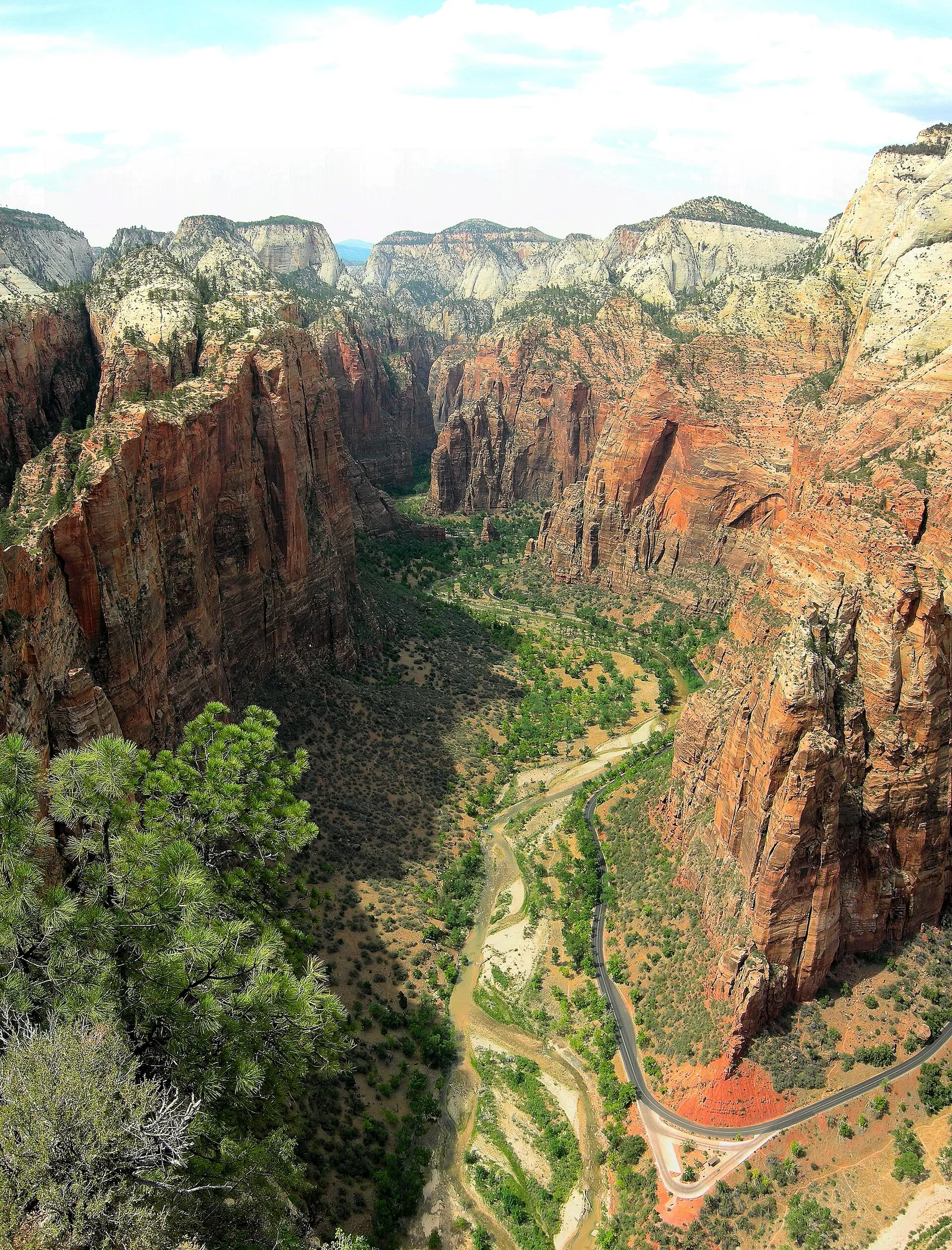
Springdale is a single street a few hundred yards wide, squeezed between thousand-foot sandstone walls, that ends at the pedestrian entrance to Zion National Park. Fewer than a thousand people live here. There is nowhere for the town to expand, because the canyon walls decide the boundary, and that physical constraint is the most important commercial fact about the place. What Springdale sells that no other Zion-area town can sell is the shuttle. Private vehicles are restricted in Zion Canyon during the operating season, and the town's own shuttle runs the length of Springdale to the park's pedestrian entrance, which means a guest staying here walks or rides to the canyon while a guest staying in St. George or Hurricane spends an hour each way and fights for parking. That is the whole positioning, and a surprising number of properties in this town bury it below a paragraph about the kitchen.
Springdale is the highest-demand, lowest-supply market on this wave and its regulation is the tightest. The town restricts where transient lodging may exist at all through a Transient Lodging Overlay zone, applications for which are only accepted on properties already in the Central Commercial or Village Commercial zones — which is a small fraction of the town — and only during a narrow application window in even-numbered years, with a hard limit on how many applications the town will take. In plain terms: new nightly-rental supply in Springdale is close to impossible to create. If you hold permitted transient lodging here, you hold something that essentially cannot be manufactured. Demand runs against that fixed supply from a park that receives millions of visitors a year, with a long season carried by spring and autumn rather than midsummer, because summer in this canyon is genuinely hot. Two things go unsaid in most listings: the shuttle walk, and the Angels Landing permit lottery, which every guest planning that hike has to navigate and almost none understand before arriving.
Nearby Markets: St. George and Zion | Kanab | Moab

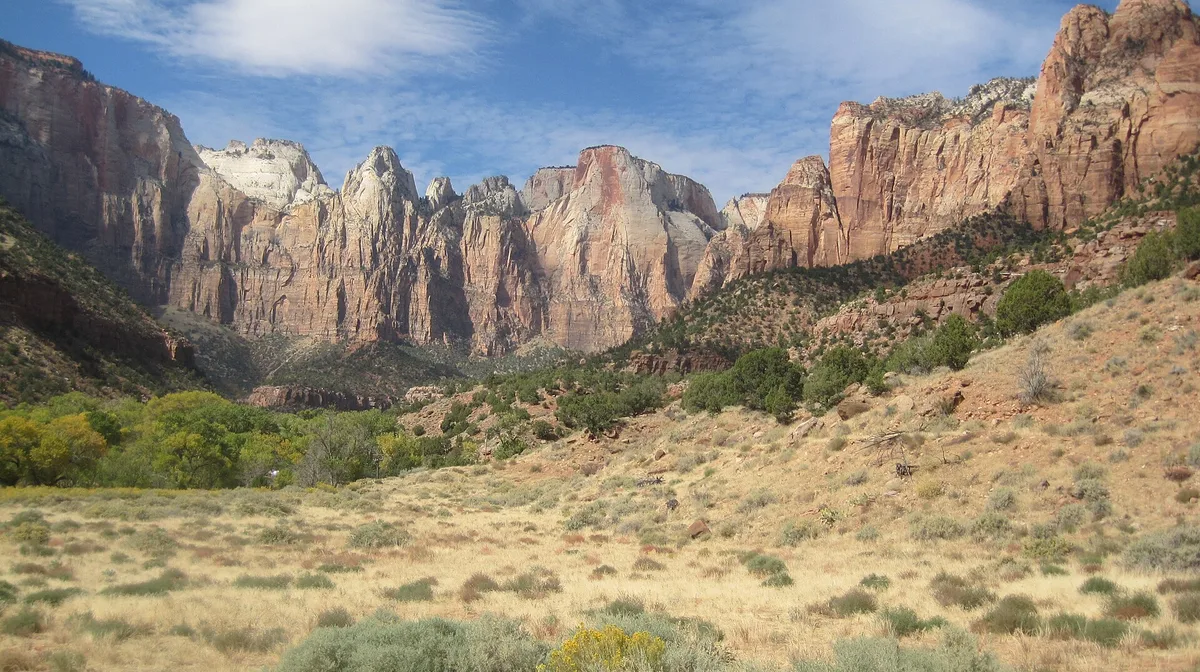
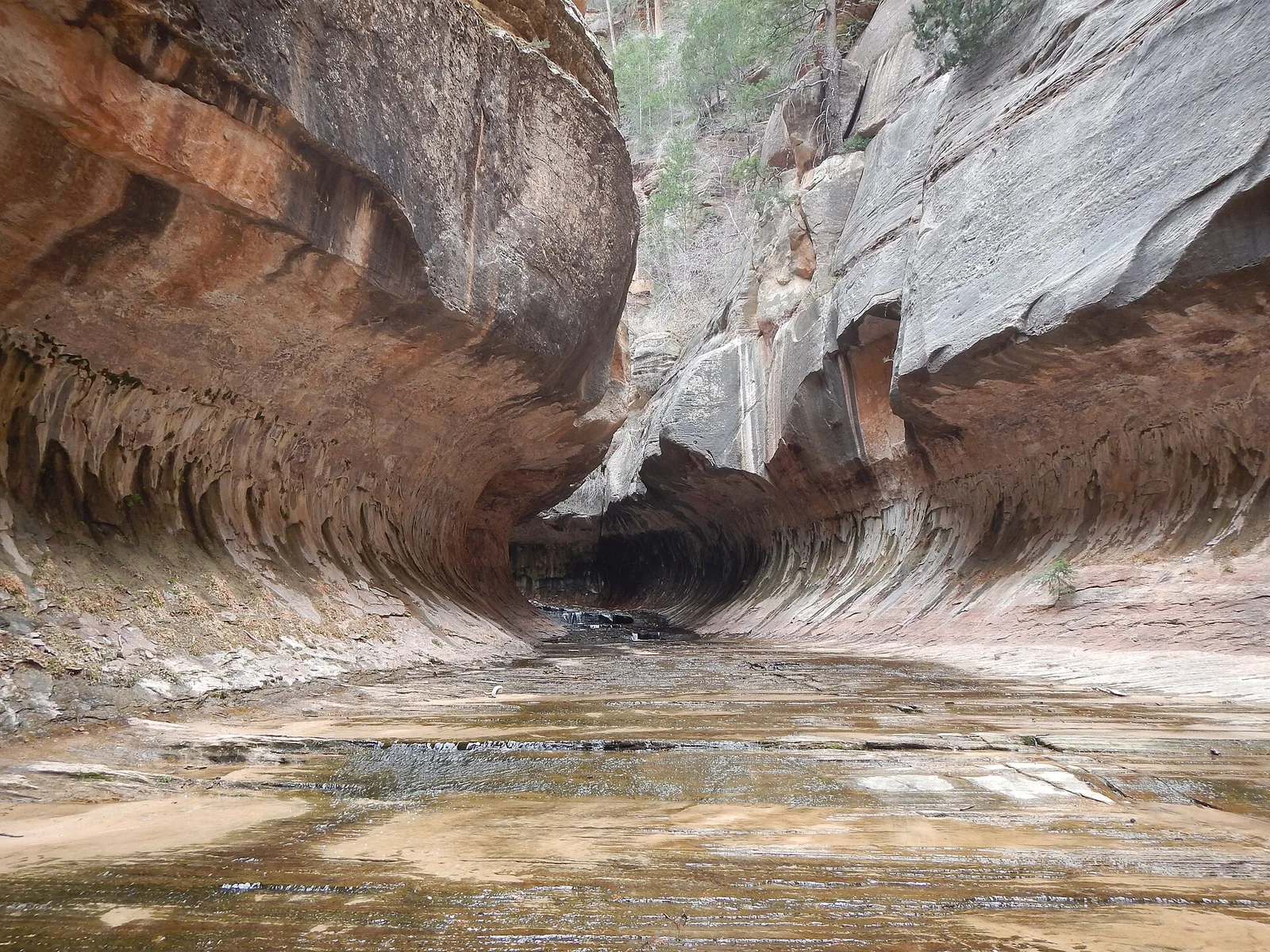
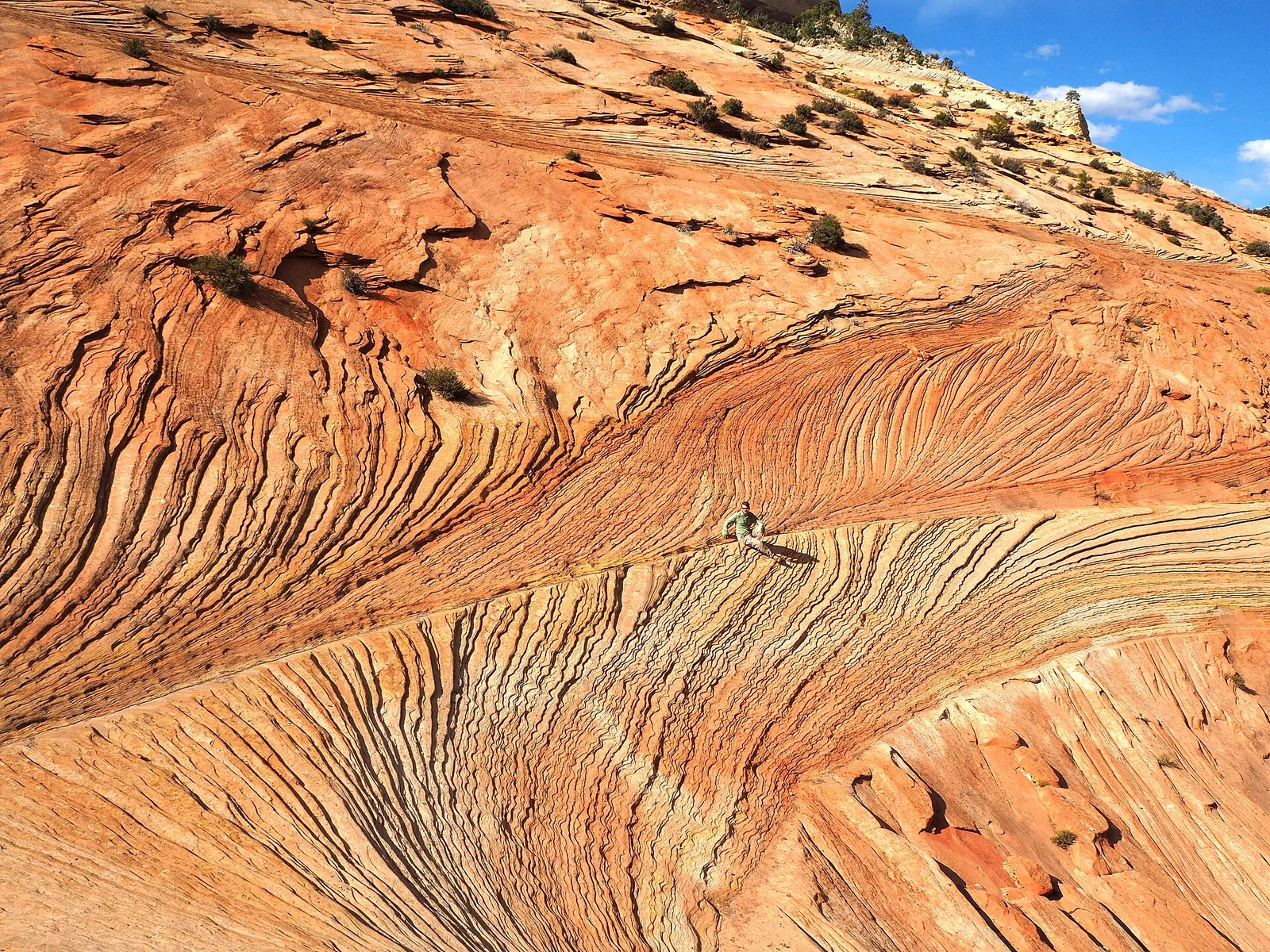
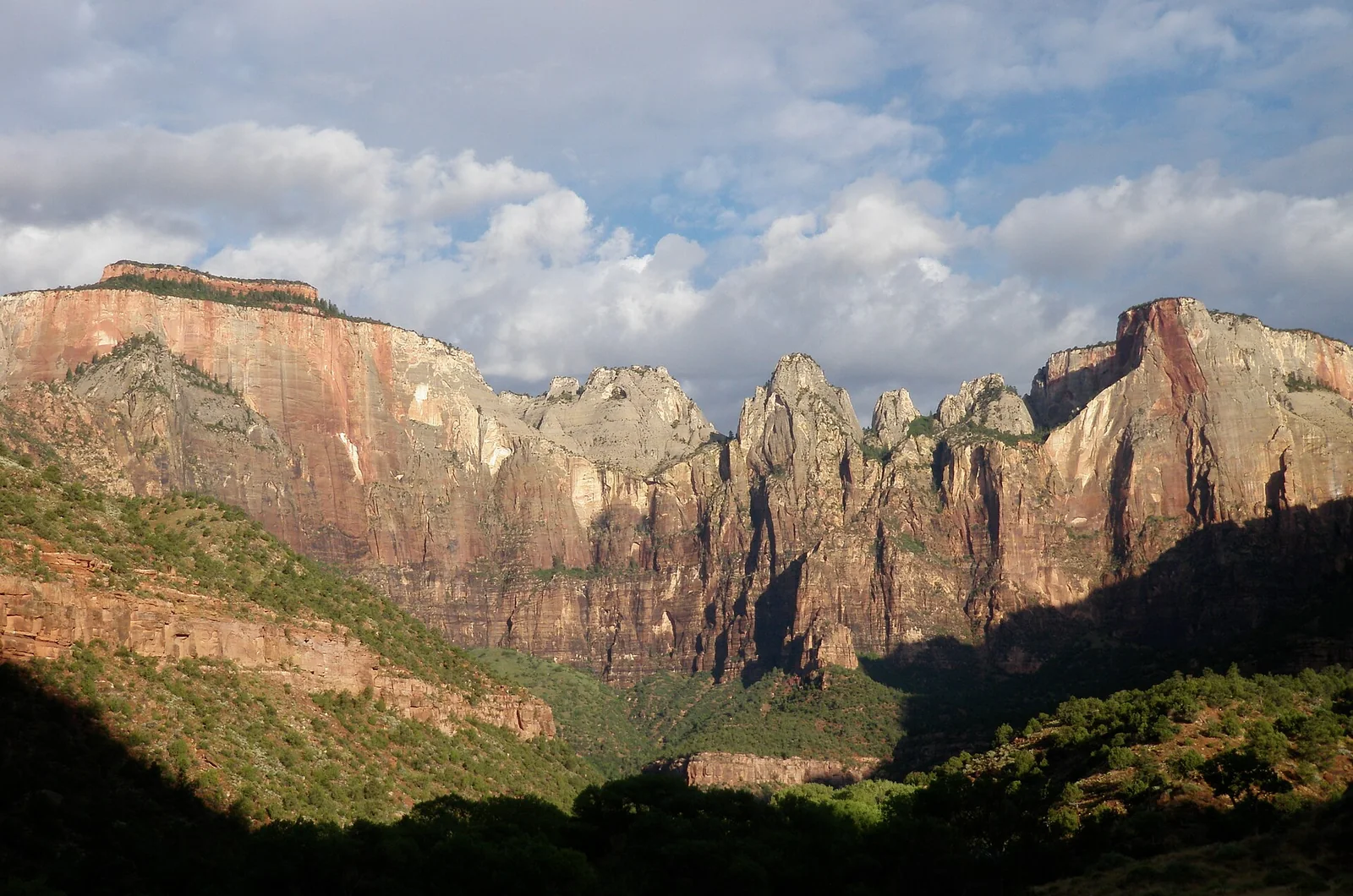
A few of the visual fingerprints we lean into when we shoot, brand and market a Springdale property — courtesy of the open Wikimedia Commons archive.
Cavmir markets permitted Springdale lodging around the one advantage that matters, which is where you are standing. We photograph the property with the canyon walls in the frame at the hours they actually glow, rather than at noon when the light is flat and the rock goes white, and we lead with the walk to the shuttle stop stated in minutes. We write the listing and the site for a guest planning a real Zion trip: the shuttle, the Angels Landing permit lottery, the Narrows and when the water is right, the hot afternoons and what to do in them, the dark sky at night. We build your direct-booking site and rank it for Zion, shuttle and canyon-gateway searches so returning visitors book with you rather than starting again on a search page, and we set up the email flow that a repeat-heavy park market rewards. We will confirm your permit and overlay status before we write a word. We help position and market your property. We never manage it or touch your keys.
Mormon settlers came up the Virgin River in 1862 and named the place Springdale, farming a narrow floodplain between sandstone walls that rise two thousand feet on either side. Farming there is difficult in ways that are hard to overstate — the river floods, the canyon shades, and the amount of workable land is measured in acres rather than square miles. Several of the neighbouring settlements were simply abandoned. Grafton, a few miles down the valley, was given up entirely and is now one of the best-preserved ghost towns in the West, familiar to a great many people because Butch Cassidy and the Sundance Kid was partly filmed there.
The canyon above the town was declared Mukuntuweap National Monument in 1909, renamed and expanded as Zion National Park in 1919. The name Zion had been used by the settlers; the earlier one came from the Southern Paiute. What followed was the standard American national park story — a road, a lodge, the Union Pacific promoting a grand circle tour of the southern Utah parks, and then, eventually, cars. Rather a lot of cars.
By the late twentieth century Zion Canyon had a traffic problem so severe that the scenic drive was regularly gridlocked and the canyon's parking simply could not absorb the demand. The park's answer, introduced in 2000, was the shuttle: private vehicles restricted in Zion Canyon during the operating season, a park shuttle running the scenic drive, and a second shuttle line running the length of Springdale to the pedestrian entrance at the edge of town. That decision is the single most important commercial fact in Springdale's history, because it turned the town from a place near a park into the only place from which you can walk into one.
The modern era has brought its own management questions. Angels Landing, one of the most famous and most exposed hikes in the park system, moved to a permit lottery in 2022 because the queue on the chain section had become genuinely dangerous. Zion's night skies are now formally certified as dark. And a town of well under a thousand residents absorbs millions of visitors a year, which is why its lodging rules look the way they do.
Springdale has the strongest demand-to-supply ratio of any market on this wave, and the pricing should reflect scarcity rather than competition. The season is long and it is shaped by heat rather than snow: spring from March through May and autumn from September through early November are the true peaks, because summer in this canyon is genuinely punishing and winter is cold and short-dayed. That is the inverse of most mountain markets and owners who arrive from a ski-market mindset get it wrong. Price March to May and September to November as peak. Price July and August honestly — they are still busy because school holidays are when families can travel, but they are the discount months here, and a listing that acknowledges the heat and sells the early-morning start and the afternoon retreat will outperform one that pretends the weather is not happening. Winter is quiet, cheap and beautiful, and it is the right window for longer stays. The other lever nobody pulls: shoulder-season midweek. Zion's crowding is a weekend and holiday phenomenon, and a Tuesday in April is a genuinely better park experience — market it that way and charge for it rather than discounting it.
Peak is spring, roughly March through May, and autumn, September through early November, when the temperatures are workable and the canyon is at its best. Summer is busy on school-holiday family traffic but it is the weakest product — daytime highs in the canyon are severe, and the good hours are early morning and evening. Winter, December through February, is quiet, cold at night and often clear and beautiful during the day, with the shuttle season and some trail access reduced; it is the natural home for longer stays and the lowest rates of the year. Spring break in March is a hard peak. The overall curve is long and relatively flat compared with a ski market, which is why Springdale supports higher annual occupancy than most park gateways on this site — the constraint here has never been demand, it has been how few beds the town is allowed to have.
Springdale has the tightest transient lodging regime of any market on this wave, and it is not close. The town controls where nightly lodging may exist through a Transient Lodging Overlay zone, governed by its own section of the town code, and the overlay classifies lodging into two types — traditional hotel-style lodging and short-term rental-style lodging.
The constraints are structural rather than procedural. Applications for the overlay are only accepted on properties that are already zoned Central Commercial or Village Commercial. The town will not accept an application on a property outside those two zones, which excludes the great majority of Springdale. Applications are only accepted during a one-month window in March, and only in even-numbered years. And the town limits how many applications it will accept in total, in the region of a handful per year.
Read that sequence again, because the implication is the important part: new nightly-rental supply in Springdale is close to impossible to create. A property that already holds permitted transient lodging status is therefore holding something that cannot practically be replicated, and its value reflects that. If you are buying here with a nightly rental plan, the only question that matters is whether the specific property already carries the entitlement, and you should have that confirmed in writing by the town before you make an offer. Do not assume a real estate listing that says short-term rental is telling you the property is permitted.
On tax, Utah stacks several layers on lodging: a statewide transient room tax, a county transient room tax levied by Washington County, a municipal transient room tax which Springdale levies at the maximum the state allows, and state and local sales tax on top. The guest-facing total runs into double digits. Register with the Utah State Tax Commission and confirm current rates with them and with the town, because Utah's county lodging rates have been adjusted by statute in recent years and figures published elsewhere go stale quickly.
Lead with the walk to the shuttle. It is the entire competitive advantage of staying in this town rather than in Hurricane or St. George, and it should be in your first line stated in minutes to the nearest stop, with a note on how the town shuttle connects to the park's pedestrian entrance. Second, explain the Angels Landing permit lottery properly, because nearly every guest planning that hike arrives without a permit and blames somebody. Say when the seasonal lottery opens, that there is a day-before lottery, and what the alternative hikes are for the people who miss out. Third, photograph the canyon walls at the right hour. This rock goes red and gold early and late and washes out completely at midday, and a great many Springdale listings are shot flat at noon with white cliffs behind them. Fourth, tell the truth about summer and sell the workaround — a five a.m. start, the shuttle before the queue, and an afternoon indoors or in the river. Fifth, cover the Narrows honestly: water levels, when it closes, where to rent boots and drysuits, and what a flash flood warning means. Sixth, sell the night. Zion's certified dark skies are one of the best things about staying inside the canyon rather than an hour away, and almost no listing mentions them.
Acquisition is the barrier and it is severe: permitted lodging in Springdale is scarce, expensive and effectively cannot be created, so entry means paying for an entitlement as much as a building. Summer heat is a real product problem that has to be managed rather than ignored. The town's physical constraints make parking, deliveries, staffing and construction all harder than they look. Flash flooding on the Virgin River and its side canyons is a real seasonal safety issue. Park management decisions — shuttle capacity, permit systems, any move toward reservations — land directly on this market with no buffer. The workforce lives down the valley, which affects cleaning and maintenance costs. And a town of a few hundred people managing millions of visitors will keep regulating tightly, so expect the rules to get stricter, not looser.
Insurance in Springdale is a desert-canyon conversation with a flood chapter. A standard homeowner's policy will not follow you into transient lodging use, so you need a short-term rental or commercial policy with proper liability limits, and pools, hot tubs, decks, exterior stairs and any river frontage or trail access should be named specifically. The distinctive local risk is water, which surprises people in a desert: the Virgin River and the side canyons flash flood, sometimes violently, and properties on or near the floodplain need their flood zone understood and a separate flood policy considered — standard policies exclude flood. Wildfire risk in southern Utah has risen and affects underwriting. Heat and sun are hard on roofs, exterior finishes and HVAC systems, and cooling failure in July is not a minor inconvenience here — it is a guest-safety and refund event, which is worth raising with your carrier in the context of loss of rental income. Get quotes during diligence rather than after closing, and have guest injury, guest property damage, loss of rental income and business interruption written into the policy in terms you can read.
Utah taxes lodging in layers and Springdale sits at or near the top of the stack. There is a statewide transient room tax, a county transient room tax levied by Washington County, and a municipal transient room tax which Springdale levies at the maximum the state permits — and on top of all of that, state and local sales tax applies to the accommodation charge. The guest-facing combined rate runs into double digits. Utah has amended the allowable county transient room tax rates by statute in recent years and several counties have moved, so confirm the current numbers with the Utah State Tax Commission and with the town rather than relying on any published summary, including this one. Register before your first booking. Booking platforms collect and remit a good deal of this on the reservations they process, but that never covers a direct booking, and direct bookings are exactly what effective marketing produces — so know precisely which taxes each channel remits and keep platform and direct revenue separated from the first reservation. Utah has a state income tax, so out-of-state owners will generally have Utah-source rental income to report; your accountant should look at how that, personal use days and depreciation interact for your structure.
Financing in Springdale is dominated by one question that has nothing to do with the building: does the property carry transient lodging entitlement, and will it survive the sale? Because the town's overlay makes new entitlement nearly impossible to obtain, a permitted property trades at a premium that reflects the entitlement rather than the structure, and appraisers do not always capture that cleanly — which can open a gap between contract price and appraised value that a buyer needs to be ready to bridge. Confirm the entitlement in writing with the town before you go under contract; a real estate listing's description is not sufficient. Beyond that, expect underwriting to look at flood zone and any floodplain exposure, roof and HVAC condition given the heat, water rights and connection where relevant, and insurability. Get insurance quotes during diligence. Second-home and investment loans carry higher rates and larger down payments; debt-service-coverage products underwritten on rental income are available in Utah and are frequently the practical route for an investor, and those lenders will want documented rental history and evidence of the entitlement. Model a spring-and-autumn peak with a soft summer rather than a mountain market's winter curve.
Springdale's structural position is close to unique and it is likely to strengthen rather than weaken. The town cannot physically expand — the canyon walls decide the boundary — and it has chosen a lodging framework that makes new nightly-rental supply nearly impossible to create. Demand from a park receiving millions of visitors a year continues to run against that fixed supply. For an owner already holding permitted lodging, the main risks are not competitive; they are operational and political. Watch park management decisions closely, because shuttle capacity, permit systems for popular hikes and any move toward a park-wide reservation requirement would change the guest experience and the booking pattern directly and with no buffer. Watch the town, which has consistently chosen restriction over growth and is unlikely to reverse. And watch water and heat, which are the real long-horizon variables in southern Utah — Virgin River flows, drought, extreme summer temperatures and the cost of cooling all bear on both the guest experience and the operating cost. None of that argues against owning here. It argues for treating a permitted Springdale property as the scarce asset it is: presented at that level, priced for the real seasons, and marketed direct so the guest relationship belongs to you.
Springdale is one street, a few hundred people, and two thousand feet of sandstone standing over it on both sides. There is nowhere for it to go. You can walk the whole town in twenty minutes, and at the end of it there is a footbridge and a gate and you are in Zion. That is the trick this place has that no other town in southern Utah has: you do not drive into the park, you walk into it, and while everyone else is circling a parking lot at nine in the morning you are already on the shuttle. The canyon does something to the light. Early and late the rock goes properly red — the kind of colour that makes people stop mid-sentence — and at midday it bleaches out to nothing, which is why so many photographs of this place are disappointing. At night the sky is certified dark and the Milky Way comes up over the Watchman. The river runs through the middle of it, cold and shallow and occasionally, without much warning, not shallow at all. What we like about it commercially is the arithmetic, which is the most extreme on this site: millions of visitors a year, a town that legally cannot build more beds, and a permit regime that only opens for one month every second year. Scarcity like that does not need clever marketing. It needs to stop being undersold.
A great property in Springdale doesn't just want a listing — it wants a point of view, an audience, and a brand the city itself would recognise.
Eight answers to put in your guest guide. These are the questions guests ask anyway, and getting them right in advance is the cheapest review insurance there is.
The canyon is a different place before eight — cool, quiet, and the light on the walls at its best. Tell guests where the nearest town shuttle stop is, in minutes from the door, and what time to be on it.
There are not many seats in Springdale and in spring and autumn they all go. Tell guests to book on arrival day, and name one place that serves late for people coming off a long hike.
The chains, the exposure, the queue. It has needed a permit since 2022 and most guests do not know until they arrive. Explain the seasonal lottery, the day-before lottery, and what to hike instead if they miss out.
Rain in this canyon means flash flood risk in the narrows, so guests need a plan that is not a slot canyon. The museum is indoors; Grafton, down the valley, is an abandoned settlement used in Butch Cassidy and the Sundance Kid.
Zion's crowding is a weekend and holiday problem. A Tuesday in spring or a warm November week is the same park with a fraction of the people.
Forty minutes up the interstate, a separate entrance, red rock finger canyons and almost nobody there. The right answer when the main canyon is full.
Ten minutes from anywhere in town, no hike required, and the best twenty minutes of light in the park. Then stay out — the night sky here is formally certified dark.
Two questions decide a Zion trip. Explain the town shuttle and the canyon shuttle as two different things, and cover the Narrows honestly — water levels, closures, where to rent boots and a drysuit, and what a flash flood warning means.
A few composite engagements, drawn from how Cavmir typically works with owners of permitted lodging in a supply-locked park gateway. Illustrative rather than any single client's file.
The single reason to stay in Springdale rather than thirty miles away — walking to the shuttle — mentioned once, halfway down the listing, in a sentence about the location being convenient.
Rebuilt the listing and the site around the car-free morning: the walk to the stop in minutes, how the town and canyon shuttles connect, and what time to leave to be in the canyon before the crowds, with photography shot in that early light.
The property stopped competing with cheaper inventory down the valley and started being chosen by guests who understood exactly what the walk was worth.
A rate card copied from a mountain market, treating July and August as the top of the year in a canyon where summer is the hardest month to enjoy and spring and autumn are the real peaks.
Inverted the seasonal structure to price March through May and September through November as peak, repositioned summer around early starts, afternoon shade and the river, and marketed winter for longer stays.
Annual revenue improved without raising summer rates, because the genuinely strong months stopped being sold at the same number as the weakest one.
A steady stream of guest disappointment over Angels Landing permits nobody had applied for and Narrows closures nobody had anticipated, all landing as reviews about the stay.
Built the permit lottery, the Narrows conditions and the flash flood guidance into the listing, the confirmation email and a pre-arrival message timed to the lottery window, with named alternatives for guests who miss out.
Guests arrived prepared, the park's rules stopped reading as the property's problem, and reviews returned to the property itself.
Demand in Springdale peaks around March, April and May and runs quietest around January and December. Here is how the year actually books — and what to do about each stretch of the calendar.
Spring from March through May and autumn from September through early November. This is the inverse of a ski market and owners who arrive with a mountain-market rate card get it backwards. Summer is busy because school holidays are when families can travel, but daytime heat in this canyon is punishing and it is the weakest product of the year, not the strongest.
Summer is the real shoulder here despite the crowds, and it should be sold on early starts, afternoon shade and the river rather than pretended away. Late November is quiet and pleasant. Midweek in the true peak seasons is the most underexploited slot in the market, because Zion's crowding is a weekend and holiday problem.
December through February is the quiet stretch — cold nights, short days, some trail and shuttle access reduced — and it is beautiful during the day. It is the natural home for longer stays, photographers and the lowest rates of the year.
Spring and autumn peak weeks fill early, often several months out, because guests are also arranging permits and shuttle-dependent itineraries. Summer books shorter. Midweek in peak season is frequently available late, which is a genuine opportunity for a host who markets it.
Two to four nights is typical, with longer stays in winter and from photographers. Short stays plus high demand means turnover is high and cleaning cost per revenue dollar deserves close attention.
Walking distance to a town shuttle stop is the single largest value driver and it should be stated in minutes in the first line. A pool or serious shade is close to essential for the summer months. Properties with canyon-wall views photographed at the right hour dramatically outperform the same property shot at midday, when the rock washes out to white.
Start with photography that shows what a guest actually gets here, then write the listing around a real itinerary rather than a feature list. Build a direct-booking site so returning guests can come back without going through a platform, and keep an email list segmented by season so you can reach last year's visitors before the calendar opens. Local search matters more than people expect in a market this size, because guests search the destination and the attraction rather than the word rental. A marketing agency layer handles the photography, the listing copy, the direct-booking site and the local SEO as one system instead of four disconnected jobs.
Spring from March through May and autumn from September through early November — the inverse of a ski market. Summer is busy because school holidays are when families travel, but the canyon heat makes it the weakest product of the year rather than the strongest. Winter is quiet, cold at night, often beautiful during the day, and best for longer stays.
Spring and autumn peak weeks fill early, often several months out, because guests are arranging permits and shuttle-dependent itineraries at the same time. Summer books shorter. Midweek in peak season is frequently still available late, which is a real opportunity, because Zion's crowding is a weekend and holiday problem.
Las Vegas is the practical airport for a large share of guests at under three hours, with Salt Lake City the other main gateway, plus drive traffic from St. George, Cedar City and Phoenix. A big share of the market is running a multi-park southern Utah loop, so itineraries covering Bryce and the Grand Canyon are worth writing.
Walking distance to a town shuttle stop, stated in minutes, is the whole reason to stay in Springdale rather than an hour away, and it belongs in your first line. After that: a pool or serious shade, air conditioning that genuinely copes, a canyon view photographed at the right hour, and outdoor seating for the certified dark skies.
Run your Airbnb, Vrbo, or website through Cavmir's free grader. It checks the things that decide whether guests book in Springdale — photos, listing copy, page speed, local search — and shows you where bookings leak. Takes about a minute, and there's no sales call attached.
If the report says your booking engine is the weak link, that's fixable: a direct-booking website of your own means repeat guests stop paying platform fees to come back to you. That's the work Cavmir does — see Airbnb website design in Springdale.
Talk to Cavmir today. We'll show you exactly what your Springdale property is leaving on the table — and how fast we can change that.
Book a Free Strategy Call