Cypress Creek before the square wakes
Walk the creekside trail while the mist is still on the water, then coffee on the square as the galleries open. The valley's best hour costs nothing, and guests who catch it book longer next year.
Expert short-term rental marketing to grow your bookings and nightly rate in Wimberley, Texas, USA.
* Market averages. Properties marketed by Cavmir typically exceed these figures by 25–45%. Data sourced from AirDNA, STR market reports, and Cavmir internal analytics.
Wimberley is the Hill Country's swimming-hole town — around three thousand people where Cypress Creek meets the Blanco River, an hour southwest of Austin and ninety minutes from San Antonio, close enough that five million Texans treat the valley as their weekend backyard. The water made the reputation: Blue Hole, the cypress-lined swimming hole so beloved the city runs summer swimming on a reservation system, and Jacob's Well, the artesian spring that draws photographers year-round even with swimming suspended through the long drought. The square built an economy on the traffic — galleries, Market Days on the first Saturday of every month from March through December with nearly five hundred booths under the oaks at Lions Field, the Corral Theatre showing movies outdoors on summer nights, and the EmilyAnn Trail of Lights closing the year. The valley also takes its nights seriously: Wimberley and neighboring Woodcreek became Texas's third International Dark Sky Community in 2018 and were later honored as DarkSky International's Place of the Year, which means porches here actually show the Milky Way an hour from a booming metro. The rulebook is split — every short-term rental inside city limits needs a conditional use permit, while much of the valley's cabin stock sits outside them on county land with a lighter file — and the tax stack inside the city runs 13%. Underneath it all: a drive-to market with a wedding industry, an event calendar, and a repeat guest who books the same creek every year.
Wimberley demand runs April through October with a long tail the rest of the year. Spring opens with wildflowers and the first Market Days weekends, summer runs on the swimming holes — Blue Hole reservations, tubing, hundred-degree Saturdays that fill every creekside cabin — and fall belongs to wedding season, when the venues along the creeks and ridgelines book out and their guest blocks spill into every rental in the valley. December earns its keep with the Trail of Lights and holiday shopping on the square. Nightly rates run around $355 with occupancy in the low 40s across roughly nine hundred listings — sharply weekend-shaped numbers, because this is a Friday-and-Saturday market for Austin and San Antonio couples, and the owners who price weekends properly and let midweek work at honest rates out-earn the flat-raters. The premium product is specific: creek or river frontage first, then walkable-to-the-square cottages, then hillside builds with real dark-sky decks. Supply has grown fast — the design-forward wave of A-frames and modern cabins photographs well and prices confidently — but the median listing is still a phone-shot ranch house with one rate for all 365 nights, which is the gap. And the guest base repeats: the same Austin families book the same first-Saturday weekends, the same wedding parties return for anniversaries, and the booking window lengthens every year for the marquee weekends.
Nearby Markets: Austin | San Antonio | Fredericksburg
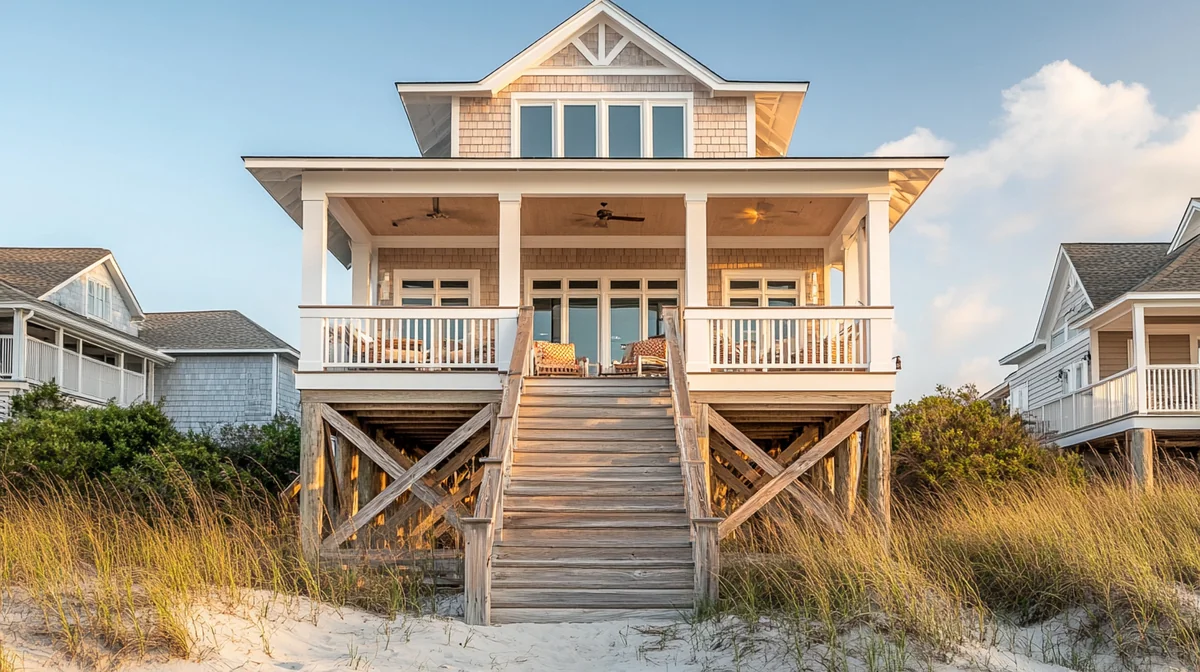
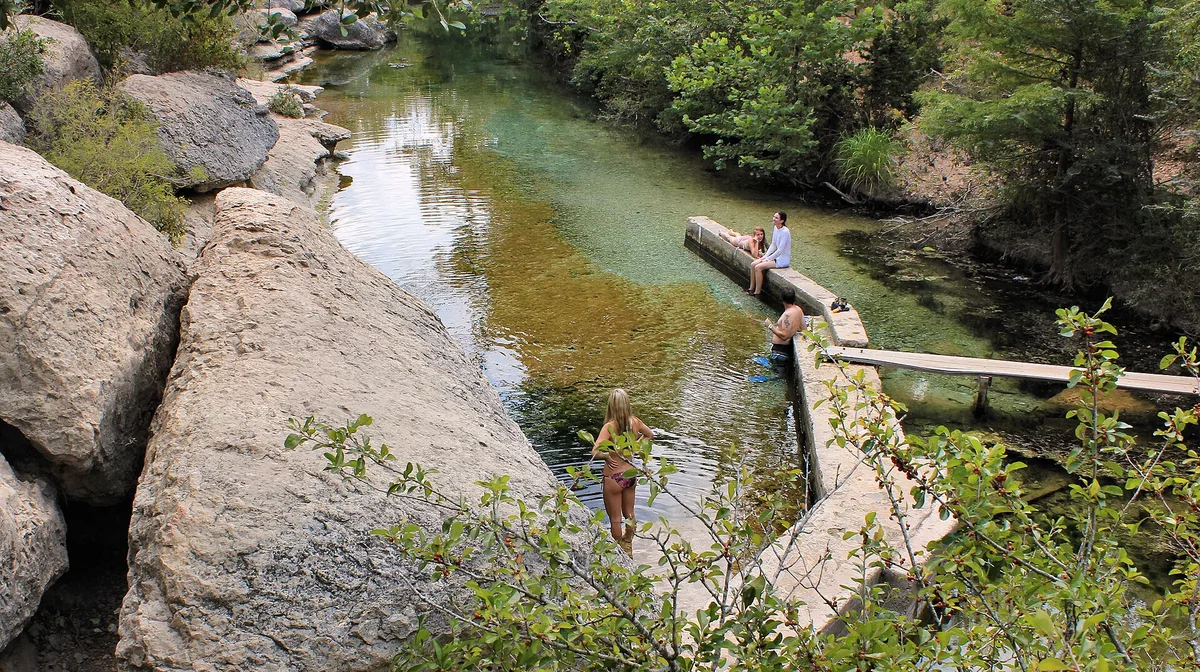
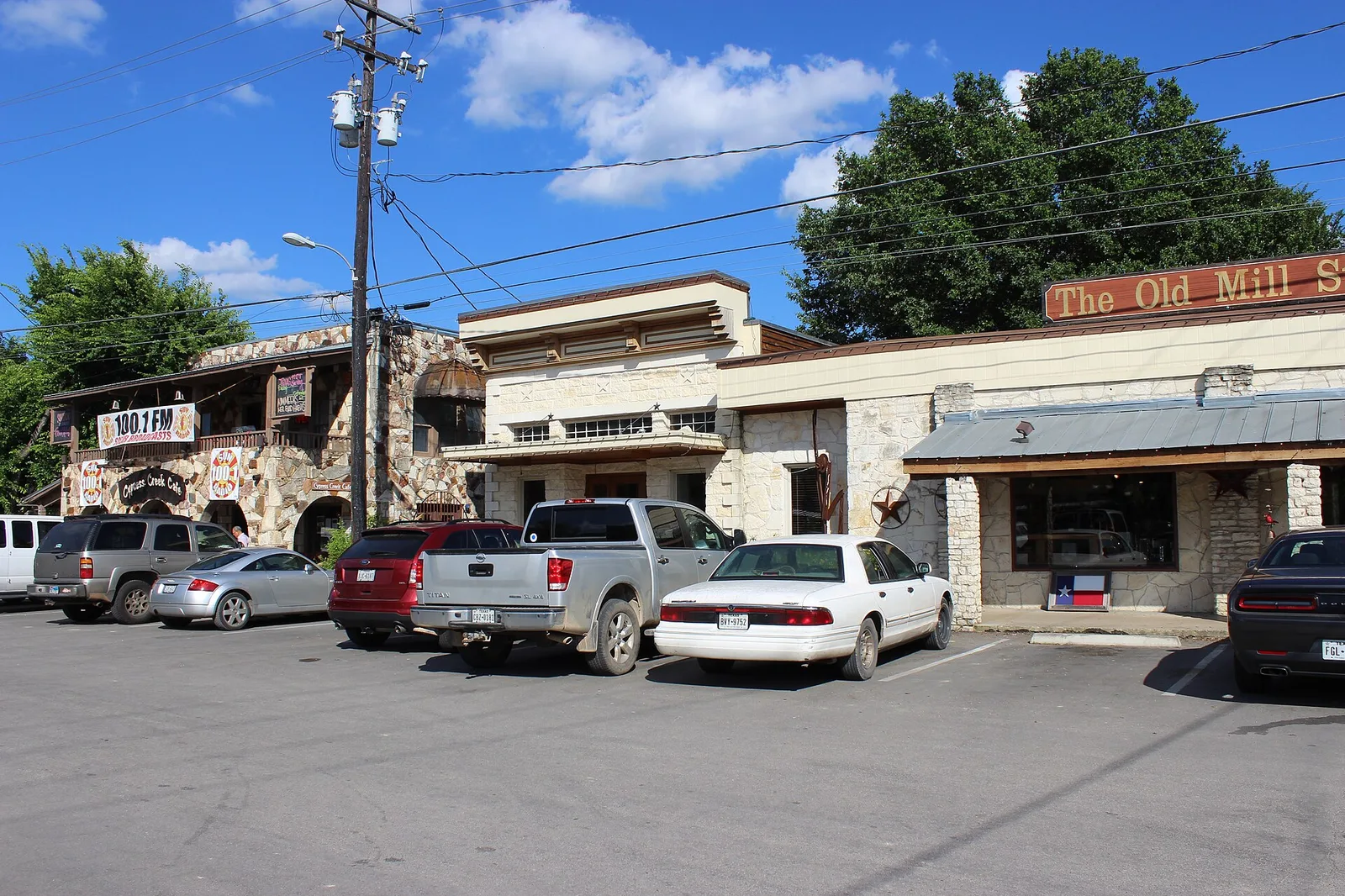
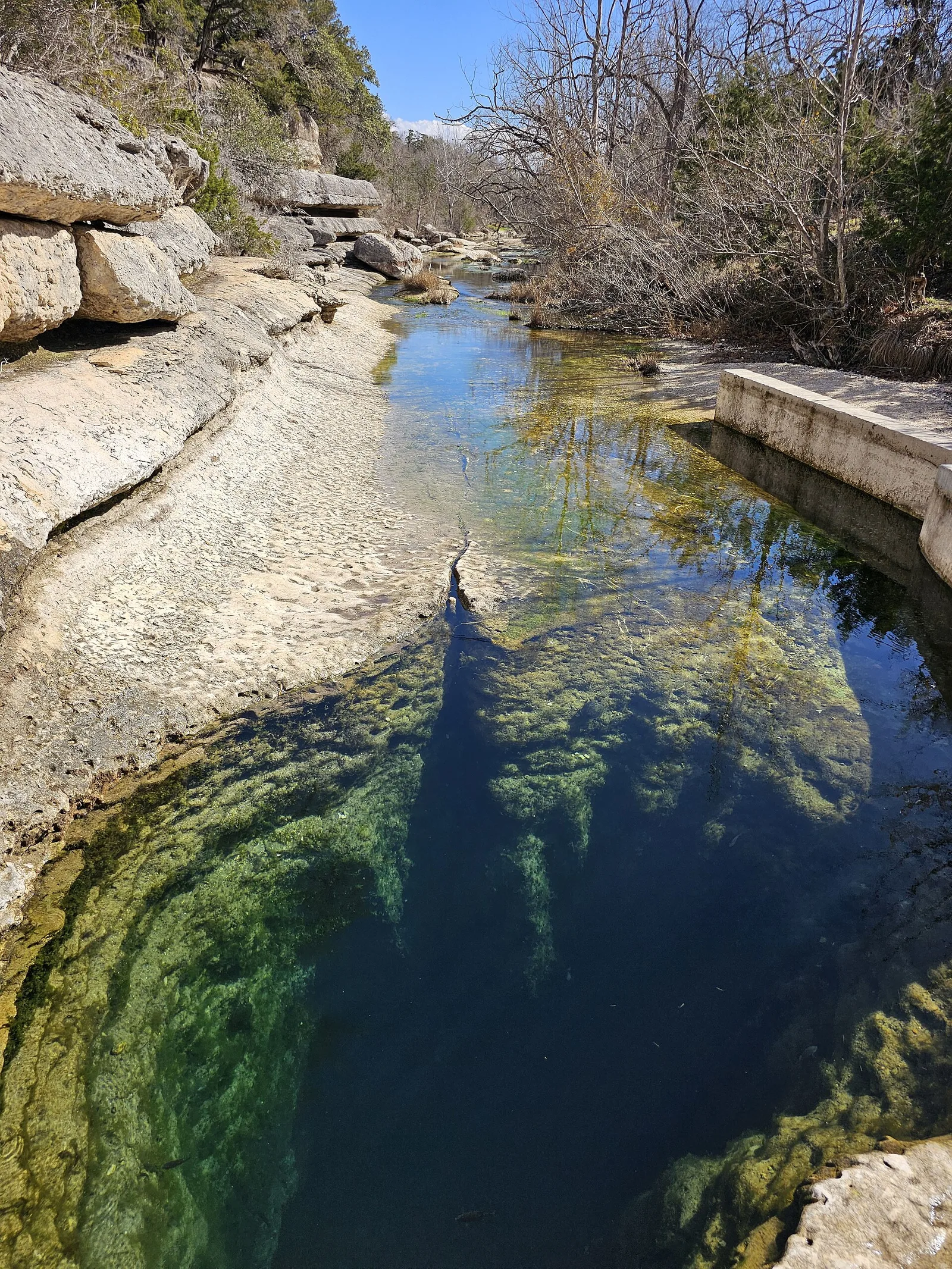
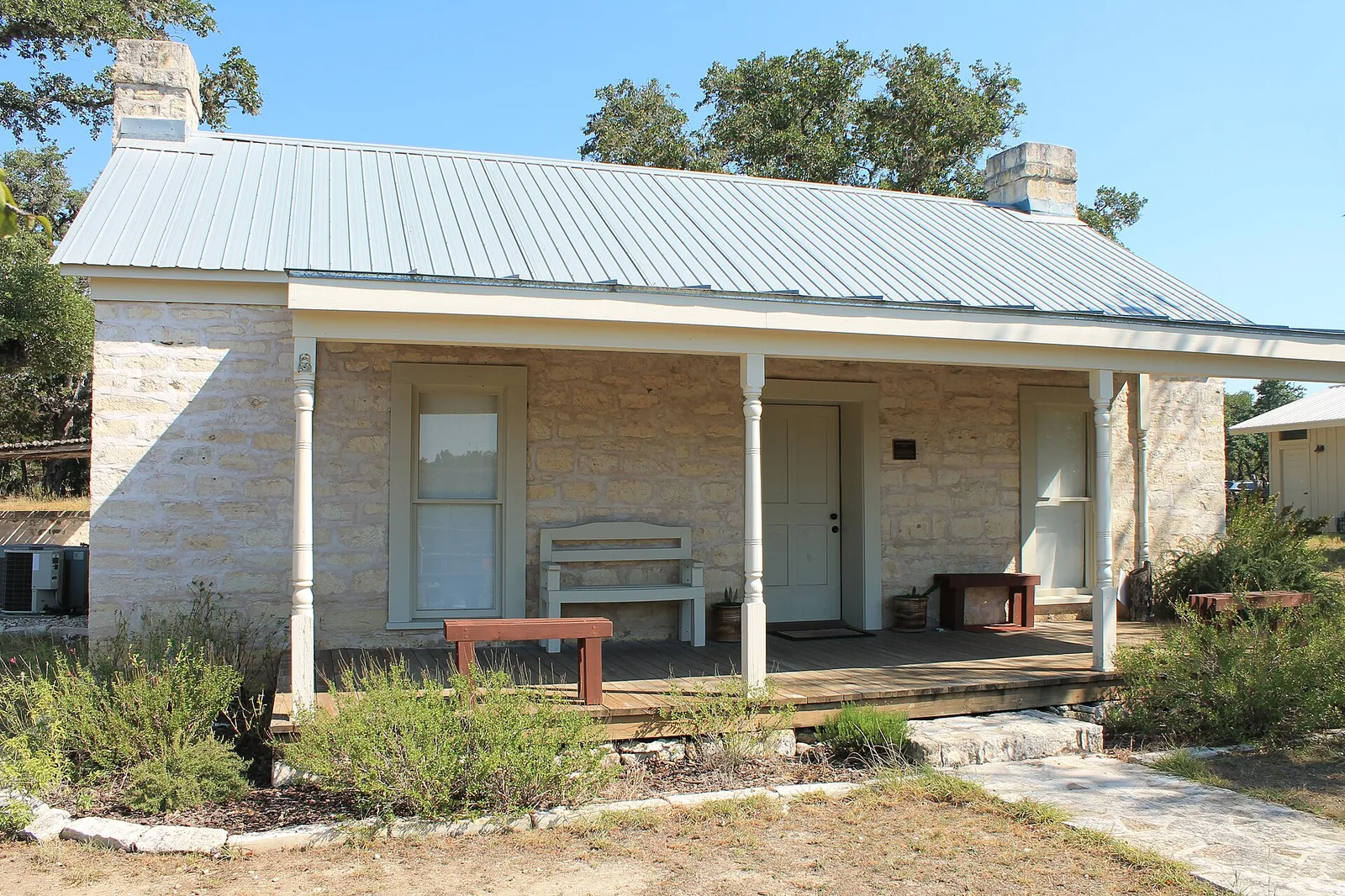
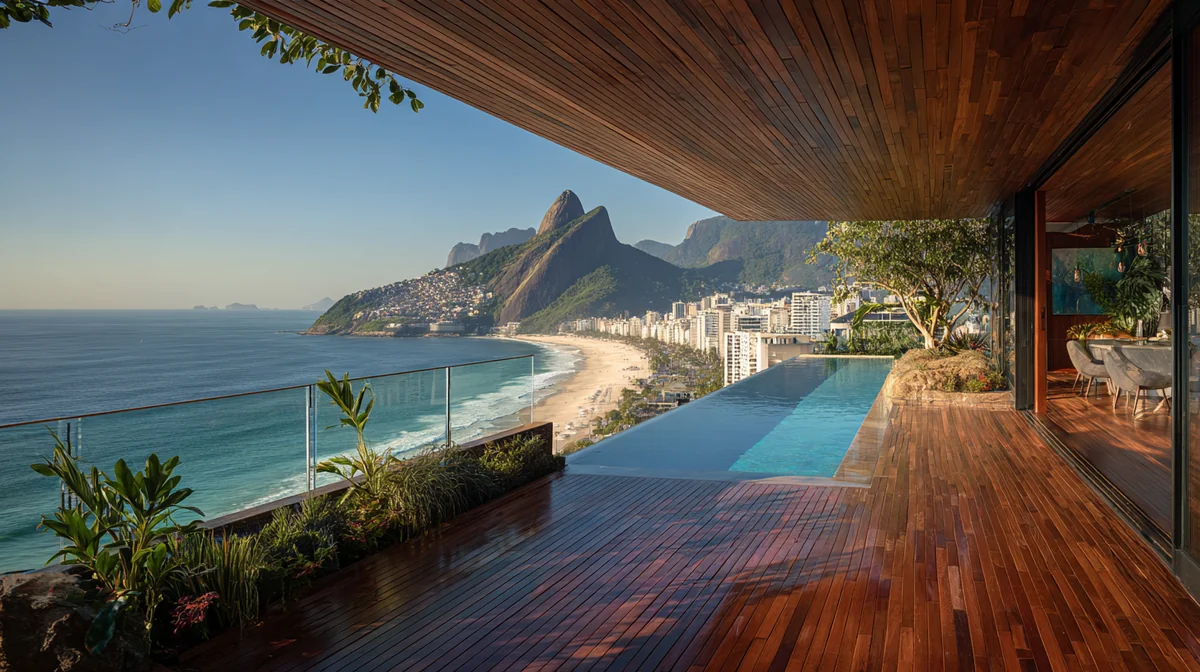
A few of the visual fingerprints we lean into when we shoot, brand and market a Wimberley property — courtesy of the open Wikimedia Commons archive.
Cavmir wins in Wimberley because the market's beauty is underexploited by its listings. The valley sells water, oaks and dark skies, yet the typical listing leads with a bedspread photo and a generic Hill Country getaway description. We shoot the property the way the market dreams it: morning light through the cypresses, the deck at dusk with the first stars up, the fire pit burning under a sky the town passed ordinances to protect. We write copy that answers this guest's actual questions — can you walk to the creek, do you need Blue Hole reservations, how far to the square, which wedding venues are within ten minutes — because Wimberley bookings are decided on specifics. We price the published calendar: first-Saturday Market Days weekends, spring and fall wedding season, summer Saturdays, the Trail of Lights, and honest midweeks in between. Inside city limits we make the conditional use permit visible, because in a town that reviews every rental, demonstrable compliance converts the careful booker. And we build the direct channel early: wedding blocks rebook for anniversaries, Austin families return for the same swimming weekends, and every returning guest booked on your own site is a commission you keep. The competition here is presentation — the rules are navigable and the demand is an hour up the road. We help position and market your property. We never manage it or touch your keys.
Wimberley grew up around a mill and never lost the habit of gathering at the water. William Winters raised a mill on Cypress Creek in 1856; the Wimberley family bought it in 1874 and gave the settlement its name; and for a century afterward the valley ran on cypress timber, ranching and the slow trade of a square that sat a comfortable distance from everywhere. What changed the arc was leisure. Hill Country ranches turned to summer camps and guest resorts, the 7A Ranch built its Pioneer Town on the Blanco in the 1950s, artists and glassblowers settled in — Wimberley Glassworks has drawn crowds to its furnace since 1992 — and the Lions Club's Market Days grew into one of the largest outdoor markets in the Hill Country, filling Lions Field on first Saturdays for decades. The town only incorporated in 2000, which tells you how lightly it has always preferred to be governed. Blue Hole, run privately as a camp for most of the twentieth century, was bought for the public in 2005 and reopened as a regional park with summer swimming run on reservations — a model of managed access the rest of Texas now studies.
The modern era has tested and rewarded the valley in equal measure. On Memorial Day weekend 2015 the Blanco River rose out of its banks in the dark and tore through riverside neighborhoods — a flood the town still measures itself against, and the reason floodplain diligence is a first-class subject here. Wimberley rebuilt, then organized around its night sky: with neighboring Woodcreek it earned International Dark Sky Community status in 2018, third in Texas, and was later honored as DarkSky International's Place of the Year. Austin's boom pushed demand and prices up the valley through the 2020s, the short-term-rental wave followed, and the city answered with a conditional-use-permit ordinance, tightened in 2022, that reviews every rental inside city limits. The through-line from the mill to the permit is unbroken: this valley's business has always been the water, the oaks and the gathering.
The rate map follows the water, then the walk, then the view. Creek and river frontage — Cypress Creek, the Blanco, River Road addresses — carries the premium, and earns it hardest in swimming season; a private stretch of bank with a rope swing is the single most valuable amenity in the valley. Square-walkable cottages trade next: Market Days weekends and wedding guests pay for the stroll to dinner. Woodcreek runs the family middle — golf-adjacent, quiet streets, HOA rules worth reading before you buy. Hillside builds off RR 12 and the Devil's Backbone sell the view and the dark sky, and the design-forward A-frames up there price like small hotels when the photography earns it. Ranch-road compounds east and west are the value entry, minutes from everything at the lowest buy-ins. Blended numbers run around $355 a night with occupancy in the low 40s — weekend-shaped, because outside the peak weeks this is a Friday-and-Saturday town. The pricing discipline that pays: publish first-Saturday and wedding-season weekends early at premium rates, hold summer Saturdays firm, price midweeks honestly for couples and remote workers, and let capacity — the sleeps-twelve wedding-party house — charge for what it actually provides.
April through October is the working season. Spring brings wildflowers, wedding season's first wave and the reservation book reopening at Blue Hole; summer is the swimming peak, with July's heat filling every creekside cabin on Saturdays; fall stacks wedding season's second wave against Market Days and the first honest campfire evenings. December is a real small season — Trail of Lights, shopping on the square — and January and February are the quiet months, best used for maintenance, photography and midweek couples at honest rates. The shape to respect is the week itself: Fridays and Saturdays carry the year, and midweek is a different product at a different price.
Wimberley regulates by review, not by ban — and the geography of the rules matters more here than in most markets. Inside city limits, every short-term rental requires a conditional use permit: applications run through the Planning and Zoning Commission and then City Council, under an ordinance the city updated in 2022. The code distinguishes owner-occupied rentals (STR 1) from whole-home rentals where the owner lives elsewhere (STR 2), and approval rides on the practical file — septic capacity, parking, noise mitigation and lighting that complies with the dark-sky standards the valley takes seriously. Permitted rentals collect the 6% state hotel occupancy tax plus the city's 7% hotel occupancy tax, a combined 13% on stays under 30 days. The process is public and neighbors are notified, so a professional application — clear site plan, honest occupancy, a local contact — is worth real money.
Outside city limits the file lightens considerably: Texas counties have no zoning authority over rural land, so no county use permit exists, and the state's 6% hotel tax is the confirmed baseline — verify with the county whether any additional local tax applies to your parcel, and expect deed restrictions and HOA rules (Woodcreek's among them) to do the regulating that government doesn't. Two cautions apply everywhere. First, septic is the honest constraint on occupancy in this valley — the number on your listing should match the system, not the floor space. Second, the river writes its own rules: floodplain status affects insurance, lending and guest-safety disclosure, and the 2015 flood is living memory. The framework is stable and navigable as of 2026, but ordinances move — confirm current requirements with City Hall and your attorney before you list.
The Wimberley strategic tip: sell the water honestly and the sky confidently. Every guest is coming for one or both, and the listing that states exactly what it offers — private creek access or a five-minute drive to Blue Hole, a hot tub under a genuinely dark sky — beats the prettier house that makes them guess. Tactically: first, photograph at the two hours this valley is bought on — morning light through the cypresses and the first hour of dark, fire pit lit, stars visible in frame. One dusk shoot moves a listing out of the phone-photo pack for good. Second, publish the water facts above the fold: swimming reservations at Blue Hole open March 1 and summer slots go fast, and Jacob's Well is currently a walk-and-look rather than a swim — guests who learn this from your listing instead of at the gate write better reviews. Third, run the wedding playbook: name the venues within fifteen minutes, state your true sleeps and parking, and offer a guest-block rate on your own site — wedding traffic is the most under-marketed revenue in the valley. Fourth, price first Saturdays like the events they are; Market Days is a demand spike with a published schedule, and flat-raters donate it. Fifth, keep midweek alive with a different product: couples' rates, remote-work copy, porch-and-coffee photography. And sixth, collect every guest email from day one — this is a repeat market where the same families return annually, and a spring email with first refusal on their weekend converts commission-free.
The weekend shape is the structural fact — blended occupancy in the low 40s means midweeks need their own strategy or they sit empty. Water is variable: drought years suspend the famous swims and shift the pitch to creeks, springs and shade, while flood risk on the Blanco demands real floodplain diligence and proper insurance. The city's permit process takes time and invites neighbors' voices, so buy with the ordinance in hand. And supply is growing faster than demand differentiates — the phone-photo era is ending, and mid-pack listings feel it first.
The file leads with water in both directions. Flood coverage is parcel-specific and essential anywhere near the Blanco or the creeks — standard policies exclude it, the NFIP or private flood market fills the gap, and the 2015 flood makes this a first-question underwriting topic, not a footnote. Drought years bring the opposite exposure: wildfire risk on the cedar-and-oak hillsides, where defensible space and documented mitigation help both premium and appetite. Operate on a proper short-term-rental or landlord policy with at least $1 million liability, sized for the amenities that book this valley — hot tubs, fire pits, swimming access, tree swings. Septic systems, wells and private-road access belong in the documentation. A Texas broker who writes Hays County river property routinely will save you from both kinds of surprise.
Inside city limits, short stays owe the 6% Texas hotel occupancy tax plus the 7% city hotel occupancy tax — a combined 13%, and the conditional use permit expects both accounts current. Platforms generally collect and remit the state tax on their bookings; city-tax handling varies by channel, and direct bookings put both filings in your hands, so confirm per channel rather than assuming. Outside city limits the state 6% is the confirmed baseline — verify whether any county or district tax applies to your parcel before you set rates. Texas levies no state income tax on the rental revenue, which flatters the ownership math, but property taxes are the serious local reality and belong in every pro forma. A short-stay-literate Texas accountant closes the loop.
Wimberley finances like the Hill Country it is: mostly conventional, with character-property asterisks. In-town cottages and Woodcreek homes run standard second-home and investment paper, and DSCR lenders read documented weekend and wedding-season income well. The asterisks arrive with the land — wells, septic, unrestricted acreage and gravel access narrow the lender pool; unique builds (A-frames, barn conversions, creekside cabins on pier foundations) can stump conservative appraisers in a market where comps are eclectic; and anything in a mapped floodplain moves both insurance and loan terms, so order the flood determination before you fall in love. Hill Country regional banks and credit unions handle these files fluently and often beat national desks on rural parcels. The strategic rule: buy the water access if you can — it holds value the way frontage always does — but underwrite against the weekend-shaped calendar, not the July Saturdays.
Wimberley's future is a negotiation between growth and the things growth came for. The demand side compounds on its own: Austin's metro keeps expanding toward the valley, San Antonio grows from the south, and the wedding industry keeps converting guests into next year's rental bookings. The constraints are equally structural — water above all. Drought cycles decide when Jacob's Well flows and how Blue Hole manages its summers, the valley's aquifer politics are serious and ongoing, and the towns have shown they will choose stewardship over volume; expect managed access, reservation systems and dark-sky enforcement to deepen rather than relax. The city's permit regime looks stable — review, not prohibition — and the county side will keep relying on deed restrictions and the state baseline. For owners, the durable play through 2027 is the one the town itself would design: a permitted, septic-honest property with real water access or a real dark-sky deck, photographed at dusk, priced to the published calendar of first Saturdays and wedding weekends, and backed by a direct channel full of returning Austin families. Markets an hour from a boom, with fixed natural assets and rising standards, reward the professional early — and Wimberley's standards are rising on schedule.
Wimberley is the market where our photographers fight over assignments. The raw material is absurd: cypress-filtered light on green water, limestone hills that go gold at seven, and a night sky the town protects by ordinance — an hour from a metro with money to spend on weekends. The marketing gap is just as photogenic: a valley of properties that could sell postcards, listed with phone photos of bedspreads. One dusk shoot with the fire pit burning moves a Wimberley listing from mid-pack to reference point, and we get to do that over and over.
We also love the structure of the demand. The calendar publishes itself — first-Saturday Market Days, two wedding seasons, a reservation-managed swimming hole, a December lights trail — so pricing is craft rather than guesswork. The guest repeats like clockwork: Austin families who book the same swimming weekend every July, wedding parties who come back on anniversaries, empty nesters who drove out for Market Days a decade ago and never stopped. That loyalty is the raw material of the direct-booking machine we most like to build — a fast site, a guest list, a spring email offering last year's weekend back. And the town itself keeps choosing the long game: dark-sky ordinances, managed access at Blue Hole, honest stewardship of Jacob's Well. A market that protects its assets is a market whose premium survives the supply wave — and this one wrote its priorities into law.
A great property in Wimberley doesn't just want a listing — it wants a point of view, an audience, and a brand the city itself would recognise.
A few honest, insider picks for Wimberley — the kind of specifics that make a listing read like a local wrote it, because one did. Real places, no filler.
Walk the creekside trail while the mist is still on the water, then coffee on the square as the galleries open. The valley's best hour costs nothing, and guests who catch it book longer next year.
The stair-climb hill above town pays off the whole valley at sunset — the square below, the Blanco winding, the hills going gold. Send guests up with a camera and a dinner reservation for after.
Hill Country-sourced cooking above Cypress Creek — the valley's standard answer to 'where should we eat.' Book ahead on Market Days and wedding weekends.
Market Days at Lions Field, March through December — nearly five hundred booths under the oaks, one of the Hill Country's biggest markets, and the weekend the whole valley plans around. A listing that names it reads native.
Watch glass blown live at the furnace south of town, then a slice from the Wimberley Pie Company on the way back. It's the itinerary that saves a wet Saturday and shows up in reviews.
The EmilyAnn Theatre's walk-through light trail runs from late November through December 26 — donation-run, beloved, and the reason a December weekend here doesn't feel off-season.
Drive RM 32's ridgeline for the classic Hill Country panorama, then land at the Salt Lick's barbecue pits or a Driftwood tasting room. One road, one afternoon, two Texas icons.
The three pre-booking questions: can we swim and where, do we need Blue Hole reservations (in summer, yes — they open March 1), and is the stargazing real. Answer all three plainly and watch conversion move.
A few composite engagements drawn from how Cavmir typically works in this market. The details are illustrative and consistent with Wimberley, not pulled from a single named client.
A cypress-shaded cottage with private creek access ran phone photos, a generic Hill Country getaway description and one rate for all 365 nights — with its best feature, the water, buried in the middle of the amenity list.
Cavmir reshot the property water-first — morning mist on the creek, the deck at dusk, the fire pit under stars — moved the swimming facts above the fold, priced first Saturdays and both wedding seasons as premiums, and built a midweek couples' product at honest rates.
Summer Saturdays booked out early at rates the old listing never asked, wedding-block inquiries started arriving through the direct site, and the cottage became the reference listing in its comp set within two seasons.
A big house minutes from three wedding venues competed on price against small cottages, said nothing about capacity or events, and attracted exactly the short, hard-wearing bookings it didn't want.
Cavmir repositioned it as the wedding-party house: capacity-first copy with true beds, parking and the long table, venue drive times by name, photography built around gathering spaces, and a guest-block rate offered on its own direct page.
Wedding weekends became the core product at week-long-money rates, wear dropped as the guest profile shifted to families and wedding parties, and anniversary rebooks began arriving a year out.
A modern A-frame with a genuine dark-sky deck marketed itself with daytime interior photos and slept empty midweek — the owner assumed Tuesday nights were structural.
Cavmir shot the house at night — deck lit low, Milky Way in frame — rebuilt the copy around the valley's Dark Sky designation, added midweek remote-work positioning, and timed Austin-facing ads to first-Saturday weekends.
The night photo became the listing's signature and its best-performing image, midweek occupancy stopped flatlining, and the A-frame built a repeat clientele of Austin couples who come back for the stars.
Demand in Wimberley peaks around June through August and runs quietest around January through February. Here is how the year actually books — and what to do about each stretch of the calendar.
Summer is the crest — June through August, when the swimming holes drive the whole valley's demand and creekside cabins fill every Saturday. Have photography, weekend pricing and minimum stays dialed before Memorial Day, because the season is decided by then. Spring and fall wedding waves push shoulder months nearly as hard, so treat May and October weekends as peak product too.
March through May and September through November run on weddings, wildflowers and Market Days weekends. The plays: price first Saturdays ahead of the crowd, court wedding guest blocks directly, and swap hero photos with the season — bluebonnets in spring, golden hills in fall. Midweek stays soft, which is where couples' rates and remote-work angles earn their keep.
January and February are the honest quiet, with December partly rescued by the Trail of Lights and holiday shopping on the square. Use the deep winter for maintenance, a photography refresh and midweek couples at fair rates rather than panic pricing. The spring calendar reopens fast, so have the year's rate card published before the first Market Days weekend in March.
Marquee weekends — first Saturdays, wedding season, holiday stretches — fill months ahead, and summer Saturdays are largely spoken for by late spring. Midweek stays book on short notice year-round. Publish the year's rate card early, because the repeat crowd plans around the same weekends annually.
Weekends rule: two-night stays dominate, stretching to three or four nights in summer and around wedding weekends. Midweek is soft outside of summer and books mostly to couples and remote workers.
The Wimberley winner has water or sky: a cottage with real creek or river access, or a hillside build with a genuine dark-sky deck. After that, character beats size — cypress shade, stone and timber, a porch built for mornings — though the sleeps-twelve house near the wedding venues is its own strong lane. Walkability to the square is the tiebreaker.
Lead with what guests are actually buying: the water and the night sky. Get dusk and creek photography, write copy that answers the swimming questions — where, how, and whether reservations are needed — and price first Saturdays, wedding weekends and summer Saturdays separately from midweek. A direct-booking site pays off because Wimberley runs on repeat Austin guests and returning wedding parties, and local SEO catches steady searches for the town by name. That's the marketing stack Cavmir builds for Hill Country markets like this one.
June through August is the swimming peak, when creekside places fill every Saturday. Spring and fall are nearly as strong on weddings, wildflowers and Market Days weekends, and December gets a lift from the Trail of Lights. January and February are the quiet months.
The marquee weekends — first Saturdays, wedding season, July — fill months ahead, often to repeat guests reclaiming the same dates. Summer Saturdays are mostly gone by late spring. Midweek books on short notice year-round, so keep flexible pricing there while protecting the weekends early.
Austin first, San Antonio close behind — both inside an easy drive — with Houston and Dallas-Fort Worth supplying long weekends. Fly-in guests are mostly wedding traffic landing at Austin. Advertising works hardest against the Austin metro, timed to first Saturdays and wedding season.
Water access leads everything — a private creek stretch or a short drive to the swimming holes. After that: a hot tub, a fire pit, a big shaded porch and a deck dark enough to see the Milky Way, since the valley's Dark Sky status is a genuine draw. Pet-friendliness widens the Austin market considerably.
Run your Airbnb, Vrbo, or website through Cavmir's free grader. It checks the things that decide whether guests book in Wimberley — photos, listing copy, page speed, local search — and shows you where bookings leak. Takes about a minute, and there's no sales call attached.
If the report says your booking engine is the weak link, that's fixable: a direct-booking website of your own means repeat guests stop paying platform fees to come back to you. That's the work Cavmir does — see Airbnb website design in Wimberley.
Talk to Cavmir today. We'll show you exactly what your Wimberley property is leaving on the table — and how fast we can change that.
Book a Free Strategy Call