

It's 10:47 on a Tuesday night. A mom in Columbus is sitting in the dark on the edge of a toddler bed she is not allowed to leave yet, phone brightness at minimum, booking the family's June beach week. She has fourteen tabs open. Your listing is one of them. Your photos are gorgeous. Your reviews are glowing. Your price is right.
She reads your amenity list once, taps the search bar, types "crib," gets nothing, and closes the tab. You will never know she existed. Neither will your calendar, which just quietly lost a seven-night booking in your best month — and probably the same seven nights next June, and the June after that.
This happens to good hosts constantly, and almost none of them see it. Families are the most valuable guest segment most short-term rentals accidentally repel. They stay longer, cancel less, travel on schedules you can set a watch by, and — this is the part that should make you sit up — they rebook the same house year after year, because dragging two kids through a new-house adjustment is a cost no parent pays twice voluntarily. And the price of admission to this entire market is usually a pack-n-play, a high chair, and about an afternoon of crawling around your own floor.
Let's go win the guests who travel with car seats.
Why families book differently than everyone else
Start with what a family booking actually looks like from your side of the calendar, because it's structurally different from almost every other reservation you take.
They stay longer. A couple on a weekend getaway books two nights. A family hauling a car seat, a stroller, a sound machine, and a cooler full of specific snacks is not doing all of that loading for two nights. Family trips cluster around five, six, seven nights — a week feels like the natural unit, because the packing overhead is brutal and school breaks come in week-shaped blocks. Longer stays mean fewer turnovers, fewer cleaning fees eaten as friction, fewer gap nights, and less wear per booked night. Your cleaner does one changeover instead of three.
They cancel less. A spontaneous weekend trip is easy to abandon when something comes up. A family trip is a small military operation that was negotiated weeks or months in advance — time off requested, grandparents notified, cousins synchronized, swim lessons rescheduled. Once a family commits, they are extremely committed, because unwinding the plan costs more than the deposit.
They travel on a published schedule. Spring break, the last week of June, the Fourth of July stretch, the first two weeks of August, Thanksgiving, the dead week between Christmas and New Year's. School calendars are public documents. You can look up the districts in your top feeder cities right now and know, months ahead, exactly when family demand will surge. Almost no other guest segment hands you its travel calendar in advance.
And they come back. This is the quiet jackpot. Adults happily try a new city every year. Kids do not want a new house — they want the house with the bunk room, the house with the drawer of beach toys, the house where they know which cabinet has the pancake mix. When a family has one good week somewhere, "same house next year?" is the easiest yes in family travel. One converted family can be worth a week of peak-season occupancy annually for half a decade. We wrote about the same repeat-guest math with a different four-legged audience in the pet-friendly playbook, and the logic rhymes: the guests with the most logistics are the most loyal, because you solved their logistics.
Here's the example math, and it's example math, not a survey. Say your average non-family booking is three nights and a family booking is six. If a family takes one peak June week at $340 a night, that's $2,040 in one reservation. If they rebook that week for five straight summers — which is exactly what families do with a house they love — that single Tuesday-night booking becomes roughly $10,000 of future revenue, before you count the sister-in-law they refer. The pack-n-play that won it costs about $90.
The family-ready baseline: cheap, decisive, done in a weekend
Here's what makes families such a satisfying segment to win: the barrier to entry is comically low, and most of your competitors haven't cleared it. You don't need a themed kids' suite or a swing set. You need a short list of items that together cost less than one night's revenue in most markets, and their presence or absence decides bookings all by itself.
The baseline:
- A pack-n-play or crib. The single most decisive item in family travel. A parent of a baby or young toddler cannot book without one — it's not a preference, it's a hard requirement, because the alternative is checking a crib as luggage. A clean, current-model pack-n-play with two fitted sheets runs roughly $90–$130.
- A high chair. Second most decisive. A folding or clip-on model is fine; parents care that it exists and is clean, not that it's fancy. $40–$70.
- Baby gates at the top and bottom of any staircase. Pressure-mounted gates need no drilling and store flat in a closet when childless guests visit. $35–$50 each.
- Outlet covers on every reachable outlet. A box of thirty costs about $8, and installing them takes fifteen minutes.
- Corner guards on the coffee table and any hearth or countertop edge at toddler-head height. Clear silicone ones are nearly invisible in photos. About $12.
Total damage: somewhere around $250–$350, most of it one-time. That's the whole ticket. For the price of a mid-tier espresso machine, you move from "family hostile by default" to "family ready," and unlike the espresso machine, this purchase shows up as a search filter.
Which brings up the part hosts forget: listing the amenities is half the job. Airbnb and Vrbo both let parents filter by crib and high chair. If you own a pack-n-play but never checked the box, you are invisible to every parent who filters — and the parents who need this stuff always filter. Go into your listing settings, find the family section, and check everything that's true. Then say it again in the description, because plenty of parents scan text instead of amenity grids, and the mom in Columbus is searching the word "crib" at 10:47pm.
Store the pack-n-play assembled in a closet if you have the space, and say so in your listing: "Pack-n-play set up on request before you arrive." A parent arriving at 9pm with a sleeping baby in a car seat does not want to fight collapsible tubing in a dim bedroom. "It'll be ready when you walk in" is the kind of sentence that wins bookings on its own.
The bunk room: your single best photo asset
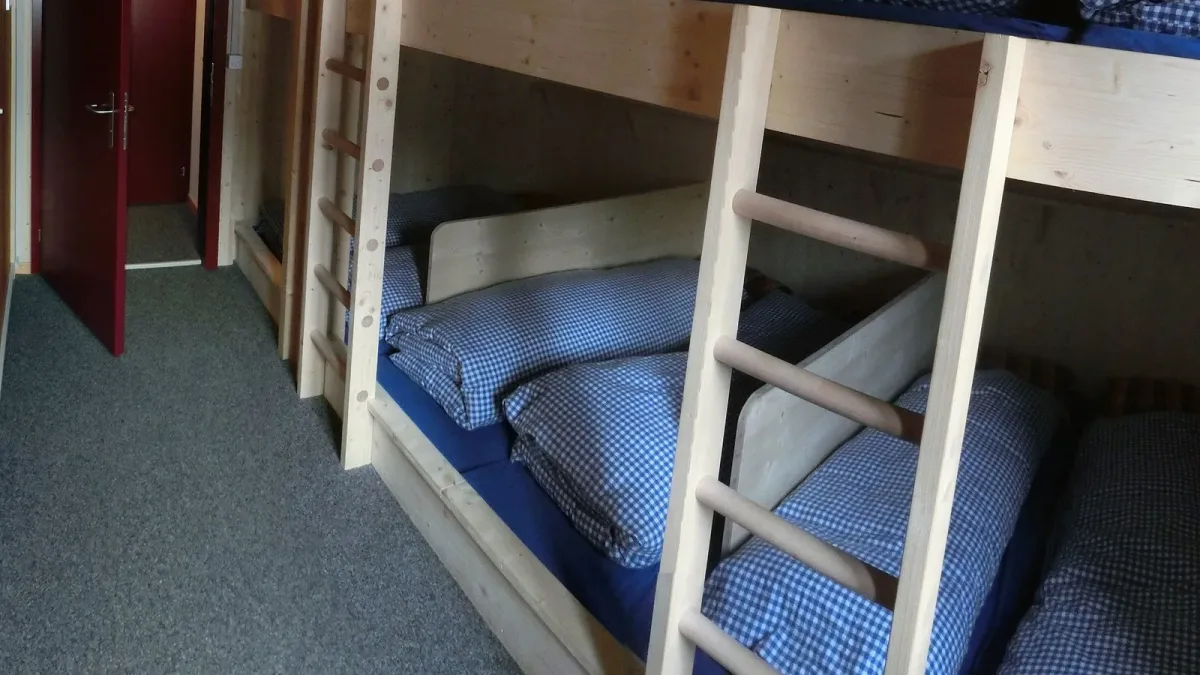
If you have a spare bedroom that currently holds a sad full-size bed and a dresser nobody uses, I want you to meet the highest-converting photograph in family travel: the bunk room.
A bunk room does something no other photo in your listing can do — it lets a parent hand the phone to a child. Adults evaluate listings. Kids campaign for them. When an eight-year-old sees a bunk bed with a ladder and a reading light, your house stops being one of fourteen tabs and becomes "the bunk bed house," lobbied for at dinner with the tenacity only an eight-year-old can sustain. You have acquired an unpaid sales agent who lives with the decision-maker.
The economics are just as good as the psychology. A full-size bed sleeps two people who probably don't want to share it. A twin-over-twin bunk sleeps two kids happily; twin-over-full sleeps three; two sets of bunks turn one modest bedroom into sleeping for four. Every extra sleeping spot raises the size of group your house can host, and in family travel, capacity is the search filter that matters — a family of six filters for "sleeps 6" and never sees your "sleeps 4" listing, no matter how lovely it is.
Make the bunk room photograph like it matters, because it does. Crisp matching bedding, one distinct color or small flourish per bunk so kids can claim "mine," a clip-on reading light at each berth, a rail on every upper bunk, and a small step stool if the ladder is steep. You don't need a mural. You need the photo to say, instantly, "kids sleep great here and there might be a negotiation about who gets the top."
Then put that photo early in your photo order — within the first five. Listing photos are a story, and "your kids will love it here" is a chapter parents are actively looking for. If your best rooms deserve better than your phone camera and a cloudy Tuesday, a proper photo and staging pass is exactly the kind of project a design-minded refresh pays for over and over.
The knee-height walkthrough
Now for the least glamorous and most useful hour you'll spend on your property this year. You're going to kid-proof it, and you're going to do it the only way that actually works: at knee height.
Adults audit rooms from five and a half feet up, which is why adult audits miss everything a toddler finds in ninety seconds. So get down. Literally kneel, and move through your house at the altitude of a two-year-old, room by room, and look at what's suddenly in reach.
Here's what this walkthrough tends to find:
- Cords. Blind cords with loops, lamp cords that pull a lamp off a table, charger cables at floor level, the dangling cord of the kettle. Cordless blinds are the gold standard; cord cleats are the $6 fix.
- Cabinets at floor level. The one under the kitchen sink is the classic — that's traditionally where the dishwasher pods and drain cleaner live. Move chemicals to a high cabinet or add a $10 latch. Same for the bathroom vanity.
- Tip-over furniture. Bookcases, dressers, and TVs that aren't anchored to the wall. Kids climb drawers like ladders. Anti-tip straps cost a few dollars and take ten minutes.
- Small swallowables. Decorative bowls of pebbles or potpourri, magnets on the low half of the fridge, that jar of seashells on the coffee table. If it fits through a toilet-paper tube, a toddler will taste it.
- Sharp corners and hard hearths at exactly forehead height — you bought the corner guards already; the walkthrough tells you where they go.
- Doors and water. Which doors lead somewhere kids shouldn't go alone — the garage, the basement stairs, the pool deck — and do they latch high? Set your water heater no higher than 120°F while you're at it; scald-safe water is an invisible amenity every parent benefits from and none will ever thank you for, which is how the best safety work always goes.
None of this makes your house childproof, because no house is, and you should never claim yours is — more on that language later. What it does is remove the obvious, cheap, foreseeable hazards, which is both the responsible-host move and the thing that lets a parent exhale on arrival instead of spending the first hour doing your walkthrough for you with a wine glass in one hand and a roll of painter's tape in the other.
Do the walkthrough once a year. Furniture migrates, new decor arrives, and last spring's anchored bookcase is this fall's freestanding hazard.
What parents actually scan your listing for
Parents read listings differently than any other guest, and if you understand the reading pattern, you can win the booking in the first thirty seconds.
A couple booking a romantic weekend reads your listing like a menu — browsing, savoring, imagining. A parent reads your listing like a lawyer reads a contract: hunting for specific clauses, in a specific order, ready to close the tab the moment a clause is missing. The internal checklist goes roughly like this:
Is there a crib or pack-n-play? Hard requirement for the baby-and-toddler crowd, and the first thing searched. Are there stairs? Not a dealbreaker — but a parent needs to know before booking whether they're gating a staircase or watching a crawler around an open loft edge. Is the pool fenced? For any listing with water, this is the sentence parents look for hardest, and vagueness reads as "no." Is there a washer? Anyone who has traveled with a potty-training toddler or a sand-coated five-year-old knows a washer is the difference between packing one suitcase and packing three. How far to the beach or playground, in minutes, walking? "Close to everything" means nothing when you're pushing a stroller in July heat. Can we do bedtime here? Meaning: are the kids' sleeping spaces dark, separate enough, and quiet enough that the adults get an actual evening afterward.
Notice what's not on the list: your rainfall shower, your record player, your curated art. Parents like those things fine. They just don't scan for them, because none of them determine whether the trip is feasible. Feasibility first, delight second.
The tactical takeaway is simple: every question on that checklist should have an explicit, findable answer in your listing. Not implied by a photo. Written down, in words a tired person can find at 10:47pm. Which is the whole next section.
Listing copy that answers before they ask
The best family-friendly listing copy works like a great concierge: it answers the question while the guest is still forming it. Most listings do the opposite — they force parents to message and ask, and here's the brutal part: most parents won't ask. They'll just book the house that already answered. Messaging a host, waiting hours for a reply, and holding a tentative plan in your head is exactly the kind of open loop a parent juggling bedtime and a booking window has no patience for. Silence loses to clarity every time.
So write a short, scannable block in your description — call it "For families" — and answer the checklist directly. Something like:
"For families: pack-n-play (with fresh sheets) and high chair always here — just ask and we'll set them up before you arrive. Two baby gates for the one staircase. Blackout curtains in both kids' rooms. Washer and dryer in the hall closet. The fenced yard gate latches at adult height. Playground is a four-minute walk, flat the whole way, stroller-friendly."
Six sentences. Every one of them closes a tab's worth of competition. Notice the texture: "four-minute walk, flat the whole way" beats "close to a park" the way a street address beats a zip code. Specificity is trust, and parents are booking on trust more than any other guest, because their downside risk is a ruined week with overtired kids.
Do the same in your photo captions — a caption reading "Bunk room with blackout curtains and rails on both top bunks" does double duty as copy and reassurance. And make sure your listing title and first line earn the click from a parent's search results in the first place; the mechanics of that are their own craft, and we broke them down in the listing description formula.
One honest note: if your house is genuinely wrong for little kids — a cliff-edge deck, an open spiral staircase, a dock with no rail — say that too, kindly and clearly. "Best for families with kids 8 and up" is not lost revenue; it's a five-star review protection plan. The family with toddlers books elsewhere and never leaves you the three-star "beautiful but we couldn't relax for one second" review, and the family with a ten-year-old books with total confidence.
Steal this from hotel concierges: keep a saved reply for family inquiries. When a parent messages "do you have a crib?", answer the crib question and the next four questions they haven't asked yet — stairs, gates, blackout curtains, washer. Answering the unasked questions is what makes a parent stop shopping. The booking usually arrives within the hour.
Amenities that matter vs Instagram fluff
Every host has a finite upgrade budget, and family travel is where you learn the difference between amenities that photograph well and amenities that book well. They are not the same list. The hanging rattan chair gets the likes. The blackout curtains get the rebooking.
The family amenity hierarchy, from the trenches:
Blackout curtains. If I could give every family-market host one upgrade, this is it. Kids' sleep runs the entire family vacation — a toddler who's up at 5:15 because of a glowing window sets the mood for all six humans in the house for the whole day. Proper blackout curtains in every sleeping room cost maybe $30–$60 a window and directly manufacture the thing parents are actually buying: a vacation where everyone sleeps. Mention them by name in the listing. Parents search for the phrase.
Laundry. A washer and dryer let a family of five pack like a family of two. Sandy swimsuits, blowouts, spaghetti night — laundry is the amenity that absorbs the chaos of traveling with kids. If you have it, photograph it and caption it. If you don't have it and could, few installs change your family bookability more.
Dishwasher. Families cook. Breakfast for six, twice-daily sippy-cup rotations, the pasta pot — a family stay generates restaurant-volume dishes, and nobody's vacation should include forty minutes a night at the sink. A dishwasher is the difference between "we cooked and it was lovely" and a review that says "great house but a lot of work."
A real kitchen setup. Plastic plates and cups that can bounce, a few kid utensils, sippy cups, a decent set of food-storage containers for leftovers and snack-packing. Cost: about $40. Reviews mentioning it: forever.
The boring safety-and-logistics tier. Nightlights in the hallway and bathroom, a sound machine (parents either travel with one or dream of a house that has one), a step stool so a four-year-old can reach the sink, a diaper pail or at least a lidded trash can in the nursery-adjacent room.
Compare that list to the Instagram tier — the neon "cheers" sign, the third decorative throw arrangement, the projector nobody figures out. Fun, sure. But none of it moves a family booking one inch, and some of it (glass decor at knee height, anyone?) actively works against you. When in doubt, ask the only question that matters: does this help six tired people eat, sleep, and rinse off sand? The broader ranking of which amenities actually move bookings — for every guest type, not just families — gets the deep-dive treatment in our amenities guide.
Games and toys: curation beats accumulation
There's a failure mode on the fun side too, and it's the overflowing toy bin — forty-three donated toys, thirty-one of them broken or missing pieces, radiating daycare-at-closing-time energy. A pile of junk toys reads as clutter to parents and disappointment to kids. What you want instead is a small, deliberate collection that says somebody thought about this.
The formula: one basket, one shelf, one closet — never more. Inside it:
- Board games with all their pieces. A classic stack — Uno, Connect 4, a jigsaw puzzle or two, one family board game. Check them seasonally; a game missing pieces is worse than no game.
- Blocks or magnetic tiles. The single highest-value toy category: ages two through ten, no batteries, no noise, no thousand-piece cleanup.
- Books. A dozen picture books and a few chapter books. A bedtime book in the house means one less thing packed, and a kid-height book basket photographs beautifully.
- Coloring supplies — a stack of paper and washable (underline washable) markers or crayons.
- Location-specific gear. Beach house: a bucket-and-shovel set and sand molds in a mesh bag. Mountain cabin: a deck of cards and binoculars. Lake place: a couple of kid life vests, clearly labeled by size.
Everything battery-free on that list has a second virtue: it's quiet-hours-friendly. A family in your house at 7:30pm has done bath time and is in the fragile negotiation phase before bed. Puzzles, blocks, books, and coloring keep the evening calm — for the kids, for the parents, and for your neighbors, who will never file a noise complaint about a jigsaw puzzle. If your market skews to condos or close-set houses, quiet entertainment isn't a nicety; it's neighbor relations.
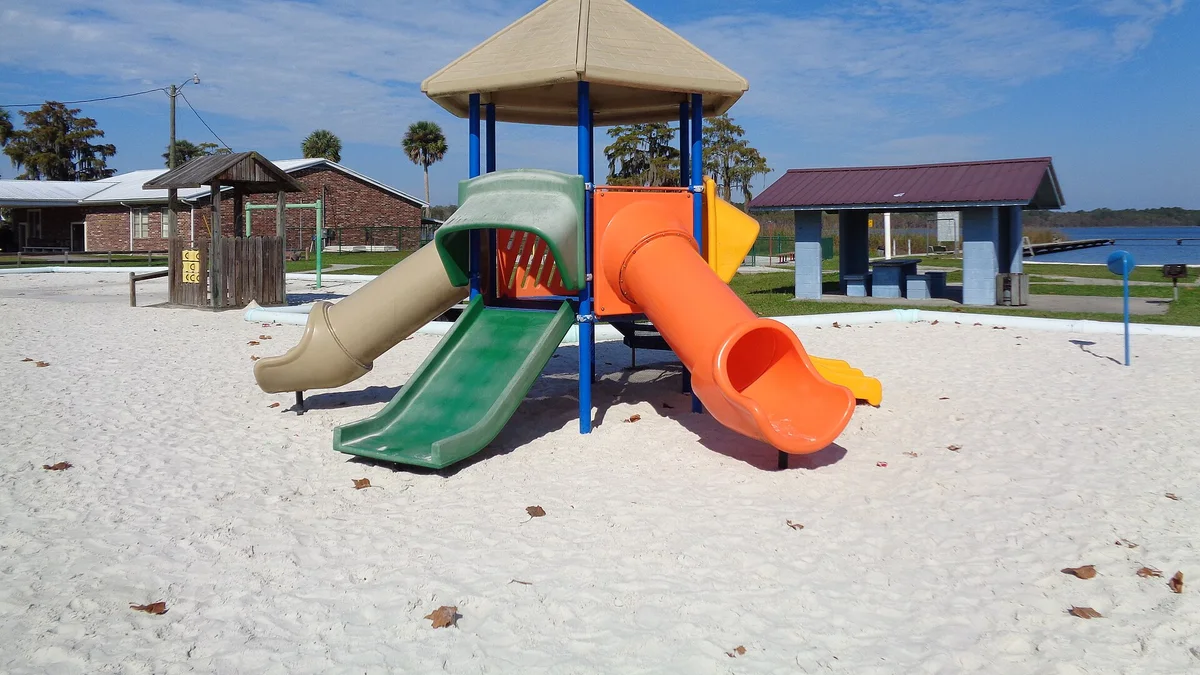
And remember that your best "toy" might not be in the house at all. The playground down the street, the library with story hour, the ice cream window that opens at noon — parents plan whole days around this intel, and the host who provides it becomes the host who gets rebooked. Put a "with kids" page in your house manual: the three nearest playgrounds ranked by shade, which beach entrance has the gentle slope, which restaurants have high chairs and crayons, where the changing tables are. That guide costs you an hour and reads like gold; we've made the case before that a great welcome guide is a marketing asset, and the family edition is the strongest proof of it.
The multigenerational trip: put the grandparents on the ground floor
Zoom out from the minivan family for a moment, because family travel's biggest bookings are bigger than one household. The multigenerational trip — grandparents, adult kids, grandkids, sometimes an aunt and a cousin for flavor — is the whale of family travel: milestone birthdays, reunions, the annual "everyone comes to the lake" week. These groups book the largest houses, for the longest stays, at the most predictable times, and they are chronically underserved because most large listings are designed for bachelorette parties.
Winning them takes one design idea and a few sentences of copy. The design idea: a comfortable bedroom with a full or queen bed and an attached or adjacent bathroom on the ground floor. No stairs between Grandma and her bed, her bathroom, and her morning coffee. Knees are the invisible architecture of multigenerational travel — the adult child planning the reunion is quietly checking whether their parents can live comfortably on one level, and most listings make them guess.
So don't make them guess. "Main-floor bedroom and full bathroom — no stairs required" is a sentence that wins ten-night bookings. Add the supporting cast: decent mattresses (grandparents notice), a firm-armed chair that's easy to stand up from, good lighting for reading, grab-worthy rails on any steps, and a bathroom with a walk-in shower rather than a tub-only setup if you have the option.
Then think about the group's shape. Multigenerational trips run on togetherness with escape valves — one big table that seats everyone (the single most important piece of furniture in the house; the reunion happens at that table), plus enough separate sitting areas that the early risers, the nappers, and the teenagers can all coexist. A second refrigerator or a garage beverage fridge sounds absurd until you've fed eleven people for a week, at which point it sounds like genius.
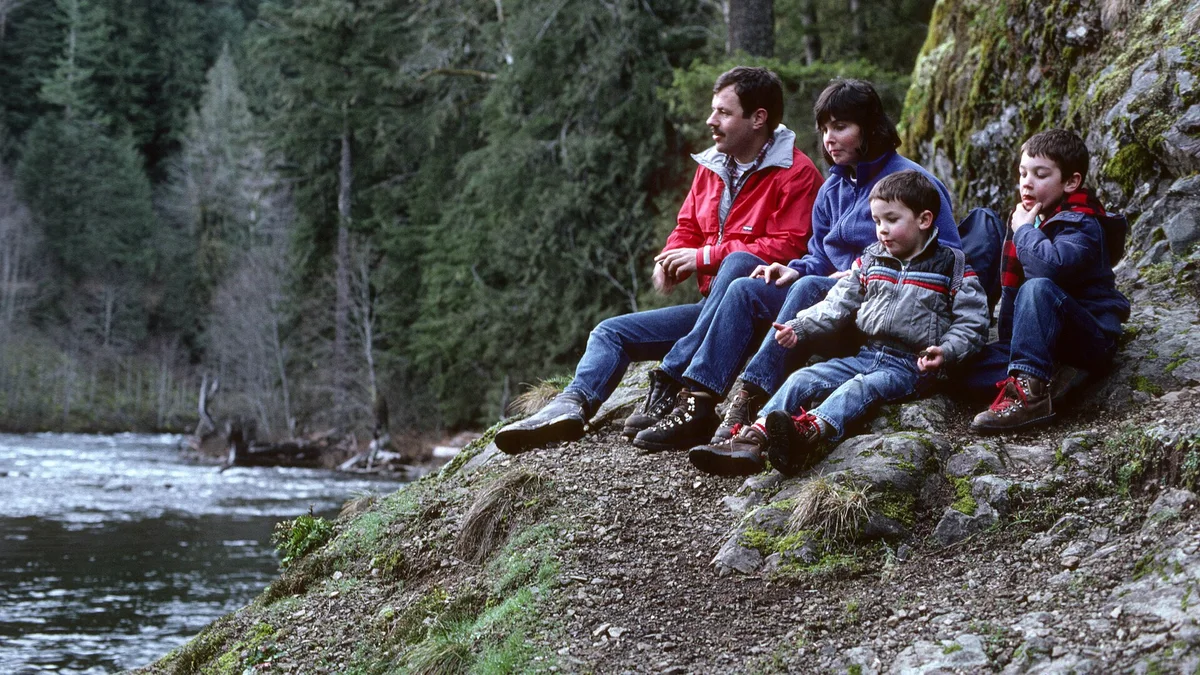
The economics deserve a sentence of their own. A multigenerational group is often two or three households splitting one bill, which means they shop a price tier above what any single family would pay — and because the week is an annual tradition, the house that hosts it well becomes part of the tradition. "The lake house" gets rebooked the way holidays get scheduled: automatically, and with feeling.
Safety communication: reassure without alarming
There's a writing skill specific to family hosting, and it's worth practicing: talking about safety in a way that builds confidence instead of dread. Get it wrong in either direction and it costs you.
Say too little and parents fill the silence with worst-case assumptions — an unfenced pool, an open staircase, a balcony out of a nightmare. Say it wrong — a wall of warnings, liability boilerplate, ten exclamation-pointed rules about the hot tub — and your listing reads like a house that's afraid of children, which parents correctly interpret as a house that doesn't want them.
The tone you want is a calm, competent friend showing you around: factual, specific, brief. Compare:
Alarming: "WARNING: Pool on property. Children must NEVER be unattended. We are not responsible for accidents."
Reassuring: "The pool area is fully fenced, with a self-latching gate that latches at adult height. Two child life vests hang in the pool closet. As everywhere, kids should swim with an adult watching."
Same facts. Same legal posture, frankly. Completely different feeling. The first sounds like a deposition; the second sounds like a host who has thought about children and made real decisions on their behalf. Specific hardware — "self-latching gate," "latches at adult height," "rails on both top bunks" — does more reassuring than any adjective, because parents trust mechanisms more than promises.
A few rules for the genre. Never claim "childproof" or "babyproofed." No house is, the claim invites both complacency and liability, and careful parents distrust it anyway. Say what you did: "outlet covers throughout, gates at both ends of the stairs, cabinet locks on the cleaning-supply cabinet." Put the details where they belong: the two or three booking-decision facts (pool fence, stairs, gates) go in the listing; the fuller walkthrough — where the gates are stored, water heater temperature, the first-aid kit location, the address to read to a 911 dispatcher — goes in the house manual, where a parent reads it on night one and thinks, this host gets it. And check the honest boxes on the platform's safety checklist. Airbnb asks about pools, water features, and stairs for exactly this audience; accuracy there is both integrity and marketing.
One more quiet trick: your safety story is also your review story. Parents who spent a week actually relaxed — not hovering, not improvising gates out of ottomans — write a very particular kind of glowing review, the kind that names the gates and the fence and tells every future parent this is the safe pick. Reviews like that compound; there's a whole system for earning them on purpose, and family guests are its most enthusiastic participants.
Add one line to your check-in message for bookings that include kids: "Gates are set up, the pack-n-play is made up in the back bedroom, and the pool gate is latched — holler if you want anything moved." Twenty seconds of typing, and the family walks in already trusting you. That trust shows up verbatim in reviews.
How a beach house became "the house"
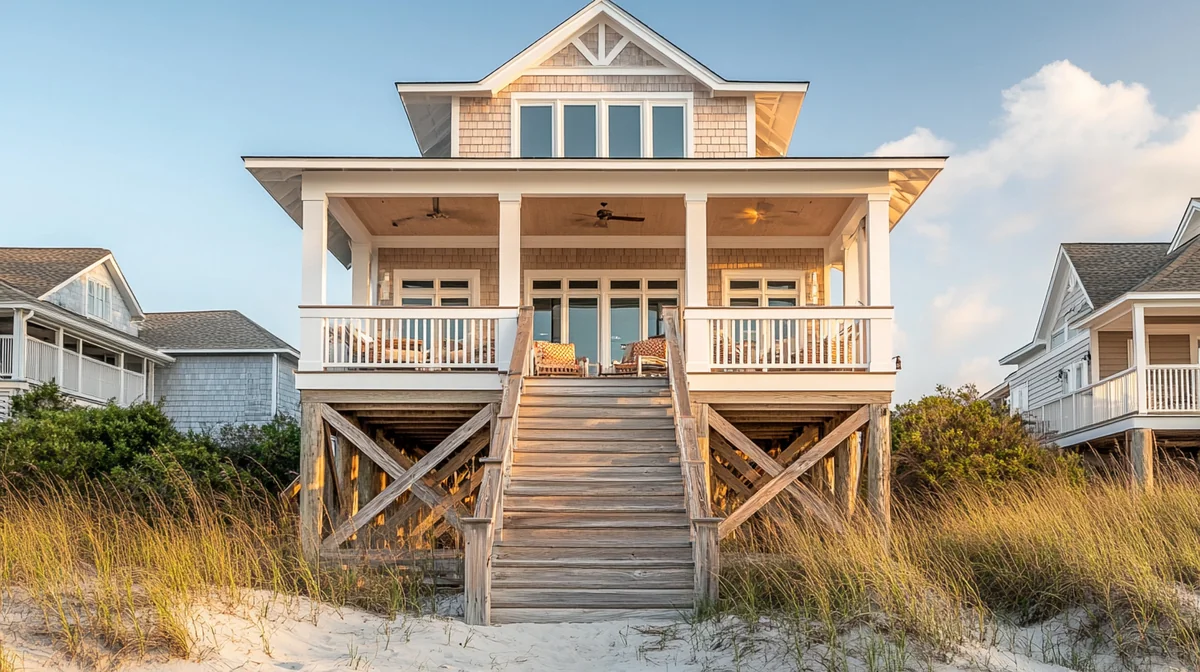
Let me tell you about Marcus, a host with a four-bedroom on the Alabama coast, a block and a half off the sand in Gulf Shores. For two years he ran it like everyone else runs a beach four-bedroom: neutral decor, king in the primary, queens everywhere else, decent reviews, decent summers, brutal shoulder seasons, and a calendar that reset to zero strangers every single year.
The rethink started, as these things do, with a review. Four stars: "Beautiful home. Traveling with our two-year-old was tough though — no crib, and the stairs were scary. Probably better for adults." Marcus read it and saw what most hosts see: a mismatched guest. Then he counted how many of his inquiries mentioned kids, looked at the school-calendar shape of his own peak demand curve, and saw it differently: he owned a family house that was quietly telling families to leave.
That off-season he spent about $1,900 — modest money against a beach-week nightly rate. The fourth bedroom's queen became two sets of twin bunks with rails, matching quilts, and four clip-on reading lights, which took the house from sleeps-8 to sleeps-10 and gave him a photo he moved to position three in the listing. Pack-n-play, high chair, two gates, outlet covers, corner guards: the baseline. Blackout curtains in three bedrooms. A mesh bag of beach toys and two kid boogie boards in the garage, a basket of games and books in the den. He did the knee-height walkthrough, anchored two dressers, moved the sunscreen-and-chemicals shelf up high. Then he rewrote the listing with a "For families" block — crib, gates, no-stairs bedroom on the main floor for grandparents, washer, the walk to the beach measured in stroller minutes — and added a "with kids" page to the house manual: the gentle-slope beach access, the ice cream place with the walk-up window, which pier has the shade.
The next June, a family from Nashville booked eight nights. Two kids, one grandmother, a review that used the phrase "we could actually exhale." Before checkout they messaged asking about the same week next year. In July it happened again with a family from Dallas — six nights, three kids who assigned themselves bunks within four minutes of arrival. The following spring, the Nashville family's neighbors booked their own week on the strength of a backyard-barbecue recommendation, which is how three families came to rotate through the same house every summer like a time-share nobody signed.
Three summers on, those three families book roughly twenty nights of Marcus's peak season before he lifts a finger — reserved by February, cancellation risk near zero, cleaning fees earned in week-long units, review average anchored by people who are effectively reviewing their own tradition. The kids call it "the house." Not a house. The house. There is no listing photo, no pricing algorithm, and no ad budget that competes with being a family's proper noun.
The quiet math of being the house
Strip the story down and the playbook is almost embarrassingly simple. A few hundred dollars of decisive equipment. One bedroom that makes kids campaign for you. An hour on your knees finding what a toddler would find. Listing copy that answers the parent checklist before it's asked. Amenities chosen for sleep, laundry, and dinner instead of likes. A ground-floor room that welcomes the grandparents. Safety language that sounds like competence instead of caution tape.
None of it is glamorous, which is exactly why it works — most of your competitors are busy buying neon signs. Families don't need your house to be impressive. They need it to be possible, then comfortable, then theirs. Get those three in order and the rest of the flywheel — longer stays, calendar-proof rebookings, reviews that recruit the next family — turns on its own.
The mom in Columbus is still out there every Tuesday night, fourteen tabs open, searching the word "crib." Be the tab that answers, and next year she won't open the other thirteen. And if you'd like a partner in making the house itself earn that loyalty — the bunk room, the photo-ready staging, the spaces that work for six tired humans — that's the kind of project Cavmir's interior design team quietly loves.
Photography via Wikimedia Commons, resized and cropped: hero, Sunset, Family 2016 01 by Paul Harrison (CC BY-SA 4.0); inline, Bedroom of Muttseehütte by Capricorn4049 (CC BY-SA 3.0).



.jpg)

